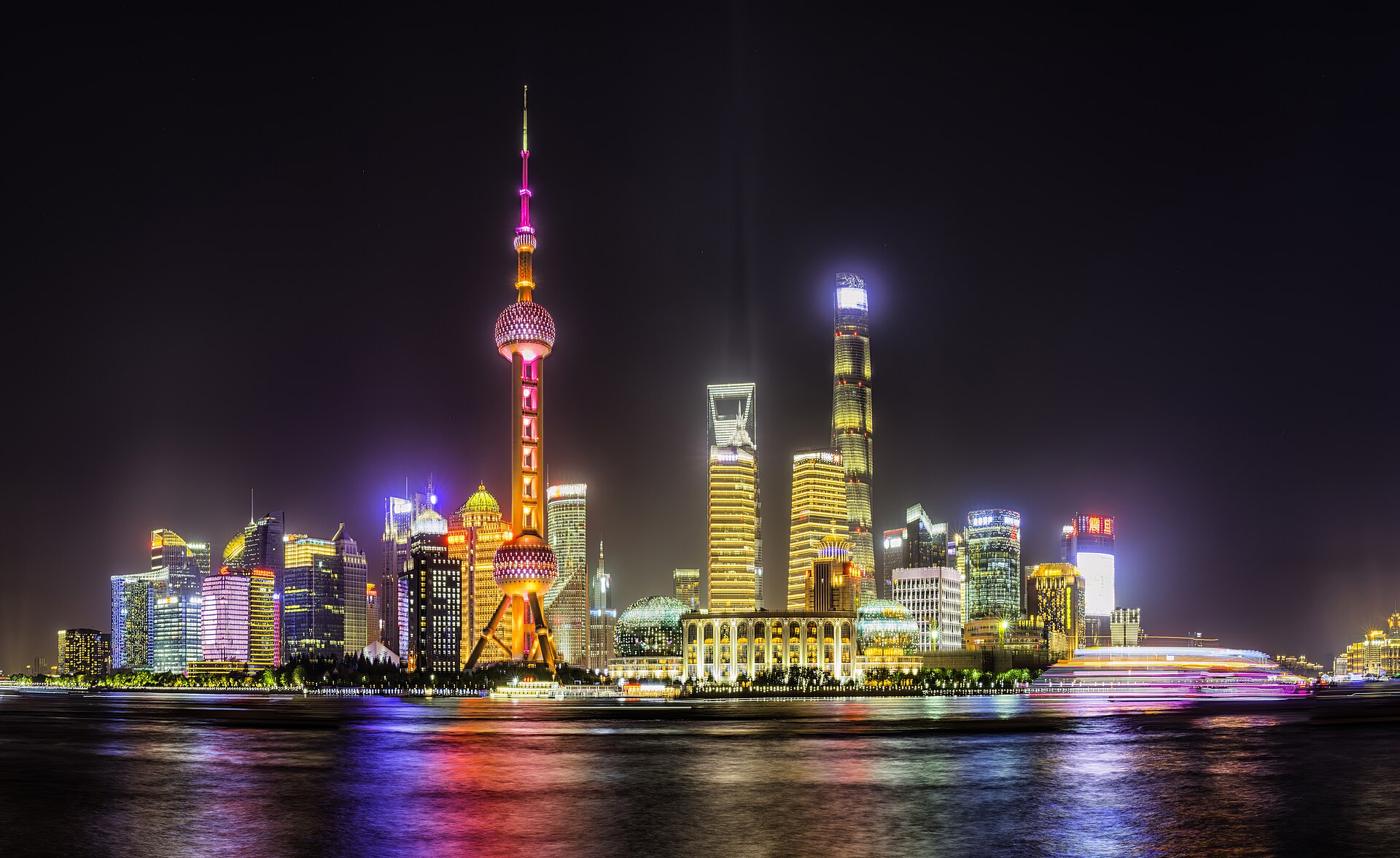
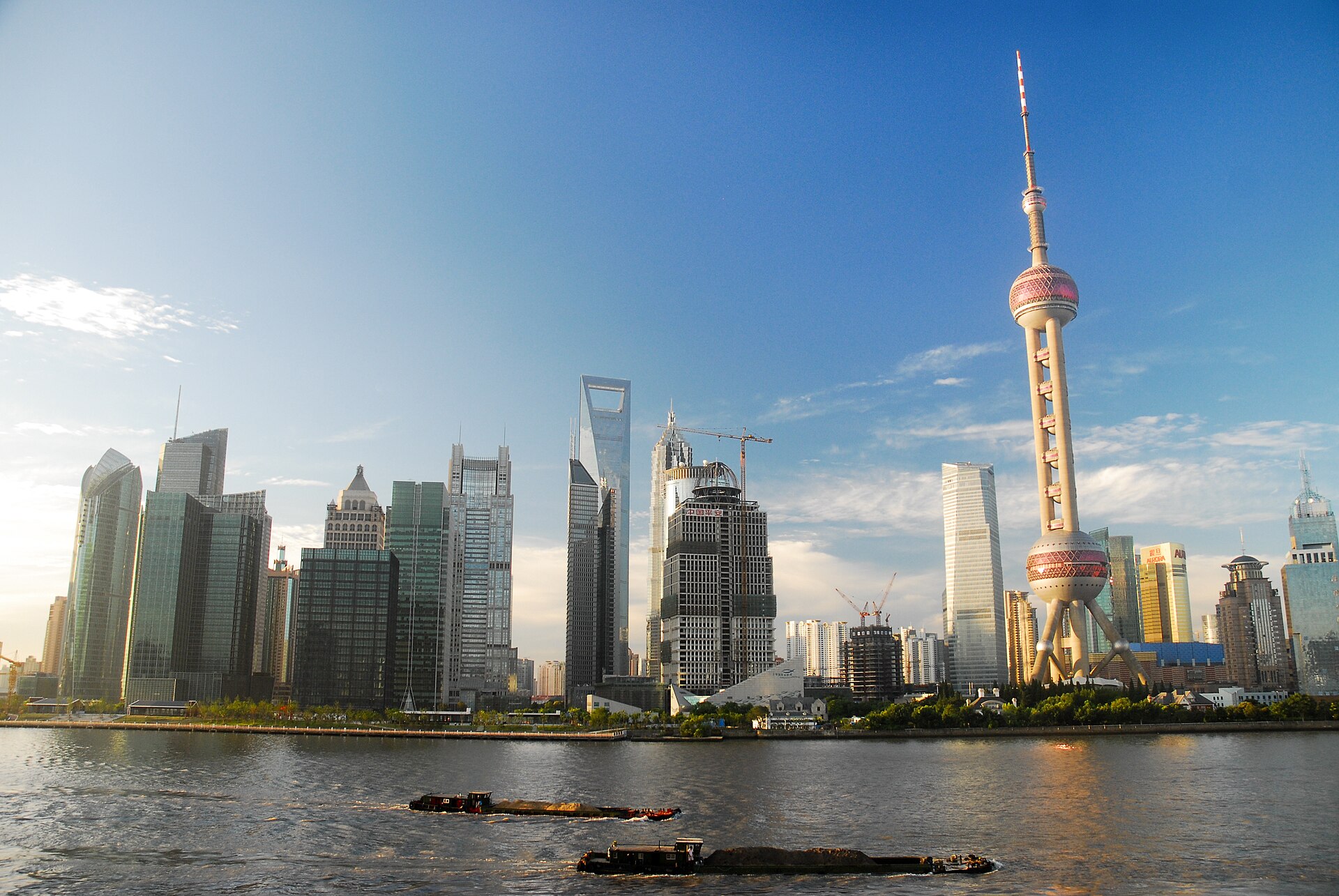
468 metres. Two oversized spheres stacked on a concrete column. Completed in 1994, when Pudong was still farmland. Now the tower that every visitor looks for first on the skyline.
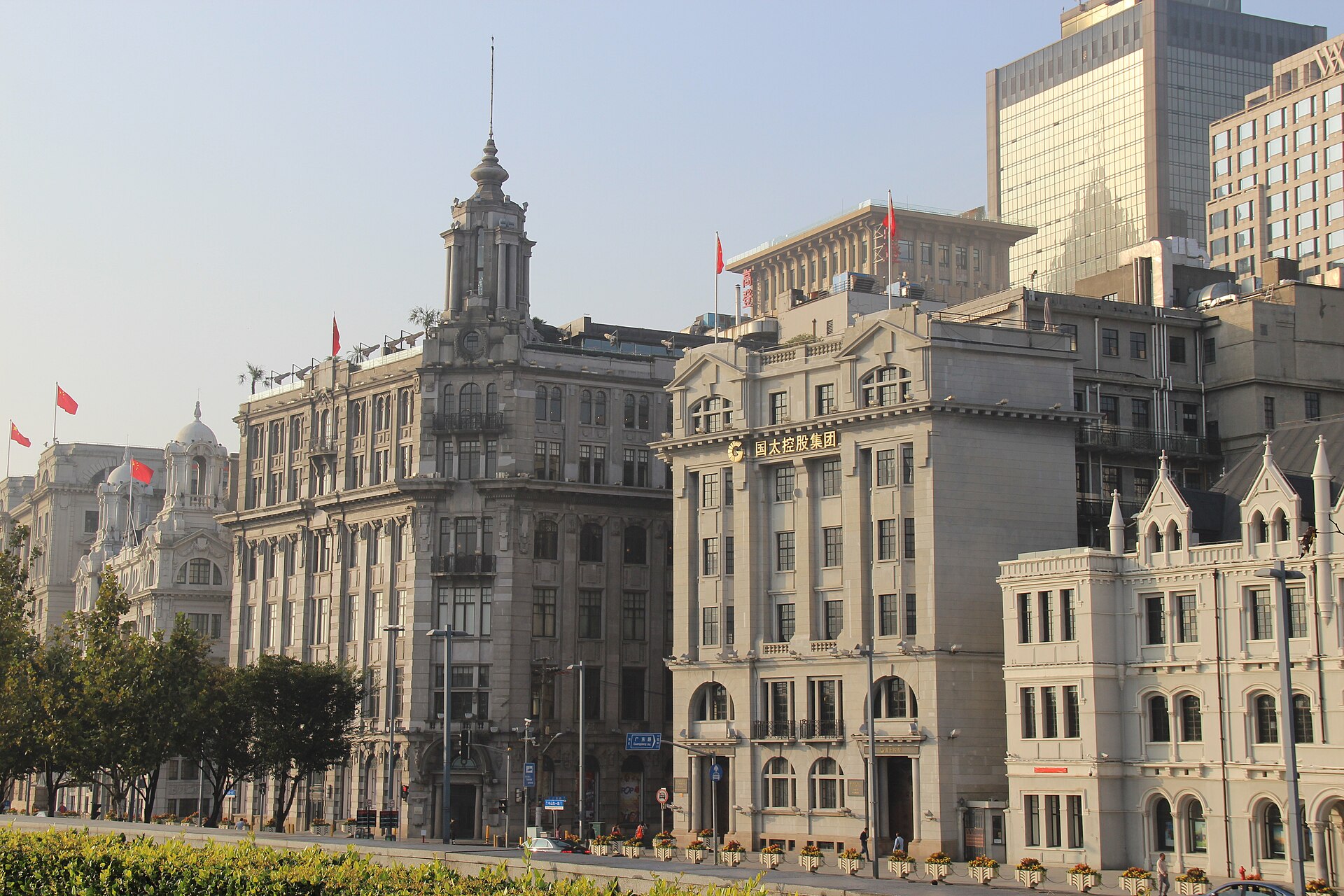
In 1993, Pudong was flat. The west bank of the Huangpu River — the Bund — was Shanghai's face to the world, all colonial-era facades and century-old banks. Across the water, there was not much. Then a tower went up: two large pink-red spheres stacked on a mast, unlike anything else in the Chinese skyline. That was the Oriental Pearl Tower (东方明珠), and it was a declaration of intent.
Completed in 1994 at 468 metres, it was the tallest structure in Asia at the time. It no longer holds that record — Shanghai Tower at 632 metres and the SWFC at 492 metres now flank it on both sides — but the Oriental Pearl remains the tower people picture when they think of Shanghai. Its observation sphere at 263 metres looks directly across at the Bund's colonial facade, making it one of the few places in the city where both sides of Shanghai's split personality are visible at once. The glass-floor skywalk and the underrated history museum at the base add substance beyond the view.
Each floor offers something distinct — choose your package based on what you actually want.
This is the core experience. Step out of the lift and the view opens in all directions: the Bund's colonial facade directly across the river, Shanghai Tower rising to your left, the Huangpu River below with vessels moving constantly, and Puxi's dense grid stretching west. On a clear day visibility extends 30–40 km. The angle from here looking back at the Bund is one of the most satisfying in the city. Included in all ticket packages.
A 150-metre corridor with a transparent glass floor 35 mm thick runs around the sphere. You look straight down through it to Lujiazui. Some people stride across without a second thought; others go still the moment they step on it. LED lighting built into the floor and walls makes the whole thing look different after dark than it does in daylight — both are worth seeing. No extra charge; included with the standard ticket.
The uppermost sphere sits nearly 90 metres above the main observation deck, and it is quieter — this level draws fewer visitors than the floor below because it requires paying extra. The panorama is wider and slightly different in character: the full sweep of both Pudong and Puxi in a single unobstructed view. Worth adding if you want the most complete experience and the budget allows.
4
Most people walk past the entrance without realising it is there. The museum recreates 1920s Shanghai at full scale — a rickshaw stand, an opium-era tea house, a shikumen workers' lane with original fittings, wax figures in period dress — along with more than a thousand genuine artefacts spanning the Qing dynasty through the Republican era. The result is one of the most atmospheric history exhibitions in China, and it is consistently less crowded than anything upstairs. Allow 45–60 minutes. Included in select packages; check at booking.
Do not leave Lujiazui without looking up at what surrounds you.
Two hundred metres from Oriental Pearl, Shanghai Tower's Sky Walk on floor 118 sits at 546 metres — the highest observation point in the city. Tickets are ¥180. If you want the highest possible view and the widest panorama, this is the place; it simply reaches further up than anything else here.
The SWFC sits directly opposite Oriental Pearl across the plaza, which makes it the right building to go up if you want the tower's distinctive pink spheres in your photograph. The two face each other cleanly. Observation decks on floors 94, 97 and 100; tickets ¥180.
The third of the trio, with a facade drawn from classical Chinese pagoda proportions. The Grand Hyatt occupies floors 53–87; the Sky Promenade on floor 88 is open to visitors at ¥120. Less visited than the other two, which means shorter queues on most days.
From Oriental Pearl, cross to the Bund by MRT Line 2 (under 5 minutes, one stop to East Nanjing Road) or take the Huangpu River ferry for ¥2 — a short crossing that gives you the skyline view most photographs are taken from. See the full Shanghai attractions guide → for timing and what else to do nearby.
Tickets: The standard package — 263m sphere, 259m glass skywalk and the history museum at the base — costs around ¥199 (~฿1,000). Upgrading to include the Space Module at 350m brings the total to roughly ¥250–280 (~฿1,250–1,400). Booking online ahead of time (Klook or the official site) typically saves 10–20% and means you skip the ticket counter entirely.
Best time to visit: Go in the mid-to-late afternoon, roughly 3 to 5 pm. Arrive in daylight, take your time on the observation deck, and stay until the Bund's buildings and the Pudong towers all light up together. You get two completely different views — the sharp, detailed daytime panorama and the warmer, more atmospheric night version — without having to come back twice.
Haze and fog: Shanghai has hazy days, particularly in winter and during humid summer months. Check a local weather forecast before going; days with visibility under 5 km will limit the view significantly. The tower is air-conditioned throughout, but the glass panels near the observation levels can be cold in winter — bring a layer if you are visiting December through February.
Crowds and queues: Chinese public holidays — especially Golden Week (1–7 October) and Chinese New Year — bring very long queues. Weekday mornings after 9 am have the shortest waits overall. Booking online resolves most of the queue problem regardless of the season.
By metro (recommended): Take MRT Line 2 to Lujiazui station (陆家嘴), use Exit 1, and walk straight ahead for about 5 minutes. The tower is visible from the station exit. From People's Square the journey takes roughly 10–12 minutes and costs ¥4–5. The metro eliminates traffic entirely and is by far the most reliable option.
By ferry: If you are starting from the Bund, the Jinling Road Ferry Terminal runs crossings for ¥2. The crossing takes 8–10 minutes; from the Pudong landing, walk about 10 minutes to the tower. A proper river experience, slower than the metro but more memorable.
By taxi or DiDi: From the Bund, expect ¥25–35 and 10–25 minutes depending on traffic. In the evenings and on weekends, traffic in Lujiazui can be very slow. The metro is faster and more predictable for this particular destination.
If you are planning an evening visit and want a short walk back to your room, Lujiazui hotels are hard to beat.