A group of limestone islands in the Andaman Sea between Phuket and Krabi that everyone wants to see once — the Phi Phi viewpoint over the twin bays and the Tonsai isthmus, Maya Bay made famous by The Beach, clear snorkelling water and lively beachfront nightlife. It's also a busy, crowded place. This guide is built from verified facts and real visitor accounts to get you ready for your first Koh Phi Phi trip before you board the boat.
Koh Phi Phi is a famous group of islands in the Andaman Sea, in Krabi province, sitting between Phuket and Krabi/Ao Nang/Koh Lanta. There are two main islands: Ko Phi Phi Don, the inhabited one — with the village and pier of Tonsai, Loh Dalum bay, the Phi Phi viewpoint, Long Beach (Hat Yao) and the northern resort bays of Laem Tong and Loh Bagao — and Ko Phi Phi Leh, uninhabited and day-trip only, home to Maya Bay (made famous by The Beach), Pileh Lagoon and the Viking Cave.
You arrive by boat only — Koh Phi Phi has no airport, so you cross by ferry from Phuket, Krabi, Ao Nang or Koh Lanta (in high season). The main pier is Tonsai. Good sea in the dry months — roughly November to April brings calm, clear water with everything open and good diving. An island of views and water — on a single trip you can climb the Phi Phi viewpoint, take a boat tour to Maya Bay and the surrounding islands, snorkel clear water and watch the sunset at Loh Dalum. See the full overview at the complete Koh Phi Phi guide →
It depends on whether you want to see the island in passing or really soak it in. Two to three days is the sweet spot for a first visit — the Phi Phi viewpoint, an island-hopping boat tour out to Maya Bay with snorkelling, the sunset at Loh Dalum and the Tonsai nightlife. A single day is too rushed and you won't see the island quiet, after the day-trip boats leave — the real charm of Phi Phi is the early mornings and evenings when the crowds thin out. If you want to relax on the quieter northern beaches or dive over several days, allow three to four days.
Day 1: Ferry in to Tonsai, check into your chosen area, wander the village, sunset at Loh Dalum. Day 2: An island-hopping boat tour around Phi Phi Leh — Maya Bay, Pileh Lagoon and snorkelling (go early to dodge the crowds). Day 3: Climb the Phi Phi viewpoint in the morning, hit the cafes, stroll around, then the afternoon ferry back.
Add time for snorkelling or several dives (Bida Nok/Bida Nai, Shark Point, Bamboo Island), head to the quieter northern beaches like Laem Tong and Loh Bagao, or stay at Long Beach with its fine view of Phi Phi Leh, and take boat tours without rushing. Some days, just swimming and lying on the beach is enough. Koh Phi Phi is beautiful enough to spend real time on, not just photograph.
Things to do: attractions · beaches · Maya Bay · what to eat
Koh Phi Phi is an island with no airport, reached only by boat. The nearest airports are Krabi (KBV) and Phuket (HKT), then a ferry across. Ferries to Koh Phi Phi run from Phuket, Krabi, Ao Nang and Koh Lanta (in high season), taking about 1.5 to 2 hours. Every route lands at Tonsai pier, the island's main village and hub, and there's a national-park entry fee collected when you arrive.
The main route is to fly into Krabi or Phuket, then take a road transfer to the pier and a ferry across to Koh Phi Phi — from Phuket (Rassada pier) and from Krabi / Ao Nang it's about 1.5 to 2 hours either way. Pick whichever you fly into more easily. Many operators sell a combined "hotel transfer + ferry" ticket. More on getting in from the neighbouring cities at the Phuket guide → · the Krabi guide →
If you're already on Koh Lanta, there's a direct boat from Lanta to Koh Phi Phi in high season (roughly November to April). Good for island-hopping the Andaman as one trip. ⚠️ In the monsoon this route may run less often or stop, so check the schedule first. More on getting in from the neighbouring island at the Koh Lanta guide →
The most important choice on Koh Phi Phi is which area you book, because each corner of the island has a different feel, and with no cars, moving means a long walk or a boat. Pick one area and stay put. Full beach-by-beach guide at the Koh Phi Phi beaches guide →, or see real places to stay at where to stay on Koh Phi Phi →
The heart of Phi Phi Don, on the narrow isthmus between Tonsai bay and Loh Dalum bay. This is where the pier, accommodation, restaurants, bars and the most nightlife are, and you can walk to everything, close to the viewpoint trail, with great sunsets at Loh Dalum. It's lively and the party hub. ⚠️ It's loud at night. For the social crowd and first-timers who want to be in the thick of it.
A beach south of Tonsai with white sand, clear water and the best view of Phi Phi Leh on the island. It's noticeably calmer and more relaxed than Tonsai, a short beach walk or a few minutes by longtail from the village. Good for people who want to be near the action but escape the party noise, with snorkelling off the beach. ⚠️ You can walk to Tonsai along the sand at low tide, but take a boat at high tide.
The far northern tip of Phi Phi Don, a cluster of upscale, secluded resorts well away from the Tonsai bustle, with clear water and good beaches. Best for people who want to truly switch off and will pay for the privacy. ⚠️ You reach it by resort boat or longtail, with no easy walking route to Tonsai — every trip into the village means a boat ride.
A wide bay on the northeast of the island, another quiet resort area away from Tonsai, with a long beach and calm sea. Good for a quiet resort stay close to nature. ⚠️ Like Laem Tong, it's boat-access in the main, far from the village restaurants and nightlife, so plan your meals and tours ahead.
November to April is the prime window for this Andaman island: a calm, clear sea, easy ferries and everything open, with good diving and visibility. ⚠️ This is also high season, so it's busy and prices climb. March and April are very hot. Full Thailand-wide picture at when to visit Thailand →
May to October is the Andaman's southwest monsoon: more rain, a rough sea, harder crossings and some ferries cancelled, with lower underwater visibility when it's roughest. The upsides are fewer crowds and cheaper rooms. Important: Koh Phi Phi stays busier than Koh Lanta all year, and Maya Bay has periodic seasonal closures in some years (around August to September) — check the current rules and closures before booking. See the best time to visit Koh Phi Phi →
Koh Phi Phi has no roads for cars and no vehicles at all — no taxis, no Grab, no songthaews and no scooters for getting around. The main way to move is on foot: Tonsai is a maze of little lanes where you can walk everywhere, and most shops, hotels and restaurants are within walking distance. Porters with carts help haul heavy luggage from the pier to your hotel. Wear comfortable shoes.
The far beaches — Long Beach, Laem Tong, Loh Bagao — and Phi Phi Leh (Maya Bay, Pileh Lagoon) are reached by longtail or speedboat, not by road. Northern resorts usually run their own boat transfers, while island-hopping tours and snorkelling go out by boat in a group. ⚠️ Agree the price and the pick-up/drop-off clearly before you board a longtail, and check on life jackets — this is the island's main way to get around.
Koh Phi Phi has many sides, but for a first visit these are the core — the things that best explain why the island draws people from all over the world. Full details at Koh Phi Phi attractions →
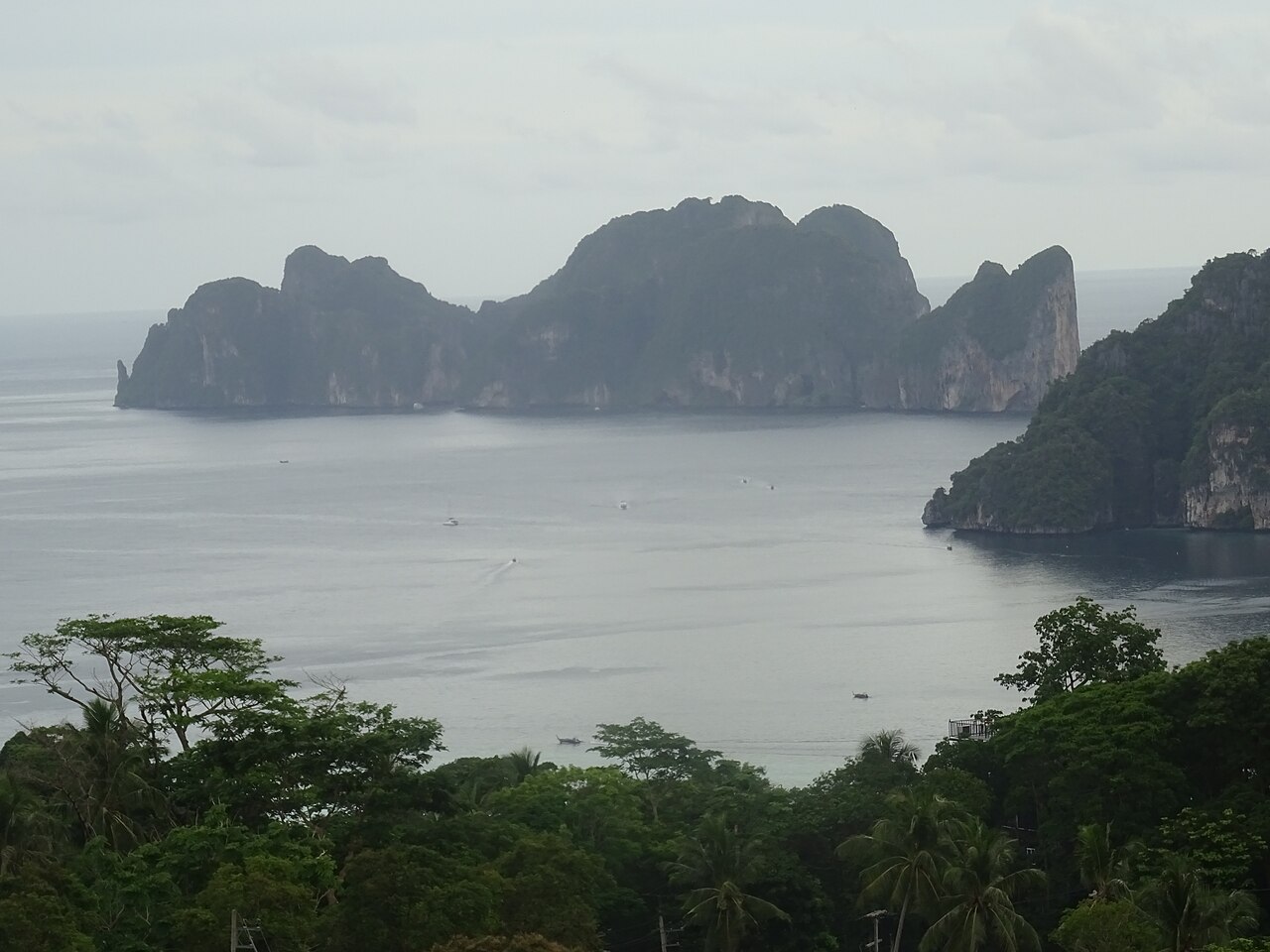
The Phi Phi viewpoint is the island's postcard image — a climb up steps in three tiers from Tonsai to a view over the twin bays of Tonsai and Loh Dalum and the sandy isthmus joining the two halves of Phi Phi Don. It's best in the early morning or evening when the sun is softer. ⚠️ The path is a steep stairway and a real little workout — wear good shoes, bring water, and there's a small fee at one tier.
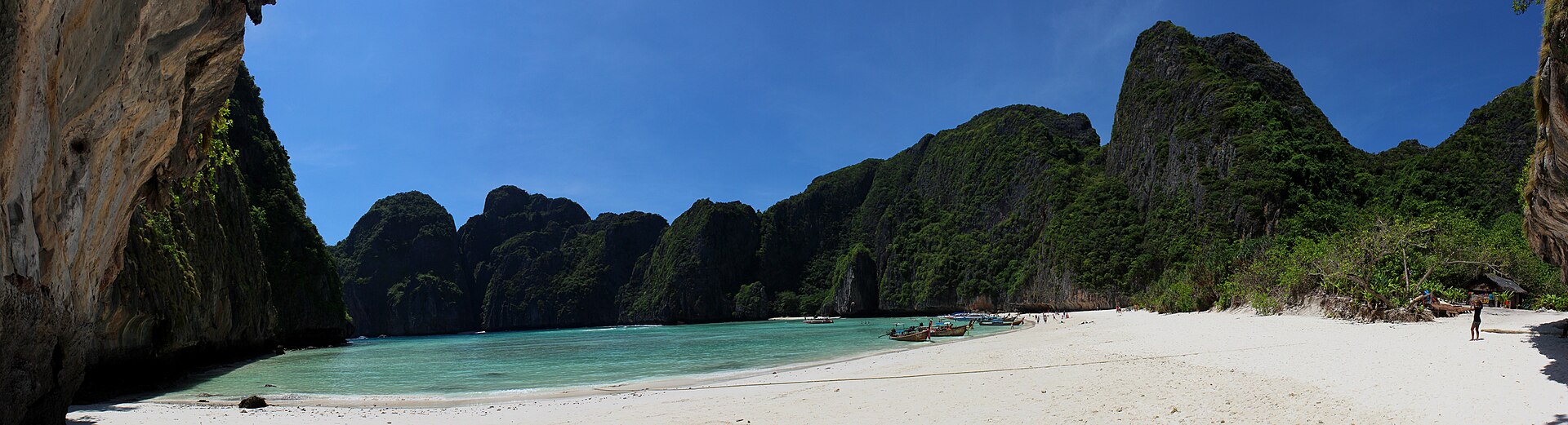
Maya Bay on Phi Phi Leh is the bay made famous by The Beach — white sand ringed by towering cliffs, and day-trip only. Most people visit on an island-hopping boat tour that also stops at Pileh Lagoon, the Viking Cave and snorkel spots. ⚠️ Since reopening it has strict rules — limited numbers, boats can't anchor in the bay, you enter via a back-bay pontoon, and you usually can't swim in the bay. Check the rules and closures before booking.

Phi Phi's clear water is excellent for snorkelling and diving. Top sites are Bida Nok and Bida Nai (with a chance of leopard sharks), Shark Point with its blacktip reef sharks, and Bamboo Island (Ko Mai Phai) with clear water and white sand. Most island-hopping tours include snorkelling stops. ⚠️ Choose a dive shop by safety and reviews, not just the lowest price.
Loh Dalum bay is a favourite for sunset, and at low tide it's a wide sandy beach to stroll. After dark it becomes the island's nightlife hub — beach bars, music and fire shows, among the liveliest in Thailand. ⚠️ It's loud and packed in high season, so if you want to sleep in peace, book away from this zone, and drink sensibly.
Maya Bay on Phi Phi Leh is the most famous beach of all, made world-famous by The Beach (2000) — white sand ringed by tall limestone cliffs. Its popularity damaged the coral so badly that it closed for recovery from 2018 to 2022 before reopening with strict rules. Most people visit on an island-hopping boat tour that handles the park fees and route, and booking ahead in high season is wise. There's no accommodation on Phi Phi Leh — it's day-trip only.
Koh Phi Phi is a seaside island, so the standout is fresh seafood, alongside Thai cooked-to-order food, beach restaurants and a big cafe and international scene driven by the international crowd. Full guide at the Koh Phi Phi food guide →
Around Tonsai you'll find seafood spots where you pick your fresh catch to grill — fish, prawns, crab, squid — priced by weight and size, with many setting tables on the sand for the sunset. ⚠️ Check the price per kilo before ordering and confirm the total before cooking, since beachfront and island prices tend to be higher than on the mainland. See the food guide →
Because Koh Phi Phi is full of international travellers, Tonsai has plenty of cafes and brunch spots — coffee, smoothie bowls, a big breakfast before an early boat tour, and relaxed spots to sit after a day out. Good for starting the day before you board. See the food guide →
In the lanes of Tonsai village you'll find cooked-to-order spots and street-food stalls — pad thai, tom yum, rice and curry, roti — far friendlier on the wallet than the beachfront. Best for budget travellers, easy to find in the alleys, with convenience stores to grab water and snacks before a boat trip. See the food guide →
Koh Phi Phi's nightlife centres on Loh Dalum and Tonsai, with beach bars, live music, fire shows and late-night bars — lively and well known to partygoers worldwide. Long Beach and the north are far quieter. Pick the area for the energy you want. ⚠️ Mind your valuables and drink sensibly. See Koh Phi Phi nightlife →
Koh Phi Phi works for a range of budgets — from hostels and cheap rooms in Tonsai village to upscale resorts in the north — but overall things on the island cost more than on the mainland because everything is brought in by boat. The big-ticket items are getting there (the ferry plus a flight or transfer), the island-hopping boat tour and the park fees. See real places to stay at every budget at where to stay on Koh Phi Phi →
| Level | Accommodation/night | Food/day | Approx. total/day |
|---|---|---|---|
| Budget | about ฿500–1,200 hostel or room in Tonsai village | about ฿400–800 | about ฿1,200–2,500 |
| Mid-range | about ฿1,800–4,500 mid resort (Tonsai / Long Beach) | about ฿700–1,500 | about ฿3,000–7,000 |
| Comfort | about ฿5,000–15,000+ upscale resort (Laem Tong / Loh Bagao) | about ฿1,200–3,000+ | about ฿7,000–20,000+ |
The big items to budget for: getting to the island (flight / transfer plus the ferry), the ferry fare (per person), an island-hopping boat tour plus Maya Bay, the national-park fees (both on arrival and to enter Phi Phi Leh), snorkelling or diving, and the higher cost of food and water on the island. All prices can change — check the latest before you go. See where to stay on Koh Phi Phi → · find the right island →
Koh Phi Phi has no airport, so every trip in and out is by boat. The common mistake is not allowing enough time for the ferry plus an onward transfer or flight. On departure days, build in time for the ferry to Phuket or Krabi and the trip to the airport. In the monsoon the sea is rough and crossings can drop off, so leave even more margin.
A lot of first-timers expect to rent a scooter or open Grab like on other islands, but Koh Phi Phi has no roads for cars and no vehicles at all. Every trip is on foot in Tonsai village or by boat to the far beaches and islands. Choose your hotel with this in mind (the north depends entirely on boats), and don't bring big hard-wheeled cases, because the paths are sand and steps.
Koh Phi Phi is genuinely busy and chaotic, especially midday when the day-trip boats all land at once. The way to handle it is to stay overnight at least one night so you see the island quiet, take tours early or late to dodge the peak, and if you want real quiet, base at Long Beach or in the north (Laem Tong / Loh Bagao).
First-timers often assume they can swim in Maya Bay like in the film, but there are strict rules — limited numbers, no anchoring in the bay, entry via a back-bay pontoon, usually no swimming in the bay, and periodic seasonal closures in some years. Check the current rules and closures before booking a tour, or you may arrive and find you can't go in.
There are ATMs on the island, but they cluster in Tonsai village and charge high fees. Small shops, seafood spots, longtails and some tours take cash only — withdraw enough before you arrive, and sort out a SIM or eSIM in advance, since the signal can be patchy in places, especially the northern beaches and Phi Phi Leh. See the Thailand SIM / eSIM guide →
Koh Phi Phi is in the tropics and the sun is strong — you can burn even on a cloudy day, and people often burn their backs from long, face-down snorkelling. Pack sunscreen, a hat and sunglasses, drink plenty of water, and for water activities use reef-safe sunscreen and don't stand on the coral. The viewpoint climb is brutal at midday — go early or late.