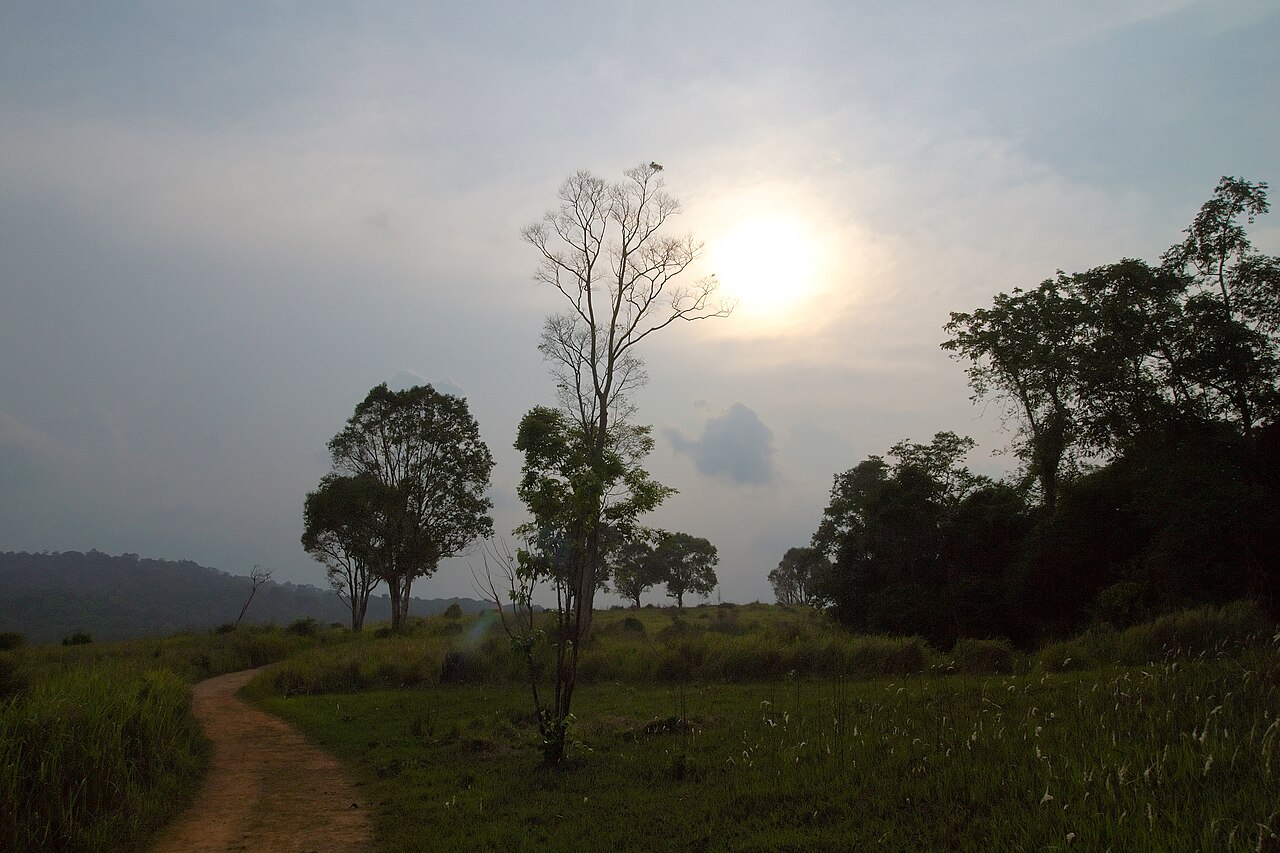
Khao Yai every season
Khao Yai in every light
Whatever season you arrive, there is something worth seeing.
Khao Yai changes with the seasons — misty cool-season mornings with fog over the grasslands, then the Haew Narok and Haew Suwat waterfalls at their fullest and most dramatic in the rains. Each one offers something real, and each one comes with a warning worth reading before you pack.
If you can only pick one window, pick the cool season. The air is cool and comfortable all day, mornings often bring mist, and on the coldest days a sea of fog drifts over the grasslands and into the valleys. Hiking and reaching the viewpoints feels easy rather than a slog, and visibility is long and clear. This is exactly why Bangkok weekenders drive up in their thousands every cool season — and why you need to book accommodation ahead, especially over long weekends and Friday-to-Saturday nights when prices spike and crowds peak. Nights up on the plateau get genuinely chilly, dropping below 15°C, so pack a warm layer.
If waterfalls are your priority, that changes things. To see Haew Narok and Haew Suwat in full flow, come in the rainy season (Jun–Oct): the forest is at its greenest, the falls are at their loudest, and crowds thin out — you just have to handle afternoon downpours, muddy slippery trails, and leeches in the wet forest. The hot season (Mar–May) is quieter and cheaper, with thinner waterfalls and drier forest. Every window has its own logic; it comes down to what you are here for.
The weather, what it delivers, and what you are trading for it — told straight.
This is the answer to "when is Khao Yai at its best" — cool, comfortable air all day, low humidity, and easy hiking up to viewpoints like Pha Diao Dai and Pha Kluai Mai without breaking a sweat. The sky is clear and the mountain views run for miles. Many mornings bring mist, and on a lucky cold dawn you will catch a sea of fog drifting over the grasslands and into the valleys — well worth the early start.
The trade-off you should know about: these are the busiest weeks of the year, especially over long weekends, New Year and Friday-to-Saturday nights. Resorts along Thanarat Road fill fast and rates climb, so book ahead. And the nights up on the plateau are genuinely cold, dropping below 15°C on some nights — if you are camping, pack a proper sleeping bag and a warm layer.
Khao Yai's hot season is warmer and sunnier than the cool season, but because it sits up on high ground it still feels noticeably cooler than Bangkok, particularly in the early morning and at night. The odd early-season shower helps take the edge off. The forest is drier, and the Haew Narok and Haew Suwat waterfalls run much thinner than in the rains. Some days can be a little hazy from agricultural burning in the surrounding lowlands.
The upside is real: crowds thin out and many places drop their rates from the high-season peak. The cafés, vineyards and farms are still easy to enjoy all day. This is a good window if you are coming more for the café-and-winery side of Khao Yai than for the waterfalls, and you want quiet and a lighter price tag.
The rainy season is when Khao Yai's forest is at its greenest, and it is when the Haew Narok and Haew Suwat waterfalls are at their fullest and most dramatic of the year — powerful, loud, and looking the part for the park's big falls. Crowds drop noticeably from the cool season, and the forest after rain is wonderfully fresh. It is the time to come if you want to see Khao Yai at its greenest and most alive.
But there are honest trade-offs. Rain tends to fall heavily in the afternoon and evening, some trails turn muddy and slippery, and a few close for safety — the route down to Haew Narok in particular is best avoided on heavy-rain days. And importantly, there are leeches in the wet forest, so wear leech socks and long trousers, and walk with care. Always check the forecast, and ask park rangers which trails are open before you set off.
Khao Yai is close to Bangkok — under three hours by car — which makes it a top long-weekend destination. New Year, when the cool weather is at its best, is the absolute peak: resorts along Thanarat Road book out weeks ahead and rates hit their annual high. The road up the hill and the park entrance back up with traffic, and the popular cafés have queues out the door.
If you can avoid it, travel midweek instead — you get normal room rates, fewer people and no time lost to traffic. But if you do have to go over a long weekend, book accommodation and tours well ahead, set out early in the day, and leave plenty of extra time to get into the park.
Temperature, rainfall and crowd levels — in one table for easy comparison.
| Month | Temperature | Rain | Crowds | Notes |
|---|---|---|---|---|
| January | 13–28°C | Very low | High (cool season) | Cool, misty · busy weekends |
| February | 15–30°C | Very low | Moderate | Late cool season · still a chance of mist |
| March | 20–33°C | Low | Moderate | Heating up · waterfalls thinning |
| April | 22–35°C | Low–moderate | High (Songkran) | Hottest · Songkran crowds and price spike |
| May | 21–33°C | Moderate | Low | Early rains arrive · forest greening |
| June | 21–32°C | Heavy | Low | Rains in earnest · falls building · leeches |
| July | 21–31°C | Heavy | Moderate (long weekends) | Green forest, full falls · slippery, leeches |
| August | 21–31°C | Heavy | Moderate (Mother's Day) | Still wet, waterfalls at their best · leeches |
| September | 21–31°C | Heaviest | Low | Wettest month · some trails may close |
| October | 20–31°C | Heavy | Moderate (long weekends) | Late rains, still green · cooling down |
| November | 17–29°C | Low | Moderate | Cool season begins, clear skies · lovely weather |
| December | 14–28°C | Very low | Highest (New Year) | Coolest, misty · New Year is the busiest |
Two questions that can decide your whole Khao Yai trip — answered straight, both of them.
If you have come to Khao Yai for Haew Narok (the park's tallest falls, a deep multi-tier drop) and Haew Suwat (the lower one made famous by the film "The Beach"), come in the rainy season or just after. The falls run at their fullest and most powerful — far more impressive in sight and sound than in the dry months.
Mind the safety side, though. On heavy-rain days the water surges, some spots are signed against swimming, and the trail to Haew Narok can close temporarily. Paths get slippery and there are leeches, so bring leech socks and shoes with good grip, and always heed the rangers' notices. Both falls sit inside the park, so you will need your own vehicle to reach them.
Khao Yai accommodation is cheapest in the hot season and on weekdays during the rains, as these are quieter than the high season. Resorts along Thanarat Road and guesthouses in Pak Chong town often run promotions, and the cafés and vineyards don't have long queues.
The trade-off is that the hot season has thinner waterfalls and drier forest, while the rains mean afternoon showers and leeches to plan around. But if you are flexible on dates, staying in Pak Chong town — cheaper than the resort strip near the park — makes this an easy-on-the-wallet way to see Khao Yai without fighting the crowds.
Khao Yai is close to Bangkok, so the crowds arrive all at once on holidays. Here is what that means for your trip.
New Year is Khao Yai's peak. The cool weather is at its loveliest and everyone wants to come up for the mist and the chill, so resorts along Thanarat Road book out weeks ahead and rates hit their annual high. The hill road and the park entrance back up with traffic, the famous cafés have queues, and the in-park campsites are hard to reserve. If you genuinely want the New Year-on-the-mountain atmosphere, plan and book far in advance; if you don't need it, shift to early January or February, when it is still cool but with fewer people.
Songkran is a long holiday right in the middle of the hot season, and many Bangkok residents head up to Khao Yai to escape the heat for cooler air. Rooms fill and prices rise, and the hill road gets busy. Even though the waterfalls run low at this time, the cafés, vineyards and farms stay lively. If you are going during Songkran, book accommodation ahead, set out early, and allow plenty of extra time for traffic.
Every long weekend of three days or more, Khao Yai is busy, because it is under three hours' drive from Bangkok — just right for a short trip. Accommodation gets harder to book, the popular cafés and photo spots are packed, and cars queue at the park entrance. If you want a relaxed trip, weekdays are the best answer. But if you must go on a holiday, book ahead, plan your route, and start early before the crowds build.
These are reasons to time your visit, not reasons to avoid it.
The highlight of Khao Yai's cool season is the morning mist. On the coldest days a sea of fog drifts over the grasslands and through the valleys, and getting out before sunrise gives you the best chance of catching it. The fog doesn't appear every morning — it depends on the weather — but the cool season is when the odds are best, paired with comfortable cool air all day long.
If rain and leeches don't put you off, the rainy season is when Khao Yai is greenest and most alive. Haew Narok and Haew Suwat run full and powerful, the forest after rain is fresh, mushrooms and plants flush across the forest floor, and animals come out to graze on the grasslands. Just bring leech socks and a rain jacket, and check which trails are open with the rangers before you hike.
Wildlife can be watched year-round, with dawn and dusk the times animals come out to graze on the grasslands — deer, barking deer and sometimes wild elephants. The night safari (a guided spotlight drive) is booked at the visitor centre; check times and price on the day. The key points: don't feed the animals, keep your distance, and remember that wild elephants use the roads at night — drive slowly and always give way. Sightings come down to luck.
Not exhaustive — just the things that actually matter for Khao Yai.
Whatever season you arrive, there is something worth seeing.