Home Khao Yai Thailand Khao Yai & Korat Hotels About
Home  ›  Asia  ›  Thailand  ›  Khao Yai  ›  Khao Yai National Park
🌳 Khao Yai · Attraction Guide

Khao Yai National Park
Thailand's first park, a UNESCO forest where elephants still walk the road

Waterfalls, viewpoints, grasslands where deer come down to graze, and genuinely wild animals — in one of the largest forests within reach of Bangkok. Here is the entry fee, the gate hours, the circuit to do, and what to know before you drive up.

What it is

Why Khao Yai is the forest Thais love most

Let's be clear up front: Khao Yai is not just another day-trip near Bangkok. It is Thailand's very first national park, established in 1962, and later inscribed as a UNESCO World Heritage site within the Dong Phayayen–Khao Yai Forest Complex. It covers more than 2,000 square kilometres across four provinces, and the main gate most people use is in the north, on the Pak Chong side of Nakhon Ratchasima province.

What makes Khao Yai special is that it is real forest with real animals — not a zoo. There are wild elephants, gibbons, hornbills, sambar deer, barking deer and macaques, and on a lucky day a sun bear or a leopard. These animals live their own lives in the forest. On the Nong Phak Chi grasslands at dawn or dusk you may see a herd of deer come down to graze, and on the road at night you may have to stop your car and let an elephant pass — that is both the appeal and the responsibility that come together here.

This page is the practical guide to the park itself: the entry fee, the gate hours, the circuit to do in a day, wildlife and the night safari, camping, the leech reality in the wet season, and the safety rules. The cafes, wineries and farms in the surrounding belt live on their own pages — because Khao Yai really is two trips in one.
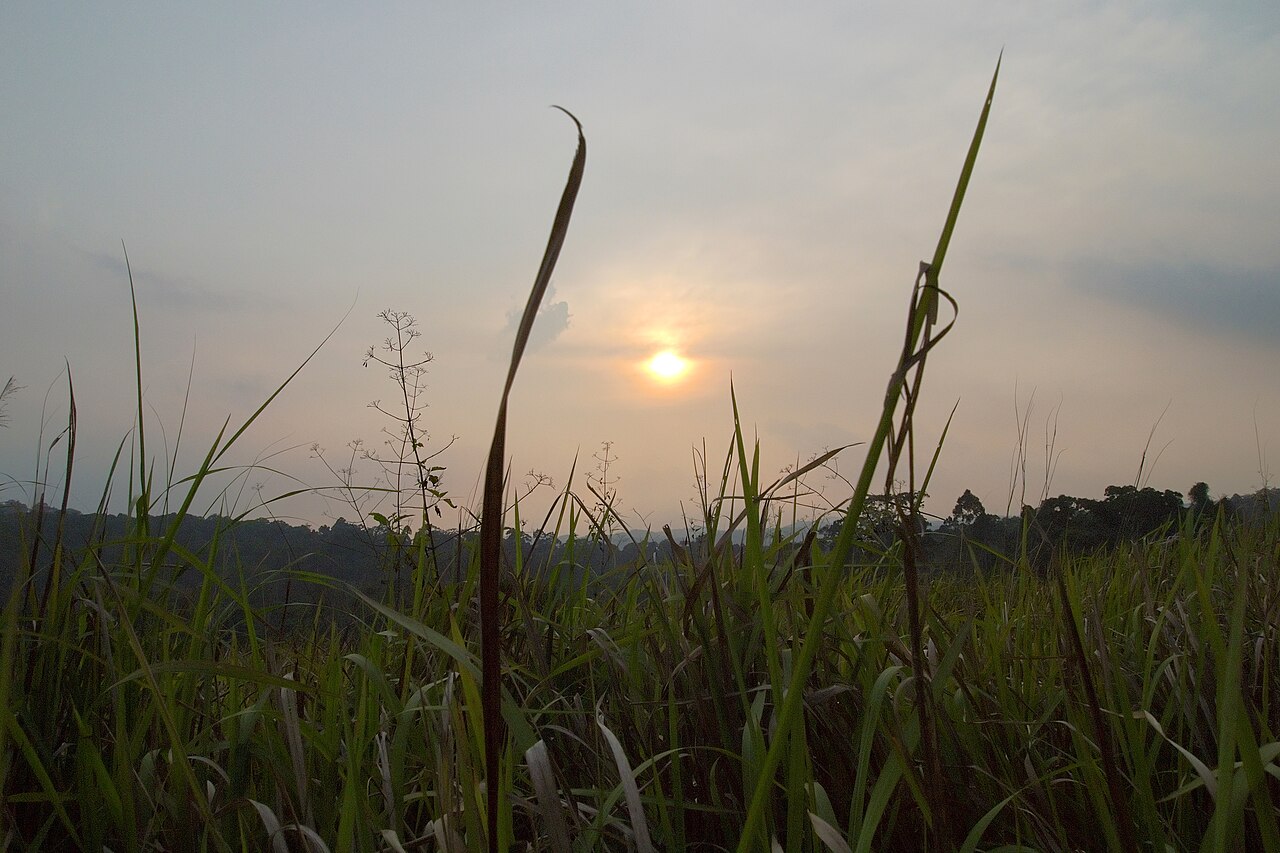
Khao Yai National Park grasslands at sunset, golden light through tall grass with a distant forest line
The Khao Yai grasslands at dusk — when deer and elephants come down to graze, and when the cool-season fog likes to roll in
🎫
Entry (foreigner)
~฿400 / person
Thai ~฿40 · children half · car +~฿50 (prices change)
🕕
Gate hours
~6 am – 6 pm
Daily · arrive before midday to do the circuit
🎟️
Ticket valid
1 day
Camp or stay inside and it is valid 3 days
🌤️
Best season
Nov–Feb
Cool, misty, busy · Jun–Oct rains fill the falls
🐘
Wildlife
Elephants, gibbons, hornbills, deer
Real wild forest — keep your distance, never feed
🚗
Getting around
You need a car
No public transport inside · drive, rent or tour
Before you go: entry fees and gate hours change with DNP announcements — check the latest before you set out, and carry cash for the gate, as some entrances do not take cards.
The circuit

5 stops not to miss in a day

A single main road threads past most of them — plan the order well and you can do the lot in a day, but you will need a car.

Wildlife + overnight

Wildlife, the night safari and camping in the forest

🦌 Wildlife and the night safari

Khao Yai is genuine forest. The animals you will see most often are deer, barking deer, macaques, gibbons and hornbills, with wild elephants appearing now and then, especially on the grasslands at dawn and dusk and on the road at night. To be honest, though, this is nature, not a show — whether the animals turn up is down to luck.

The night safari is a ride in a park pickup truck, ranger-led and spotlit, generally running in the evening (roughly 7 to 9 pm) for about an hour. Book at the visitor centre before 6 pm. It is priced per truck for a group (around ฿500–600 per truck seating several people — check the current rate on site). It is a watch-from-the-truck activity, so keep it respectful: no shining lights in animals' faces, no harassing wildlife.

⛺ Camping inside the park

Khao Yai has two main campgrounds, Pha Kluai Mai and Lam Takhong, both with toilets, service points and tents and bedding for hire — the best way to do it if you want to wake up to the morning fog and be inside the forest while the animals are out. Book in advance through the Department of National Parks (DNP) system, especially in the cool season and on long weekends, when sites fill up fast.

Nights up top are genuinely cold, particularly December and January, so bring warm layers and a good sleeping bag. Store food securely in your car or a box because macaques and other animals will raid it, and do not leave litter — carry a rubbish bag and take it out with you.

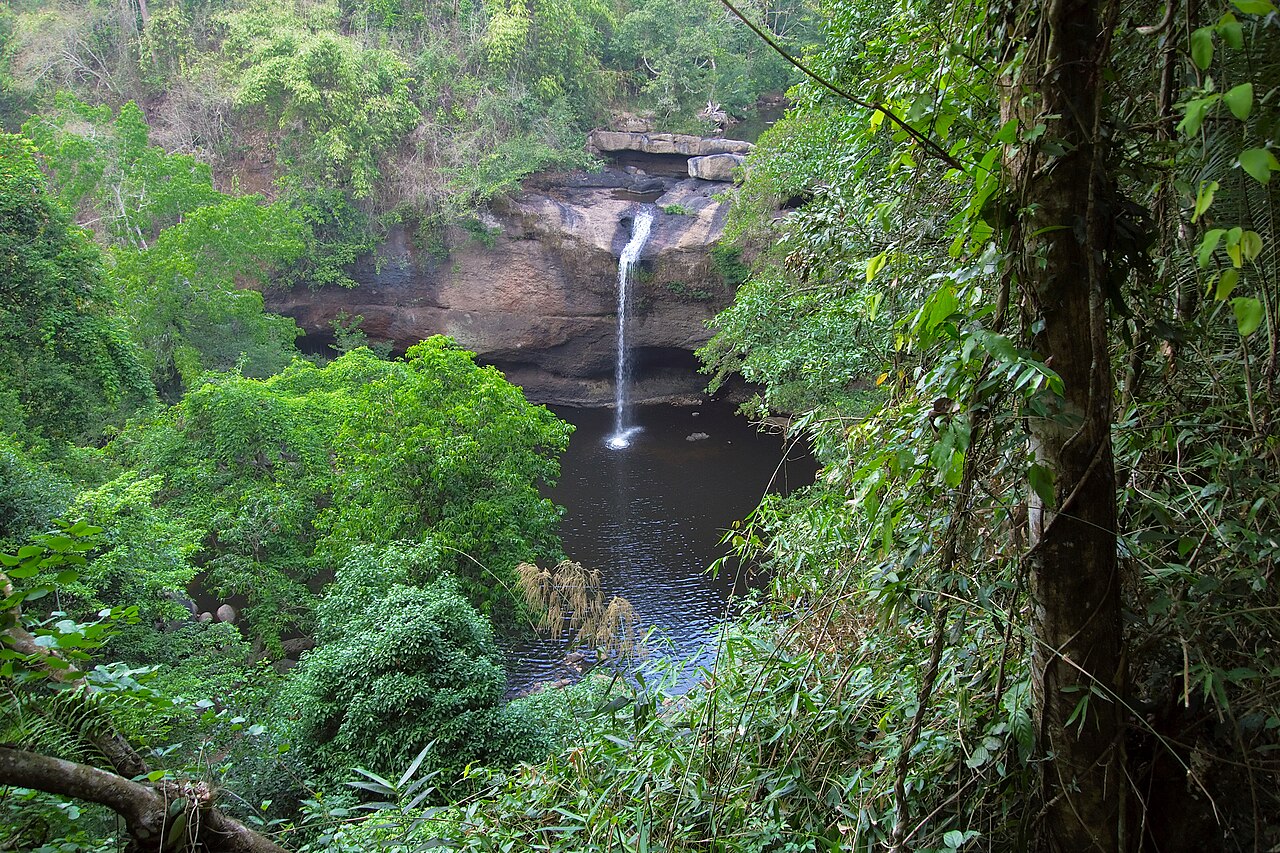
Haew Suwat Waterfall, Khao Yai National Park — water dropping into a pool surrounded by dense green forest, the 'The Beach' film waterfall
Haew Suwat Waterfall — fullest and most dramatic after the rains; in the dry season the flow thins out

🪱 Leeches and slippery trails in the wet season — straight talk

From June to October the forest is at its greenest and the waterfalls at their fullest and best — but it comes with a catch: leeches in the wet forest along the walking trails. Bring leech socks, wear long trousers, and carry salt or balm to help leeches drop off. Leech bites are not dangerous, but they bleed and itch.

Some trails are slippery and some close temporarily after heavy rain, especially the steep Haew Narok staircase trail, which is dangerous when the water is high. Watch the warning signs and listen to the rangers, always. Do not swim where signs forbid it — flash floods come fast and there have been accidents.

⚠️ Wildlife safety — the rules to remember

Never feed any animal, especially macaques and elephants. Feeding makes them aggressive, brings them up to cars, and ends up dangerous for both people and the animals themselves. Keep food and plastic bags out of sight — macaques will grab things from a car with an open window.

Wild elephants use the roads at night. Drive slowly, dip your lights, never use your horn or flash, and always give the elephant the road. If one approaches, reverse slowly — do not rev the engine or make loud noises, and keep as much distance as you can. More on driving in Khao Yai and the trickier spots is on the getting around Khao Yai page.

Getting there and in

How to reach Khao Yai — and why you need a car

Straight talk first: Khao Yai is car country. It is about a 2.5–3 hour drive from Bangkok via Motorway 6 / Mittraphap Road to Pak Chong, then up Thanarat Road (Route 2090) to the northern gate. There is no public transport inside the park, and there is no BTS/MRT/skytrain or metro anywhere in the region — but the good news is that the train reaches Pak Chong station, which is a comfortable, scenic way to get to the area.

🚗
Drive (the main way)
Bangkok ~2.5–3 hr
Motorway 6 / Mittraphap → Pak Chong → up Thanarat Road to the north gate — easiest, since you need a car in the park anyway
🚆
Train to Pak Chong
NE line · comfortable, scenic ride
From Krung Thep Aphiwat / Hua Lamphong to Pak Chong, then a songthaew, taxi, charter or tour up to the park
🚐
Bus / minivan
Mo Chit → Pak Chong
Several departures a day; get off at Pak Chong and arrange wheels up to the park the same way
Tip: if you are not driving yourself, the easiest option is to charter a car or songthaew by the day from Pak Chong, or join a tour that includes the safari truck — Grab is limited here and the sights are far apart. See all the options on the getting to Khao Yai page, and how to get around once there on the getting around page.
Where to stay

Where to stay near Khao Yai park

Most options sit along Thanarat Road near the gate, or in Pak Chong town — pick by style and budget.

Frequently asked

FAQ · Khao Yai park before you go

How much is the Khao Yai entry fee and what are the gate hours?
The foreigner entry fee is around ฿400 per adult (children roughly ฿200); Thai nationals pay about ฿40 (children ฿20), plus a vehicle fee of about ฿50 per car. The gates are open roughly 6 am to 6 pm daily (cars already inside may leave later). A standard ticket is valid for one day, but if you camp or stay inside the park it is valid for three days. Prices change, so check with the Department of National Parks (DNP) before you go.
Do I need a car, or can I use public transport inside the park?
There is no public transport inside the park, and no BTS/MRT or metro anywhere in the region — you need a car, whether self-drive, a rental, a chartered taxi or songthaew by the day, or a guided tour or safari truck. The sights are spread out and the cafes, farms and wineries are strung along Thanarat Road. The good news: the train reaches Pak Chong station, a pleasant way to get to the area, but from there you still need wheels to get up to the park. See getting to Khao Yai.
When is the best time to visit Khao Yai?
The cool, dry season (Nov–Feb) is the peak: cool air, misty mornings, the sea of fog over the grasslands, comfortable hiking and clear viewpoints — but it is crowded and campsites fill fast, especially weekends in December–January and on long weekends, and nights get genuinely chilly. Mar–May is hot and hazy with thinner waterfalls, but quieter and cheaper. Jun–Oct is rainy: lush, with the waterfalls at their fullest, but with afternoon downpours, leeches in the wet forest, and some trails muddy, slippery or temporarily closed. More detail on the best time to visit Khao Yai page.
What do I do if I meet a wild elephant on the road?
Wild elephants use the park roads, especially at night. Drive slowly, dip your lights, switch off the engine if needed, never use your horn or flash, and always give the elephant the road, keeping at least several car lengths back. Never feed any animal, especially macaques and elephants, because it makes them aggressive and dangerous. If an elephant approaches, reverse slowly and calmly — do not rev the engine or make loud noises.
Can you camp in Khao Yai, and how do you book?
Yes. The park has two main campgrounds, Pha Kluai Mai and Lam Takhong, both with toilets and service points where you can rent tents and bedding. Book in advance through the Department of National Parks (DNP) system, especially in the cool season and on long weekends when sites fill quickly. Nights are cold, so bring warm layers, and store food securely because macaques and other animals will raid it.
Klook · Khao Yai tours & safaris

Khao Yai tours from Bangkok + park wildlife safaris — book ahead for peace of mind

Day trips from Bangkok, wildlife tours with a night safari, and Bangkok–Pak Chong transfers — handy if you are not driving yourself, because you need a car inside the park.

Browse Khao Yai tours on Klook →
Wherebest is an affiliate partner of Klook — we may earn a commission when you book through our links, at no extra cost to you.