The two waterfalls everyone asks about in Khao Yai National Park: one a clear jungle pool that once made the big screen, the other a tall multi-tier drop you climb down a long staircase to reach — both at their fullest and loudest in the rains.
Honestly, going up to Khao Yai without stopping at a waterfall feels like leaving the job half-done — and of all the park's falls, the two names people ask for most are Haew Suwat and Haew Narok. The interesting part is that they are completely different experiences. Haew Suwat is a low single-drop falls with a pool below, easy to reach. Haew Narok is the tallest waterfall in the park — a much longer walk and a far steeper staircase down.
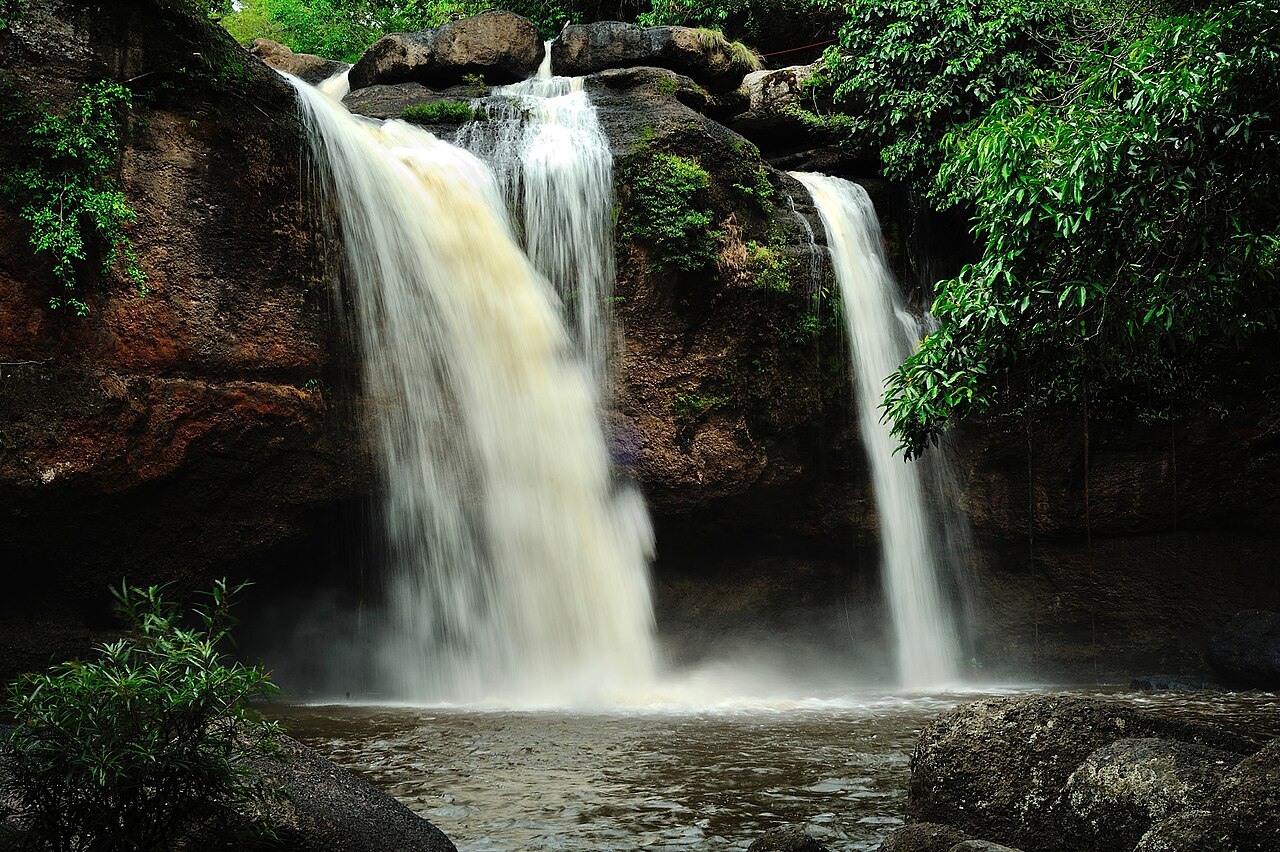
Haew Suwat is the more famous of the two, partly because it appeared in the Hollywood film 'The Beach' (the cliff-jump scene with Leonardo DiCaprio). It is formed by the Lam Ta Khong stream dropping about 20 metres over a cliff into a pool below, reached from the car park down a few short flights of concrete steps. If you want to see a Khao Yai waterfall without much effort, this is the one.
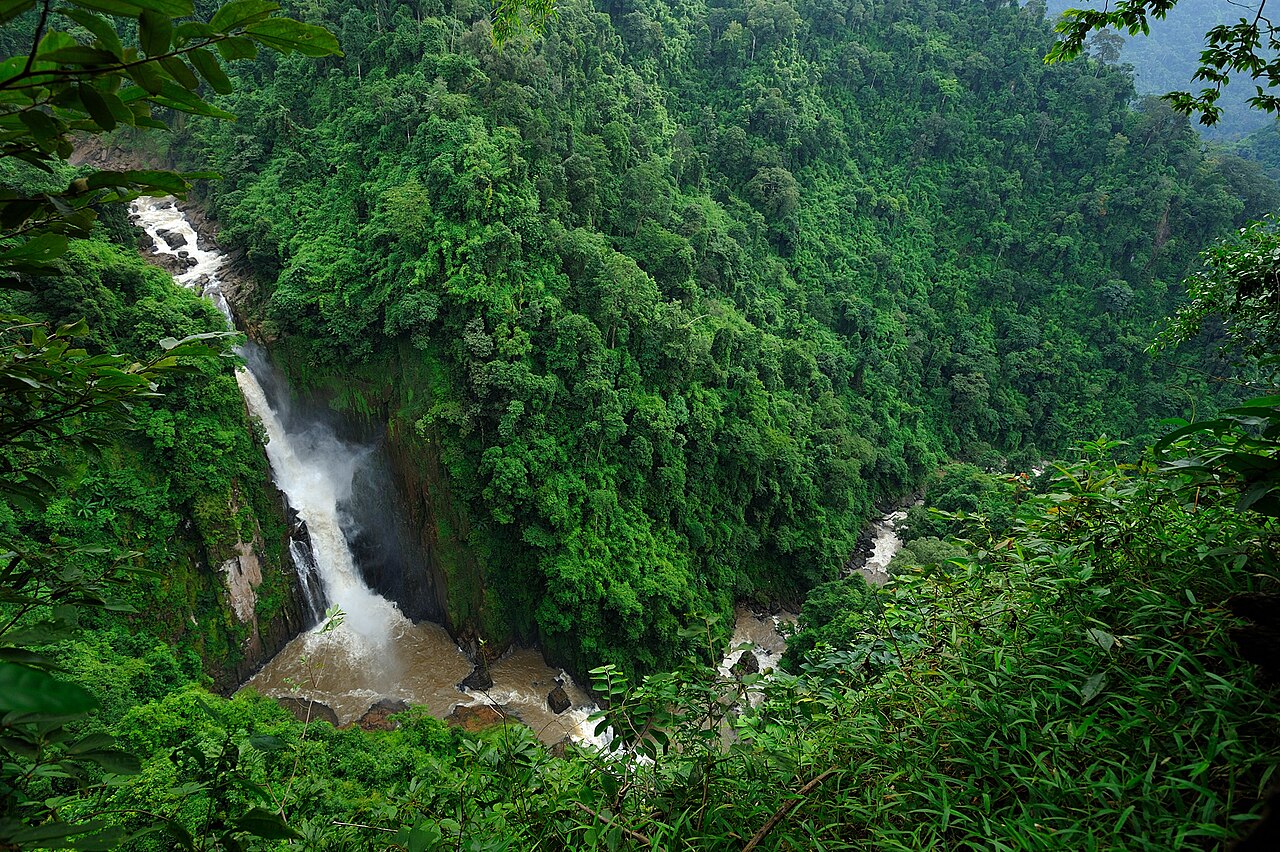
Haew Narok is a different mood entirely — the tallest waterfall in Khao Yai, dropping in stages through a deep, jungle-rimmed gorge. From the car park you walk a trail of roughly 1 kilometre, cross a footbridge over a stream, then take a steep staircase down to a viewing deck. It is more work, but the payoff is worth it, especially in the rainy season when the water thunders over the cliff and mist drifts across the whole gorge.
If your time is short, choose by your legs and the weather — these two are not the same outing.
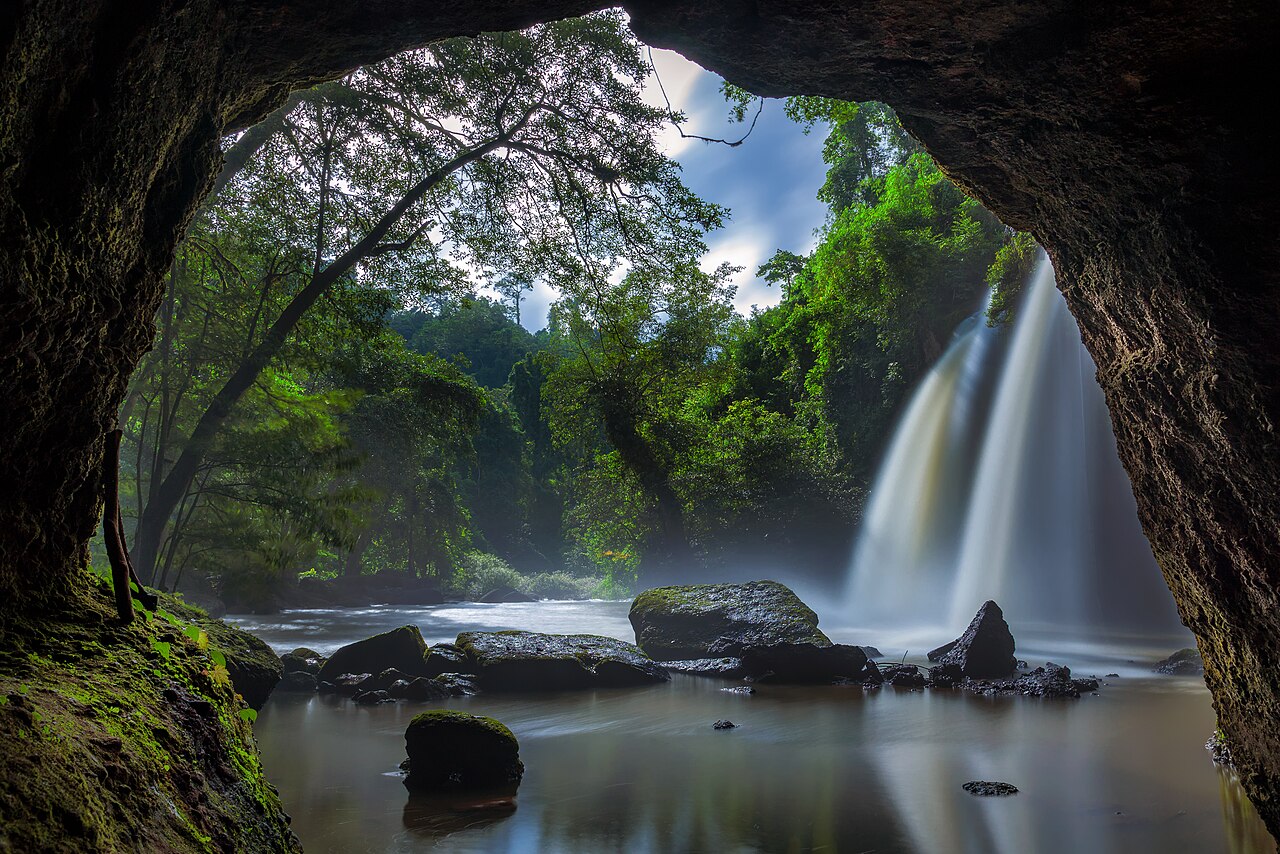
The best-known waterfall in Khao Yai. The Lam Ta Khong stream pours about 20 metres over the cliff into a wide pool, reached from the car park down a paved path and a few flights of steps. The classic photograph is taken from beneath a rock overhang, looking out at the falls with the forest behind. The cliff-jump scene in 'The Beach' was filmed here — but these days swimming is prohibited in many periods for safety, so check the posted signs and ranger warnings before doing anything.
The tallest and most powerful falls in the park, dropping in stages through a deep, forested gorge. From the car park you walk a trail of around 1 kilometre, cross a wooden footbridge over a stream, then descend a fairly steep, narrow staircase to the viewing deck. The walk down is enjoyable; the climb back up is genuinely tiring, so keep some energy and time in reserve. In the rains the falls fill the cliff face and look spectacular — but the stairs and trail get slippery, and on days of heavy rain or flash flooding rangers may close the descent for safety. If it is closed, do not push past it.
If you are heading to Haew Suwat anyway, add Pha Kluai Mai Falls nearby. It is a smaller, lower cascade linked by a short nature trail, good for an easy stroll among wild orchids and the stream. There is no steep staircase like Haew Narok, which makes it a gentle option for families or anyone who would rather not do a hard walk.
Both waterfalls are fullest and most dramatic in and just after the rains, roughly June to October, when rain has built up in the forest catchment and the water thunders over the cliffs in clouds of mist. This is when the scene is at its most powerful — the trade-off being afternoon downpours, muddy trails and leeches in the damp forest.
The cool season, November to February, is the peak time in Khao Yai (cool air, misty mornings, comfortable walking, bigger crowds). The falls still carry some water from the late-year rains, then taper off into the dry months. March to May is hot, the forest is drier and the falls run at their thinnest — pleasant walking and fewer people, but underwhelming if you came for big water. See the full month-by-month picture in our best time to visit Khao Yai guide.
The rocks around the falls are very slippery, especially in the wet season. Walking on wet rock or wet stairs takes real care — wear shoes with good grip. Do not climb over barriers or step off the trail to get a photo. Water that looks shallow can hide a stronger undercurrent than you would expect.
On swimming — follow the posted signs and ranger warnings first. In many periods, particularly the rainy season when water floods quickly and dangerously, signs prohibit swimming. Do not jump or enter the water where signs forbid it. And if heavy rain sets in or rangers announce the descent is closed (which can happen at Haew Narok), do not go down.
While you drive to the falls you are in a park with real wild animals. Do not feed them (especially the macaques around the car parks), carry every scrap of rubbish out, and above all: wild elephants use the park roads, especially at night — drive slowly and give way to them, always. For the full picture on wildlife and park rules, read our Khao Yai National Park guide.
Both falls are inside Khao Yai National Park, on the side reached from the Nakhon Ratchasima (Pak Chong) gate. You need a car — the two waterfalls are in different parts of the park, some distance apart, and no public transport runs between them inside the park.
Shoes with good grip (rocks and stairs are slippery, especially in the wet) · drinking water (the climb back up from Haew Narok is tiring) · a rain jacket or small umbrella, as it rains most afternoons in the wet season · leech socks or repellent for June to October · a waterproof pouch for your phone and camera · and a light long-sleeved top against insects. Carry your rubbish back out of the park.
Come in the morning — softer light, fewer people, and time to circuit a waterfall, a viewpoint and the grasslands comfortably before the afternoon rain (in the wet season). If you also want to watch animals on the grasslands, early morning or late afternoon is when you are most likely to see deer grazing. Read more on wildlife and the night safari in our Khao Yai wildlife & night safari guide.
Most people stay along Thanarat Road near the park gate, or in Pak Chong town — choose by budget and style.