Guilin is a landscape that changes face with the seasons — misty karst peaks in spring, full rivers and dramatic cloud in summer, the famous golden Longji terraces in autumn, and cool, low-water calm in winter. This guide tells you straight which month gets you the view you came for.
If you can only pick one month, pick October (after the 7th). Temperatures sit at a comfortable 17–26°C, rainfall is low, skies are clear — and, crucially, this is when the Longji rice terraces turn gold across the whole valley, the single most-photographed sight in the region. The one catch: avoid the first week. October 1–7 is China's National Day Golden Week, when hundreds of millions of domestic travellers move at once and hotel prices peak.
If October doesn't fit, April is beautiful in a different way — 18–26°C, fresh green hillsides, frequent morning mist over the peaks, and the terraces beginning to fill with mirror water that reflects the sky. Summer (June–August) and winter (December–February) each have their charm, but you trade for it: heavy rain in one, low water and cool air in the other.
The weather, what it delivers, and what you are trading for it — told straight.
Li River · Spring
Great
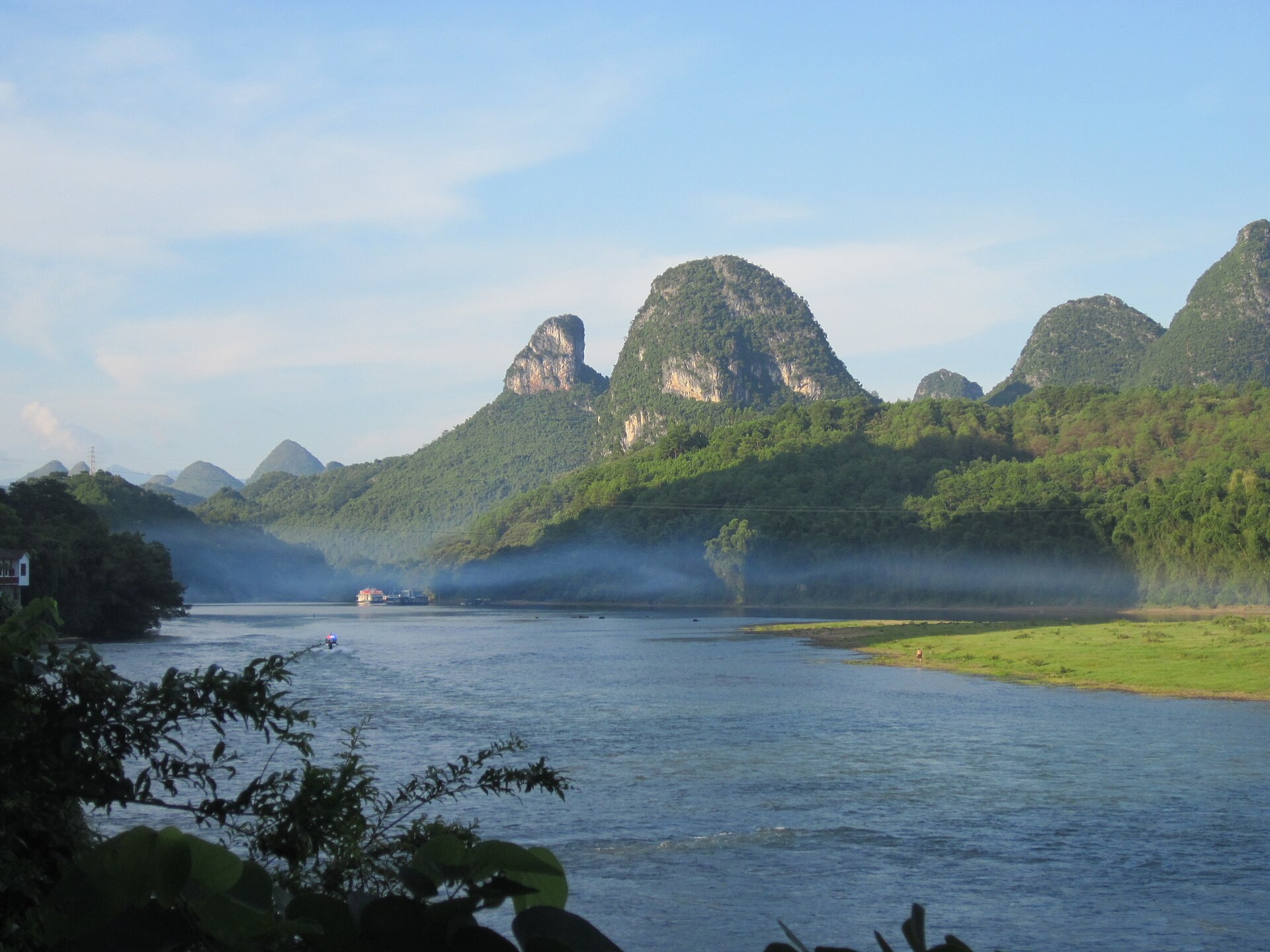
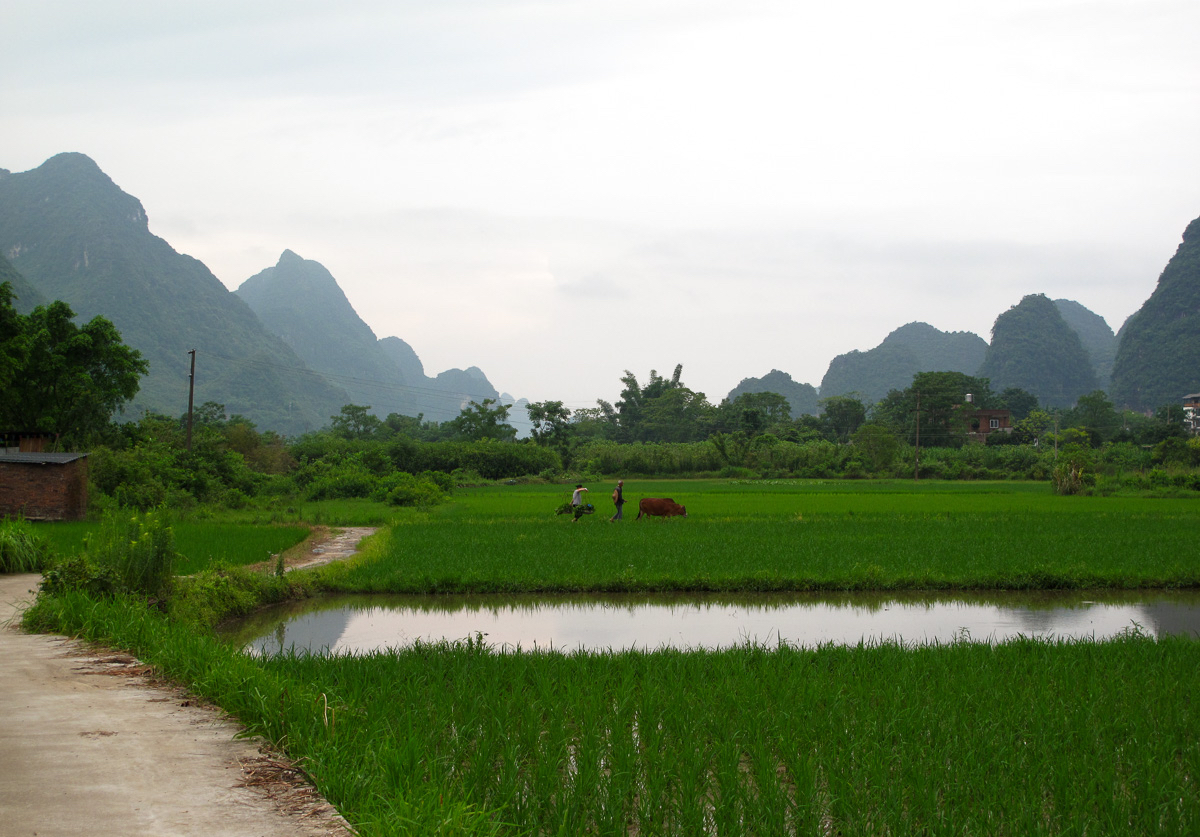
A season many people love for one thing: mist. March is soft and atmospheric, with a thin veil of cloud draping the karst peaks almost every morning and making the Li River look like an ink painting. Crowds are still thin and prices are good, and the landscape greens up fully by April — a fine time to cruise the Li River or cycle the Yulong River out at Yangshuo.
From late April through June it's planting season, when the Longji terraces fill with mirror water that reflects the sky and clouds — a different kind of beauty from the golden harvest shot. May warms up and the rain starts to build, and the Labour Day Golden Week (1–5 May) brings a rush of domestic travellers.
Yangshuo · Summer
Come prepared
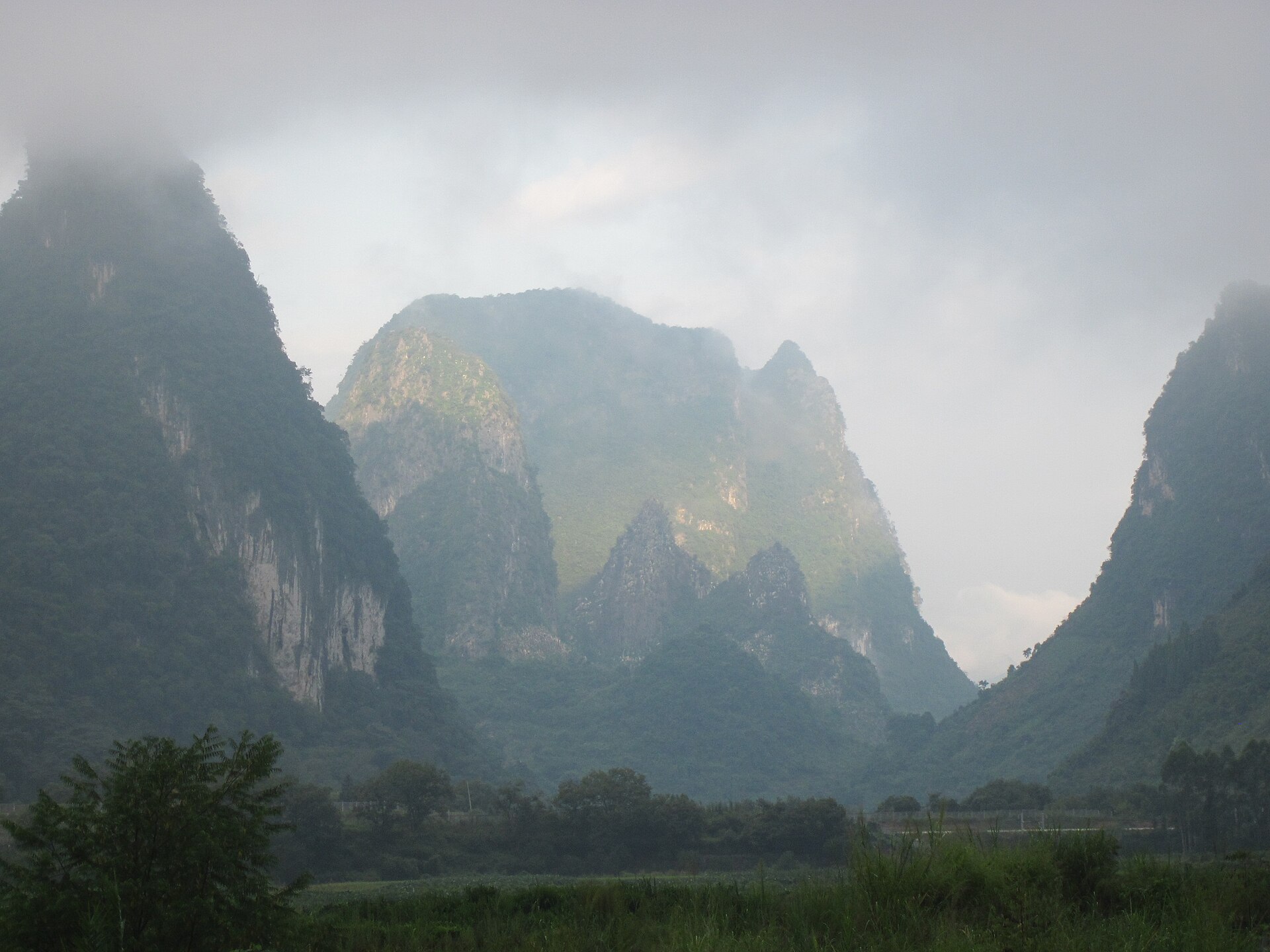
Guilin summers are hot and humid — daytime highs of 28–34°C, high humidity, and the heaviest rain of the year, especially in June. Heavy downpours can affect cruises on some days, and in some years there is flash flooding in the city or around Yangshuo. But this is also when the Li River runs fullest, the karst is at its greenest, and the mist that rises after rain makes the scenery look like a film set.
It does take preparation, but it isn't a write-off — check the forecast daily, do your exploring early or just after the rain, and always carry an umbrella and a rain jacket. Keep an indoor backup like Reed Flute Cave or a café in your pocket for the heaviest hours. When the sun breaks through after a storm, the views are as clear and green as they ever get.
Longji terraces · Autumn
The best
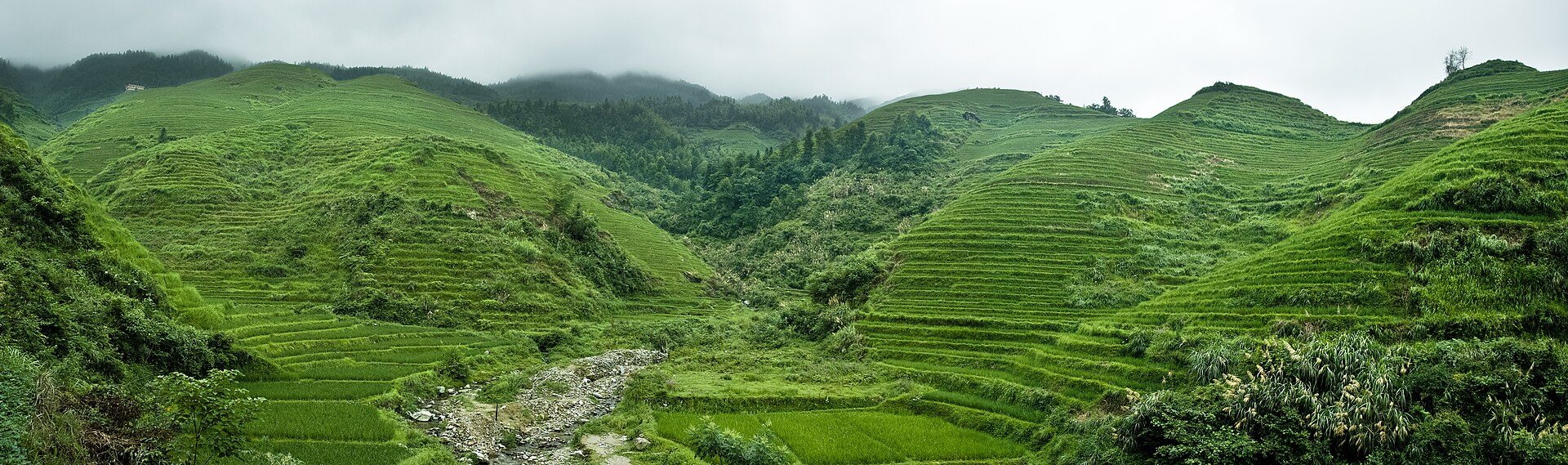
This is Guilin at its finest. The summer heat breaks, the air turns cool and comfortable, rainfall drops sharply, the skies clear — and, most importantly, from mid-September to early-or-mid-October it's harvest time, and the Longji terraces turn gold across the entire valley, the shot most travellers come to Guilin for. You can explore the city, cruise the Li River and climb up to Longji all day without flagging.
Late October into November cools further, the Li River is still at a good cruising level, and crowds thin out once Golden Week ends — this is the most comfortable, best-value stretch of the year. The one caveat: fog and cooler mornings and evenings begin to return in late November.
Sun & Moon Pagodas · Winter
Its own kind of charm
Guilin winters are not bitterly cold — averages run 5–12°C — but humidity and river wind make it feel cooler than the numbers suggest, and skies are often grey with fog or drizzle. The key thing to know is that the Li River runs low, especially on the upper stretch near the city. On some days the big cruise boats have to start further downstream (for example from Mopanshan pier), which shortens or reroutes the trip.
The upsides are real: the fewest tourists of the year, the lowest hotel prices (outside Chinese New Year), and in some winters a rare light dusting of snow on the Longji terraces. Chinese New Year (late January or February) is festive but expensive, with many small shops closing for one to two weeks.
Temperature, rainfall, crowds and the verdict — in one table for easy comparison.
| Month | Temperature | Rain | Crowds | Verdict |
|---|---|---|---|---|
| January | 5–11°C | Low | Low | Cool, damp, foggy · low Li River water · cheapest hotels |
| February | 6–13°C | Low–moderate | High (CNY) | Chinese New Year — shops close, crowds · still cool and damp |
| March | 10–18°C | Moderate | Low | Beautiful misty karst · thin crowds, good prices |
| April | 16–26°C | Moderate | Moderate | Excellent weather · lush green · terraces filling with water |
| May | 20–29°C | Moderate–heavy | High (Labour Day) | 1–5 May crowds · mirror-water terraces · rain building |
| June | 23–31°C | Heavy (wettest) | Moderate | Rainiest month · full rivers · watch for flooding |
| July | 25–34°C | Heavy | High (holidays) | Hot and humid · karst at its greenest · thunderstorms |
| August | 25–34°C | Moderate–heavy | High (holidays) | Hottest, most humid · busy domestic season |
| September | 21–30°C | Moderate | Moderate | Heat eases · terraces start turning gold late in the month |
| October | 17–26°C | Low | High (Golden Week) | 1–7 Oct: peak crowds · after 8th: best of the year, golden terraces |
| November | 11–20°C | Low | Moderate | Cool and pleasant, thinner crowds · fog returns late in the month |
| December | 7–14°C | Low | Low | Cool, foggy · low river water · low prices, rare Longji snow |
Figures are typical monthly high–low ranges drawn from multi-year climate data; any given year may differ. Check the forecast before you travel.
China's national holidays generate the largest annual human movements on Earth. Here is what that means for your trip.
China's largest holiday. Hundreds of millions of people travel to their home towns and tourist spots at once. The atmosphere is genuinely festive — lanterns and celebrations — but hotels charge peak prices, small restaurants and local shops close for 7–14 days, and trains and flights book out weeks ahead. It also falls in the cool, low-water season for the Li River. To experience the festival itself, plan everything well in advance; for a normal trip, pick a different time.
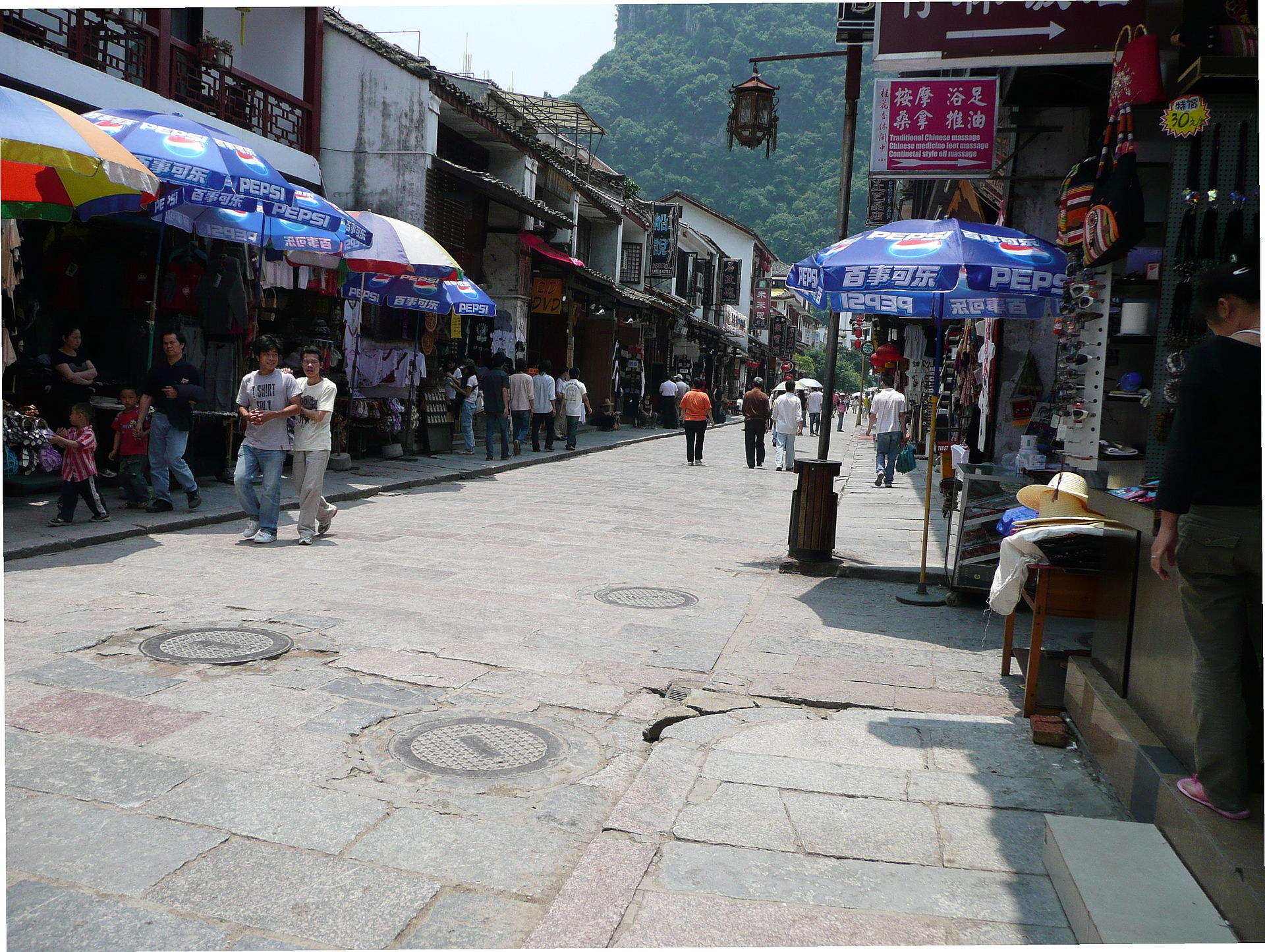
China's second major holiday window. Domestic tourism surges; honeypots like the Li River, West Street in Yangshuo and the Longji terraces become difficult to walk through, and queues for cruises and the Longji shuttle buses grow long. Hotels fill and prices rise by 30–60%. If you must travel during this period, book accommodation 4–8 weeks ahead and brace for the crowds.
The largest Golden Week of the year — hundreds of millions of domestic trips occur in this single week, and Guilin is one of the country's most popular destinations. The Li River and Longji become so crowded that walking slows to a shuffle, and hotel prices hit their annual peak. The weather is excellent and the terraces are gold, though, so if you book well ahead and accept the crowds it's not impossible — or simply wait for 8–31 October, when the weather stays just as good, the terraces are still gold, and the crowds thin noticeably.
These are reasons to time your visit, not reasons to avoid it.
When the rice ripens, the whole Longji (Longsheng) valley turns golden yellow — the most photographed scene in the region. Travellers and photographers head for the Ping'an and Dazhai viewpoints, and on some days you can still see villagers harvesting by hand. The mirror-water reflections come earlier, around mid-April to June after planting, and some winters bring a light snowfall. The harvest can shift by one to two weeks with the weather each year, so check before you go. See our full Longji rice terraces guide
The cruise down the Li River from Guilin to Yangshuo passes the karst peaks that grace book covers and the 20-yuan banknote. April to early November brings the best conditions — good water, green karst and lower rainfall in autumn. In winter the water drops and the boats may need to change their starting pier or run a shorter route, so confirm before booking. Read our full Li River cruise guide
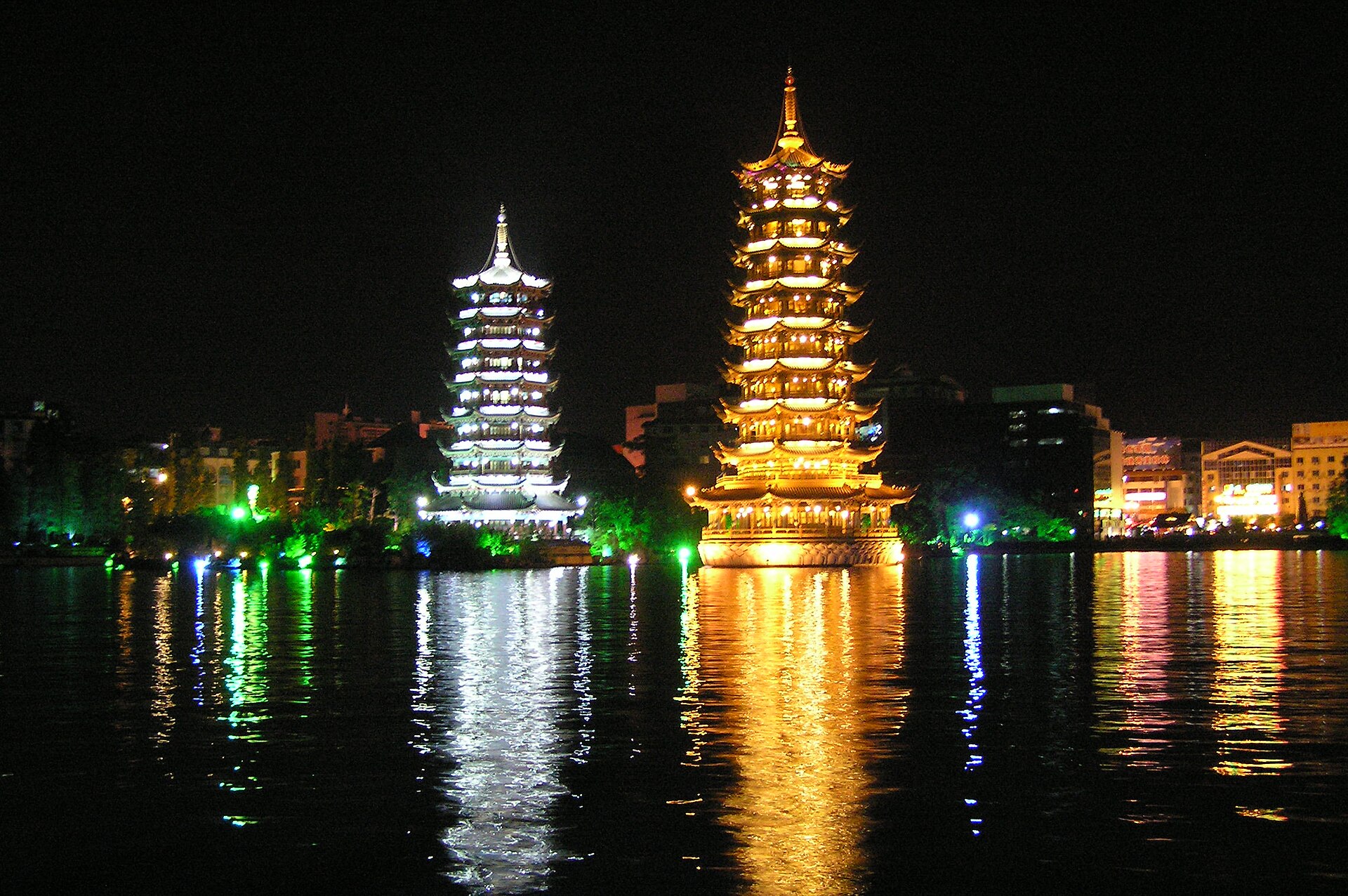
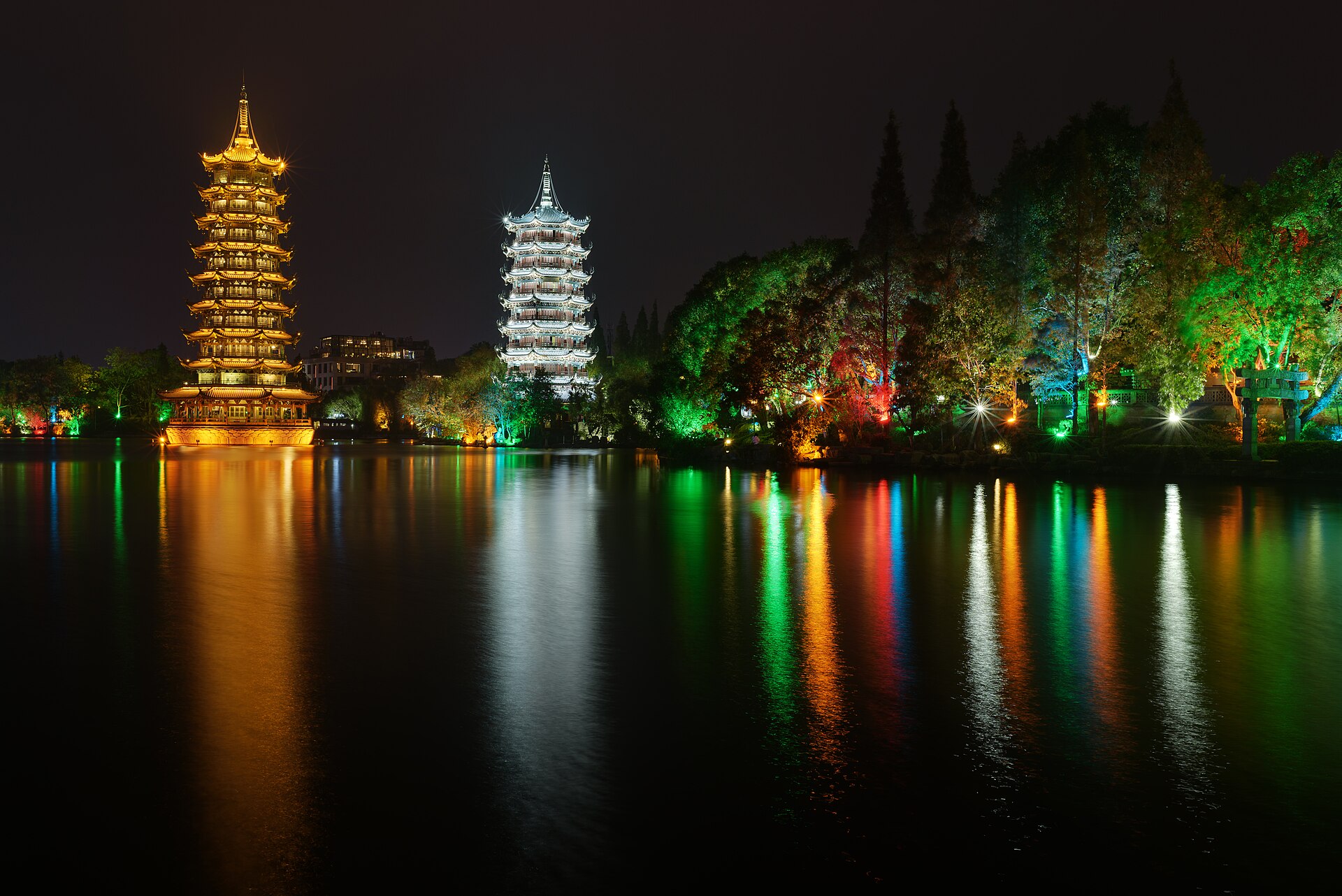
The Two Rivers and Four Lakes network in the heart of Guilin lights up each evening, the golden Sun Pagoda and silver Moon Pagoda glowing in the still water. You can stroll the lakeside or take a night boat any time of year, regardless of the season — it stays beautiful even on grey evenings and through the winter. See all Guilin attractions
Not exhaustive — just the things that actually matter for Guilin.
Whatever month you arrive, this karst landscape always has something worth seeing.