This is the city where yum cha — sitting down to morning tea and ordering dim sum basket by basket — was born. At dawn the whole town is waiting on translucent har gow, hot char siu bao, rice rolls made to order and silky sampan congee. It isn't just breakfast; it's a ritual locals have kept for over a century.
The dim sum you've eaten in Bangkok, Hong Kong or any Chinatown — its culture starts here. Yum cha (饮茶), or zao cha (早茶), is the Cantonese tradition of sipping Chinese tea while ordering dim sum basket by basket, a habit that goes back to the Qing dynasty and became the heart of daily life in Guangzhou. Locals don't simply "eat breakfast" — they "go for tea": they linger, chat, read the paper, and bring three generations of family around one table.
Breakfast here lives in two worlds at once. The first is the dim sum house — Tao Tao Ju has been trading since 1880 and still serves plump har gow and fresh-baked egg tarts off a long menu and rolling carts. The second is breakfast on the street — the cheung fun stall steaming silky rice rolls to order, the congee shop ladling smooth sampan congee, the noodle house where people queue for bamboo-pressed wonton noodles before work. We picked 8 breakfast dishes that tell the fullest story of Guangzhou's yum cha culture, with the etiquette, the institutions, and prices you can actually walk in and order.
To understand breakfast in Guangzhou, understand the tea ritual first — four simple steps and you'll order like a local.
1
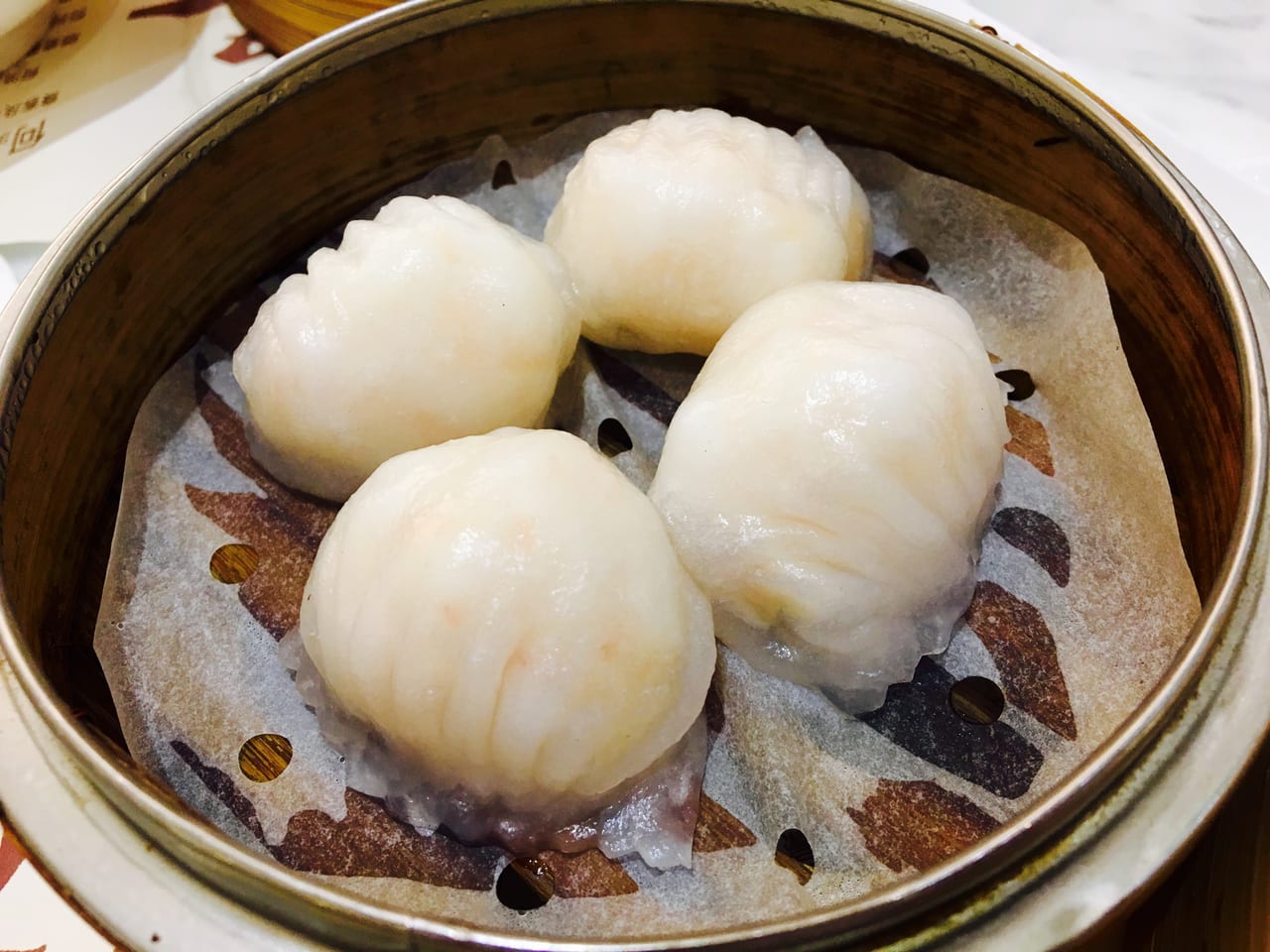
If you could judge a dim sum house by one basket, locals would order har gow. The shrimp dumpling is wrapped in a skin so thin you can see the pink shrimp inside — it has to be delicate but unbroken, springy and chewy, and pleated with at least seven folds by old dim sum standards. Inside sits whole, snappy fresh shrimp, so one bite gives you both the slip of the wrapper and the clean sweetness of the shrimp. This is the first basket to order every time you go for yum cha, and the one that tells you whether the kitchen is any good.
Har gow's constant companion — Cantonese siu mai is wrapped in a thin yellow skin, open at the top, filled with minced pork and chopped shrimp. Some shops crown them with orange shrimp roe or a little mushroom. They're denser and bouncier than the dumplings you may know, because the pork is beaten until springy, so each bite releases a little sweet juice. Locals order har gow and siu mai together as the opening baskets, since they're the basics every house must nail before you trust it with anything fancier.
3
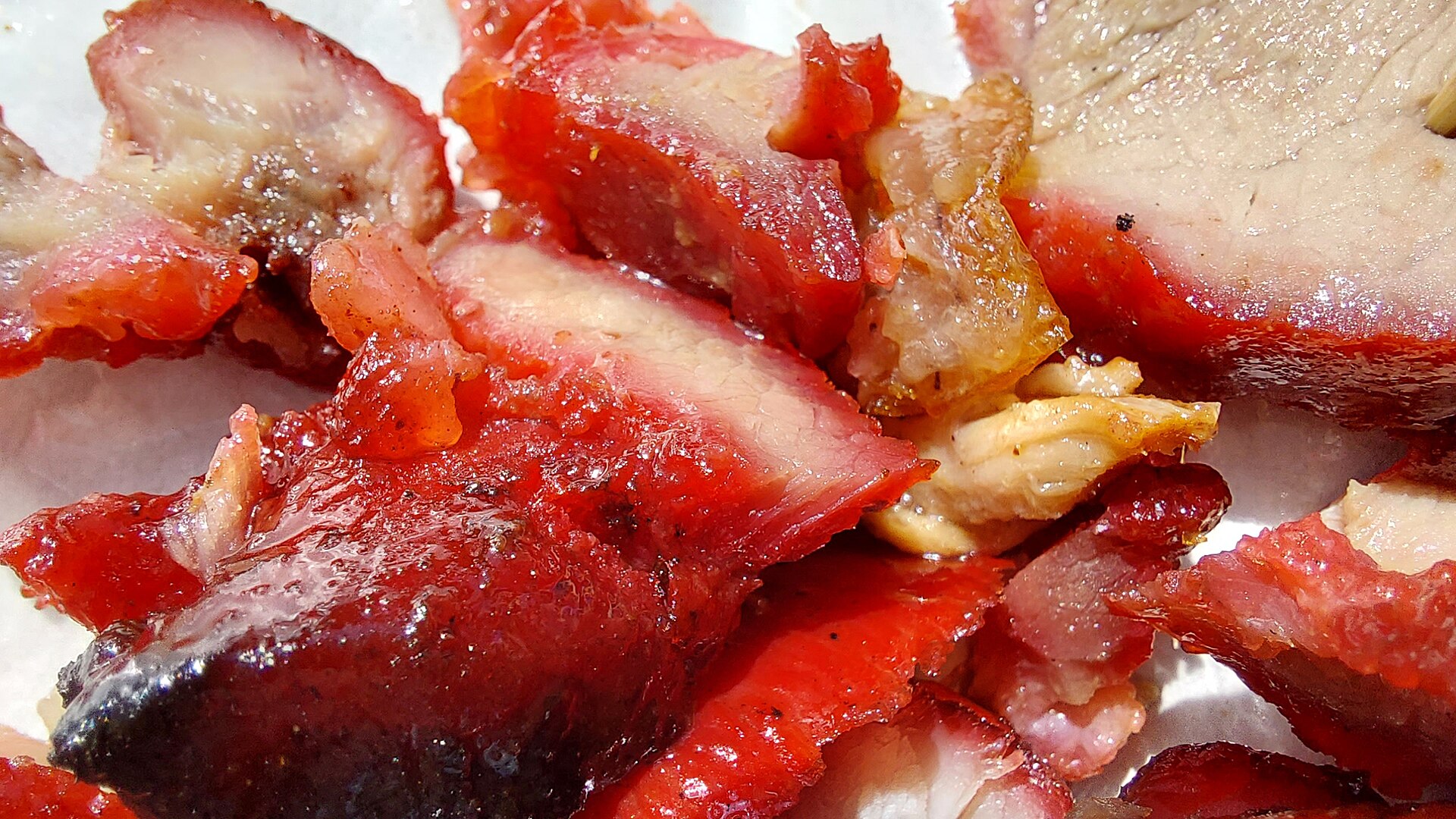
The bun that's the symbol of yum cha — the dough is steamed until light and fluffy and then "smiles" (爆口) into a three-way split across the top, the mark of a well-steamed bun. Inside is diced char siu (the same honey-glazed barbecue pork in our roast-meats guide) tossed in a thick, glossy sweet-savoury sauce. One bite gives you the pillowy dough and the fragrant, sweet pork together. Cantonese kids grow up on this basket, and it's the easiest thing on the table — perfect for anyone not ready to try the stranger dishes yet.
The sweet bun of the yum cha table comes in two versions, and it's worth telling them apart. Lai wong bao (奶黄包) has a milk-and-egg custard that's set into a soft, firm filling, gently and evenly sweet. Liu sha bao (流沙包) has a salted-egg-yolk filling enriched with butter and custard that stays runny, so it pours out when you bite in — the name means "flowing sand." It's richer, sweet-savoury and more decadent. A warning: the lava filling is very hot. Bite a small hole first to let the steam escape before you eat the whole thing, or it can scald your mouth.
5
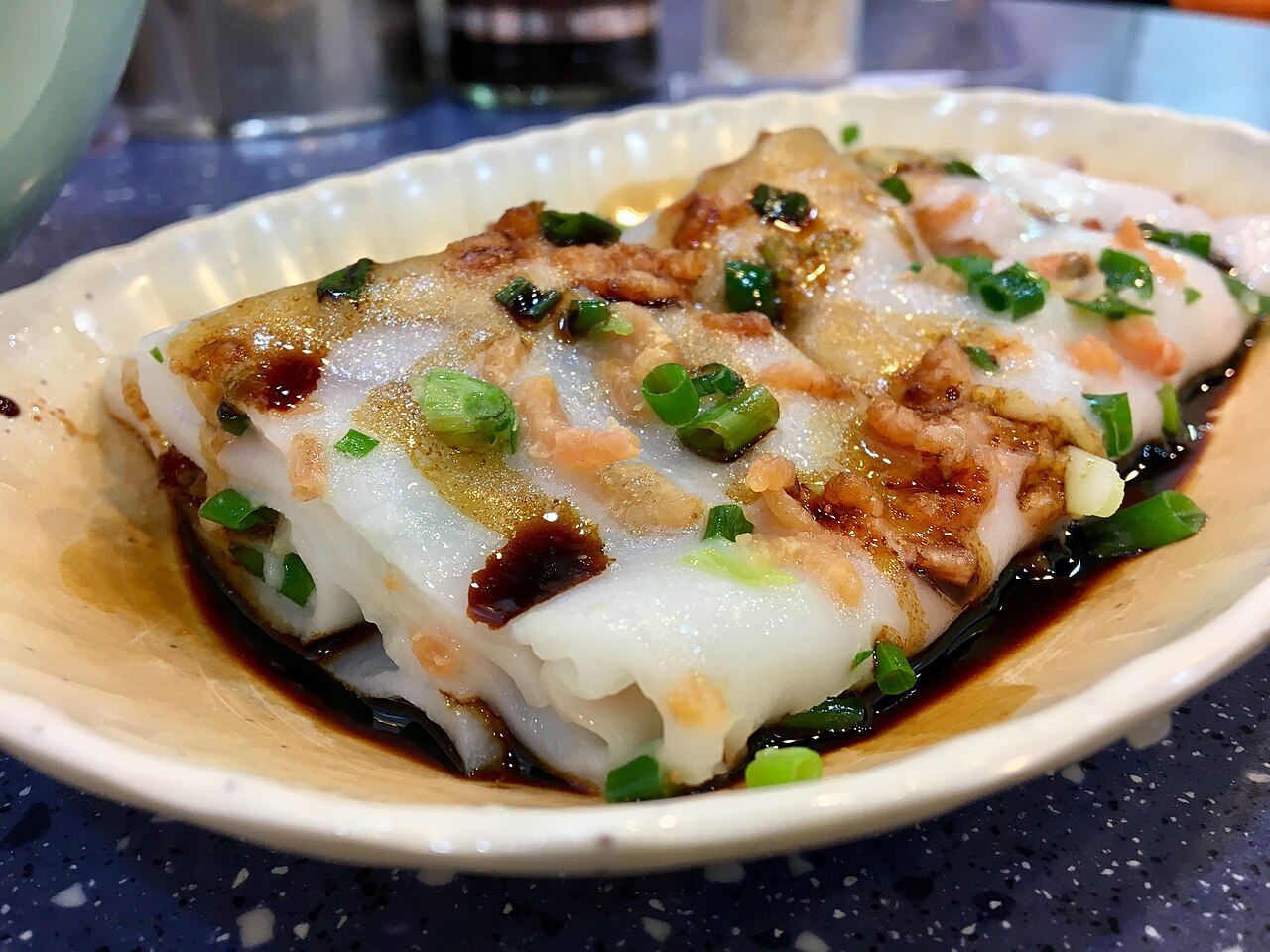
The street breakfast Guangzhou eats most, made fresh and hot in front of you in a steam cabinet — a loose rice batter is poured thin onto a tray and steamed into a silky sheet, filled with fresh shrimp, char siu, beef or egg, then rolled and cut into lengths and drizzled with a house sweet soy. The magic is the texture: so slippery you barely need to chew, soft and smooth but never mushy. The legendary name is Yin Ji (银记肠粉店), trading since 1958 and famous for hand-made "cloth-pulled" rolls (布拉肠), with branches including Beijing Road. A plate is a few yuan — cheap, filling, and the real working person's breakfast.
A breakfast with a story — "sampan congee" gets its name from the days when Tanka boat people (蜑家) paddled small sampans selling congee along the canals of Liwan and Liwan Lake, and customers ordered it fresh from the water's edge. Cantonese congee is different from porridge elsewhere: it's cooked until the rice breaks down completely into a smooth cream, with no grains left. It's loaded with everything — fresh shrimp, thin-sliced fish, squid, fried peanuts, crisp pork skin, cut youtiao, and slivers of scallion, ginger and coriander. Hot and easy to slurp, it's the most comforting breakfast there is, and Liwan is still where you'll taste it at its most authentic.
7
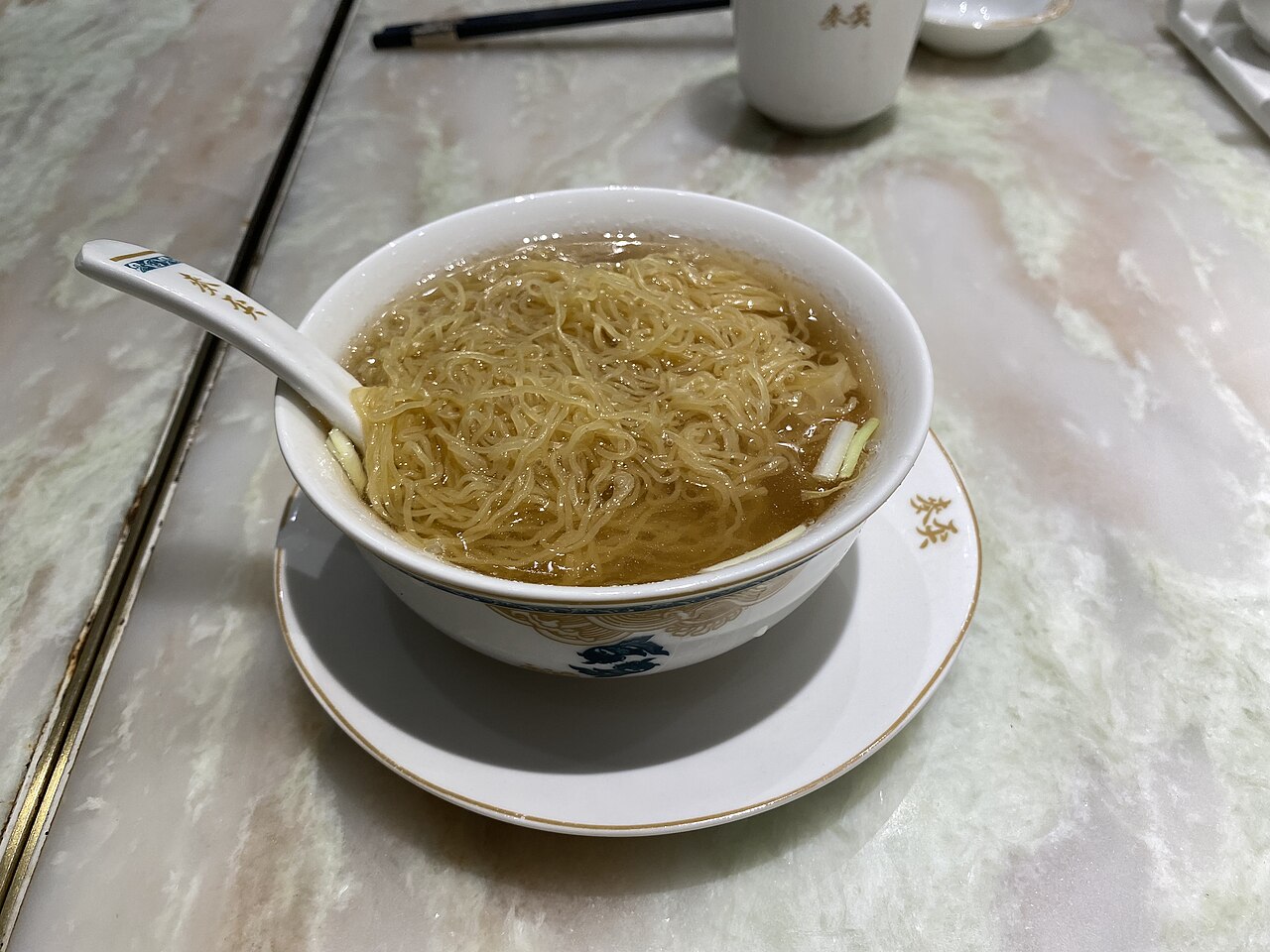
The light breakfast many choose instead of dim sum — a deceptively simple bowl with a lot of detail. The good shops still make the egg noodles the old way, "juk sing min" (竹升面): a chef rides a thick bamboo pole, pressing the dough again and again until the strands are springy and taut, then cooks them just past raw so they stay firm. They sit over whole shrimp wontons hidden at the bottom, in a clear broth simmered from dried shrimp and pork bone. A legend like Wu Cai Ji (吴财记面家) in Liwan has done it for over 70 years and holds a Michelin Bib Gourmand. The trick: push the noodles under the broth first so they don't swell.
End the yum cha table the way everyone loves to — with an egg tart. The Cantonese version comes with two kinds of shell: puff pastry (酥皮), thin and crisp and flaky in the French style, and cookie pastry (曲奇皮), thicker, short and buttery. Inside is a golden egg custard, baked until it's smooth and just-set with a gentle wobble, never too sweet. A good one is served warm so the custard is still soft and the shell still crisp. Locals order egg tarts as the last basket of the meal to sip alongside hot tea, or take a box home as an afternoon snack.
Know what each area does best, then pick the one that matches your morning.
The heart of traditional Cantonese breakfast — the old-town district where Tao Tao Ju, Wu Cai Ji, congee shops and cheung fun stalls cluster together. The Xiguan lanes are full of morning stalls making everything to order, and you can walk from a noodle house to a milk-pudding shop in a single alley. It's the most old-world atmosphere in the city, and the place to make sure you sit down for morning tea at least once.
The downtown shopping street with the easiest dim sum access for visitors — Tao Tao Ju's big branch is near here (around Shifu Road), Dim Dou Dak has a branch in the area, and Yin Ji's cheung fun has a Beijing Road outlet too. It's handy if you're staying central or want morning tea before sightseeing, with picture menus and staff used to travellers.
If you want morning tea in a classic Chinese-garden setting, Pan Xi Restaurant is the answer — a garden restaurant on the edge of Liwan Lake, set among Chinese pavilions, lotus ponds and old trees. It has served dim sum and roast meats for decades, and Liwan Lake is also the birthplace of sampan congee. Best for an unhurried morning where you bring the family and linger, with the food and the view in one place.
The new side of the city, skyscrapers and Canton Tower — where the air-conditioned dim sum halls in malls and hotels sit. They open early, have English menus, take cards and are comfortable to sit in. Handy if you're staying here or want morning tea without worrying about language or the queue. A Dim Dou Dak branch in this area is a safe pick for your first breakfast.
The places Guangzhou families have gone for morning tea for generations — put them on the plan.
One of the oldest restaurants in Guangzhou, trading since 1880, and still where locals bring family for morning tea. The early tea round starts around 7am. Old-style Chinese décor, plump har gow, dense siu mai and fresh-baked egg tarts. The main branch is near Shifu Road / Beijing Road, and it's in the Michelin Guide for Guangzhou — arrive before nine or book a table on weekends, because the queue is real.
If it's your first time in Guangzhou and you want yum cha without the guesswork, Dim Dou Dak is the safe choice — a dim sum chain with branches across the city (including Beijing Road and Tianhe), picture menus, easy ordering, early hours and consistent quality. Good value at about ¥10–18 a dish, and a great place to try har gow, siu mai, char siu bao, custard buns and egg tarts all in one sitting without the long wait of an old institution.
The legendary name for cheung fun in Guangzhou, with its first shop on North Wenchang Road back in 1958. It's famous for "cloth-pulled" rice rolls (布拉肠) steamed on cloth by hand, giving an especially silky, smooth roll, finished with a house sweet soy. Fillings include shrimp, char siu, beef and egg. It's the quick breakfast locals grab before work, with several branches including Beijing Road — affordable and a great starting point if you want the real street breakfast.
A noodle shop of over 70 years in Liwan, with no fancy fit-out — just bamboo-pressed noodles (竹升面) that are springy and taut, whole shrimp wontons, and a broth fragrant with dried shrimp and dried seafood. You can order it with shrimp wontons or braised beef. It holds a Michelin Bib Gourmand. A great pick if you want a light breakfast instead of dim sum — and the kind of genuine old Cantonese shop that's getting hard to find in a big city.
One of the loveliest garden restaurants in Guangzhou, set beside Liwan Lake among Chinese pavilions, lotus ponds and old trees. Known for dim sum, roast goose and traditional Cantonese dishes, its morning tea round is a comfortable sit in a setting you won't find in a mall. Best for an unhurried morning, bringing the family to linger — here you get the food and the garden view together.
Dim sum houses are busiest 9–11am, especially on weekends when local families fill the place. To get a table fast, arrive before nine or after 1pm. The nice thing about Guangzhou is that yum cha runs longer than in most cities — many places have mid-morning and afternoon rounds too. Street cheung fun stalls and congee shops open earlier, around 6.30am, and the food is best fresh and hot between 7 and 9.30am.
Cheung fun stalls, congee shops and many older noodle houses accept Alipay or WeChat Pay only — and some won't take cash at all. Download Alipay before you travel and link a Visa or Mastercard via its international (tourist) mode — do it while you're still at your hotel. The bigger dim sum houses in malls and chains like Tao Tao Ju and Dim Dou Dak usually take cards and are easier.
Most dim sum houses charge by the number and size of baskets you've eaten, graded small, medium, large and special. There's a card on the table that staff stamp or scan each time a dish lands; some modern places let you order from a QR code at the table. If you order from a cart, point to choose and they'll stamp your card. You eat and order as you go and pay at the end by what's stamped — no need to order everything at once.
When someone pours your tea, Cantonese diners tap two or three fingers lightly on the table to say thank you (called 叩指礼) — it happens at every table, so just copy it and you'll fit right in. And when the pot runs dry, prop the lid open on the rim — that's the signal for a server to refill the hot water without being asked. Small things like these make your breakfast blend in with the locals at once.
Breakfast in Guangzhou is friendlier to newcomers than in many cities. Har gow, siu mai, char siu bao, cheung fun and egg tarts are delicious and easy for everyone — start with those, then branch out to phoenix-claw chicken feet in black-bean sauce, molten salted-egg buns, or steamed offal if you want to go full local. Nothing to be scared of — just order basket by basket and keep the ones you love.