The district that holds the Forbidden City, Tiananmen, Jingshan Park and the Lama Temple all in one place — with Wangfujing, Beijing's classic shopping street, a few minutes' walk from the palace walls. For a first trip to Beijing, this is the most central place to base yourself.
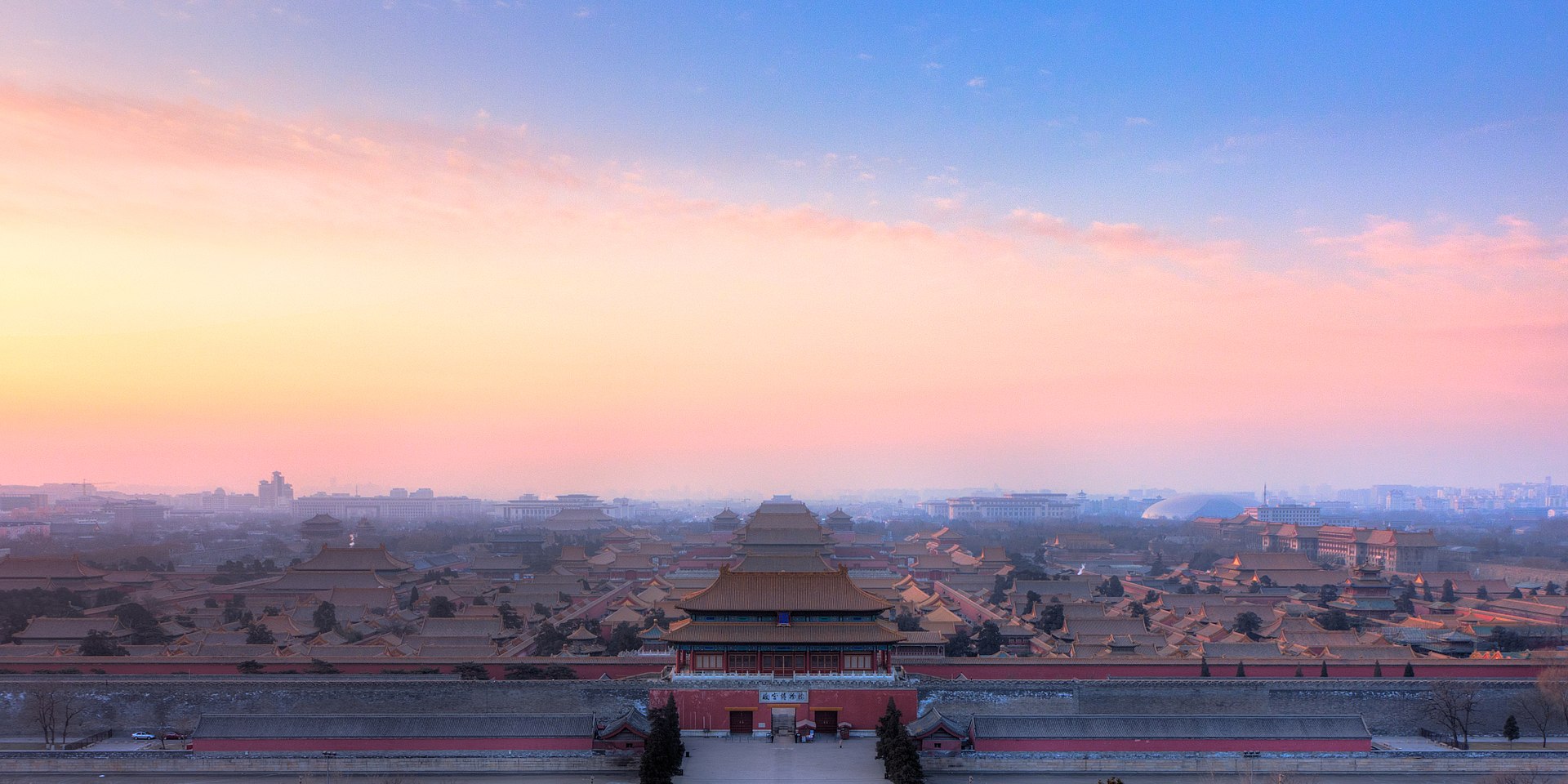
Picture this: you wake up, walk less than ten minutes from your hotel, and you are standing in front of the Tiananmen gate. Walk through it and you are inside the Forbidden City. Exit the north gate, climb the small hill in Jingshan Park, and the entire palace lies below you — a sea of golden rooftops in the late-afternoon light. All of that sits in one district. The district is called Dongcheng (东城区), and the shopping street at its heart is called Wangfujing (王府井).
Dongcheng is Beijing's historic core in the literal sense. The district covers the eastern half of the city's central axis and contains the Forbidden City, Tiananmen Square, Jingshan Park, the Lama Temple (雍和宫), and a dense network of old hutong (胡同) alleys. Wangfujing itself is a pedestrian shopping street roughly 1.6 km long, running from Chang'an Avenue in the south up to the National Art Museum in the north — a short walk east of the Forbidden City.
What makes Dongcheng so useful is simple geography: Beijing's headline sights are clustered in one district. Base yourself near Wangfujing, use Subway Line 1 that runs right along the street, and you can reach almost everything without overthinking the logistics — which is exactly what you want on a first trip to a city this large.
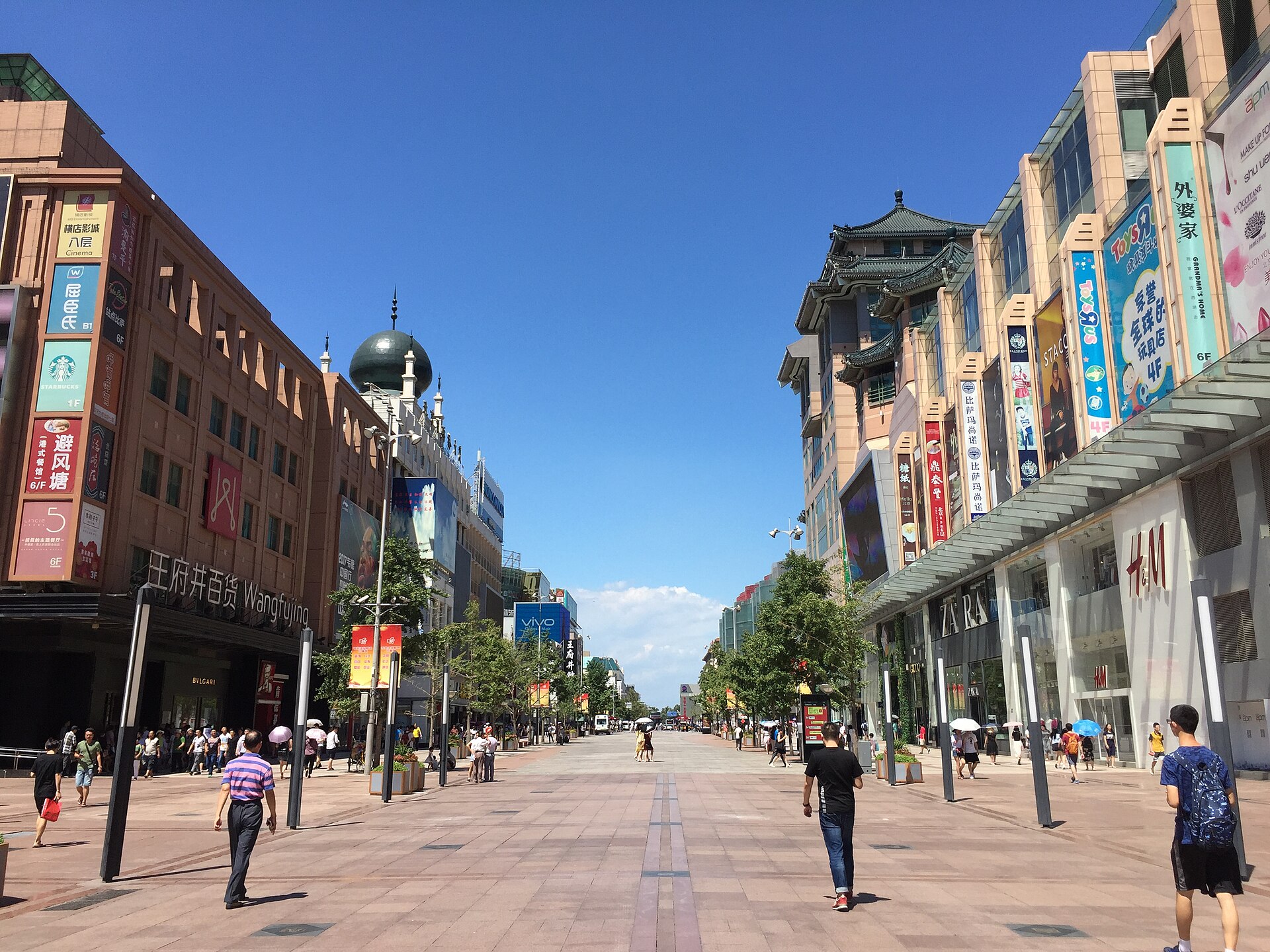
Wangfujing is a busy tourist street. But turn into the Dongcheng hutongs just to the north and you find another Beijing entirely — quieter, older, and far more real.
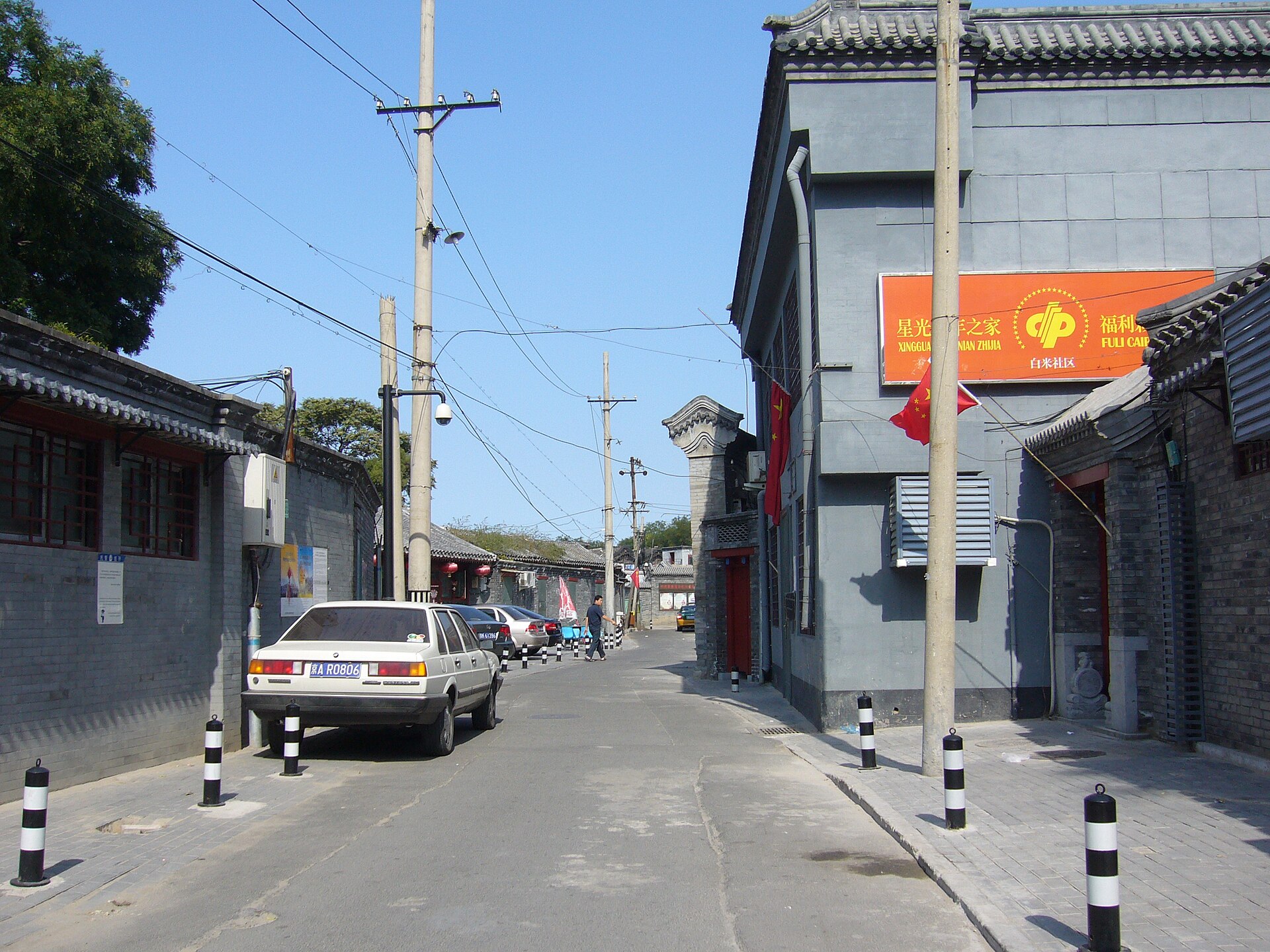
The character of this area comes from two very different atmospheres sitting close together. Wangfujing Street itself is bright, busy and full of malls and visitors. The old hutongs in the north of Dongcheng, by contrast, are still genuine residential neighbourhoods where Beijingers actually live. Be honest with yourself about this: if you only walk the main street, you have seen half the area — the better half is in the lanes.
If the main purpose of your trip is the Forbidden City, Tiananmen and Beijing's headline sights, staying near Wangfujing is the most straightforward choice you can make. You can walk over early to queue for the palace before the crowds build, with no taxi or transfer to factor in, and stroll back to your hotel in the evening.
Wangfujing is Beijing's classic shopping street. Oriental Plaza (东方新天地) is the large mall at the southern end, attached to Wangfujing subway station; there is also the Wangfujing Department Store and the Foreign Languages Bookstore. It is a pleasant evening stroll once the lights come on, and the air-conditioned malls are a useful break from the summer heat or the winter cold.
North of Dongcheng there are plenty of old hutongs to explore. The best known is Nanluoguxiang (南锣鼓巷) — a lane lined with cafés, gift shops and old grey-brick buildings. The smaller side alleys branching off it stay quiet and remain genuinely residential. If you want to see the old Beijing that is not a postcard, these lanes are where you find it.
The northern corner of Dongcheng is home to the Lama Temple (雍和宫), a beautiful Tibetan Buddhist temple that is still an active place of worship. Next to it sit the quieter Confucius Temple and the Imperial College. Both are best in the morning before the crowds, and both are close to Yonghegong station on Subway Line 5 — an easy ride from Wangfujing.
The heart of Dongcheng and of Beijing itself — one of the largest imperial palace complexes in the world, built over the Ming and Qing dynasties, and just a few minutes' walk west of Wangfujing. You must book tickets online in advance and bring your passport to enter; tickets sell out quickly in peak season. Allow at least 2.5–3 hours to walk it properly. For the latest opening hours and ticket prices, see the full Forbidden City guide.
The vast central square south of the Forbidden City — and the natural starting point for walking into the palace. Entry requires a security check, and at certain times advance registration; carry your passport at all times. For how to enter and what to know before you go, see the Tiananmen Square guide.
A public park on an artificial hill directly behind the north gate of the Forbidden City. The pavilion at the top looks down over the entire palace, its golden rooftops laid out like a sea — the view is at its best at sunset. Admission is cheap and well worth it. The trick is to finish the Forbidden City, exit the north gate, and climb Jingshan in the late afternoon for the golden hour.
The main shopping street, about 1.6 km long, with the large Oriental Plaza mall at the southern end (attached to Wangfujing station, Line 1), the Wangfujing Department Store, and the Foreign Languages Bookstore. It is attractive in the evening once lit up and pleasant for a stroll. But to be straight with you: the restaurants on the main strip are average and priced for tourists. If you are genuinely hungry, head into the lanes or to another food district.
A short food alley off Wangfujing Street, once known for skewers of unusual snacks. To be honest, it is now more for photos and atmosphere than serious eating — particularly after recent urban redevelopment, when most of the food stalls were scaled back in favour of souvenirs and crafts. It is fine for a photo stop, but do not expect a memorable meal. For real street food, there are better districts in Beijing.
A three-domed Catholic cathedral at the northern end of Wangfujing Street. The present building dates to around 1904 (the congregation's origins are much older), making it one of Beijing's historic churches. The wide plaza in front is a local gathering spot where you will see people skateboarding, and the building cuts a handsome silhouette against the evening sky — a popular photo stop you can fit in without any detour while walking Wangfujing.
The north of Dongcheng holds some of Beijing's best old hutong alleys. The most famous is Nanluoguxiang, lined with cafés, gift shops and old grey-brick courtyard houses; it gets very crowded on weekends. The trick is to turn off into the smaller side alleys, which stay quiet and genuinely residential and give you a glimpse of Beijing life the main street never will. See more in the Houhai & hutong guide.
The honest truth: the food on Wangfujing's main pedestrian street is average and priced for tourists. The genuinely good eating is in the hutongs and the surrounding districts.
You cannot come to Beijing without eating Peking duck, and Dongcheng and the area around Wangfujing have both famous-name and small local duck restaurants to choose from. The well-known places are worth booking ahead, or arriving before the meal rush, because the queues are long. Other snacks and local dishes are easy to find in the hutongs to the north, at prices noticeably below the mall restaurants.
The hutongs in the north of Dongcheng — especially around Nanluoguxiang — are full of cafés set inside old buildings. Many are tucked into converted grey-brick courtyards, making them a good place to rest after a full day of sightseeing. They are quieter and far more photogenic than the cafés on the main street. Turn into a smaller side alley and pick a place where the locals are sitting — you will rarely be disappointed.
Read more: Beijing attractions · Houhai & the hutongs
The most central base in Beijing — walk to the Forbidden City, the subway runs along the street, and there are hotels at every price point.
The strongest argument for basing yourself here is a location that genuinely puts the headline sights within walking distance. You can walk to the Forbidden City early before the crowds and stroll back in the evening, with no transfer to plan. Add Subway Line 1 running right along the street and the rest of the city is easy to reach too. Hotels in the area range from good-value mid-range to high-end addresses with views over the palace rooftops.
The trade-off to know about: this area is busy and tourist-oriented. If you want the quiet, lived-in atmosphere of the lanes, you may prefer a boutique hotel inside the hutongs to the north instead. But if you weight convenience and walkability to the sights above all else, Wangfujing is the best-value choice for a first Beijing trip.
Or read the individual hotel reviews for properties in the area:
The subway is the best way in and out of this area. Several stations cover the different parts of the district — choose based on where you want to start.
08:30 — Start at Tiananmen Square (Metro Tiananmen East, Line 1). Pass the security check; carry your passport.
09:00 — Walk into the Forbidden City (book your ticket in advance). Follow the central axis from south to north.
11:30 — Exit the north gate and climb Jingshan Park for the elevated view over the palace's golden rooftops.
12:00 — Walk back toward Wangfujing, stopping at St Joseph's Cathedral and the pedestrian street for photos.
Follow the half-day route above through the morning, then continue:
13:00 — Lunch in the hutongs to the north (skip the pricey main-street restaurants) — Peking duck or local dishes.
14:30 — Take Subway Line 5 to Yonghegong station for the Lama Temple and the neighbouring Confucius Temple.
16:00 — Wander Nanluoguxiang and its smaller side alleys; pause for coffee in a courtyard café.
18:00 — Return to Wangfujing for dinner and the pedestrian street once the lights come on.
This area pairs easily with the rest of the city because it is so central — see the full plan in the complete Beijing city guide and Beijing's top attractions.