Step through the gate and the air fills with Tibetan incense. Yellow palace roofs catch the light, and at the far end of the central axis stands an 18-metre Maitreya Buddha carved from a single sandalwood trunk. This was once an emperor's home — and it is still a temple where Beijingers come to pray every day.
You come up from a crowded subway station, cross the road, and there it is — a red wall and a brightly painted gate. Step through, and an attendant hands you a free bundle of incense. The noise of the city fades, replaced by smoke drifting over a wide stone courtyard and the low sound of chanting from the halls beyond. This is the Lama Temple, or Yonghegong (雍和宫), the most beautiful and most alive Tibetan Buddhist temple in Beijing, belonging to the Gelug — or "Yellow Hat" — school.
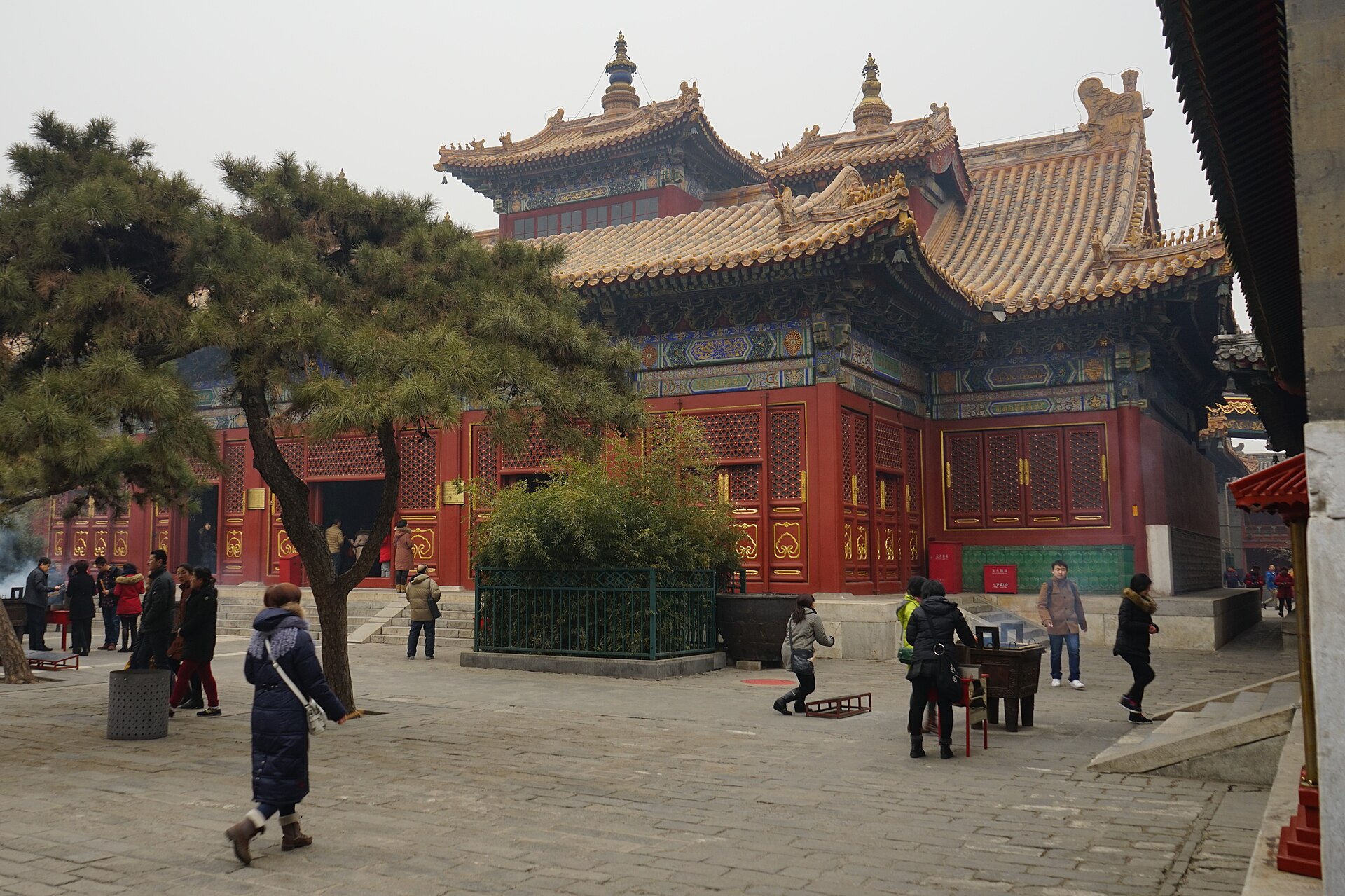
Its story is not like other temples. The complex was built in 1694 as the residence of Prince Yong, a son of the Kangxi Emperor. When that prince ascended the throne as the Yongzheng Emperor, his former home was elevated to an imperial palace. Then, in 1744, the Qianlong Emperor converted the palace into a lamasery. That imperial past is why the Lama Temple wears yellow glazed roof tiles — a colour normally reserved for the emperor's own buildings, and granted to very few temples anywhere in China.
The temple is laid out along a long central axis running south to north, through a sequence of five main halls that grow taller as you move deeper in. Each is rich with statues, thangka paintings and Tibetan ritual objects. The one everyone waits for sits at the very back — a colossal standing Maitreya Buddha in the Pavilion of Ten Thousand Happinesses that will have you tipping your head all the way back. We will walk through it piece by piece below.
The temple runs in a single line south to north — follow the central axis and you will pass everything in turn.
1
This is the main reason people come. Inside the Pavilion of Ten Thousand Happinesses stands a Maitreya Buddha rising 18 metres above the floor — with roughly another 8 metres buried below ground — carved from a single trunk of white Tibetan sandalwood that was hauled across the mountains as a gift from Tibet in the 18th century. The statue is so tall that a three-storey pavilion had to be built around it, and it is listed in the Guinness records. Standing at its feet and looking up is the moment most visitors come away talking about.
The Lama Temple is arranged on a long central axis through a series of courtyards and five main halls. You begin at the Hall of Harmony, which holds Buddhas of the three ages, pass through the Hall of Everlasting Blessing, and end at the Pavilion of Ten Thousand Happinesses with its giant Maitreya. The clever part is that each building rises higher as you walk deeper into the complex — a deliberate design that makes you feel you are stepping closer to the sacred, one level at a time.
What sets the Lama Temple apart from a museum is that it is still very much in use — resident lamas live here, and Beijingers come every day to light incense and pray over exams, jobs and family health. At the entrance the temple hands out a free bundle of incense to every visitor, so there is no need to buy any from the sellers outside. Light it in the courtyards in front of the halls (never inside the buildings) and offer it there. On the 1st and 15th of the lunar month, and during Chinese New Year, the courtyards fill with worshippers and the smoke grows especially thick.
Look up at the rooflines and you will notice something almost no other temple in China has — yellow glazed tiles, the colour that imperial rules once reserved for buildings of the royal family alone. The reason is its history: before it was a temple, this was the residence of the Yongzheng Emperor, so when it became a lamasery in 1744, the yellow roofs stayed. Set against the bright painted timber, red columns and Tibetan-Manchu decorative beams, the Lama Temple becomes a meeting of two worlds — Chinese imperial palace and Tibetan Buddhist art under one roof.
5
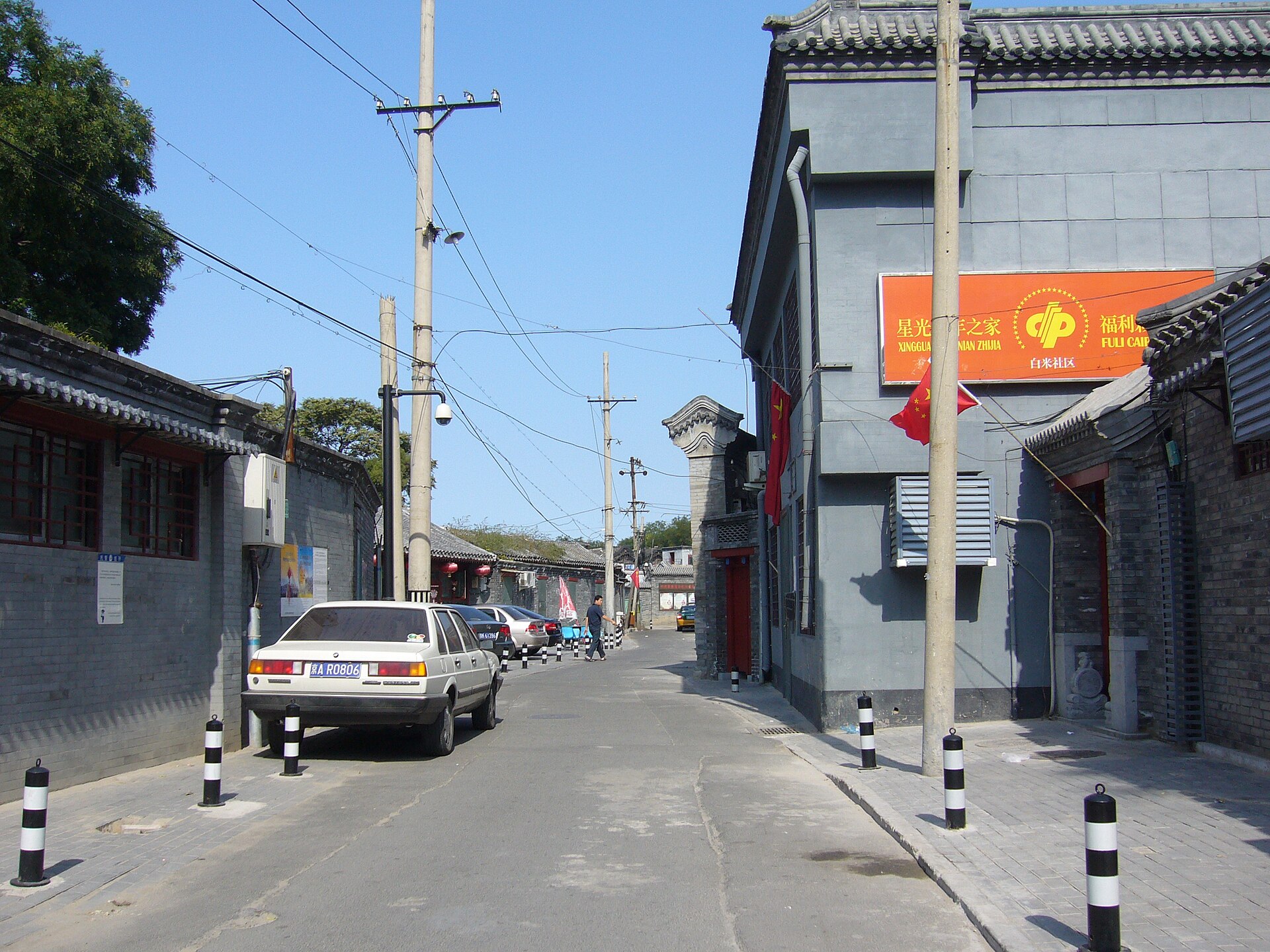
Leave the Lama Temple and walk about 5 minutes along Guozijian Street to find the Temple of Confucius and the Imperial College standing side by side. This was once the empire's highest centre of Confucian learning, and the mood is the complete opposite of the Lama Temple — quiet, shaded by cypress trees centuries old, with hundreds of stone tablets carved with the names of scholars who passed the imperial civil-service exams. If the Lama Temple has worn you out with crowds, this is the calm corner most visitors overlook.
Everything you actually need to know, in one place.
The Lama Temple sits in the Dongcheng district, in the northeast of the old city centre, near the hutong lanes and Houhai Lake. It is easy to reach because the subway exit comes up right at the temple gate.
From the Forbidden City, take Line 1 and change to Line 5 at Dongdan, then ride north to Yonghegong. A natural pairing if you spend the morning at the palace and come to the Lama Temple afterwards.
If you are staying around Wangfujing or the city centre, take Line 5 straight north to Yonghegong with no change required. This is the fastest and simplest route for anyone based centrally.
The Lama Temple is in the same Dongcheng hutong district as Houhai. If you are staying in a courtyard boutique nearby, you can stroll through the old lanes, or take a short DiDi for a few yuan — a route that gives you the full flavour of old Beijing.
With a free half-day: Lama Temple 9–10.30 am, then walk Guozijian Street to the Confucius Temple and Imperial College, then wander the old hutong lanes nearby with a coffee in an alley café. Done by midday, with Houhai Lake or the city centre an easy next step.
The Lama Temple is in the Dongcheng hutong district, close to the Forbidden City and Houhai. Whether you want to sleep in a traditional Beijing courtyard for the old-city atmosphere, or stay central and walkable, here are the hotels we have compared in this area: