Huge river prawns grilled over charcoal until the orange head-fat runs hot, dipped in a fiery seafood sauce, eaten on the riverbank as boats slide past and the old prangs glow on the far shore — this is the splurge meal people come to Ayutthaya for.
Here's the honest version: plenty of people drive out to Ayutthaya for two things — walking the old temples, and one good riverside meal of grilled river prawns. The giant freshwater prawns (goong mae nam / goong kam kram) of the Chao Phraya–Pa Sak floodplain are known for their size, their firm springy flesh, and above all for the orange head-fat tucked inside the head, rich and thick like egg yolk. That fat is the real star, and it's why people happily pay several times the price of an ordinary prawn.
The classic treatment is to grill them whole over charcoal. The shell shields the meat so it cooks slowly and stays juicy rather than drying out, while the head-fat inside heats until it runs hot and smoky. They arrive with Thai seafood dipping sauce — fresh bird's-eye chillies, garlic, lime, fish sauce and a touch of sugar — whose sour-spicy-salty bite cuts the richness of the prawn just right. Many places guard their own house dip as a point of pride. Eaten with hot rice, it's a meal Ayutthaya does better than almost anywhere.
One warning up front: grilled river prawns are priced by weight and size, usually around ฿1,100–1,800 per kilo, with truly giant prawns running roughly ฿400–600 each at some places. This is the splurge of the trip, not a cheap snack — so ask the price per kilo first, and pick the size or number of prawns you want before you commit, or the bill will catch you out. This guide covers how to eat the prawns well, what else is on a riverside menu, and the real riverside restaurants worth your trip.
The prawns are the headliner, but an Ayutthaya riverside table also runs to river fish and several other prawn dishes to share.
1
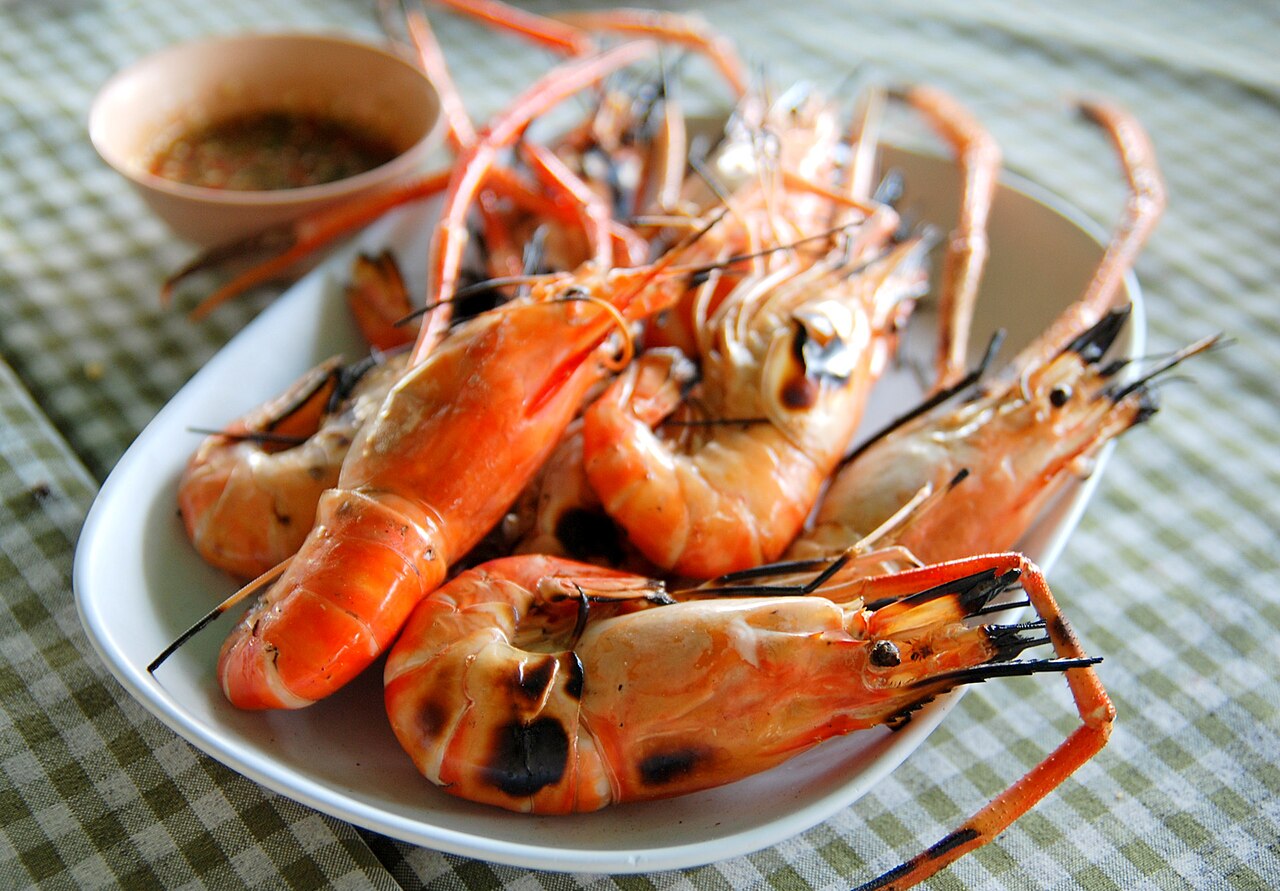
If you order one thing first, order this. Big river prawns are laid on the grate and cooked slowly over charcoal; the shell keeps the heat off the meat so it stays juicy rather than drying out. Crack the shell and you find dense, springy white tail meat — but the head is where it gets serious, the fat inside running hot and smoky. River-prawn flesh is sweeter and cleaner than sea prawn, with a little heat from the dip. The first bite gives you the sweetness of the meat and the richness of the head at once, and you understand why people drive a long way for this meal.
2
This is the whole reason grilled river prawns cost what they do — the orange-yellow paste packed inside the head. Once the charcoal heats it through, it runs out hot and intensely rich, somewhere between salted egg yolk and butter. Most restaurants split the head open so you can see the fat in full. The best way to eat it is to spoon the fat over the prawn meat, or stir it through a bowl of hot rice — that alone is worth another helping of rice. If you love rich flavours you may end up rating the head-fat above the meat itself; and if you'd rather avoid it, sticking to the tail meat is completely fine.
The partner the prawns can't do without — Thai seafood dip, made by pounding fresh bird's-eye chillies with garlic, then squeezing in lime and adding fish sauce and a touch of sugar; some kitchens scatter in coriander or coriander root. Its sharp sour-spicy-salty hit slices through the richness of the meat and the head-fat so you can keep eating without it turning heavy. A lot of restaurants are quietly proud of their house sauce. Try a bite of the prawn plain first to taste it on its own, then add the dip to taste — a genuinely fresh river prawn is already delicious before you dip it in anything.
The Chao Phraya–Pa Sak floodplain is also full of big freshwater fish, so most riverside places list river fish to order alongside the prawns — catfish, gourami, sheatfish, fried with garlic until the skin crisps, steamed with sour-spicy lime, or dropped into a hot pot of tom yum. River fish has firm, sweet flesh quite different from sea fish, and it costs far less than the grilled prawns. Adding one fish dish to a single plate of prawns is a smart way to spread the cost of the meal — and you get to eat both prawn and fish in the same sitting.
If the giant grilled prawns are out of budget, or you want prawns with some broth too, riverside places usually run prawn dishes that use slightly smaller river prawns — a hot clay pot of glass noodles baked with prawns so the noodles soak up the prawn fat, a rich spicy tom yum goong, or a tangy sour curry with prawn. These give you the same river-prawn flavour for a gentler bill, because they're priced per dish rather than per kilo. They suit anyone who wants to taste river prawns without putting the whole meal's budget into one grilled plate, or a table of one or two who can't get through a whole kilo of grilled prawns.
6
Honestly, half the pleasure is the setting. Ayutthaya is an island ringed by three rivers (the Chao Phraya, Pa Sak and Lopburi), so a good riverside restaurant means watching boats pass with old prangs and chedis on the far bank. Late afternoon before sunset is the moment — golden light spreading across the water, a cool breeze, the grilled prawns arriving hot just as the sky turns. It's a meal you'll remember longer than the price you paid. Many places are floating rafts or have a deck reaching out over the river, so if you're coming for the evening, book a riverside table ahead — the ones with the view fill fast.
This is rule one for a grilled river-prawn meal: prawns are priced by weight and size, not at a fixed price per plate. Most places keep several grades, from medium up to giant. Before ordering, ask straight out "how much per kilo?" and "how much does this one weigh?", then tell them how many prawns or how many hundred grams you want. Don't just say "a plate of grilled prawns" and leave it open, because the kitchen may weigh out a big prawn and the bill jumps. Choosing the size up front is the simplest way to keep the spend in hand.
As a rough 2026 reference, expect ฿1,100–1,800 per kilo, with extra-large prawns running ฿400–600 each or more at some places. Two or three medium prawns usually make about a kilo, so for two people a half-kilo of grilled prawns (one big prawn or two medium) plus a fish dish and vegetables and rice is plenty, and keeps the budget under control.
The trick to enjoying grilled prawns without paying through the nose is to make the prawns the star, not the whole meal — order a sensible amount of prawns, then round it out with a plate of river fish (fried with garlic or steamed with lime), a stir-fried vegetable, a pot of tom yum or curry, and rice. That's a full meal with the flavours all there, and the grilled prawns, the most expensive plate, don't end up being the entire bill.
On paying — most Ayutthaya riverside places take cash and PromptPay (QR). Bigger or hotel restaurants usually take cards, but some small raft places are cash only, so carry some cash just in case. And if you're coming on a weekend evening, phone ahead to book a riverside table — the popular places fill up fast.
Riverside spots that locals and food guides have recommended for years (as of June 2026 · prawn prices shift with season and size, so phone to check opening hours and the per-kilo price before you go).
If you want one legendary name for grilled river prawns by the water in Ayutthaya, food guides keep pointing to Pae Krung Kao — the name means "raft at the old capital", and it has sold food on the river since 1966. Today it's a sit-down restaurant on the Chao Phraya with a terrace and floating-raft seating, and its signature touch is the prawn grill set right by the entrance, sending out a smoky charcoal smell as you walk in. The giant river prawns are the headliner, backed by Thai-Chinese stir-fries and curries. It's listed in the Michelin Guide, and the riverside mood is easygoing — good for lunch or an evening meal.
For grilled river prawns in a prettier setting, the riverside restaurant at the Sala Ayutthaya hotel comes up often — it sits on the Chao Phraya looking straight across to the prang of Wat Phutthaisawan on the opposite bank, which is at its best in the evening when the temple is lit. The menu runs to grilled river prawns, punchy Thai curries and Thai desserts like mango sticky rice. Prices are higher than a typical raft restaurant because it's a hotel and you're paying for the view, but for a special, romantic meal over the river it does the job nicely. Book a riverside table ahead.
Another riverside name that gets talked about and sits in the Michelin Guide — Grand Chao Praya puts you on the Chao Phraya with old temple views on the far bank. The kitchen leans into charcoal-grilled river prawns and river fish, along with local Thai dishes built on ingredients brought in fresh each day. The space is roomy, which makes it a good pick for a group or a family. It's a solid choice if you want both good grilled prawns and a river view in one place; come in the evening for the breeze and the sunset light, and call to check the prawn price per kilo before you go.
Beyond the view-led riverside places, Ayutthaya also has restaurants that put giant grilled river prawns front and centre, which is where people hunting big, fat prawns tend to go — Sampaonava is one name that food blogs and reviews mention for specially selected large prawns, charcoal-grilled and served with the house seafood dip. Places like this aren't always as much about the riverside view as the raft restaurants; they trade on prawn quality and size instead. They suit anyone coming specifically to eat prawns. Before going, check opening hours and the price per kilo or per prawn carefully, since giant prawns shift in price with the season and the size.