12 things to eat before you leave Ayutthaya
Ordered from the dish the town is known for to the market eats and sweets — with a note on where each one is and roughly what it costs.
 1
1
This is the first thing people think of in Ayutthaya — a tiny bowl with a deep, concentrated broth made with blood and spices, your choice of thin rice noodles, wide noodles or egg noodles, with beef or pork and meatballs, topped with morning glory and fried garlic. The bowls are small because the dish was once sold from paddle boats in the canals — pass a bowl across the water and it can't be too big. The fun tradition is to eat several and stack the empties to count them. Most people order 5–10, so try clear, "nam tok" and dry versions all in one meal.
 2
2
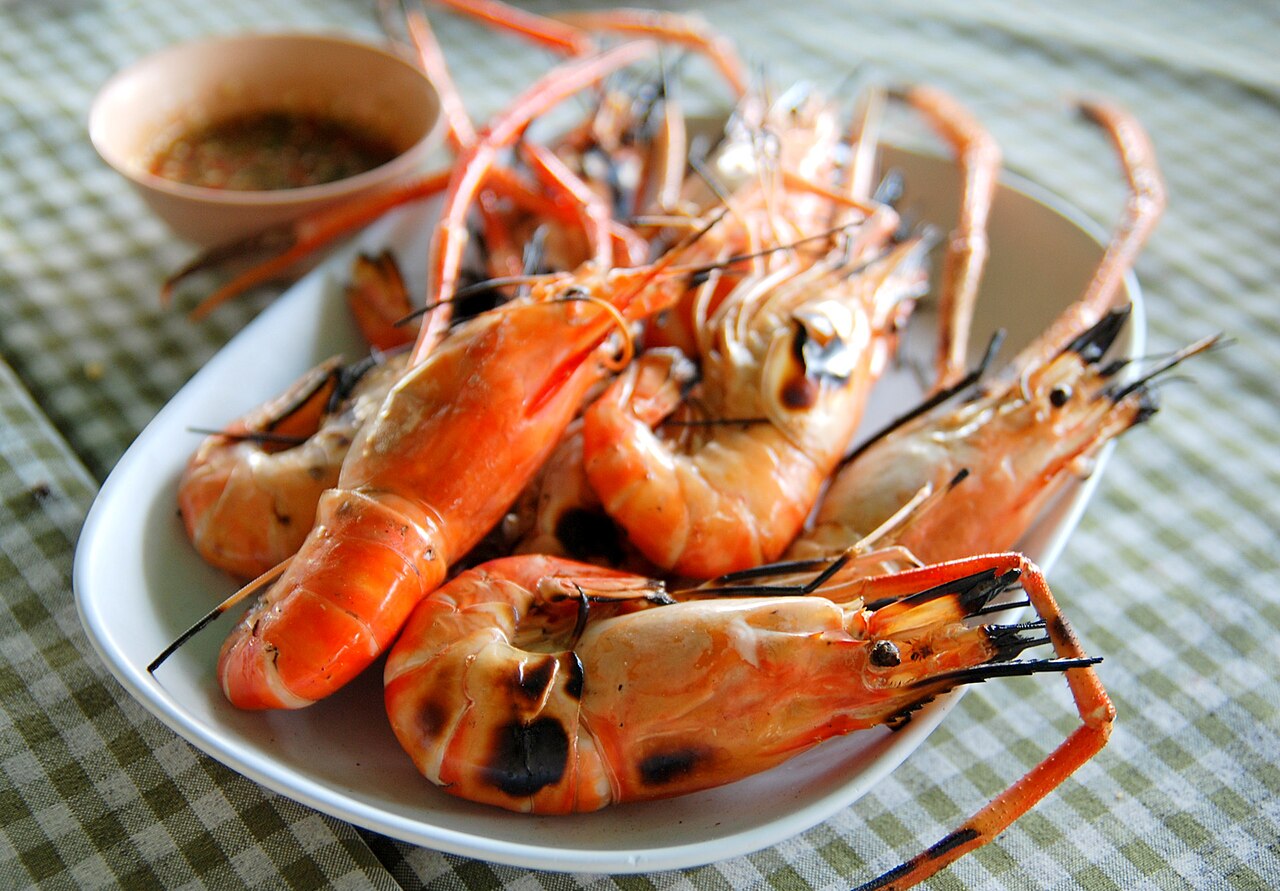
Big freshwater prawns from the Chao Phraya and Pa Sak, charcoal-grilled in the shell until fragrant, the meat firm and sweet, the head full of deep-orange fat that many people rate the best part. Peel one, spoon the head fat over hot rice, and dip it in a sharp seafood sauce that cuts the richness. It's priced by weight — the bigger the prawn, the higher the price. To be honest, this tends to be the heaviest spend of a trip, but split across a group it's very good value. Order it with salt-grilled fish and giant-prawn tom yum, and eat it by the water on a cool evening — that's Ayutthaya at its best.
 3
3
If boat noodles are the savoury icon, roti sai mai is the sweet one everyone buys to take home. Palm sugar is pulled into soft wisps, like cotton candy, and laid on a thin roti sheet that comes both plain white and in a fragrant green pandan version — you roll it up and eat it in one bite. The lightly salty sheet balances the sweet floss perfectly. It has roots in the town's Thai-Muslim community. If you buy a box to take home, eat it within a day or two while the sheets are soft — leave it too long and the sheet stiffens and the floss melts.
In a river town like Ayutthaya, freshwater fish is fresh all year. The favourites are a big salt-grilled fish you flake and dip in seafood sauce, sheatfish or giant gourami in a rich tom yum, and fried gourami topped with fish sauce, the skin crisp and the flesh soft. Almost every riverside place has a river-fish menu, and it pairs neatly with grilled prawns in the same meal. River fish is sweeter and softer than sea fish, without a fishy edge — a local speciality fish-lovers shouldn't skip. Order a few dishes to share so you can try several.
Ayutthaya was a port with communities of many origins living along the river, and the Thai-Muslim community left a food legacy you can find across town — massaman curry with beef or chicken in a deep, fragrant paste, golden chicken biryani heavy with spice, and a clear, well-rounded stewed-beef soup. These dishes are mellow rather than fiery, which makes them an easy way to try local food without burning your mouth. Many of the long-running shops are around the Muslim community and the in-town markets. To be honest, several open only for lunch, so come around midday for the fullest spread.
 6
6
After a full day at the temples, Bang Ian Night Market (also called Bang Lan) is where locals come to graze in the evening. It's in the island centre near Wat Mahathat, open from late afternoon into the evening, with rows of food carts — fried things, grilled skewers, noodles, sweets and fruit — at gentle local-market prices. You can wander and eat one thing at a time. The feel is plain and unpolished, not dressed up for tourists, so you get a genuine local dinner, and it's close enough to the temples to drop in straight after sightseeing.
Hua Ro is Ayutthaya's oldest market, on the river to the north-east of the island, with a morning market that buzzes before dawn as locals shop for the day, and an evening market that runs roughly 17:00–21:00. There's plenty of local food — made-to-order dishes, fried snacks, Thai sweets and seasonal fruit. It's a market with real, everyday life to it, at local prices rather than tourist prices. If you want to see what Ayutthaya people actually eat day to day, this is the place that shows you.
 8
8
The Ayothaya Floating Market sits outside the island near the railway station and Wat Maheyong — a tourist-style market of wooden pavilions along a canal with a retro feel. There's lots of Thai food to try, from noodles and Thai sweets to grilled skewers and cold drinks, plus performances and souvenir stalls. It photographs well and suits a family outing or an easy evening stop. To be honest, it's a tourist market, so prices run a little above the local markets and the draw is the atmosphere — for genuine local food at local prices, Bang Ian and Hua Ro are better value, but for pretty waterside photos this one is a pleasant wander.
Beyond roti sai mai, Ayutthaya is known for court-era Thai sweets handed down from its days as a capital — khanom mo kaeng, a smooth baked custard fragrant with coconut, and the golden trio of foi thong, thong yip and thong yod, made from egg yolk and sugar syrup, glossy and sweet. There's also layered khanom chan, crisp khanom bueang, and look choop, marzipan-style sweets shaped into miniature fruit. You'll find them in the in-town markets, at old confectioners and at souvenir stalls, all at modest prices. They make a prettier, longer-keeping gift than roti sai mai, so pick up a small mixed set to taste several.
Khlong Sa Bua boat noodles is another name that comes up a lot. What sets it apart is that it's a riverside place that does more than noodles — it also serves big grilled river prawns, fried gourami with garlic, squid in salted-egg sauce, and giant-prawn tom yum. So you can have both the classic stacked bowls and a proper riverside spread in one spot, finishing with cold coconut ice cream by the water. It draws a fair queue at weekends. It suits anyone who wants the signature dish and a riverside meal together — come as a group and split the grilled prawns and it's better value.
Ayutthaya gets hot and the sun is strong, especially from March to May, so a café stop is really part of a day spent among the temples. The town has plenty of cafés in old wooden houses — riverside homes and shops in the old quarter near the temples — serving coffee, Thai tea and desserts in a cool, easy setting. Several have lovely views of a ruined chedi or the river. They make a good midday hideout from the heat while you're cycling or taking a tuk-tuk around the sights. Sit with a cold drink through the hottest hours, then head back out to the temples when the light softens — it's far more comfortable.
To round things out, a dish everyone at the table will happily eat — stewed chicken and duck noodles in a herbal Chinese-style broth. A warming bowl, the broth mellow and fragrant with spices, the chicken or duck stewed soft until it falls apart, finished with spring onion and cilantro. It isn't spicy and there's no strong offal, so children and adults can all enjoy it. You'll find it across town in market shops and street stalls, perfect as a light meal during the day or a breakfast before heading out. If you're travelling as a group with picky eaters or kids, this is the safe, easy-to-love choice.