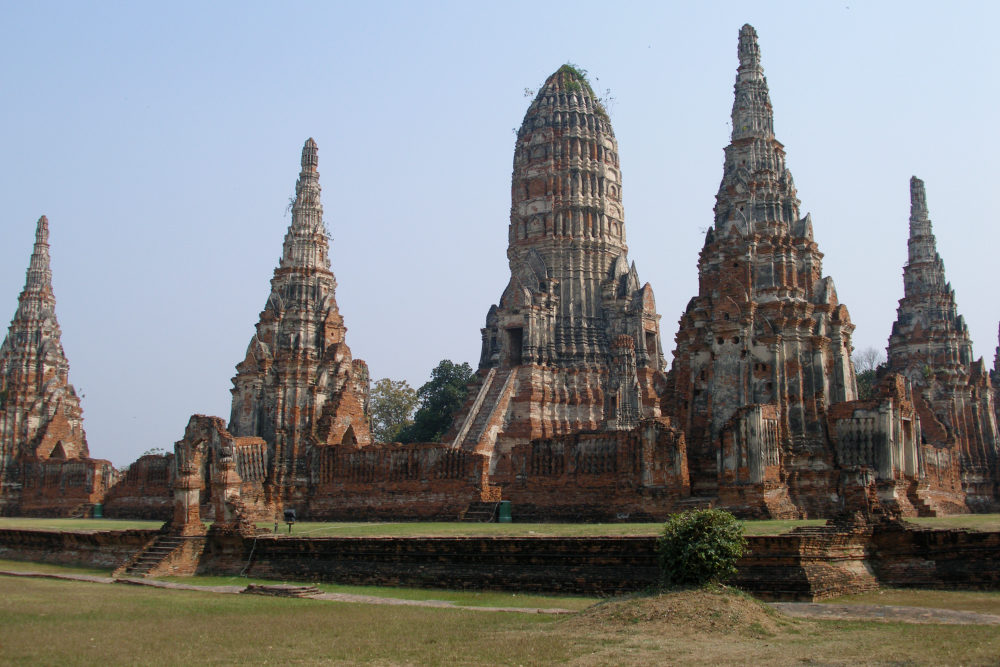
Ayutthaya in every season
Ayutthaya in every light
Whatever month you arrive, this World Heritage city has something worth seeing.
Ayutthaya sits on Thailand's central plain, with three clear seasons — a cool, dry stretch made for cycling the ruins, a hot season that pushes past 40°C, and a rainy season that genuinely floods the riverside in some years. Each one has something to offer, and each one comes with a warning worth reading before you set out.
If you can only pick one month, pick December or January. Daytime temperatures sit around 22–30°C, mornings and evenings are cool, the rain has gone, and you can cycle the ruins all day without wilting in the sun — and the floodlit temples look their best because the sky is clear. The catch: this is the peak, so crowds are heavier and rooms cost more, especially over New Year. For good weather with fewer people, choose November (which also brings Loy Krathong) or February.
If the cool season doesn't fit, go in knowing two things. March to May is hot — some days hit 40–45°C, and the ruins have almost no shade. And September to October is flood-prone in a high-water year, when low-lying riverside temples can close. Both seasons are still doable if you time your hours and check conditions — and you'll get thinner crowds and cheaper rooms for it. The full month-by-month breakdown is below; to compare across the country first, read best time to visit Thailand.
The weather, what it delivers, and what you are trading for it — told straight.
This is the answer if you're asking when Ayutthaya is at its finest. The rain has gone, the sky is clear, daytime sits around 28–32°C, and mornings and evenings drop to a comfortable 22–25°C. You can walk or cycle between Wat Mahathat, Wat Phra Si Sanphet and Wat Chaiwatthanaram all day without the sun grinding you down. Visibility is good and the prangs and chedis photograph sharply.
December and January are the peak of the year — the most visitors and the highest room prices, especially over the New Year holiday. For good weather with thinner crowds, choose November (with Loy Krathong) or February. The Ayutthaya World Heritage Fair around mid-December lights up the monuments — lovely, but busy.
The hot season is genuinely hot. Daytime highs usually top 35°C, and from late March into April some days reach 40–45°C. Here's the honest part: most of the ruins are open brick courtyards with barely a tree for shade. A few minutes in the midday sun and you'll feel it.
The way to handle it is to go at dawn (before 9am) or from the late afternoon into the evening, and always carry water, a wide-brimmed hat and sunscreen. The trade-off works in your favour: fewer people than the cool season and lower room prices. Songkran in April is a fun way to beat the heat with water, but it's also the hottest, busiest week.
From June to August the rain usually comes in short afternoon or evening bursts — heavy but brief — and the rest of the day stays fine for sightseeing. The greenery around the ruins is lush, crowds thin out and rooms get cheaper. Keep a folding umbrella or a packable rain jacket on you.
The thing you really need to know: September is the wettest month, and Ayutthaya is a low-lying town at the meeting of three rivers that floods in a high-water year. Low-lying riverside temples such as Wat Chaiwatthanaram can flood or close temporarily. Before travelling in September or October, check the flood news and the historical park's official channels. If the water stays down, the full moats and rivers look dramatic and you'll have the place almost to yourself.
A few windows are worth timing your trip around. Songkran in April is a fun way to cool off in the heat (though it's the hottest, busiest week). Loy Krathong in November is especially lovely held among the riverside ruins, and the weather has turned cool by then — the best alignment of festival and climate all year.
The biggest highlight is the Ayutthaya World Heritage Fair around mid-December, when monuments across the island are illuminated and a light-and-sound show retells the old capital's history. Beyond the fair, the Historical Park routinely lights Wat Ratchaburana and Wat Mahathat after dark — the prangs under the lights are striking, and the air is cooler. The clearest evenings are in the cool, dry season.
Temperature, rainfall and crowd levels — in one table for easy comparison.
| Month | Temperature | Rain | Crowds | Notes |
|---|---|---|---|---|
| January | 22–32°C | Very low | High (New Year) | Cool and clear · peak cycling |
| February | 23–34°C | Very low | Moderate | Still pleasant · warming late in the month |
| March | 25–37°C | Low | Moderate | Heating up · stronger sun |
| April | 28–40°C | Low | High (Songkran) | Hottest, up to 40–45°C · Songkran |
| May | 27–38°C | Moderate | Low | Still hot · rains begin late in the month |
| June | 26–35°C | Moderate | Low | Afternoon-evening rain · rooms cheaper |
| July | 26–34°C | Moderate | Low | Intermittent rain · lush, few crowds |
| August | 26–34°C | Heavy | Low | Rain getting more frequent · pack an umbrella |
| September | 25–33°C | Heaviest | Low | Wettest · riverside flood risk |
| October | 25–33°C | Heavy | Low | Water still high · check riverside temples |
| November | 24–33°C | Low | Moderate | Turning cool, skies clearing · Loy Krathong |
| December | 22–31°C | Very low | High (year-end) | Coolest and clearest · World Heritage Fair |
Two questions that can decide your whole Ayutthaya trip — answered straight, both of them.
The cool season is the answer. Ayutthaya's island is flat and compact, the main temples sit close together, and renting a bicycle (around ฿50/day) lets you loop Wat Mahathat, Wat Ratchaburana and Wat Phra Si Sanphet in comfort once the air is cool — no sweating it out like the hot months. Skies are clear and the monuments are sharp; save Wat Chaiwatthanaram for the late afternoon and the sunset.
If you'd rather not pedal, hire a tuk-tuk by the hour (around ฿200–300/hr for a temple loop — agree the rate before you get in). For a full how-to on the ruins, read our Ayutthaya Historical Park guide.
Ayutthaya sits where the Chao Phraya, Pa Sak and Lopburi rivers meet. As the rainy season winds down, run-off from the north piles in, and in some years the water rises and spills into the low-lying ground — especially in September and October. Low-lying riverside temples such as Wat Chaiwatthanaram can flood or close temporarily.
It doesn't happen every year, and it doesn't flood everywhere, but before travelling in this window check the flood news and the historical park's official channels. The compensating upside is full moats and rivers that look dramatic, very few crowds, and the lowest room prices of the year.
These are reasons to time your visit, not reasons to avoid it.
Songkran is a water-splashing festival that lands right in the hottest week of the year. Ayutthaya has an old-town feel to it — water-pouring blessings at the temples alongside street water fights in the neighbourhoods. It's a hot but joyful time. Worth knowing: it's busy, rooms fill fast, and you'll want everything in your bag waterproofed. If you'd rather see the ruins in peace, skip the main splashing days. More in our Songkran guide.
Loy Krathong falls just as the weather is turning cool, and Ayutthaya — a town built on the water — makes a beautiful setting for it, especially when it's held among the riverside ruins with the prangs and chedis lit up. It's the best alignment of festival and weather all year. Check the exact date and the venues for that year before you plan. More in our Loy Krathong guide.
The annual fair celebrating Ayutthaya's UNESCO World Heritage listing, held around mid-December when the weather is pleasantly cool. The highlight is the illumination of monuments across the island and a light-and-sound show that retells the history of the old capital. The prangs and chedis under the lights are a fine sight. It gets crowded and rooms book out, so check the Ayutthaya province schedule and reserve accommodation ahead.
Not exhaustive — just the things that actually matter for Ayutthaya.
Whatever month you arrive, this World Heritage city has something worth seeing.