Zhangjiajie city is where the logistics of the whole trip come together — the airport is barely a half-hour drive away, the high-speed train brings you from Changsha in about ninety minutes, and Tianmen Mountain's cable car lifts off from the middle of town. Zhangjiajie has no metro, but this is the easiest place to sleep on your first and last nights.
Picture landing at Hehua airport, taking a 15-20 minute DiDi into a central hotel, dropping your bags and stepping back out — and there is the sheer cliff of Tianmen Mountain rising right beside the city, with a cable car climbing from the heart of town to the summit. That is the appeal of Zhangjiajie city, or Yongding (永定) district, which gathers the DYG airport, the rail stations and the Tianmen cable-car base in one place — the arrival-and-departure point for almost every trip.
What defines the city is how close everything to do with getting around is — Hehua airport (DYG) is only about 5-10 km from the centre, the Zhangjiajie West high-speed-rail station (张家界西站) is a hub where the train from Changsha arrives in about 1.5 hours and the Zhangjiajie-Fenghuang high-speed line begins, and the central Zhangjiajie station (张家界站) sits about 1 km from the Tianmen Mountain cable-car base, walkable from town. By the Lishui River in the evening, the new Dayong Ancient City (大庸古城) lights its red lanterns and stages a Tujia culture show.
If you have ever had a trip where the sights and the transport sit on opposite sides of a region, eating your day in transit — Zhangjiajie has one thing to understand from the start: the city and the Avatar pillar park are not the same place. The Avatar-style sandstone pillars are at Zhangjiajie National Forest Park / Wulingyuan, about 33 km away, roughly an hour by road. So most people split their stay — sleep near Wulingyuan for the pillar park, then come back to the city for Tianmen or the night before flying out. That is why we point you here for your first and last nights.
You don't come to Zhangjiajie city mainly for the looks of the city itself, but because it is practical — close to the airport and the rail, and a strong base for a Tianmen Mountain day.
The appeal of Zhangjiajie city is that it fits the start and end of a trip just right. It isn't large or a place you'd walk all day, but there is enough to do for a day or so — ride the Tianmen Mountain cable car up to Heaven's Gate and the glass walkways, then come down at dusk to stroll Dayong Ancient City by the river and eat fiery Tujia and Hunan food, and the next morning move on or fly home with no fuss. The city suits travellers who want to set up near the transport rather than linger for days.
Sleep in the city on your first night off the plane or the train, to settle and recover before the Forest Park, and on your last night before flying out, so you aren't dragging bags from Wulingyuan at dawn to catch a flight. For the detailed way in from the airport, read getting in from Zhangjiajie airport.
The Tianmen cable-car base is right in the city, a few minutes on foot or by DiDi, so on the day you go up the mountain it makes sense to be in the city to join an early queue ahead of the crowds. Read the routes and highlights in the complete Tianmen Mountain guide.
In the evening, Dayong Ancient City lights its red lanterns by the river, with a Tujia culture show and local restaurants — a nice walk to wind down after the mountain. For what to try, see the complete Zhangjiajie food guide.
The Zhangjiajie-Fenghuang high-speed line leaves from Zhangjiajie West, and Changsha is only about 1.5 hours away. If you are continuing to the old town of Fenghuang, staying in the city the night before you set off is the easiest option. For ideas around the region, see day trips from Zhangjiajie.
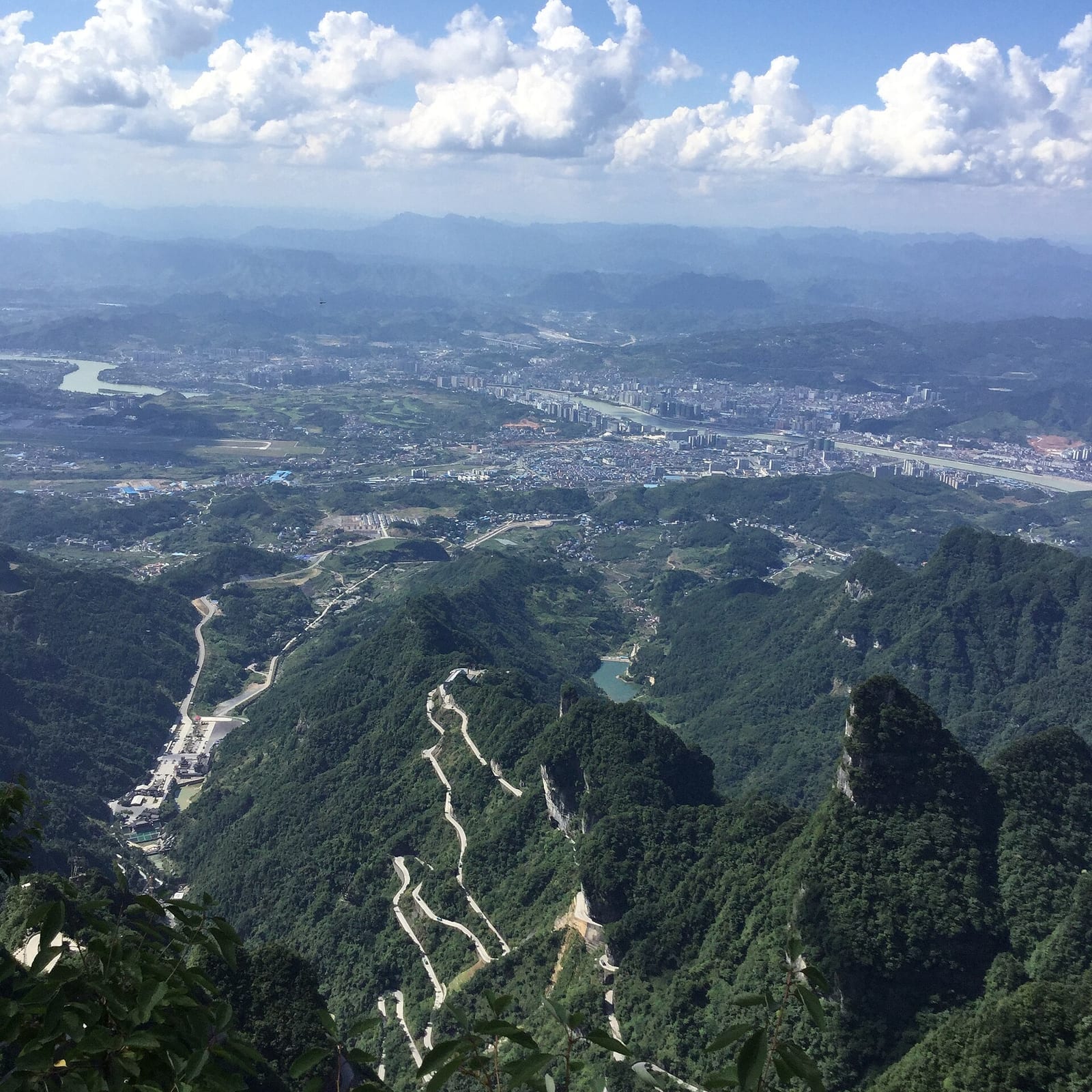
A flat-topped mountain that rises right beside the city, reached by the world's longest passenger cableway, about 7.5 km (~7,455 m), which lifts off from the lower station in the city centre opposite the railway station and floats over town and the 99-bend road up to the summit. An adult ticket is currently about ¥285-288 (~฿1,425-1,440), which already includes the round-trip cable car and the in-park shuttle buses; allow half a day to a full day. Key 2026 note: the upper cable-car section (mid-station to summit) has been closed for major maintenance since 6 November 2025 and was still under repair in mid-2026 — during this time the cable car runs only to the mid-station and you continue by shuttle bus, so reconfirm the cable-car status with your ticket seller first. Read the full detail in the Tianmen Mountain guide.
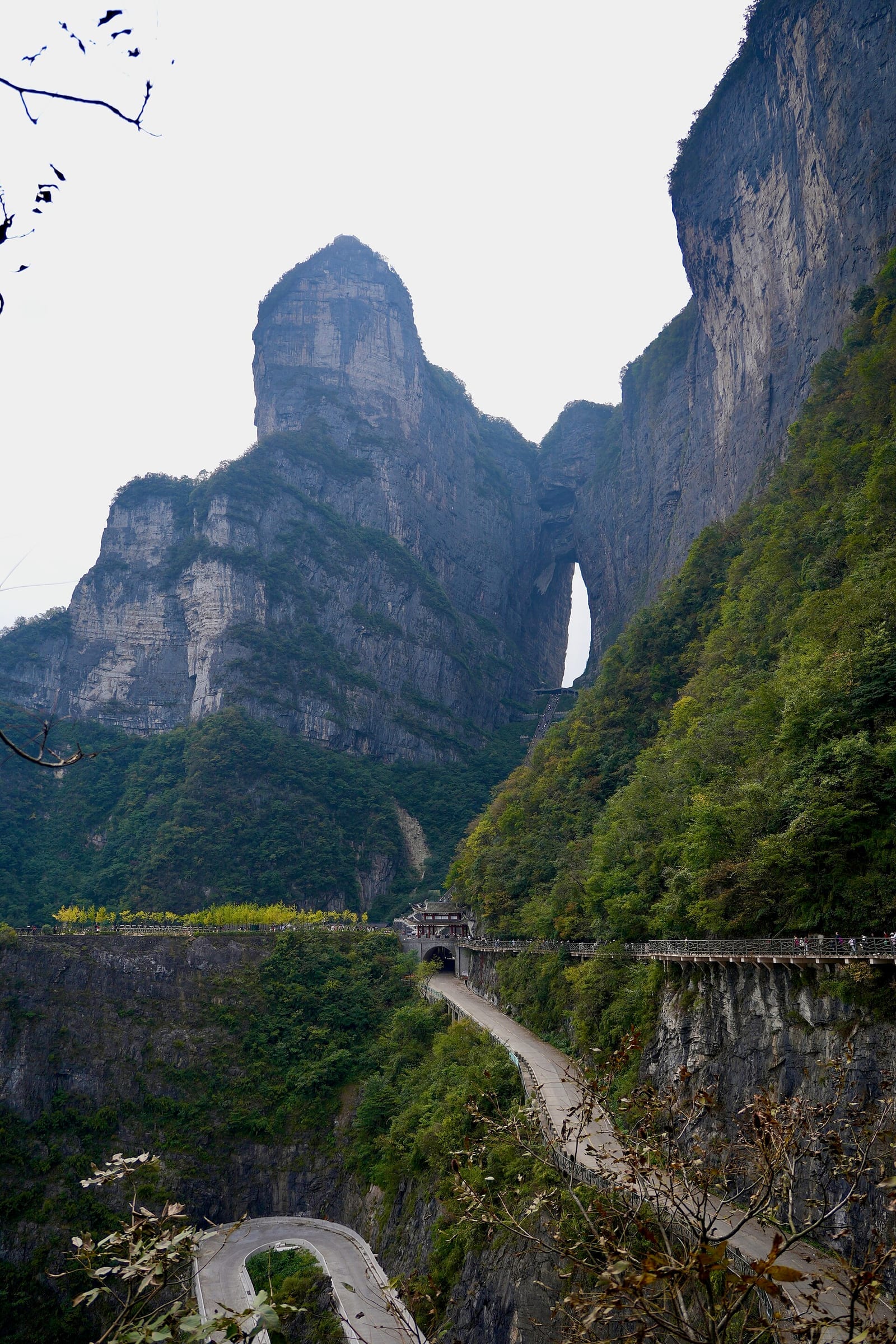
Heaven's Gate is a giant natural arch punched clean through the middle of the cliff, about 131 m high and roughly 57 m wide — the source of the name "Heaven's Gate", since it looks like a doorway opening through the mountain into the sky. Below it runs a steep stone staircase, the "Stairway to Heaven" of 999 steps — the number nine signifies eternity in Chinese culture. If you don't fancy climbing all 999, there are escalators inside the mountain to take you up instead (a separate charge). This is the iconic shot travellers come to Zhangjiajie to capture.
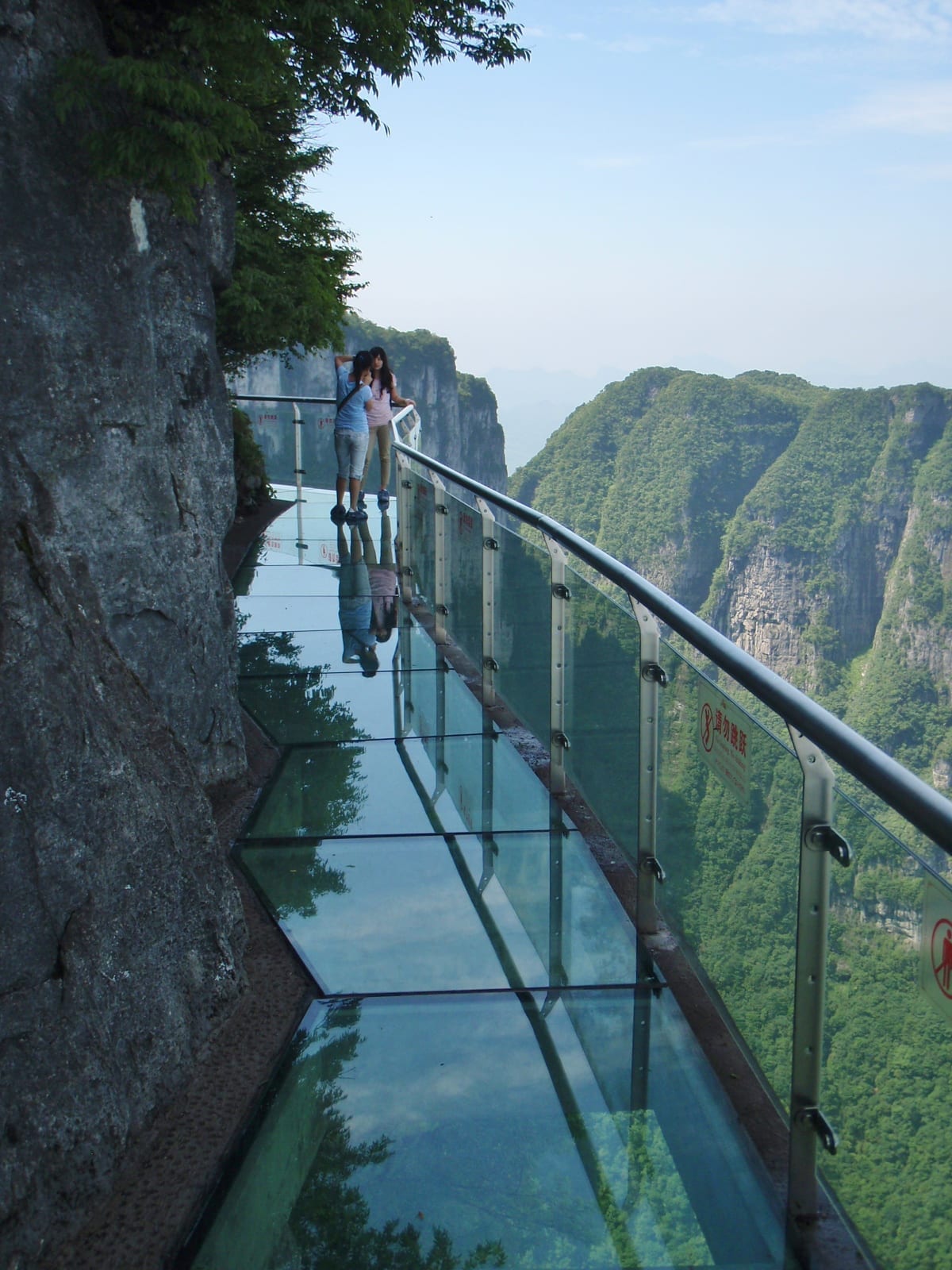
The summit of Tianmen Mountain has clear glass walkways along the cliff face that jut out from the rock so you can look straight down into the chasm below, including the Guigu plank walk (鬼谷栈道) and other coiled cliff paths that ring the top. They are a nerve test, but the view is well worth it. You have to put on shoe covers before you step on (a small charge of about ¥5 / ~฿25 per section). If you are afraid of heights, you can take the normal paths and skip the glass stretches — but if you want the thrill, this is the highlight of the day.
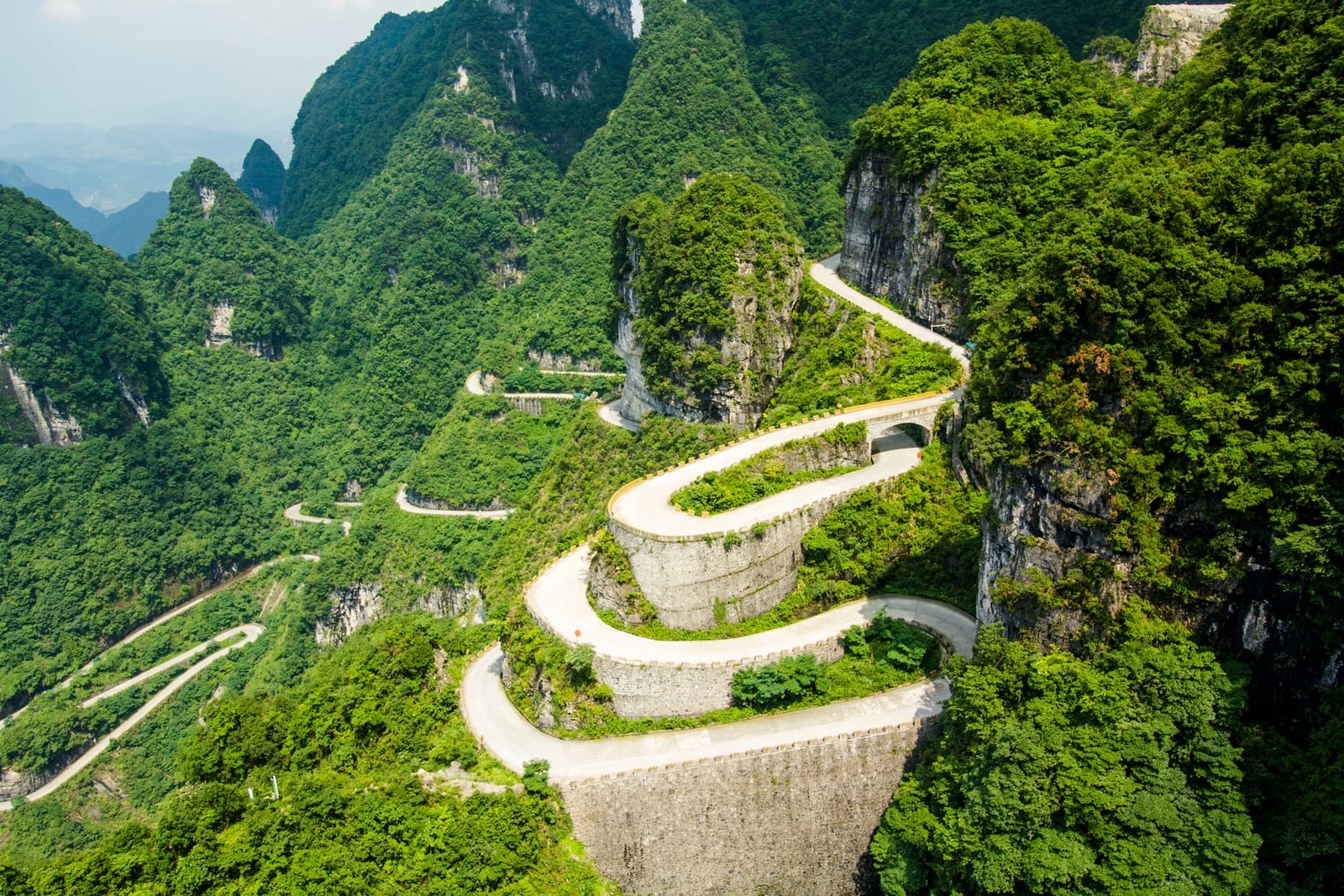
A road that switchbacks up the mountain in 99 hairpin bends, climbing toward the mouth of Heaven's Gate. Its name, "Tongtian Avenue", means "the road to heaven", and it is at its most photogenic shot from the cable car, where you see the ribbon of road snaking up the cliff in layers. Normally you ride up it on the park's mountain shuttle buses (included in the ticket); while the upper cable-car section is closed for maintenance, this bus road plays a bigger role in getting you up and down.
A rebuilt old town on the Lishui River (澧水) in the city, looking across the water to Tianmen Mountain. It is an evening stroll that lights its red lanterns after 19:00, with buildings in the styles of the Tujia, Miao and other ethnic groups, and a big culture show called "Meet Dayong / Fantasy Dayong City" (a separate show ticket of about ¥258). It opens roughly 08:00-21:00 — a good place to wind down after the mountain and get a feel for the Tujia culture that this area belongs to. If you skip the show, you can still walk and photograph the riverside after dark.
The food in Zhangjiajie city is Tujia and Hunan — spicy, sour and smoky over wood — eaten all around Dayong Ancient City and the streets near the cable-car base.
The city's signature dish is sanxiaguo (三下锅), the Tujia "three-layer pot" — a braised pot of three kinds of meat stir-fried with spices, dried chillies and pickles, fiery in the Hunan style and eaten with hot steamed rice. On a cool day up the mountain it tastes even better. Local places are scattered around the city and near Dayong Ancient City, and prices are easy on the wallet. More at the complete Zhangjiajie food guide.
Beyond the three-layer pot there is mountain smoked bacon (腊肉), deep-fried stinky tofu, Hunan-style hotpot and a run of street snacks around Dayong Ancient City after dark. The Tujia lean sour and spicy; if you don't handle heat well, ask the cook to ease off the chilli. There are local sweets and teas to try after a meal too, and eating by the river under the red lanterns is part of the city's appeal at night.
This is a base close to the airport, the rail stations and the Tianmen cable-car base — with hotels at several price points to suit your budget and your plan.
The strongest argument for basing yourself in the city is that you get a location close to the transport and the cable-car base at the same time. Settle in on night one off the plane, ride up Tianmen early the next day, and sleep near the airport on your last night before flying out. Many of the hotels sit around the cable-car base and the central railway station, within walking distance of restaurants and Dayong Ancient City.
One thing worth knowing: if the main goal of your trip is the Avatar pillar park, the city is about an hour from the Forest Park, so on your park days it is better to sleep near Wulingyuan to get an early start into the park, and only come back to the city for your Tianmen day or before flying home. That is the "split stay" most Zhangjiajie travellers use.
Or read the individual hotel reviews near the Tianmen cable-car base in the city:
Zhangjiajie has no metro. You get around the city by taxi, by hailing a DiDi, or by city bus (paid by scanning Alipay or WeChat). The good thing about the city is that the airport, the rail stations and the Tianmen cable-car base are all close together.
08:00 — Start with noodles or a Tujia breakfast in the city, then walk to the Tianmen cable-car base.
08:45 — Join the morning cable-car queue and float over town and the 99-bend road up the mountain (check the upper section's status first).
10:00 — Walk the cliff glass skywalks and the summit paths for the chasm views.
12:00 — Come down to Heaven's Gate and climb the 999 steps (or take the in-mountain escalators).
14:00 — Come down off the mountain back into the city, rest and have a late lunch.
18:30 — Stroll Dayong Ancient City by the river, see the red lanterns and have dinner (catch the show if you like).
The way most people handle Zhangjiajie is to split the stay by zone — because the city and the Avatar pillar park are about an hour apart:
Night 1 — Arrive at the airport/rail, sleep in the city to settle in, and see Tianmen Mountain or Dayong Ancient City.
Nights 2-3 — Move to stay near Wulingyuan and go into Zhangjiajie National Forest Park for the Avatar pillars, Tianzi Mountain, the Golden Whip Stream and the Bailong Elevator.
Last night — Come back to the city before flying out, or continue by train to Fenghuang.
See the full list at Zhangjiajie's top attractions · trips around the region at day trips from Zhangjiajie · and plan the whole trip with the complete Zhangjiajie city guide.