Hot and humid year-round, but temples need covered shoulders, the rainy season needs an umbrella, and the north gets chilly at night — pack wrong and you'll lug it the whole trip. Here's what to bring, and what to leave at home because it's cheaper there.
There's one rule people forget about Thailand: it's hot and humid almost all year, but temples and palaces require modest dress with covered shoulders and knees. So you pack light, breathable clothes that survive the heat — plus one cover-up for temple visits. After that it's beach gear, rainy-season kit, sun and insect protection, and a small meds bag. None of it is complicated once you know what the climate actually throws at you.
The good news: Thailand is cheap and easy to buy in. Toothpaste, sunscreen, umbrellas, flip-flops and T-shirts are on every corner at 7-Eleven, Boots or a market stall, so you don't need to carry everything. Pack the things that are genuinely hard to find locally, and top up the rest there. This page is the full checklist by category — scroll through and tick off what you need.
Tick off each category before you zip up — every one has an item travellers commonly forget.
Small things — but annoying to be without for a whole trip.
Pack a compact kit: rehydration salts (ORS) for the day a stomach bug or heavy sweating hits · anti-diarrhoea tablets · motion-sickness pills (genuinely useful for island ferries, and for the winding 762 curves up to Pai) · antihistamines · plasters · and enough of any personal prescription meds for the whole trip, plus a copy of the script. Pharmacies and 7-Elevens stock most basics cheaply, but bring your own specific medication.
Thailand runs on 220V / 50Hz. Sockets take Type A (two flat pins), Type B (two flat pins plus ground) and Type C (two round pins, European). Most outlets are hybrid sockets that accept both flat and round pins, so standard Thai, US and European plugs fit directly — but UK and Australian plugs need an adapter, so a universal travel adapter is the safe call. Don't forget a power bank and an eSIM so you have data the moment you land.
Your passport should have at least 6 months of validity. Photograph or scan it and keep copies on your phone and in your email in case it's lost. Get travel insurance (especially if you'll ride a scooter or dive). Carry some cash in baht (฿) — many small shops, markets and songthaews are cash-only — plus a credit or debit card for ATMs and shopping malls.
Don't carry much of the everyday stuff, because it's cheap to buy in Thailand — toothpaste, shampoo, soap, sunscreen, umbrellas and flip-flops are all at 7-Eleven, Boots and Watsons. Pack just enough for the first day or two, then top up. And don't forget a packable daypack for day trips — somewhere to stash water, an umbrella, sunscreen and things you pick up along the way.
The core kit is the same, but each destination and season adds a few specific items.
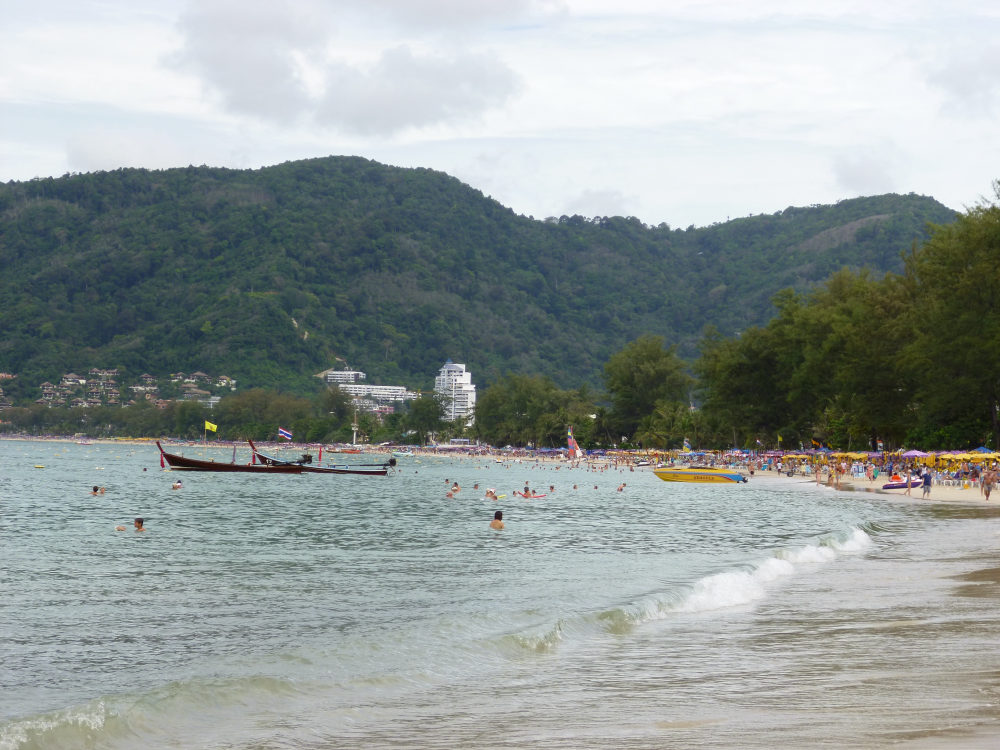
Add to the core kit: spare swimwear, a quick-dry towel, water shoes, a waterproof phone pouch, reef-safe sunscreen — and motion-sickness pills for the boat hops between islands. The Andaman side (Phuket, Krabi) is best Nov–Apr; the Gulf side (Samui, Phangan, Tao) is best Feb–Sep. Either way, pack light clothes as the base.

Add to the core kit: a light jacket or hoodie, because in Dec–Jan the nights and early mornings get genuinely cold — some days under 15°C, especially up on the hills and in Pai. Bring trainers for walking and trekking, and motion-sickness pills for the curves up to Pai. The days are still sunny, so keep your sunscreen and sunglasses handy. For Bangkok and elsewhere, you don't need the warm layer.
Leave room for what you'll bring home.
Before you fly, line up an eSIM so you have data the second you land — no hunting for a SIM at the airport. Then work out when to go and which islands suit you, so it's all set before departure.
Start here — cities, islands, seasons and every Thailand guide on one page.
Hot, wet or cool, region by region — pick your month, then pack for the season.
Domestic flights, trains, buses, ferries, Grab and scooters — how to move efficiently.
Scooters, scams, the sea, street food — what to know, tied to what you pack.
What first-timers get wrong — including temple dress and what they forget to bring.
Answer a few questions to find your island — then pack beach gear to match.