🌏 All Destinations 🇹🇭 Thailand · All Guides 🛡️ Safety Guide (this page) Getting Around Thailand First-Timer Mistakes Best Time to Visit eSIM / SIM / Internet Which Island? About 🇹🇭 Thai🇬🇧 English
🇹🇭 Thailand Travel Safety Guide · Updated June 2026

Is Thailand safe?
The short answer is yes

Thailand is one of the most welcoming destinations in Asia, and violent crime against tourists is rare. There are a few things worth knowing first, though — and what actually hurts visitors may not be what you expect. This is the calm, no-scaremongering version.

Overview

Thailand is safer than its reputation — but the real risk isn't crime

Honestly? Thailand is safer for tourists than the headlines make it feel. Thai people are friendly, daytime in tourist areas is relaxed, and violent crime against visitors is uncommon. But here's the part many travellers don't expect: the thing that injures and kills foreign tourists most often isn't theft, and it isn't terrorism — it's road accidents, and above all rented motorbikes ridden by people who've never ridden before.

The good news is that almost every real risk is preventable with common sense. This page ranks the dangers by how often they actually happen, not by how scary they sound — roads, scams, health, the sea, theft, and solo travel — with the emergency numbers and a short pre-flight checklist at the end. Read it and you'll travel a lot more relaxed.

Very safe overall
🛵Motorbikes = risk #1
💧Drink bottled/filtered water
🏖️Sea: watch for rip currents
👮Tourist Police 1155
🏥Always get travel insurance
⚠️ As of June 2026. Local conditions and government travel advice can change — always check the latest official notices and the weather before you go.
Risks, ranked honestly

6 things actually worth watching for in Thailand

Ordered by what genuinely injures travellers, not by what sounds frightening. Each one is easier to avoid than you'd think.

🛵
The real #1 danger
Road & motorbike accidents

This is the leading cause of tourist injury and death in Thailand — not crime. To rent a scooter you need an International Driving Permit with the motorcycle category, a helmet every single time, and zero alcohol. Traffic drives on the left and can be chaotic. If you've never ridden, a foreign holiday road is not the place to learn — Grab, taxis and songthaews are far safer.

Getting Around Thailand →
🎭
Costs money, not safety
The common scams

Most are money traps, not physical danger: "the temple is closed today" before being steered to a gem or tailor shop; taxis refusing the meter or quoting a flat fare; jet-ski operators claiming you damaged the craft; suspiciously cheap tours that herd you into shops; and padded bar bills. The fixes: ignore strangers who say a place is shut, always insist on the meter or use Grab, and film the jet-ski before you ride.

First-Timer Mistakes →
🍽️
Health & food
Water, street food, heat, mosquitoes

Drink bottled or filtered water, never the tap (restaurant ice is generally fine). Street food is delicious and safe if you pick busy stalls cooking fresh and hot. Thailand is genuinely hot with strong sun — drink often, wear sunscreen, and avoid the midday peak. Mosquitoes carry dengue, so use repellent, especially at dusk. Bring your own regular medication plus something for an upset stomach.

Best Time to Visit →
🌊
Beaches & the sea
Rip currents, jellyfish, jet-skis

Thailand's seas are beautiful but hold hidden dangers: rip currents strengthen during the monsoon — if a red flag is up, do not swim, and if caught, swim parallel to shore to escape the pull. Jellyfish (including box jellyfish) appear on some beaches in some seasons, so heed the warning signs. Always wear a life jacket on a jet-ski or banana boat, and pick island boats that carry enough of them. Ferries get cancelled in rough seas — don't push it.

Thailand Islands Guide →
👜
Belongings
Theft, bag snatching, the safe

Violent robbery is rare, but pickpocketing and bag snatching happen in crowds and from passing motorbikes — wear your bag on the inside, not dangling roadside. Keep your passport and most of your cash in the hotel safe, and carry a copy plus a photo of your documents on your phone. Watch your things in shared tour vans and on the beach while you swim.

Stay Connected with eSIM →
👩
Solo & nightlife
Solo-female safety & drink-spiking

Thailand is one of the safest countries in Asia for solo female travellers, but the basics still matter: tell someone at home where you are, and take a Grab back to your room late at night. At parties and Full Moon events, never leave your drink unattended or accept one from a stranger — drink-spiking does happen. Pace yourself, and go with friends where you can.

The Thailand Guide →
Good to Know

4 things worth keeping in your head

No long read required, but each one genuinely helps when it matters.

📞

Emergency numbers — save these three before you fly

Three easy numbers: 191 for the police (general emergencies); 1155 for the Tourist Police (English-speaking officers who help travellers directly — the first one to call for a scam or a language problem); and 1669 for ambulance and emergency medical services. All are free and work nationwide. Note the address of the nearest hospital to where you're staying, too.

🌧️

Natural hazards — monsoon, boat cancellations, northern haze

The Andaman coast (Phuket, Krabi) sees its monsoon around May–October, with rough seas and possible ferry cancellations. The Gulf side (Samui, Phangan) is wettest October–December. The North has a burning-season haze around March–April with high air-pollution readings — people with asthma or allergies should avoid it. Check the forecast and sea conditions before booking an island ferry, and if they cancel a boat for rough weather, don't go hunting for an unlicensed one.

⚖️

Laws & culture — the lines you don't cross

Thailand is serious about a few things: drugs carry heavy penalties, including some that are legal elsewhere; show respect for the monarchy and religion — dress modestly at temples, remove your shoes, and never climb on a Buddha image for a photo; vaping (e-cigarettes) is illegal in Thailand and can't be brought in; and littering or smoking is fined on some beaches. When in doubt, follow what locals are doing.

🏥

Travel insurance — don't cut this corner

Thailand is safe, but a private-hospital bill after an accident or sudden illness can be steep. A good policy should cover medical treatment, medical evacuation, and an emergency flight home. Most important: if you plan to ride a scooter, check that the policy explicitly covers motorcycle riding — many won't pay out without a valid licence. Read the fine print before you buy.

Where to take extra care

Mostly safe — a few places just want a little more attention

This isn't a "don't go" list — just match your awareness to the setting. Every major tourist destination is fine to visit as normal.
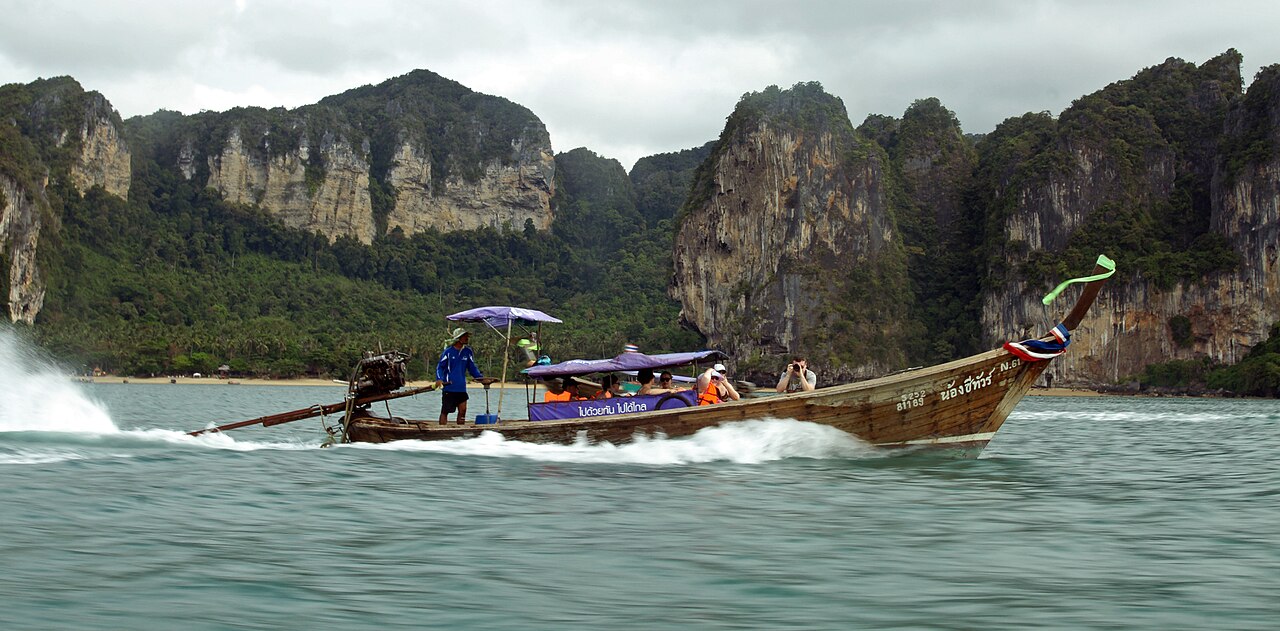
Longtail boat carrying tourists in life jackets past the limestone cliffs near Krabi
Islands & beaches
Phuket · Krabi · Samui · Phangan

It's mainly about the water: rip currents during the monsoon (watch for red flags), island ferries in rough seas, and jet-ski scams. On party islands at night, watch your drink and head back to your room in a group. The towns and main beaches are relaxed to explore by day.
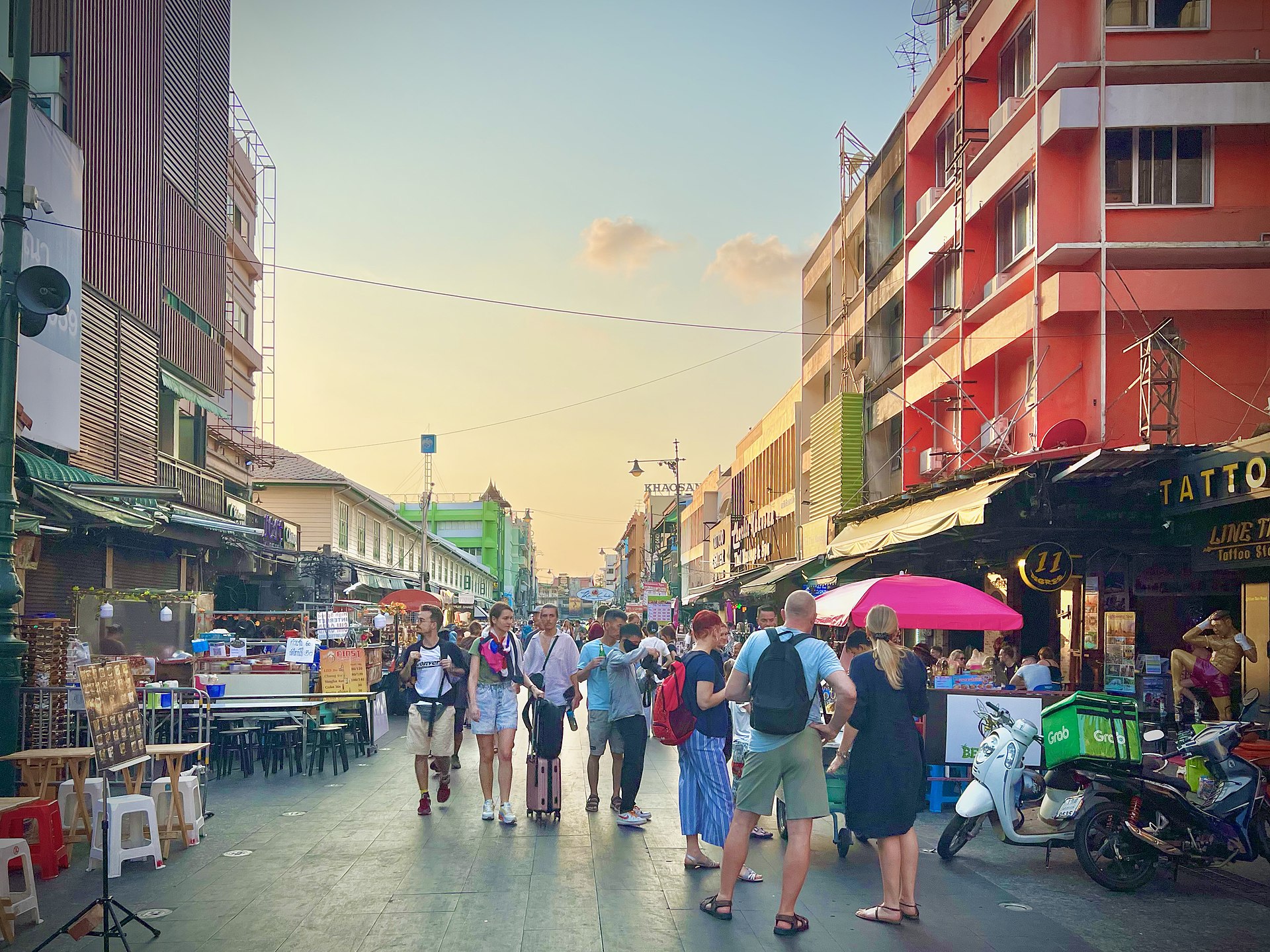
Khao San Road in Bangkok at night, crowded with tourists and lit-up shopfronts
Tourist zones & nightlife
Bangkok · Pattaya · bar districts

Mind your bag and your bill: in crowded spots like Khao San Road or a night market, pickpocketing happens — keep valuables on the inside. In bar areas, check the bill before paying and steer clear of places with unclear pricing. Take a Grab back late at night. The far-southern border provinces (Yala, Pattani, Narathiwat) warrant checking the latest travel advice before you go.

The big picture: all the main destinations — Bangkok, Chiang Mai, Phuket, Krabi, Samui, Pattaya, Hua Hin, Ayutthaya — are safe for tourists. Stay aware at the spots above and you'll be fine. Plan your routes and transport in the Getting Around Thailand guide, and to pick the island that fits you, try the island chooser.
Pre-Departure Checklist

6 things to do before you travel

🏥
Get travel insurance (covers motorbikes)
Check it covers medical costs and motorcycle riding if you intend to rent a scooter. Many policies won't pay out without a valid licence.
📞
Save 191 / 1155 / 1669
Police · Tourist Police (English-speaking) · ambulance. Note the address of the nearest hospital to your hotel as well.
🛂
Photograph your passport to your phone
Keep the original in the hotel safe and carry only a copy or photo, in case it's lost or you're asked for ID.
💊
Pack your meds + something for stomach upsets
Bring regular medication with its prescription. Anti-diarrhoea tablets, repellent and sunscreen are all easy to buy locally.
📶
Set up an eSIM/SIM so you're always reachable
Mobile data lets you book a Grab, check maps and call for help instantly. See the eSIM/SIM guide
🌡️
Check the season + weather
Avoid the worst of the monsoon and the northern haze (March–April). See the right window in Best Time to Visit.
FAQ

The safety questions people ask most

Is Thailand safe for tourists?
Overall, very safe. Thailand is one of the most tourist-friendly destinations in Asia, violent crime against visitors is uncommon, and walking around tourist areas in daylight feels relaxed. What actually injures travellers is not crime — it is motorbike and scooter accidents, followed by money-losing scams and minor health issues, all of which are preventable with common sense. (Information as of June 2026 — verify the latest before you travel.)
What is the most dangerous thing for tourists in Thailand?
Road accidents — and specifically rented motorbikes and scooters — are the leading cause of injury and death among foreign tourists, not crime. If you plan to ride a scooter you need an International Driving Permit with the motorcycle category, you should wear a helmet every time, never ride after drinking, and carry travel insurance that explicitly covers riding. Thai roads drive on the left. If you are not confident, use Grab, taxis or songthaews instead — far safer.
Can I drink the tap water in Thailand, and is street food safe?
Do not drink tap water directly. Stick to bottled or filtered water, which is cheap and sold everywhere. Ice in established restaurants and cafes is generally made from purified water and is fine. Thai street food is excellent and mostly safe — choose busy stalls cooking fresh and hot in front of you. Give your stomach a few days to adjust, avoid raw items or food left sitting out, and pack some anti-diarrhoea medicine just in case.
What are the most common scams in Thailand?
The usual ones are: a tuk-tuk driver or friendly stranger telling you a temple or palace is "closed today" before steering you to a gem or tailor shop; taxis that refuse the meter or quote a flat fare claiming traffic; jet-ski operators claiming you damaged the craft and demanding a large payment; suspiciously cheap tours that funnel you into shops; and padded bar bills. The fixes are simple: book a Grab, always insist on the meter, photograph and video any jet-ski before you ride it, check the bill before paying, and ignore strangers who approach you to say a place is shut.
What are the emergency numbers in Thailand?
Remember three numbers: 191 for the police (general emergencies); 1155 for the Tourist Police, who have English-speaking officers and help travellers directly; and 1669 for ambulance and emergency medical services. All three are free to call and work nationwide. Save them in your phone before you travel, and note the address of the nearest hospital to where you are staying.
Do I need travel insurance for Thailand?
Strongly recommended. Thailand is safe, but private-hospital bills after a motorbike accident or sudden illness can be very high. Good travel insurance should cover medical treatment, medical evacuation, and — if you intend to ride a scooter — must state clearly that it covers motorcycle riding. Many policies will not pay out if you were riding without a valid licence, so read the fine print before you buy.
Plan a relaxed Thailand trip

Prepared? Then go
Thailand is waiting for you

Once you know the real risks and have packed for them, the rest is just enjoying the trip. Start by picking the right season, mapping out how you'll get around, and setting up data so you're always reachable — the guides are all here.

🇹🇭 Thailand Guide 🚘 Getting Around