Home Shirakawa-go Japan Gifu Read in Thai About
Home  ›  Asia  ›  Japan  ›  Shirakawa-go  ›  Food Guide
🇯🇵 Shirakawa-go Food Guide · 2026

What to eat in Shirakawa-go
6 dishes from a mountain kitchen

The UNESCO thatched village in the Gifu mountains is more than a photograph. This is the home of Hida beef that melts on the tongue, soba milled from grain grown on the slopes, and miso grilled on a leaf until the whole table smells of it — and you can eat the lot in half a day.

Why eat here

A kitchen born of snow and scarcity

Picture a village sealed in by snow for months at a time, with no sea, no wide paddy fields, only mountains, a clear river and small terraces of soil on the hillsides. Shirakawa-go's cooking grew out of what the valley could actually give: buckwheat that grows on thin ground, charr from cold streams, mountain vegetables foraged in season, miso fermented at home to last the year, and beef raised in the Hida district that became one of Japan's championship wagyu. Every dish is plain, and every dish has a reason.

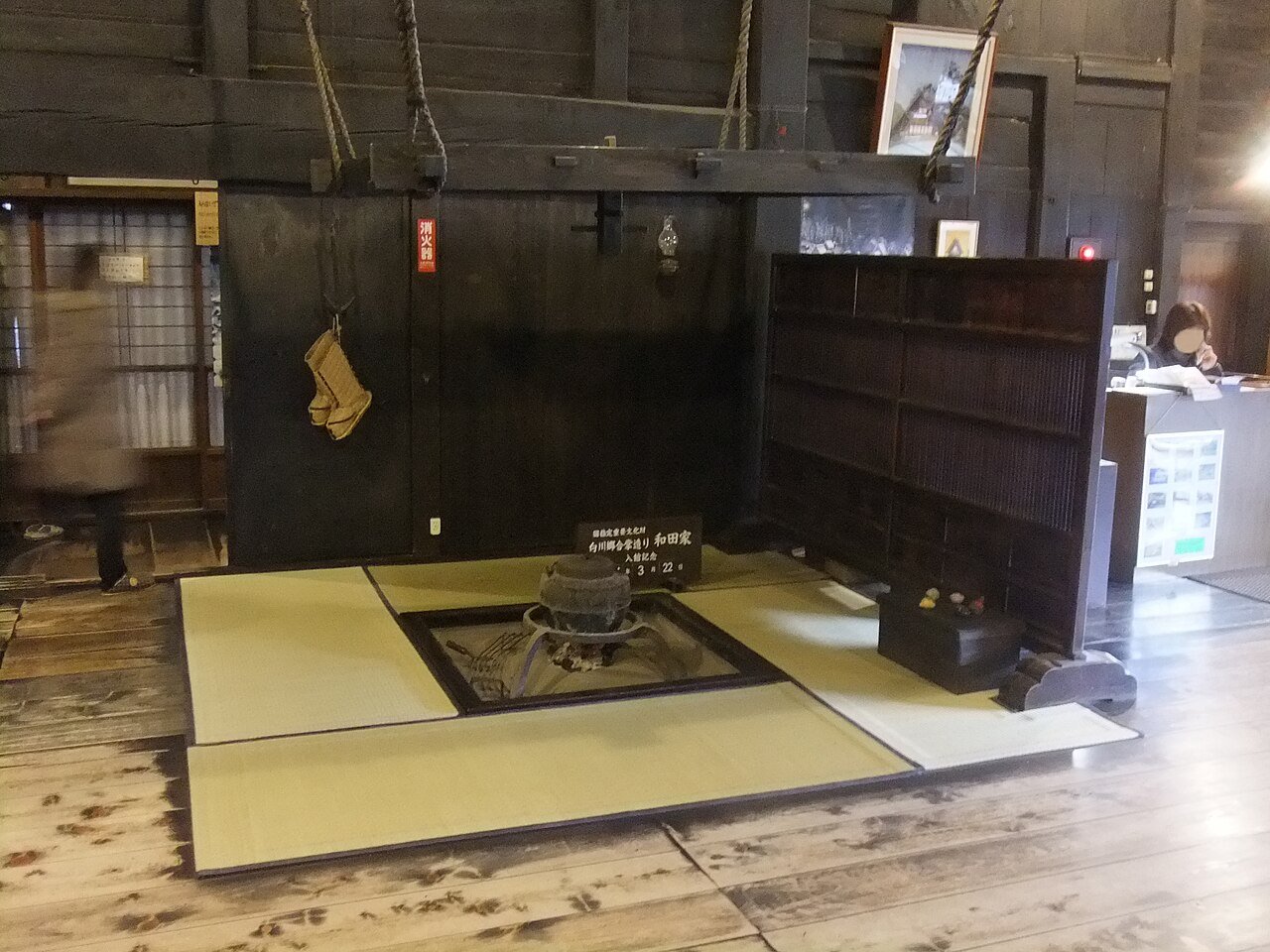
At the heart of eating here is the irori — the sunken charcoal hearth in the middle of a gassho-style farmhouse. Fish stand on skewers planted around the fire to cook low and slow, miso bubbles on a leaf, and the rising smoke cures the thatched roof so it lasts a century. We picked 6 dishes and bites that tell the story of this village best, from a ¥300 skewer eaten on the move to the dinner around the hearth you have to stay the night to taste.

The dishes

6 dishes to try before you leave the valley

Ordered from easy hand-held bites to the spread you sit down for, around the fire
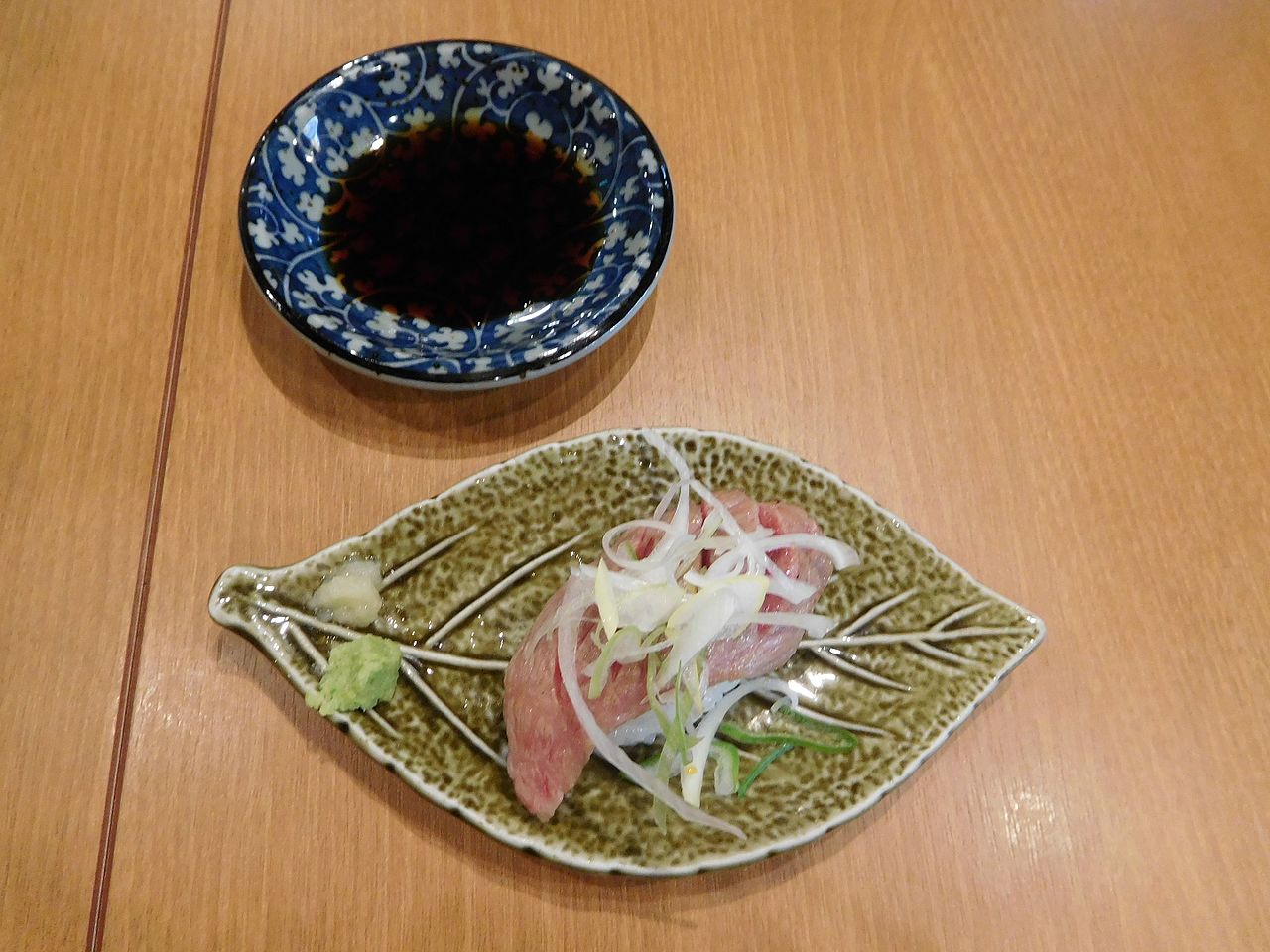
Hida beef sushi on a leaf-shaped ceramic plate, pink marbled wagyu topped with white spring onion beside a blue-and-white dipping dish 1
Hida Beef
飛騨牛 · the wagyu that won the national championship

Be honest — coming to the Hida district and skipping Hida beef would be a waste. This is wagyu from Gifu's black-haired cattle that once took the top prize at Japan's national beef competition, with marbling so fine it melts at low temperature and turns sweet and tender the moment you bite. The village serves it every way: grilled Hida beef sushi pressed onto a small mound of rice, hot croquettes fried to order, soy-glazed skewers, and full grilled sets or steaks at sit-down restaurants. It costs noticeably less than the famous city brands because you are standing right beside where the cattle are raised.
Where: Tenkara (grilled Hida beef sets, a TV regular) · Irori (on the main street) · sushi and croquette stalls in the village centre
Price: grilled sushi ¥600–900/pair · croquette ¥300–400 · grilled set/steak ¥2,500–5,000/person
Tip: a full set means sitting down — popular places fill at noon, so arrive before 11.30am
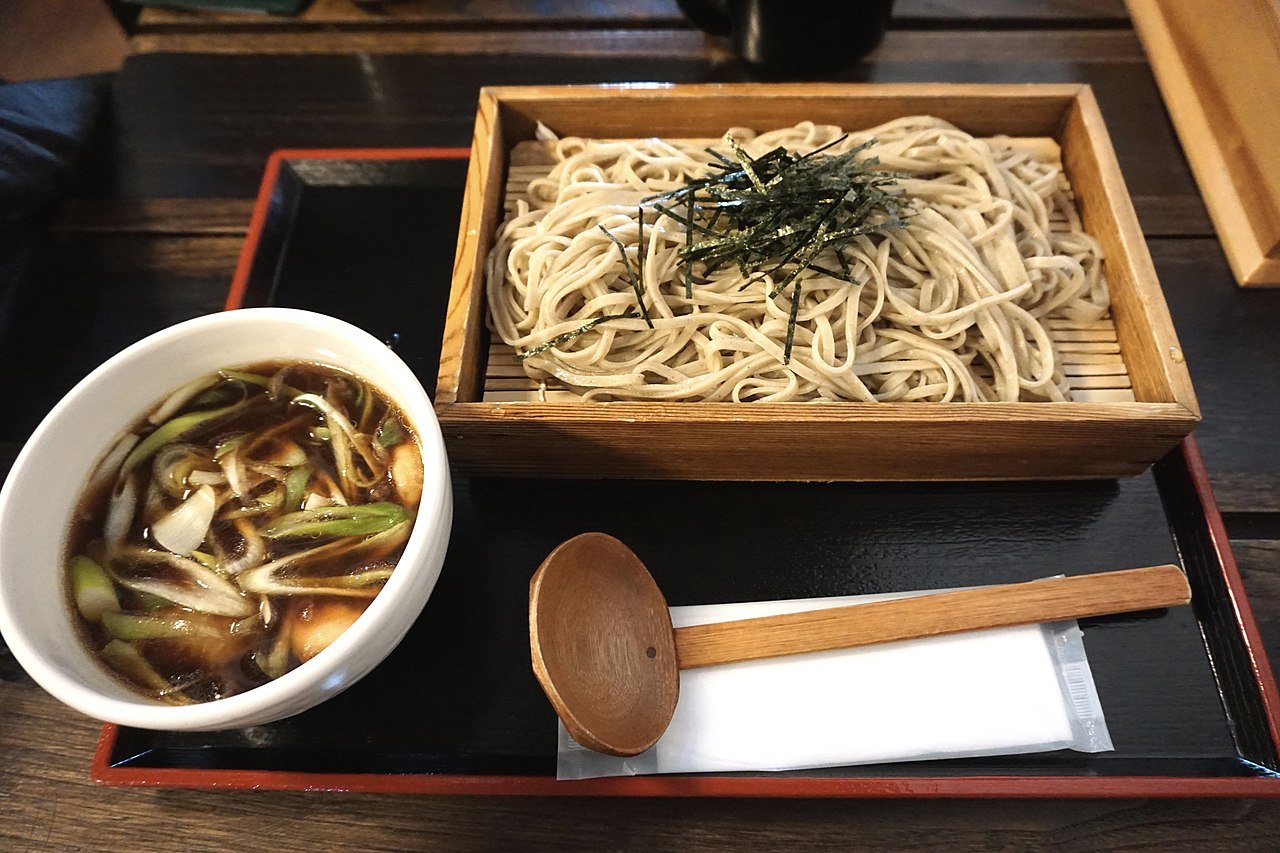
Zaru soba, brown buckwheat noodles in a bamboo box beside a dark dipping broth with spring onion, a wooden spoon and red-black lacquer tray 2
Hand-milled Soba
そば · buckwheat ground on the spot from mountain grain

Up in mountains where rice is hard to grow, buckwheat thrives on thin soil — which is why people here have eaten soba for centuries. Plenty of restaurants and inns still grind their own buckwheat on a stone mill in the shop, then knead and boil it fresh, so the noodles carry a buckwheat aroma far deeper than the soba you get in the city. Order it as zaru soba (cold, dipped into a soy broth) to taste the noodle at full strength, or kake soba (hot, in broth) with mountain-vegetable tempura. It hits perfectly after a morning of walking the village.
Where: Wakimoto (soba sets with grated yam or Hida beef rice bowls) · Shiraogi · soba shops around the village
Price: ¥900–1,500/bowl · set with rice or tempura ¥1,300–1,800
Tip: order zaru soba to taste the noodle; in winter, hot kake soba is warmer comfort
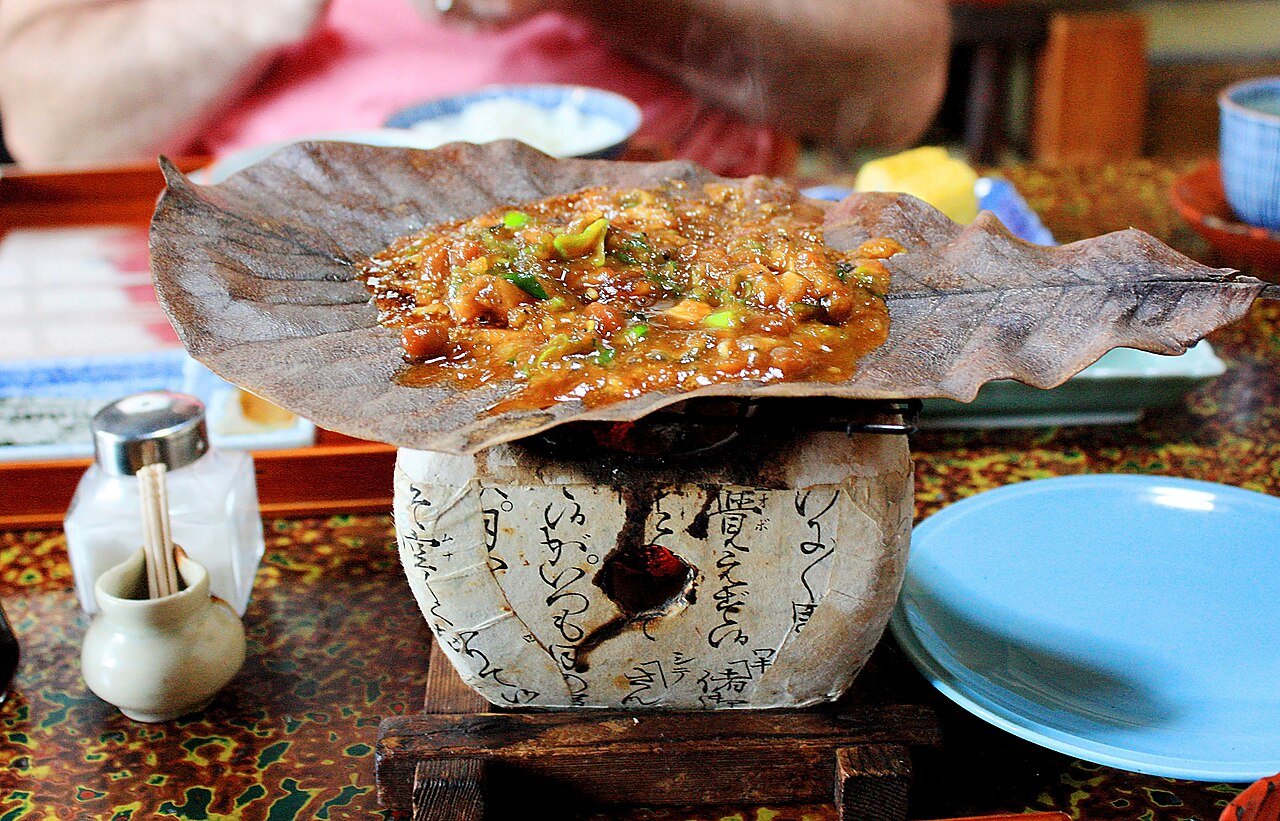
Hoba miso, miso topped with spring onion grilling on a dried brown magnolia leaf set over a small clay charcoal burner at a Japanese dining table 3
Hoba Miso
朴葉味噌 · miso grilled on a leaf over charcoal

This is the Hida regional dish you will want to photograph — house-made miso mixed with spring onion, mushrooms and mountain vegetables, spread on a dried hoba (magnolia) leaf and grilled over a small charcoal burner right at your table. As the miso starts to bubble and catch a faint scorch, the smell drifts across the whole table, and locals spoon it over hot rice one mouthful at a time. Some places lay Hida beef or an egg onto the same leaf to grill alongside. The flavour is salty-sweet and rounded, the kind you never tire of — a dish born from preserving miso to eat through the snowbound months.

Where: Gassho (served inside a gassho house) · Irori (hoba miso set) · Hida restaurants and minshuku across the village
Price: hoba miso set with rice ¥1,200–1,800 · more with Hida beef added
Tip: let the miso bubble before you mix it in — that faint scorch is the whole point
🐟4
Iwana Shioyaki
岩魚 · whole river charr, salt-grilled on a skewer

Iwana is the mountain charr that lives in the cold, clear streams around the village. People skewer it whole, rub it with coarse salt and plant it around the irori to grill slowly until the skin crisps and the flesh stays soft. You eat the whole thing, head to tail — the clean, mild flavour of cold-water fish carrying a light breath of charcoal smoke. Some minshuku finish it as iwana-zake, charring the bones and pouring warm sake over them until it takes on the fish's fragrance. It is a classic image of the hearthside dinner you rarely see in the city, a plain bite that tells the whole story of the streams and the valley.
Where: gassho-style minshuku (the irori dinner) · Hida restaurants · the occasional fish-grilling stall
Price: ¥600–1,000/fish on its own · usually included in a minshuku dinner spread
When: easiest to find at a minshuku dinner; only a few daytime stalls grill it
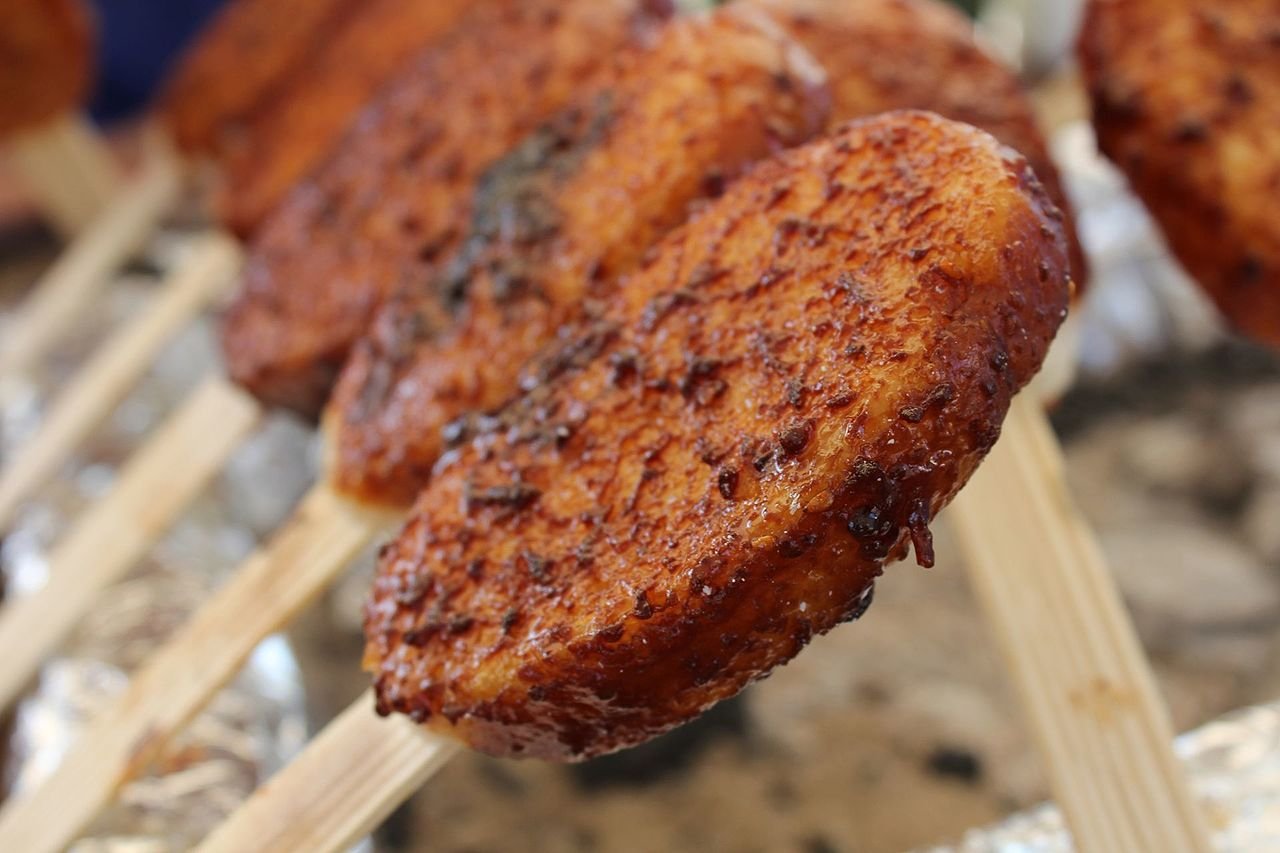
Gohei mochi, pounded rice on a flat skewer glazed with glossy reddish-brown miso sauce and grilled until the surface chars, resting on a grill 5
Gohei Mochi
五平餅 · pounded rice on a paddle, glazed and grilled

The hand-held favourite sold at stalls along the main street — cooked rice pounded until half-sticky, pressed around a flat paddle into a sandal shape, brushed with a sweet-savoury miso or walnut sauce, then grilled over charcoal until the surface chars and the glaze turns glossy. Bite in and you get both the chew of the rice and the smoky scent of the miso. It is the everyday snack of the Hida–Kiso region, eaten warm as you wander the village, and only a few hundred yen a skewer. If you are here for just half a day, this is the one to grab from your very first stall.
Where: stalls along the main street through the village · snack shops by the car park and Deai Bridge
Price: ¥150–300/skewer
When: mainly daytime · stalls tend to close around 4–5pm
Interior of a Shirakawa-go gassho farmhouse with a sunken irori hearth set into tatami matting, a kettle hung above the charcoal and worn wooden floors 6
Mountain Tofu & Suttate
石豆腐・すったて · the home flavours of a valley village

Mountain villages are known for their stone tofu (ishi-dofu), so firm you can lift it on a straw rope without it breaking. Eat it grilled and brushed with miso (yaki-dofu) and it turns fragrant; eat it cold with soy and you get the full taste of the soybean. Alongside comes suttate, a local soup thick and nutty with nothing but ground soybeans, and to finish, seasonal mountain vegetables (sansai) — bamboo shoots, fiddleheads, wild mushrooms, pickled or fried as tempura. Together they are the plain spread that tells the story of mountain life best, found most completely at a minshuku dinner or a Hida restaurant inside a gassho house.

Where: Gassho · Irori (yaki-dofu set) · gassho-style minshuku (the dinner spread)
Price: tofu / mountain-vegetable set ¥1,000–1,800 · included in a minshuku dinner
Tip: order yaki-dofu (miso-grilled tofu) to taste the firm village-style tofu at its best
Eating it all in half a day

Half a day is enough to eat well

Most visitors come to Shirakawa-go as a day trip from Takayama or Kanazawa — here is the order that works best

9.30–10.30
Step off the bus, grab your first gohei mochi
Walk from the car park across Deai Bridge into the village and stop at a street stall for a warm gohei mochi skewer (¥150–300) and a Hida-milk ice cream. Eat as you walk the gassho houses, catching the morning light before the crowds build.
10.30–11.30
Up to the Shiroyama viewpoint, then find Hida beef sushi
Climb to the Shiroyama viewpoint for the classic shot of the village from above, then come back down for a stall of grilled Hida beef sushi (¥600–900/pair) or a hot Hida beef croquette as a mid-morning bite.
11.30–13.00
A proper lunch — soba or hoba miso
Come before noon to beat the queue. Sit down inside a gassho house for a bowl of hand-milled zaru soba, or a hoba-miso set grilled on the leaf with hot rice (¥1,200–1,800). Want to go all in? A grilled Hida beef set at Tenkara.
13.00–15.00
Sweets and souvenirs before the bus
Walk it off with a Hida-milk drink or ice cream, taste local miso and pickles at the souvenir shops, and pick up Hida miso or dried soba to take home before catching an afternoon bus.
If you stay
Dinner around the irori — the bite a day trip misses
Stay at a gassho-style minshuku and you get the dinner around the charcoal hearth: iwana skewered and grilled slowly, hoba miso, firm mountain tofu, seasonal mountain vegetables and rice cooked over a wood flame. This is the meal you simply cannot get at ordinary restaurants.
Eat with respect: Shirakawa-go is a living UNESCO village where people still make their homes. Eat only on the public paths, never carry food into private gardens or yards, dispose of rubbish properly (bins are scarce, so carry a bag for your own), and do not photograph residents or their windows while you are eating.
In the village

Restaurants worth planning around

The places inside gassho houses and along the main street that eaters pass on — check the hours before you go, as many close early

1
Gassho (Oshokujidokoro Gassho)
Hida cuisine inside a gassho-style house · village centre

Eat local food inside a real thatched farmhouse, under high beams and old timber. The signature is Hida beef hoba miso grilled on the fragrant magnolia leaf, alongside suttate, the thick, nutty ground-soybean soup. Order a rice set each and a single meal brings you the grilled miso, the tofu and the mountain vegetables all at once — a good, proper lunch in the middle of a half-day trip.

Location: centre of Ogimachi village · near the main street
Signature: Hida beef hoba miso · suttate soup · local rice sets · Price: ¥1,200–2,500/person
2
Tenkara
The Hida beef place people come back for · a TV regular

If you have come specifically to eat Hida beef on a plate, Tenkara is the name that comes up most — its beef is sourced from a long-established butcher in the area. The favourites are the grilled Hida beef set (yakiniku) and the Hitsumabushi beef rice bowl, eaten several ways from one bowl. It is a small place with a loyal following and fills at lunch, so arrive early or leave time to wait.

Location: Ogimachi village · ask at the tourist information centre
Signature: grilled Hida beef set · Hida beef Hitsumabushi · Price: ¥2,500–5,000/person
3
Irori (Kita-no-sho Irori)
Local set meals around the hearth · on the main street

The name means "the irori hearth," and that is the draw — a hoba miso set, a chicken-chan set, a yaki-dofu set built on Shirakawa-go's firm tofu, and a local pickle-and-steak set, with both noodles and rice to choose from. Order hot soba in winter and cold soba in summer. This is the place if you want to try several of the village's dishes in one meal without staying the night.

Location: on the main street through Ogimachi village
Signature: hoba miso set · yaki-dofu · hot/cold soba · Price: ¥1,200–2,200/person
4
Wakimoto
Soba and Hida beef, generous sets

The pick if you want both soba and Hida beef in a single meal. The popular sets pair a mini grated-yam rice bowl with soba, or a mini Hida beef steak bowl with grated-yam soba — generous portions that justify the price, and noodles with a real buckwheat aroma. A good landing spot when you are hungry after a morning walking the village.

Location: Ogimachi village · near the main-street zone
Signature: soba and grated-yam rice set · Hida beef steak bowl · Price: ¥1,300–2,500/person
Frequently asked

FAQ · what people ask before they go eating

How much does a meal cost in Shirakawa-go?
Hand-held bites like grilled Hida beef sushi or a croquette start around ¥300–600 each, and a gohei mochi skewer is ¥150–300. A bowl of soba or a sit-down rice set runs ¥900–1,800 per person. A full grilled Hida beef set or steak is roughly ¥2,500–5,000 per person. Minshuku stays usually bundle dinner and breakfast into a ¥9,000–15,000 per-person package for both meals.
Where do you eat Hida beef in Shirakawa-go, and how does it differ from Kobe beef?
Hida beef is wagyu from Gifu's black-haired cattle that once won the national beef championship. The marbling is fine and melts at low temperature like other famous brands, but it is usually cheaper here because you are right by the source. In the village you can try grilled Hida beef sushi, hot croquettes and grilled skewers from stalls, while full grilled sets and steaks are served at sit-down places like Tenkara and Irori.
What is Hoba Miso?
Hoba miso is house-made miso mixed with spring onion, mushrooms and mountain vegetables, spread on a dried hoba (magnolia) leaf and grilled over a small charcoal burner right at your table until it bubbles and turns fragrant. People in Gifu eat it spooned over hot white rice, and some places add Hida beef or an egg to the leaf. It is a Hida regional speciality found at village restaurants and minshuku.
What can you eat on the go if you only visit for half a day?
If time is short, there is plenty to eat while you walk — gohei mochi skewers glazed with miso or walnut sauce, grilled Hida beef sushi, hot Hida beef croquettes, Hida-milk ice cream and grilled mochi sweets. You will find them all at stalls along the main street through the village and around the car park. Most sell during the day and tend to close early, around 4 to 5pm.
Do restaurants in Shirakawa-go take cards, and how much cash should I carry?
Larger sit-down restaurants and most Hida beef places accept cards and IC cards, but street stalls, small shops inside gassho houses and many minshuku are still cash only. The village sits in a valley and ATMs that accept foreign cards are scarce, so it is wise to carry around ¥5,000–10,000 in cash per person per day just in case.
What do you eat if you stay overnight in a gassho-style minshuku?
The charm of a minshuku is dinner around the irori, the sunken charcoal hearth at the heart of the house. Hosts typically serve whole iwana skewered and grilled slowly around the fire, hoba miso, seasonal mountain vegetables, firm mountain tofu and rice cooked over a wood flame — a home-style spread you cannot get at ordinary restaurants. Rooms are very limited and book out fast, so reserve months ahead, especially in winter. See the Shirakawa-go where-to-stay guide for options.
Klook · Day Trips

Shirakawa-go Day Tour — skip the sold-out bus gamble

There is no train to Shirakawa-go — you ride a bus from Takayama or Kanazawa, and seats sell out fast, especially in winter. Book a day tour ahead and you travel easy, with time to actually sit down to Hida beef and soba.

See Shirakawa-go tours on Klook →
Wherebest is a Klook affiliate partner — we may earn a commission when you book through our link, at no extra cost to you.