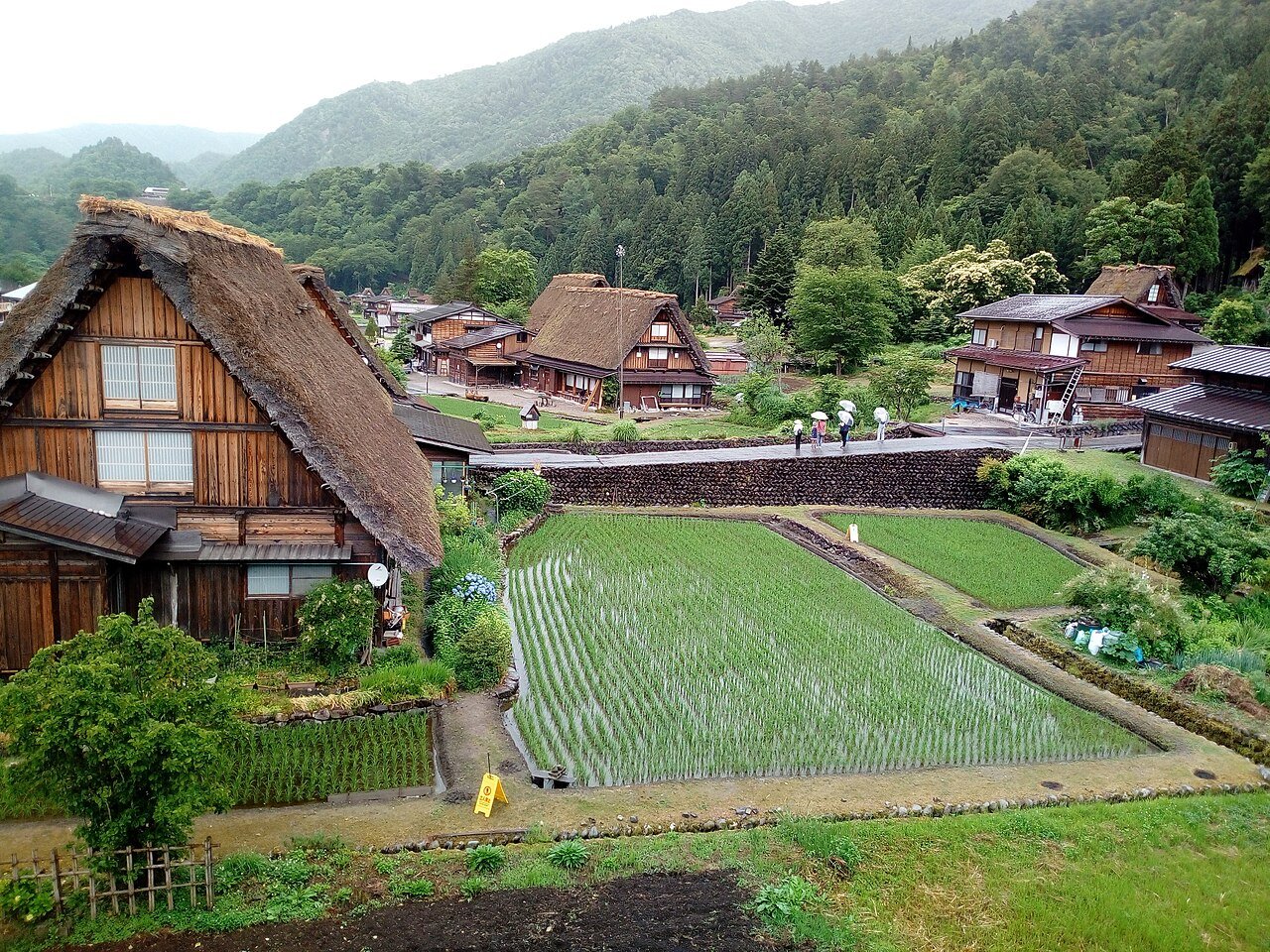
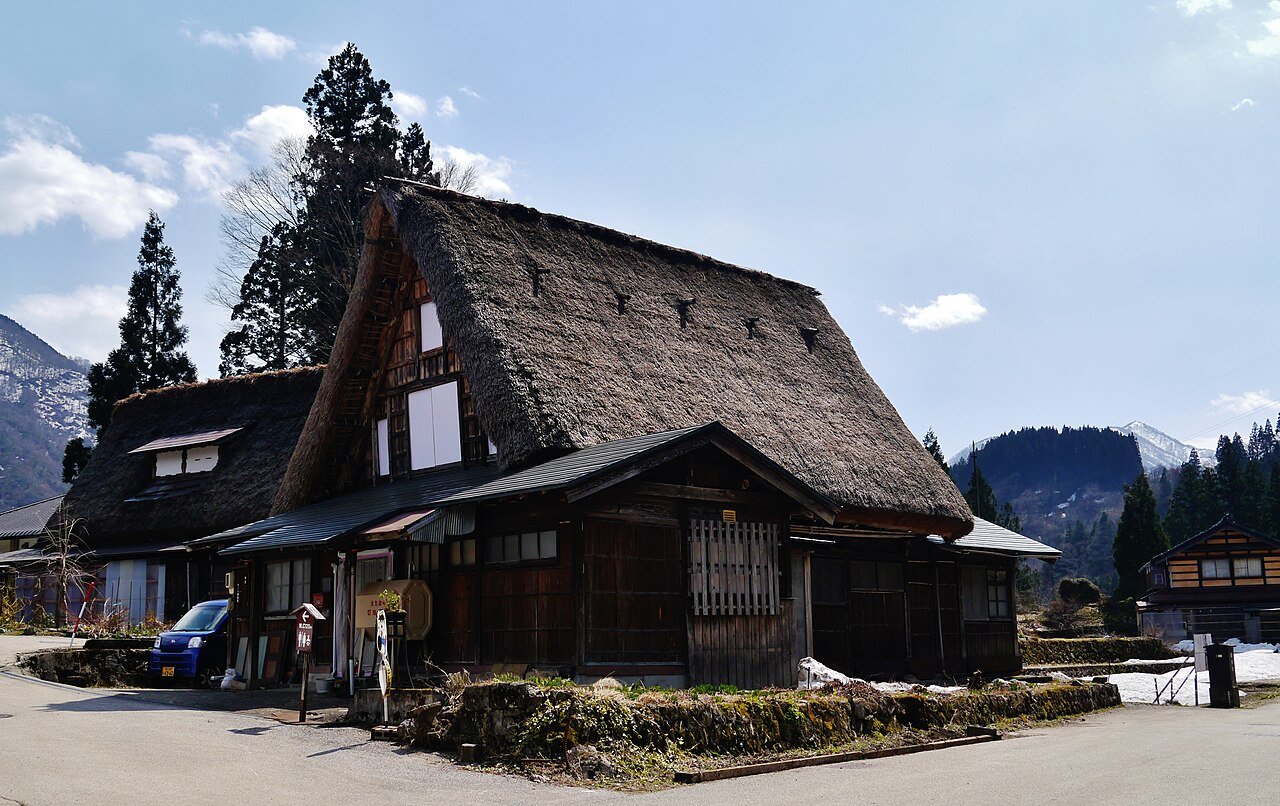
You can see this UNESCO village of thatched gassho houses in half a day. But stay the night and you get a different place entirely — quiet, lamplit, wrapped in morning mist. This plan lays out both, with real times, bus fares from Takayama and Kanazawa, and a per-person budget.
Let's be honest up front — Shirakawa-go is not a city. It's the small village of Ogimachi, tucked into a valley in the Gifu mountains, and you can walk the whole of it in under an hour. The main sights — the Shiroyama viewpoint, Wada House, Myozenji temple and the open-air museum — add up to roughly four or five hours. Which is why most people visit as a day trip, riding the bus in from Takayama or Kanazawa, walking the village, and catching an afternoon bus back.
But here's the thing worth whispering — this village is at its most beautiful after the day-tour buses have gone. By late afternoon the crowds thin out, woodsmoke drifts from the thatched roofs, warm light glows from the house windows, and at dawn the mist settles over the rice paddies. That is the Shirakawa-go a day visitor never sees, and it's the single reason that spending one night in a gassho minshuku is worth more than the price.
Pick the plan that fits your time and your pace.
All the main highlights — Shiroyama, Ogimachi village, Wada House, Myozenji temple, the open-air museum. Morning bus in, afternoon bus out.
The silent village under lamplight after the buses leave, a Hida dinner around the irori hearth, and a misty morning before anyone arrives.
Add the sibling UNESCO villages of Ainokura and Suganuma, plus Takayama's Sanmachi old town, to take in the whole valley.
Climb the viewpoint before the crowds · walk the village lanes · eat hoba miso, then catch the afternoon bus back — the plan most people use.
Leave your base as early as you can on one of the first buses — about 50 minutes from Takayama or about 75 minutes from Kanazawa. Both lines need a seat reservation, so book online ahead: seats fill quickly in winter and during the autumn-foliage season. Get off at the Shirakawa-go bus terminal, stash your bags in a station locker, and walk in light.
Cross the Deai Suspension Bridge into the village — a long footbridge over the clear, cold Shogawa River. It's a beautiful first step into the village from the very first stride.
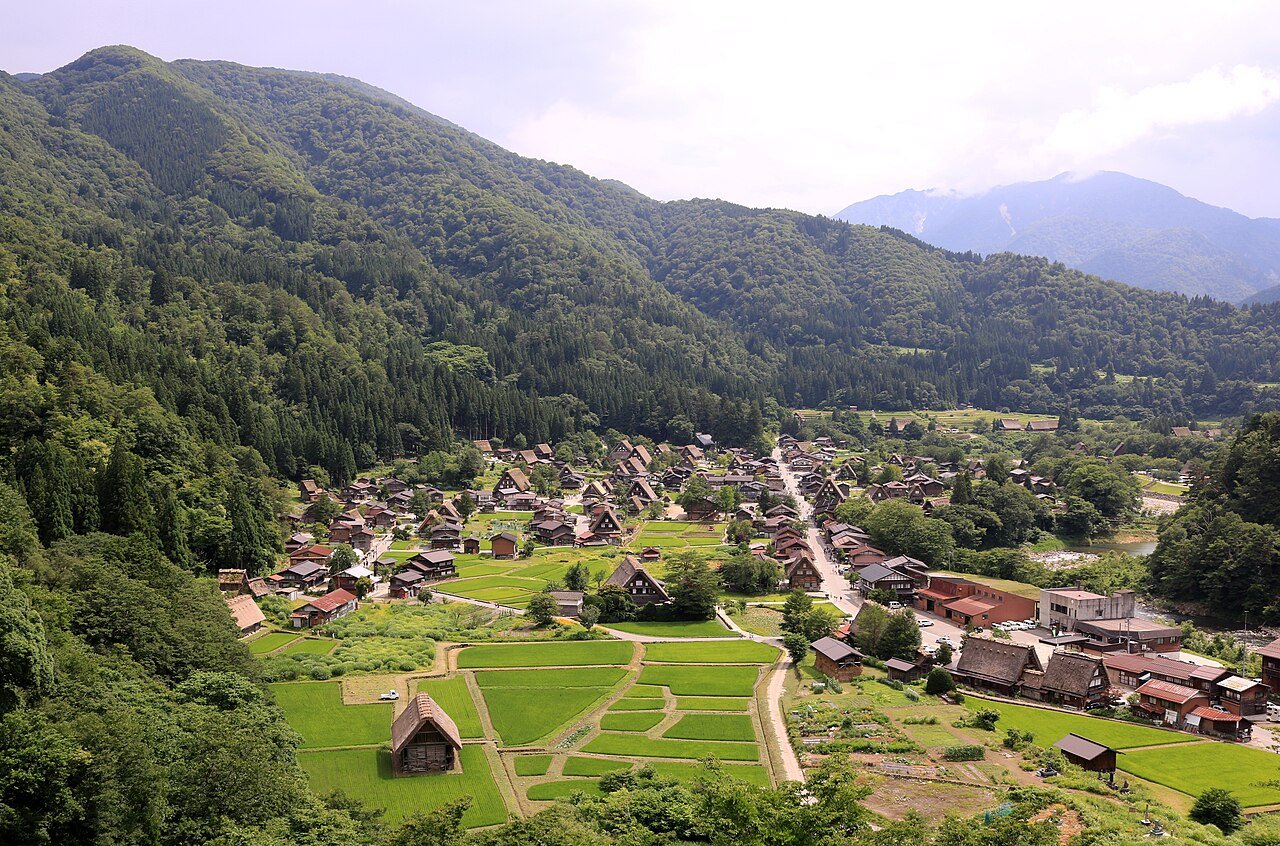
Head up to the Shiroyama viewpoint as early as you can. This is the postcard image everyone remembers Shirakawa-go by — more than a hundred thatched roofs nestled in the arms of the mountains. There are two ways up: a 15-minute walk (steep, but manageable for most) or the shuttle bus at ¥200 one way (cash, paid on board, running roughly every 20 minutes from about 10:00 to 14:40, departing in front of Wada House). Go up in the late morning, before it gets packed, and you'll have room to photograph.
Come down from Shiroyama and find a spot in the village for lunch. Local dishes worth trying: hoba miso (miso grilled on a hot magnolia leaf, slightly caramelised and fragrant), hand-cut soba, and the region's superb Hida beef. For something to eat on the move, gohei mochi (skewered rice cake glazed with sweet-savoury walnut-miso sauce) is sold at roadside stalls.
In the afternoon, step inside one or two of the gassho houses. Wada House is the largest gassho house in the village — once the home of the village head — where you can walk through the irori-hearth rooms and the attic that used to house silkworms (¥400). Myozenji temple is remarkable for being thatched too, its main hall and bell tower built in the same style as the farmhouses (¥400, includes the museum).
If you still have time and want to understand the gassho architecture in depth, cross the river to the Gassho-zukuri Minka-en open-air museum — 25 old gassho buildings relocated and preserved here, so you can see the whole range in one place (adults ¥800).
Head back to the bus terminal, retrieve your bags from the locker, and catch the afternoon bus back to your base. Check the last departure carefully — regular buses usually finish by around 16:00–17:00, and if you've reserved a seat you'll need to travel on the time you booked. Allow 15–20 minutes to walk back to the terminal from inside the village.
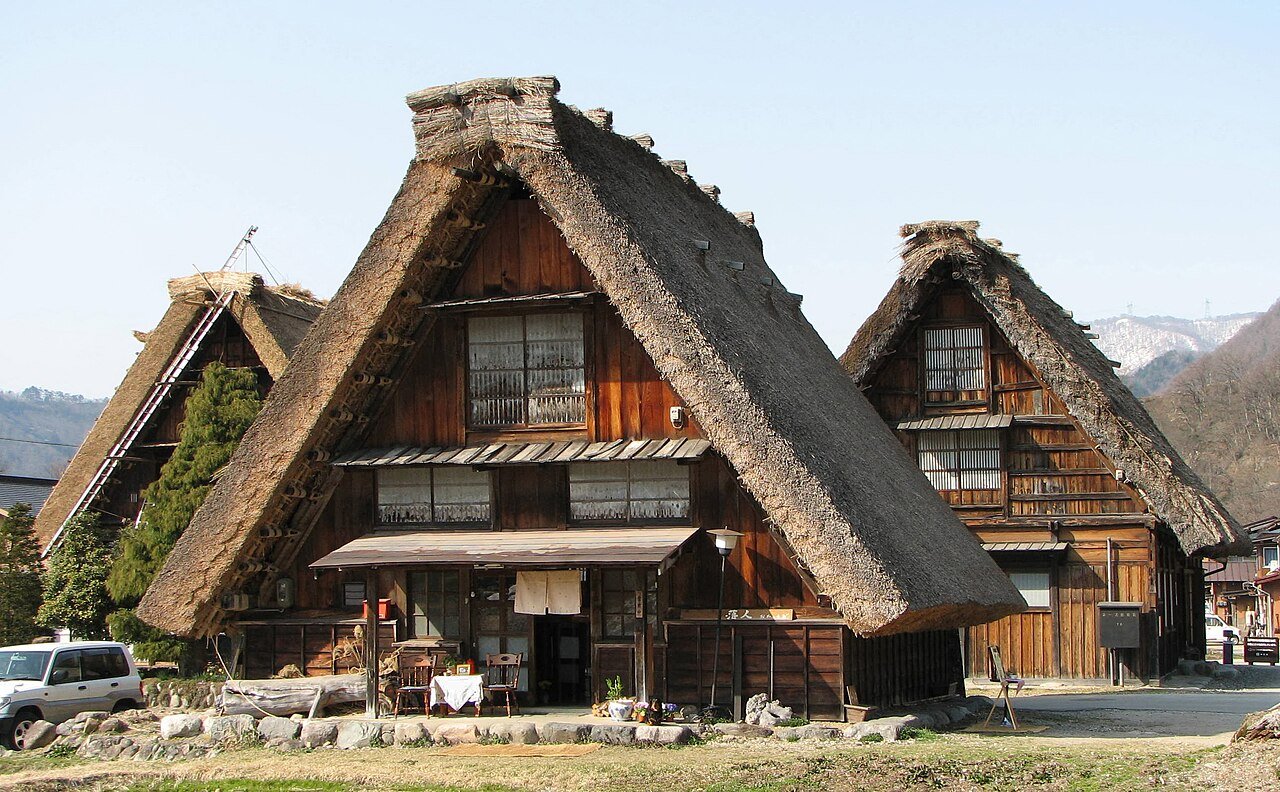
The silent village under lamplight after the buses leave · a Hida dinner around the irori hearth · a misty morning before anyone arrives — this is why you stay.
Spend the day following the one-day plan above — Shiroyama, Wada House, Myozenji temple, the open-air museum. The advantage of staying overnight is that you don't have to chase the last bus. Walk slowly, stop at a café inside an old house, sit by the Shogawa River, and let the village's rhythm sink in.
Check in to a gassho minshuku — a homestay inside a genuine thatched farmhouse, usually run by a family that has lived there for generations. Rooms are tatami with futons laid out, and bathrooms are mostly shared, as in any old farmhouse. The highlight is dinner around the irori hearth (the sunken fireplace at the heart of the house) — home-cooked Hida food, mountain vegetables, salt-grilled river fish skewered around the fire, hot pot, and at some houses a taste of doburoku, the village's cloudy unfiltered sake.
This is the part that makes staying overnight worth it — once the day-tour buses have gone, the village falls completely quiet. Warm light spills from the gassho windows, thin woodsmoke rises from the thatched roofs. Step out and wander the village in the hush, listen to the river, look at the stars over the valley — a sight no day visitor ever gets.
Wake early and step out. At dawn, especially in winter and the rainy season, mist often settles over the paddies and rooftops. The first light filters softly through the haze, the village still asleep, only birdsong and the river. If you want a photo of Shiroyama with no one in it, this is the moment (you can walk up on your own — the shuttle doesn't run at dawn).
Head back for breakfast at the minshuku — hot rice, grilled fish, pickles, miso soup and local ferments around the irori hearth once more. After check-out, use the mid-morning to catch the corners you missed yesterday — other gassho houses, a café inside an old farmhouse, or another stroll along the Shogawa River while the morning sun is at its best.
Around midday on Day 2, catch your onward bus. Many travellers route Takayama → Shirakawa-go → Kanazawa in one straight line, since the same bus connects all three. Or, to complete the set of UNESCO villages, continue to Gokayama, which lies along the way.
For travellers who love traditional Japanese villages — take in the sibling UNESCO villages and the Sanmachi merchant streets, and complete the whole valley.
On Day 3, head to Gokayama, Shirakawa-go's sibling UNESCO World Heritage village set deeper in the valley on the Toyama side. There are two main hamlets: Ainokura, the larger one, with around 20 gassho houses on a hillside, and Suganuma, smaller and very quiet. Both are far less crowded than Shirakawa-go, giving you the feel of a genuine working village without the tourist shopfronts.
In the afternoon, come back down to Takayama and walk the Sanmachi old town — whole streets of preserved Edo-period wooden townhouses, historic sake breweries (look for the cedar-ball sugidama hanging over the door), sweet shops, Hida-beef skewer stalls, and cafés inside old houses. Takayama is a fun town to explore on your own, easily a half-day, and an easy point to connect onward by train or bus to the main routes.
By bus only — Takayama ~50 min (~¥2,600 one way) · Kanazawa ~75 min (~¥2,600) · Toyama ~85 min, run by Nohi Bus and Hokutetsu. These are reserved-seat buses — book online 24h, or call the reservation centre 09:00–18:00. Book well ahead in winter and the autumn-foliage season. See the travel tips.
Gassho minshuku = sleeping inside a genuine World Heritage house, dinner by the hearth (very few rooms, mostly shared bathrooms, book months ahead) · riverside hotels/ryokan are more comfortable, some with an onsen · or use Takayama/Kanazawa as a day-trip base. See all accommodation.
In the village, cash matters — many small shops and minshuku take cash only, so carry enough yen · spring to early summer brings green paddies and fewer crowds · autumn foliage peaks late October–November · winter brings deep snow and the light-up (reserve ahead).
| Item | 1-day round trip | 2-day with minshuku |
|---|---|---|
| Bus (round trip from Takayama) | ~¥4,420 | ~¥4,420 |
| Accommodation (1 night, dinner + breakfast) | — | ¥10,000–18,000 |
| Admission (houses / temple / museum) | ¥400–1,200 (Wada ¥400 + Myozenji ¥400 + museum ¥800) |
¥400–1,200 (choose what you enter) |
| Food (lunch + snacks) | ¥1,000–1,800 | ¥1,000–1,800 (day 1 · other meals in the minshuku) |
| Shiroyama shuttle (if not walking) | ¥200–400 (one way / return) |
¥200–400 (free to walk up in the morning) |
| Approximate total | ¥6,020–7,820 | ¥16,020–25,820 |
Prices are approximate and vary by season and accommodation · the Shiroyama viewpoint is free to walk up.