Home Shirakawa-go Gifu Japan Read in Thai About
Home  ›  Asia  ›  Japan  ›  Shirakawa-go  ›  Travel Tips
⛩ Before You Go · Shirakawa-go 2026

Shirakawa-go Travel Tips
Because this is a village where people still live

Buses are the only way in, the winter light-up sells out months ahead, and every thatched roof you photograph is someone's home. Learn the routes and the etiquette before you set off, and the trip will be as smooth as it is beautiful.

Getting There

Shirakawa-go is reached by bus only — which gateway?

The village sits deep in a valley in Gifu Prefecture with no train line. The most popular bases are Takayama and Kanazawa.

Here's the thing that trips up most people while planning: Shirakawa-go has no railway station. Picture a small village tucked into the Japanese Alps, and the only way in is a highway bus or your own car. Three cities run direct buses — Takayama, Kanazawa and Nagoya. Pick the base closest to your route, then read the section that fits you.

🚌
Bus from Takayama — the closest gateway
Takayama Nohi Bus Center → Shirakawa-go · The classic route

If you're basing yourself in Takayama (a lovely old town in Gifu), this is the easiest and shortest route. Catch the Nohi Bus from the Takayama Nohi Bus Center in front of JR Takayama Station; the ride takes about 50 minutes and costs roughly ¥2,800 one way. Buses run frequently through the day — some departures require a seat reservation while others let you simply board. Check the timetable and book through Japan Bus Online or the Nohi counter at the station, especially during autumn foliage and winter when seats fill fast.

~50 min ~¥2,800 one way Some seats need booking
Best if: you're already travelling the Japan Alps route (Nagoya–Takayama–Kanazawa) · you want a simple day trip from a Takayama base
🚌
Bus from Kanazawa — pair it with the gold-leaf city
Kanazawa Station → Shirakawa-go · Nohi / Hokutetsu Bus

From Kanazawa (home of Kenrokuen Garden and the geisha districts), Nohi Bus and Hokutetsu Bus run almost hourly. The ride takes about 75 minutes and costs roughly ¥2,800 one way. The key difference from Takayama: this route always requires a seat reservation — there's no pay-on-board option. Book online through Japan Bus Online or the Hokutetsu site in advance; in high season it sells out quickly.
~75 min ~¥2,800 one way Reservation required
Best if: you're travelling the Sea of Japan side (Kanazawa–Toyama) and want to stop at Shirakawa-go en route to Takayama · many people chain it as Kanazawa → Shirakawa-go → Takayama in one day
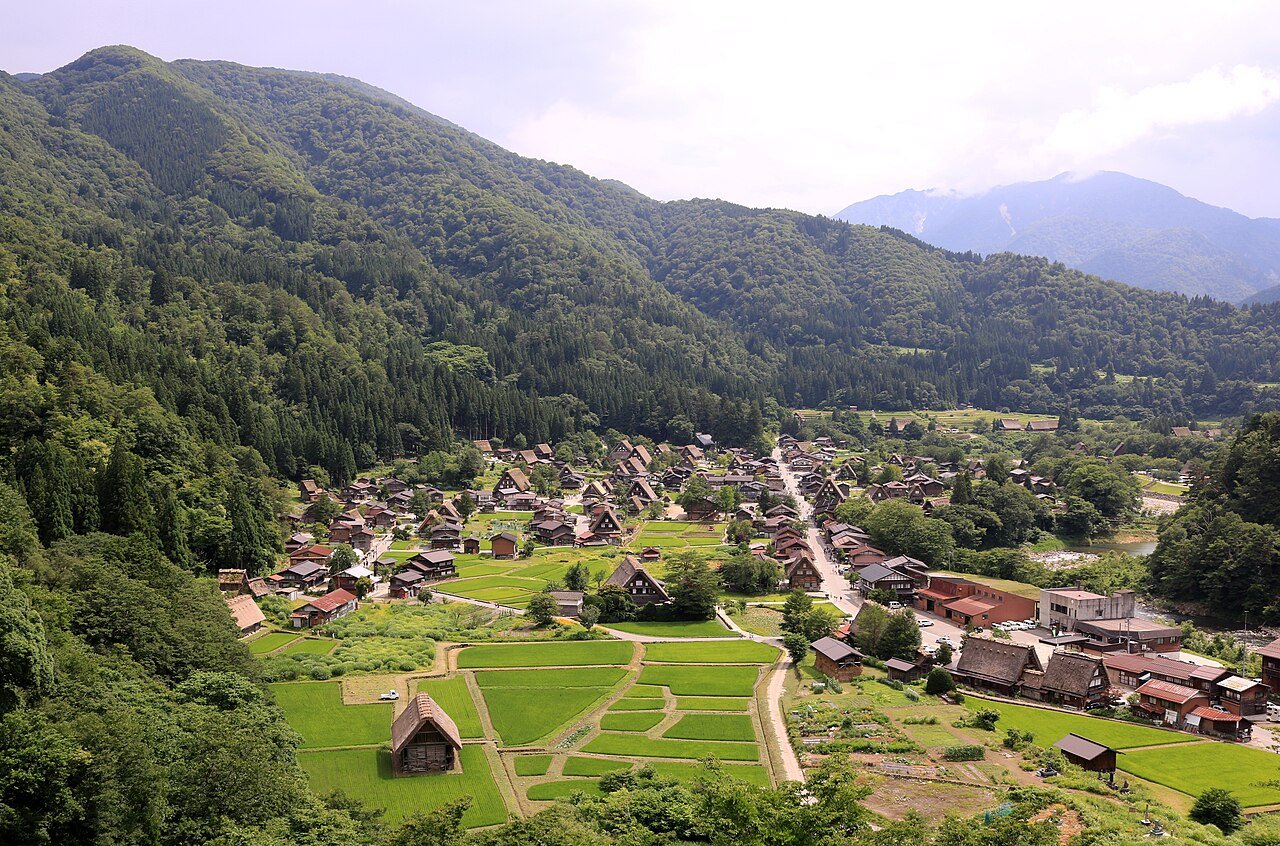
Elevated view of Shirakawa-go village from the Shiroyama viewpoint, thatched gassho-zukuri farmhouses scattered across a green valley ringed by mountains
Shirakawa-go from the Shiroyama viewpoint — the view people travel far to see
🚌
Bus from Nagoya — doable as a day trip
Meitetsu Bus Center → Shirakawa-go · Direct from the big city

If your base is Nagoya, direct buses leave from the Meitetsu Bus Center beside Nagoya Station (operated by Gifu Bus, Meitetsu and Hokutetsu). The ride is about 2.5 to 3 hours and costs roughly ¥3,600–4,700 one way depending on the day (weekends cost more). A seat reservation is required. The upside is no transfers, which suits anyone short on time who wants to see the village once from Nagoya — but with more time, stopping over in Takayama or Kanazawa is far more rewarding.

~2.5–3 hrs ~¥3,600–4,700 one way Reservation required
🚗
Driving yourself — freedom, but mind the winter
Tokai-Hokuriku Expressway · Park at the village lot

You can drive in any season via the Tokai-Hokuriku Expressway, exiting at Shirakawa-go. There's a car park (Seseragi Park) across the river, around ¥1,000 per day, from which you walk across the bridge into the village. The single most important thing to know: in winter (Dec–Mar) the roads carry snow and ice, and winter tyres are mandatory. If you're not used to snow driving, the bus is far safer. On light-up nights you cannot drive into the village without a pre-booked parking slot.
Park at Seseragi Park Parking ~¥1,000/day Winter tyres required in snow
Bus-booking tip: Seats on the Nohi/Hokutetsu buses into Shirakawa-go sell out fast during autumn foliage (Nov) and winter (Jan–Feb). You can book through Japan Bus Online weeks ahead. If you're doing a same-day return, book your return seat at the same time — the last bus out leaves fairly early (often mid- to late afternoon), and missing it is a headache. See our Shirakawa-go itinerary for day-by-day timing.
Getting Around

Inside, it's all on foot — plus how to reach the viewpoint

Ogimachi village is small enough to walk in full, but the Shiroyama viewpoint sits up a hill — know how to get up before you go.

The good news: Ogimachi, the main village of Shirakawa-go, is small enough to explore entirely on foot. From the bus stop it's just a few minutes' walk to the farthest gassho house. The paths are flat, with shops, cafes and houses open to visitors scattered along the way. What you do want to plan is reaching the Shiroyama (Tenshukaku) viewpoint — the elevated photo spot over the village that everyone wants.

Walking up to Shiroyama viewpoint

You can walk up the hill from the village in about 15–20 minutes. The path is slightly steep but easy, and it's free. Ideal if you don't mind a short climb and want photos along the way.

Time: ~15–20 min uphill · Cost: free
Shuttle bus to the viewpoint

A shuttle bus runs from the village up to the viewpoint for those who'd rather not walk, costing around ¥200 one way and running at intervals. Handy for older travellers or those with small children.

Fare: ~¥200 one way · Pick-up: near the village centre
Deai suspension bridge

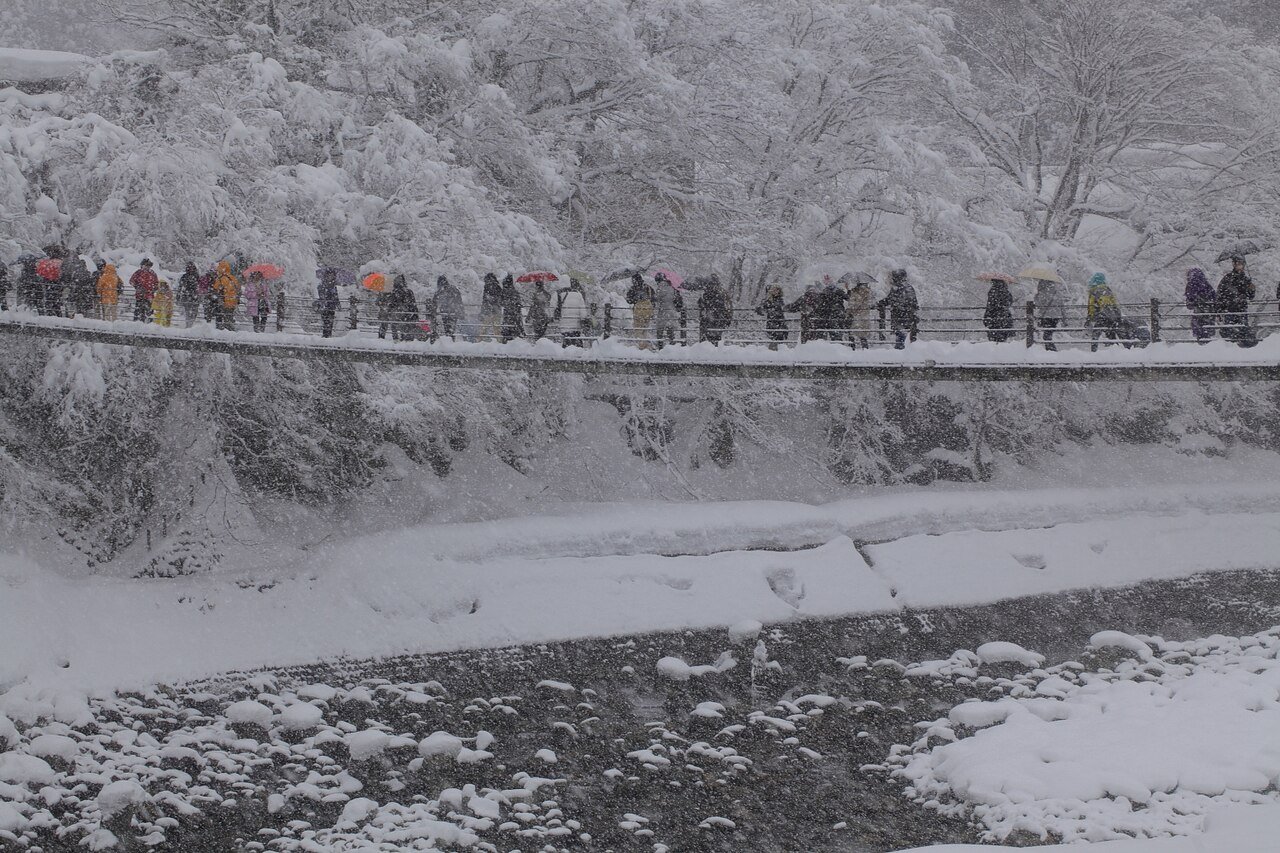
The suspension bridge over the Shogawa River connects the Seseragi Park car park with the village — the main entrance for anyone arriving by car. It's an easy crossing with lovely river views, especially in winter when both banks are buried in snow.

Connects: Seseragi Park ↔ village · Note: very crowded at peak hours
Luggage lockers

Coin lockers are available at the Ogimachi bus stop, so you can stash bags before exploring. Very handy if you're doing a day trip with a suitcase in tow.

Where: Ogimachi bus stop · Tip: arrive early while lockers are free
Visitors crossing the Deai suspension bridge over the Shogawa River in Shirakawa-go during heavy snowfall, both banks covered in white snow
The Deai suspension bridge — the main entrance from the car park, busiest from late morning through afternoon
Beating the crowds: Tour buses arrive most heavily between 10am and 3pm. For empty-village photos, come before 9am — or better still, stay the night and wander at dawn and after dark once the day trippers have left. That's a different Shirakawa-go entirely, one a same-day visitor never gets to see. See our where to stay in Shirakawa-go guide for gassho-house minshuku and recommended hotels.
Etiquette to Know

This is a village where people genuinely live

Every gassho farmhouse is not a photo set but the home of a family that has lived here for generations.

The thing we most want you to know before you enter is this — Shirakawa-go is not an open-air museum. It is a UNESCO World Heritage site where residents still live and work in those thatched farmhouses, many of which have been handed down for centuries. Visiting with respect is exactly what keeps this village intact for the generations to come.

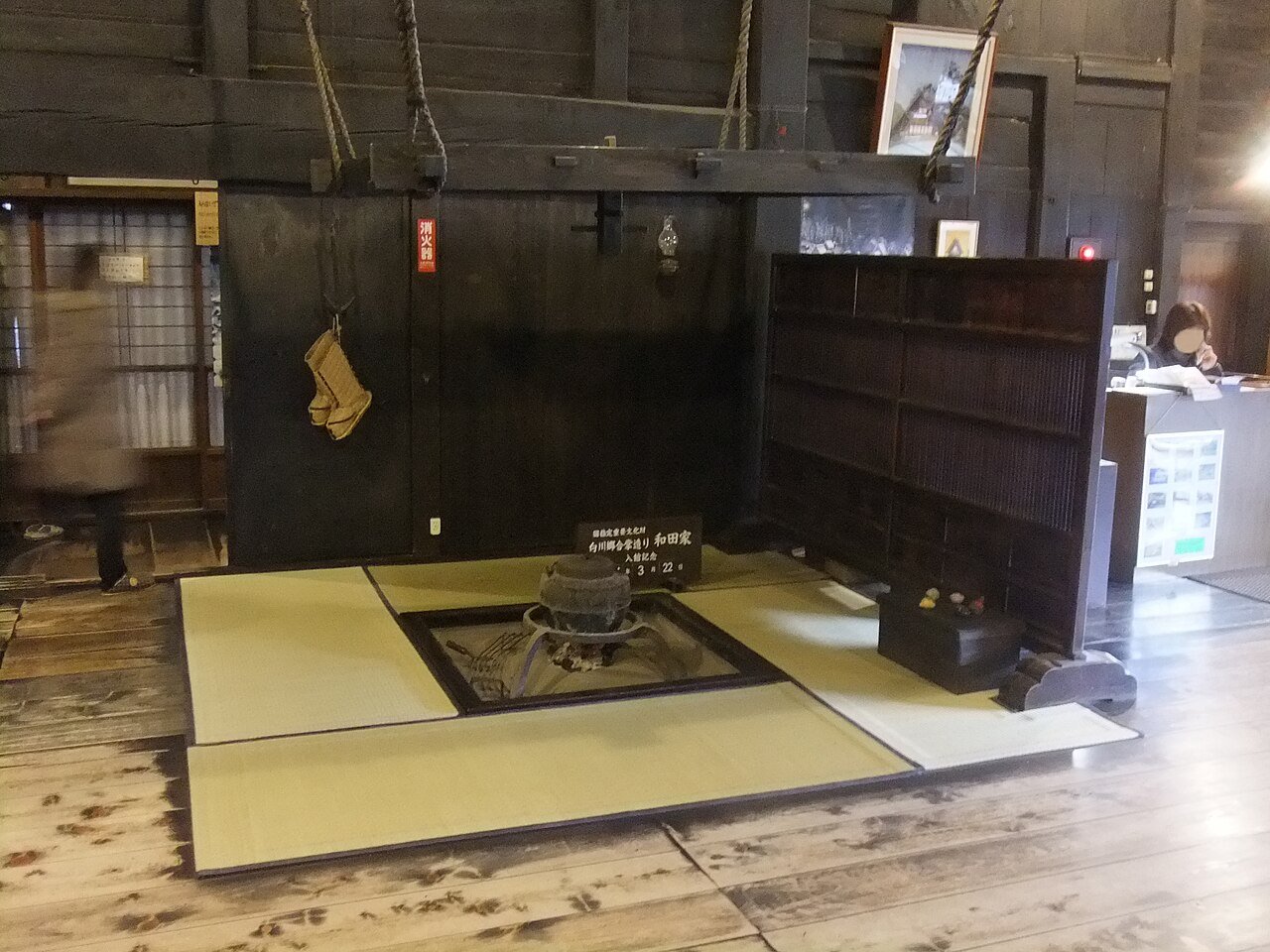
Interior of a gassho-zukuri house in Shirakawa-go showing a sunken irori hearth on tatami flooring, surrounded by dark aged timber
Inside a gassho house — the central irori hearth is the heart of the home, giving warmth and preserving the thatched roof with its smoke
Staying in a Gassho House

A minshuku stay — a little more etiquette

Several gassho farmhouses in the village open as minshuku (family-run guesthouses) where you can stay the night. It's an experience you'll find nowhere else — sleeping in a thatched house centuries old, sharing dinner around the irori hearth with your hosts. But a minshuku has its own rhythm, different from a hotel.

Book months ahead

Minshuku rooms in the village are very limited and fill quickly, especially in winter. Book months in advance. Many take bookings by phone or through agents rather than the instant online systems of large hotels.

Advice: the earlier the better, especially for nights near the light-up
Respect the house's rhythm

A minshuku is a real family home, usually with fairly fixed times for check-in, meals and lights-out. Tell your hosts your arrival time, remove your shoes as is the custom, and help keep things tidy.

Note: many rooms share a communal bathroom rather than en-suite
Dinner around the irori

The highlight of staying over is the home-cooked dinner around the central hearth — often grilled river trout on skewers, mountain vegetables and local dishes. Taste it and thank your hosts; it's the warmest moment of the whole trip.

Expect smoke and a chill

Old thatched houses aren't sealed against the wind like modern hotels, so winter nights get cold — though thick futons and heaters are provided. You may catch the scent of irori smoke on your clothes; consider it part of the charm of sleeping in a gassho house.

Bring: a warm layer for indoors · thick socks
Best Time to Visit

Shirakawa-go changes its face with all four seasons

You can visit year-round, but each season gives the village an entirely different mood.

Spring (April–May)

Snow melts and the valley turns fresh green. Wildflowers and cherry blossoms appear from late April into early May (later than the lowlands, as the village is up in the mountains). The air is cool and pleasant, crowds are building but not yet at their peak — ideal for a bright, verdant village.

Summer (June–August)

The rice paddies around the village are at their greenest of the year and the mountains lush. Days are warm to hot but cool in the shade; June brings the rainy season (tsuyu). The view from Shiroyama over green paddies is a classic in its own right, utterly different from winter.

Autumn (late October–November)

The hills around the valley turn red, orange and gold, set beautifully against the brown thatched roofs. The air is crisp and pleasant. It's extremely busy on weekends, with accommodation and buses booking out fast — reserve ahead.

Winter (December–February) — the dream image

Thatched roofs buried in deep snow are the signature image of Shirakawa-go. Snow is most reliable from mid-January to early February. Daytime runs 0–6°C and nights drop below freezing, sometimes to -5°C. It's also the only time of the Winter Light-Up, held on just a few nights. The most beautiful season, but the one needing the most planning.

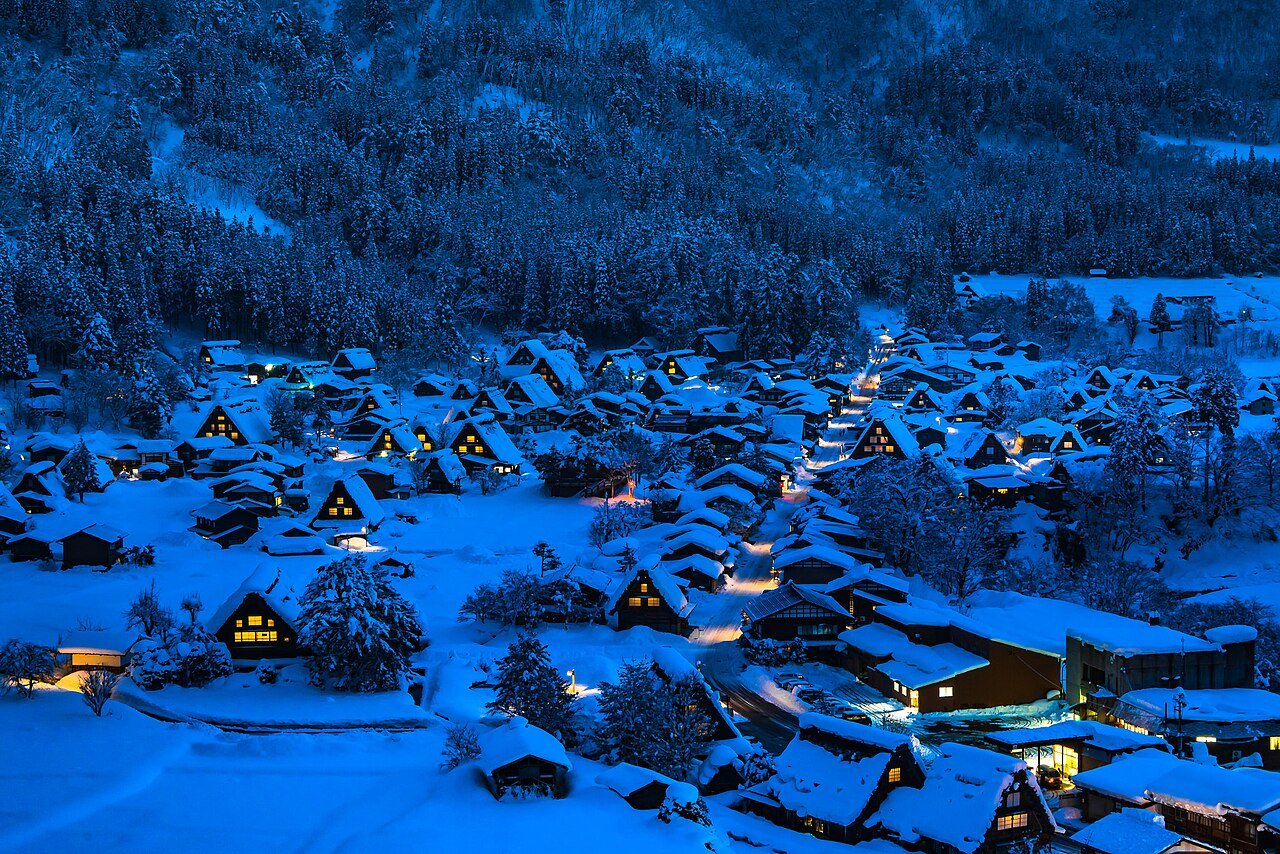
Shirakawa-go village at dusk in winter, snow-covered thatched gassho-zukuri houses glowing with warm window light against a deep blue sky
Shirakawa-go on a snowy evening — warm light from the gassho houses against the blue of falling dusk
What to know about the 2026 Winter Light-Up: The event runs on just four nights — 12, 18 and 25 January and 1 February, lit from about 17:30 to 19:30. Everyone entering the village on those nights must hold a pre-booked admission ticket. Parking is booked separately (about ¥6,000–10,000 per car), and on light-up nights the Shiroyama viewpoint is open only to overnight guests or those on selected bus tours — slots sell out very quickly. Plan and book early.
Budget

How much does a Shirakawa-go visit cost?

Rough numbers for planning — adjust depending on whether you day-trip or stay over.

Item Budget (day trip) Mid-range Overnight in village
Return bus (from Takayama) ~¥4,400–5,000 (round trip) ~¥4,400–5,000 ~¥2,800 (one way in)
Accommodation (per night/person) — (no stay) ¥9,000–18,000 (minshuku, 2 meals)
Food (during the day) ¥1,000–1,800 (soba / snacks) ¥2,000–3,500 (sit-down meal) Meals incl. in minshuku + lunch ~¥1,500
House admission (e.g. Wada House) ~¥400/house (adult) · ¥200 (primary child) — visit 1–2 houses
Shiroyama viewpoint Free on foot · shuttle ~¥200 one way
Lockers / extras ¥300–600 ¥500–1,000 ¥500–1,000
Rough total (excl. lodging) ~¥6,500–9,000 ~¥8,000–11,000 + lodging ¥9,000–18,000
Saving tip: If you're travelling the whole Japan Alps route, look at a 2–3 day bus pass or a Takayama–Shirakawa-go route pass that some operators sell — often cheaper than buying single tickets leg by leg. A same-day trip from Takayama is the most economical way to see the village on a tight budget. But if you can stretch the budget, one night in a minshuku is the most rewarding spend of all. See our full Shirakawa-go travel guide to plan around it.
Before You Go

What to pack and the essentials

What to pack (winter)

A windproof, waterproof down jacket · a knitted hat and gloves · non-slip snow boots (or slip-on grips for your shoes) · thick socks plus spares (snow gets you wet) · lip balm and moisturiser, as sub-zero air is very dry.

Important: paths are slippery — good grip helps a lot
What to pack (other seasons)

Comfortable walking shoes (there's an uphill path to Shiroyama) · a light jacket (the mountains are cooler than the lowlands even in summer) · an umbrella or rain shell in the June rainy season · a charged camera/phone · a cloth bag for your own rubbish.

Every season: cash — many small shops take cash only
Money and payment

It's a small village, and many restaurants and houses take cash only. Bring enough yen. The best ATMs in Japan for foreign cards are at 7-Eleven and Japan Post, but they're scarce here — withdraw in a larger city before you arrive.

Currency: yen (¥) · ATM: withdraw in Takayama/Kanazawa first
Connectivity and language

Buying a Japan eSIM before you travel is the easiest option. Mobile signal in the village is decent, and Google Maps handles both navigation and bus timetables well. Many shop owners and minshuku hosts don't speak much English — Google Translate's camera mode helps a lot.

Handy apps: Google Maps · Japan Bus Online (bookings) · Google Translate
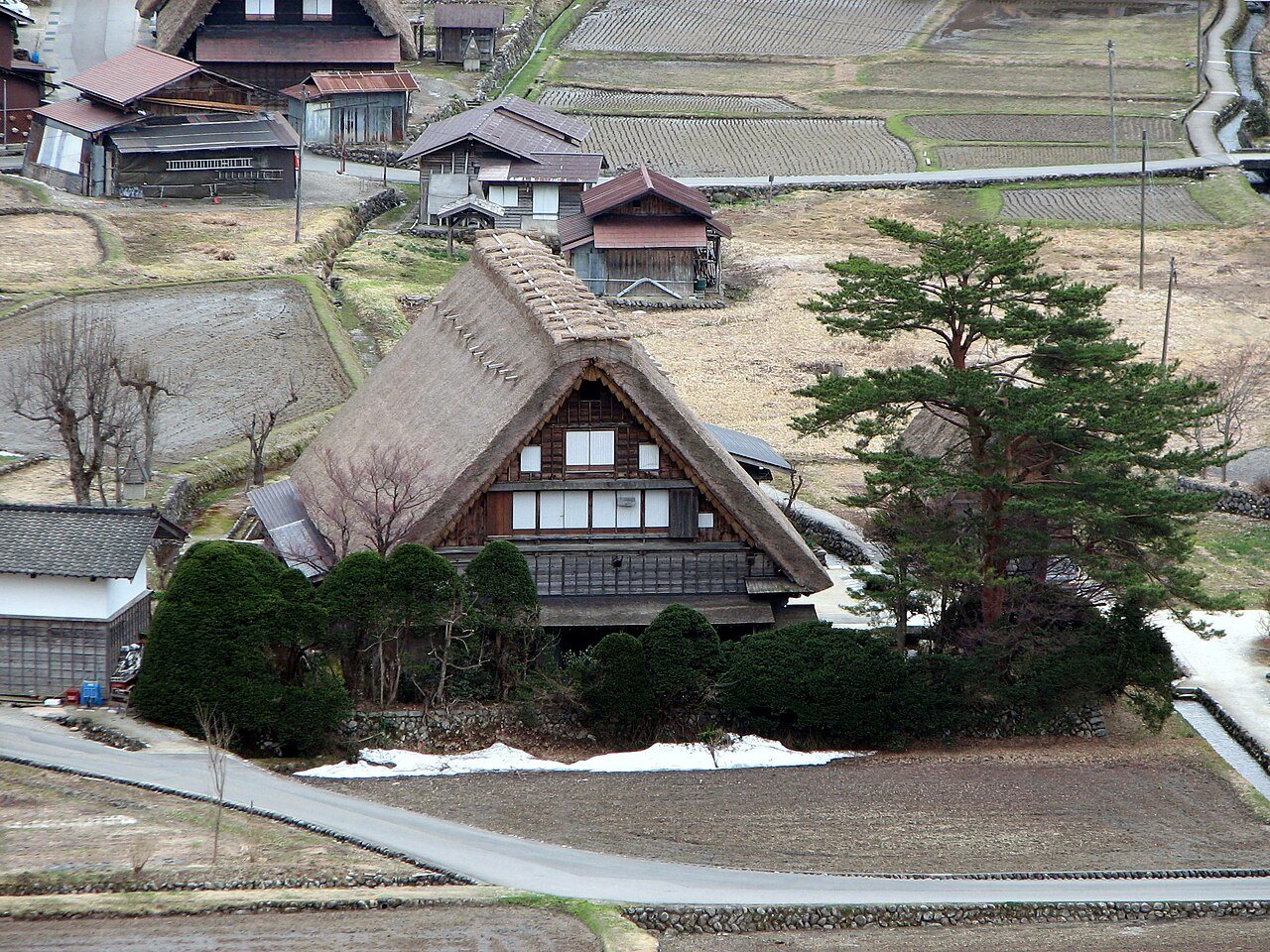
Wada House, the largest gassho-zukuri farmhouse in Shirakawa-go, with a steep thatched roof surrounded by trees and fields
Wada House — the largest gassho farmhouse, open 9:00–17:00, admission ¥400
Want to keep exploring? Shirakawa-go pairs well with Gokayama in a single day — the sibling World Heritage villages of Ainokura and Suganuma, quieter and deeper in the valley, connected by bus and perfect for escaping the crowds. See all the sights in our Shirakawa-go attractions guide.
Frequently Asked Questions

FAQ · Before you visit Shirakawa-go

How do I get to Shirakawa-go from Takayama or Kanazawa?
By highway bus only — there's no train to the village. From Takayama it's about 50 minutes at roughly ¥2,800 one way; from Kanazawa about 75 minutes, also around ¥2,800. The main operators are Nohi Bus and Hokutetsu Bus. The Kanazawa route always needs a seat reservation; from Takayama some departures require booking while others let you board freely — in winter, book ahead for every route.
Can I reach Shirakawa-go from Nagoya?
Yes. Direct buses run from the Meitetsu Bus Center beside Nagoya Station, taking about 2.5 to 3 hours and costing roughly ¥3,600–4,700 one way depending on the day. A seat reservation is required. It suits a day trip if Nagoya is your base, but with more time it's far closer to stop over in Takayama or Kanazawa. See our Shirakawa-go itinerary.
When is the 2026 Winter Light-Up, and do I need to book?
In 2026 it runs on just four nights — 12, 18 and 25 January and 1 February, lit from about 17:30 to 19:30. Everyone entering the village must hold a pre-booked admission ticket issued by the Shirakawa-go Tourism Association. Parking is booked separately on a first-come basis (about ¥6,000–10,000 per car). Importantly, the Shiroyama viewpoint on light-up nights is open only to overnight guests or those on selected bus tours — slots go very fast, so book early.
What etiquette should I follow while walking around the village?
Shirakawa-go is a living village — people genuinely reside in those gassho farmhouses. Stay on public paths, never enter private gardens or yards, and don't open doors or peer through the windows of homes not open to visitors. Don't photograph residents or home interiors without permission. Carry your rubbish out, as bins are scarce, take care with fire near the thatched roofs, and don't fly drones without authorisation.
When does Shirakawa-go look its best, and when does it snow?
It's beautiful in all four seasons, but the image most people picture — thatched roofs in deep snow — is most reliable from mid-January to early February. Daytime is about 0–6°C and nights drop below freezing, sometimes to -5°C. Spring (Apr–May) brings fresh green and blossoms, summer fills the paddies with vivid green, and autumn (late Oct–Nov) turns the surrounding hills red and gold. Every season gives a fine photo from the Shiroyama viewpoint.