8 places worth your time
In the order you'd actually walk them — from the viewpoint above, down into the village, then out to the surroundings
 1
1
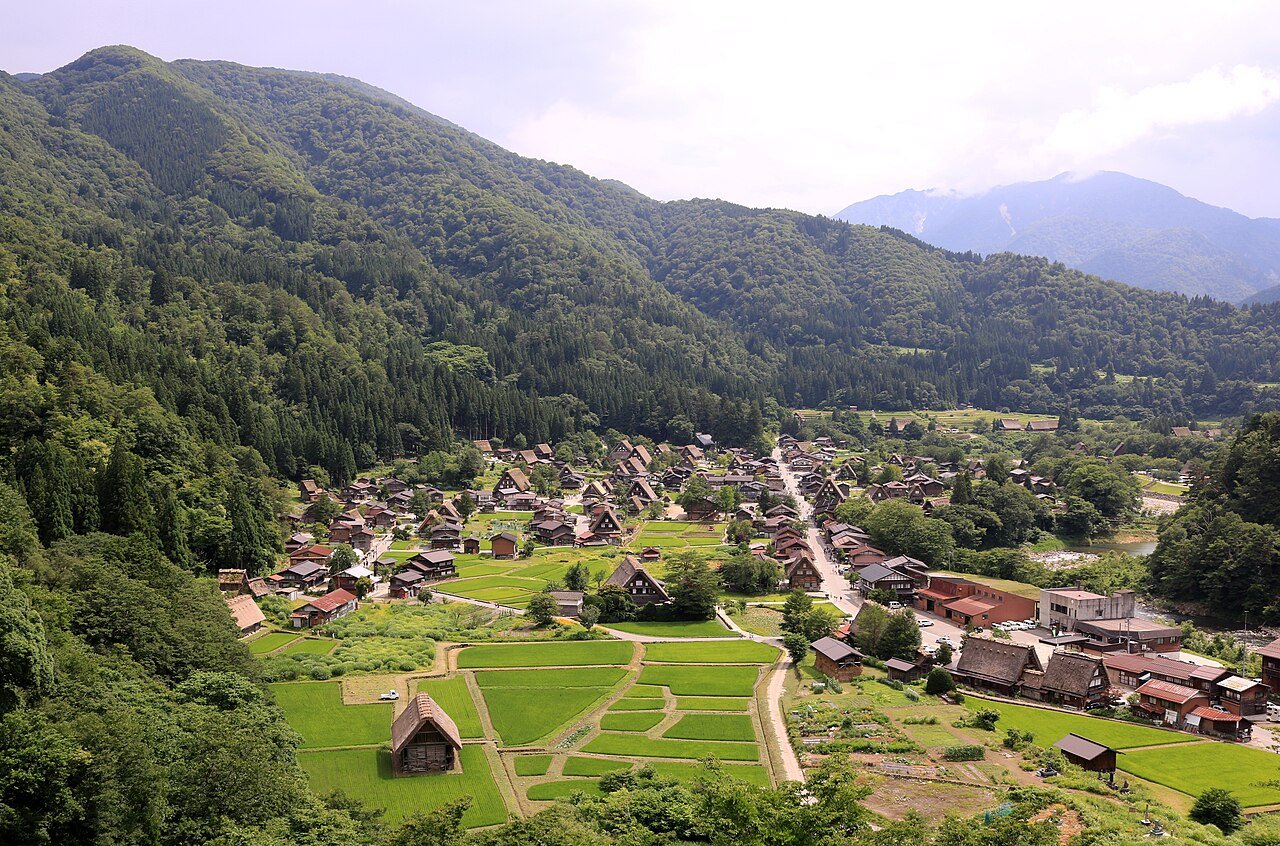
Picture this: you're standing on a hill about 60 metres above the village, looking down on thatched gassho houses scattered across the valley floor, framed by rice paddies and green mountains on every side. This is Shiroyama, the terrace on the ruins of Ogimachi castle, and it's the image you've seen on every "visit Japan" advert. Come here first, before you walk down into the village, so you have the whole layout in your head. It's free — about a 15-minute walk up from the village, or you can take the shuttle bus from in front of Wada House.
 2
2
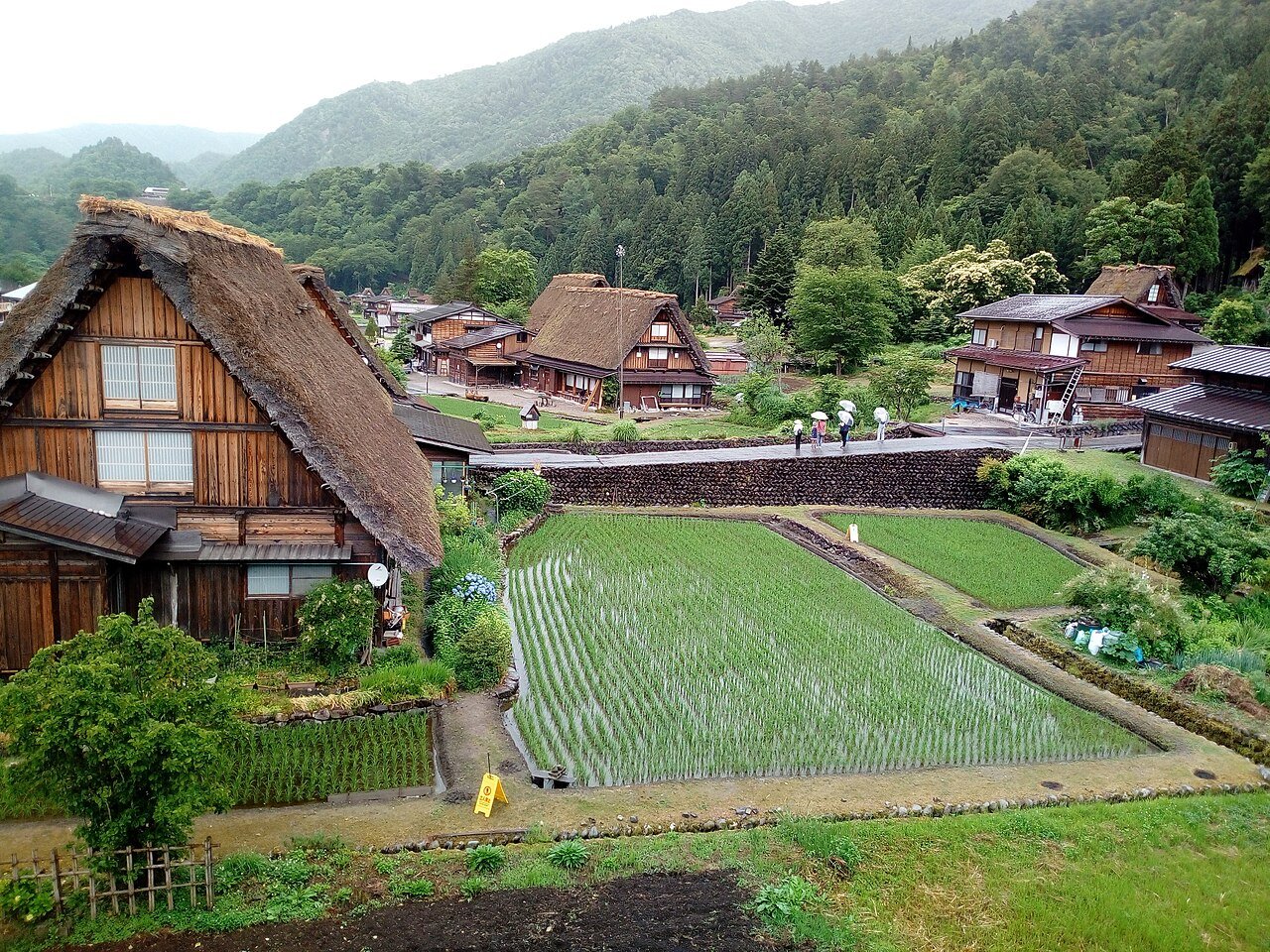
Honestly, the magic of Shirakawa-go isn't any single spot — it's simply wandering through Ogimachi village, past one gassho house after another. Some are open as museums, some are tea houses, some are minshuku guesthouses, and many are simply homes people still live in. Paths follow the irrigation channels where fish dart in the clear water, past green paddies in summer or snowfields in winter. Give it an unhurried 1-2 hours and don't rush — this village was made for walking slowly.
 3
3
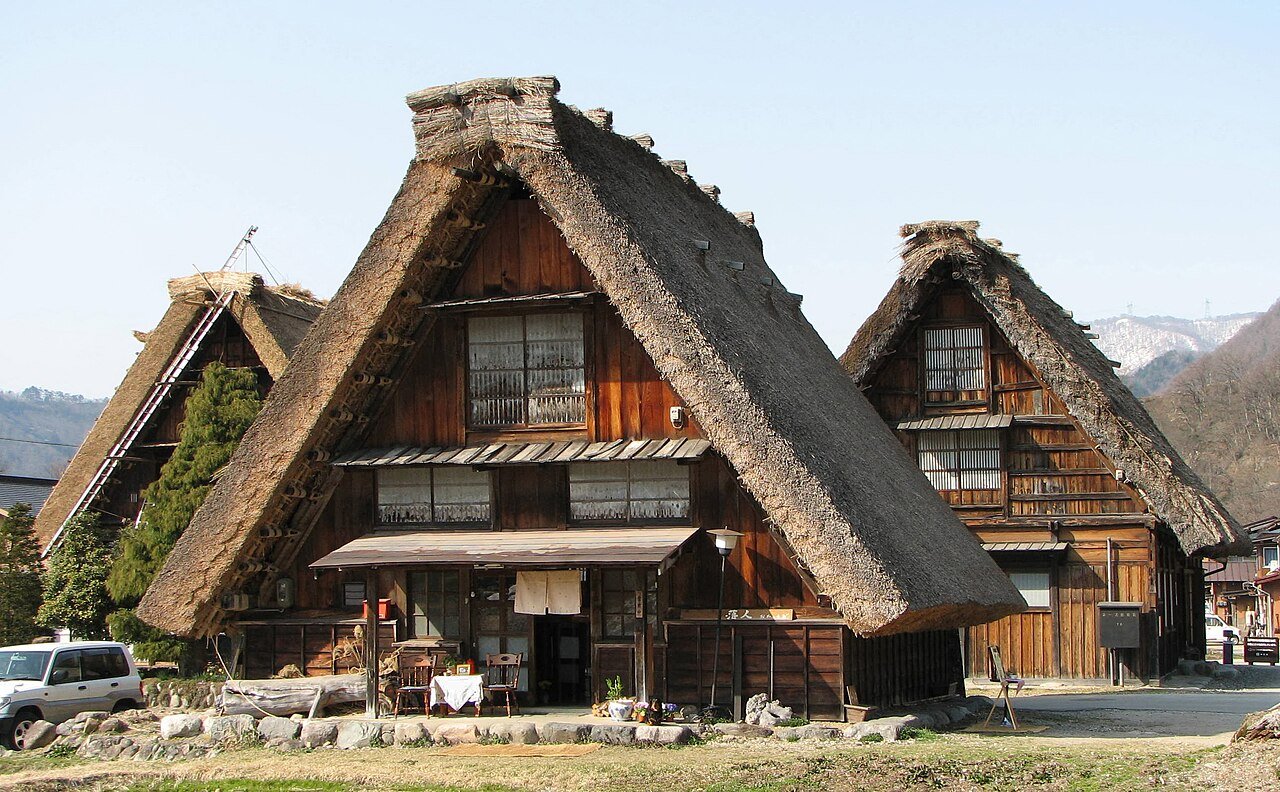
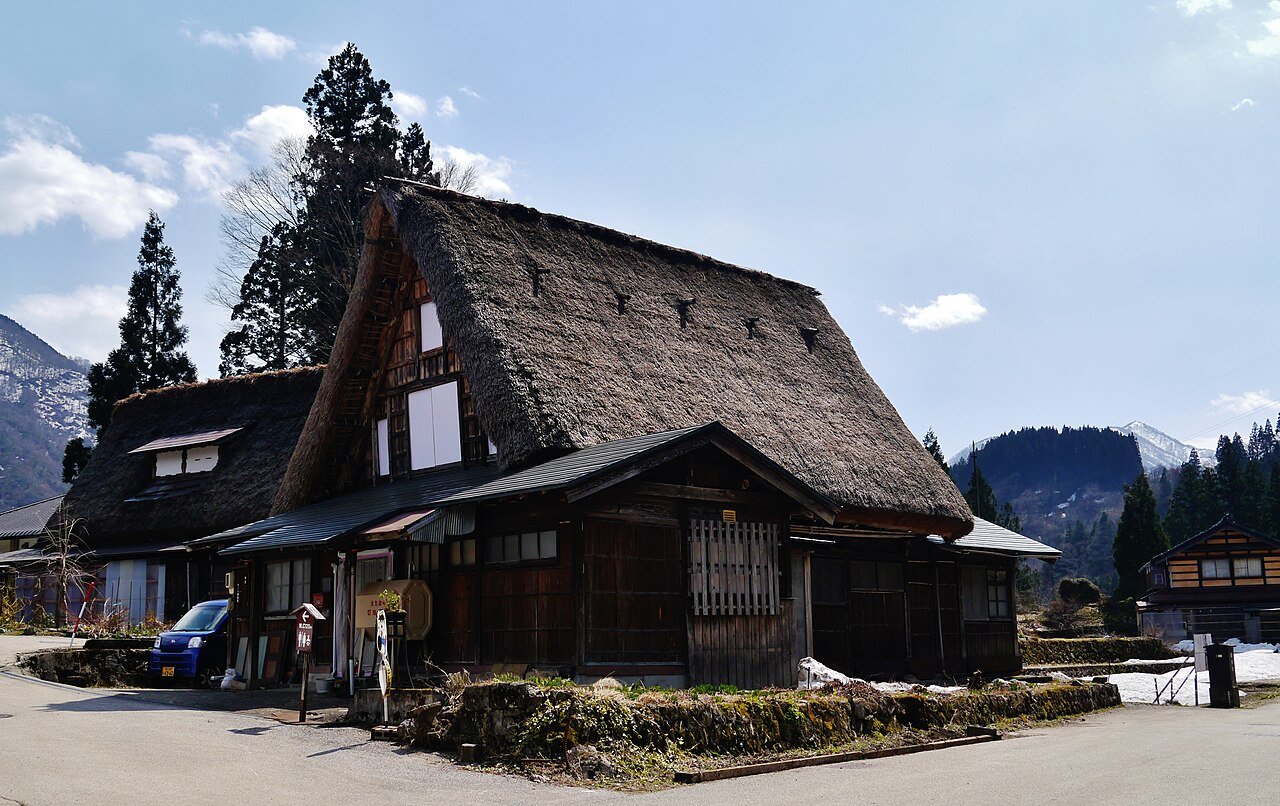
If you only step inside one gassho house, make it Wada House — the largest in Ogimachi, around 300 years old, and a designated Important Cultural Property of Japan. The Wada family grew wealthy from the gunpowder (saltpetre) and silk trades, and they still live in the house today, opening the ground and upper floors to visitors. Climb into the attic and you'll see the timber frame lashed together with straw rope, not a single nail, and the broad floor that was once used to raise silkworms. Around Wada House you'll also find the cluster of three gassho houses in a row that's the village's classic photo.
 4
4
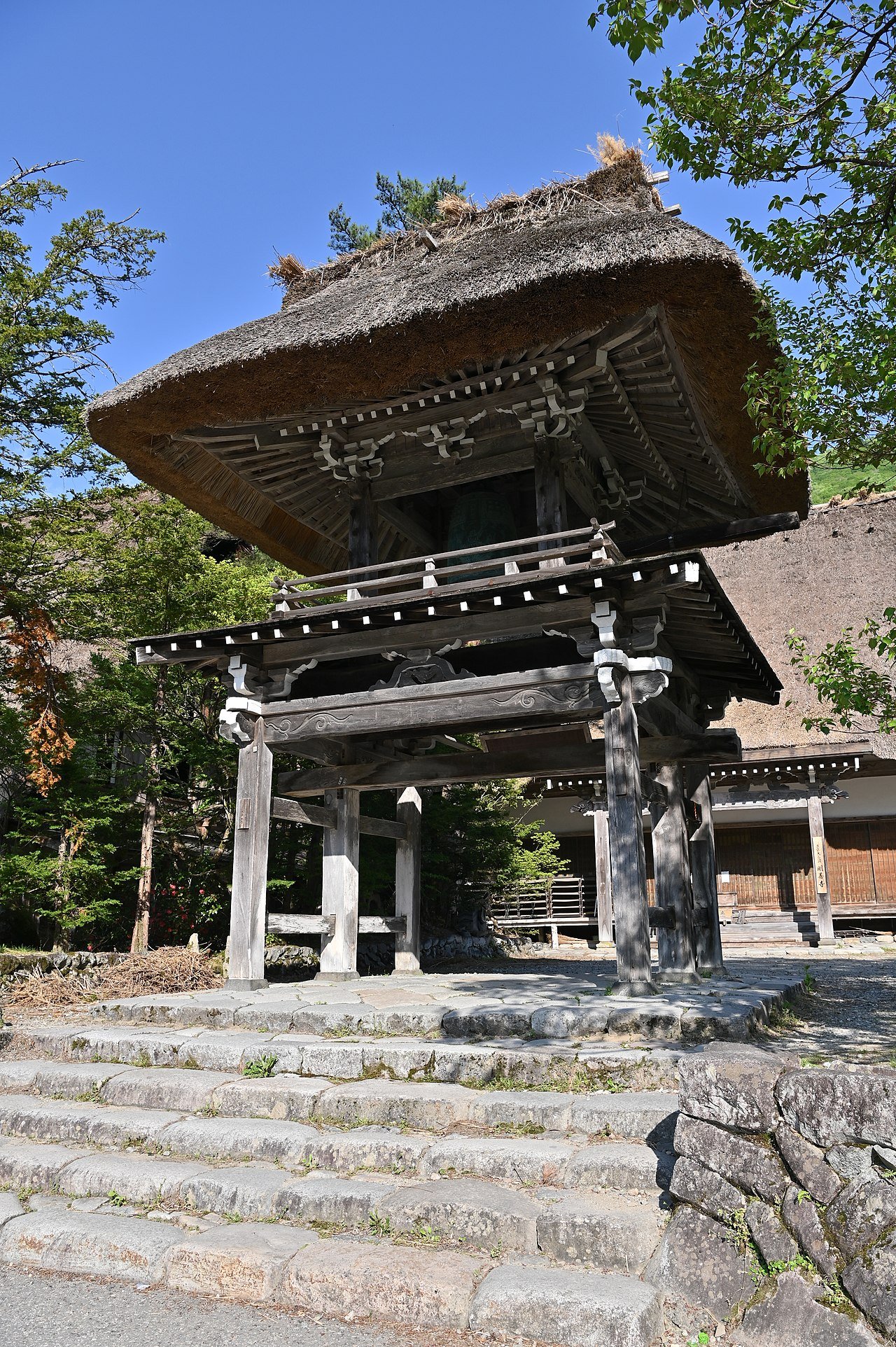
Have you ever seen a temple roofed in thatch? Myozenji is one of very few in Japan. A temple of the Jodo Shinshu (True Pure Land) school, it has been Ogimachi's village temple since 1748, and its main hall, bell gate and priests' quarters are all thatched in the same style as the farmhouses — so the temple blends seamlessly into the village. The bell gate (a bell above, a passage below) under its thatched roof is a beautiful photo. Inside, a small folklore museum tells the story of the community's life and faith. Please walk it quietly and with respect: this is still a working temple.
 5
5
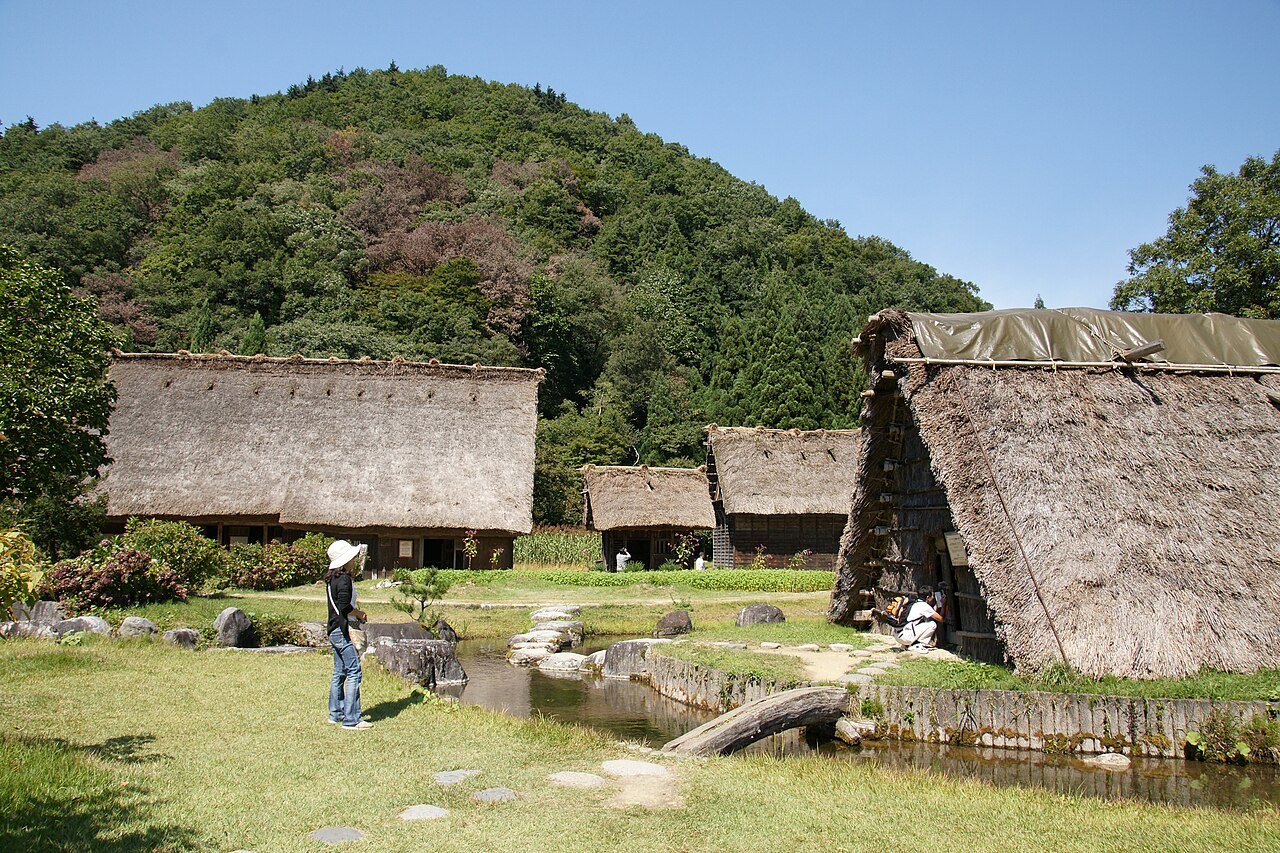
Here's the one people skip, even though it's just across the river — the Gassho-zukuri Minkaen open-air museum, opened in 1972. It gathers 25 gassho houses (9 of them Important Cultural Properties) that were rescued from surrounding villages facing demolition and reassembled in a wide garden along the foot of the hills. The advantage is that you can walk inside house after house in a row, see the tools, the silkworm-rearing equipment, and at times a live demonstration of roof re-thatching. It's the place to understand gassho life most deeply — without disturbing the homes people still live in over in the main village.
 6
6
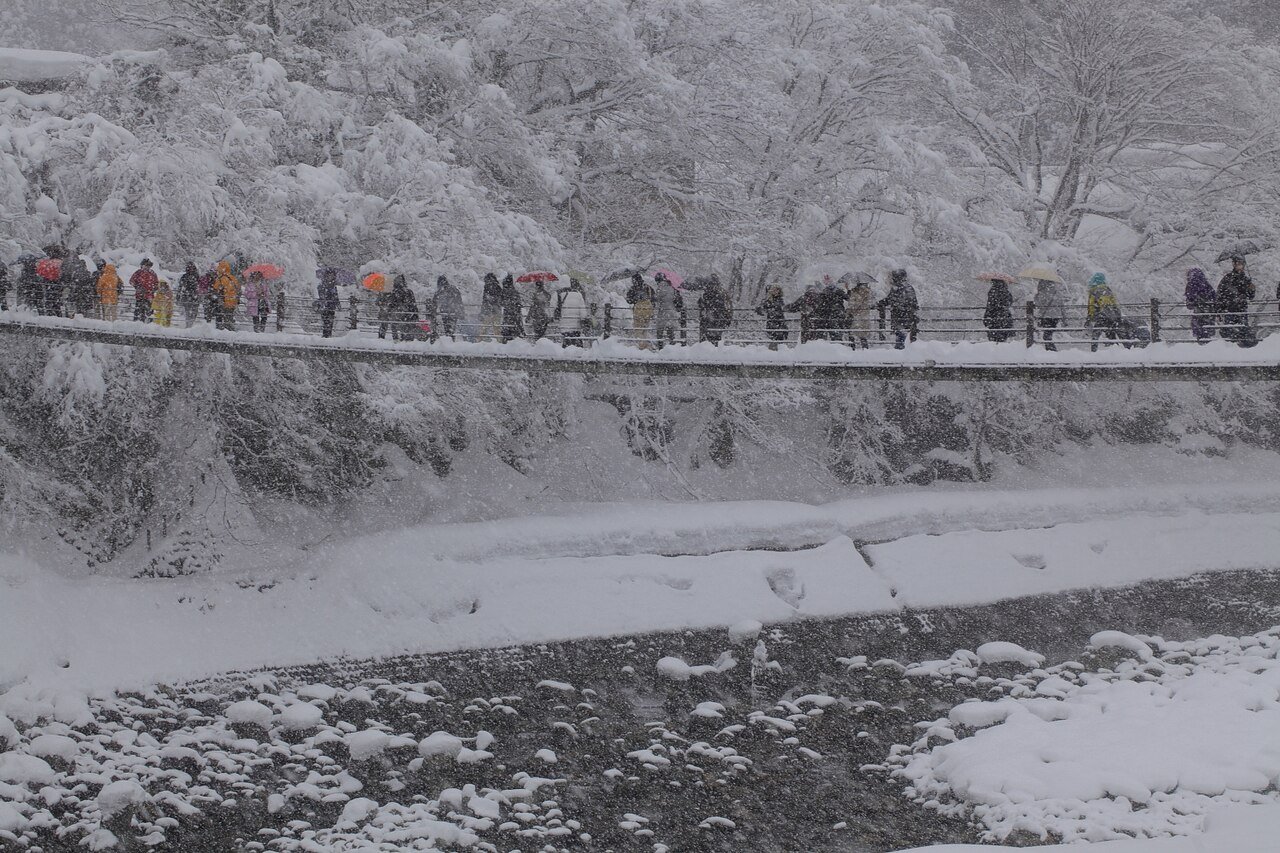
Whether you arrive by bus or car, almost everyone's way into the village is the Deai bridge — a 107-metre suspension bridge spanning the Shogawa river, linking the Seseragi Park car park to the village. It sways gently underfoot as you cross, and from the middle you get clear river water below, thatched roofs lined up on the far bank, and mountains all around — the first view that tells you you've really arrived. In winter the bridge becomes a snowy procession of people under umbrellas, so striking that many end up lingering here far longer than they expected.
 7
7
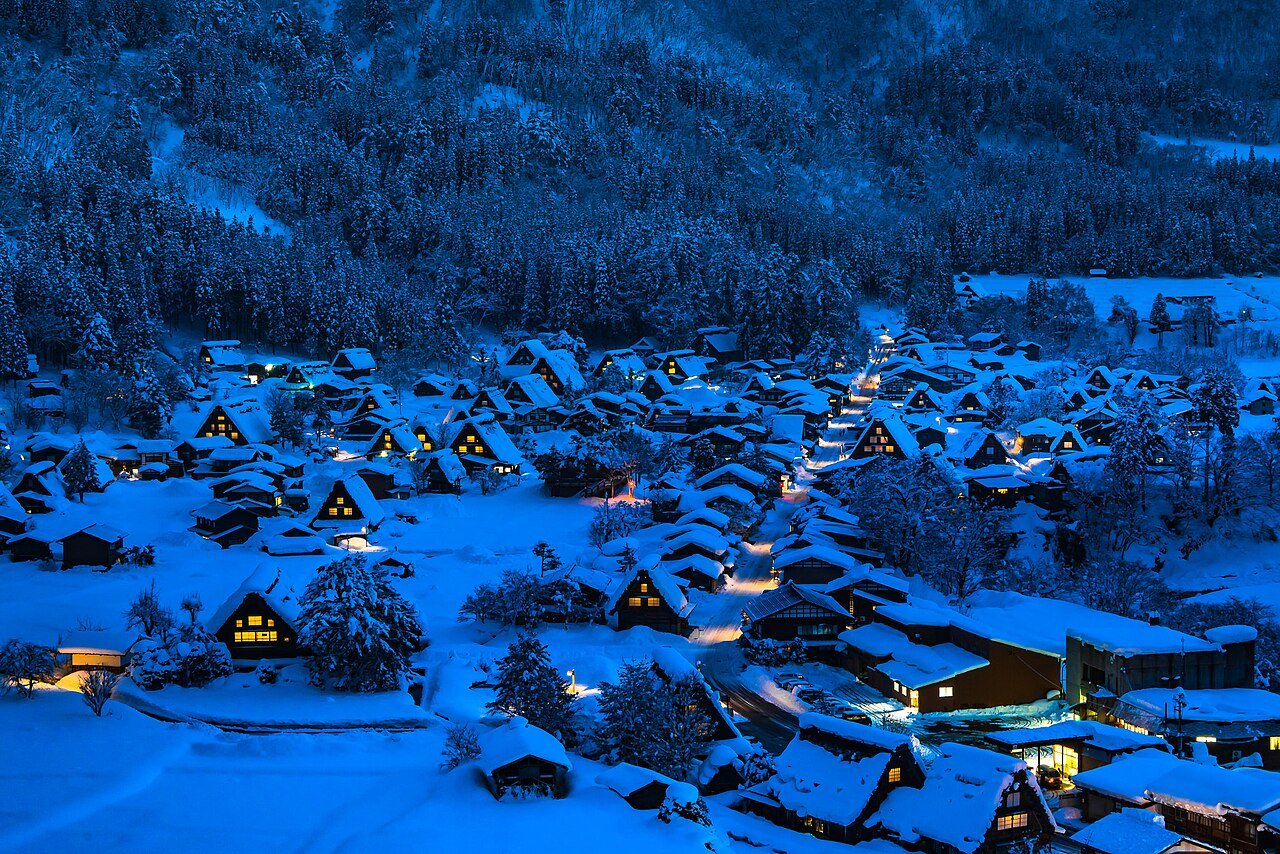
The Shirakawa-go image the whole world wants most is the winter light-up — gassho houses buried in deep snow, windows glowing warm yellow against a deep blue evening sky. It's genuinely moving to see in person. It's also the part of this guide that takes the most planning, because it runs on only a few nights a year. In 2026 that's four evenings — 12, 18 and 25 January and 1 February — with the lights on from 17:30 to 19:30. Crowds are enormous and tightly capped: parking, viewpoint tickets and bus tours all need booking months ahead and sell out fast. If you don't have a reservation, don't drive there, because the roads and car parks are closed to anyone without a ticket.
 8
8
If Shirakawa-go feels too busy for you, think about Gokayama — the sister villages listed by UNESCO at the same time in 1995, but tucked deeper into the valley over in Toyama Prefecture, which keeps the crowds thinner and the mood far calmer. It's two small clusters: Ainokura, with around 20 gassho houses on a hillside, and Suganuma, smaller and charming by the river. Gokayama also preserves the ancient Kokiriko folk-music tradition. You can continue here from Shirakawa-go by bus or car in the same day — perfect if you want gassho villages where the clock ticks slower still.
 +
+
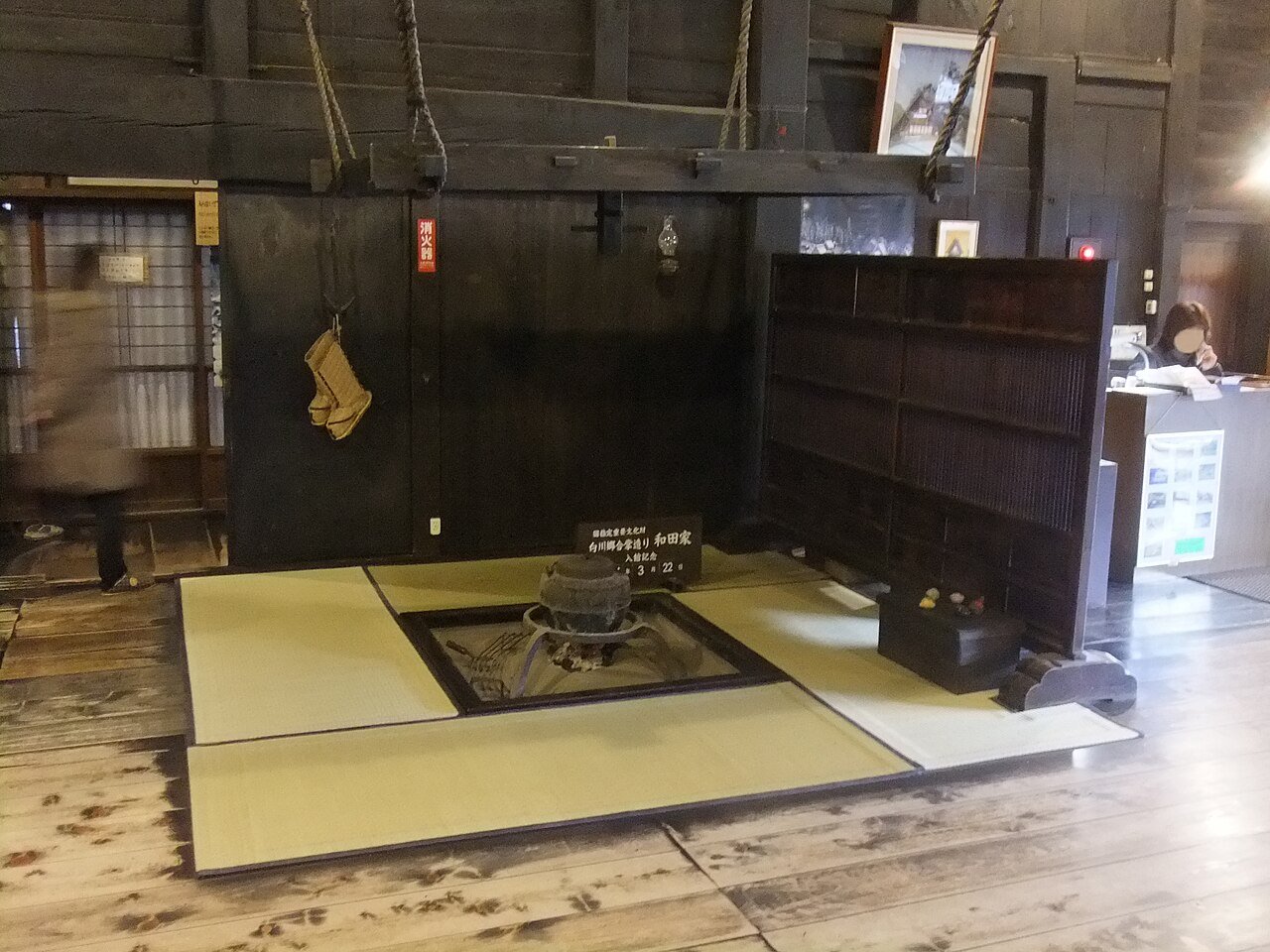
Ever wondered how a roof that looks so fragile survives centuries of heavy snow? The answer is the irori — the sunken floor hearth at the centre of the room, where families have cooked and kept warm for generations. Smoke from that fire rises every day to cure the timber frame and the thatch above, drying the wood, keeping out insects, and making the whole structure far tougher. When you visit Wada House or another museum home, sit down beside the irori and look up at the attic blackened by generations of smoke — and you'll understand why this place earns the words "World Heritage." If you stay in a minshuku, dinner around the irori is the experience many travellers say they remember for life.