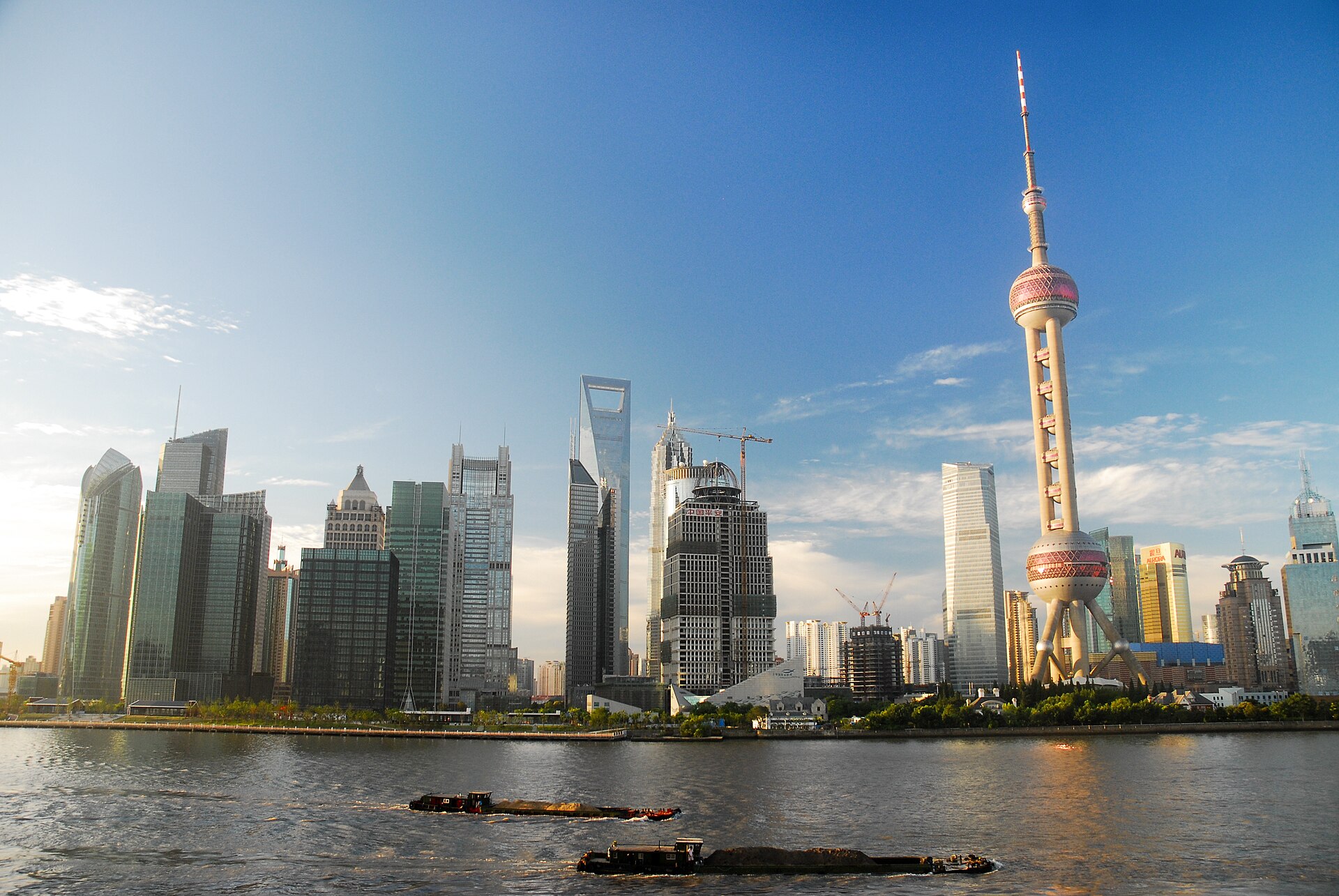
All the classics without the sprint, one full day for your big experience — Disneyland or a 1,700-year-old water town — and a fourth day wandering neighbourhoods most visitors never reach. Four days is exactly right.
Three days in Shanghai covers the highlights well — but every three-day plan has the same problem: you have to cut the big experience. Shanghai Disneyland needs a full day on its own. So does a trip to Zhujiajiao water town. Try to wedge either into a three-day city trip and you end up rushing the thing you were most excited about.
Four days solves that directly. Days one and two take care of the city's core — The Bund, Yu Garden, the Pudong skyline, Jing'an Temple, Tianzifang, the French Concession. Day three is your own big experience, chosen to suit your group. Day four is something a three-day trip never has time for: a slow morning on the Huangpu River and an afternoon in the quietly brilliant neighbourhoods that sit just off the tourist map.
The difference from the five-day itinerary: this plan keeps you entirely within Shanghai — no overnight rail trips, no choosing between Disneyland and Suzhou on consecutive days. Just the city, done properly.
A Ming-dynasty garden at opening time, the city's oldest soup dumplings, and the Bund lit gold against the Pudong towers after dark — this is the day Shanghai introduces itself.
Start at Yu Garden when the gates open at 09:00, before the midday crowds arrive. The 460-year-old Ming-dynasty garden — dragon-spine walls, red pavilions over carp ponds, moon gates opening onto winding stone paths — is genuinely tranquil in the early hours in a way it simply isn't by noon. Budget 90 minutes here.
Walk out into the free-entry Yuyuan Bazaar surrounding the garden. Look for the Nanxiang Steamed Bun Restaurant (南翔馒头店) beside the zigzag bridge — it has been serving xiaolongbao since 1900. The queue moves faster on the ground floor. This is as close to the original as the dish gets.
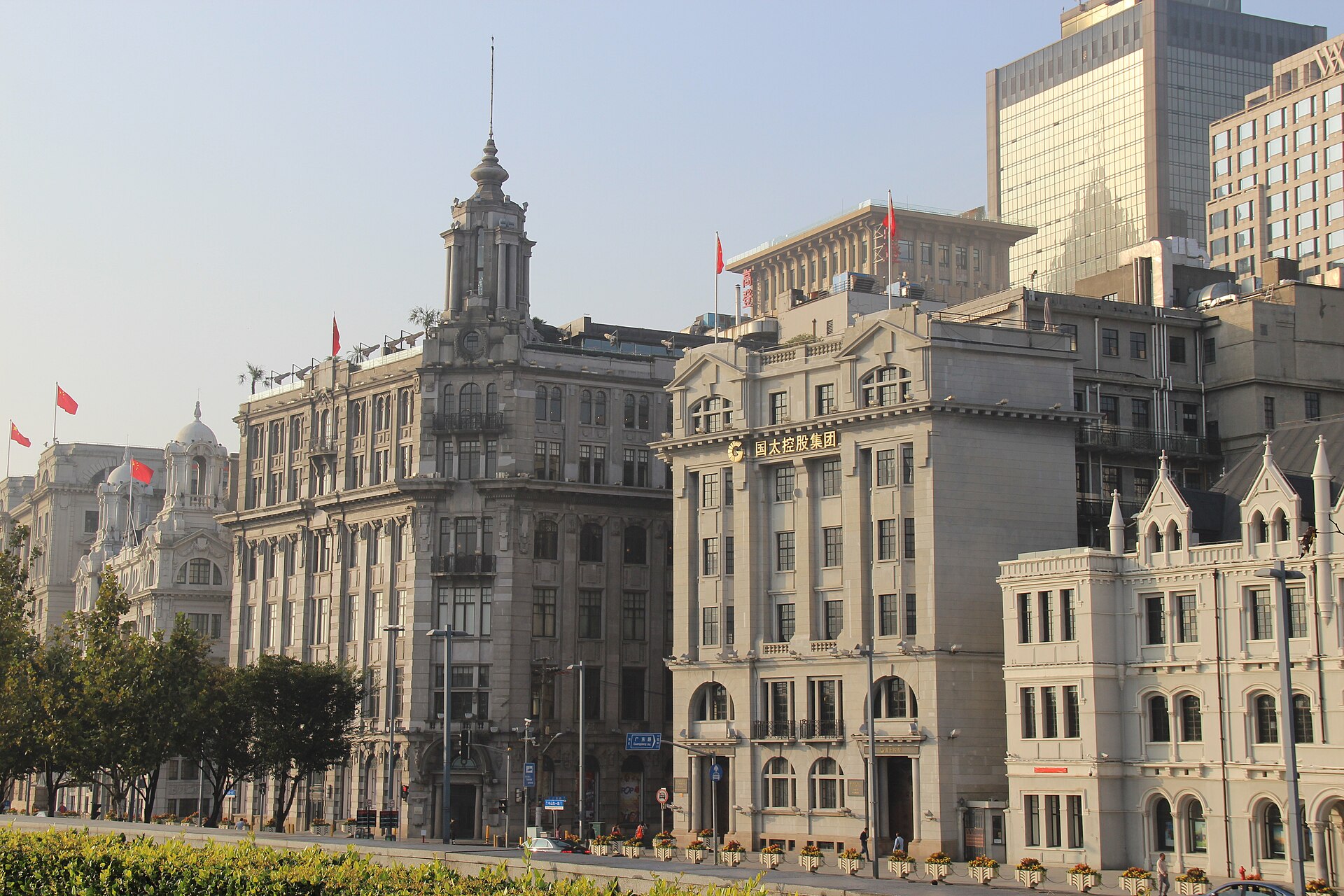
Walk or take the metro to The Bund. The afternoon light from the west lands on the 1920s and 30s Neoclassical and Art Deco facades beautifully; stroll the 1.5 km Promenade at whatever pace feels right. Turn inland along Nanjing Road toward People's Square — the red neon signs, the crowds, the sheer scale — then catch Metro Line 2 across the river to Lujiazui.
Pick one observation deck: Shanghai Tower, floor 118 at 546 m (¥180), or the Shanghai World Financial Center (¥180), which puts the Oriental Pearl Tower in your frame. Either way, you're looking down at the 19th, 20th and 21st centuries of the same city simultaneously.
Come back to The Bund between 18:00 and 20:00. The colonial waterfront you saw in daylight and the glittering Pudong skyline you saw from above now face each other across the river simultaneously, and the contrast is something no photograph quite prepares you for. Walk the Promenade slowly. Dinner is easy to find along East Nanjing Road or at Xintiandi a short metro hop away.
A gilded temple between glass towers, an art-lane that smells of roasting coffee, a free museum with five thousand years of Chinese history, and an evening on the most beautiful streets in the city.
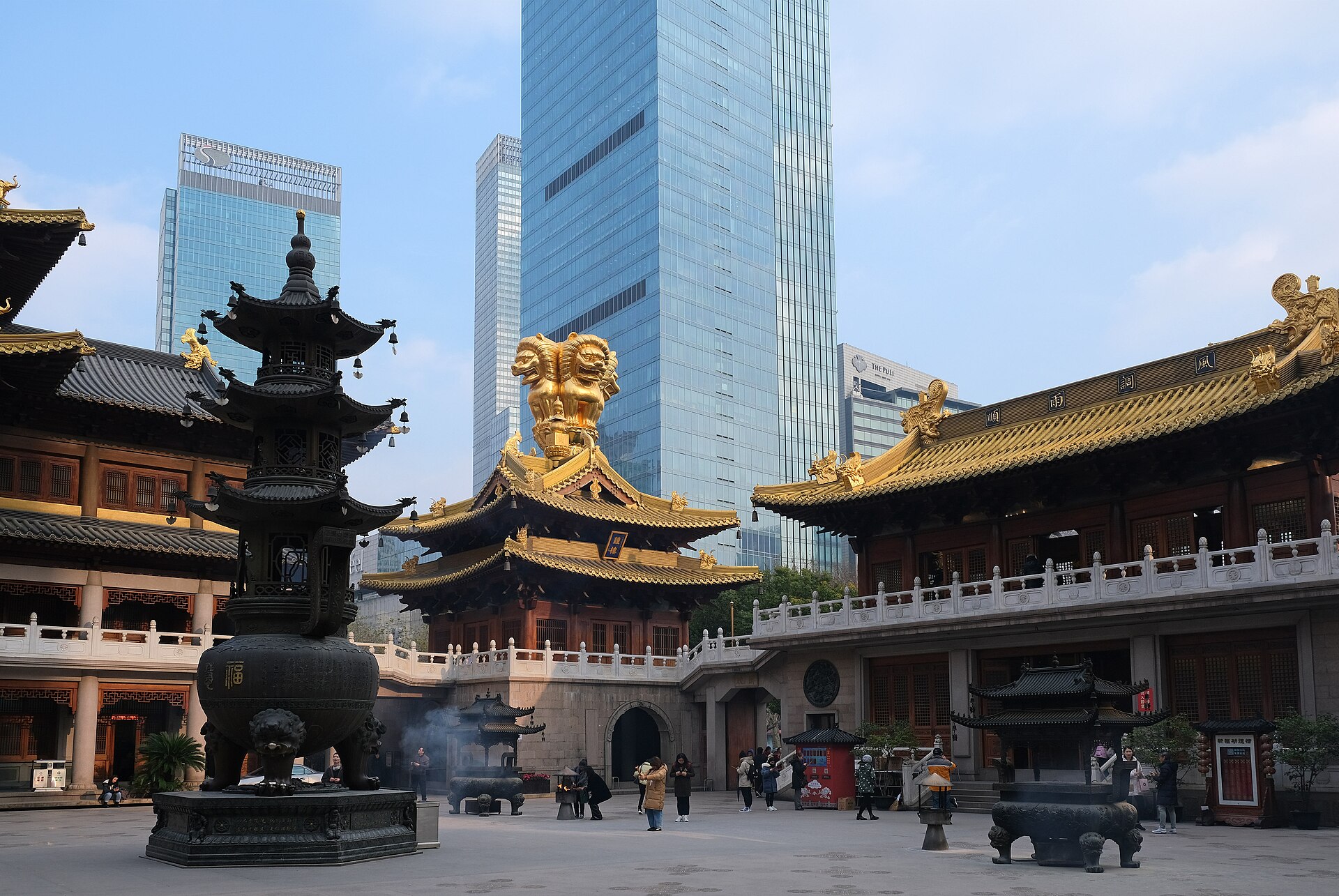
Step off the metro at Jing'an Temple station and look up: glass office towers frame a Buddhist hall with saffron-gold roofs that has been standing here since the year 247 AD. The visual collision is intentional and it never gets old. Spend 45 minutes inside the temple — early mornings bring monks at prayer and local worshippers before the tourist groups arrive. Entry ¥50.
Ride to People's Square and walk into the free Shanghai Museum (requires online booking). If ancient Chinese bronzes, Song-dynasty ceramics and Tang-dynasty scrollwork interest you at all, this is one of the world's best collections. If you haven't booked, a walk through People's Park is a fair substitute — the Sunday morning marriage market, where parents post cards seeking partners for their children, is genuinely fascinating.
Tianzifang is a warren of narrow brick lanes — former workers' housing that locals converted into galleries, independent design shops and cafés instead of letting it be demolished. There is no entrance fee and no particular route to follow. Allow 90 minutes to get pleasantly lost. Shanghai reportedly has more coffee shops than any other city on earth; in Tianzifang you understand why.
From Tianzifang, walk or take the metro a few stops to Xintiandi — the same shikumen stone-gate architecture as Tianzifang, but polished into an upscale dining and bar district. It works well as an early-evening base between afternoon wandering and dinner.
The best two hours of the French Concession are between 16:00 and 18:00, when afternoon light filters through the plane-tree canopy on Wukang Road (武康路) and the Art Deco and Spanish Mission villas glow warm. Café tables spill onto the pavement. It's the one part of Shanghai that feels more like a European residential neighbourhood than an Asian metropolis — and that is precisely why people keep coming back. Wander the side streets freely; getting slightly lost is the point. Dinner in this area ranges from excellent French bistros to small Shanghainese spots, ¥150–400 per person.
This is the day that separates four days from three. Pick the experience that fits your group, give it your full energy, and don't try to combine it with anything else.
Leave your hotel before 08:00 to catch Metro Line 11 and arrive near opening time. The moment the gates open, head straight for TRON Lightcycle Run — this is the ride with the longest queue; buy Lightning Lane priority access through the Disneyland Shanghai app immediately on entry. With TRON secured, work through the seven themed lands at your own pace: the Enchanted Storybook Castle is the tallest Disney castle ever built and worth standing under for a moment even if you've been to every other resort.
Stay into the evening — the castle light and fireworks show after dark is genuinely spectacular and not something you can replicate earlier in the day. Most days the park runs until 21:00–22:00.
Head out early for Zhujiajiao, a canal town that has existed in some form since the Three Kingdoms period (roughly 1,700 years ago). The preserved Ming and Qing-dynasty houses lean over narrow waterways crossed by stone-arch bridges; the boat ride through the canals (¥8–10) gives a viewpoint the walking streets don't. North Street is the main lane, still selling food and everyday goods rather than purely tourist merchandise. Plan 3–3.5 hours here.
On the way back, stop at Qibao Old Street (Line 9, Qibao station) — a genuine neighbourhood market that happens to be old rather than a preserved attraction. Street food is the point: glutinous rice cakes, stewed tofu, sesame candy. An hour is plenty before heading back to the hotel to rest ahead of day four.
A river cruise at water level, a converted power station full of contemporary art, a 1933 slaughterhouse turned creative hub, and a farewell dinner of proper Shanghainese food.
The most underrated morning activity in Shanghai: a Huangpu River cruise departing from Shiliupu Wharf beside The Bund. The same skyline you've been admiring from the promenade looks entirely different from water level — you see the scale of the shipping traffic, the industrial banks that back up behind the postcard towers, and the colonial facades from the river that their architects originally intended. The 45-minute daytime cruise costs ¥120; book via Klook to skip the wharf queue.
If you haven't been up a Pudong tower yet, this morning is your last chance. Shanghai Tower, floor 118, is less crowded before noon than in the afternoon, and the morning light is cleaner for photography.
Three places that deserve more attention than most four-day itineraries give them — pick two that appeal, or visit all three if energy allows:
Wukang Road (武康路) in the French Concession: if you walked through on day two in the evening, try the same street at midday when the light hits differently and the cafés are quieter. The Art Deco villas and their restored ironwork gates reward a second look.
Power Station of Art (上海当代艺术博物馆, PSA) on the West Bund: the largest contemporary art museum in China, housed in a decommissioned power plant whose chimney stack is still intact. Entry is free for permanent galleries; temporary exhibitions may charge. The industrial architecture alone is worth the visit.
1933 Old Millfun (1933老场坊) in Hongkou: a 1933 Art Deco-Brutalist slaughterhouse converted into a creative complex. The interior — a concrete lattice of bridges, ramps and circular corridors — is genuinely unlike anything else in the city. Coffee shops and design studios operate inside. Currently free to enter.
If you still need gifts or last-minute shopping, Nanjing Road East and Huaihai Road in the French Concession cover everything from branded goods to local design and tea shops. For the final dinner, consider something you haven't tried yet from the Shanghainese canon: hongshao rou (braised pork belly that falls apart), sweet and sour Mandarin fish, or shengjian bao (pan-fried pork buns with a crispy base) — the same dough as xiaolongbao, cooked completely differently. Mid-range restaurants in the Jing'an or French Concession area run ¥100–250 per person. The Shanghai food guide has specific dishes and where to find them.
The Jing'an district or the People's Square area works best for this four-day plan: centrally positioned between every stop on every day, with Metro Line 2 running east to The Bund and Lujiazui and west toward Hongqiao. If you choose Disneyland on day three, one night near the resort lets you enter before the general public. See the neighbourhood guide or the top 10 hotels.
The metro covers every stop in this itinerary, including Zhujiajiao on Line 17. Fares are ¥3–8 per journey. Pay by scanning a QR code in Alipay or WeChat Pay at the turnstile, or buy a Shanghai Public Transport Card at any station machine. All station signs are bilingual. Google Maps works for routing, though you will need a VPN. Full details in the metro guide.
Link a Visa or Mastercard to Alipay via its international mode before leaving home. Most shops in Shanghai accept Alipay or WeChat Pay only — some do not take cash at all. Download and test a VPN at home too: Google Maps, Instagram, WhatsApp and Gmail are blocked inside China. The Alipay setup guide walks through the process step by step.
| Item | Budget | Mid-range | Comfortable |
|---|---|---|---|
| Hotel · 3 nights | ¥300–600 (~฿1,500–3,000) |
¥900–1,500 (~฿4,500–7,500) |
¥1,800–3,600+ (~฿9,000–18,000+) |
| Food · 4 days | ¥320–480 (~฿1,600–2,400) |
¥600–1,000 (~฿3,000–5,000) |
¥1,200–2,400 (~฿6,000–12,000) |
| Metro · 4 days | ¥60–100 (~฿300–500) |
¥80–140 (~฿400–700) |
¥150–300 (~฿750–1,500) |
| Entry tickets · days 1–2 | ¥90–130 (garden + temple) |
¥270–360 (+ sky deck) |
¥400–600 (premium tickets) |
| Day 3 big experience | ¥75–150 (Zhujiajiao route) |
¥475–720 (Disneyland) |
¥719+ (Disneyland + Lightning Lane) |
| Day 4 · Huangpu cruise | ¥0 (skip or walk the Bund) |
¥120 (cruise) |
¥180+ (cruise + sky deck) |
| Total per person (approx.) | ¥845–1,460 (~฿4,225–7,300) |
¥2,445–3,840 (~฿12,225–19,200) |
¥4,449–7,500+ (~฿22,245–37,500+) |
Exchange rate reference: ¥1 ≈ ฿5. Estimates may vary by season and personal spending habits.