Home Koh Lanta Thailand Koh Lanta Hotels About
Home  ›  Asia  ›  Thailand  ›  Koh Lanta  ›  First-Timer Guide
Koh Lanta First-Timer Guide · 2026

Your first trip to Koh Lanta
A long, laid-back Andaman island, planned before you set off

A long, chilled-out Andaman island in Krabi province, known for being calm, slow and made for long stays — far quieter and less of a party than Phi Phi or Phuket. It has a string of west-coast beaches, a heritage Old Town of wooden stilt houses, a national park on the south tip and a base for Andaman diving. This guide is built from verified facts and real visitor accounts to get you ready for your first Koh Lanta trip before you set off.

Why start here

A long Andaman island that's calm and made for long stays

Koh Lanta is a long Andaman island in Krabi province, south of Krabi town and Ao Nang. The main tourist island is Koh Lanta Yai (you cross Koh Lanta Noi to reach it). Most people know it as a laid-back island made for long stays — calm, easygoing and friendly, good for families, couples and remote workers, and far quieter and less of a party than Phi Phi or Phuket. It has a string of long west-coast beaches, the wooden waterfront Lanta Old Town on the east coast, a national park on the south tip and a base for Andaman diving and island-hopping.

You can drive in — it's not ferry only — the island is now reached by road over two bridges, a minivan or car from Krabi (Krabi Airport KBV or town) in about 2 to 2.5 hours. Good sea in the dry months — November to April brings dry weather, a calm sea and everything open. An island with many sides — on a single trip you can stay on the beach, walk Lanta Old Town, climb the lighthouse at the national park on the south tip and take an Andaman snorkelling boat trip. See the full overview at the complete Koh Lanta guide →

⚠️ The single most important thing to know: Koh Lanta is laid-back, quiet and very seasonal. If you want to slow down for a while and watch the sunset from the beach, it's perfect; if you want big nightlife or a party, Lanta is quieter than you might expect — and, most importantly, in the monsoon (May to Oct) many hotels, restaurants and dive shops close for the season. Boats drop back to mostly the minivan route, some beaches are rocky and shallow at low tide, and you'll get far more out of the island with a scooter. Come expecting a chilled, long-stay island. That's its appeal.
A note on this guide: All prices, ferry times and logistics here are drawn from public sources and verified visitor accounts. Details change — and many places close in the low season — so check for the latest before you travel.
Trip planning

How many days do you need?

It depends on whether you're here for a short break or a long stay. If you're here to relax and see the main sights, three to five days is the sweet spot — beach time, Lanta Old Town, the lighthouse at the national park on the south tip and a snorkelling boat trip. But Koh Lanta is known for long stays — many people stay a week or a month, because it's so laid-back and made for slowing down. Leave margin for getting on and off the island, since it's a minivan or boat both ways.

🏝️
3–5 Days — relax and see the sights
The right call for a first visit around the island

Day 1: Minivan in from Krabi, check into your chosen beach, beach time, sunset. Day 2: A snorkelling boat trip (Koh Haa or the 4 islands, or Koh Rok in the dry season). Day 3: Lanta Old Town and the national park on the south tip (lighthouse, viewpoint). Days 4–5: Cafes, work your way along the west-coast beaches, kayak the mangroves, then make your way off the island.

See all attractions: Koh Lanta attractions →
🌴
A week or more — a long stay
The version for relaxing or remote work

Lanta is a genuine long-stay island, and plenty of people stay a week or a month. Pick the beach that suits you and settle in, then spread the sightseeing out — alternate beach days, cafe days, boat-trip days and proper rest days. There are monthly rentals and laptop-friendly cafes. ⚠️ Come in the dry season (Nov to Apr) so everything is open, and have a scooter to explore the island.

Things to do: attractions · beaches · diving & snorkelling · what to eat

How to get there

You can drive in — via Krabi and two bridges

The good news is that you can drive to Koh Lanta now — it's not ferry only — because two bridges connect the island (the Koh Lanta Noi bridge opened around 2016, so the old car ferries are gone). There's no train, no metro and no airport on the island. The trip is really "get to Krabi first, then take a minivan or car onto the island", with boats as an extra option in the dry season. The nearest airport is Krabi (KBV), and the island's main town and pier is Saladan in the north.

By road — minivan / car from Krabi (the main way, year-round)
Over two bridges, about 2 to 2.5 hrs · land at Krabi KBV

The popular, year-round way is a minivan or car from Krabi — fly into Krabi Airport (KBV) or come from Krabi town, then take a minivan onto the island, crossing Koh Lanta Noi and over two bridges to Koh Lanta Yai, in about 2 to 2.5 hours. Many operators run a shared minivan that picks up from the airport or your Krabi hotel and drops at your island accommodation. It's the most convenient and direct option from Krabi. You can also fly into Phuket and transfer, but it's further.

Best for: Every season, especially the monsoon, getting straight to your hotel, landing at Krabi
By boat — dry season only (Nov to Apr)
Speedboats / ferries from Krabi, Ao Nang, Phi Phi, Phuket

In the dry season (Nov to Apr) there are also speedboats and ferries to Koh Lanta — from Krabi (Klong Jilad pier), Ao Nang, Ko Phi Phi and Phuket. Good for island-hopping the Andaman as one trip, such as Phi Phi → Lanta or Phuket → Lanta, with a nice sea crossing. ⚠️ These boats mostly run only in the dry season, and in the monsoon they drop back to mostly the minivan route. More on getting in from the mainland at Krabi island hopping →

Best for: Island-hopping the Andaman (Phi Phi / Phuket → Lanta) in the dry season
About getting there: Now that the bridges are in, the minivan from Krabi is the most reliable, year-round way, and boats are an extra option in the dry season only. In the monsoon (May to Oct) many boat routes stop, and national-park islands like Koh Rok close — so if you come in the rainy season, plan to get in and out by minivan. You can book a Krabi-airport transfer or a boat trip in advance on Klook. See how to get to Koh Lanta → · stay in Krabi before the island →
Accommodation

Which beach should you base on?

The most important choice on Koh Lanta is which beach you book, because the west-coast beaches run north to south and each has a different feel, and the island is long enough that moving around takes time. Pick one beach and settle in. Full beach-by-beach guide at the Koh Lanta beaches guide →, or see real places to stay at where to stay on Koh Lanta →

Klong Dao
North + near town + family

The northern beach near Saladan: long, soft sand, shallow and calm water, good for families and being near town. You can easily walk to restaurants, convenience stores and the pier, with good sunsets and an easy feel. A solid starting point for first-timers. ⚠️ It's a popular beach, so it's busier in high season than the southern ones.

Best for: Families, first-timers, being near town and the pier
Long Beach / Phra Ae
The longest beach + the most options

The longest beach on the island, with the most accommodation, restaurants and beach bars, and a little nightlife while still feeling relaxed. Long white sand you can walk for ages. Good if you want plenty of options and to be in the middle of the action. A well-balanced first-time pick if you want both a fine beach and places to eat and drink.

Best for: Wanting options and amenities, a long beach, relaxed but not silent
Klong Khong
Budget + chilled + beach bars

The budget, chilled beach of the island, with cheap bungalows, hippie-ish beach bars and fire shows at night. Good for backpackers and anyone on a smaller budget who wants to lie back by the sea. ⚠️ The beach is rocky and very shallow at low tide, so it swims best at high tide — it's more about the vibe than a sandy swimming beach.

Best for: Smaller budgets, backpackers, the chilled beach-bar scene
Klong Nin
Quieter + mid-range + pretty

A beach a little further south, quieter and calmer than the northern ones, with pretty sand, clear water and a fair few mid-range places and restaurants along the shore. Good for people who want quiet but still a few places to walk to — a balance between calm and convenience. ⚠️ It's a fair way from Saladan, so you'll ride a bit to get there.

Best for: Quiet but still convenient, couples, a pretty beach without crowds
Kantiang Bay
South + a beautiful quiet cove + upscale / remote

A beautiful cove in the south, wrapped in green hills, with clear water, quiet and remote, and upscale bayfront resorts (such as Pimalai). Good for couples and anyone who wants to get well away from the bustle, and it's close to the national park on the south tip. ⚠️ It's the far south and a long way from town, with few shops — best if you want to settle in somewhere quiet rather than head out often.

Best for: Couples, maximum quiet and upscale, near the national park
The far south — Bamboo Bay / Nui Bay
Very remote + the quietest

Small beaches at the very south of the island, such as Bamboo Bay and Nui Bay — remote and very quiet, with few people, good for anyone who wants to get away from everything. ⚠️ They're far from town and shops, you'll need a car or scooter, and many places close in the monsoon. Best only if you want maximum quiet and to rely mostly on your accommodation.

Best for: Maximum quiet, remoteness, relying on your accommodation
Before you go

When to visit & the Andaman monsoon

The best window
November to April · calm sea, everything open

November to April is the prime window for this Andaman island: dry weather, a calm clear sea, ferries running and hotels, restaurants and dive shops all open. National-park islands like Koh Rok and Koh Haa are open to visit. April is the hottest (March to April), but the sea is still lovely. Full Thailand-wide picture at when to visit Thailand →

Busiest / priciest: The dry-season high season, plus New Year — book accommodation and boat trips ahead
The monsoon — know before you book
May to October · the southwest monsoon · many closures

May to October is the Andaman monsoon: rain, a rough sea, and crucially many hotels, restaurants and dive shops closed for the season. Boats drop back to mostly the minivan route, and national-park islands like Koh Rok close. The upside is it's very quiet and very cheap, but your options are limited — check before you book whether the places you want are open. See the best time to visit Koh Lanta →

Plan ahead: Check what's open · plan to get in and out by minivan · keep a rainy-day backup
On the island

Getting around the island

🛵
Renting a scooter (the main way)
One coastal road · mostly flat

Koh Lanta is long, with one main coastal road running down the west coast. If you want to see several beaches, the Old Town and the national park on the south tip, a scooter is the most convenient and cheapest way around. The road is fairly easy and mostly flat, but there are still some hills and the bridges, so wear a helmet, ride with care, photograph the bike before you take it, and rent from a shop with good reviews. The distances are real — Saladan in the north to Kantiang Bay in the south is about 40 minutes.

Tip: Fill up before heading south · photograph the bike from every angle · wear a helmet
🚖
Songthaew / taxi + walking
No public bus · no metro · limited and pricey

If you don't ride a scooter, there are songthaews and taxis on the island, but they're limited and fairly pricey — agree the fare before you get in. Within a single beach (the flat area around Klong Dao, say) you can easily walk or cycle. There's no public bus, no train and no metro on the island, and being an island, the airport and train are over on the mainland at Krabi.

Tip: Agree the fare before you get in · walk or cycle within one beach
The distances are real: Koh Lanta is long, and Saladan in the north to Kantiang Bay in the south is about 40 minutes by scooter — factor this in when you pick where to stay. If you'd rather not ride far every day, choose the beach that matches what you'll mostly do. See getting around Koh Lanta →
The highlights

Things first-timers shouldn't miss

Koh Lanta has many sides, but for a first visit these are the core — the things that best explain why the island is worth the trip. Full details at Koh Lanta attractions →
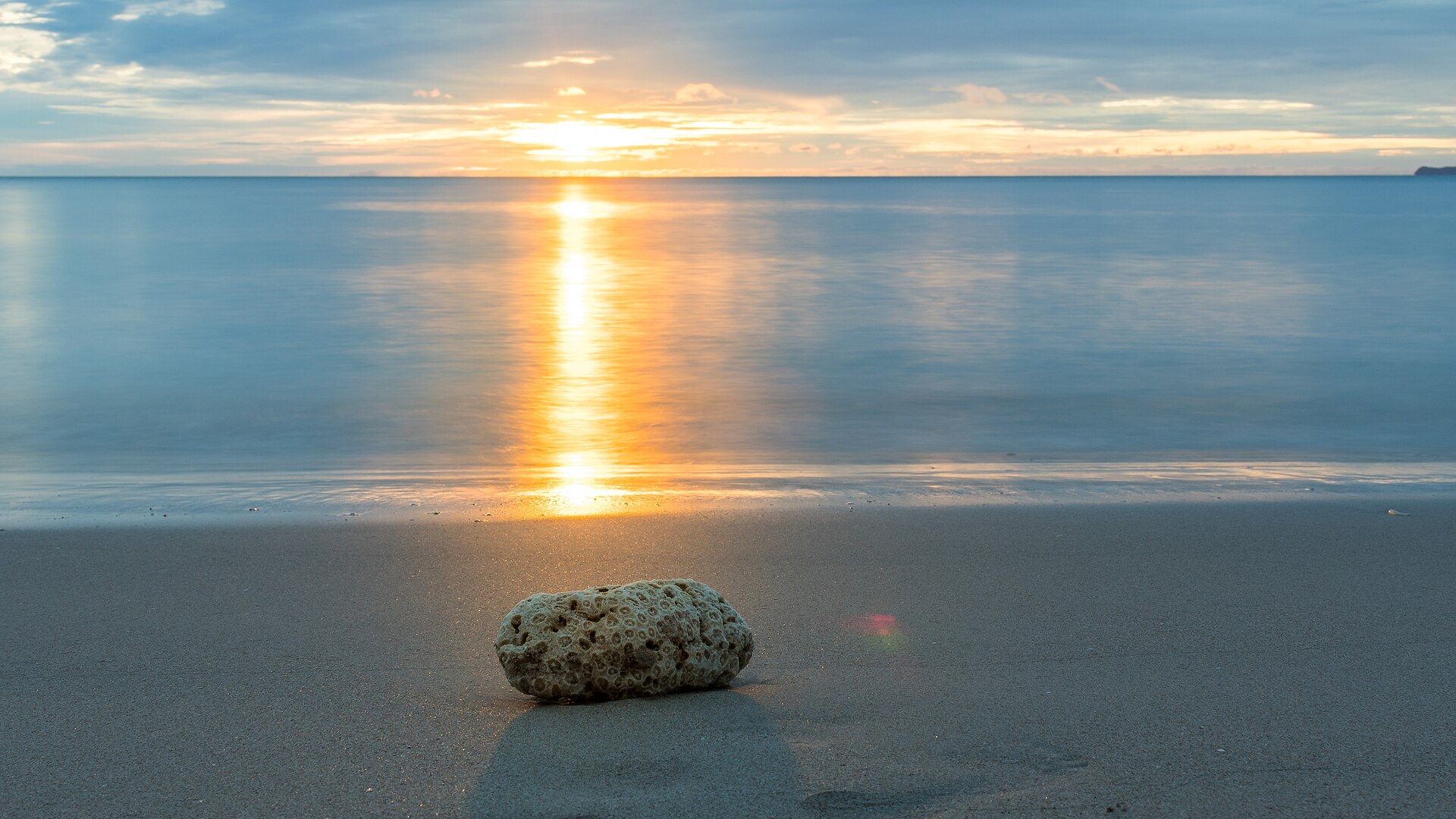
A west-coast beach on Koh Lanta at sunset, calm Andaman sea, smooth sand and a coral rock on the shore
Klong Dao · Long Beach · Klong Nin · Kantiang

The heart of Lanta is its string of west-coast beaches, all facing the sunset every evening — from Klong Dao in the north through Long Beach / Phra Ae, Klong Khong and Klong Nin down to Kantiang Bay in the south. Pick the beach that matches your style and spend real time lying on the sand and watching the sunset. This is what people come to Lanta for.

🏛️
Sino-Portuguese stilt houses · the east coast · the sea

Lanta Old Town on the east coast is a single street of old wooden Sino-Portuguese shophouses built out on stilts over the sea, reflecting a mix of Thai-Chinese, Thai-Muslim and Urak Lawoi "sea gypsy" heritage. There are cafes, craft shops and seafood piers over the water, and a quiet, easy feel that suits a late-afternoon wander.

🗼
Lighthouse · viewpoint · resident monkeys · south tip

Mu Ko Lanta National Park sits at the very south tip, with a white lighthouse that's a well-known photo spot, a viewpoint over the sea on both sides, small beaches, a short nature trail and resident monkeys. A worthwhile first-time stop. ⚠️ There's a park entry fee, watch the monkeys around your food, and check the opening hours before you go.

🤿
Hin Daeng / Hin Muang · Koh Haa · Koh Rok · 4 islands

Lanta is a strong Andaman dive base. The headline sites are Hin Daeng and Hin Muang, with soft-coral walls and a chance of manta rays, while the top snorkelling trips are Koh Haa (a lagoon and a cave) and Koh Rok (white sand and clear water, open roughly mid-Oct to mid-May), plus the 4 islands and Ko Phi Phi. ⚠️ Most trips run in the dry season — pick a shop or tour by safety and reviews.

Beyond the main beaches: the Khao Mai Kaew cave (a jungle cave trek) · kayaking the mangroves around Koh Lanta Noi · Lanta Animal Welfare, a dog and cat sanctuary you can visit and walk dogs at · cafes and restaurants spread along the beaches. See Koh Lanta attractions → · Koh Lanta cafes →
The question many ask

Diving & snorkelling in one paragraph

Koh Lanta is a strong Andaman dive base. The top dive sites are Hin Daeng / Hin Muang, famous for soft-coral walls, manta rays and the occasional whale shark (a day trip or a liveaboard, roughly Nov to May). If you don't scuba, you can snorkel at Koh Haa (a lagoon and a cave) and Koh Rok (white sand and clear water, a national-park island open roughly mid-Oct to mid-May), and easily add the 4 islands and Ko Phi Phi.

⚠️ On the season and choosing a dive shop: Lanta's dive and snorkelling trips mostly run in the dry season only (Nov to May) — in the monsoon many dive shops close and national-park islands like Koh Rok shut. Pick a shop or tour with a good safety record, smaller group sizes and genuine, strong reviews, not simply the cheapest. Mantas and whale sharks are a matter of season and luck and are never guaranteed. And if you scuba dive, never fly straight after: wait at least 18 to 24 hours before a flight.
Read the full version: dive sites, snorkelling trips, the season and how to choose a shop in detail at the Koh Lanta diving & snorkelling guide →
Eating on Koh Lanta

What to eat on your first visit

Koh Lanta is a seaside island with a mix of Thai-Muslim and sea-gypsy culture, so the standouts are fresh seafood and spicy southern Thai food, alongside beach restaurants and a big cafe scene driven by the laid-back, long-stay crowd. Full guide at the Koh Lanta food guide →

🦐
Seafood + the Old Town piers
Fish, prawns, crab, squid · over the water in the Old Town

Koh Lanta is known for fresh seafood, especially at the over-the-water restaurants in Lanta Old Town, where you eat looking out at the sea — fish, prawns, crab and squid grilled, steamed or in a spicy southern curry. It's priced by weight and size, so check the price before you order. The west-coast beaches also have seafood spots for sunset. See the food guide →

Price: Seafood by weight · pick your catch · confirm the total before cooking
🍲
Southern Thai + local cooked-to-order
Southern curries, khao yam, roti · Saladan / the villages

Beyond seafood, Lanta has punchy southern Thai food and friendly local cooked-to-order spots — southern curries, khao yam (rice salad) and Thai-Muslim roti and tea — around Saladan and the island's villages. Far friendlier on the wallet than the beachfront, and best for budget travellers who want to eat like a local. See the food guide →

Tip: Spots in the villages and Saladan are usually cheaper and better value than the beachfront
Cafes + laid-back spots
Coffee, smoothie bowls, brunch · the long-stay crowd

Because Lanta is full of the laid-back, long-stay crowd, there are plenty of cafes and brunch spots — coffee, smoothie bowls, breakfast and laptop-friendly spots with a sea view, made for a long sit between beach days. They're spread around Long Beach, Klong Nin and the Old Town. See Koh Lanta cafes →

Tip: Long Beach / Klong Nin / the Old Town are the cafe areas · some close in the low season
🍹
Beach bars + low-key nightlife
Klong Khong is the chilled hub · fire shows on the sand

Lanta's nightlife is far more low-key than Phi Phi or Phuket, centred on Klong Khong, with hippie-ish beach bars and fire shows, while Long Beach has bars for the sunset. Pick the beach for the energy you want. It's not a party island — you come here for the chilled beach-bar feel. ⚠️ Don't drink and ride.

Note: Klong Khong = beach bars · elsewhere is quieter · don't drink and ride
Trip costs

How much does Koh Lanta cost?

Koh Lanta works for a range of budgets — from cheap bungalows at Klong Khong to upscale bayfront resorts at Kantiang. The big-ticket items are getting there (a flight or drive plus the minivan onto the island) and the diving or snorkelling boat trips. On a long stay, the per-night accommodation cost drops a lot. See real places to stay at every budget at where to stay on Koh Lanta →

Level Accommodation/night Food/day Approx. total/day
Budget about ฿400–900 bungalow or guesthouse (Klong Khong / Long Beach) about ฿300–600 about ฿900–1,800
Mid-range about ฿1,200–3,500 mid resort (Long Beach / Klong Nin) about ฿600–1,200 about ฿2,200–5,500
Comfort about ฿4,000–12,000+ bayfront resort (Klong Dao / Kantiang) about ฿1,000–2,500+ about ฿5,500–16,000+

The big items to budget for: getting to the island (a flight or drive plus the minivan over the bridges), the diving or snorkelling boat trips (Koh Haa / Koh Rok / the 4 islands / Phi Phi), scooter rental and fuel, the national-park entry fee on the south tip, and seafood. All prices can change and many places close in the low season — check the latest before you go. See where to stay on Koh Lanta → · find the right island →

Practical heads-up

Things first-timers get wrong

The low season closes a lot — check before you book
In the monsoon (May to Oct), many hotels / restaurants / dive shops close

The most common Lanta mistake is arriving in the monsoon to find many hotels, restaurants and dive shops closed for the season, national-park islands like Koh Rok shut, and many boats stopped. If you can, come in November to April. If you must come in the rainy season, check before you book that the places you want are open, and plan to get in and out by minivan.

You can drive in — no waiting for a car ferry
There are bridges now · minivan from Krabi year-round

A lot of people still think Lanta is ferry-only or that you have to wait for a car ferry — in fact there are two bridges now, and a minivan or car from Krabi drives straight to your accommodation, year-round, in about 2 to 2.5 hours. Boats are an extra option in the dry season only. Planning around this makes the trip much simpler.

Pick the beach for your style — the island is long
North = near town / family · south = quiet / upscale

Koh Lanta is long and each beach has a different feel. Families and people who want to be near town pick the north (Klong Dao / Long Beach); budget and chilled means Klong Khong; quiet and upscale means the south (Klong Nin / Kantiang). Choose the wrong one and you may end up riding far every day — pick the one beach that matches what you'll mostly do and settle in.

You really want a scooter to explore
One coastal road · limited public transport

Lanta has one main coastal road, and without a scooter, seeing several beaches, the Old Town and the national park is awkward and pricey, because songthaews and taxis are limited. If you can ride, it's very easy to get around — the road is mostly flat. Wear a helmet and photograph the bike first. If you can't ride, choose a beach with amenities on its doorstep and rely on hotel transfers.

Safer choice: Wear a helmet · photograph the bike first · rent from a shop with good reviews
Bring cash and a SIM before heading south
ATMs and clinics cluster in Saladan; the south is quiet

There are ATMs and clinics on the island, but they cluster in Saladan in the north, and fees are high. Small shops, seafood spots and the songthaew tend to take cash only — withdraw enough, and sort out a SIM or eSIM before heading to the quieter southern beaches with fewer shops. Serious medical care is on the mainland at Krabi. See Thailand SIM / eSIM guide →

Bring: Backup cash · eSIM/SIM · any regular medication
Sun protection — strong sun, long snorkels
Tropical sun, and easy to burn face-down snorkelling

Koh Lanta is in the tropics and the sun is strong — you can burn even on a cloudy day, and people often burn their backs from long, face-down snorkelling. Pack sunscreen, a hat and sunglasses, drink plenty of water, and for water activities (Koh Haa / Koh Rok) use reef-safe sunscreen and don't stand on the coral. Rest in the shade around midday.

Tip: Wear a rash guard when snorkelling · use reef-safe sunscreen
Frequently asked

FAQ · Before you go

How do I get to Koh Lanta — by ferry or can I drive?
You can drive to Koh Lanta now — it is not ferry only. Two bridges connect the island to the mainland (the Koh Lanta Noi bridge opened around 2016, so the old car ferries are gone). The main way is a minivan or car from Krabi (Krabi Airport KBV or town) in about 2 to 2.5 hours, crossing Koh Lanta Noi and over the bridges to the main island, Koh Lanta Yai. In the dry season (Nov to Apr) there are also speedboats and ferries from Krabi (Klong Jilad pier), Ao Nang, Ko Phi Phi and Phuket. The nearest airport is Krabi (KBV), and the main town and pier is Saladan in the north. See how to get to Koh Lanta →
How many days should I spend on Koh Lanta as a first-timer?
If you're here to relax and see the main sights, three to five days is a good fit: beach time, Lanta Old Town, the lighthouse at the national park on the south tip and a snorkelling boat trip. But Koh Lanta is known for long stays, and many people stay a week or a month because it's so laid-back and made for slowing down. For a long stay, pick the beach that suits you and settle in. Leave margin for getting on and off the island too. See Koh Lanta attractions →
Which beach should first-timers base on in Koh Lanta?
Choose by vibe. Klong Dao in the north, near Saladan, is a long, soft, shallow, calm beach, good for families and being near town. Long Beach / Phra Ae is the longest beach with the most hotels and restaurants. Klong Khong is budget and chilled, with cheap bungalows and beach bars. Klong Nin is quieter and pretty. Kantiang Bay in the south is a beautiful, remote cove with upscale resorts. Pick one beach and settle in, because the island is long and moving around takes time. See the beaches guide → · where to stay →
Is Koh Lanta any good in the low season?
Honestly, Koh Lanta is an Andaman island, and the monsoon runs roughly May to October with rain, a rough sea and, crucially, many hotels, restaurants and dive shops closed for the season. Boats drop back to mostly the minivan route, and national-park islands like Koh Rok close. The low season is very quiet and very cheap but your options are limited. The best window is November to April: dry, a calm sea and everything open. The hottest months are around March to April. See the best time to visit Koh Lanta →
Is Koh Lanta good for families and long stays?
Very much so. Koh Lanta is laid-back, calm and easy for long stays. The northern beaches like Klong Dao have shallow, calm water that suits children and families, and there are restaurants, convenience stores and clinics in Saladan. Remote workers and couples like it too, for the unhurried feel and the monthly rentals. The catch is to come in the dry season (Nov to Apr) so everything is open, and to have a scooter to explore the island. See Koh Lanta with kids →
Do I need a scooter on Koh Lanta, and how do I get around?
Koh Lanta is long with one main coastal road running down the west coast. The distances are real: Saladan in the north to Kantiang Bay in the south is about 40 minutes by scooter. If you want to see several beaches and the Old Town, a scooter is the most convenient and cheapest way around. The road is fairly easy and mostly flat, but there are still some hills and the bridges, so wear a helmet and ride with care. If you don't ride, there are songthaews and taxis but they're limited and pricey. There's no public bus and no train or metro on the island. See getting around Koh Lanta →
Klook · Koh Lanta Activities

Book Koh Lanta transfers and trips in advance — no surprises on the day

Krabi-airport↔Koh Lanta minivan transfers · Koh Haa / Koh Rok / 4-islands / Phi Phi snorkelling trips · Hin Daeng / Hin Muang diving — book ahead on Klook for peace of mind, especially in high season. (Most dive trips run in the dry season only.)

Browse Koh Lanta on Klook →
Wherebest is an affiliate partner of Klook — we may earn a commission when you book through our links, at no extra cost to you.