9 things to do beyond the beach
Ordered by what makes Lanta itself — the old town, the park, the cave, the mangroves, then the sea.
 1
1
Cross to the other coast, the opposite side from the tourist beaches — Lanta Old Town sits on the east shore, a single street lined with old wooden houses on stilts reaching out over the sea. Many are now cafes, seafood restaurants on the piers, guesthouses and souvenir shops. This was the island's original port and trading hub, where Thai-Chinese, Thai-Muslim and Urak Lawoi sea-gypsy families have long lived together. Look in at a small Chinese shrine, sit and eat seafood watching the fishing boats. Half a day strolling is plenty — it's the quietest, most characterful side of Lanta.
 2
2
Ride a scooter to the far south tip of Koh Lanta Yai and you reach Mu Ko Lanta National Park. The highlight is the white lighthouse on the headland reaching out to sea, a fine photo and the island's emblem. There's a viewpoint over the Andaman on both sides, a short nature trail through the forest, a small beach to swim at, and resident macaques you'll want to watch around food and valuables. There's a national-park entry fee (cheaper for Thais than foreigners). I'll note that in the monsoon parts of the park can close or the sea turns rough, so check before you go.
 3
3
Even though this guide is about what to do beyond the beach, the west-coast beaches are the heart of Lanta, and each one is distinct — Klong Dao (north, near Saladan; long, shallow, good for families) · Long Beach (Phra Ae), the longest, with the most places to stay and eat · Klong Khong (chilled-out, budget bungalows, beach bars, rocky at low tide) · Klong Nin (quieter, pretty) · and Kantiang Bay (south, a lovely curved cove, more upscale). Drive the one coast road and stop at each in turn, and pick the beach that matches your style.
Honestly, Lanta is one of the best dive bases in the southern Andaman — the standouts are Hin Daeng and Hin Muang, underwater pinnacles with walls of soft coral, manta rays and the occasional whale shark, among the top dive sites around. Koh Haa has a lagoon and a "cathedral" cave for snorkelling and diving. Koh Rok is white sand and clear water for snorkelling (a national-park island, open roughly mid-October to mid-May). Go by day trip or liveaboard. I'll be straight: in the monsoon many sites and dive shops close, so the main season runs roughly November to May.
Want some adventure on land? The Khao Mai Kaew cave in the island's interior is the answer — you trek up through the jungle for about 30 minutes to reach the entrance, then drop into a cave of stalactites and stalagmites with linked chambers, some sections a scramble and a tight squeeze, and a pool inside you can get into. You go with a local guide who leads and carries the light; it's not a cave you wander into on your own. I'll be honest, it's muddy, slippery and dark, so wear shoes with grip and clothes you don't mind getting filthy. Not for anyone wary of tight or dark spaces, but adventurous types love it — a half-day that's a complete change from the beach.
A side of Lanta many people miss is its big mangrove forest, especially around Koh Lanta Noi (the island you cross before Koh Lanta Yai). The popular thing to do is kayak into the creeks and shady mangrove tunnels — still water, easy paddling, with mangrove roots, water birds and monkeys to spot, and some tours add a small cave in the karst. It's a gentle, peaceful outing, good for families and anyone who wants to be close to nature without working for it. Book a half-day tour with kayaks and a guide, or some creek-side places lend you a kayak to paddle yourself.
If you're an animal person, Lanta has something you won't easily find elsewhere — Lanta Animal Welfare, a non-profit that cares for the island's stray dogs and cats, neutering, treating and rehoming them. You can visit for free, take a tour around the centre to hear about the work, and the favourite is to volunteer to walk a dog, taking one out along the beach or nearby so the animals get exercise and get used to people. It's a warm thing to do at any age, and you can donate or buy something to support it. Check the centre's page for tour and dog-walking times before you go.
 8
8
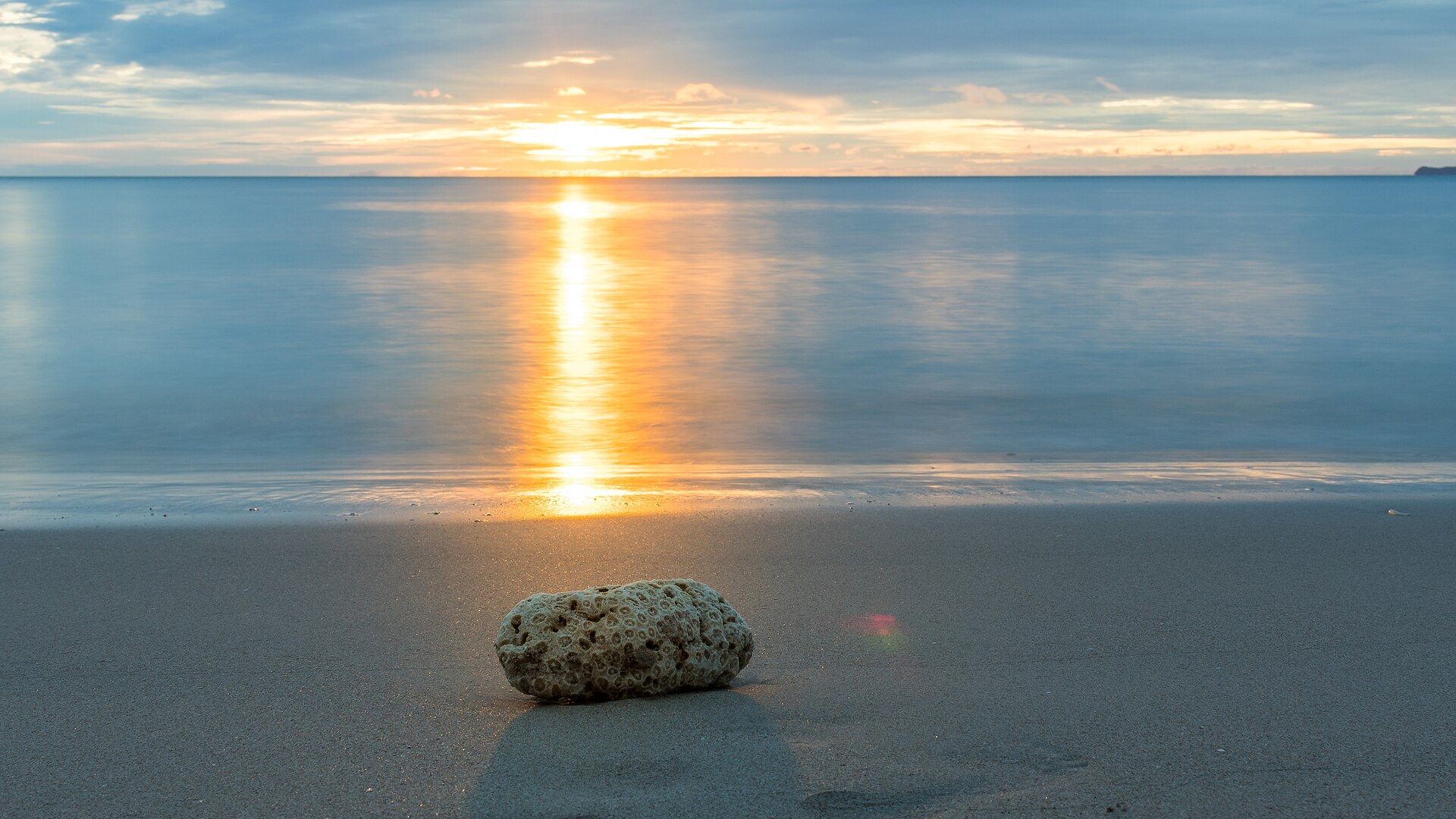
The upside of an island whose beaches face due west is that every evening the sun goes down straight over the sea — so almost any west-coast beach is a sunset spot in itself, and you can sit on the sand with a drink and wait for the orange light. The one known for the scene is the Klong Khong beach bars, where after dark there's a fire show and chilled-out music. For a higher angle, ride down toward the cliffs and viewpoint at the south tip near the park and watch the light run across the water. Ending the day on a sunset is something Lanta does very well, with almost no planning needed.
Lanta is a launch point for the pretty islands nearby — Koh Rok, white sand and very clear water, lovely snorkelling (a national-park island, open roughly mid-October to mid-May) · Koh Haa, a lagoon and caves with good snorkelling · Phi Phi, Maya Bay and the dive stops, an easy day trip from Lanta · and a Four-Island tour nearby, all run by speedboat from Saladan pier in the north. Pick the package by the islands you want, for swimming, snorkelling and photos. I'll note these all depend on the season — in the monsoon many tours stop and the national-park islands close, so November to April is the best time to get out.