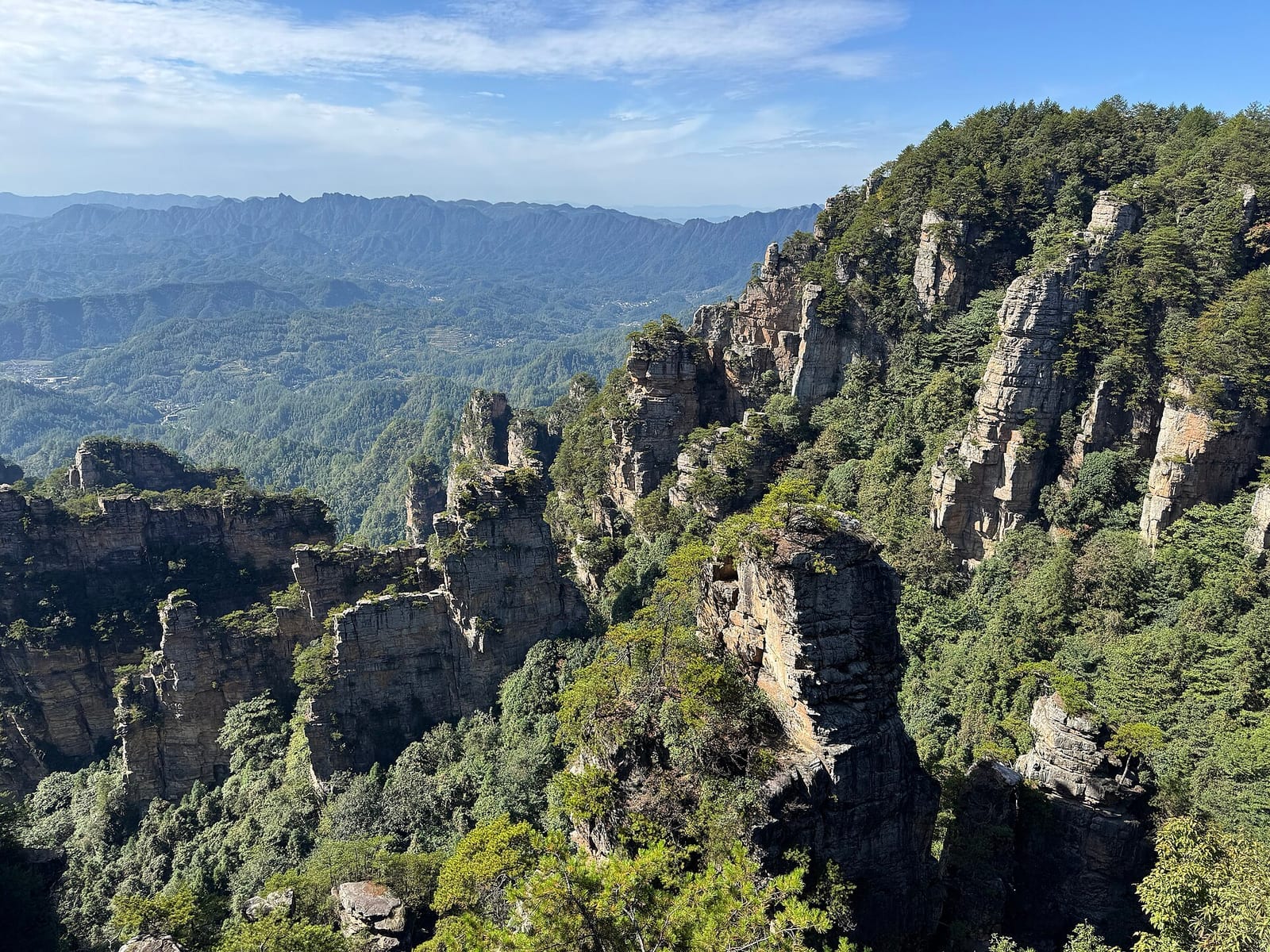
Zhangjiajie's sandstone pillars — the inspiration for the floating mountains in Avatar — are on plenty of bucket lists, but direct flights from Bangkok are seasonal and often charter, not frequent. In some periods you fly direct into DYG in about 3.5–4 hours; in others you fly into Changsha and connect by high-speed train, which is often cheaper and gives you more dates to choose from. This guide compares every route, with fares and the visa rules before you book.
Let's be honest up front: Zhangjiajie does not have daily direct flights from Thailand the way Shenzhen or Shanghai do. The first option is to fly direct into Zhangjiajie Hehua International Airport (DYG) from Suvarnabhumi or Don Mueang — about 3.5 to 4 hours, and you land very close to town, since the airport is only about 5–10 km from the centre. But this direct service is seasonal, and in some periods it runs as a tour-operator charter rather than a scheduled flight: the timetable changes, and in some windows there is no direct flight at all, so you need to check whether one actually runs on your dates.
The second option, which many travellers use and which is usually more reliable, is to fly into Changsha (CSX), the capital of Hunan province, and connect by high-speed rail. Changsha has far more frequent flights from Thailand than Zhangjiajie. Land, then take the bullet train to Zhangjiajie West Railway Station (张家界西站) — about 1.5–3 hours depending on the service, with the fastest around 1 hour 45 minutes, and dozens of departures a day. This usually gives you more dates to choose from, and once you add the flight and the train fare together it is often cheaper than waiting for one of the few direct DYG flights.
There is good visa news: Thai travellers with an ordinary passport can currently enter mainland China visa-free for tourism, for up to about 30 days per visit (the Thailand–China policy in place since 2024) — but verify the latest conditions before you travel at the visa-free entry guide. One more thing worth saying early: Zhangjiajie has no metro. Inside the National Forest Park you get around on a free shuttle-bus network (included with your ticket); outside the park and between zones it is buses, taxis, DiDi and the train.
Fly direct to DYG for speed if a flight runs · fly into Changsha and connect by train for flexibility and often a lower price — choose by the schedule and fares on your dates.
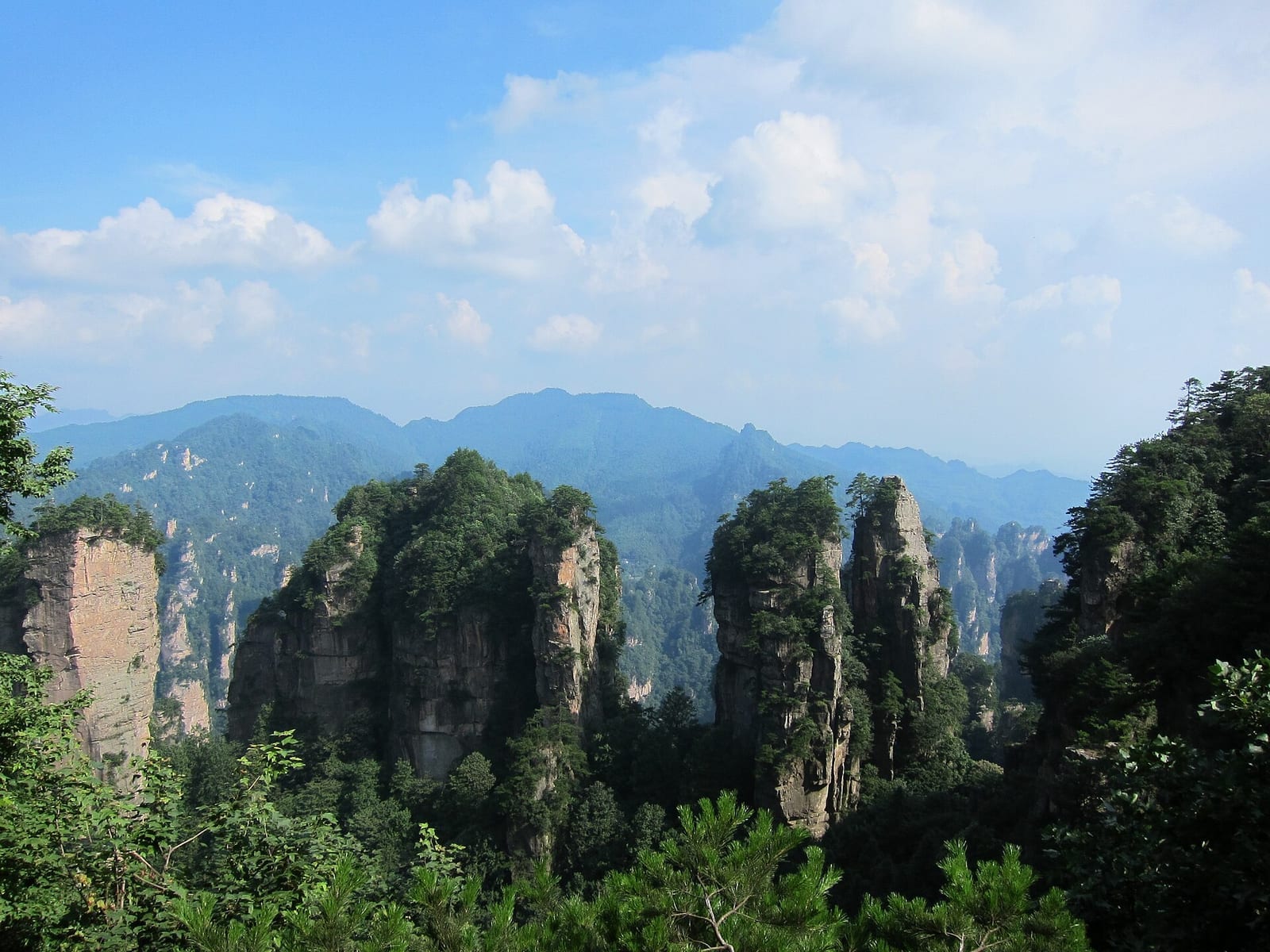
The most direct, fastest option when a flight runs in your travel window. Land at Hehua and take an airport bus or taxi straight into town — the airport sits very close to the centre. Best for anyone focused on Zhangjiajie who wants to arrive quickly. The catch is that this direct service is seasonal and sometimes charter, not daily, so check the schedule first.
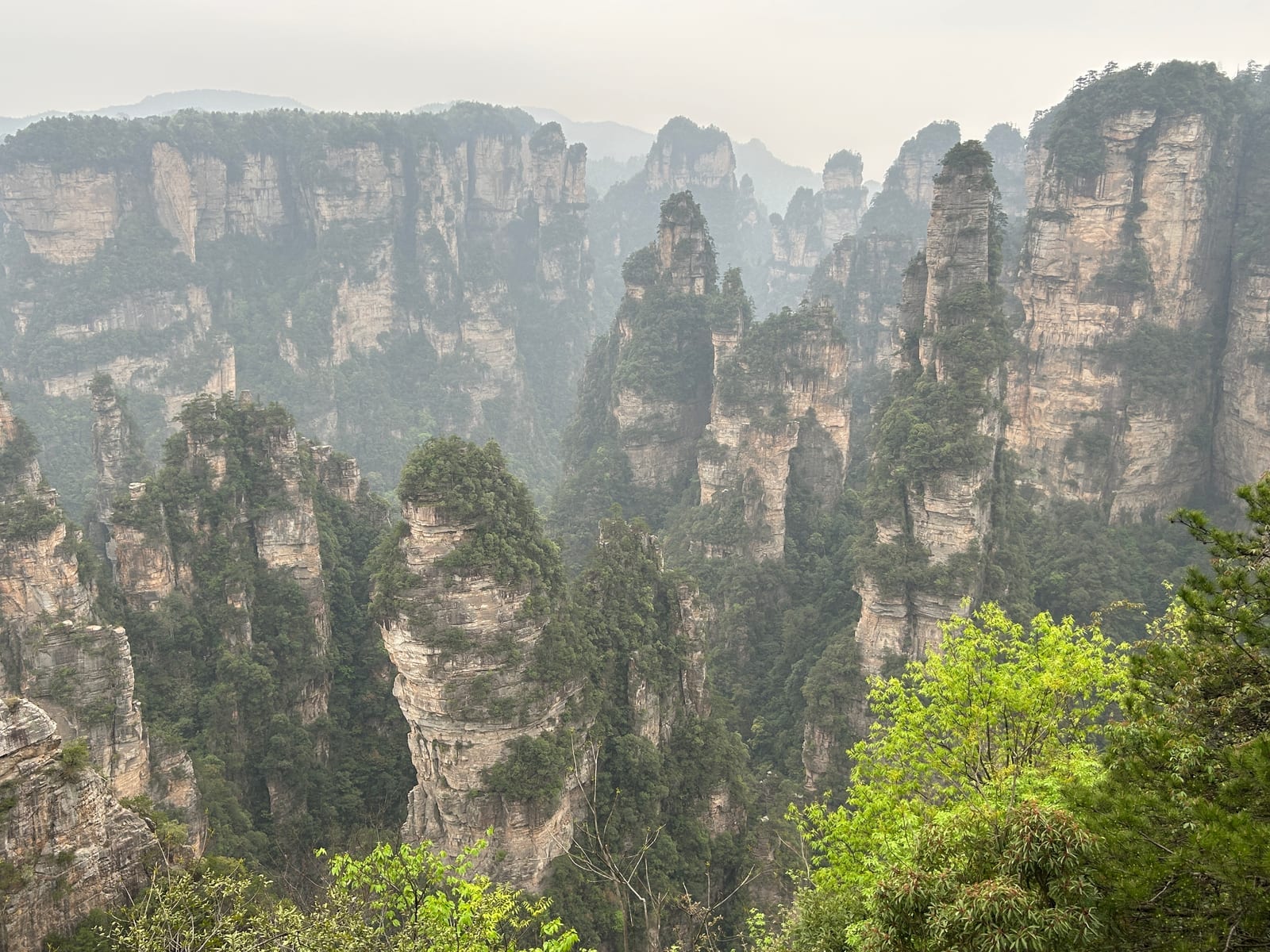
If there is no direct DYG flight on your dates, or the direct fare is pricey, this is the answer. Changsha has far more frequent flights from Thailand. Land, then take the high-speed train to Zhangjiajie West — more dates to choose from, plus Changsha itself along the way if you want it. Just allow time to transfer from the airport to the train station.
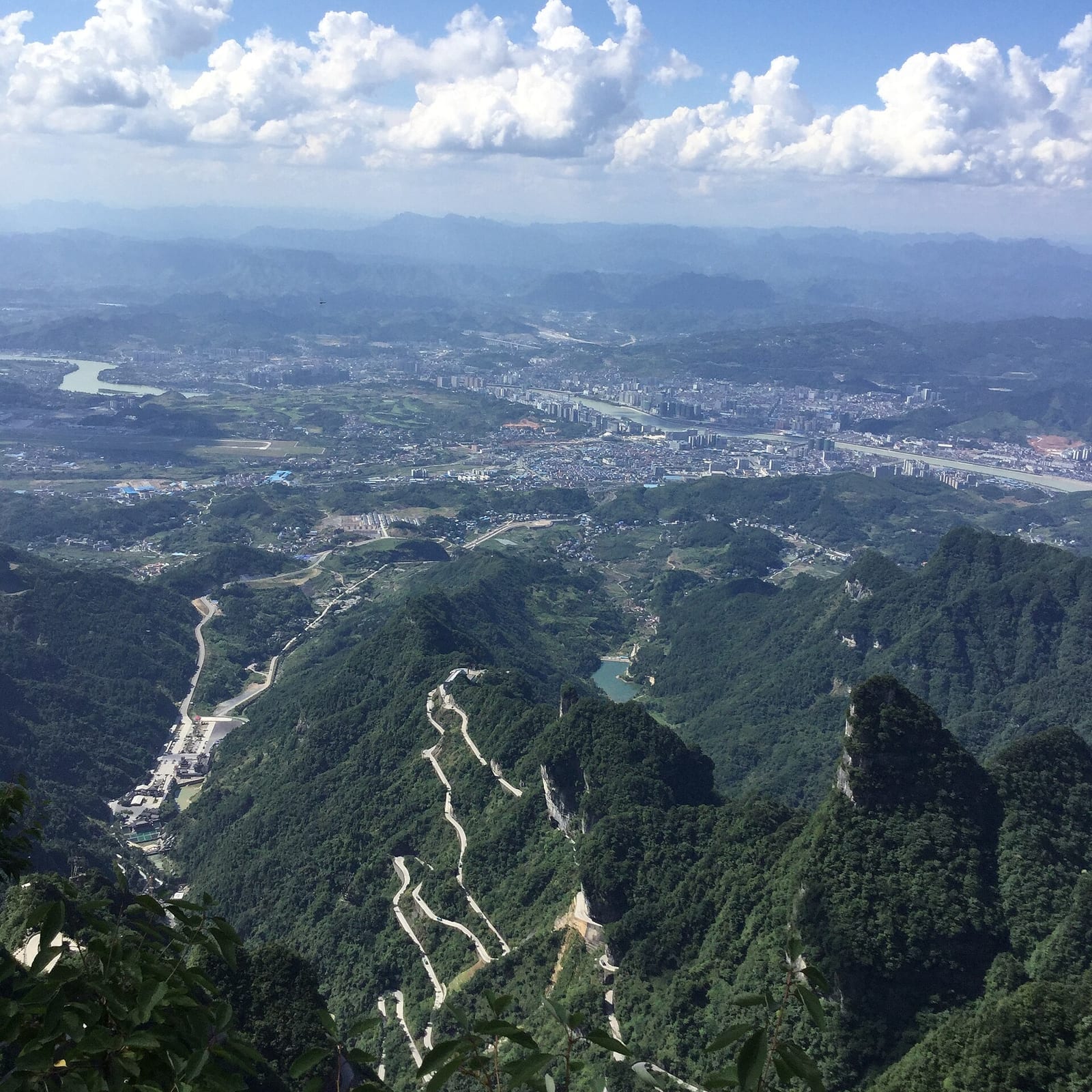
This route is seasonal and sometimes runs as a charter, the schedule changes, and it is not daily — so we do not print a fixed timetable or carrier. Check current routes and schedules on a flight-search site before booking.
The direct Bangkok–Zhangjiajie route has run seasonally — sometimes as tour-operator charter flights, sometimes as scheduled service in certain seasons — but it is not a daily route like the major cities. In some periods a search will return one-stop connections via Changsha, Guangzhou or another city instead. Treat that as the picture: there is direct service in some windows, but not a guaranteed timetable. Zhangjiajie is a nature destination, so its international direct flights rise and fall with the season and demand — some winters and summers there is a direct flight; at other times it disappears.
The clear upside: no connection, no train transfer — land at Hehua and head into town, which is quick because the airport is so close to the centre. Ideal if you find a direct flight on your dates. The limitation is that frequencies are few and seasonal, and some are tour charters, so fares can be more volatile than on the big-city routes — booking early always helps.
Fly into Changsha, where flights are far more frequent, then take the high-speed train to Zhangjiajie West. You get many more dates and times, and the all-in price is usually easier to manage — ideal if your dates are fixed or you want to see two cities. Just allow time to reach the train station from Changsha Huanghua Airport and book train tickets ahead on holidays.
Hehua sits only about 5–10 km from the city centre — very close — and Zhangjiajie has no metro, so you reach town by airport bus, taxi or DiDi.
Direct flights from Thailand land here, at a small-to-mid-sized airport that is easy to walk and very close to town. Once you clear immigration, follow the signs to the airport-bus stop or the taxi rank. The city has no metro, so reaching town is done by bus, taxi or DiDi.
Reaching the centre is easy and cheap: an airport bus, taxi or DiDi runs about ¥20–40 and takes only around 15–20 minutes, since the airport is so close. For Wulingyuan (武陵源), the gateway to the National Forest Park (the Avatar pillars), about 33 km away, a taxi or DiDi runs about ¥150–200 and takes around an hour — or go into the city first and connect onward by bus. Many Wulingyuan hotels arrange a paid pickup.
If you get a direct flight, the Bangkok–Zhangjiajie leg is about 3.5 to 4 hours, depending on the routing and winds that day — a short, easy hop, and because Thailand and China share the same time zone, you step off the plane on the same clock with no jet lag. On a Chinese full-service carrier you get a meal and checked bag included. Just remember the direct service is seasonal and sometimes a charter, so confirm the schedule first and then build your travel dates around it.
If you fly into Changsha and connect by train, it is less of a hassle than it sounds: you land in China, clear immigration once at the airport, then transfer from Changsha Huanghua Airport to the high-speed rail station (Changsha South, or Changsha) and take the train to Zhangjiajie West. China's trains are punctual and comfortable — just leave enough connection time, especially if your flight lands in the evening. In that case, either build in the next morning's train or pick a departure you can reach without a rush.
Land at Hehua, clear immigration once at the airport, and you are done — no train transfer, and town is only minutes away. Best for anyone who wants to reach Zhangjiajie quickly and simply. The only catch is finding a date with a direct flight, since the route is seasonal and sometimes charter; booking early helps a lot.
Changsha has very frequent flights from Thailand, so if a direct DYG fare is pricey or unavailable, look here. From Changsha to Zhangjiajie West is ~1.5–3 hours, with the fastest around 1h45. You pick up Changsha along the way, but allow time to reach the train station and book train tickets ahead on holidays.
Ideal weather, lush green and clear skies, with the pillars sharp against the sky — one of the most comfortable and beautiful windows in Zhangjiajie. It is popular, so tickets and hotels start to climb; book ahead and avoid the early-May Labour Day crowds.
The other best window — cool, comfortable and clear, with the pillars at their sharpest. Avoid Golden Week in early October, when tickets, hotels and sights pack out and prices double or triple.
The hottest and wettest stretch of the year — but after the rain you often get the famous sea of clouds drifting around the pillars, the mist that makes Zhangjiajie look like floating mountains. It is also the most crowded (Chinese school holidays), with afternoon storms, so keep a backup plan and an umbrella handy.
Cold, and on some days snow dusts the sandstone pillars — rare and stunning — but ice or heavy snow can close some trails or cable cars, so check before you go. Fares are at their lowest outside Chinese New Year; during the New Year period prices surge and seats fill fast, so avoid it if you can.
Once you are in Zhangjiajie, the destination splits into two zones you need to plan around — Wulingyuan is the gateway to Zhangjiajie National Forest Park, with the Avatar pillars at Yuanjiajie, Tianzi Mountain, Golden Whip Stream and the Bailong Elevator (inside the park a free shuttle-bus network moves you between points) · the city side has the Tianmen Mountain cable car up to Heaven's Gate and the glass walkways · and don't forget the Grand Canyon Glass Bridge, a separate area about 15–30 km from Wulingyuan. Plan around the geography — these sights are spread out, so think distances, not a metro map, and allow about an hour between the two zones.