Home Zhangjiajie China Zhangjiajie Hotels About
Home  ›  Asia  ›  China  ›  Zhangjiajie  ›  Fenghuang Ancient Town
🇨🇳 Zhangjiajie · Fenghuang 凤凰古城 · Tuojiang River 沱江

Fenghuang Ancient Town, from Zhangjiajie
A riverside town at its best when the lights come on

About an hour from Zhangjiajie by bullet train is a 700-year-old town on the Tuojiang River — wooden stilt houses lining the water, the arched Hong Bridge crossing it, and a town that lights up after dark until it looks like a dream. This guide helps you plan how to get there, decide between a day trip and an overnight, and not miss Fenghuang at its most beautiful.

The town

What Fenghuang Ancient Town is — and why it's the favourite trip to pair with Zhangjiajie

Most people fly into Zhangjiajie for the Avatar pillars and Tianmen Mountain, but ask which extra stop is worth squeezing in and the answer you hear most is Fenghuang Ancient Town (凤凰古城), the "Phoenix Town" — a riverside old town often named among the most beautiful in China. It was built up over more than 700 years and sits in the Xiangxi region of western Hunan, its old wooden houses lining the river as if time had stopped.

The heart of Fenghuang is the Tuojiang River (沱江) running through the middle of town. Both banks are lined with wooden stilt houses (吊脚楼), built out over the water on long timber posts; there's the Hong Bridge (虹桥), an old covered stone bridge that has become the town's landmark, and the jumping-stone crossing (跳岩), rows of stones you hop across the river one at a time — the photo everyone wants. All of it sits in the autonomous prefecture of the Tujia and Miao peoples, so there's a thread of ethnic-minority culture running through every lane.

Here's the thing about Fenghuang: some places are ordinary by day and turn into a different town by night, and this is one of them. After dusk, the riverside lights come on all at once, the golden glow doubles on the surface of the Tuojiang, and the wooden houses that felt sleepy by day become bars, cafés and riverside restaurants buzzing with people. That's why so many people say if you're going to come to Fenghuang at all, stay until evening — and this guide helps you line up the route, the timing and the rhythm so you see the town at its best.
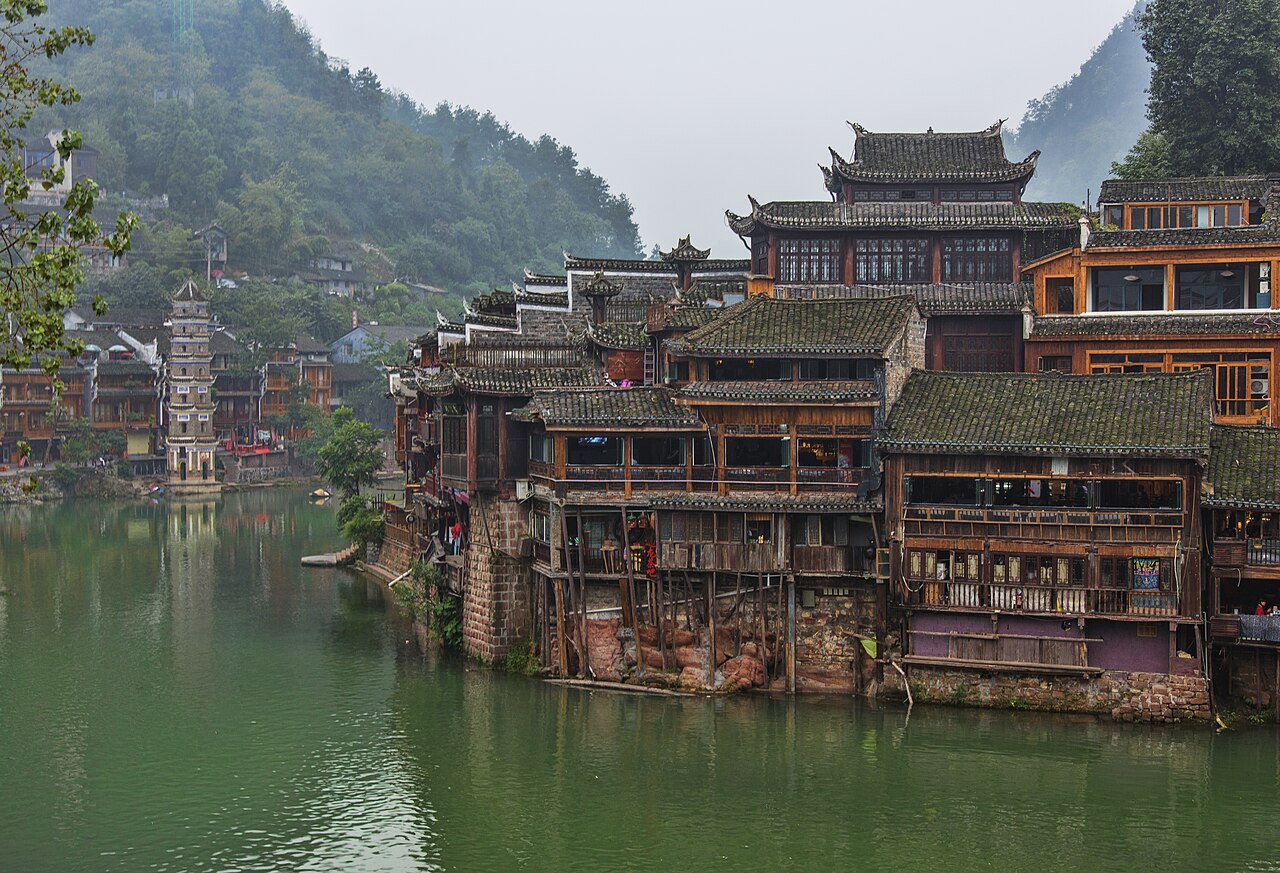
Fenghuang Ancient Town on the Tuojiang River — wooden stilt houses lining both banks in the Xiangxi region of Hunan
Fenghuang Ancient Town — a 700-year-old town on the Tuojiang River, its wooden stilt houses lining both banks
🏯
What it is
Fenghuang Ancient Town (凤凰古城)
"Phoenix Town," a riverside town over 700 years old
🗺️
Where
Xiangxi, Hunan province
~1 hr from Zhangjiajie by high-speed train
🌊
Heart of town
Tuojiang River (沱江)
Stilt houses · Hong Bridge · jumping-stone crossing
🎟️
Entry
Free to walk in
Attractions & boat ticketed separately · check first
🌃
Best hours
Dusk, when the lights come on
And early morning before the tours · mist over the river
🛶
Tuojiang boat
Day or night
About ¥76 / ¥138 (~฿380 / ฿690) · check on site
Decide before you go

Day trip or overnight — choose what fits your Zhangjiajie trip

The first question everyone faces is "is one day enough?" The answer depends on whether you only want to see the old town by day, or you also want the night scene that is the real highlight.

If time is short and you only want the old town in daylight, a day trip on the high-speed train will do. But if you want Fenghuang when the lights are on and the dawn mist hangs over the river — the most beautiful hours — we recommend staying one night. As for your trip base, keep your main nights in Zhangjiajie and make Fenghuang a separate side trip, because Fenghuang is a sightseeing stop, not a base for the Zhangjiajie park.

What to see

The key sights of Fenghuang — stilt houses, the Hong Bridge and the Tuojiang boat

🏠 The wooden stilt houses (吊脚楼) — Fenghuang's signature image

The image everyone pictures when they think of Fenghuang is the old wooden houses leaning out over the river on long timber posts. These are called diaojiaolou (吊脚楼), the traditional architecture of the local peoples, built out over the water because flat ground was scarce. Walk along both banks of the Tuojiang and you'll see them in a long row; many are now guesthouses, cafés and riverside restaurants. The classic shot is from a bridge, looking down the line of wooden houses reflected in the water — best in the morning when the light is soft and the crowds are thin.

🌉 The Hong Bridge (虹桥) and the jumping-stone crossing (跳岩)

The landmark in the centre of town is the Hong Bridge (虹桥), an old covered stone bridge with shops on the upper level that spans the Tuojiang. You can walk up to the upper floor, and it's a good high vantage point over the town. The other fun spot is the jumping-stone crossing (跳岩) — pillars and stones set in a line so you can hop across the river one at a time, both an old right-of-way and a hugely popular photo stop. Crossing when the water is clear gives the best photos, but watch your footing, and at busy times you may have to queue.

🛶 A boat on the Tuojiang River (沱江) — day or night

The best way to take in the stilt houses and the bridges is a boat ride on the Tuojiang River, available by day and by night, leaving from the North Gate wharf or the Wanshou wharf. The day cruise is around ¥76 (~฿380) and the night cruise around ¥138 (~฿690) (or buy it as part of a combo ticket — check on site). The daytime ride lets you see the detail of the houses and riverside life; the night ride gives you the riverside lights and their reflections, the dream image of Fenghuang. Prices and departures change with the season, so check before you go.

🏛️ Attractions in town and the combo tickets

Walking the old town is free, but several individual attractions are ticketed, usually sold as a combo ticket — for example about ¥128 (~฿640) for 9 attractions valid over 2 days, covering the former residence of Shen Congwen (the famous writer born in Fenghuang), the East Gate tower, the Yang ancestral hall and the old-town museum, or a combo of about ¥208 (~฿1,040) that includes the night river cruise. If you're not especially keen on the museums, simply walking the town and taking the boat captures the atmosphere well enough — choose your ticket by which sights you actually want to enter.

🍜 Tujia–Miao culture and what to eat

Fenghuang sits in the Xiangxi autonomous prefecture of the Tujia (土家) and Miao (苗) peoples, so the food and souvenirs carry a strong ethnic-minority character. Dishes worth trying include blood-duck (血粑鸭), a signature of west Hunan, the local sour soup, and a sweet like ginger candy (姜糖), which many shops make fresh in the window. The most common souvenir is Miao handmade silver jewellery. The food around here is bold and spicy in the Hunan style, so tell the restaurant in advance if you don't eat spicy. To see what Zhangjiajie eats, read the Zhangjiajie food guide.

🏮🌊
Illustrative scene of Fenghuang after dark — the riverside lights come on all at once and double on the surface of the Tuojiang River
When to go

Fenghuang by season — pick a window that's easy to walk and good to photograph

Fenghuang is worth visiting year-round, with a different mood each season. Knowing this before you go lets you pick the window that fits your Zhangjiajie trip.

🌸 Spring and autumn (Apr–May and Sept–Oct) — the best

The most comfortable weather, much like Zhangjiajie, comes in spring and autumn — mild, neither too hot nor too cold, and clearer skies than the rainy season, easy for walking the riverside and taking photos. It's the window many people choose to combine with a Zhangjiajie trip. One caution: early October overlaps with Golden Week (1–7 October), when the whole country travels — if you can, go a week before or after for far smaller crowds.

🌿 Summer (Jun–Aug) — rainy, but lovely after a shower

Hunan's summer is hot, humid and often rainy, especially in the afternoon, and it's busy thanks to school holidays. The upside is the atmosphere after a shower, with mist drifting over the river in a classic Chinese-painting way. Bring an umbrella and a rain jacket, and keep an eye on water reports, because in heavy-rain years the Tuojiang can run high and affect the boat rides. Check the forecast before you go.

❄️ Winter (Dec–Feb) — cold and the quietest of the year

Fenghuang in winter is cold and some days are thick with mist, with the fewest visitors of the year — ideal if you want quiet and to photograph the old town without jostling for an angle. The town at night with the lights on is still just as pretty, just colder, so pack enough warm clothing. One thing to note: if you're also doing Zhangjiajie, some mountain routes can close in ice or snow, so check before you plan.

In short: for easy walking and good weather, go in April–May or September–October (avoiding Golden Week); if you'd rather have quiet, winter has its own charm. And whenever you go, Fenghuang's prettiest hours are dusk when the lights come on and early morning. For the city-wide picture of when to visit, read the best time to visit China.

Where to stay

Where to base yourself — a riverside guesthouse in Fenghuang or back in Zhangjiajie

You have two options: stay over in the riverside old town to catch the night and the dawn, or day-trip and sleep comfortably in Zhangjiajie — it depends on the rhythm of your trip.

If you want the town at night and at first light on the Tuojiang River, you have to stay in the old town in Fenghuang — there are riverside guesthouses at a range of levels, some of them traditional wooden houses facing the river, so you wake to the houses reflected in the water. A room with a river view is the one worth choosing. The catch is that the old town is pedestrianised with limited car access, so you'll drag your bags into the lanes a bit (some places will help carry your luggage — check before booking), and on weekend nights rooms cost more and fill quickly, so book ahead.

But because the real base for this trip is Zhangjiajie, what many people do is keep their main nights in Zhangjiajie and make Fenghuang either a same-day trip on the bullet train or a single overnight before heading back — that way you're not hauling a big suitcase back and forth. If you still haven't settled on where to stay in Zhangjiajie, compare real hotels below first.

How to get there

Getting to Fenghuang from Zhangjiajie — your options

The good news is there's now a high-speed train running between Zhangjiajie and Fenghuang, far more convenient than before. Choose the method that fits your budget and time — most people take the train, but the bus is still the cheaper option.

🚄
High-speed train (fastest)
~1 hr · ¥40–120 (~฿200–600)
Zhangjiajie West → Fenghuang Ancient Town Station · 10+ a day
🚌
Direct bus (cheaper)
~4 hrs · ~¥90 (~฿450)
Zhangjiajie Central Bus Station · morning service ~08:50
🚕
Station to the old town
~10 km · ~20 min
Fenghuang station is outside town · shuttle/taxi/DiDi
🚐
Private car / tour
~3.5 hrs, hotel pickup
Easiest for a group · no gambling on timings · book ahead
🎟️
Booking tickets
Train online · bus at the station
Book the train with your passport via 12306/Trip · bus a day ahead
🚶
In the old town, mostly on foot
Pedestrian area · stone lanes
Limited car access · stone paths can be slippery when wet
Tip: the easiest way for most visitors is an early high-speed train with a shuttle into town. Book the train ahead via 12306 or Trip.com using your passport — see how the system works in our China high-speed rail guide. You can pay for transport, attraction tickets and the boat by scanning Alipay or WeChat — see how to set it up in our Alipay/WeChat payment guide. To combine Fenghuang with other trips out of town, see day trips from Zhangjiajie.
Plan your visit

A Fenghuang itinerary — a day trip or an overnight

⏱️ As a day trip (out and back on the bullet train)

~08:00 — Take an early high-speed train from Zhangjiajie West, about an hour to Fenghuang Ancient Town Station.
~09:30 — Transfer by shuttle or taxi into the old town (~20 min); start walking the Tuojiang River, see the stilt houses and cross the Hong Bridge.
~12:00 — Lunch by the water; try blood-duck and the Xiangxi sour soup.
~13:30 — Take the daytime Tuojiang cruise, walk the jumping-stone crossing and visit the attractions in town.
~16:30 — If you booked a slightly later return train, wait for the lights to start coming on before you head back to Zhangjiajie.

🌃 As an overnight (for the night and the dawn — recommended if you can)

Day one — Arrive in Fenghuang in the afternoon, check into a riverside guesthouse (choose a room with a river view), and walk the old town. After dusk, watch the riverside lights come on, take the night cruise or find a riverside seat and sip a drink while the town reflects in the water.
Day two — Wake early and walk the riverside while the mist hangs over the water and it's still quiet (the highlight day-trippers miss). Pick up any attractions or souvenirs you have left, then take a mid-morning or afternoon train back to Zhangjiajie.

To fit Fenghuang into your whole Zhangjiajie trip, see the overview of sights on the best things to see in Zhangjiajie and the other trips out of town at day trips from Zhangjiajie. To also explore the Zhangjiajie city side and Tianmen Mountain, see the Zhangjiajie city & Tianmen guide.

Frequently asked

FAQ · Fenghuang Ancient Town, from Zhangjiajie

How do you get to Fenghuang from Zhangjiajie, and how long does it take?
There are two main ways. The fastest is the high-speed train from Zhangjiajie West Station (张家界西站) to Fenghuang Ancient Town Station (凤凰古城站), about 1 hour (the fastest train about 51 minutes), with more than 10 departures a day roughly between 07:55 and 18:45, for around ¥40–120 (about ฿200–600); then transfer by shuttle or taxi for the last 10 km, about 20 minutes, into the old town. The other option is the direct bus from Zhangjiajie Central Bus Station, with a morning service around 08:50, taking about 4 hours for around ¥90 (about ฿450); buy your ticket at least a day ahead. Schedules and prices change, so check before you go. See the China high-speed rail guide.
Do you need a ticket to enter Fenghuang Ancient Town, and how much is it?
Walking around the old town is free — you don't need an entry ticket to stroll the Tuojiang River, see the stilt houses, cross the Hong Bridge or wander the stone lanes. What you pay for is the individual attractions and the river boat. There is a combo ticket of about ¥128 (about ฿640) for 9 attractions valid over 2 days (such as the former residence of Shen Congwen, the East Gate tower and the Yang ancestral hall), or a combo of about ¥208 (about ฿1,040) that includes the night river cruise. If you prefer the boat on its own, the day cruise is around ¥76 (about ฿380) and the night cruise around ¥138 (about ฿690). Prices change with the season and policy, so check on site first.
Is one day enough for Fenghuang, or should you stay overnight?
A day trip is doable with the high-speed train but it will be tight, because Fenghuang is at its best after dark when the riverside lights come on and at first light before the tour groups arrive. We recommend staying one night if you can, so you catch both the town reflected in the water at night and the early-morning mist over the Tuojiang River while it's still quiet. If you really only have a day, take an early train out and a late-evening train back so you catch at least a little of the night scene. And remember Fenghuang is a sightseeing stop, not a base for the Zhangjiajie park, so plan your main nights in Zhangjiajie and make Fenghuang a side trip. See day trips from Zhangjiajie.
What is there to eat in Fenghuang, and what is the local culture like?
Fenghuang sits in the Xiangxi autonomous prefecture of the Tujia (土家) and Miao (苗) peoples, so the food and souvenirs have a strong ethnic-minority character. Dishes worth trying include blood-duck (血粑鸭), a signature of west Hunan, the local sour soup, and a sweet like ginger candy (姜糖), which many shops make fresh in the window. The most common souvenir is Miao handmade silver jewellery, and you can browse the lanes as you go. The food here is bold and spicy in the Hunan style, so tell the restaurant in advance if you don't eat spicy. See more in the Zhangjiajie food guide.
When is the best time to visit Fenghuang, and how do you avoid the crowds?
Fenghuang gets very busy on weekends and public holidays, especially China's National Day Golden Week (1–7 October) and Chinese New Year, when it's packed and rooms cost two to three times more. If you can, go midweek — it's far easier to walk and to photograph. The most comfortable months, much like Zhangjiajie, are spring and autumn (April–May and September–October). Summer brings a lot of rain but the town is lovely and misty after a shower; winter is cold and the quietest of the year. Whenever you go, the prettiest hours are dusk when the lights come on and early morning. See the best time to visit China.
Klook · Zhangjiajie tours & activity tickets

Book a Fenghuang tour ahead — hotel pickup, no gambling on bus times

Fenghuang is easier as a day tour from Zhangjiajie booked through Klook — with a vehicle that picks you up at your hotel and takes you into the old town, no transfers needed, plus Zhangjiajie park tours, the Tianmen Mountain cable car and other activities around Zhangjiajie.

See Zhangjiajie tours & activities on Klook →
Wherebest is a Klook affiliate partner — we may earn a commission when you book through our links, at no extra cost to you.