Directly south of Tiananmen Square is a Beijing most visitors walk through too fast. The main Qianmen Street looks the part — but the real character is one lane deep, in the Dashilan hutong: century-old medicine shops, silk houses and the original Quanjude roast duck.
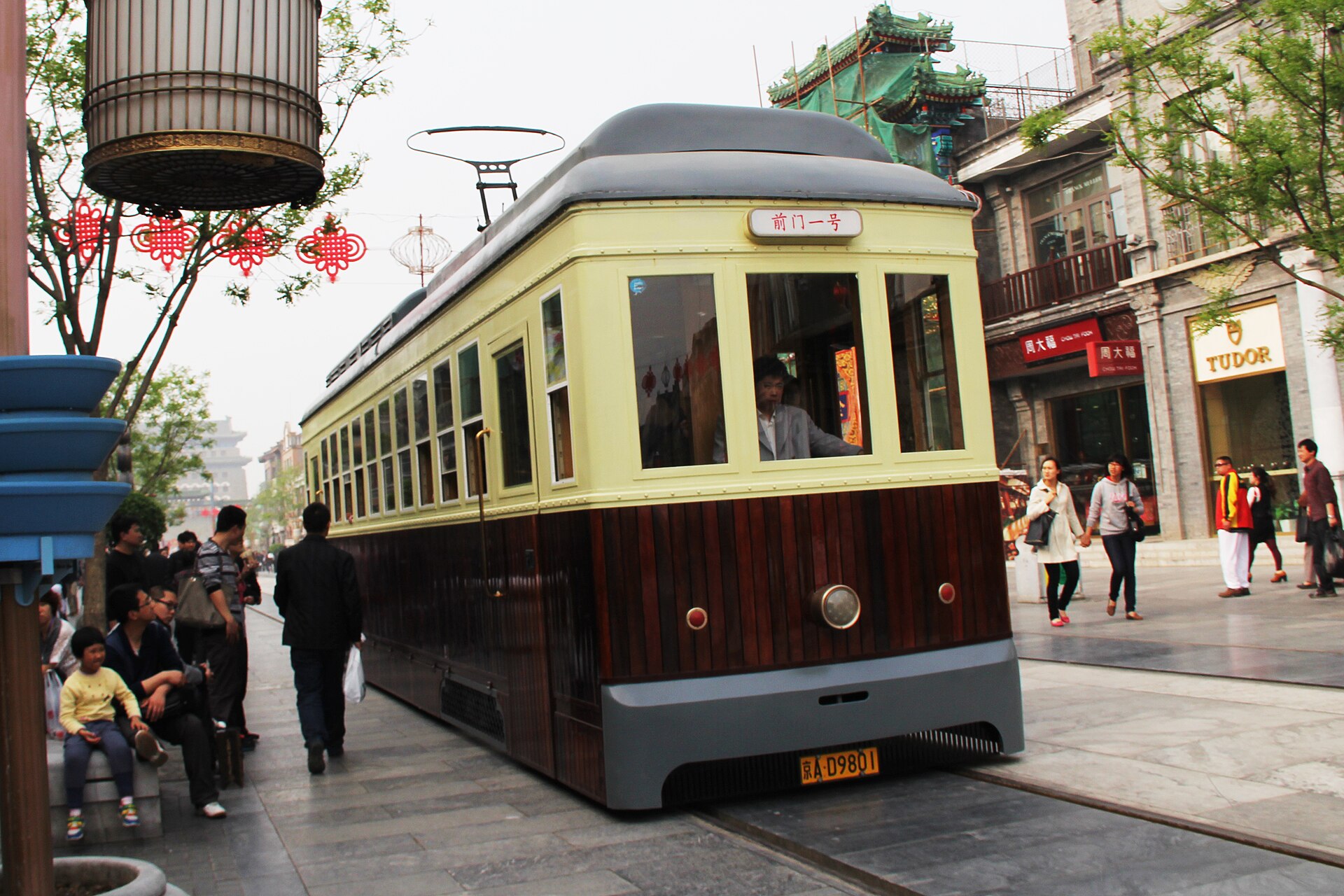
Picture yourself stepping off the southern end of Tiananmen Square, passing beneath a tall old gate called Zhengyangmen (正阳门) — which Beijingers shorten to "Qianmen", literally "front gate". In front of you a stone-paved pedestrian street runs south, an old tram rolling slowly along it, brass shop signs catching the light, and Qing-dynasty-style buildings lining both sides. This is Qianmen Street (前门大街): the gateway to old Beijing, sitting precisely on the city's central axis.
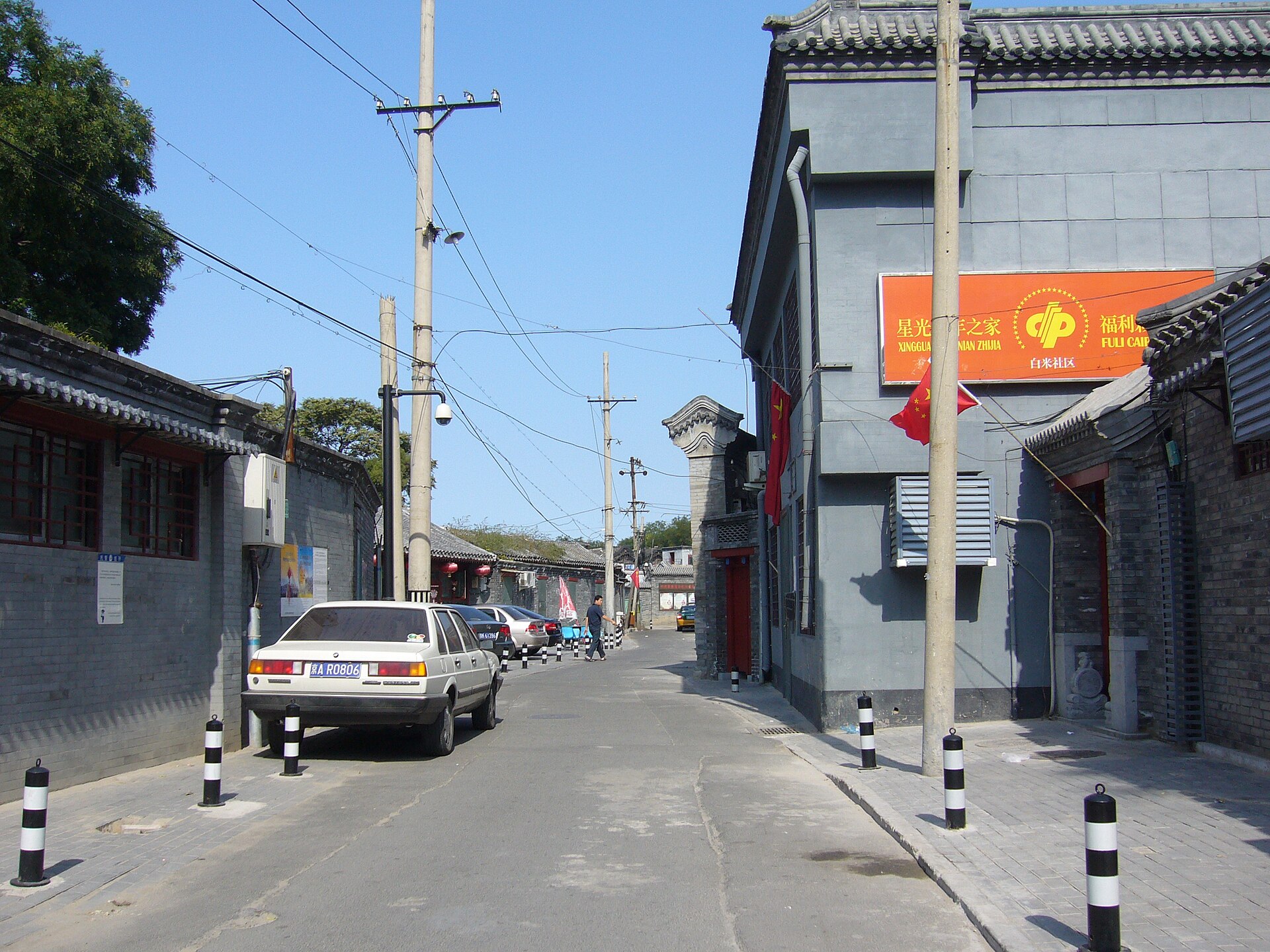
But here is the honest part: the main Qianmen Street is fairly touristy. Most of the storefronts are chains and souvenir shops. The real character of the quarter is in Dashilan (大栅栏) — the old commercial hutong that branches off west from Qianmen Street. Here you still find traditional Chinese medicine houses, silk shops and tea merchants that have been trading for centuries. Walk just one lane deeper than the main street and the atmosphere shifts from "Beijing for tourists" to "Beijing for Beijingers" almost instantly.
It is the kind of place that looks at first like a simple shopping street, then reveals several layers of story once you walk in. Qianmen was the busiest commercial and entertainment quarter of imperial Beijing, and traces of that survive in the Dashilan lanes and the Liulichang antique street a little further west.
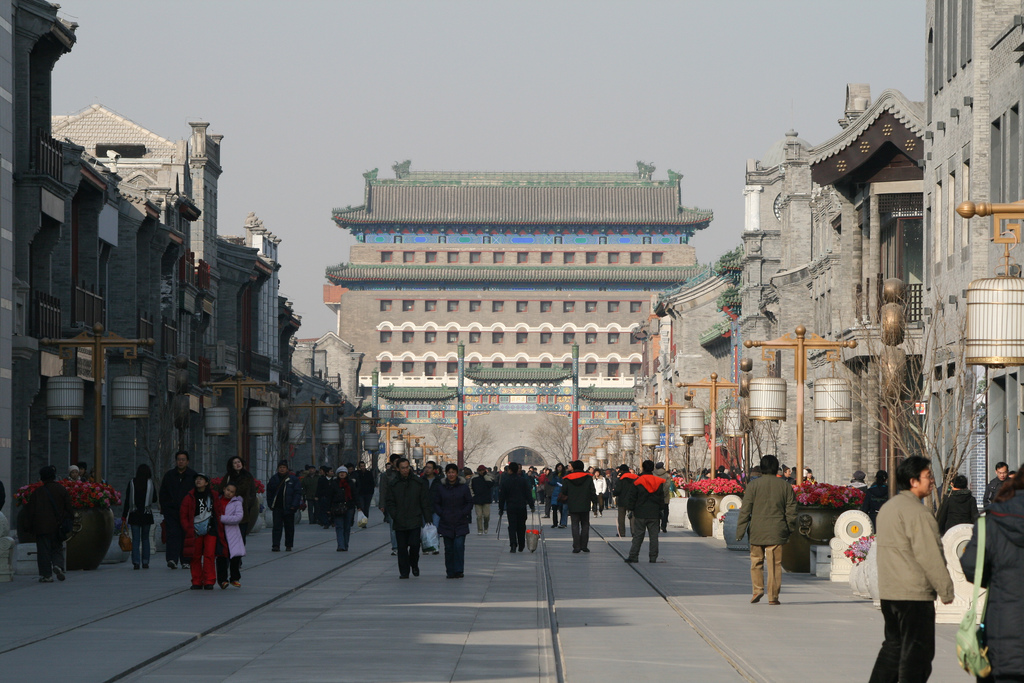
Qianmen has two faces one lane apart. The main street is busy and polished; the lanes behind it are still genuinely old Beijing.
What makes the quarter rewarding to walk is how much contrast sits close together. Qianmen Street by day feels like an open-air museum staged for visitors — but turn into the Dashilan lanes and the noise drops, the signs switch to traditional Chinese characters, and you start seeing actual Beijing residents shopping for medicine and silk, or eating a bowl of noodles at a place that has been there for decades.
The classic shot is Qianmen Street running dead-straight toward the Zhengyangmen archery tower, with the old tram and red lanterns in the foreground. Early morning before the shops open, and dusk when the lights come on, are the best windows — far fewer people than midday. Stand in the middle of the pedestrian street and aim straight at the gate for a frame that tells the whole story of old Beijing.
Dashilan (大栅栏) is the true heart of the quarter — a network of narrow lanes that was a thriving commercial district in the Ming and Qing dynasties. Several old shops still operate here across many generations: traditional Chinese medicine houses, silk merchants, tea sellers and cloth-shoe makers. If you prefer watching real daily life to browsing chain stores, this is where to spend the most time.
Liulichang (琉璃厂), west of Dashilan, is the street for antiques, Chinese calligraphy brushes, ink, paper, paintings and old books. Most shops have been trading for a long time and deal in genuine collectibles. The atmosphere is quieter and more serious than Qianmen Street — a good fit if you want a souvenir with real meaning rather than a fridge magnet.
This quarter is the birthplace of Peking duck as the world knows it. The original Quanjude (全聚德), open since 1864, sits on Qianmen Street. Beyond the duck, the Dashilan lanes and surrounding alleys hold plenty of old Beijing snacks to try — Beijing yoghurt in ceramic jars, skewered meatballs, and local sweets sold from stalls.
The main gate of the old inner city wall, standing right at the southern edge of Tiananmen Square. It consists of two parts: the gatehouse (城楼) and the archery tower (箭楼) you see at the end of Qianmen Street. It is one of the few surviving old city gates in Beijing. The upper levels are sometimes open to climb for an admission fee, but periodically close for restoration — check the current status before you go. Even if you cannot go up, standing and looking at the gate from Qianmen Street is worth it.
A stone-paved pedestrian street rebuilt in Qing-dynasty style, running south from Zhengyangmen gate. Its signature is the 铛铛车 (dāngdāngchē) heritage tram that rolls slowly along it, named for the clang of its bell. The street collects Beijing's old-brand shops (老字号), souvenir stores and snack vendors. It is free to walk and open all day, though most shops open late morning. Evening and dusk, when the lights come on, are when it looks its best.
The old commercial hutong branching west off Qianmen Street. The name "Dashilan" comes from the wooden fence-gates that once closed the lane at night. This is one of the oldest commercial quarters in Beijing, and it still holds original shops that have traded for centuries — such as the Tongrentang (同仁堂) traditional medicine house, the Ruifuxiang (瑞蚨祥) silk shop, and the Neiliansheng (内联升) cloth-shoe maker. It is free to wander, and best taken slowly, looking at the shop signs and the old architecture.
A culture street famous for antiques, Chinese calligraphy supplies, ink, paper, paintings and old books, located west of Dashilan — about a fifteen-minute walk from Qianmen Street. The atmosphere is quieter and more serious than elsewhere in the quarter, with most shops dealing in genuine collectibles and art. It is ideal if you want to buy a real Chinese brush or ink stick as a gift, or simply walk through a slice of old Beijing that is not a primary tourist site. Free to browse.
If you want Peking duck at its source, this is where it begins. The Quanjude (全聚德) flagship on Qianmen Street has operated since 1864, and is the restaurant that made open-flame, wood-fired (挂炉) Peking duck famous. A whole duck per table starts at around ¥300 (~฿1,500), depending on the set and the side dishes. Check current prices and opening hours before you go, and allow time to queue at peak periods. Read more in the complete Peking duck guide.
Beyond the duck, the quarter is full of local snacks found in the Dashilan lanes and surrounding alleys — Beijing yoghurt in ceramic jars (老北京酸奶), candied haws, local sweets and old noodle shops. Typical snacks run about ¥10–30 (~฿50–150) each. Grazing your way through is the best way to taste old Beijing without committing to a sit-down meal.
This is the birthplace of Peking duck — and the lanes behind the main street still hide plenty of old Beijing snacks worth trying.
Qianmen is a pilgrimage for Peking duck because it is home to the original Quanjude (全聚德), open since 1864. Beyond Quanjude, the quarter and its surroundings hold other duck restaurants too, both old institutions and modern rooms. If you want to understand the difference between the duck-roasting schools — open-flame, wood-fired (挂炉) versus the closed-oven (焖炉) method — and which restaurant suits which budget, read the Peking duck guide.
The eating here is not only about the big restaurants; it is in the Dashilan lanes and small alleys where original shops still operate. Try Beijing yoghurt in a ceramic jar, skewered meatballs, zhajiangmian (炸酱面, noodles with fermented bean sauce) and the local sweets sold from stalls. Prices are clearly gentler than on the main street, at roughly ¥10–40 (~฿50–200) each. Grazing as you explore the lanes is the best approach.
Read more: all Beijing attractions
One of the most central historic bases in Beijing — walkable to Tiananmen and the Forbidden City to the north, a short hop from the Temple of Heaven to the southeast.
The strongest argument for basing yourself in Qianmen is the central historic location. Wake up and walk a few minutes to Tiananmen Square and on to the Forbidden City to the north, while the Temple of Heaven is a few metro stops to the southeast. The quarter has hotels across price points, from boutiques in old buildings to budget chain properties.
The one trade-off is that the main Qianmen Street is crowded and commercial. If you want hutong quiet to rest in, look for a boutique tucked into a side lane rather than on the main street. But for a central, good-value base, Qianmen does both jobs well.
Or read the individual hotel reviews for properties in the area:
The quarter is easy to reach, sitting in the heart of the old city with several metro lines around it. Choose based on where you want to start.
09:00 — Start at the southern end of Tiananmen Square, looking at Zhengyangmen gate (Metro Qianmen, Line 2), before the crowds fill in.
09:30 — Walk south down Qianmen Street. Watch the 铛铛车 tram and the old-brand shops, and photograph the Qing-style pedestrian avenue.
10:15 — Turn west into the Dashilan lanes. Browse the medicine houses, silk shops and century-old businesses.
11:00 — Graze on old Beijing snacks in the lanes — Beijing yoghurt, meat skewers or local sweets (¥10–30).
11:45 — Continue west to Liulichang, the antique and calligraphy street. A quiet end to the morning.
Follow the half-day route above through the morning, then continue:
13:00 — Lunch in the quarter — an old shop in the lanes or a bowl of traditional Beijing noodles.
14:00 — Metro or taxi to the Temple of Heaven to the southeast; walk the park and the Hall of Prayer for Good Harvests.
16:30 — Return to Qianmen; rest and stroll the main street as the lights begin to come on.
18:00 — A roast-duck dinner at the original Quanjude on Qianmen Street (allow time to queue at peak; check opening hours before you go).
Qianmen sits right on the central axis, so it combines easily with Tiananmen Square and the Forbidden City to the north in a single day. For the full city plan, see the complete Beijing city guide.