Beijing's four seasons swing from one extreme to the other — luminous blue skies and red maple leaves in October, then a Great Wall under snow in the depths of winter. Each one offers something real, and each one comes with a warning worth reading before you book.
If you can only pick one month, pick October. Temperatures sit between 10 and 22°C, the sky turns clear and blue for days at a stretch, rain is rare, and air quality is usually at its best for the year. The red maples at Fragrant Hills (Xiangshan) peak around mid-to-late October, and the Great Wall is sharp and visible for miles. One catch: book well ahead and arrive after October 7 — the first week is China's National Day holiday, when hundreds of millions of domestic travellers move at once and hotel prices peak.
If October doesn't fit, go in April or May — warming weather, blossoms, and pleasant 12–26°C days. The one caveat is early spring (March to early April), which can be windy with the occasional dust storm; check an air-quality app first. Summer and winter each have their own logic, but both ask more of you in return.
The weather, what it delivers, and what you are trading for it — told straight.
Summer Palace · Spring
Good
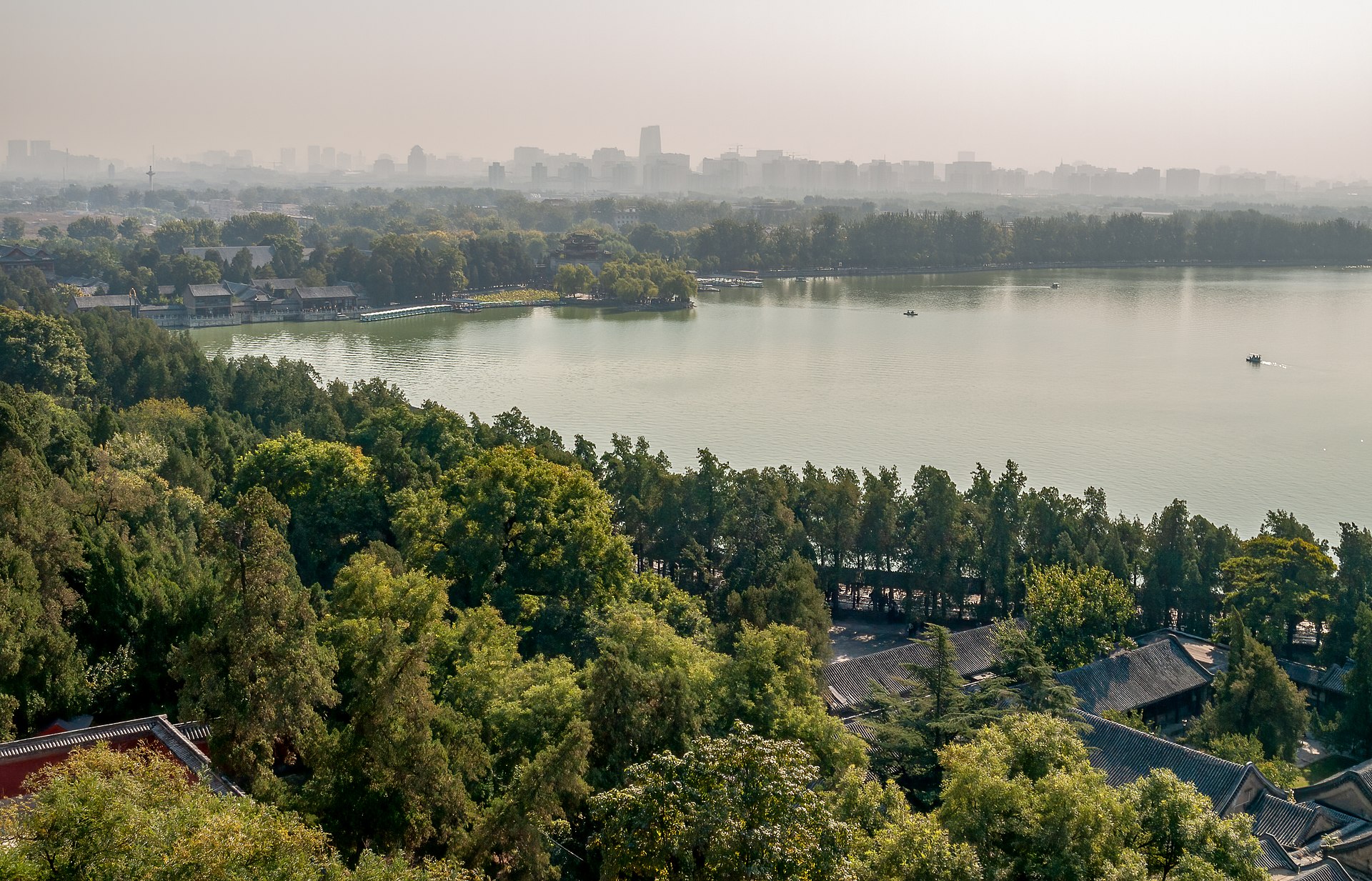
Beijing warms gradually through spring, and by April and May the city is at its loveliest — blossoms opening across the Summer Palace and the city's parks, mild days you can walk in a light jacket, and peonies and cherry blossom worth seeking out. This is the best stretch of the season.
The real thing to watch is early spring. In March and early April, some years bring strong winds and dust storms blown in from the deserts to the north, turning the sky a hazy yellow and pushing air quality down on those days. It is not constant and not every year, but check the AQI before you commit to a long day outdoors.
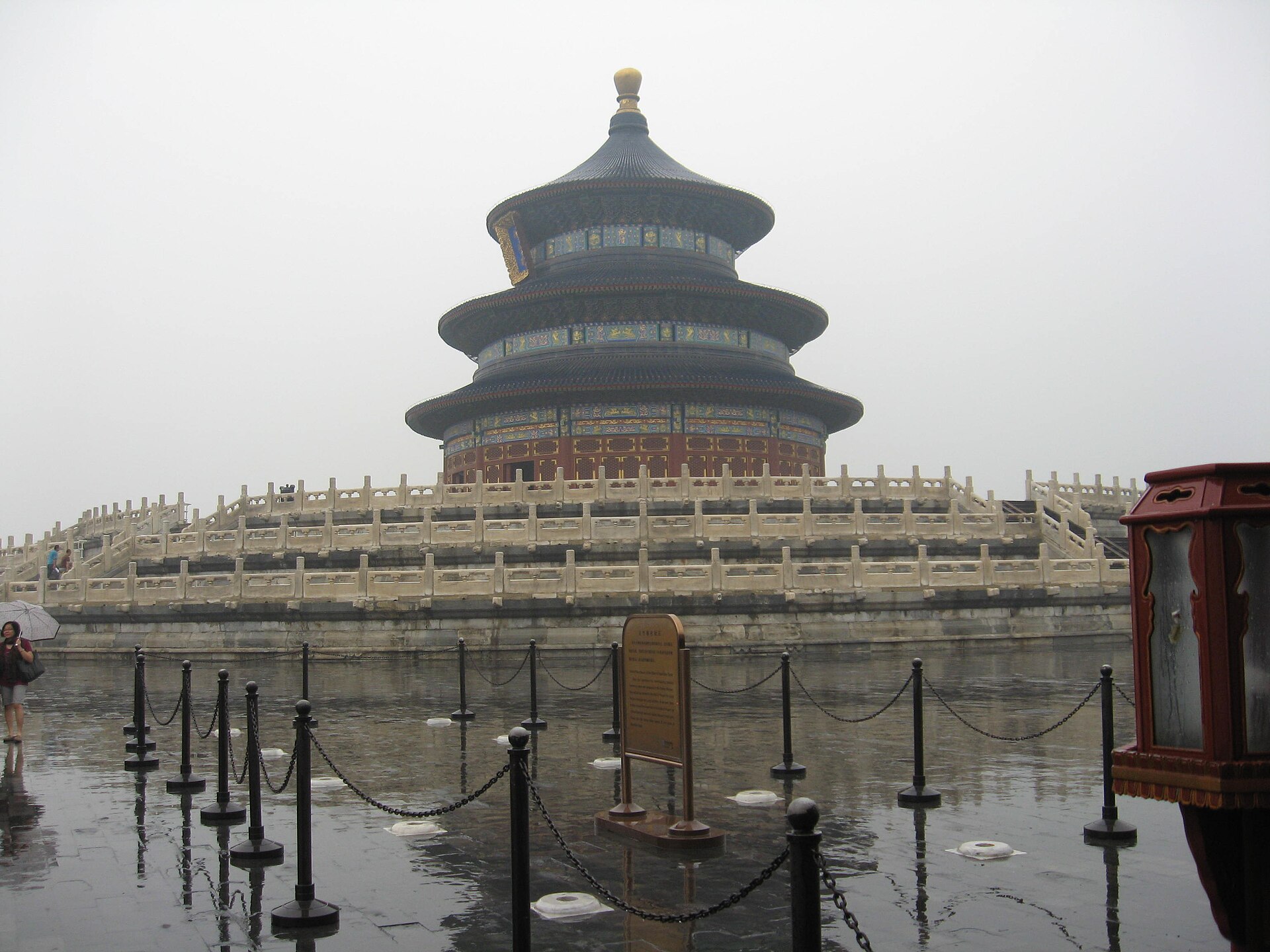
Temple of Heaven · Summer
Come prepared
Beijing summers are hot and humid, and July and August are the rainy season — the wettest months of the year. Rain tends to arrive as afternoon or evening thunderstorms: heavy, but short. Between them the air sits hot and hazy, and the sun is fierce.
This is the peak season for domestic tourism, because it lines up with the school summer holidays, so the Great Wall and the Forbidden City get very crowded. The upside is that the parks and gardens are at their greenest. If you come now, start early — before the heat and the crowds build.
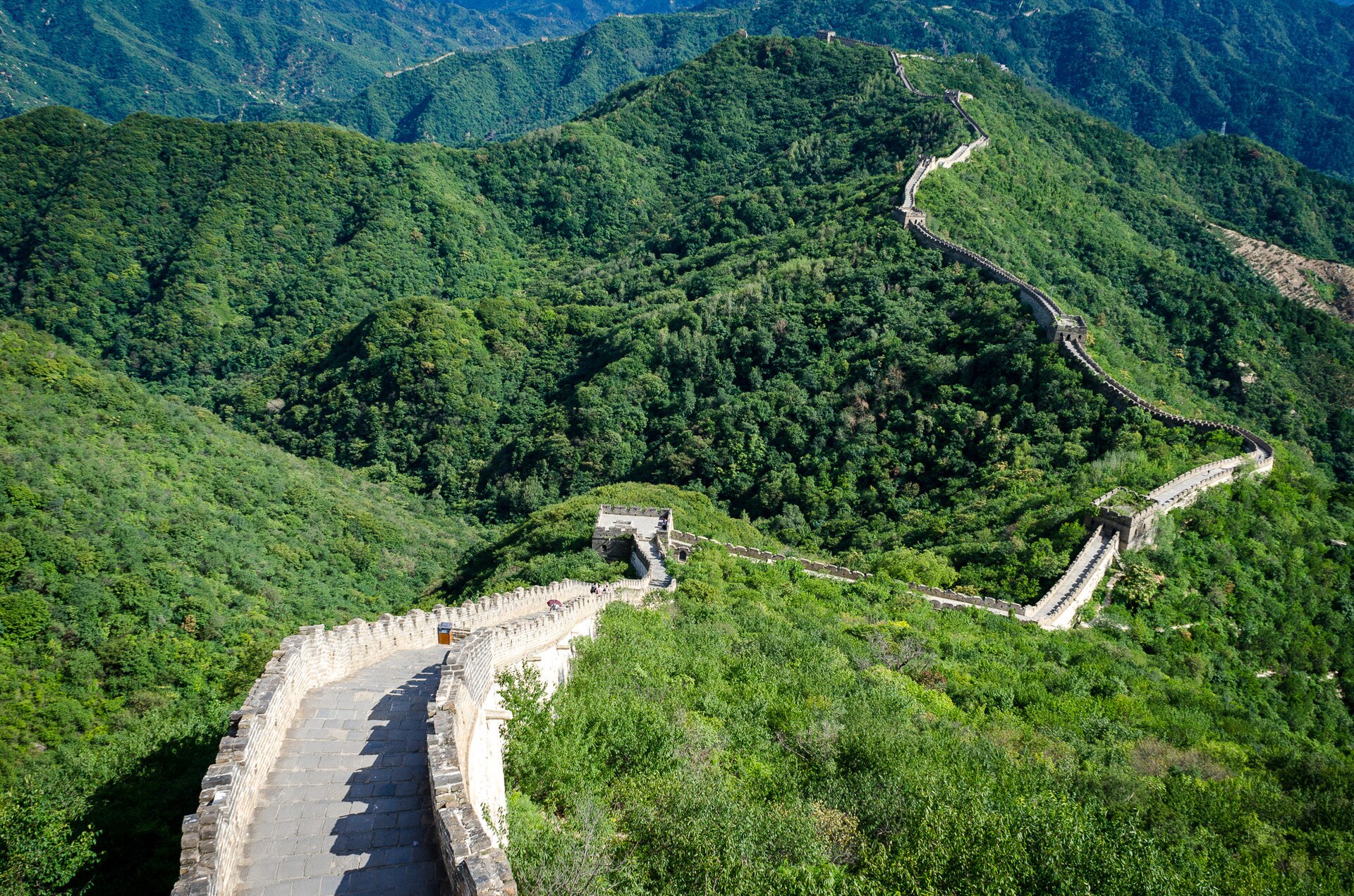
The Great Wall · Autumn
The best
This is Beijing at its finest. The sky turns a clear deep blue for days on end, humidity is low, temperatures sit between 10 and 25°C, and you can walk all day without flagging. Visibility is the best of the year — the Great Wall and the city skyline are sharp — and air quality is usually at its annual best too.
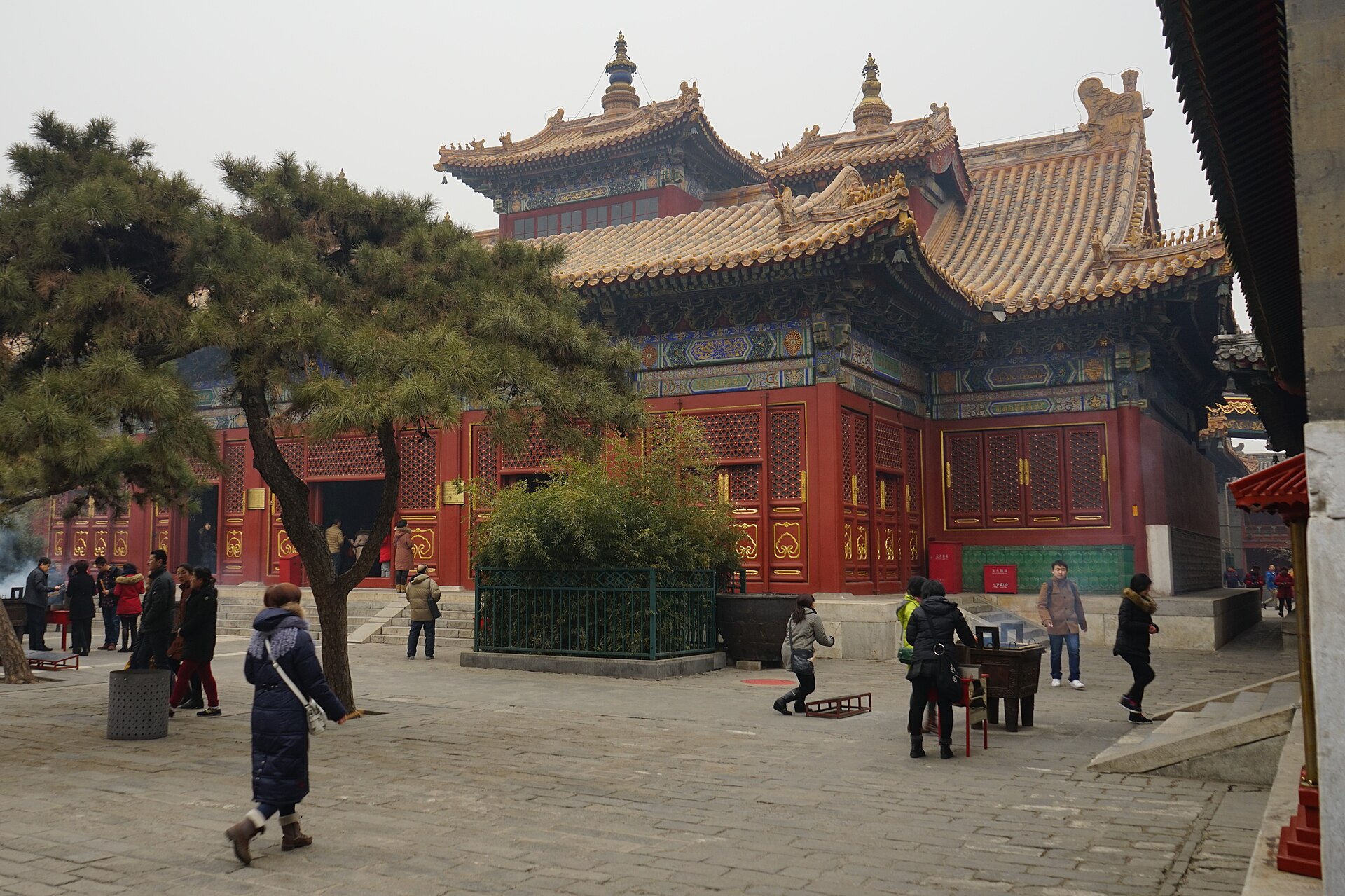
Late October is the highlight for leaf-chasers: the red maples at Fragrant Hills (香山, Xiangshan) peak around mid-to-late October, and ginkgo trees across the city turn a brilliant gold — the lane outside the Lama Temple and the older university campuses are famous for it, and busy with photographers because of it.
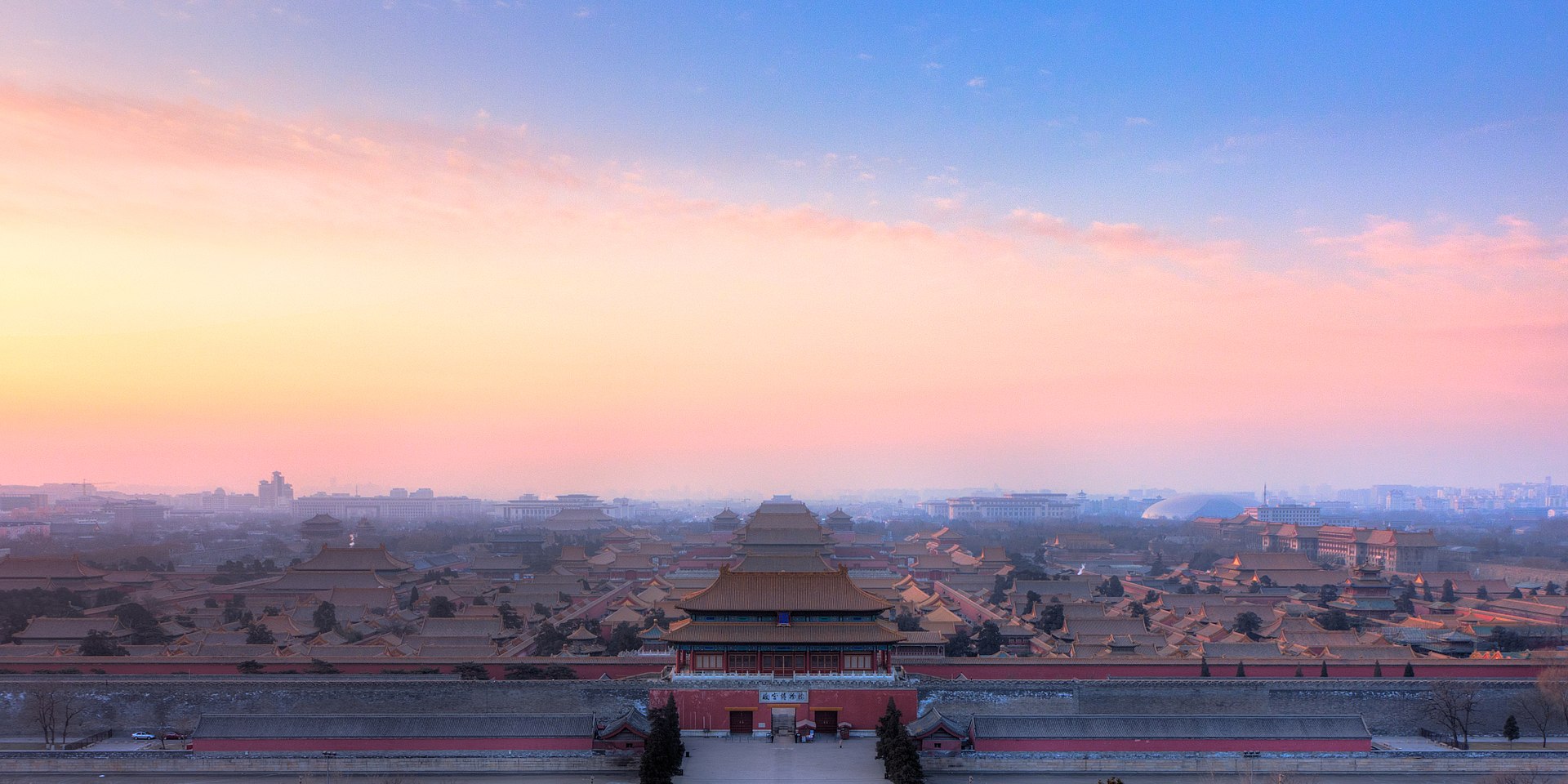
Forbidden City · Winter
Its own kind of charm
Beijing winters are genuinely cold. Daytime temperatures hover around or below 0°C and nights drop to about -10°C, with dry, biting air. You will want a proper heavy coat, gloves and a scarf. The reward is real: the fewest crowds and the lowest prices of the year, and the chance to walk the Forbidden City without being part of a crush.
If you are lucky enough to catch snow falling on the Great Wall, it is one of the most beautiful sights in the country — worth the cold on its own. The flip side: some sights and Wall sections feel bleak, and a few facilities cut their hours. Chinese New Year (late January or February) brings lively temple fairs, but many small restaurants close for a week or two and transport is booked solid.
Temperature, rainfall and crowd levels — in one table for easy comparison.
| Month | Temperature | Rain | Crowds | Notes |
|---|---|---|---|---|
| January | -9 to 2°C | Very low | Low | Coldest · dry · cheapest hotels |
| February | -6 to 5°C | Very low | High (CNY) | Chinese New Year — shops close · temple fairs |
| March | 0–13°C | Low | Moderate | Windy · dust-storm risk |
| April | 7–20°C | Low | Moderate | Blossoms · weather improving |
| May | 13–26°C | Moderate | High (Golden Week) | 1–5 May: Labour Day crowds and price spike |
| June | 18–31°C | Moderate | Moderate | Heating up · rains beginning |
| July | 22–35°C | Heavy | High (school holidays) | Hottest and most humid · wettest month |
| August | 21–33°C | Heavy | High (school holidays) | Still wet · afternoon thunderstorms |
| September | 14–27°C | Low | Moderate | Skies clearing · weather much improved |
| October | 7–20°C | Very low | High (Golden Week) | 1–7 Oct: peak crowds · after 8th: best of the year · red leaves |
| November | 0–11°C | Low | Low | Turning cold · prices easing · skies still clear |
| December | -7 to 3°C | Very low | Low | Deep cold · lowest prices · chance of snow |
Two questions that can decide your whole Beijing trip — answered straight, both of them.
The Great Wall · Mutianyu / Jinshanling
Golden months
Autumn is the answer — clear skies, long visibility, and a temperature that makes climbing the steps comfortable rather than a sweat or a shiver. Late October brings autumn colour around the wall at Mutianyu and Jinshanling, the most photogenic stretches of the year.
If your dream is the Wall under snow, try winter (Dec–Feb) — rare and stunning, but you will need to be ready for severe cold, occasionally slippery steps, and serious cold-weather clothing. Whatever the season, steer clear of the Golden Weeks when crowds are at their worst.
Beijing · Low season
Best value
Beijing hotel prices bottom out in the winter window before Chinese New Year, with few travellers — international or domestic. Rates can run 30–50% below autumn, and the lines for the Forbidden City and the Temple of Heaven are far shorter.
The trade-off is the deep cold, so pack for it properly, and skip the Chinese New Year week itself, when prices snap straight back up. If you can handle the chill, this is the calmest, best-value time to see the city.
China's national holidays generate the largest annual human movements on Earth. Here is what that means for your trip.
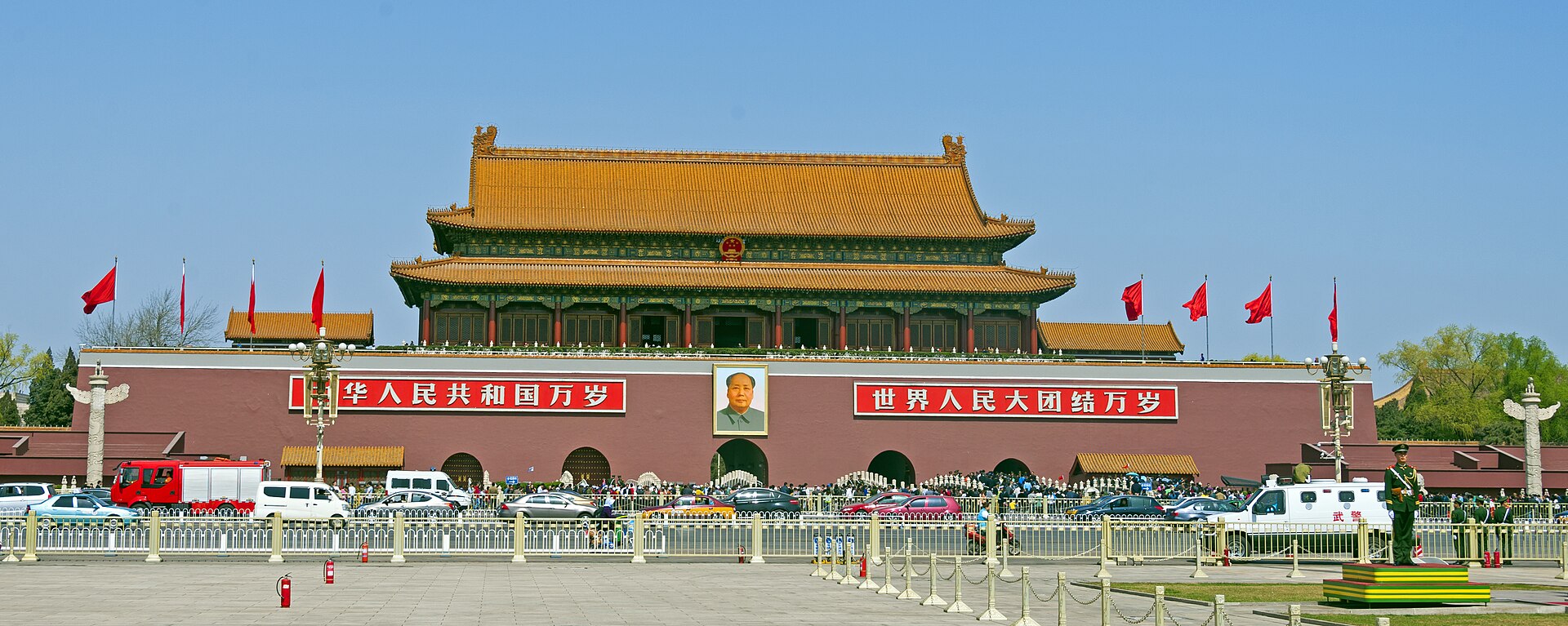
The largest Golden Week of the year. Hundreds of millions of Chinese travel in this single week, and Beijing is one of the top destinations. The Forbidden City, Tiananmen Square and the Great Wall become extremely crowded — walking speed drops to a shuffle — and timed Forbidden City tickets sell out days ahead. Hotel prices hit their annual peak. The weather is genuinely excellent, but if you can avoid it, wait for October 8–31 instead: the weather holds and the crowds thin dramatically.
China's second major holiday window. Domestic tourism surges; the Forbidden City and the Great Wall become difficult to move through. Hotels fill and prices rise by 30–60%. If you must travel during this period, book accommodation two months ahead, reserve your Forbidden City ticket online in advance, and brace for the queues.
China's largest holiday. Hundreds of millions of people travel home and to tourist destinations at once. The temple fairs (miaohui) at temples and old parks are genuinely festive — street food, opera and folk performances. But many small restaurants and local shops close for 7–14 days, train and flight tickets are extremely hard to book, and hotel prices spike. If you want the festival itself, plan everything far in advance; if you want a normal trip, pick another time.
These are reasons to time your visit, not reasons to avoid it.
Fragrant Hills (香山), in the northwest of the city, is Beijing's most beloved spot for autumn colour. The maples usually peak around mid-to-late October. Weekends are extremely busy — go on a weekday morning. Across the rest of the city, ginkgo trees turn gold at the same time, and the lane in front of the Lama Temple is especially photogenic.
The Mid-Autumn Festival falls in early autumn, when the weather is at its best. It's a public holiday, with mooncakes (yuebing) on sale all over the city and a lively buzz in the parks. In some years it lands right beside National Day, creating one long break and even bigger crowds — check the calendar for the year you're travelling.
If the cold and the crowds don't put you off, the temple fairs (miaohui) of Chinese New Year are a once-a-year spectacle. Temples and old parks fill with food stalls, opera, lion dances and souvenirs — colourful and full of life. Just plan your meals and transport carefully, because plenty of things close or fill up during this period.
Not exhaustive — just the things that actually matter for Beijing.
Whatever month you arrive, there is something worth seeing.