In Xi'an, dumplings aren't a side order — they're an entire banquet. Butterflies, goldfish, ducks and gold ingots arrive course by course, ending with tiny pearl dumplings simmered tableside that are said to read your fortune. This is the wheat city that turned the humble dumpling into an art form.
Picture a dinner where every dish on the table is a dumpling — and not one looks like another. One is folded into a butterfly, another into a tiny goldfish complete with tail, another set glows yellow as little gold ingots. This is the jiaozi banquet (饺子宴, jiǎozi yàn) of Xi'an, the meal that lifted the dumpling from everyday comfort food to a centrepiece for special occasions — and nowhere else in China does it quite like this.
Xi'an's obsession with dumplings comes down to one thing: this is wheat country. The Guanzhong plain that surrounds the city has grown wheat for thousands of years, and the Xi'an table runs on noodles, flatbread and dumplings rather than the steamed rice of the south. When flour is the staple of daily life, the cooks of a city learn to play with it — from the belt-wide biangbiang noodles to dumplings folded into the shapes of animals and flowers.
The banquet took its modern form in the late 1980s, as visitors began arriving to see the Terracotta Army. De Fa Chang (德发长), on Bell Tower Square, developed its dumpling menu into a full multi-course affair — more than 100 varieties in all, enough to earn a place in the Guinness World Records for sheer range. Today the dumpling banquet sits alongside roujiamo and yangrou paomo as one of the meals you come to Xi'an to eat.
From the boiled jiaozi locals eat every day, to the sculptural dumplings of the banquet, to the lamb-filled soup dumplings of the Muslim Quarter.
1
This is the main event. The dumpling banquet serves dumplings course by course, each set shaped differently and filled differently. A single sitting runs through around 15–18 varieties, with fillings from pork, duck, chicken, fish and shrimp to egg, vegetables and mushrooms, all the way to sweet ones like red bean and walnut. Courses move from savoury to sweet and finish with a numbing-spicy (málà) round, with a mild white-mushroom soup served between to clean the palate. It looks like grazing, but you leave properly full.
This is the part people tell their friends about. At the end of the meal, the server brings a small pot of broth to simmer at the table and drops in dumplings the size of a fingertip. Once they're cooked, a portion is ladled into each guest's bowl — and here's the charm: the number you receive is said to predict your luck for the year. Two means a pair, three means prosperity, a generous scoop means abundant fortune. It's a small tradition, nobody takes it too seriously, but it sends everyone off smiling — and you won't find it anywhere else.
3
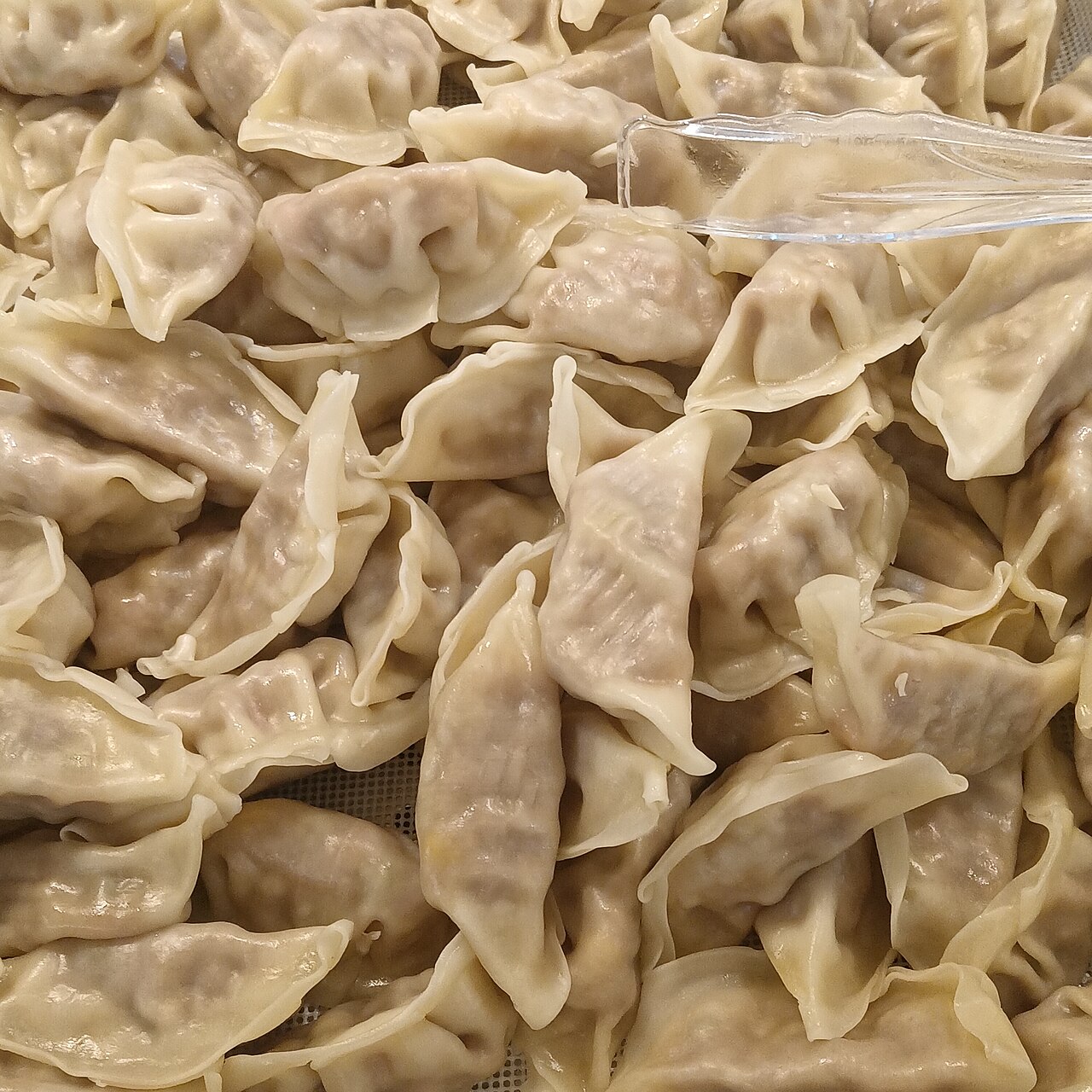
Long before the elaborate banquets, this is the dumpling people in Xi'an eat every day — a thick, soft wrapper around minced pork, napa cabbage or Chinese chives, dropped into boiling water until they float, then scooped out juicy and steaming. Dip in black vinegar and chili oil. It's the cheapest, most filling and most comforting meal in the city. Tiny dumpling shops are everywhere in the old town; a plate of 10–20 costs a few yuan. The ground floor of De Fa Chang serves boiled dumplings like this, quick and inexpensive, before you head upstairs to the banquet.
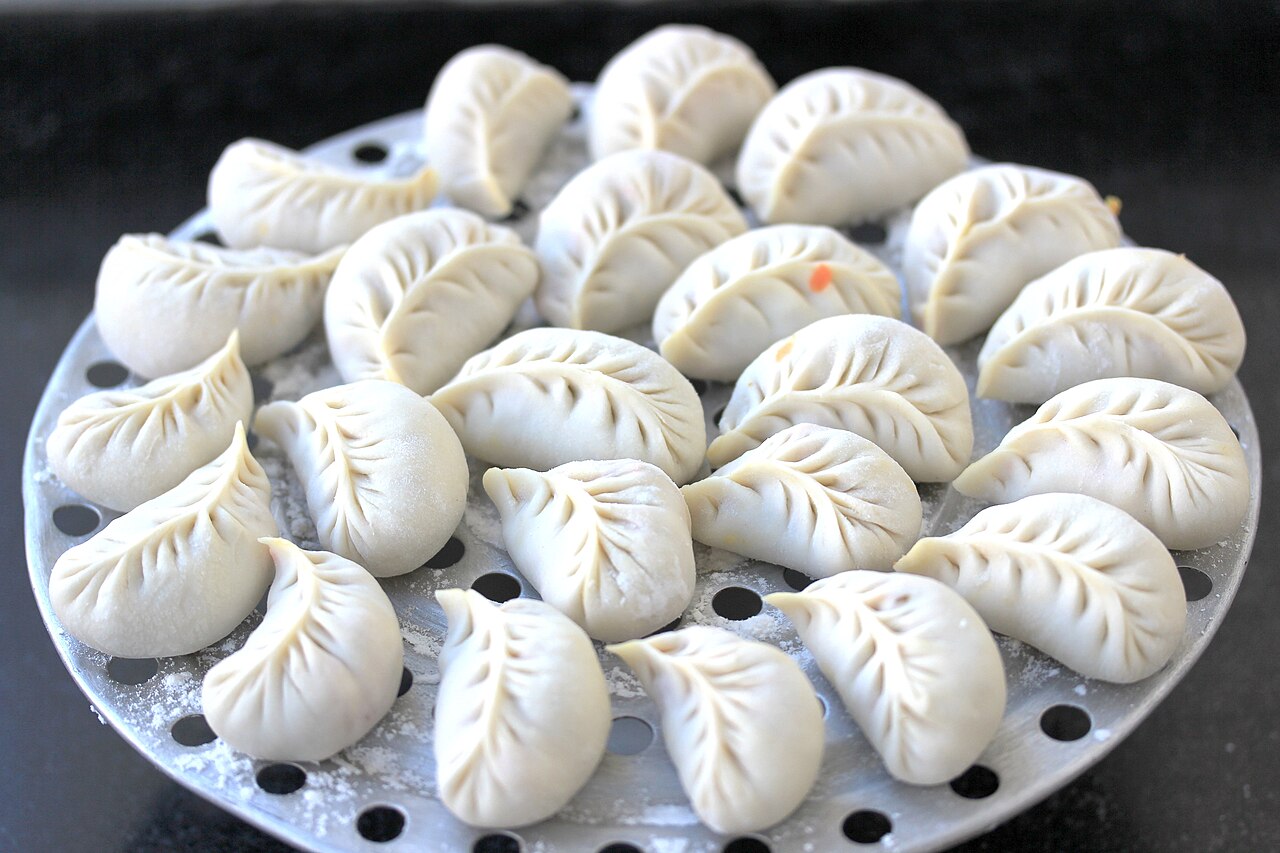
Steamed dumplings have a thinner wrapper than boiled ones, cooked in a bamboo steamer until the skin turns semi-translucent and you can faintly see the filling inside. Because they never sit in water, the texture is chewier and the filling keeps its full aroma. Popular fillings are pork and spring onion, lamb with cumin, or mixed vegetables. The banquet usually includes a steamed course shaped into something pretty, since the translucent skin shows off the folds. Eat with a light touch of vinegar — or plain, if the filling is well seasoned.
Pan-fried dumplings are laid out in a flat pan and crisped on the bottom until golden, while the tops stay soft from the steam. One bite gives you both crunch and tenderness at once. Some shops fry them until a thin lacy crust links the dumplings together (the so-called "ice wing"). It's a technique the banquet uses to build variety into the meal — boiled, steamed and pan-fried courses alternating so the texture never repeats. Best dipped in vinegar with chili oil.
Xi'an has its own soup dumpling, and it's a different beast from Shanghai's. The local 灌汤包 is bigger than a xiaolongbao, with a thinner wrapper, more broth inside, and a filling of lamb or beef rather than pork — because this is Hui Muslim food from the 回民街 quarter, where everything is halal. The best-known maker is Jiasan (贾三) in the Muslim Quarter. Bite a small hole in the side, sip the hot broth first, then eat the whole thing — and mind the broth, it scalds. The flavour is rounded and savoury, with the gentle cumin warmth of Hui cooking.
What makes the Xi'an banquet unlike dumplings anywhere else is the ones folded into shapes — butterflies with spread wings, goldfish with tails and eyes, little ducks with yellow beaks, antique gold ingots (元宝), layered peonies and tiny pearls. Cooks use different-coloured fillings to signal the flavour: orange dumplings tend to be shrimp or carrot, green ones vegetable. Each shape carries an auspicious meaning — the duck for fulfilled wishes, the ingot for wealth. They're food and folk art at once, telling the story of China's tradition of blessing through symbols.
Here's the honest truth: a good dumpling needs the right dip, and in the north that means black vinegar first. Shaanxi aged vinegar is softer and rounder than typical Chinese vinegar, never sharp. Add chili oil (辣椒油) to taste, and some people throw in minced garlic or a splash of soy. The Xi'an way is plenty of vinegar, just enough chili oil for fragrance, then dip and eat at once. The vinegar cuts the richness of the filling and keeps you reaching for more without tiring of it. Look at the next table — every group mixes its own.
The dumpling banquet doesn't all arrive at once. It comes course by course, like a tasting menu. It opens with the savoury courses — pork, duck, chicken and fish, the boldest flavours first. Then it eases into milder and sweeter courses such as vegetable, bean and walnut fillings, before finishing with a numbing-spicy (málà) round. A mild white-mushroom soup usually appears between courses to clear the palate so each new round lands fully.
A single meal runs through around 15–18 varieties, each arriving as just 2–4 dumplings per person — the point is to try many things, not to fill up on one. It all ends with the pearl dumplings simmered in a pot of broth at the table — the most enjoyable course of the night.
Group sizes: Two to four people works best; a solo diner may not be able to order the full banquet — try the boiled dumplings downstairs instead. Price per head: dumpling banquet ¥100–200 (about ฿500–1,000) · everyday boiled jiaozi ¥20–40 (about ฿100–200).
For the full banquet set, book ahead — especially on weekend evenings and through the tourist season (March–October), when a famous spot like De Fa Chang is packed. If you haven't booked, a weekday lunch gives you a better chance of a table, or skip the banquet and eat the boiled dumplings downstairs, which need no reservation.
Most restaurants take WeChat Pay and Alipay as the default; some accept cash in yuan, but few take foreign cards. Link a Visa or Mastercard to Alipay's international mode before you arrive and you're covered. Larger restaurants usually have a picture menu with English; smaller back-lane dumpling shops may be Chinese only — point at a photo, or say "饺子" and hold up the number of plates with your fingers.
Two time-honoured restaurants that have served dumpling banquets for decades, plus the Muslim Quarter's famous soup dumpling.
If you eat one dumpling banquet in Xi'an, most people point you here first. De Fa Chang has been making dumplings since 1936 and developed its menu to more than 100 varieties — enough to earn a Guinness World Records entry for range. The layout is clear: the ground floor sells quick, inexpensive boiled dumplings, good for a short lunch, while the upper floor hosts the full multi-course banquet in a smarter setting, served course by course. The location is hard to beat — right on Bell Tower Square in the heart of the old city, an easy walk from the Bell Tower metro station.
Another of Xi'an's culinary institutions — Xi'an Restaurant has been open since 1929 and is known as a full-spectrum Shaanxi house, serving both local snacks and a dumpling banquet. Its strength is gathering the city's traditional dishes under one roof, so if you want a dumpling banquet alongside a taste of Shaanxi snacks like liangpi and assorted pastries in a single sitting, this is the place. The atmosphere is more formal than a back-lane dumpling shop, which suits a family dinner or a group of friends. It sits on Dong Da Jie, a short walk from the Bell Tower.
For an authentically Xi'an soup dumpling, go to Jiasan in the Muslim Quarter. The shop has long made 灌汤包 with lamb filling and broth inside, and it's a name both locals and visitors know well. Bigger than a xiaolongbao, thin-skinned, full of broth, fragrant with the spices and cumin of Hui cooking — it's halal food that works as a lunch or a snack while you wander the quarter. To be honest, the Muslim Quarter is a tourist magnet and gets very crowded, but the soup dumpling here is still the real thing and worth a stop.