Before the first light touches the old city walls, locals are hunched over bowls of peppery hulatang in Sajinqiao alley, spooning silky doufunao under a savoury halal gravy, and tearing a roujiamo into their soup. A breakfast under ¥15 that tells you more about this city than any hotel buffet ever will.
Most visitors sleep in, eat a hotel buffet, then queue all day for the Terracotta Warriors — and miss the best meal of the day doing it. The real Xi'an morning happens in the small alleys just north of the Muslim Quarter, on plastic stools by the kerb, where locals are slurping soup while it's still dark out.
Xi'an eats wheat and mutton, not rice — a legacy of its centuries as an imperial capital at the eastern end of the Silk Road, and of the Hui Muslim community that has lived here for over a thousand years. Breakfast is hearty and warming: hulatang, a thick peppery soup studded with mutton meatballs; doufunao, silky tofu pudding under a salty halal gravy; and the gentler, anyone-can-eat-it options like jianbing egg crêpes and soy milk with a you tiao dough stick.
This guide walks you through breakfast in Xi'an honestly, dish by dish — what's worth trying, which alley to find it in, what time to go, when it sells out, and how to pay for it. If you want lunch dishes too, we've linked our Xi'an food guide for you.
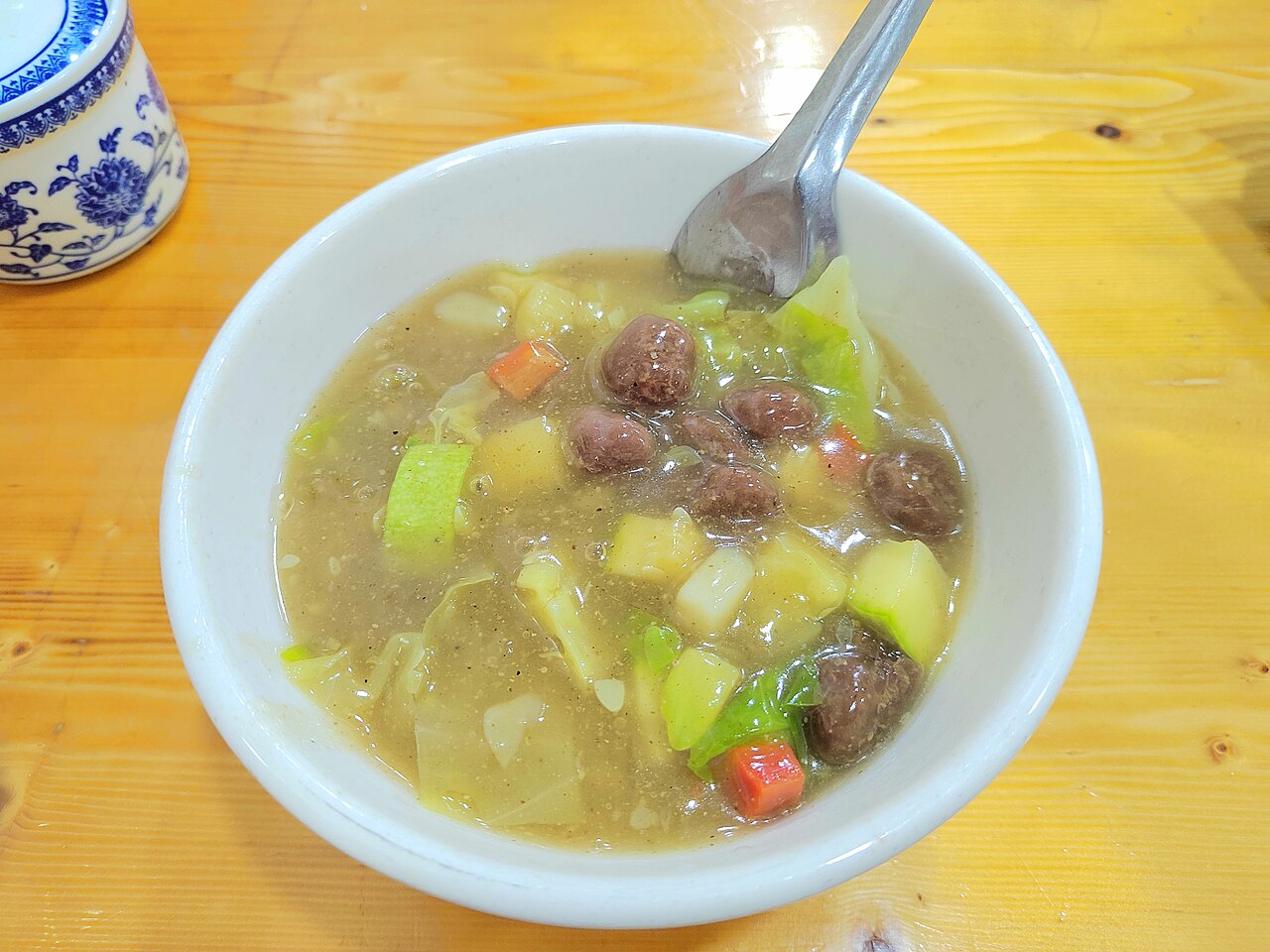
If you only have room for one thing on a cold morning, make it this bowl — ¥6–12 (~฿30–60), hot, thick, and pepper-bright.
1
This is the soup Xi'an wakes up to. A thick, gluey, gravy-brown broth, bright with white pepper, packed with mutton meatballs, diced potato, cabbage and carrot. The Xi'an version (肉丸胡辣汤) is heavier on lamb than the Henan original and substantial enough to be a meal in one bowl. Stir in red chilli oil and a splash of black vinegar, then tear a mantou bun into it — it warms you and wakes you up better than coffee.
2
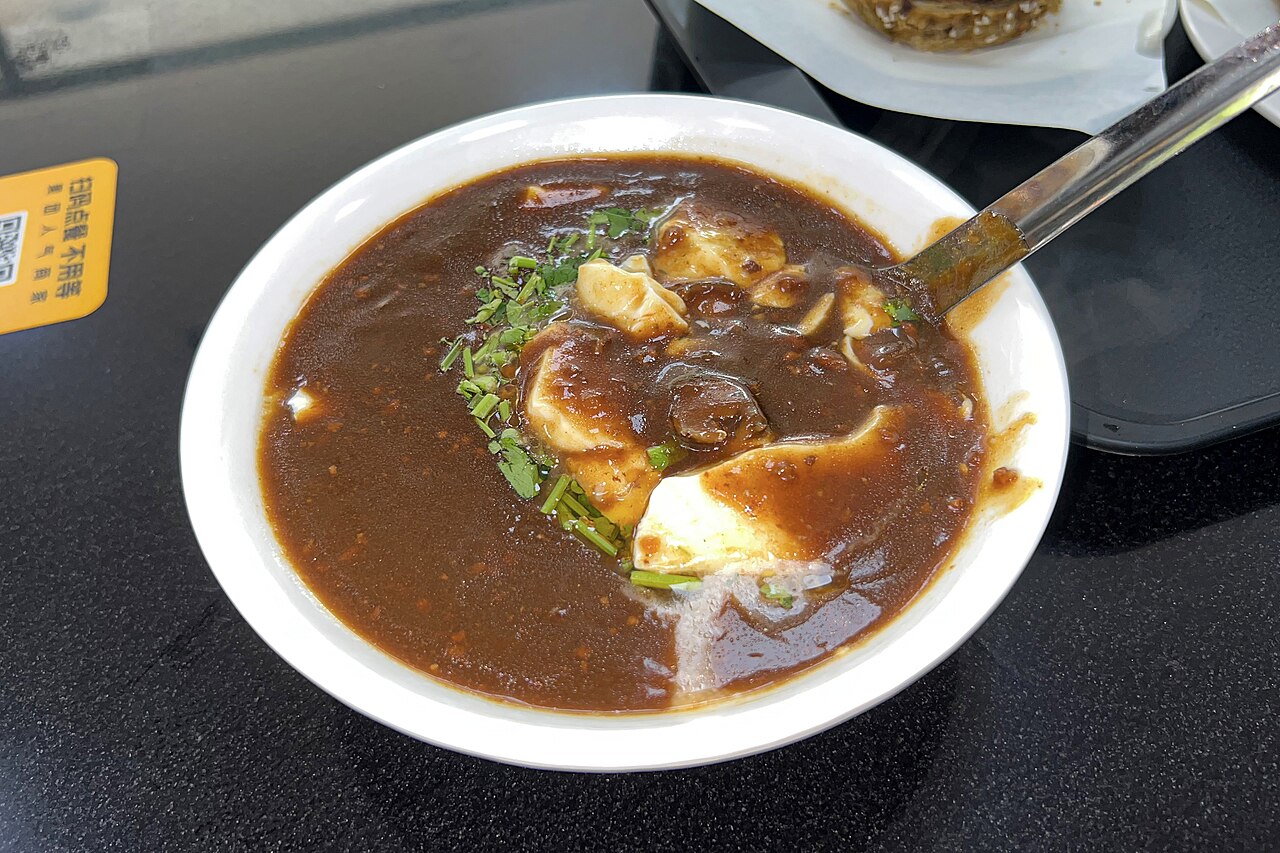
If you know tofu pudding as a sweet, syrupy dessert, Xi'an will flip it on you — here it's savoury. Pudding-soft tofu is spooned into a bowl and ladled with a salty gravy; in the Muslim Quarter that gravy is halal, a dark brown sauce made with mutton or beef, finished with coriander, garlic and a slick of chilli oil. The tofu is so soft it dissolves on the tongue, the gravy deep and gently spiced. Locals eat it as a light breakfast next to a roujiamo or a fried dough stick — easy, comforting, nothing to fear for a first-timer.
3
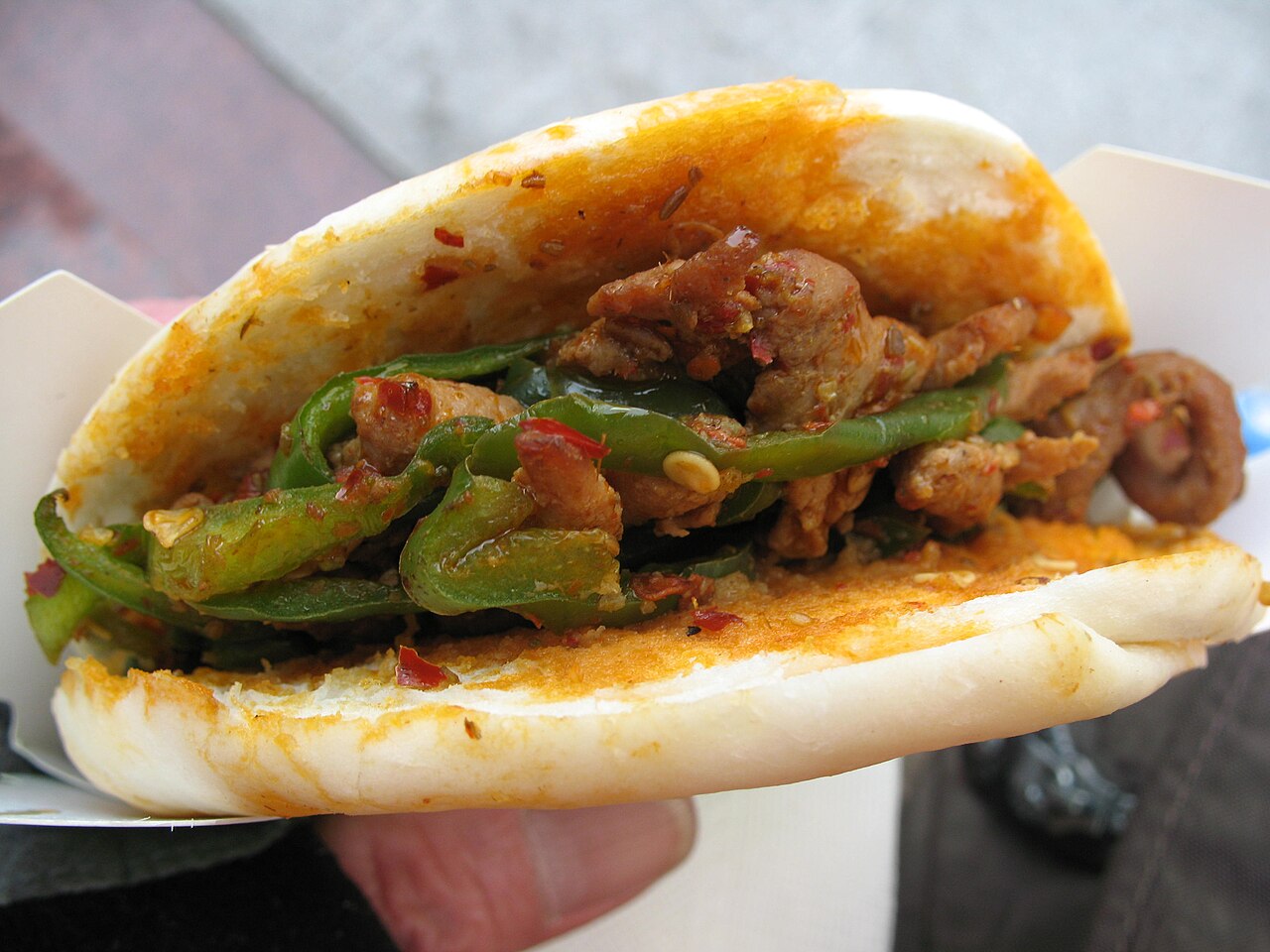
Roujiamo isn't only a lunchtime thing — locals eat it for breakfast all the time, paired with a bowl of hulatang or doufunao. The wheat-flour baijimo (白吉馍) bun is baked fresh until the edge crisps and the middle stays soft, then split and stuffed with juicy chopped braised meat. The Han style uses braised pork; in the Muslim Quarter it's halal mutton or beef. In the morning the buns are baked fresh, so you get them hotter and crispier than in the afternoon. Tear off pieces to dunk in your soup, or just eat it whole — either way it's the perfect weight for breakfast.
4
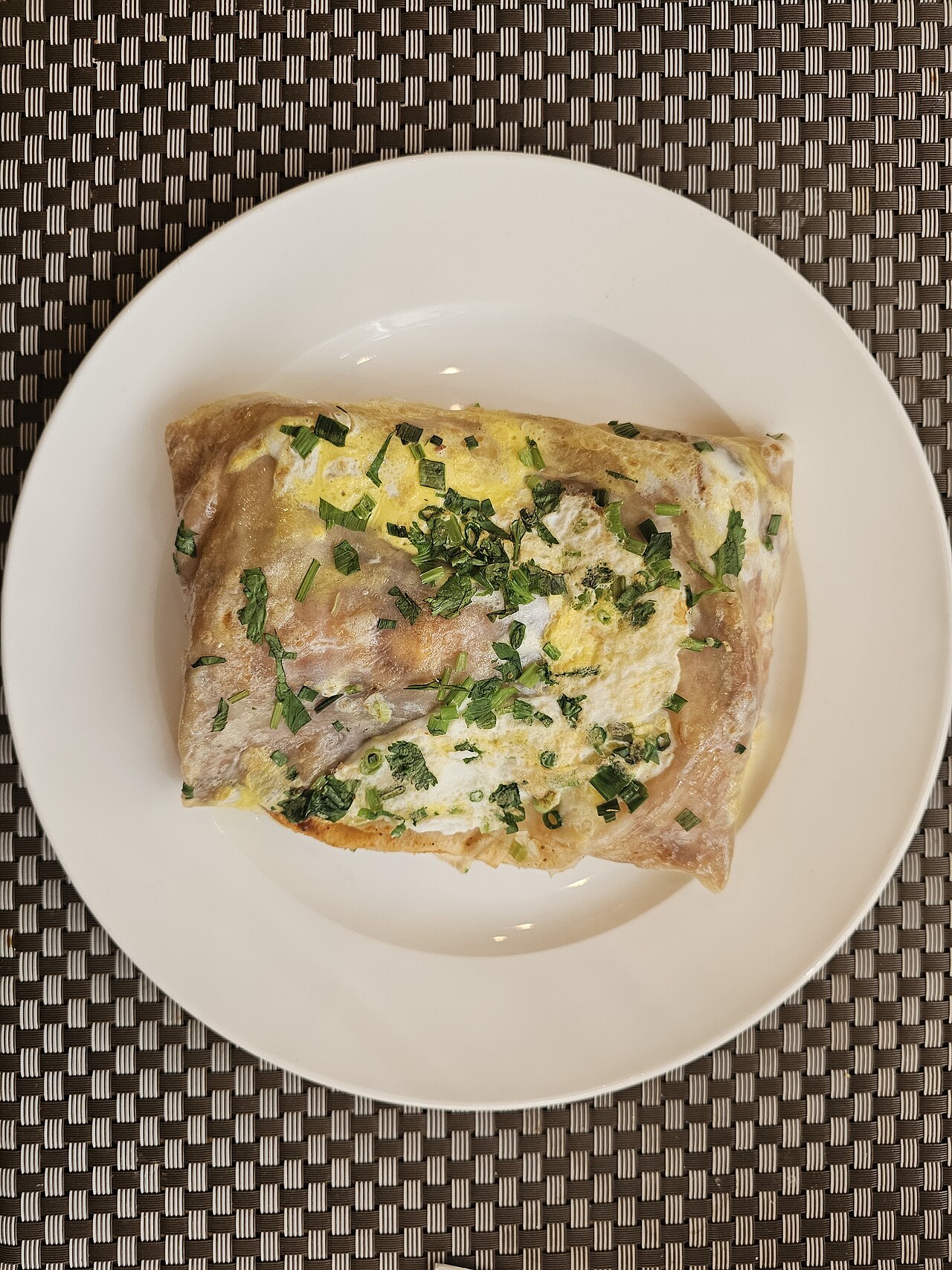
Jianbing is a street breakfast you'll find all over China, and Xi'an has carts parked outside plenty of hotels. Grain-flour batter is spread thin on a hot round griddle, an egg cracked and smoothed over it, scallions and coriander scattered on, then sweet bean and chilli sauce brushed across. The heart of it goes in last: a sheet of crisp fried cracker (báocuì) for the crunch, before the whole thing is folded into a hot parcel and handed over. One bite gives you soft, crisp and savoury at once. Done in ninety seconds, easy to eat on the move — ideal for a morning when you're rushing out to sightsee.
Three more to round out the morning — one safe for first-timers, one sharp and spicy, one sweet.
5
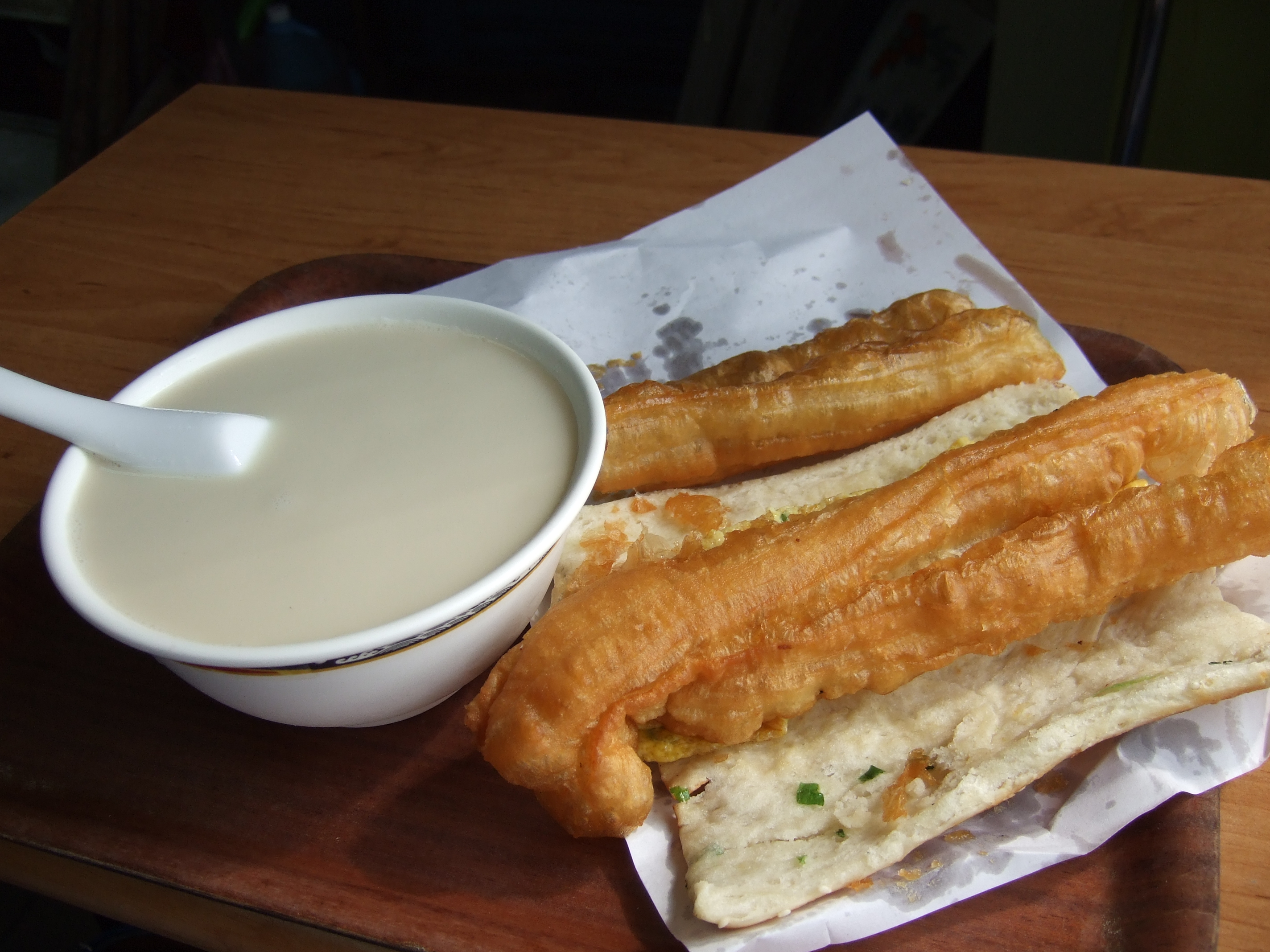
The safest, most familiar pairing on this list. A you tiao is a fried dough stick — crisp outside, hollow and airy inside, China's answer to a savoury doughnut — and doujiang is fresh hot soy milk, served either sweet or savoury. The traditional way is to tear the dough stick and dunk it into the soy milk: the bread drinks up a little, the texture changes instantly. If you're not ready for peppery soup or offal first thing, start here. It's everywhere in the city, it's filling, and there's nothing intimidating about it.
6
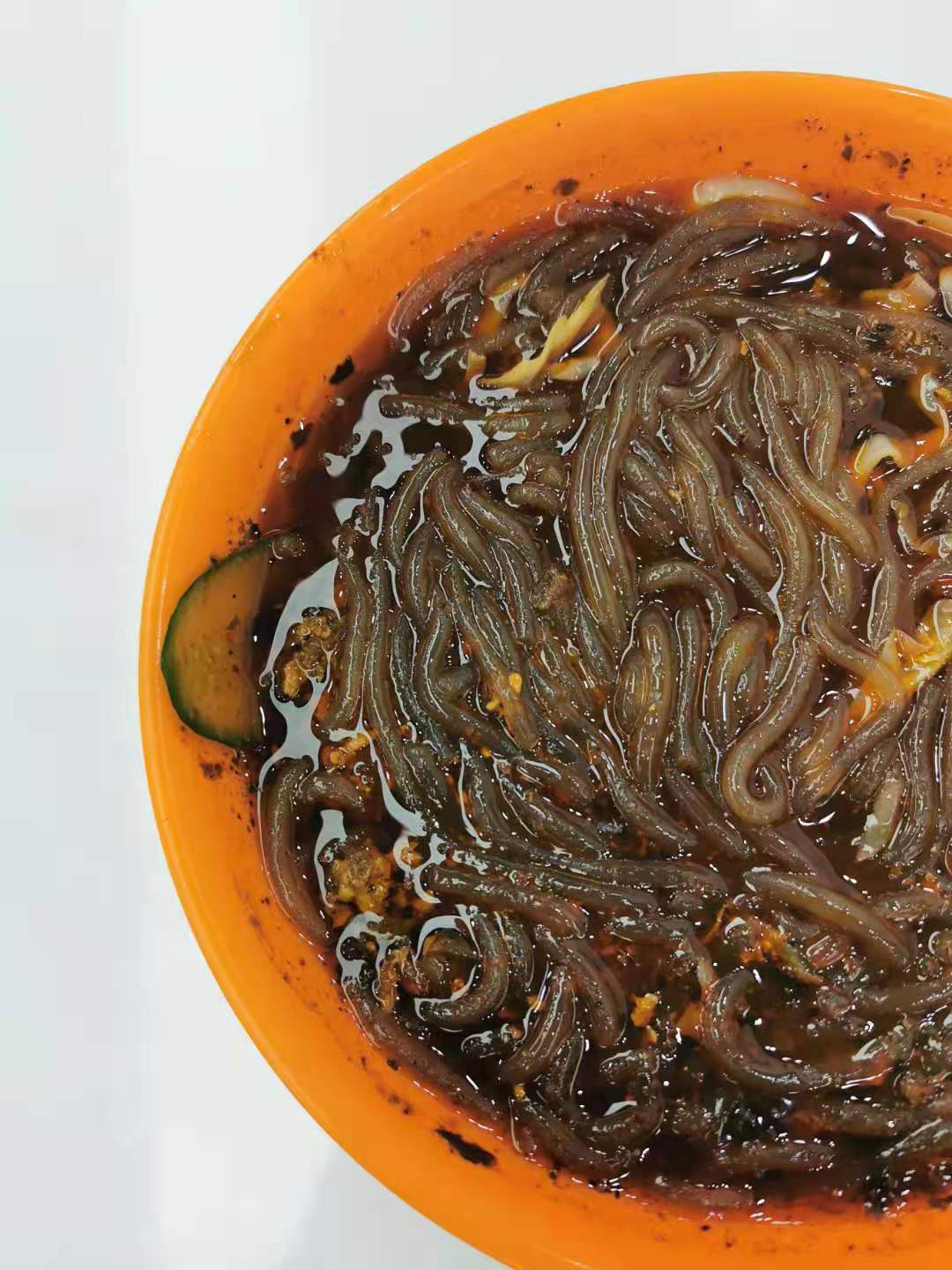
Slippery, springy sweet-potato glass noodles in a hot broth, sour from black vinegar and sharp with chilli oil, scattered with roasted peanuts, scallions and pickles — some stalls add minced pork. Sour, spicy and fragrant, it'll wake your whole face up. In Xi'an you'll find it all day, including at the morning food alleys, and it's a light, cheap bowl that cuts beautifully through something heavy like a roujiamo. If you like bold flavours you'll be back for another.
Two cousins to finish the morning on something sweet. Jinggao (镜糕) is glutinous rice flour steamed in a tiny round wooden mould — small and flat like a little mirror, which is where the name comes from (jing = mirror) — then steamed fresh in about three minutes, skewered, and rolled in sugar, black sesame and crushed peanuts: soft, chewy, fragrant. Zenggao (甑糕) is glutinous rice steamed in layers with Chinese red dates and red beans for hours in a big pot, until it turns dark, sweet and sticky — sweet from the dates alone, no added sugar. The famous zenggao stalls in Sajinqiao often sell out by around 8 am, so come early to catch it.
Inside the old city walls almost everything is within walking distance — the good breakfast alleys run 6.00–9.00 am and then sell out, so knowing where to go saves time.
The real heart of Xi'an breakfast — the alley locals eat in, rather than the main tourist street. It starts stirring at 5.30 am, with the peak around 6.00–9.00 am, and lays on hulatang, doufunao, zenggao and hot-and-sour noodles. Cheaper than the main drag, the queues are all locals, the atmosphere more genuine and the cameras fewer.
The main Huimin Street is lively and photogenic, but the real morning food hides in the back lanes — Beiyuanmen and Dapiyuan — with halal mutton roujiamo stalls, the famous soup-dumpling shops and halal doufunao. Everything here is halal, opens early and runs later than Sajinqiao, so it suits a slightly later start.
An old-town-style food court that gathers dishes from across Shaanxi province under one roof — clean, orderly, with seats. Handy if you want to graze across several breakfast bites without squeezing into an alley, and without setting an early alarm. There's zenggao, Shaanxi noodles and plenty of morning snacks to try.
If you're staying inside the walls, this is the most convenient breakfast base — many hotels are a 5–10 minute walk from Sajinqiao and the Muslim Quarter. Jianbing carts and soy-milk-and-you-tiao shops are scattered through the lanes around the square. Grab a hot jianbing here before you start your sightseeing day.
Sajinqiao opens from 5.30 am, and the sweet spot is 6.00–9.00 am — fresh, hot, and the queues are still short. Plenty of old stalls sell out and pack up before noon; the famous zenggao stalls often go by around 8 am. To catch fresh hulatang, doufunao or zenggao, aim to be there before 8.30 am. If you wake up late, fall back on roujiamo or hot-and-sour noodles, which run most of the day.
Stalls and small shops in the Muslim Quarter and along Sajinqiao mostly don't take cards, and many won't want cash either, so you'll need Alipay or WeChat Pay. Download Alipay before you travel and link a Visa/Mastercard through its tourist mode — get this sorted at the hotel before you head out for breakfast.
Most breakfast stalls have no English menu, but you can point at the pot, at a sample, or at what the person next to you ordered and nod. Or just show the Chinese name from this page (胡辣汤 hulatang · 豆腐脑 doufunao · 甑糕 zenggao). The vendors in these alleys have long been used to visitors — no need to be shy.
Breakfast in the Muslim Quarter and on Sajinqiao is almost all halal (清真), using mutton and beef instead of pork — mutton-meatball hulatang, beef-gravy doufunao, beef roujiamo. If you avoid pork, you can relax across the whole area. The Han-style braised-pork roujiamo is found outside the Muslim Quarter.
Hulatang and doufunao are best while they're still scalding; once they cool the broth thickens and the flavour flattens. Same with jianbing — that crisp cracker softens fast. Buy it and eat it right there at the stall or on a plastic stool beside it, rather than carrying it back to the hotel. Slurping soup by the kerb at dawn is half of what makes this breakfast what it is.