Home Chiang Mai Thailand Chiang Mai Hotels About
Wherebest  ›  🌏 Asia  ›  🇹🇭 Thailand  ›  Chiang Mai  ›  Wat Phra That Doi Suthep
🇹🇭 Chiang Mai · Attraction Guide

Wat Phra That Doi Suthep
The golden mountain temple that has watched over Chiang Mai for 600 years

Chiang Mai's most sacred temple, on a mountain 1,073 metres high — a gilded Lanna chedi, a 306-step naga staircase, and a view over the entire city on a clear day.

What it is

Why every trip to Chiang Mai goes up Doi Suthep

There is a moment near the top of the staircase, usually around seven in the morning, when the mountain air is cold enough to see your breath and the gilded chedi in front of you catches the first light of the day. Small bells under the eaves of the Lanna halls ring softly in the breeze. Then you walk to the front terrace and the whole of Chiang Mai is laid out below you — and on some cool-season mornings, a thin sea of mist still hangs over the old moat in the distance.

This is Wat Phra That Doi Suthep — the most sacred temple in Chiang Mai, set on Doi Suthep mountain at roughly 1,073 metres above sea level, about 15 kilometres from the city. By tradition the temple dates to around 1383, in the reign of King Kue Na of the Lanna kingdom. The story goes that a Buddha relic was placed on the back of a white elephant, which was allowed to wander until it chose a resting place; it climbed this mountain, trumpeted three times, knelt and died on the spot — and a chedi was raised there to enshrine the relic.

What makes Doi Suthep special is that it is two things at once: a sacred site that the people of Chiang Mai have venerated for centuries, and the best viewpoint over the city in the same visit. There is a local saying that if you have not been up Doi Suthep, you have not really arrived in Chiang Mai — and standing in front of the golden chedi, you understand why.
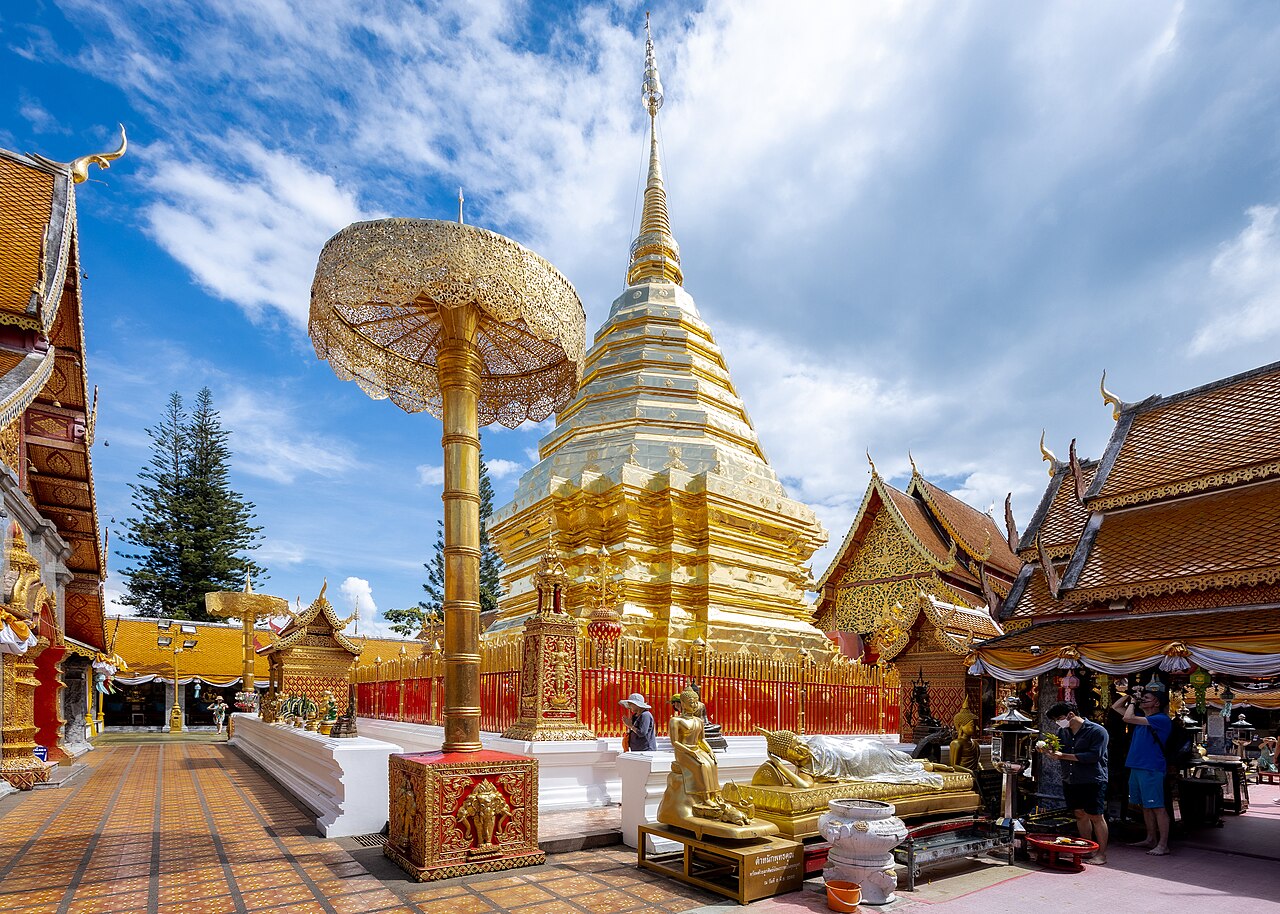
Wat Phra That Doi Suthep, Chiang Mai — gilded Lanna chedi, golden ceremonial parasol and tiered temple roofs on the inner terrace
The gilded Lanna chedi at the centre of the Doi Suthep terrace — the heart of the temple, enshrining a Buddha relic
🎫
Entry
Free for Thais · ~฿30 foreigners
For the inner chedi terrace
🕕
Opening hours
~6 am–6 pm
Go at dawn for mist and few people
⛰️
Elevation
~1,073 metres
Cooler than the city all year round
🪜
Naga staircase
306 steps
Or a tram, ~฿20–30 each way
📍
Distance
~15 km from the city
30–40 min drive on a winding road
👕
Dress code
Shoulders & knees covered
Sarongs lent at the entrance; shoes off inside
What to look for

5 things that tell Doi Suthep's story

From the foot of the staircase up to the view terrace — each spot has its own story.

What to do here

Pay respects, take in the view and carry on up the mountain

🙏 Paying respects and circling the chedi

The heart of a visit to Doi Suthep is paying respects to the Buddha relic in the golden chedi. Locals and visitors buy flowers, incense and candles near the entrance, then walk three clockwise circuits around the chedi while making a wish. The temple is said to be the relic shrine associated with people born in the Year of the Goat, and to come and pay respects here once in your life is considered highly auspicious.

Before stepping onto the inner terrace you remove your shoes and dress modestly, with shoulders and knees covered. The terrace floor can get hot underfoot in the middle of the day, so a pair of socks makes it more comfortable.

⛰️ Continuing to Bhubing Palace and the Doi Pui Hmong village

Many people who come up Doi Suthep carry on further up the mountain. Drive about 4 kilometres higher to reach Bhubing Palace, with its cool-climate flower gardens (open only when the royal family is not in residence — check before you go). Higher still is the Doi Pui Hmong village, a hill-tribe settlement with a souvenir market, viewpoints and seasonal strawberry fields.

If you have half a day, the route Doi Suthep → Bhubing → Doi Pui makes a neat loop up the mountain — a temple, a garden and a hill-tribe village all on a single trip up.

Tip: If you would rather not drive the mountain road yourself, half-day Doi Suthep and Doi Pui Hmong village tours with transport and a guide can be booked in advance through Klook. See Doi Suthep tours on Klook →
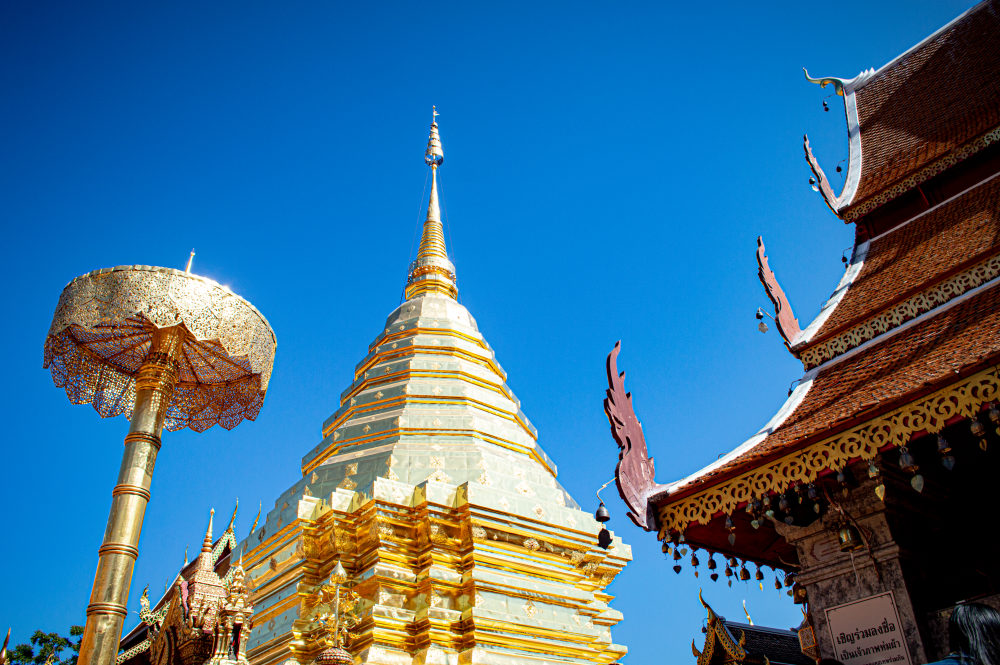
The golden chedi and a Lanna viharn at Wat Phra That Doi Suthep against a deep blue sky
The golden chedi and a Lanna viharn at Doi Suthep on a clear day — the angle that shows the gold parasol and tiered roofs clearly

📸 Where and when to photograph

The classic Doi Suthep shot is the golden chedi against a deep blue sky, best in the morning between 7 and 9 am when the sun lights the whole chedi and the sky is still clear. Two other angles not to miss: the naga staircase seen from below looking up, and the city view terrace at the front.

For the city view and a chance of mist, come at dawn in the cool season (November–February). Late afternoon before sunset gives soft golden light and the first city lights — but allow time to come down before dark, as the mountain road is winding.

Getting there

How to reach Wat Phra That Doi Suthep

Chiang Mai has no metro or underground, so getting up the mountain relies on red songthaews, a rental vehicle or Grab.

🚐
Red songthaew (red truck)
From Chang Phueak Gate / CMU
Shared seats ~฿50–60 per person going up (leaves once full); charter round trip ~฿500–600 depending on bargaining
📱
Grab / taxi
Hail one from the city
Convenient, but finding a ride back down can be hard — arrange for the driver to wait, or charter a songthaew round trip
🛵
Car / scooter rental
The most independent option
Road is well paved but winds up the mountain; about 30–40 minutes. Less confident riders should watch the bends. Parking on the mountain
Timing tip: Go up Doi Suthep early in the morning — cool air, fewer people and a chance of mist — then continue to Bhubing Palace and the Doi Pui Hmong village in the late morning, and come back down to town in the afternoon to rest or explore the Old City. It all fits comfortably into one day.
More in Chiang Mai

Where to go next

Once you are back down, there is plenty more in Chiang Mai — Old City temples and nature beyond town alike.

Frequently asked

FAQ · Doi Suthep before you go up

How much is the entry fee for Wat Phra That Doi Suthep?
Thai nationals enter free. Foreign visitors pay an entry fee of around ฿30 per person for the inner terrace where the chedi stands. If you would rather not climb the 306-step naga staircase, a funicular tram runs up and down for about ฿20–30 each way. These prices are approximate and can change, so carry some cash.
When is the best time to visit Doi Suthep?
Early morning, around 6 to 8 am, is best: cool mountain air, thin crowds, and in the cool season a sea of mist over the city below. Late afternoon, roughly 4 to 6 pm, is the other good window, with warm light on the chedi and the city starting to glow. The best season overall is November to February, when the air is cool and the skies are clear. Avoid late mornings on long weekends, when the temple and the songthaews get very busy.
What should I wear to Doi Suthep?
Doi Suthep is an active, sacred temple, so dress respectfully with shoulders and knees covered. No vests, tank tops, shorts above the knee or short skirts. If you are not dressed appropriately, the temple lends sarongs near the entrance. You also remove your shoes before stepping onto the inner terrace around the chedi. The mountain is noticeably cooler than the city, so bring a light layer for the morning and evening.
How do I get to Doi Suthep without my own transport?
Take a red songthaew (shared pickup truck) up the mountain from around Chang Phueak Gate or the Chiang Mai University area. Shared seats cost roughly ฿50–60 per person on the way up, leaving once the truck fills; chartering a truck round trip is about ฿500–600 depending on bargaining. Alternatively, use Grab or rent a car or scooter and drive yourself. The mountain road is winding but well paved, around a 30–40 minute drive from the city.
How many steps are there at Wat Phra That Doi Suthep?
The naga staircase has 306 steps, flanked on both sides by the long bodies of seven-headed serpents. At an unhurried pace it takes about 10 to 15 minutes to climb. If you cannot manage the stairs, a funicular tram runs up and down at the side for roughly ฿20–30 each way.
Klook · Chiang Mai tours & activities

Doi Suthep + Doi Pui Hmong village tours and Chiang Mai activities — easier booked ahead

Half-day Doi Suthep tours with a guide and transport, Doi Inthanon day trips, ethical elephant sanctuaries and Thai cooking classes — book through Klook in advance and skip sorting out your own transport.

Browse Chiang Mai activities on Klook →
Wherebest is an affiliate partner of Klook — we may earn a commission when you book through our links, at no extra cost to you.