One of southern Thailand's most coffee-serious towns — old kopi shops in Sino-Portuguese shophouses where locals eat crisp-skinned Trang roast pork and dim sum in the morning, the Trang cake everyone takes home, and modern specialty cafés to sit over a latte. Come early for the real Chinese breakfast, come in the afternoon for an air-conditioned café.
Picture a morning in Trang: you're at an old coffee shop in a Sino-Portuguese shophouse in the old town, a hot cup of kopi in front of you — dark-roasted, poured over sweet condensed milk — with a plate of crisp-skinned Trang roast pork beside it and a stack of dim sum baskets on the table to pick from. This is the most Trang breakfast there is, a heritage from the Chinese community rooted here for generations. Trang people are known for eating early and for taking their coffee seriously, and though it's a small town, its coffee culture is deeper and older than most people realise.
What makes Trang's cafés interesting is that it has two coffee worlds in one town — the first is the Chinese coffee shop (kopitiam): decades-old kopi shops in shophouses serving sock-brewed dark-roast coffee, sitting right alongside the city's roast-pork-and-dim-sum breakfast. The second is the modern specialty café scene doing espresso, latte art and single-origin hand drips, plus air-conditioned cake and bakery cafés, and the shops selling Trang cake, the city's long-standing take-home treat.
The charm is that you get to choose which world you're in today — or do both in a single day. Get up early for an old coffee shop, sip a kopi and eat roast pork and dim sum with the locals in the old town, then move to an air-conditioned specialty café in the afternoon for an iced latte and a slice of Trang cake. This guide walks through both the traditional Chinese-southern coffee culture and the newer café scene of Trang, and tells you which area to sit in and what to order.
In Trang, breakfast isn't just coffee and toast — it's a long sit-down: a hot cup, crisp-skinned roast pork, dim sum one basket at a time, the way it's been done for decades.
A Trang breakfast — a hot kopi, crisp-skinned Trang roast pork and little baskets of dim sum, served together on one table at an old coffee shop in the old town.
Trang's traditional coffee world starts with kopi — dark-roast Chinese-style coffee, usually brewed through a cloth sock, served hot with sweet condensed milk (kopi) or black with sugar (kopi-o). It's a strong, sweet cup served in a glass or an old porcelain cup. But what sets a Trang breakfast apart from other towns is that locals eat their kopi with Trang roast pork (moo yang Mueang Trang) — crisp-skinned, tender and sweet-savoury, the city's most famous dish — sliced to dip in a sauce, with little baskets of dim sum and a hot coffee. It's the Chinese-southern breakfast ritual that defines a Trang morning, and these shops open very early, from around 5–6am.
The city's other coffee world is the modern specialty café, growing all the time. These places focus on espresso, latte and single-origin hand drips, with iced lattes, matcha, cocoa and cold drinks for the non-coffee crowd, and cakes and bakes. Many like to renovate an old Sino-Portuguese shophouse into a café, so you get the feel of the old town in an air-conditioned room. And don't forget Trang cake — a dense, soft, buttery egg cake that's the city's take-home treat, and goes well with a hot coffee.
Get the types straight first, then decide whether today is about traditional Chinese coffee, sitting down to morning roast pork and dim sum, or a modern air-conditioned specialty café.
The heart of Trang's traditional coffee — Chinese coffee shops in old-town shophouses, open for decades, brewing kopi, a dark-roast coffee through a cloth sock, served hot with condensed milk (kopi) or black with sugar (kopi-o) in an old porcelain cup. The mood is marble tables and ceiling fans, a step back into the city's Chinese-southern past. Many also sell Trang roast pork and dim sum alongside the coffee, and they open very early, from around 5–6am. It suits you if you want traditional coffee and the genuine old Trang atmosphere.
In Trang, roast pork is breakfast, and it's usually eaten with coffee. The roast-pork-and-dim-sum places open at dawn, with people eating crisp-skinned Trang roast pork sliced to dip in a sauce, alongside dim sum — shumai, har gow, steamed buns, chive cakes — served in little bamboo baskets you pick one at a time, with a kopi or hot Chinese tea to start the day. It's the Chinese-southern breakfast ritual that defines a Trang morning. The shops cluster in the old town around the railway station, with the busy round-table feel of a traditional Chinese house. Come early and it's all out and fresh, and roast pork sells fast.
Trang is a small town, but it has more specialty cafés serious about coffee all the time. These places do espresso, latte art and single-origin hand drips, with both Thai and imported beans, aiming for a clean, fruity cup. They're well designed, air-conditioned, with power points and Wi-Fi, good for working or meeting friends. Many like to renovate an old Sino-Portuguese shophouse into a café, so you get the feel of the old town in an air-conditioned room, and you'll find them through the town and the old quarter. To be straight, they cost several times what a kopi does, but you get the atmosphere and a quality cup in a different lane from the old shops.
The most Trang sweet to go with coffee is Trang cake (khanom cake Mueang Trang) — a dense, soft cake fragrant with butter and egg, not too sweet, usually baked with a hole in the middle like a ring. The original is pandan or plain, with many flavours now. Locals eat it with coffee or kopi and buy it as a take-home gift, and you'll find it at the old cake shops and souvenir shops in town. Beyond Trang cake, there are modern air-conditioned dessert and bakery cafés serving cake, croissants and cold drinks like matcha latte, cocoa and milk tea — good for a late afternoon out of the sun.
A drink culture many visitors overlook is Trang's Thai-Muslim southern tea shops, serving teh tarik (cha chak — milk tea "pulled" to a froth), iced tea and hot coffee, alongside roti or rice dishes at southern eateries. Prices are very light. It's a local drink that reflects Trang as a southern town with both Chinese and Muslim cultures mixed in. These shops are spread across the town and the outer districts, open from morning till late — good for a hot teh tarik and roti in the morning or late at night, a different lane from both kopi and the specialty cafés.
If you want a quick cup before a full day out to the islands or waterfalls, the easy-to-find chains are the answer. Café Amazon is all over town, including in petrol stations, cheap and steady. Other coffee chains and the cafés in the malls are easy to find with air-conditioned seating. They're good for a morning coffee before you head to the pier at Pak Meng, or a mid-day top-up in the heat — predictable, no surprises, handy when you're in a hurry or when you just want an air-conditioned seat out of the humidity.
The main areas every coffee lover should know — the old town is traditional coffee and morning roast pork, while the cafés in town and the renovated shophouses are the modern scene.
The old town around the railway station, Rama VI Road and Kantang Road is the heart of Trang's traditional coffee. This is where the old kopi shops in Sino-Portuguese shophouses and the morning roast-pork-and-dim-sum places cluster, walkable from the hotel area in town. It's the place to get up early for a kopi, Trang roast pork and dim sum with the locals, then walk on to see the old shophouses and the Trang railway station. This is the area that gives you the genuine Chinese-southern coffee atmosphere of the city — if you want to understand Trang's traditional coffee culture, head here.
In central Trang around the municipal area and the clock tower you'll find modern specialty and dessert cafés scattered about, many in renovated Sino-Portuguese shophouses, so you get the feel of the old town in an air-conditioned room. It's good for a coffee or matcha, a slice of Trang cake, or a seat to work in. These cafés tend to open later through to evening, so they suit late morning to afternoon rather than early. It's an area that pairs a wander round the old town with a modern café in one trip.
Trang is known for its Trang cake, so the town has old cake shops and souvenir shops selling it both as small pieces to eat now and big ones to take home. Many have a corner to sit and eat it with a coffee or kopi, so it's good for picking up a cake before you leave, or sitting with a slice and a coffee in the afternoon. A small piece runs about ฿35–80 and a big one about ฿100–250, depending on size and flavour. It's a treat that tells the Chinese-southern story of Trang as well as the kopi and the roast pork do.
Beyond the coffee in town, the everyday local drinks are found at eateries and markets across Trang — Thai-Muslim southern tea shops serving teh tarik, iced tea and hot coffee with roti, open from morning till late, while around the town markets there are small coffee and drink stalls to grab between eating and shopping. Prices are light and cash-led. These are for a quick cup on the move rather than a long sit, but they're part of the drink culture that sets Trang apart from other towns.
Some are the city's coffee culture you'll find at many shops; some are a breakfast ritual to try · check the latest opening days and hours before you go, as venues change.
The heart of Trang's traditional coffee is the old kopi shops in Sino-Portuguese shophouses in the old town, open for decades. They brew kopi, a dark-roast coffee through a cloth sock, served hot with condensed milk or black with sugar (kopi-o), in old porcelain cups, and many also sell Trang roast pork and dim sum alongside. The mood is marble tables and ceiling fans, a step back into the city's Chinese-southern past. There are several of these around the railway station and Rama VI Road. To be straight, many don't have a clear sign out front — but ask a local where the old kopi shop is and you'll find it easily. It suits you if you want traditional coffee and the genuine old atmosphere.
The most Trang breakfast is Trang roast pork with dim sum and coffee. These shops cluster in the old town, with the busy round-table feel of a traditional Chinese house. Order the crisp-skinned roast pork sliced to dip in a sauce, with shumai, har gow, steamed buns and chive cakes served in little bamboo baskets you pick one at a time, and a kopi or hot Chinese tea alongside. It's the Chinese-southern breakfast ritual at its most Trang. Come early, between 6 and 9am, and it's all out and fresh — roast pork sells fast and often runs out. Roast pork is priced by weight at about ฿250–400 a kilo, dim sum is around ฿20–40 a basket, and a breakfast comes to about ฿100–200 a head. Check the latest opening days and hours before you go to be sure.
Trang gains more modern specialty cafés all the time. These places do espresso, latte art and single-origin hand drips with both Thai and imported beans, in well-designed, air-conditioned rooms with power points and Wi-Fi, good for working or meeting friends. Many are in renovated Sino-Portuguese shophouses, so you get the feel of the old town in an air-conditioned room, and you'll find them through the town and the old quarter. Coffee runs around ฿60–140 a cup. This kind of café opens, closes and moves with the times, so check recent reviews and the current location before you go. It's the other side of Trang coffee, a completely different mood from a kopi shop.
Trang cake (khanom cake Mueang Trang) is the signature treat to try with a coffee — a dense, soft cake fragrant with butter and egg, not too sweet, usually baked with a hole in the middle like a ring. The original is pandan or plain, with many flavours now. The town has several old cake shops and souvenir shops selling it both as small pieces to eat now and big ones to take home, and many have a corner to sit and eat it with a coffee or kopi. Trang people eat it with coffee in the morning or afternoon. Buy a piece and have it with a hot coffee — they go well together. A small piece is about ฿35–80, a big one to take home about ฿100–250, depending on size and flavour.
The local drink that reflects Trang as a southern town is teh tarik (cha chak) — milk tea pulled back and forth to a soft froth, served hot or iced, strong and sweet. It's eaten with roti, crisp outside and soft within, dipped in condensed milk or curry, or alongside a southern meal. These tea shops are open from morning till late across the town and the outer districts, and prices are very light. It's a drink that tells you Trang has both Chinese and Muslim cultures mixed in — a hot teh tarik in the morning or late at night gives you a southern flavour that neither kopi nor a specialty café can. Ask a local where the good teh tarik shop is and you'll find it easily.
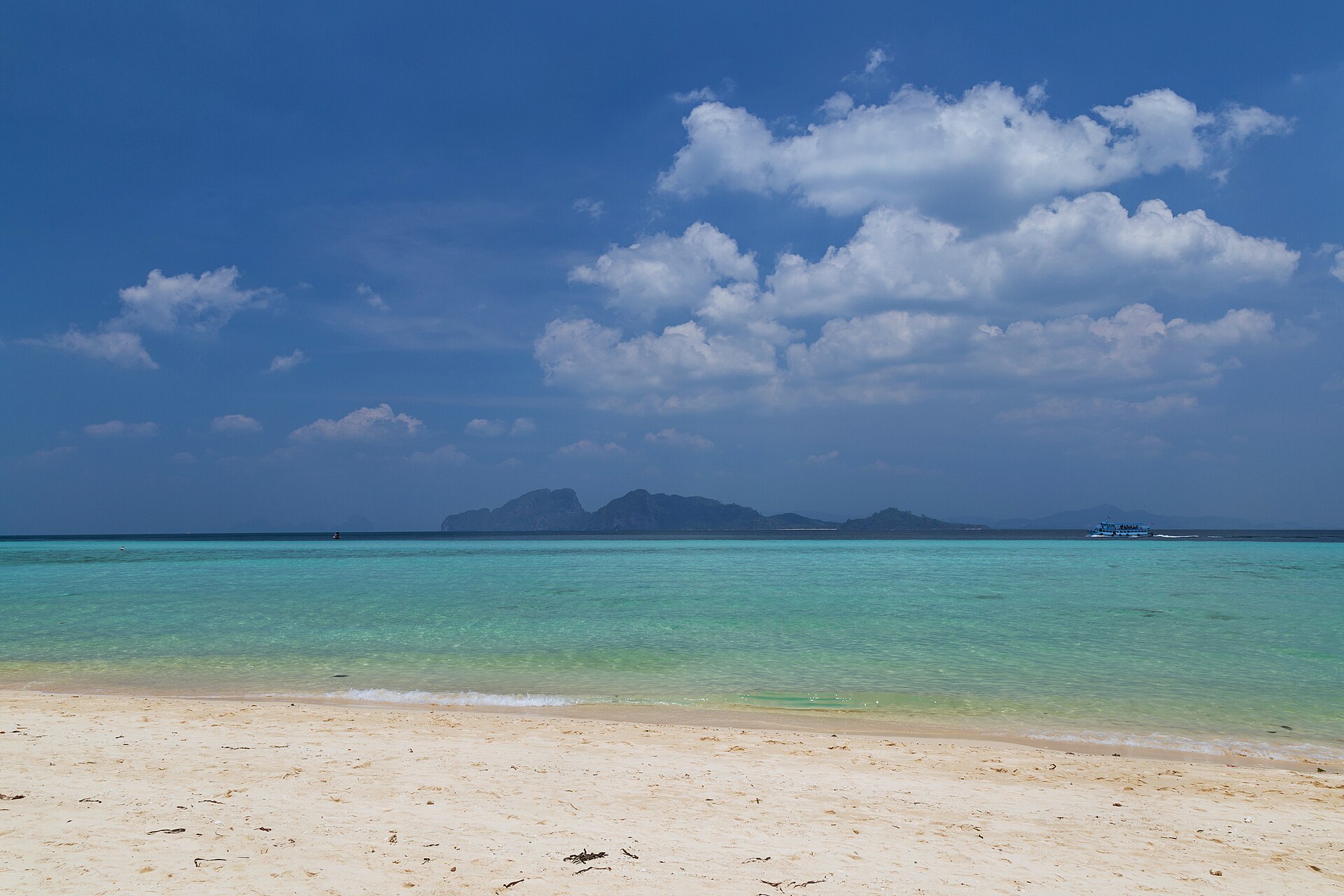
The Trang islands — many people have a coffee and roast pork in town in the morning before taking a boat out from the Pak Meng or Hat Yao pier.
What to drink and eat at a Trang café to taste both the traditional Chinese coffee and the modern café scene.
The most Trang cup there is — kopi, a dark-roast traditional coffee brewed through a cloth sock, served hot with sweet condensed milk; if you want it black, order a kopi-o (black with sugar). Served in an old porcelain cup, it's strong and rounded, made for a Chinese-southern breakfast. Order it with Trang roast pork and dim sum in the morning and sip it slowly at an old coffee shop in the old town — it's how locals start the day, and it costs very little compared with a modern café.
Kopi's partner in a Trang breakfast — Trang roast pork, crisp-skinned and tender, sweet-savoury, the city's most famous dish, sliced to dip in a sauce, with dim sum like shumai, har gow, steamed buns and chive cakes served in little bamboo baskets you pick one at a time. It's a Chinese-southern breakfast that's just-right filling and pairs perfectly with a hot coffee. You'll find it at the roast-pork-and-dim-sum places and old coffee shops in the old town — a dish that tells the Chinese-southern story of Trang as well as the kopi does. Come early, as the roast pork sells fast and often runs out.
The signature local sweet to try with coffee is Trang cake (khanom cake Mueang Trang) — a dense, soft cake fragrant with butter and egg, not too sweet, usually baked with a hole in the middle like a ring. The original is pandan or plain, with many flavours now. It pairs perfectly with a hot coffee or kopi in the morning or afternoon, and Trang people buy it as a take-home gift. You'll find it at the old cake shops and souvenir shops in town — a small piece to eat with your coffee, a big one to take home. A small piece is about ฿35–80, a big one about ฿100–250.
On the modern side, the drinks that sell in a hot, humid town like Trang are the iced latte and the matcha latte. Specialty shops do latte art from quality beans, while dessert cafés have matcha, cocoa and milk tea for the non-coffee crowd. An iced drink in an air-conditioned room in town or in a renovated shophouse, with space to work or meet friends, is the picture of Trang's other coffee world that the young crowd loves. Order a slice of Trang cake with it for the full café feel. It costs more than a kopi, but you get the cool air and a comfortable seat.
Trang is easy to pay in — old kopi shops, roast-pork-and-dim-sum places and cake shops mostly take cash and PromptPay by QR, so it's easiest to carry some small cash. Modern specialty cafés and places in malls usually take Visa/Mastercard too. Trang is a small town that still leans on cash more than the big tourist cities, especially stalls and small shops in the markets. If you'll need data for the whole trip, see the options in our Thailand SIM & eSIM guide.
The thing to know is that Trang's cafés are two coffee worlds in one town — for traditional coffee and atmosphere, get up early for an old kopi shop with roast pork and dim sum in the old town; for a modern air-conditioned café to work in or meet friends, head to a café in town or a renovated shophouse in the afternoon. Don't try to fit them all into one sitting — with one day, do an old coffee shop in the morning and a specialty café in the afternoon and you'll see both worlds. The old coffee shops and roast-pork places open very early and are at their best from 6 to 9am, with the roast pork selling fast, while the modern cafés tend to open later.
On seasons, Trang is on the Andaman coast. The best time for good weather and full island access is the dry season, November to April, when the sky is clear, the sea is calm, and the boats to the islands and the Emerald Cave (Tham Morakot) all run. May to October is the rainy season, with frequent rain and rougher seas, when many island boats and resorts reduce service or close — but the town and its coffee shops stay open year-round. Indoor coffee — kopi shops, roast-pork-and-dim-sum places and air-conditioned cafés — doesn't depend on the season. See the month-by-month detail and island planning in our Trang travel guide, and check which days the place you want is open, as some modern cafés close on a weekday.
Trang — staying in town near the old quarter is the easiest way to reach the old coffee shops, roast-pork-and-dim-sum places, cake shops and cafés on foot, while staying on an island suits the dry season.
Staying in Trang town near the old quarter is the easiest way to reach the old coffee shops, roast-pork-and-dim-sum places, cake shops and cafés on foot.