Home Shanghai China Shanghai Hotels About
Home  ›  China  ›  Shanghai  ›  Desserts & Sweets
Shanghai Sweet Guide · 2026

Shanghai's traditional sweets
10 classics worth tracking down

Beyond the soup dumplings and red-braised pork, Shanghai has always had a quiet obsession with sweets. Lotus root stuffed with glutinous rice, vivid-green spring cakes, sesame rice balls in fragrant ginger broth — here is what the city has been eating for centuries.

A city with a sweet tooth

Shanghai's sweet tradition runs deeper than you think

Most visitors arrive thinking Shanghai is all soup dumplings and braised pork — and they're right, but only halfway. For centuries the area around Yu Garden and the City God Temple has been the centre of a quietly flourishing sweet-snack culture: vendors selling osmanthus-honey lotus root to worshippers, sticky rice cakes pressed in wooden moulds carved with spring motifs, pear-and-herb candies made from a Tang Dynasty recipe, and flaky pastries that the old Gaoqiao town across the river has been baking since the late nineteenth century.

Shanghai sweets are not aggressively sweet. They tend toward the delicate — light rock-sugar sweetness with the perfume of osmanthus or the clean nuttiness of sesame, textures that are yielding rather than dense, flavours that open slowly rather than hitting all at once. Many are tied to seasons and festivals, which is part of their appeal: knowing that a particular sweet exists for only six weeks a year makes you pay a different kind of attention to it. We picked 10 traditional sweets worth seeking out — and told you exactly when each one is worth finding.

The essential sweets

10 traditional Shanghai sweets you should know

Ranked by how distinctly Shanghainese they are — treats you can't get done quite like this anywhere else.

🌸1
Guihua Tang'ou (桂花糖藕)
Osmanthus Lotus Root · stuffed with glutinous rice, bathed in flower syrup

Lotus root has nine hollow channels running through it lengthwise — a natural mould. Glutinous rice is packed tightly into every channel, then the whole root is braised until the lotus turns tender but retains a faint bite and the rice is fully cooked through. Sliced into rounds, each cross-section reveals a mosaic of white rice set in the pale lotus flesh. Then comes the osmanthus syrup — made from the small amber flowers that perfume Shanghai's old lanes every autumn — poured warm over the top. The result is floral, gently sweet, cool and deeply calming. Served as a cold starter or dessert at classic Shanghainese restaurants.
Where: Classic Shanghainese restaurants · market stalls around Yu Garden and City God Temple · Shen Da Cheng (沈大成), Nanjing East Road
Price: ¥18–35 / plate (~฿90–175)
Season: Available year-round; best in autumn (Sept–Oct) when fresh osmanthus flowers are in season
Tangyuan — round glutinous rice balls floating in warm ginger-sugar broth, filled with black sesame paste, served in a white ceramic bowl 2
Tangyuan / Leisha Yuan (汤圆 / 擂沙圆)
Sesame rice balls · two ways — with broth, and the Shanghai dry version

Tangyuan are glutinous rice balls filled with ground black sesame, lard and rock sugar — the filling is dark and smooth, almost ganache-like, with a deep nutty sweetness. Served in a ginger and rock-sugar broth that is warming and gently spiced, they are one of the great cold-weather comfort foods. But ask for leisha yuan and you get the Shanghainese version: the cooked rice balls are lifted from the water and rolled in a mixture of toasted soybean flour and ground sesame until coated in a dry, dark, deeply fragrant powder. Served without broth. The outside is dry; the inside, when you bite through, is silky and molten. Both are traditional at the Lantern Festival but sold year-round in Shanghai.
Where: Shen Da Cheng (沈大成, 636 Nanjing East Road) · Wang Jia Sha (王家沙, 805 Nanjing West Road) · traditional pastry shops throughout the city
Price: ¥10–20 / bowl of 4–6 pieces (~฿50–100)
Tip: Order leisha yuan specifically — the dry-rolled version is what's uniquely Shanghainese
Qingtuan — vivid jade-green glutinous rice cakes arranged in a bamboo steamer, made with mugwort juice and filled with sweet red-bean paste 3
Qingtuan (青团)
Spring mugwort rice cakes · the green sweet that lasts six weeks a year

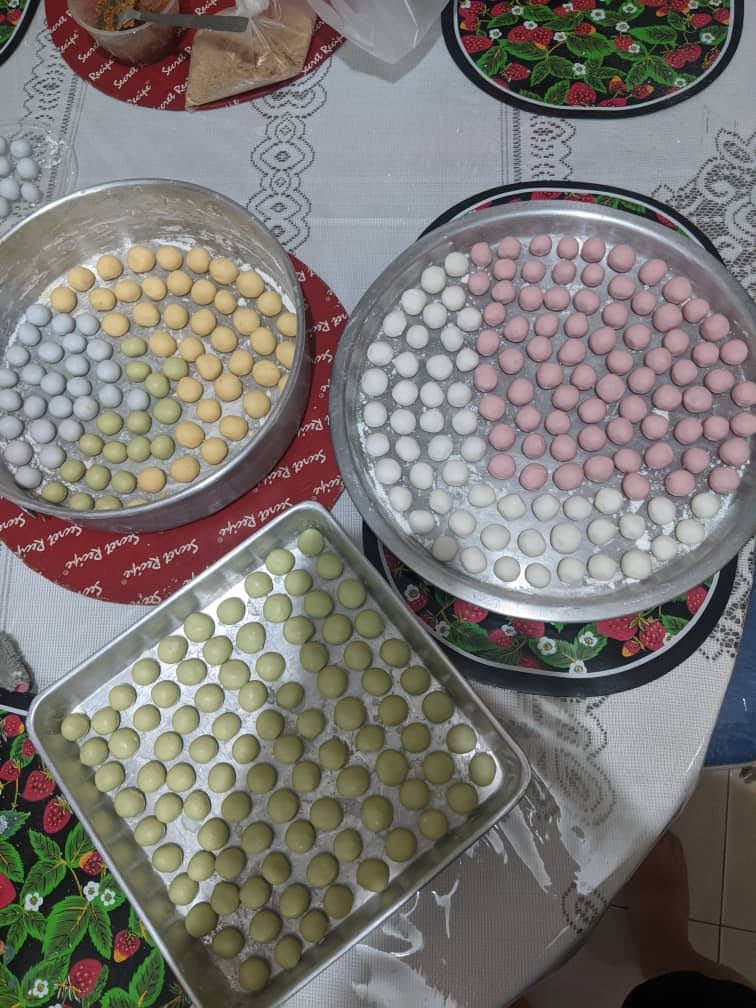
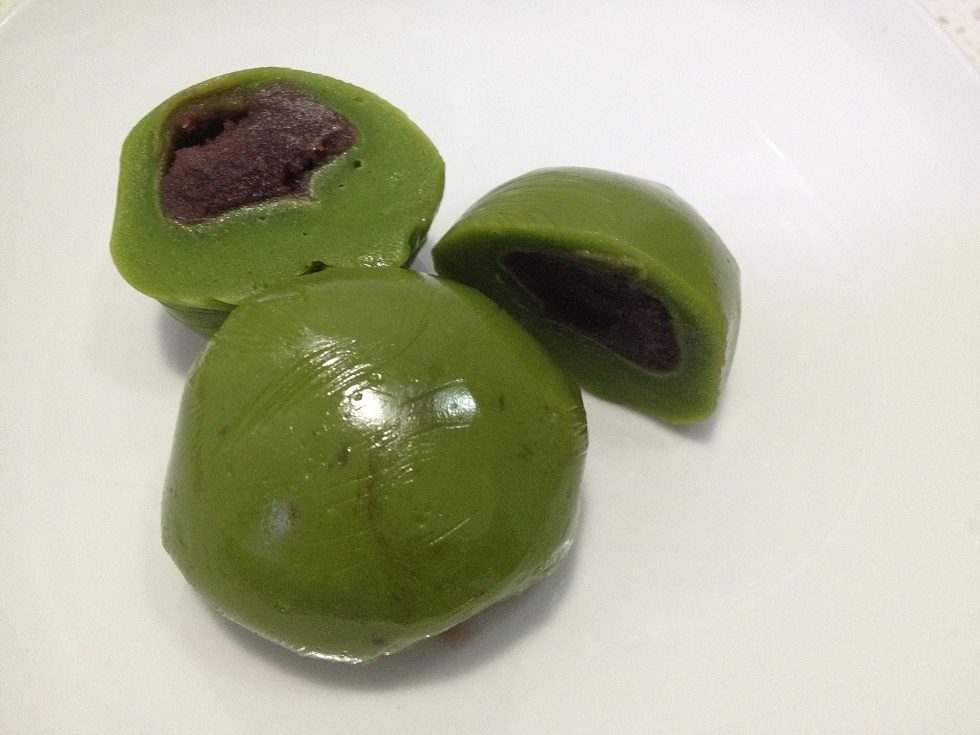
Every year around late March, Shanghai turns briefly green — not from the trees, but from qingtuan appearing in the windows of every traditional pastry shop. The colour comes from freshly pressed mugwort (艾草, aicao) juice mixed into glutinous rice flour; it is an unmistakable jade green, not dye. The classic filling is sweetened red-bean paste, smooth and subtly earthy. Bite through and you hit the filling at the same moment as the clean, grassy scent of the mugwort dough. Modern variants — salted egg yolk and pork floss, taro cream, matcha custard — exist and sell briskly, but the original red-bean version is the one with 1,500 years of history behind it. Tied to the Qingming (Tomb-Sweeping) festival, which falls in early April.

Where: Shen Da Cheng (沈大成) · Wang Jia Sha (王家沙) · every traditional shop around Yu Garden
Price: ¥5–8 each · gift box of 6 pieces ¥30–50 (~฿150–250)
Season: Late March through April only — miss it this year, wait twelve months
Honest seasonality note: Qingtuan are a strictly seasonal product. Some shops begin selling in February; most are sold out before May. Frozen versions exist year-round but the colour fades and the texture changes significantly. If you are in Shanghai during the season, this is non-negotiable.
🍯4
Babao Fan (八宝饭)
Eight-Treasure Sticky Rice · the New Year dessert, unmistakably festive

"Eight treasures" is not a metaphor: eight different dried fruits and seeds — dates, sesame, lotus seeds, water chestnuts, goji berries, job's tears, peanuts, raisins (the exact combination varies by shop and family) — are pressed in concentric rings onto the inside of a bowl, then packed with glutinous rice cooked with lard and sugar, then steamed until the whole dome holds together. Inverted onto a plate, it looks almost too pretty to eat. In the centre, a core of sweet red-bean paste. The flavour is rich but not heavy, with the different fruits providing occasional pops of sweetness and chew against the sticky rice. A fixture at New Year's Eve tables and wedding banquets in Shanghai for hundreds of years.

Where: Wang Jia Sha (王家沙) · classic Shanghainese restaurants · local supermarkets carry packaged versions
Price: ¥15–30 / portion (~฿75–150)
Season: Year-round; most abundant around Chinese New Year and Winter Solstice (冬至)
🍡5
Tiaotougao (条头糕)
Red-bean glutinous rice roll · a Shen Da Cheng signature, made by hand daily

Walk past Shen Da Cheng on Nanjing East Road and you will see them in the glass case: finger-length rolls the colour of pale café au lait, smooth-surfaced and unassuming. This is tiaotougao — a cylinder of glutinous rice dough that has been mixed, kneaded by hand and wrapped around a core of smooth red-bean paste. The dough is soft and slightly chewy without being sticky on the fingers; the filling is sweet with a faint bitterness from the adzuki beans. Shen Da Cheng has been making this by hand since the Qing Dynasty, and in 2024 the pastry-making craft was formally listed as a Shanghai Intangible Cultural Heritage item. Eat it while still warm.

Where: Shen Da Cheng (沈大成, 636 Nanjing East Road) is the canonical source · traditional pastry shops in the Old City
Price: ¥5–8 each · gift box of 6 pieces ¥28–38 (~฿140–190)
Tip: Glutinous rice hardens as it cools — eat at the shop or within an hour of buying
🌸6
Dingsheng Gao (定胜糕)
Pink rice cake for good luck · its name means "cake of definite victory"

Families in old Shanghai sent these to children before examinations, believing the name — which sounds like "certain to succeed" in Chinese — would help. The cake is made from a mixture of rice flour and glutinous rice flour, coloured a gentle pink-orange with brown sugar or natural colouring, then steamed in wooden moulds carved with spring blossoms or lucky motifs. The result is a modest, honest thing: pale pink, faintly sweet, with the clean fragrance of steamed rice and a soft, slightly crumbly texture. No complex filling, no glaze — just a cake that means something to the people who grew up eating it. Found at festival stalls and traditional shops around the old city, particularly when families are visiting the temple.

Where: Market stalls around Yu Garden and City God Temple · traditional pastry shops in the Old City lanes
Price: ¥5–10 each (~฿25–50)
Season: Easiest to find during Chinese festivals but available year-round around Yu Garden
🥟7
Shuang Niang Tuan (双酿团)
Double-filled glutinous rice ball · sweet in two layers

A Shanghainese invention with no obvious equivalent elsewhere in China. The glutinous rice skin wraps two concentric layers of filling rather than one: the outer layer is typically smooth red-bean paste, and the inner layer is ground black sesame mixed with sugar — so each bite begins with red bean and ends with a richer, darker sesame note. Some versions coat the outside in toasted soybean powder, adding another layer of nutty fragrance. The skin is thin and elastic, yielding cleanly when bitten. This is the kind of thing you find in the side-street shops that don't advertise online and have been in the same neighbourhood for decades rather than in modern mall food courts.

Where: Traditional pastry shops on Nanjing Road · Wang Jia Sha · City God Temple market stalls
Price: ¥6–12 each (~฿30–60)
Tip: Ask what fillings they use — each shop interprets the two layers differently
🍮8
Ligao Tang (梨膏糖)
Pear-and-herb candy · Shanghai's oldest street sweet, sold since the Tang Dynasty

Small amber-brown candies made by boiling pear juice with a blend of Chinese medicinal herbs — dried tangerine peel, asparagus root, fragrant rush — then pouring the syrup into moulds to set. The original recipe comes from a Tang Dynasty (seventh century) physician who prescribed pear syrup to Emperor Taizong for a cough. Shanghainese people eventually started making and eating them because they taste good, not because they were sick. The flavour is sweet up front, then cool and slightly bitter from the herbs, with a faint mintiness on the finish. They are sold in decorative tins and beautifully wrapped boxes throughout the Yu Garden area — one of the best portable souvenirs Shanghai produces.

Where: Gift shops throughout the Yu Garden area · Shen Da Cheng · City God Temple market · Xintiandi shops
Price: ¥15–40 / small box (~฿75–200)
Shelf life: Several weeks — among the most travel-friendly sweets on this list
🍰9
Gaoqiao Songbing (高桥松饼)
Gaoqiao flaky pastry · a hundred-year-old recipe from across the river

Gaoqiao is a small historic town on the eastern bank of the Yangtze estuary, and it gave Shanghai one of its most beloved pastries. The songbing is a layered shortcrust-style pastry baked until golden, with distinct papery flakes that separate when you bite — but lighter and more airy than a Western shortbread, closer to a dry puff pastry without the butteriness. Fillings include sweet red bean, black sesame, peanut paste or savoury pork. The flavour is clean and not too sweet; the crumb falls gently. Think of it as the Shanghainese version of a mooncake, but made year-round and meant for everyday eating rather than ceremony. Gift boxes of twelve make excellent souvenirs.

Where: Traditional pastry shops near Nanjing Road · Yu Garden souvenir shops · local supermarkets
Price: ¥5–8 each · gift box of 12 pieces ¥45–65 (~฿225–325)
Best buy: A box of songbing is the most durable sweet souvenir on this list — it keeps for several weeks
🍵10
Guihua La Gao (桂花拉糕)
Osmanthus rice jelly · trembling, translucent, gently floral

Imagine a silken tofu that has been given ambition. Glutinous rice flour, sugar and osmanthus syrup are combined and steamed in a flat-bottomed tin until they set into a pale amber jelly that trembles when you carry the plate to the table. Cut into rectangular portions and drizzled with a little more osmanthus syrup, the texture is between a set panna cotta and a very soft rice cake — smooth on the tongue, with a clean sweetness and the unmistakable floral perfume of the osmanthus running through every bite. Cool rather than cold, it ends a meal gently without announcing itself. Standard at the dessert end of a classic Shanghainese dinner.

Where: Classic Shanghainese restaurants · Wang Jia Sha · traditional pastry shops in the Old City
Price: ¥12–22 / plate (~฿60–110)
Best in autumn: Sept–Oct when fresh osmanthus flowers are in bloom and the syrup is made with the real thing
Where to go

The shops Shanghai trusts

Three places that have been doing this for a long time, and are still doing it well.

1
Shen Da Cheng (沈大成)
Founded circa 1875 · Nanjing East Road · 2024 Shanghai Intangible Cultural Heritage

Established during the first years of the Guangxu Emperor's reign in the Qing Dynasty, Shen Da Cheng is the pastry shop that Shanghainese people name first when asked where to buy traditional sweets. The shop's tiaotougao (red-bean glutinous rice rolls) and leisha yuan (dry-rolled sesame rice balls) are made entirely by hand according to unchanged methods. During Qingming season, the queue for fresh qingtuan can stretch around the block before 9 am. In 2024, Shen Da Cheng's pastry-making craft was officially listed as a Shanghai Intangible Cultural Heritage item — a recognition the shop had already earned from its regulars generations earlier.

Address: 636 Nanjing East Road, Huangpu District (near People's Square MRT)
Hours: 7 am–8 pm · Specialities: tiaotougao, leisha yuan, qingtuan (seasonal)
2
Wang Jia Sha (王家沙)
Founded 1945 · Nanjing West Road · full seasonal menu

Open since 1945 in the Jing'an district, Wang Jia Sha runs a menu that rotates genuinely with the seasons: qingtuan in spring, tangyuan at the Lantern Festival, babao fan at New Year, osmanthus sweets in autumn. The shop is also well-known for its savoury side — shengjian bao, vegetable wontons, steamed crab-meat dumplings — which means a single visit can cover breakfast, snacks and dessert. Unlike some historic Shanghai restaurants that have coasted on reputation, Wang Jia Sha updates its menu while keeping the traditional core intact. The gift section near the entrance carries beautifully packaged boxes of seasonal sweets.

Address: 805 Nanjing West Road, Jing'an District (MRT Jing'an Temple station)
Hours: 6.30 am–9 pm · Specialities: babao fan, tangyuan, qingtuan (seasonal)
3
Yu Garden & City God Temple (豫园城隍庙)
The old-city sweet hub · MRT Line 10, Yu Garden station

The area surrounding Yu Garden and the City God Temple has been the centre of Shanghai's street-food and sweet-snack culture since the Ming Dynasty. Today it remains the most concentrated source of traditional sweets in the city: osmanthus lotus root, Gaoqiao pastries, pear-herb candies, rice cakes in various colours and shapes, and seasonal specialties that appear only during Chinese festivals. It is crowded on weekends and particularly dense during Chinese New Year, Qingming and Mid-Autumn Festival — which is exactly when the selection is largest. Come on a weekday morning for the same goods with half the crowds.

Address: Yu Garden area, Huangpu District · MRT Line 10, Yu Garden station
Hours: Most stalls 9 am–9 pm · Best for: osmanthus lotus root, ligao tang, seasonal rice cakes
Seasonal calendar

What to find when you visit

Several of Shanghai's best sweets are tied to specific festivals or seasons. Plan around them and you eat better.

🌸
Spring (March–April)
Qingming Festival · the green season

Qingtuan is the undisputed star of this window — vivid-green mugwort rice cakes with red-bean filling, made fresh daily by traditional shops across the city. Every pastry shop sells them; the queues at Shen Da Cheng can form before opening. This is also the best season to visit Yu Garden, when the gardens are in bloom and the surrounding stalls are fully stocked.

🌿
Summer (May–August)
Hot, humid — cool sweets shine

Shanghai's summers are hot and heavy. The sweets that work best are the light and cool ones — guihua la gao (osmanthus rice jelly served at room temperature), cold guihua tang'ou (lotus root) and leisha yuan eaten without broth. Most traditional sweet shops are open year-round and well air-conditioned, so summer browsing is entirely comfortable.

🍂
Autumn (September–November)
Osmanthus season · Mid-Autumn Festival

This is the season when osmanthus flowers bloom, and their scent drifts through the lanes around Yu Garden in a way that stays with you. Guihua tang'ou and guihua la gao made with fresh-season flowers have a perceptibly richer fragrance. Add mooncakes (月饼) during the Mid-Autumn Festival and this is arguably Shanghai's finest month for traditional sweets.

❄️
Winter (December–February)
Winter Solstice · Chinese New Year

At the Winter Solstice (冬至), Shanghai families eat tangyuan together — hot sesame rice balls in ginger broth, one of the city's most steadfast food traditions. Then, as Chinese New Year approaches, babao fan (eight-treasure sticky rice) appears on every festive table. Traditional shops stock the full range in decorative gift packaging — the best window of the year for edible souvenirs.

Frequently asked

FAQ · Before you go sweet-hunting

Where can I buy qingtuan in Shanghai?
Qingtuan is sold fresh at Shen Da Cheng (沈大成, 636 Nanjing East Road) and Wang Jia Sha (王家沙, 805 Nanjing West Road) during the Qingming window (roughly late March through April). Both shops make them daily during the season and often sell out by mid-morning — arrive early. Frozen versions exist year-round but the colour and texture change noticeably. Stalls throughout the Yu Garden area also sell them during the season.
Where are the best places to find traditional Shanghai sweets?
The Yu Garden and City God Temple area (豫园城隍庙, MRT Line 10 Yu Garden station) is the most concentrated source — osmanthus lotus root, herb candies, Gaoqiao pastries and rice cakes fill the lanes around the old temple. For sit-down desserts and a full seasonal selection, Shen Da Cheng on Nanjing East Road and Wang Jia Sha on Nanjing West Road are the most reliable traditional shops. Morning markets in Jing'an also have glutinous rice snack vendors in the early hours.
What is the difference between tangyuan and leisha yuan?
Tangyuan are glutinous rice balls served in a hot broth of ginger and rock sugar — the filling is black sesame mixed with lard and sugar, smooth and intensely nutty. Leisha yuan is a distinctly Shanghainese variation: the cooked rice balls are rolled in toasted soybean flour mixed with ground black sesame, coating them in a dry, fragrant powder. They are served without broth. Both are traditional at the Lantern Festival (the fifteenth day of the first lunar month) but available year-round at Shanghai pastry shops. Order leisha yuan if you want the specifically Shanghainese experience.
How much do traditional Shanghai desserts cost?
Traditional Shanghai sweets are genuinely affordable. A qingtuan is ¥5–8 each. A bowl of tangyuan is ¥12–20. A portion of babao fan is ¥15–30. Individual pastries like tiaotougao or songbing cost ¥5–8. Gift boxes of Gaoqiao songbing (6–12 pastries) run ¥30–65. Ligao Tang herb-candy boxes start at ¥15–40. At ¥1 ≈ ฿5, the entire list is accessible even on a tight daily budget.
Are traditional Shanghai sweets worth buying as gifts?
Very much so, with some caveats. Gaoqiao songbing (flaky pastries) and ligao tang (pear-herb candies) keep for several weeks and come in attractive gift packaging — both Shen Da Cheng and Wang Jia Sha have dedicated gift sections. Fresh items — qingtuan, tangyuan, tiaotougao — are best eaten within a day or two and don't travel well. For a durable, distinctly Shanghainese edible souvenir, a box of songbing or a tin of ligao tang is hard to beat.
What is osmanthus (guihua) and why does it appear in so many Shanghai sweets?
Osmanthus fragrans (桂花, guihua) is a small yellow-orange flower with a delicate scent that reads somewhere between apricot, ripe pear and warm vanilla. It blooms in September and October, and its perfume drifts through old Shanghai neighbourhoods every autumn. Shanghainese cooks make it into a syrup used to flavour lotus root, rice jelly, tangyuan broth and teas. Sweets made with fresh-season osmanthus have a noticeably richer fragrance than year-round versions using preserved flowers. For long-time Shanghai residents, osmanthus scent in the air is inseparable from the memory of autumn itself.
Klook · Food Tours

Shanghai Food Tours — eat the right things with someone who knows

Guided food walks with local experts: qingtuan at the traditional shop before the queue builds, osmanthus sweets around Yu Garden, breakfast at the neighbourhood cart you'd never find alone. No language barrier. No guessing.

Browse Shanghai Food Tours on Klook →
Wherebest is an affiliate partner of Klook — we may earn a commission when you book through our links, at no extra cost to you.