Home Sanya China Sanya Food Guide About
Home  ›  Asia  ›  China  ›  Sanya  ›  Breakfast Guide
🥥 Sanya Breakfast Guide · 2026

Breakfast in Sanya
sour noodles to iced qingbuliang

Before the island sun gets fierce, Hainan locals start the day with a bowl of dressed rice noodles, a sour Baoluo soup, a spoon of iced coconut-milk qingbuliang, and a robusta coffee with condensed milk in an old teahouse — a breakfast under ¥20 that tells you more about the island than any resort buffet.

Why leave the resort for breakfast

Sanya's morning meallives in the old town, not the buffet

Picture it — you fly in, check into a beachfront resort at Yalong Bay, sleep late, and have the breakfast buffet by the sea. Pleasant enough. But honestly, you just missed the best meal of the day, because real Sanya breakfast isn't in the buffet hall. It's in the old-town alleys, on the stalls around the First Market (第一市场), and in the small teahouses where older men have been sipping coffee since before sunrise.

Sanya sits on Hainan, China's southernmost tropical island, with a climate close to southern Thailand. So breakfast here isn't the northern fried-dough-and-congee routine — it's built around rice noodles, with every town owning its own recipe. Some bowls are dry and dressed, some arrive in a sour soup, some are served cold and refreshing. Beside them sit coconut-milk sweets like qingbuliang, sticky rice steamed in a coconut, fresh seafood congee, and robusta coffee that Hainan grows itself. The overall flavour is light, sour and coconut-sweet — exactly what the heat and humidity call for.

This guide walks you through Sanya breakfast one dish at a time — what to try, whether it's soup or dry, where to find it, when it opens, how to pay, and why the 30-minute ride into town beats walking down to the buffet.

The morning hero

海南粉 — Hainan rice noodles, the bowl the island eats every morning

If you have time for just one thing, make it the noodles — ¥8–18 (฿40–90), made fresh, a different taste at every stall.
How many kinds of Hainan noodles are there — know before you order

Hainan is a land of rice noodles, each town with its own recipe, all eaten for breakfast. The four you'll meet most in Sanya are Hainan rice noodles (dry and dressed), Baoluo noodles (thicker, in a sour soup), Lingshui sour noodles (cold and refreshing), and Gangmen noodles (Sanya's own, with seafood). Stalls open before 7am and sell hardest during the morning commute.

🍜
Hainan fen
海南粉 · dressed

Fine noodles tossed in thick sauce

🥣
Baoluo fen
抱罗粉 · sour soup

Thicker noodles, pork-bone broth

🧊
Lingshui sour fen
陵水酸粉 · cold

Served cold, sweet-sour, fresh

🦐
Gangmen fen
港门粉 · seafood

Sanya's own, with sea shrimp

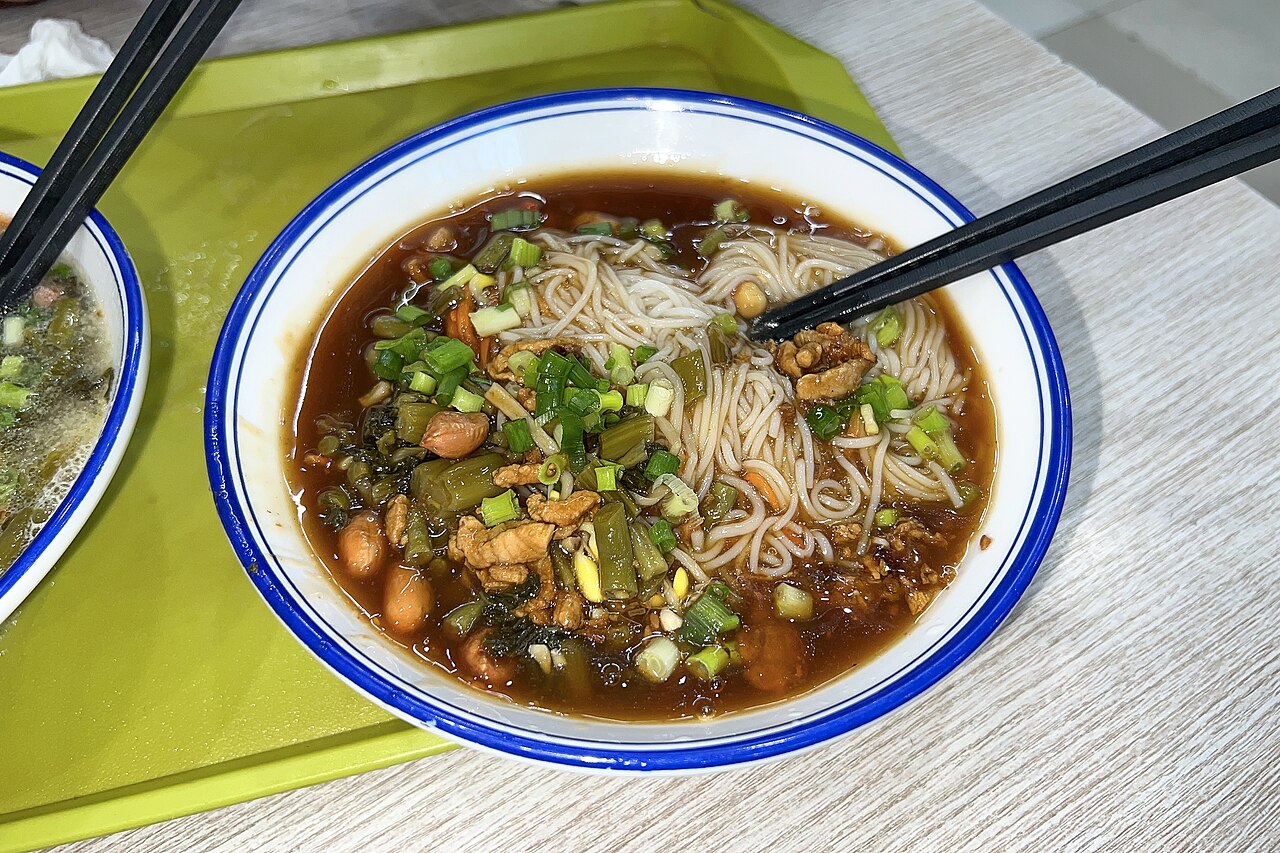
A bowl of Hainan rice noodles, fine rice noodles dressed with toppings, scallions, peanuts and pickled greens in a brown savoury sauce, island style 1
Hainan Rice Noodles (Hǎinán Fěn)
海南粉 · dressed rice noodles, the classic breakfast

This is the bowl Hainan locals eat most for breakfast — fine, silky rice noodles dressed in a thick savoury sauce (鹵) with a pile of toppings: minced pork, fish floss, dried squid, roasted peanuts, pickled greens, scallions and crisp pork. You toss it all together first, then eat. The flavour is rounded and aromatic, not spicy — a humble bowl that's quietly addictive. The original is dry and dressed, though some shops serve a clear soup on the side to sip. Locals pair it with a cold coconut as their everyday morning meal.

How to eat: toss the toppings through first, then eat; sip the side soup if there is one
Price: ¥8–15 / bowl (฿40–75)
Find it: morning noodle stalls around First Market & old-town alleys — open 6.30–10.30am
🥣2
Baoluo Noodles (Bàoluó Fěn)
抱罗粉 · thick rice noodles in a sour broth

A rice-noodle bowl named after Baoluo town in Wenchang. Unlike Hainan fen, the noodles are thicker and come in a broth simmered from pork or beef bones until rounded and sweet, with a gentle sour edge and a little heat. It's loaded with minced meat, fish floss, bean sprouts, peanuts and pickles — a filling bowl that locals love because it's cheap, tasty and substantial enough for breakfast. In Sanya you'll find it at morning stalls, and the First Market has a famous spot, Taipo Baoluo Fen (太婆抱罗粉), with a queue most mornings.

How to eat: sip the broth first, toss noodles with the toppings, add chilli/vinegar to taste
Price: ¥10–18 / bowl (฿50–90)
Find it: Taipo Baoluo Fen (太婆抱罗粉) in First Market · morning stalls citywide
🧊3
⭐ True island dish · served cold
Lingshui Sour Noodles (Língshuǐ Suānfěn)
陵水酸粉 · cold sour noodles from Lingshui

If you want the full island noodle set, don't skip this one — sour noodles from Lingshui county in the east, served cold rather than hot. Fine noodles get a sweet-sour dressing and a dozen toppings: fish floss, fried fish cake, dried squid, roasted peanuts, bean sprouts, cucumber and pickles, finished with sesame and chilli. The cool, tangy hit cuts the tropical heat beautifully, and a bowl can be as little as ¥8 in the market. Locals call it the taste of summer on the island — one mouthful is sour, sweet, spicy and crunchy all at once.
How to eat: toss the noodles through the sour dressing and toppings, eat cold straight away
Price: ¥8–15 / bowl (฿40–75)
Find it: stalls in First Market · morning markets citywide · dedicated suanfen shops
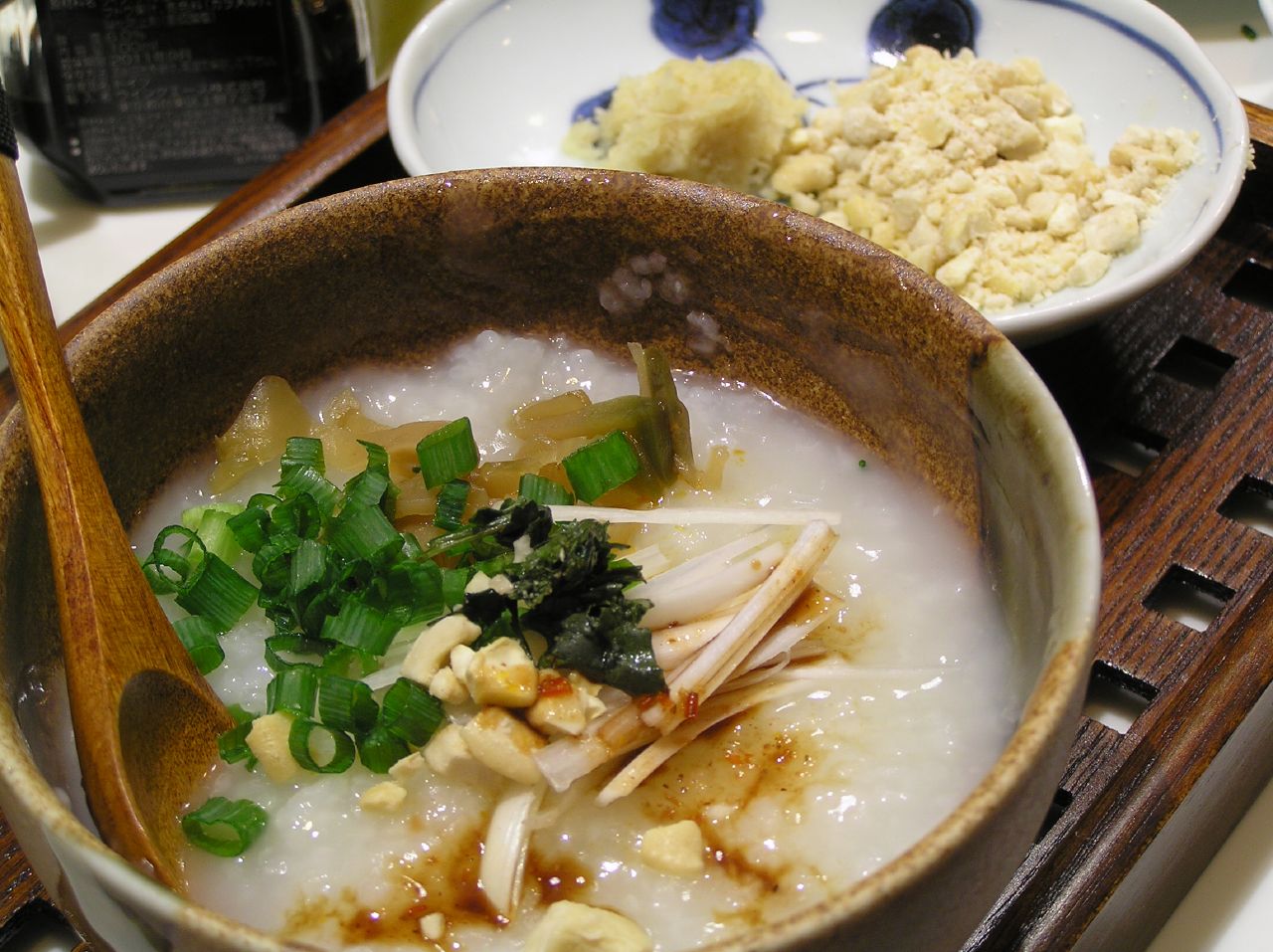
A bowl of Chinese rice congee in a clay bowl topped with scallions and meat, served with side dishes on a wooden tray, a Hainan-style breakfast 4
Seafood Congee (Hǎixiān Zhōu)
海鲜粥 · 鹹粥 · rice porridge with fresh seafood

On an island ringed by sea, breakfast congee isn't plain rice porridge — it's seafood congee. Rice is simmered in stock until silky, then loaded with shrimp, crab, fish, clams or squid fresh off the boat, finished with scallions, slivered ginger and fried garlic. Some shops make a homely salty congee (鹹粥) with simple toppings; others do a crab congee so sweet it tastes purely of the sea. It's a warming, easy-to-digest, genuinely fresh way to start the day that's hard to find off the island — perfect when you wake up wanting something light before heading out.
Eat with: torn fried dough sticks dipped in, or just on its own, hot; add white pepper
Price: ¥15–30 / bowl (฿75–150) · crab congee costs more
Find it: congee shops around First Market · morning spots in Dadonghai · seafood-congee houses in town
The sweet, coconut side of morning

Coconut sweets for breakfast — the flavour Hainan calls home

These four are the cool, sweet side of an island breakfast — coconut milk, coconut flesh, and coffee the island grows itself.

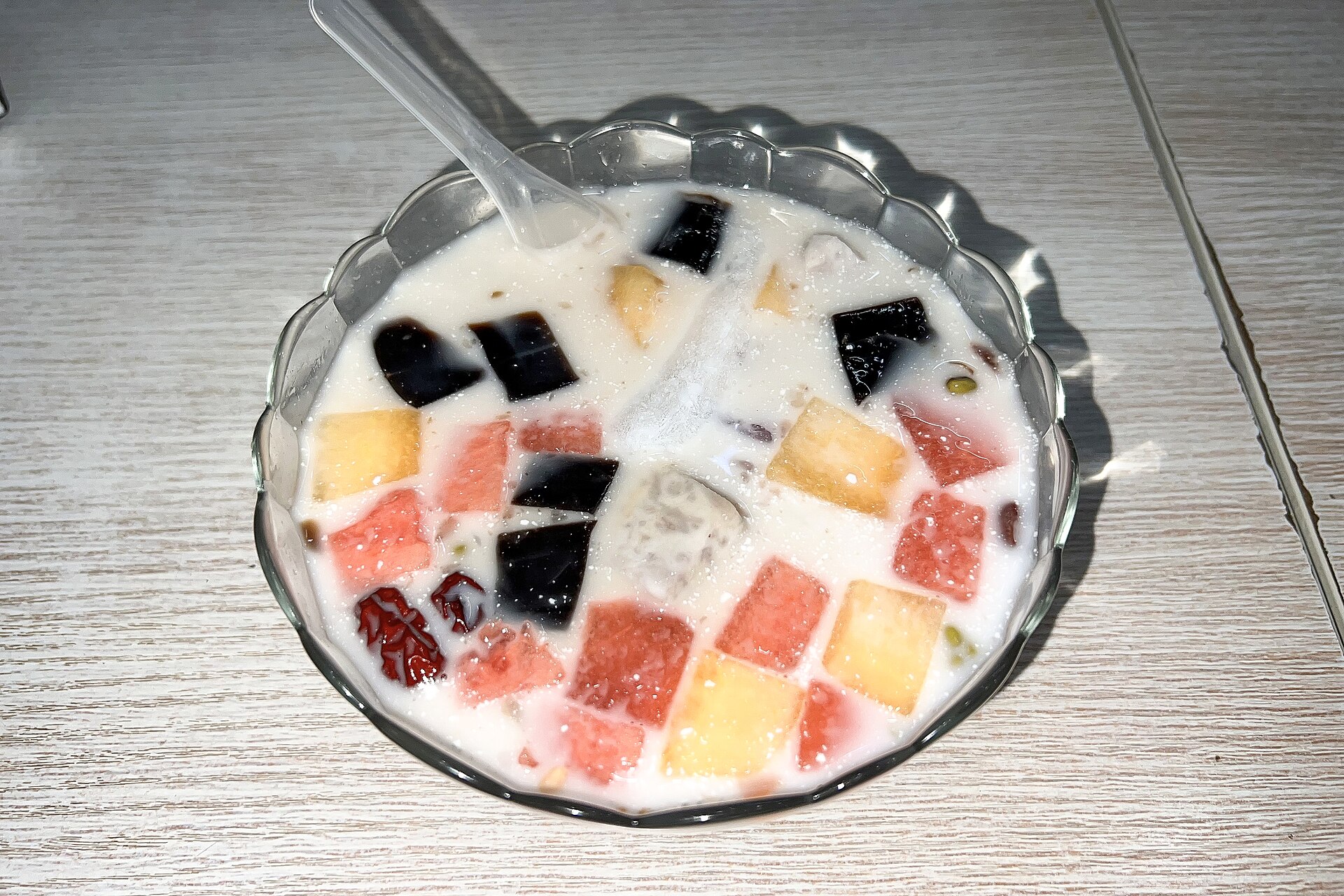
A bowl of Hainan qingbuliang, iced coconut milk full of grass jelly, watermelon, mango, beans and tapioca pearls, served in a glass bowl with a spoon 5
Qingbuliang (Qīngbǔliáng)
清补凉 · the king of iced coconut-milk desserts

The island dessert Hainan locals crown as the king of refreshment — the name literally means "refreshing, nourishing, cool." A big bowl of cold coconut milk (or young coconut water) is packed with red beans, mung beans, grass jelly, watermelon, mango, taro, glutinous rice balls, peanuts, barley and tapioca pearls. You choose the toppings and the base — coconut milk, coconut water, coconut ice cream or syrup. People eat it all day, but it's best in the hot morning or afternoon: fragrant with coconut, sweet but not cloying, crunchy with beans and fruit. One order gets you every texture in a single bowl.

Find it: qingbuliang stalls in First Market · old-town shops · Uncle Hao Coconut Ice (豪叔椰子冰)
Price: ¥10–20 / bowl (฿50–100)
Order: coconut-milk base with ice on a hot day · pick your own toppings
A tropical coconut grove on Hainan island, tall palm trees in rows, the source of the coconut rice and coconut sweets across the island 6
Coconut Rice (Yēzǐ Fàn)
椰子饭 · sticky rice steamed inside a coconut

A Wenchang tradition that became a signature of the whole island — glutinous rice steamed inside a whole coconut with its water and tender flesh, some versions with a little sugar and milk, until the rice drinks up the coconut and turns fragrant right through the shell. You split it open and scoop the rice together with the coconut flesh clinging to the husk: lightly sweet, rich and aromatic. It's a breakfast or a snack that travels well and is about as island-coconut as food gets. Look for it at local dessert shops and market stalls; a coconut costs just a few dozen yuan — good value and the real thing.

How to eat: split it open, scoop rice and coconut flesh together; best warm
Price: ¥15–25 / coconut (฿75–125)
Find it: local dessert shops · First Market stalls · Hainan sweet shops
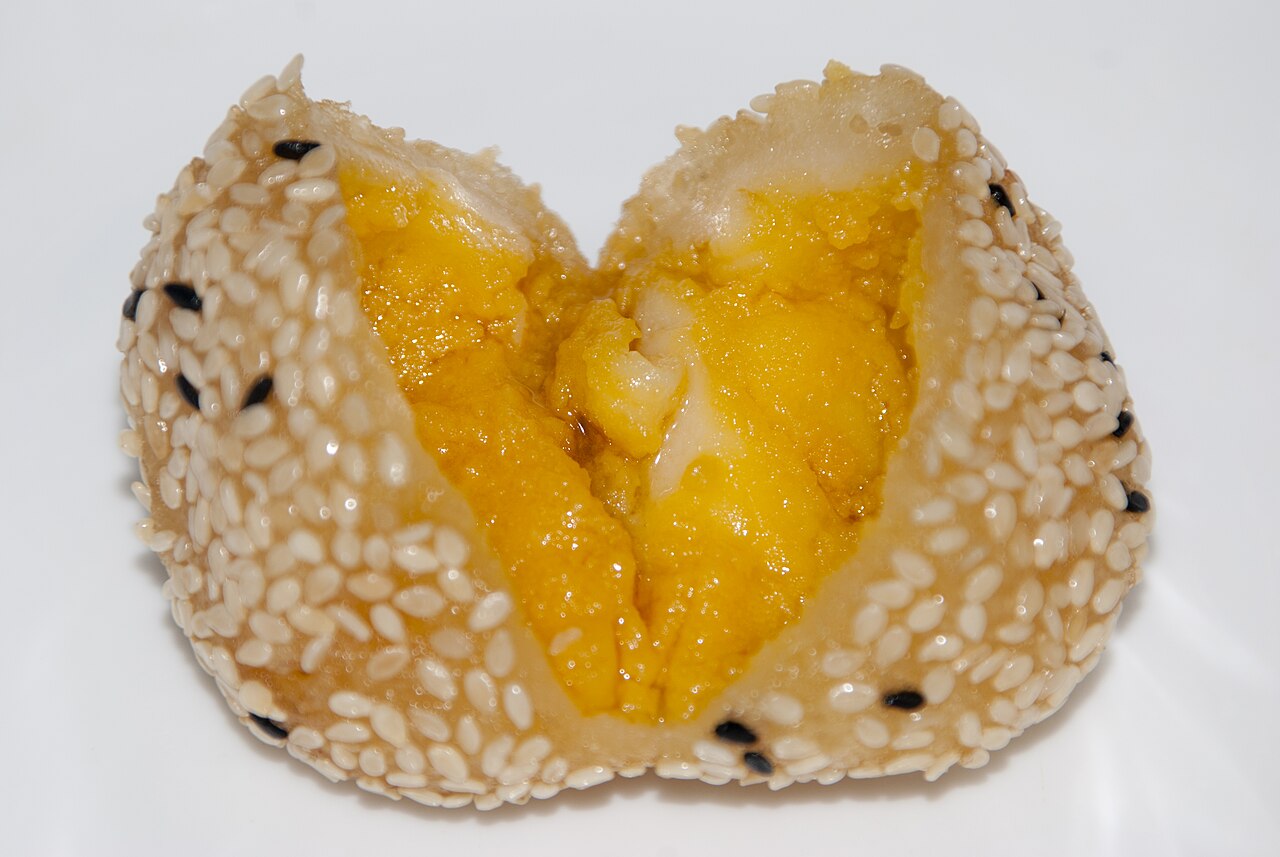
A jian dui, a sesame-coated fried glutinous ball split open to show its golden sweet filling, crisp outside and chewy inside 7
Jian Dui / Zhendai (Jiānduī)
煎堆 · 珍袋 · sesame-coated fried sweet balls

A fried sweet shared across Guangdong, Guangxi and Hainan — a round glutinous-rice ball rolled in sesame and deep-fried until it puffs, crisp outside and chewy within, filled with sweet bean paste or palm sugar. On Hainan it's known as zhendai (珍袋) and doubles as a lucky New Year treat. In the morning you'll find it at the fried-snack stalls and sweet shops in the market. Eat it hot, when the toasted sesame is at its most fragrant — if you've had savoury bowls and want a light sweet finish, this is the one. Easy to carry, easy to eat on the move.

How to eat: eat hot and crisp; pairs with Hainan coffee or soy milk
Price: ¥3–8 / ball (฿15–40)
Find it: fried-snack stalls in the market · Hainan sweet shops · laoba-cha houses
8
Hainan Coffee & Laoba Cha
海南咖啡 · 老爸茶 · robusta with milk + morning teahouses

Most people don't know Hainan grows its own coffee — robusta from Fushan (福山) and Xinglong (兴隆), planted by returning overseas Chinese from the 1930s–50s, roasted dark and usually drunk with condensed milk: heavy, sweet and rich. In the morning, drink it the local way inside the laoba cha (老爸茶) — "dad's tea" — culture: cheap old tea-and-coffee houses where Hainan locals, especially older men, sip coffee, eat dim-sum-style snacks, and chat from morning into the afternoon. It's a community news hub more than a café. Honestly, Sanya's modern sea-view cafés charge resort prices, but laoba cha is the cheap, original spot, and it gives you far more of the real morning.

Find it: laoba-cha houses in the old town · sea-view cafés along Sanya Bay/Dadonghai
Price: laoba cha a few yuan a cup · specialty coffee ¥25–45 (฿125–225)
Order: robusta with condensed milk · sit at a laoba-cha house and watch the city wake
Where to eat breakfast

Which area on the morning

The real thing is in the old town and around First Market — not in the resort bays. Knowing this first saves you time.

First Market & the Old Town
第一市场 · the heart of old Sanya, Tianya district

This is the heart of Sanya breakfast — around First Market and the old-town lanes, the morning noodle stalls, seafood-congee shops, qingbuliang stands and fried-snack stalls cluster together. Locals pack the seats from early on, and it's far cheaper than the resort bays. Taipo Baoluo Fen inside the market has a queue every morning. Look for the busiest stall and order what your neighbour is eating. If you want one place to eat several things, this is it.

Best for: noodles · seafood congee · qingbuliang · Hours: 6.30–10.30am
Dadonghai
大东海 · central bay, walk to the beach, lots of shops

The bay closest to town with a dense run of restaurants — handy if you're staying here and want to walk to breakfast. You'll find congee shops, noodle stalls and cafés mixed together, priced midway between the old market and the luxury bays. It's an easy walk from many hotels, and you can eat and then head straight onto the beach. It's the most convenient base for travellers who don't want to ride into town.

Best for: seafood congee · noodles · morning cafés · Hours: 7.00–11.00am
Sanya Bay
三亚湾 · long bay along the city, palm-lined beach

The long bay hugging the city, famous for its palm-lined beachfront. In the morning it's good for a Hainan coffee or a light breakfast with the sea breeze — there are local shops along the seafront road and relaxed cafés to sit in, plus fresh coconut water from early. The mood is calmer than downtown. It suits a slow start to the day if you're staying in this zone before heading out.

Best for: sea-view cafés · fresh coconut · light breakfast · Hours: 7.00–10.30am
Yalong Bay & Haitang Bay
亚龙湾 · 海棠湾 · luxury resort bays, far from town

The two luxury resort bays in the east, with the prettiest beaches and clearest water but the longest distance from town — breakfast here is mostly the resort buffet, which is done well but is pricey and not local. To eat the real morning noodles, you'll need a 30–45 minute taxi or DiDi into town. Honestly, if you're in these bays and short on time, the buffet is fine; but if you're set on island flavour, set aside one morning to ride in and explore First Market.

Best for: resort buffets (not local) · Hours: per resort
Pins not to miss

Breakfast spotsSanya locals point you to

Not a list of fancy restaurants — the areas and breakfast institutions that genuinely tell this island's story. Put them on the plan.

1
First Market (第一市场) in the morning
Fresh market · the heart of breakfast in central Sanya

Most people know First Market as a seafood market at night, but in the morning it's another world — stalls for Hainan rice noodles, Baoluo noodles and Lingshui sour noodles, seafood-congee shops, qingbuliang stands and fried-snack carts open for locals before the day starts. Walk a loop, see which stall is busiest, then order what your neighbour ordered. It's cheap and made fresh. If you want one place to eat several things, this is the answer.

Where: First Market (第一市场), Tianya district, central Sanya
Hours: noodles/congee busiest early · Known for: Hainan rice noodles · seafood congee · mostly WeChat Pay / Alipay
2
Taipo Baoluo Fen (太婆抱罗粉)
Famous Baoluo noodle shop · inside First Market, a queue most mornings

The Baoluo-noodle shop inside First Market that Sanya locals point to — thick noodles in a rounded, gently sour broth, generously topped, and very affordable. It's a filling bowl and a favourite breakfast for many locals. It gets busy in the morning, so you may wait a little, but it's worth it. If you want to try genuine Baoluo noodles, this is an easy, reliable spot — look for the Chinese sign or just ask someone in the market.

Where: inside First Market (第一市场), central Sanya
Hours: morning to late morning · Known for: thick Baoluo noodles in sour broth · WeChat Pay / Alipay
3
A laoba-cha house (老爸茶) in the old town
Old tea-and-coffee house · the rhythm of Hainan locals waking up

To see the slow, real rhythm of Sanya, find a laoba-cha house in the old town — a cheap old tea-and-coffee house where older locals sip robusta coffee with condensed milk, eat dim sum and Hainan snacks, and chat from early. Order a coffee and a plate of snacks, sit, and watch the city wake. It's a breakfast that costs only a few dozen yuan but gives you atmosphere no hotel buffet can. These houses are scattered through the old-town lanes and the neighbourhoods where locals live.

Where: old-town lanes of Sanya · local neighbourhoods
Hours: morning to afternoon · Known for: robusta with condensed milk · dim sum · community feel
4
Backstreet noodle & qingbuliang stalls
Citywide · the breakfast and sweets Sanya locals actually eat

The best morning noodles and qingbuliang usually aren't in big restaurants — they hide on stalls in the residential lanes and morning markets across the city. Look for the stall packed with locals in the morning, point to the bowl the person next to you is having, and say "that one." Dressed noodles run ¥8–18 a bowl, and qingbuliang lets you pick your own toppings over cold coconut milk for ¥10–20. Good value, refreshing in the heat — the most genuine island breakfast there is.

Where: residential lanes citywide · morning markets in every district
Hours: 6.30–10.30am (noodles) · all day (qingbuliang) · Known for: Hainan rice noodles · qingbuliang
Before you go

Tips worth knowing before the breakfast hunt

Go early — noodle stalls sell out before midday

Most morning stalls open at 6.30am, and many noodle and congee sellers sell out or pack up before noon. The sweet spot is 7.00–9.30am — fresh and made-to-order, short queues, and the market still buzzing. Qingbuliang and laoba-cha coffee are around all day, so if you wake up late, go for the sweets or a café instead.

🚕
Staying in a far resort bay? Build in the ride to First Market

If you're at Yalong Bay or Haitang Bay — gorgeous but far — the real breakfast is in town, a 30–45 minute taxi or DiDi away. Plan one morning specifically to head in and explore First Market; it beats the buffet every day. Hail a DiDi through Alipay for a smooth, no-haggle ride.

📱
Use Alipay or WeChat Pay

Most stalls and small shops don't take credit cards, and some take no cash at all — you'll need Alipay or WeChat Pay. Download Alipay before you travel and link a Visa/Mastercard through the international-tourist mode — get this sorted at your hotel and you can pay and hail rides straight away.

👆
Point and order — no Chinese needed

Most breakfast stalls have no English menu, but you can point at a sample or at what someone else is having and nod, or show the Chinese name from this page (e.g. 海南粉 Hainan noodles · 清补凉 qingbuliang · 海鲜粥 seafood congee). The vendors at First Market have seen travellers for years — no need to be shy.

🧊
Some dishes come cold — that's not a mistake

Lingshui sour noodles are served cold and qingbuliang comes iced — that's the real thing, not an accident. The cold sour dressing and chilled coconut milk are exactly what makes a hot-island breakfast feel refreshing. Soup noodles and congee, meanwhile, are best hot. Try both hot and cold in one morning and you'll see why Hainan locals eat this way.

Frequently asked

FAQ · before the breakfast hunt in Sanya

How is Sanya breakfast different from typical Chinese breakfast?
Quite different. Sanya sits on tropical Hainan island, so breakfast isn't always the northern fried-dough-and-congee routine. It's built around rice noodles, with each town having its own recipe, eaten either dressed and dry or in a sour soup — Hainan rice noodles, Baoluo noodles, and Lingshui sour noodles served cold and refreshing. Alongside them are coconut-milk sweets like qingbuliang, coconut rice, and locally grown robusta coffee in old teahouses. The overall flavour is light, sour and coconut-sweet, which suits the heat.
Where do I find local Sanya breakfast rather than a hotel buffet?
The real thing is in the old town and around the First Market (第一市场), not in the resorts at Yalong Bay or Haitang Bay. Morning noodle stalls, seafood-congee shops and qingbuliang stands cluster in the downtown and Dadonghai backstreets. Look for the stall where locals are crowded in early and order what your neighbour is eating. If you stay in a far resort bay, you may need a taxi or DiDi into town, roughly 30–45 minutes, to eat the genuine local breakfast.
How much does breakfast in Sanya cost?
Very cheap if you eat local. Hainan rice noodles or Baoluo noodles run ¥8–18 (฿40–90) a bowl, Lingshui sour noodles ¥8–15 (฿40–75), seafood congee ¥15–30 (฿75–150), qingbuliang ¥10–20 (฿50–100), coconut rice ¥15–25 (฿75–125) per coconut, and laoba-cha coffee just a few yuan. A full spread sampling several things costs about ¥25–45 per person (฿125–225). A resort breakfast buffet costs several times more.
Are Sanya's Hainan rice noodles served in soup or dry?
Both, depending on the type. Hainan rice noodles (海南粉) are traditionally dry and dressed — fine noodles tossed with a thick sauce and many toppings. Baoluo noodles (抱罗粉) are thicker and come in a sour pork- or beef-bone broth. Lingshui sour noodles (陵水酸粉) are served cold with a sweet-sour dressing, fish floss, fried fish cake, dried squid and peanuts — a refreshing sour bowl for hot days. Trying all three shows the difference clearly. Read more in our Sanya food guide.
What is laoba cha (老爸茶) and is it worth trying?
Laoba cha literally means "dad's tea," and it isn't a type of tea at all but a culture of cheap old tea-and-coffee houses where Hainan locals, especially older men, sip coffee or tea, eat dim-sum-style snacks, and chat from morning into the afternoon. It's more a community news hub than a café. If you want to see the slow, real rhythm of Sanya, find a laoba-cha house in the old town, order a robusta coffee with condensed milk and a plate of snacks, and watch the city wake up — better atmosphere than any hotel buffet, for a few yuan.
Do Sanya breakfast spots take credit cards, or do I need cash?
Noodle stalls, congee shops and dessert stands mostly take only WeChat Pay or Alipay, and many take no cash and no foreign cards. Download Alipay before you travel and link a Visa/Mastercard through the international-tourist mode while you're still at your hotel. Larger cafés and resort restaurants usually accept foreign cards.
Klook · Food Tour

Sanya Food Tour — walk First Market with someone who knows

A Sanya food tour with a local guide who walks you through First Market in the morning, to try Hainan rice noodles, seafood congee and coconut-milk qingbuliang — real tastes, no language worries, and no guessing which stall is good.

See Sanya food tours on Klook →
Wherebest is a Klook affiliate partner — we may earn a commission when you book through our link, at no extra cost to you.