Home Qingdao China Qingdao Hotels About
Home  ›  Asia  ›  China  ›  Qingdao  ›  Getting Around
🚇 Qingdao Transport Guide · 2026

Getting Around Qingdao
Metro from the Old Town to Laoshan

A seaside city that stretches a long way — but the metro is well planned for it. Line 3 takes you into the Old Town, Line 2 to May Fourth Square on Fushan Bay, Line 11 along the coast toward Laoshan, Line 8 straight to the airport. Hail a DiDi when you've got luggage. A little know-how takes you anywhere.

Before you go

A long, coastal city that the metro ties together

Qingdao is a seaside city that runs in a long line along the coast, so its sights fall into clear zones — the Old Town (Shinan, to the west), with Zhanqiao Pier, St. Michael's Cathedral and the old German buildings; the newer district around May Fourth Square and Fushan Bay, a CBD of high-rises and sail-shaped towers; and Laoshan, the seaside mountain off to the east. The good news is that the city is well-wired: a multi-line metro (Lines 1, 2, 3, 4, 8, 11 and 13) reaches most of it, backed up by buses with scenic Old Town routes, taxis, DiDi and shared bikes.

Because the city is long and hilly, the most useful thing is knowing which line goes to which zone. In short: Line 3 is the main north-south spine through the Old Town and Qingdao North Station, Line 2 heads east along the bay into the May Fourth Square area, Line 11 runs the east coast toward Laoshan, and Line 8 connects TAO airport. Two things to know up front: stations have English signage, ticket machines have English menus, and Alipay QR gets you through the gate with no ticket at all. Every entrance also has a bag X-ray check, so budget a couple of extra minutes each time.

This guide covers every way to get around: the cheap metro that links every zone, buses with scenic Old Town routes, metered taxis, DiDi for when you have luggage or you're heading up to Laoshan, shared bikes, and the map app that actually works in China. A little preparation, and the whole trip runs smoothly.

The main event

The Metro — fast, cheap, links every zone

Your first choice for journeys around the city. Clean trains, English signage, distance-based fares of ¥2–8 — and it connects everything from the Old Town to the airport and Laoshan.

Hours are roughly 06:00 to 23:00, varying slightly by line — last trains leave terminus stations before closing, so check the timetable in-station or in the Amap app before a late night out. Fares run on distance: short hops cost ¥2, most rides ¥2–6, and longer runs out to the airport or the west side reach ¥7–8. The system is new, clean and easy to interchange, and because the city is so spread out, the metro is the real workhorse for cutting the time between zones.
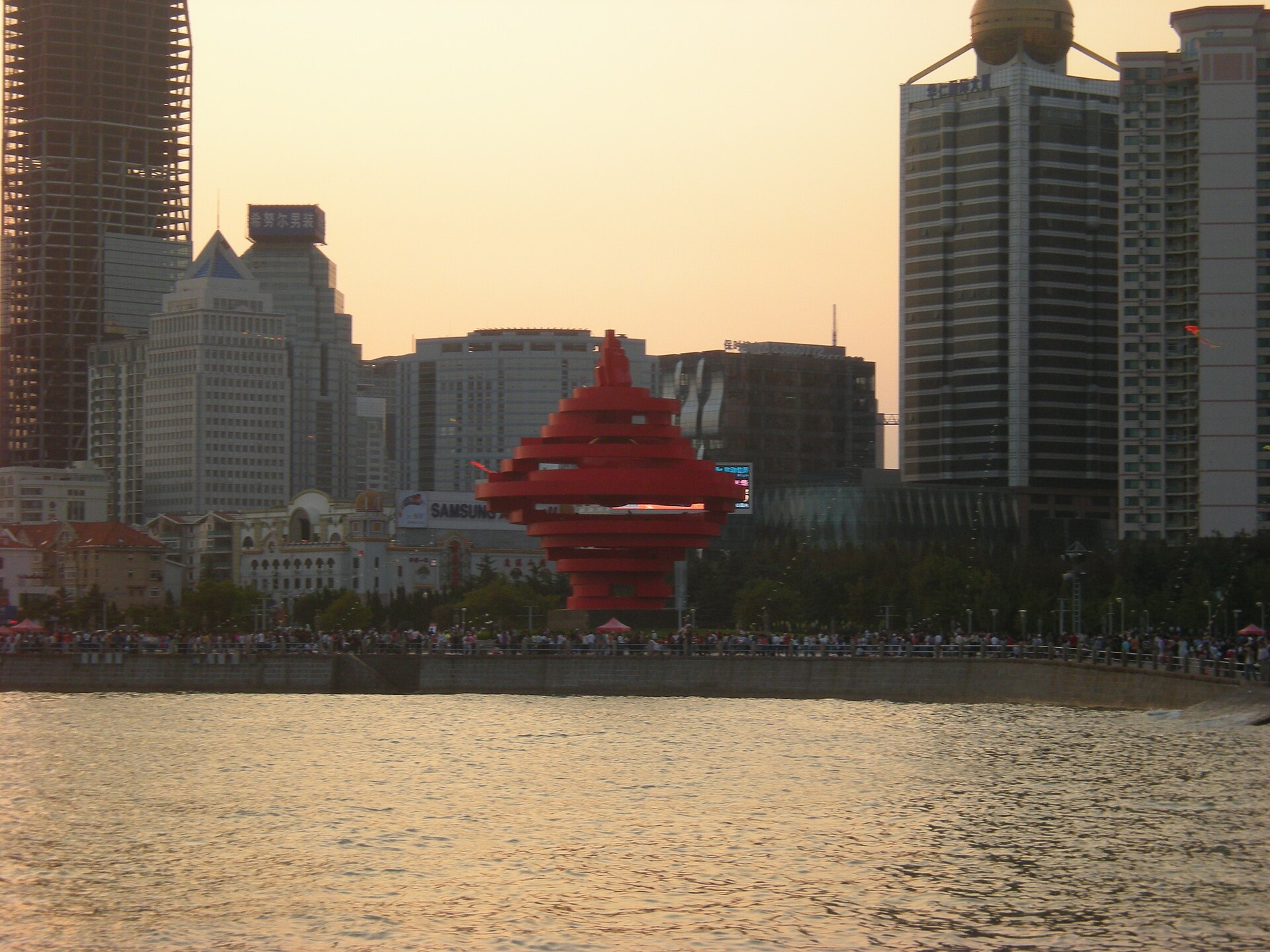
May Fourth Square in Qingdao — the red May Wind sculpture on Fushan Bay, the new-town CBD reached by metro Lines 2 and 3
May Fourth Square on Fushan Bay is the heart of the new town — reached by metro Lines 2 and 3, which cross nearby, with a long seaside walk on from there.
Key lines

The routes tourists use most

Line Route Key stops
Line 3 (main spine, via Old Town) Qingdao North Station (青岛北站) ↔ Old Town ↔ Qingdao Station (青岛站) Old Town · Zhanqiao Pier · St. Michael's Cathedral · Qingdao North rail hub
Line 2 West ↔ Fushan Bay area ↔ east May Fourth Square (五四广场) · sail-shaped Olympic Sailing Center · new-town CBD
Line 11 East coast ↔ toward Laoshan East-coast beaches · transfer to a mountain bus for Laoshan (Mount Lao)
Line 1 / Line 8 Line 1 under the bay to the West Coast (Huangdao) · Line 8 to TAO airport + Jiaozhou West Coast district (Huangdao) · Qingdao Jiaodong Airport (TAO) · Qingdao North Station
Rush-hour tip: the lines through the CBD and the Old Town get especially busy around 08:00–09:00 and 18:00–19:00. If you've just landed with luggage or need to reach the airport, travelling outside those windows is far more comfortable — see the Qingdao airport-to-city guide for your options on arrival.
Memorise it in a minute

Which zone, which line — the metro cheat-sheet

Qingdao is long and splits into clear zones, so if you remember these three pairs you'll rarely need to open a map: Old Town = Line 3 · CBD / May Fourth Square / Fushan Bay = Line 2 (with Line 3) · Laoshan = Line 11, then a bus. For the airport and the west side, it's Line 8 and Line 1 respectively.

Where you want to go Which line Notes
Old Town / Zhanqiao Pier / St. Michael's Cathedral Line 3, Old Town side Hilly quarter with plenty of climbs — wear comfortable shoes; short walk from the station
May Fourth Square / Fushan Bay / sail towers / CBD Line 2 (or Line 3 then Line 2) New-town bayside, level ground, with a long seaside walk on from there
Laoshan (Mount Lao), seaside mountain Line 11 east, then a mountain bus The farthest trip — allow a full day, start early; some areas need a park shuttle
TAO Jiaodong Airport Line 8 About 50–60 minutes from the centre — leave plenty of time before your flight
West Coast district (Huangdao) Line 1, under the bay Crosses under the bay to the west side, instead of a ferry or the long bridge
For a slow day in the Old Town: get off Line 3 on the Old Town side and walk a loop of the sights — Zhanqiao Pier, St. Michael's Cathedral, Signal Hill — then take a scenic city bus or a DiDi back. To see what's worth your time, check the Qingdao attractions guide and the Qingdao Old Town guide.
How to pay

4 ways to pay for the metro — pick whatever's easiest

📱
Alipay QR

The easiest. Open Alipay, tap Transport, choose Qingdao, generate the Metro Pass and scan the QR at the gate — no ticket needed. Set it up before you travel.

💬
WeChat Pay

Much like Alipay — open the Qingdao Metro mini-program in WeChat and scan at the gate. Works on every line.

🎫
Single-journey token

Buy from a machine in the station — English menu, takes notes and coins. Handy if you haven't set up Alipay yet.

💳
Qingdao Tong (琴岛通)

A rechargeable card that works on both the metro and the buses — tap in and out. Worth it if you ride several times a day.

Honestly, setting up Alipay before you travel helps a lot, because beyond the metro it also covers buses, taxis, DiDi, shared bikes, local restaurants and convenience stores. In 2026, many station gates have also started accepting contactless Visa/Mastercard taps, in case you don't get Alipay set up in time. For linking a foreign card, see the Alipay & WeChat Pay guide.

Other options

Buses, taxis, DiDi and shared bikes

🚌
Buses — with scenic Old Town routes
公交车 · reaches where the metro doesn't

Qingdao's buses cover the whole city and reach into the Old Town lanes the metro doesn't. Some routes run along the coast and string the sights together — a pleasant ride past sea views and old buildings. They're great for connecting a metro station to a sight tucked deeper into the hilly quarter.

Fares are around ¥1–2 per ride, paid with a Qingdao Tong card or by scanning a QR in Alipay/WeChat. Signage and announcements are mostly in Chinese, so pair them with Amap to nail down the right route and stop.

Fare: around ¥1–2 per ride
Pay with: Qingdao Tong card · QR scan · exact cash
Best for: reaching the hilly Old Town lanes + some scenic coastal routes
🚗
DiDi — the No. 1 ride-hail
滴滴出行 · English in the app

DiDi is China's answer to Grab. The app has an English interface, you can type a place name in English, and it finds the car and shows an estimated fare before you confirm. You pay through Alipay right in the app, and the starting fare is close to a taxi.

Ideal for: when the metro has closed, when you have luggage, an early-morning run up to Laoshan before the metro reaches the gate, or any spot the metro doesn't reach. You can call one from the mini-program in Alipay or WeChat, so there's no need to install a separate app unless you want to.

Call from: the DiDi app · mini-program in Alipay · mini-program in WeChat
Pay: link Alipay in the app, charged automatically at the end
When it beats the metro: late · luggage · up to Laoshan · a group of 3–4 splitting it
🚕
Metered taxis
出租车 · every car has a meter

Qingdao taxis all use the meter. Flag-fall is about ¥9–10 for the first 3 km, then roughly ¥2 per km, with a small surcharge late at night. They're inexpensive overall, but because the city is long, a cross-zone ride (say, Old Town to Laoshan) climbs with the distance.

Key tip: have your destination ready in Chinese characters, since most drivers don't speak English. Translate it in advance with Google Translate and screenshot it, or ask your hotel to write the Chinese address on a small card.

Rough fare: within one zone ~¥15–40 · longer cross-zone rides higher by distance
Pay with: cash · Alipay · WeChat Pay (depends on the car)
Note: meter pricing, no ride-hail-style surge
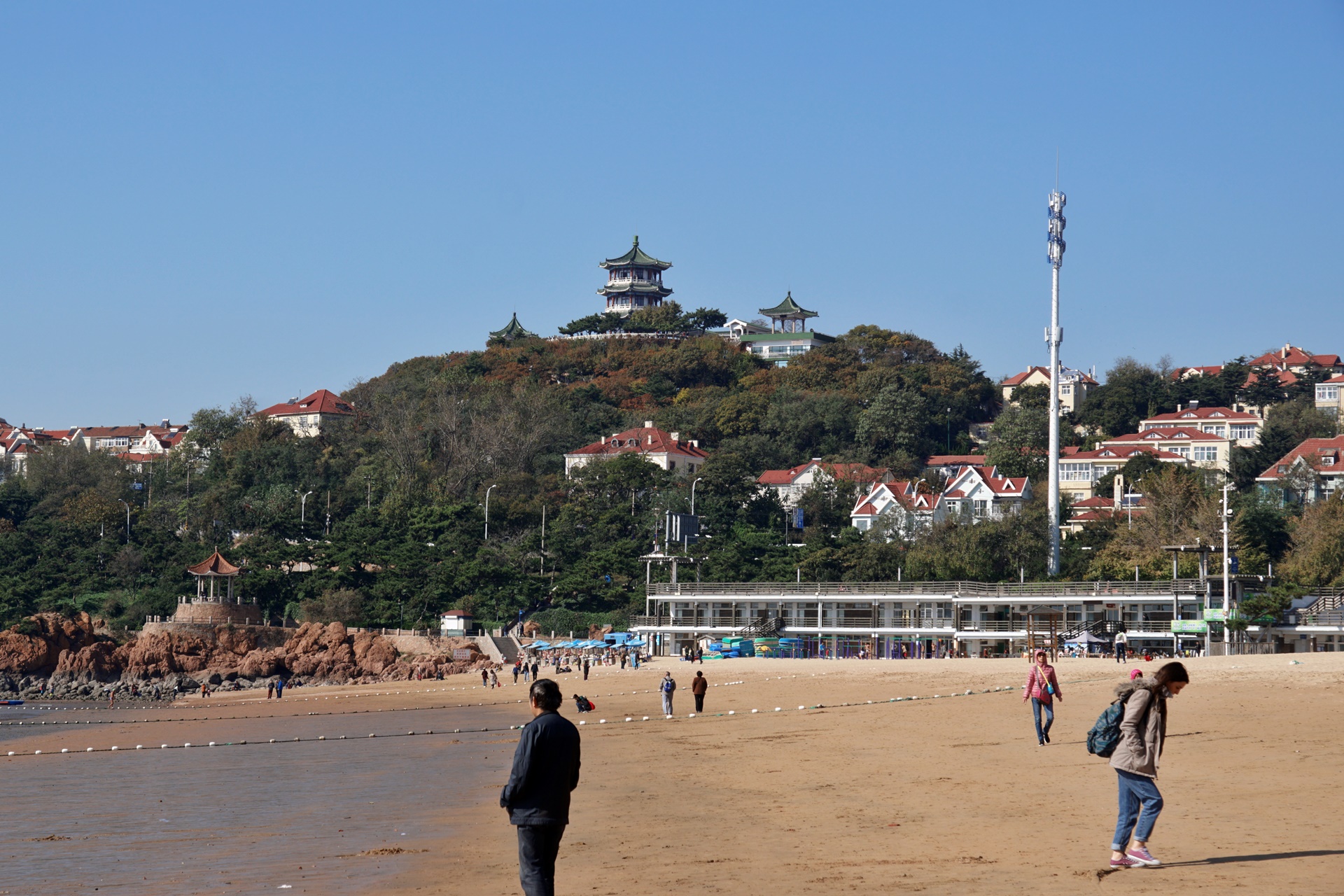
A Qingdao beach and seaside promenade — the bayside area is fairly level and good for shared bikes from Hellobike/Meituan, around ¥1.5 per 30 minutes Seaside
Shared bikes
共享单车 · Hellobike / Meituan

Shared bikes come from brands like Hellobike and Meituan and cost around ¥1.5 per 30 minutes — scan a QR to unlock, park at designated spots. One thing to know: Qingdao's Old Town is genuinely hilly, with some steep streets, so it's harder going than a flat city.

The seaside stretch around May Fourth Square and Fushan Bay, though, is fairly level and pleasant. Setting up the app means registering a phone number and linking Alipay or a foreign card — some people just use the mini-program in Alipay. Perfect for a morning or evening ride along the coast.

Cost: around ¥1.5 per 30 minutes
Apps: Hellobike · Meituan Bike · mini-program in Alipay
Sweet spot: the level Fushan Bay seafront (the Old Town is steep)
So when do you use what? Within a zone or across the main ones → the metro first, cheap and traffic-free · for Old Town spots the metro doesn't reach but that sit deep in the lanes → a bus · luggage / late / in a hurry / an early start for Laoshan → DiDi or a taxi · a ride along the Fushan Bay seafront → shared bikes · up to Laoshan → Line 11, then a mountain bus / park shuttle.
Maps and apps

Which app to navigate Qingdao

This one matters: in mainland China, Google Maps doesn't show accurate public-transit data. The map may load with a VPN, but the metro, bus and travel-time data is off or missing — so the apps that actually work in China come down to two that get the metro, buses and station exits right.

🗺️
Amap (高德地图 / Gaode)
The map app most locals use

Amap has accurate, live data for the metro, buses and trains, lets you search places in English, and has a Transit feature that tells you which station exit to use. You can download it from app stores worldwide, and it works without a VPN.

Tip: download it before you fly, as app stores in China sometimes need a VPN
🍎
Apple Maps
No extra app for iPhone users

In China, Apple Maps uses Amap's map data, so it has accurate metro and Transit information and works without a VPN. Ideal for iPhone users who'd rather not install anything extra.

Note: on Android, Google Maps won't work fully — install Amap instead

Want LINE, Instagram, Gmail or full Google Maps while you're in China? You'll need a VPN downloaded and tested before you travel, since most VPN websites are blocked inside China. See the China internet & VPN guide for the details.

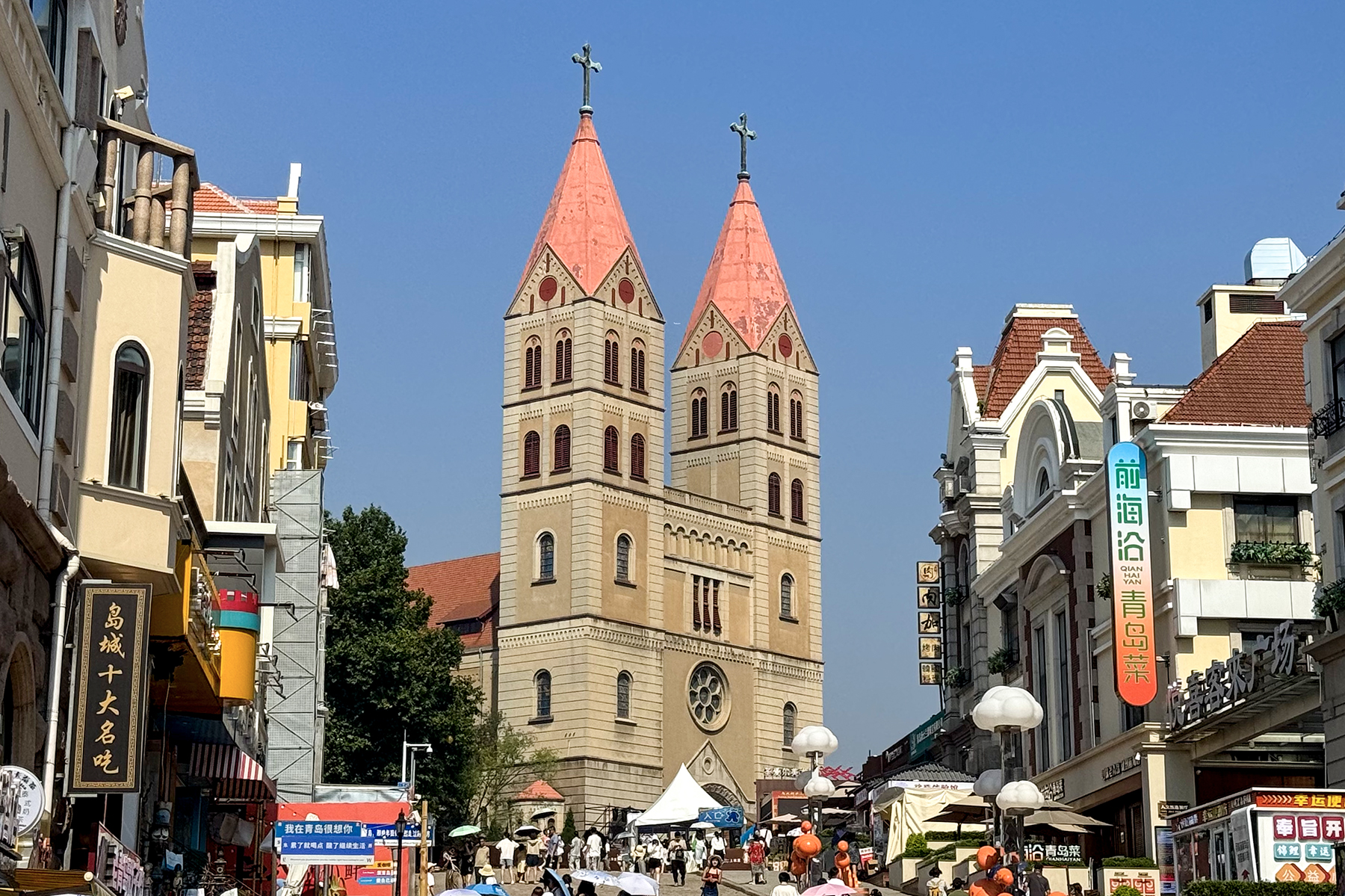
St. Michael's Cathedral in Qingdao — a twin-spired German-style stone church in the heart of the Old Town, near the Line 3 Old Town station
St. Michael's Cathedral in the Old Town — get off Line 3 on the Old Town side and you can walk a loop of the surrounding sights easily.
The real tips

Do two things before you fly and the trip gets easier instantly

If we had to suggest just one thing: get your Alipay Metro QR ready before you leave. Download Alipay, link a Visa or Mastercard via the international mode, and try opening the Transport page and choosing Qingdao first. When you land, you won't be scrambling to set anything up at the airport — just open the app, scan the QR at the gate and walk through. The same app pays for buses, bikes and DiDi too.

Another thing that helps a lot in a city this stretched-out: pick a hotel near a metro station that matches your plans. If you're focused on the Old Town and photographing the German buildings, stay around Line 3 on the Old Town side; if you're here for the sea, the CBD and late-night seafood, stay near May Fourth Square and Fushan Bay on Line 2. Your journeys get much shorter and you won't be crossing the city every day. See the 10 best hotels in Qingdao.

A few small courtesies: every station has a bag X-ray check at the entrance, so put your bag through each time (allow 1–3 minutes) · on escalators people tend to stand on the right and leave the left for those in a hurry · at rush hour, let people off before you board · the Old Town is steep and cobbled, so bring comfortable shoes.
Frequently asked

FAQ · Getting around Qingdao

How many metro lines does Qingdao have, and which ones do tourists use?
Qingdao has several operating metro lines (Lines 1, 2, 3, 4, 8, 11 and 13). The ones tourists use most are: Line 3, linking the Old Town with Qingdao North Station (青岛北站); Line 2 to the Fushan Bay area, May Fourth Square (五四广场) and the east; Line 11, which runs along the east coast toward Laoshan; Line 1, which goes under the bay to the West Coast (Huangdao); and Line 8 to TAO Jiaodong Airport. Trains run from around 06:00 to 23:00, with hours varying slightly by line — check the timetable in Amap or Alipay before a late night out.
How do I pay for the Qingdao metro?
Several options: (1) Alipay QR — open Alipay, tap Transport, choose Qingdao, generate the Metro Pass and scan at the gate; fastest for tourists. (2) WeChat Pay — open the Qingdao Metro mini-program and scan. (3) Single-journey token from a machine in the station, with an English menu. (4) A Qingdao Tong (琴岛通) rechargeable card that also works on the buses. Metro fares are ¥2–8 by distance (¥1 ≈ ฿5). For setting up Alipay, see the Alipay & WeChat Pay guide.
Which line do I take for the Old Town versus May Fourth Square / Fushan Bay?
For the Old Town (the Zhanqiao Pier area, St. Michael's Cathedral, Zhongshan Square), take Line 3 and get off on the Old Town side. For the newer downtown around May Fourth Square (五四广场), the sail-shaped towers and Fushan Bay, use Lines 2 and 3, which cross nearby. For Laoshan on the east coast, take Line 11 and transfer to a mountain bus. An easy way to remember it: Line 3 is the north-south spine through the Old Town, Line 2 heads east along the bay, and Line 11 runs the east coast toward Laoshan. See everything to do in the Qingdao attractions guide.
How do I get to TAO Jiaodong Airport from the city?
Qingdao Jiaodong Airport (TAO 胶东国际机场) sits about 40 km northwest of the city, so it's a fair way out. There are three options: (1) Metro Line 8 runs straight to the airport, about 50–60 minutes from the centre — cheapest and traffic-free; (2) airport buses (Airport Express) serve several key points; (3) a taxi or DiDi costs around ¥120–150, fast and easy with luggage. Allow at least 1.5–2 hours of travel before your flight. See all the options in the Qingdao airport transfer guide.
Are taxis and DiDi in Qingdao expensive? Do I need to speak Chinese?
They're inexpensive. Flag-fall is around ¥9–10 for the first 3 km, then roughly ¥2 per km, with a small surcharge late at night. DiDi — China's ride-hail app — has an English interface; you can type your destination in English and pay through Alipay in the app. You don't need to speak Chinese, though having your destination in Chinese characters helps if a driver calls. DiDi is ideal when the metro has closed, when you have luggage, or for an early-morning run up to Laoshan before the metro reaches the gate.
Can I use Google Maps in Qingdao?
Google Maps can display a basic map (with a VPN), but its public transit data for mainland China is unreliable or absent. Use Amap (Gaode / 高德地图) or Apple Maps instead — both have accurate data for the metro, buses and which exit to use, and neither requires a VPN. Download one before you fly, as some app stores in China require a VPN to access. For getting connected, see the China internet & VPN guide.
How do shared bikes work in Qingdao, and do they suit a hilly city?
Shared bikes come from brands like Hellobike and Meituan and cost around ¥1.5 per 30 minutes — scan a QR to unlock, park at designated spots. Setting up the app means registering a phone number and linking Alipay or a foreign card. Note that Qingdao's Old Town is genuinely hilly, with some steep streets, so it's harder going than a flat city. The seaside stretch around May Fourth Square and Fushan Bay, however, is fairly level and pleasant — ideal for a morning or evening ride along the coast.