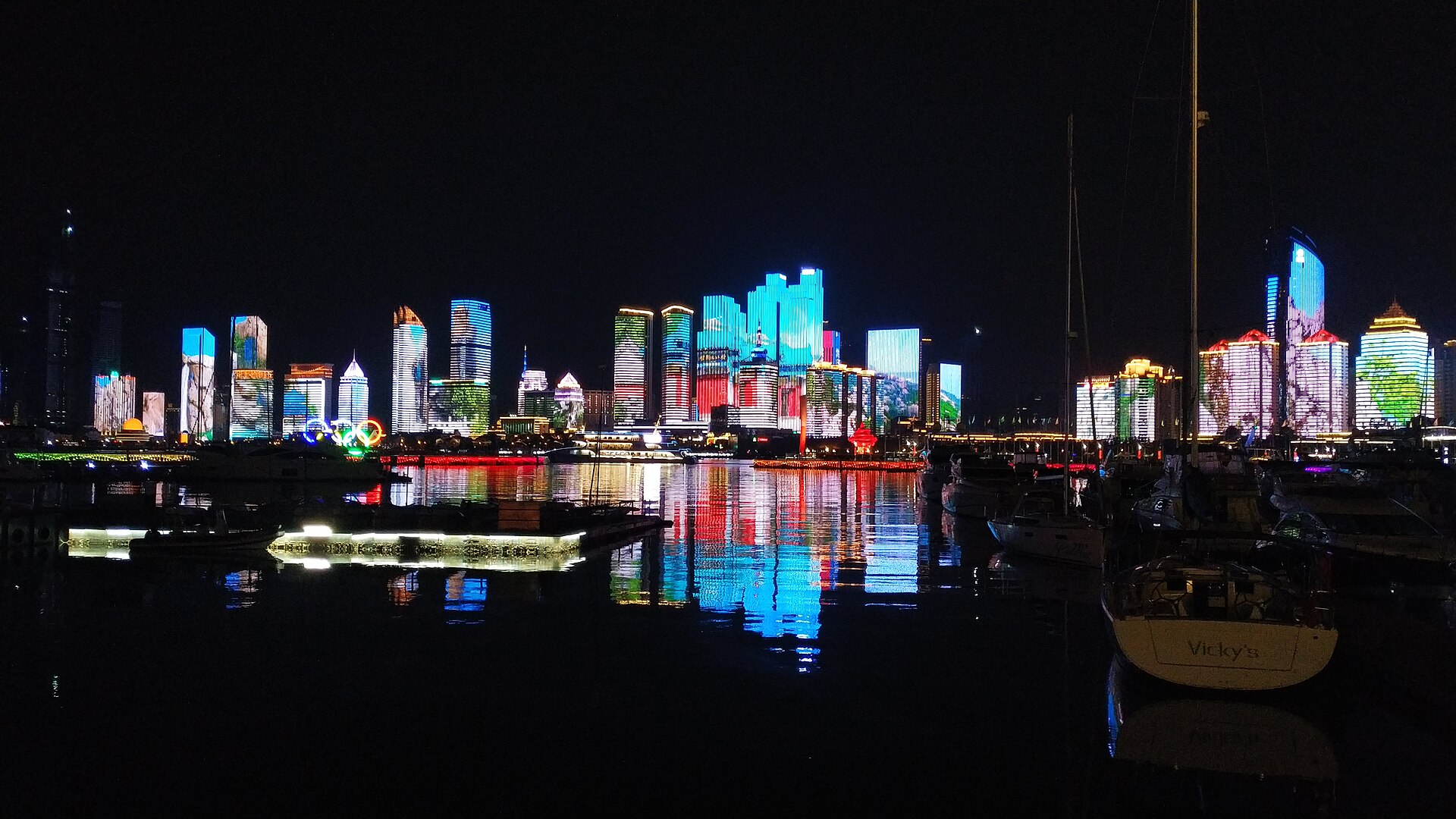
TAO into the city — 4 options compared
Most travellers from Bangkok land here. Here's everything laid out clearly, so you can pick what fits your hotel and your budget.
This is our pick if you want to keep costs down and not gamble on traffic. The station is on the B1 floor of Terminal T1, straight down by lift from the arrivals hall (from T2, take the free shuttle to T1 first). Line 8 runs directly to Qingdao North Station (青岛北站), one end of the line, in about 45 minutes for roughly ¥7–8. The thing to know is that Line 8 doesn't run down to the coast itself — at Qingdao North you change to Line 3 (for Qingdao Station and the seafront old town) or Line 1 for the city centre. Reckon on about 60 minutes in total and ¥8–12 for the whole trip (~฿40–60). The stretch across Jiaozhou Bay is fast, with a fine view of the long sea bridge along the way.
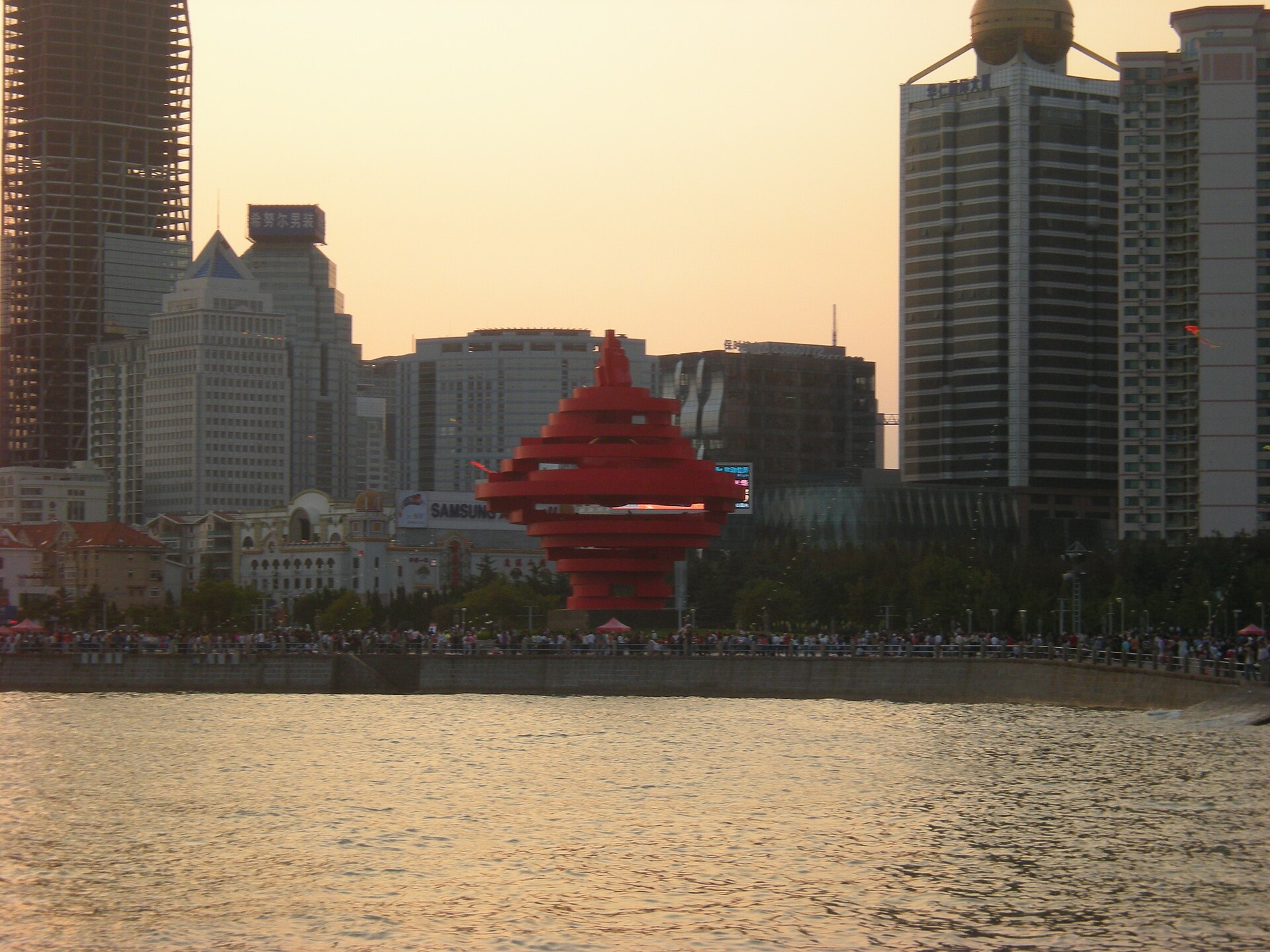
Jiaodong Airport runs several bus routes into the city and to nearby towns. The two travellers use most are Line 1 to the May Fourth Square area (May Fourth Square), a newer seafront hotel district, and Line 2 to Qingdao Station / the old town near Zhanqiao Pier. Fares run roughly ¥20–35 depending on distance, with journeys of about 60–90 minutes depending on the route and traffic. Board at the departures level / ground transportation zone — look for the 机场巴士 signs. The advantage: if your hotel is right by the route's end, you step off and walk there with no metro changes. There's also a night bus, N1, running roughly 23:00–05:30 for late arrivals (check the latest schedule first).
Because the airport is ~40 km out, a metered taxi into town costs more than in cities where the airport sits close by. Into coastal districts like May Fourth Square or the old town it runs about ¥130–160, taking roughly 50 minutes in light traffic. Heading to the west side (Huangdao / the West Coast district) can be a little closer and cheaper. A night surcharge of around 20% applies after about 23:00 (until ~06:00). Use only the official taxi rank, clearly signed outside the terminal. Don't engage anyone who approaches you inside the hall — these are almost always unlicensed touts quoting flat rates. Confirm the driver starts the meter before you leave the airport, and have your hotel address written in Chinese to show them, as most drivers won't speak English.
DiDi is China's ride-hailing app, working much like Grab back home. Fares are close to a metered taxi, and you pay directly through Alipay or WeChat Pay — no cash needed. The advantages: you see the price before you book, and you don't have to explain your destination out loud since you drop a pin in the app — really useful when you land late after the metro has closed. The catch is that airport pick-up is usually a dedicated meeting zone, separate from the regular taxi rank, so you walk to wherever the app directs you. Download and set up your account, with a card linked, before you leave Thailand — the airport Wi-Fi can be patchy when it's busy. See our China internet and eSIM guide for getting online.