A single steel span across the Pai River, on the road the Japanese army once used to reach Burma during World War II — today a quick photo stop on the way into town. We will be honest: a short visit covers it.
If you arrive in Pai by minivan from Chiang Mai, you will cross an old red steel bridge over the Pai River just before you reach town, beside Route 1095. Most people glance at it and roll on. But once you know where it came from, you may want to stop and stand on it for a while — because this span was part of a wartime route that few visitors expect to find in such a laid-back mountain valley.
Pai Memorial Bridge (also called the Tha Pai Bridge) traces its beginnings to World War II, around 1942, when the Japanese army moved through northern Thailand. Pai sat on a supply route carrying troops and weapons from Chiang Mai toward Burma — a role comparable to the River Kwai bridge in Kanchanaburi. Japanese soldiers conscripted local villagers and used elephants to drag huge logs out of the surrounding jungle to build a wooden bridge across the river.
By 1944 the Allies had gained the upper hand, and the Japanese burned the wooden bridge as they retreated. Villagers later rebuilt it, and the steel structure you see today was relocated from a decommissioned bridge in Chiang Mai (the former Nawarat Bridge) around 1975 and reassembled here. It now carries pedestrians only; vehicles use the adjacent concrete bridge instead.
There is nothing complicated here — you come to take photos, read the history, and move on, but each corner has something to look at.
The heart of the visit is simply walking up onto the steel bridge and taking photos. The old red ironwork against the river and the trees on the banks makes for a pleasingly vintage shot. Many people prefer the gentler light of early morning or late afternoon. Stalls beside the bridge rent out wartime uniforms, retro outfits and fun props if you want a themed photo.
Beside the bridge are plaques and old photographs explaining how it came to be during the war — from the wooden bridge the Japanese built, to its burning, to the steel span relocated from Chiang Mai. This is the corner that gives the stop meaning beyond a pretty photo. A few minutes of reading covers the whole story.
A handful of snack stalls, drinks vendors and small cafés cluster around the bridge — some decorated in the offbeat, photo-friendly style Pai is known for. They make a good spot to pause, stretch your legs and have a coffee mid-journey before driving on to Pai Canyon, which is only a short distance further along the same road.
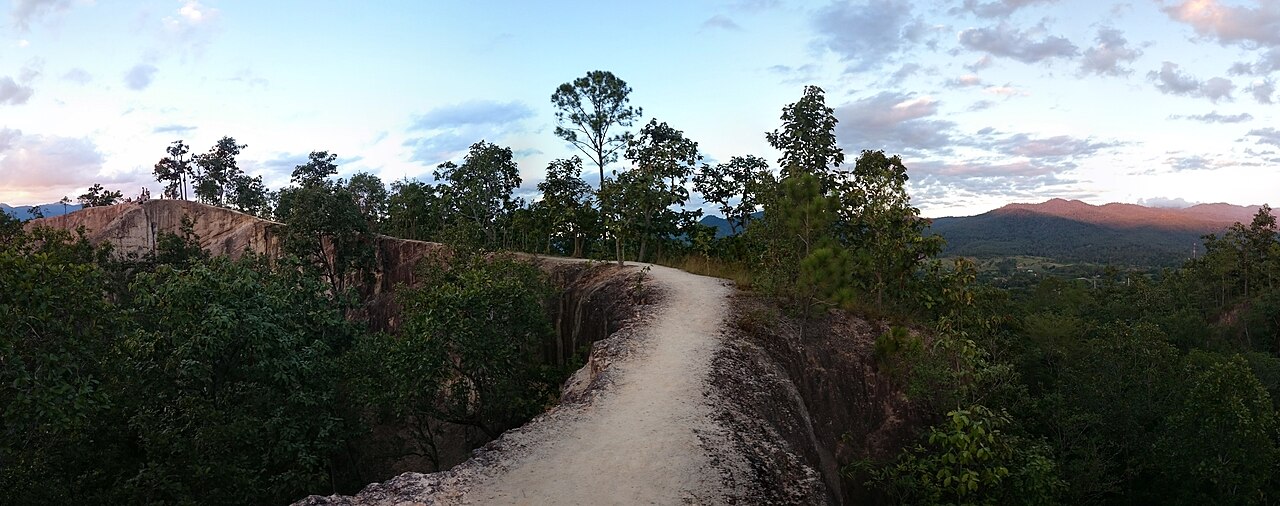
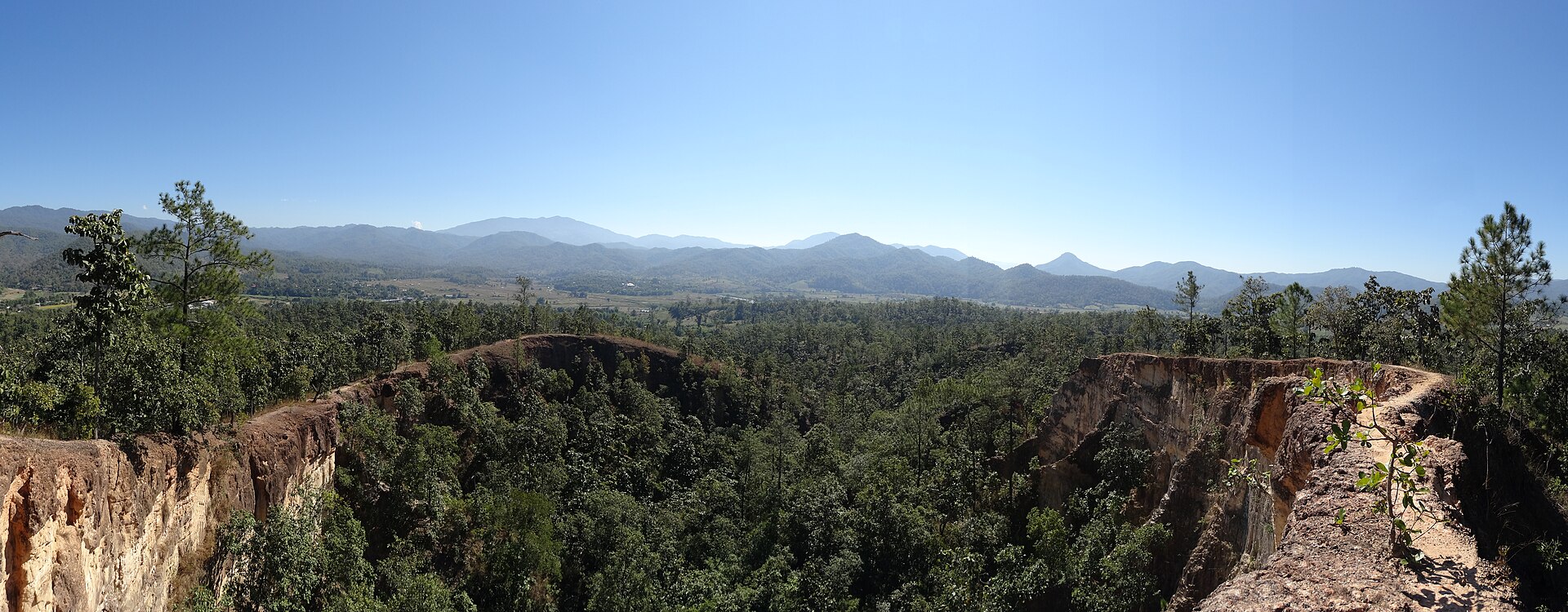
The sight that pairs best with the bridge is Pai Canyon (Kong Lan), just down the same Route 1095. A few more minutes by scooter gets you there: narrow red-earth ridges you can walk along for valley views in every direction. It is busiest at sunset. Some paths are narrow with sheer drops, so tread carefully, but the view is well worth it. The neat plan is to stop at the bridge in the afternoon, then continue to Pai Canyon for the sunset.
The bridge is open to walk across year-round, but the cool, dry months of November to February are the best time — clear skies and comfortable days (just remember that nights in Pai get genuinely cold, so pack a warm layer; many travellers forget). March to April is hot and clouded by crop-burning haze, with poor visibility, so check the PM2.5 air-quality reading before you go. June to October is the rainy season — lush and green, but roads can be slippery, so take extra care if you are riding a scooter.
Midday sun is harsh and there is little shade around the bridge, so photos come out best in the early morning or late afternoon. Bring water, a hat and sunscreen.
The bridge sits beside Route 1095 (the Chiang Mai–Pai road) about 9 km south of Pai town. If you are coming into Pai from Chiang Mai, the road passes right by it — so it is very easy to find, sitting on the main road.
The people who leave disappointed by the Pai bridge are usually the ones who expected something grand. The reality is a small steel bridge by the road that you can walk across in a couple of minutes. Arrive knowing it is a short photo stop with an interesting backstory, and you will enjoy it far more — and paired with nearby Pai Canyon, it easily justifies the drive out.
The bridge itself is free, but the stalls beside it charge for costume rentals, props, and snacks or souvenirs. If you would rather not spend anything, you can wander and take your own photos with no obligation. Roadside parking is free; in high season it gets busy and you may have to look for a spot, but overall this is a sight you can enjoy without any budget at all.
Pai ranges from budget guesthouses in town to riverside resorts and small hillside stays with valley views — pick by style and budget.