Home Nikko Japan Nikko Attractions About Read in Thai
Home  ›  Asia  ›  Japan  ›  Nikko  ›  Where to Stay
Nikko Neighbourhood Guide · 2026

Where to stay
in Nikko

Nikko isn't one place. The shrine town, a mountain lake, and gorge onsen resorts sit in completely different directions — and the area you choose shapes the whole trip. Here is how to decide, honestly.

Before you book

Nikko is bigger than it looks — location decides everything

Here's the trap most first-timers fall into: you book a place in Nikko because the photos look beautiful, then discover it's high in the mountains, a 40-minute bus ride from the Toshogu shrines you actually came to see. Or the reverse — you stay in town, then wish you'd spent a night by the lake soaking in an onsen. Nikko isn't a single point on a map. It's several worlds stacked on top of each other — the World Heritage shrine town sits low, while the lake, the waterfalls and the onsen resorts climb up the mountains in different directions.

We've split Nikko into five main areas — each suits a different traveller, sits in a different price band, and carries a different mood. Decide what you came for and pick the right base, and the whole trip flows. And one thing first: Nikko is a living centre of worship and a UNESCO World Heritage site. Wherever you sleep, step into the Toshogu and Futarasan precincts with respect.

Want the sights overview first? Read the Nikko attractions guide or the full Nikko city guide. Otherwise, for a straight answer on where to sleep — read on.

Top recommendation

The one-pick answer for most first-timers

⛩️
Best Base for First-Timers
The Shrine & Station Area (Central Nikko)

For most people whose main goal is the World Heritage shrines, this is the best base by a clear margin. From here you can walk to the red Shinkyo Bridge, the entrance to Toshogu Shrine, Rinno-ji Temple and Futarasan Shrine in a matter of minutes. Accommodation spans every level — from budget riverside guesthouses to a genuine heritage landmark. The one advantage guests of this area mention again and again: being inside the shrine precinct at seven in the morning, before the tour groups arrive, when the cedar forest around the red bridge is completely silent in the early light. It's the part of the trip people remember most.

The hotel that anchors this area best: Nikko Kanaya Hotel — the oldest Western-style hotel in Japan, open since 1873, on the hillside just above Shinkyo Bridge, a few minutes' walk down to the shrine gates.

See the full Nikko city guide →
5 areas to stay

Which area suits you?

Honest vibe, price and access for each area — with the real reviewed hotels we have so far.
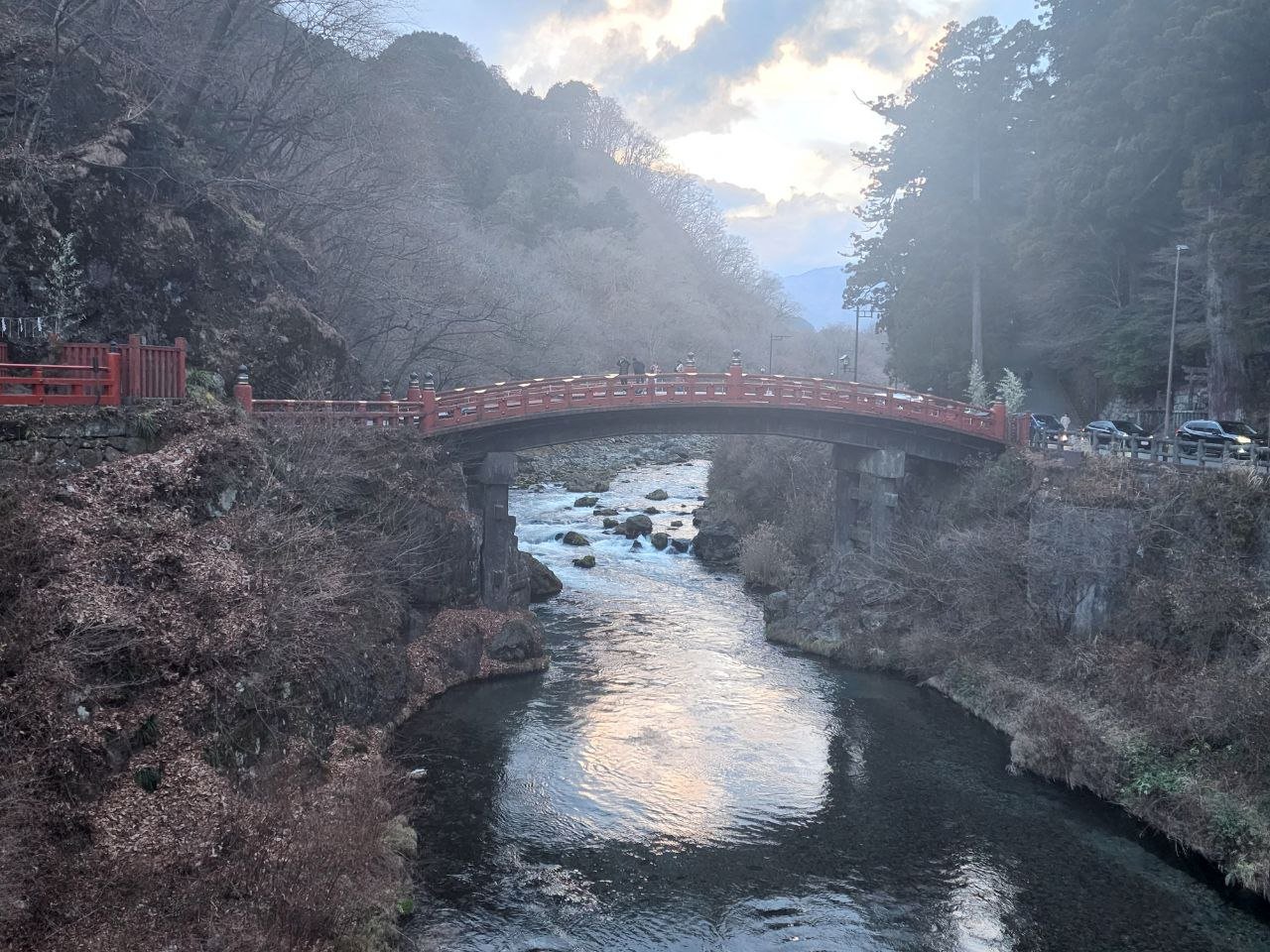
The vermilion Shinkyo Bridge arching over the Daiya River in Nikko's shrine area, forested mountains behind in early light — the gateway to the Toshogu shrine precinct Area 1
Shrine & Station Area
Central Nikko · Walk to the World Heritage shrines · Most convenient

Right for: Anyone here mainly for the World Heritage shrines who wants to walk to everything that matters. From this area you can reach Shinkyo Bridge, Toshogu Shrine, Rinno-ji and Futarasan on foot, and be out exploring before the crowds. The streets around the stations have restaurants, craft shops and cafés. The honest trade-off: most close early (around 6 pm), so evenings in town are quiet.
Getting there: 10–20 min walk from Tobu-Nikko / JR Nikko Station (or local bus / taxi ~¥1,000)
🏛️ Nikko Kanaya Hotel — heritage landmark, open since 1873 9.0
🐢 Turtle Inn Nikko — guesthouse with private onsen 8.7
See all shrine-area stays →
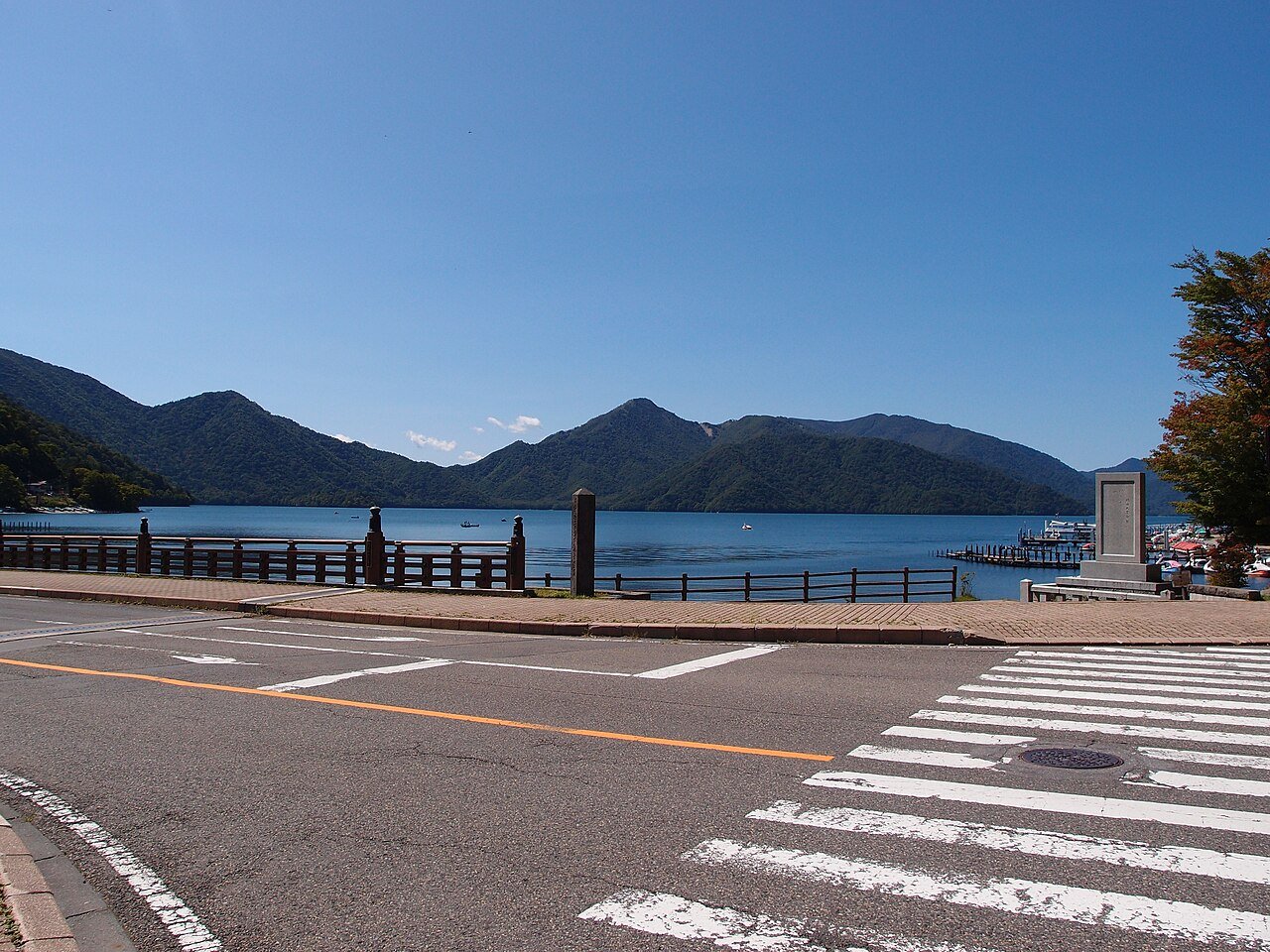
Clear blue Lake Chuzenji in Oku-Nikko with Mount Nantai rising behind, boats moored at the shore and a lakeside promenade Area 2
Lake Chuzenji / Oku-Nikko
Chuzenji Onsen · Lakeside mountain onsen · Quiet luxury

Right for: Travellers who want to soak in an onsen with a lake and mountain view, and have more than one night to head up the mountain. Resorts and onsen ryokan line Lake Chuzenji, Mount Nantai stands directly in front, and the 97-metre Kegon Falls is close by. Autumn (Oct–Nov) is the most spectacular season in all of Nikko here. The honest trade-off: evenings are very quiet, with almost no dining outside the hotels, and it's noticeably colder than town.
Getting there: Tobu bus from Nikko station up the Irohazaka switchbacks, ~40 min
The Ritz-Carlton, Nikko — 5-star resort, lakeside hot spring 9.6
Read the Ritz-Carlton Nikko review →
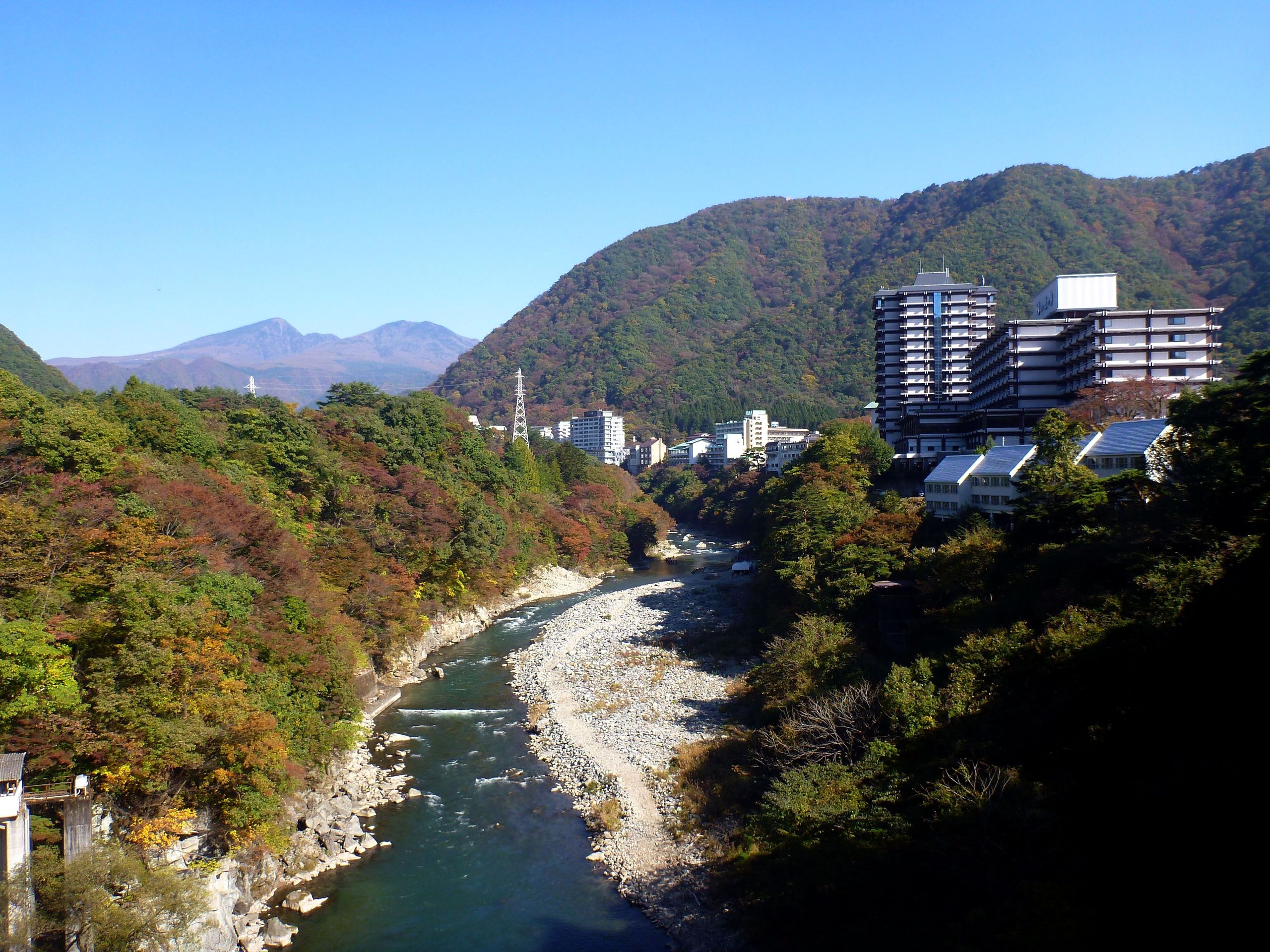
The Kinugawa River gorge at Kinugawa Onsen in autumn colours, large ryokan and resort hotels lining the cliff edge above a green river running through the valley Area 3
Kinugawa Onsen
Largest gorge ryokan resort town · Great for families

Right for: Anyone who wants the full ryokan experience — river-view rooms, several bath types, kaiseki dinner included — and families with children. This is the largest hot-spring town near Nikko, with more than 80 ryokan and hotels lining the Kinugawa River gorge. It sits right beside the Edo Wonderland (Edo-period village) and Tobu World Square theme parks. The trade-off: it's on a separate line from the shrines, so you take a different train to get up here.
Getting there: ~30 min by Tobu train onward from Nikko to Kinugawa-Onsen Station
♨️ 80+ ryokan · roughly ¥20,000–50,000 per person/night (two meals)
More on Kinugawa in the city guide →
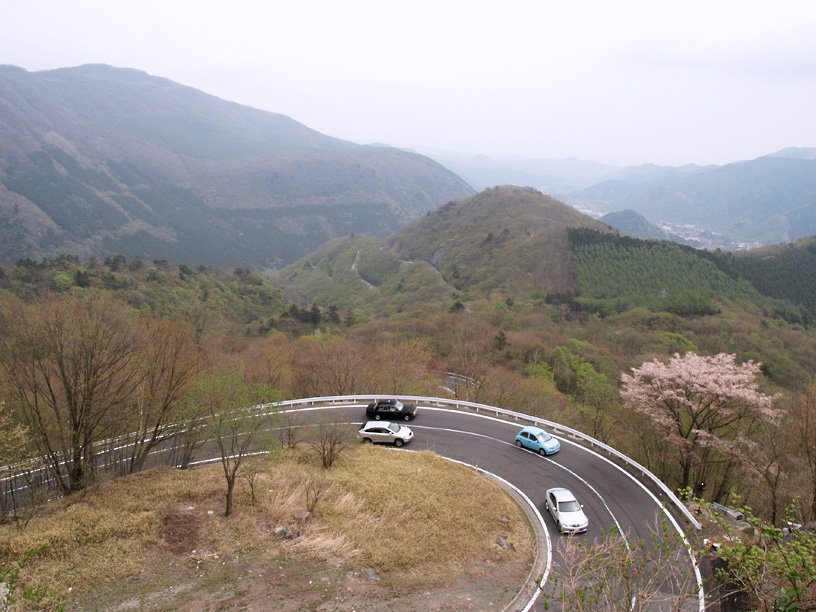
The Irohazaka switchback road climbing the mountains into Oku-Nikko, cars curving around a hairpin bend with the valley far below — the route up toward Yumoto Onsen Area 4
Yumoto Onsen
The deepest hot-spring village · Quietest of all

Right for: People who genuinely want to escape — to soak in real sulphur water and hike around a lake rather than tour shrines. Yumoto sits on the shore of Lake Yunoko at the very back of Oku-Nikko. It's a tiny village of just a handful of ryokan and a marsh where the spring water bubbles up from the ground, milky-white and properly sulphurous. The honest truth: this is the end of the road — remote and quiet. You come here to rest, not for convenience.
Getting there: Tobu bus to the end of the line, beyond Chuzenji, ~80 min from Nikko station
♨️ A few sulphur-spring ryokan · the quietest base in the Nikko area
More on Oku-Nikko in the city guide →
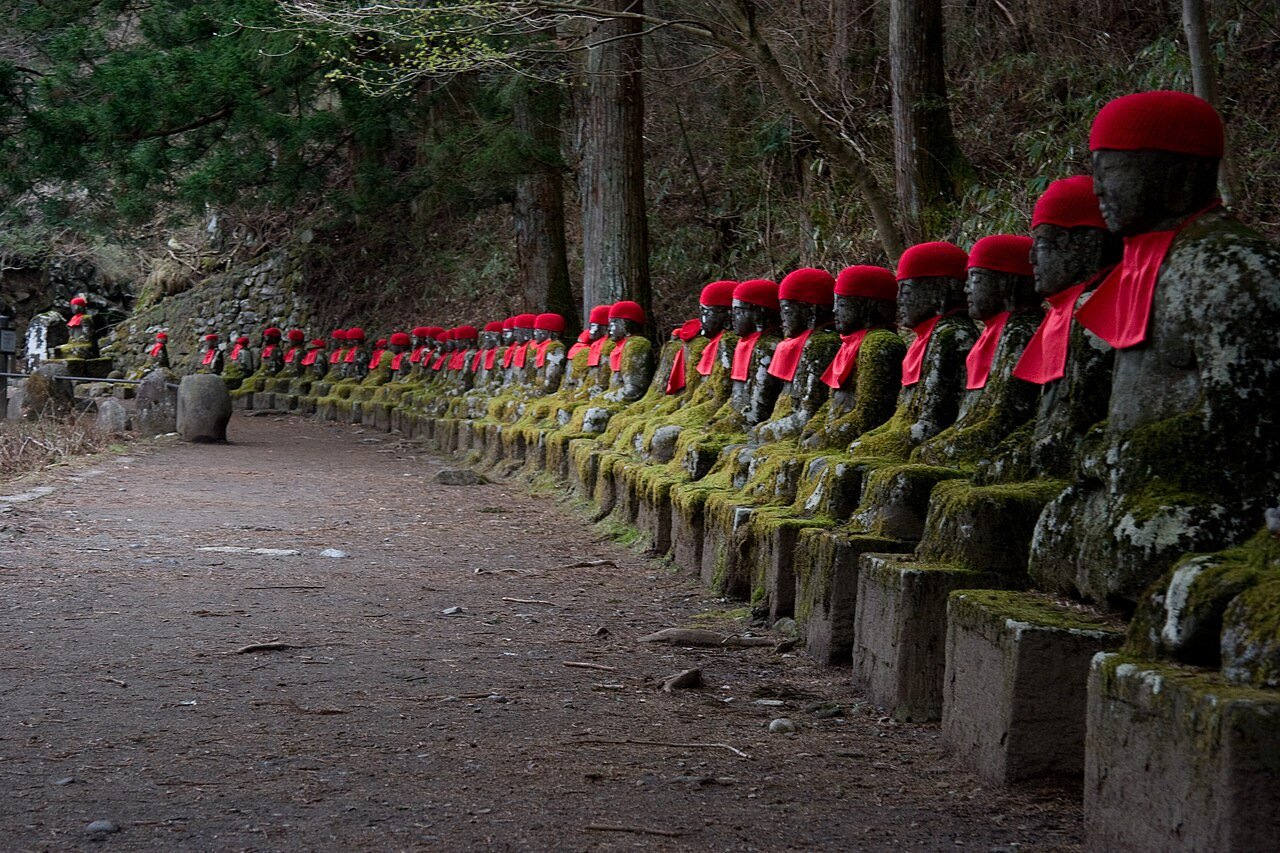
Kanmangafuchi Abyss along the Daiya River in Nikko, a row of red-capped Jizo statues lining the riverbank amid green forest, near the riverside budget accommodation area Area 5
Around the Stations (Budget)
By Tobu-Nikko / JR Nikko · Guesthouses & hostels · Late arrivals / day trips

Right for: Budget travellers, late arrivals, and anyone using Nikko as a one-day base before moving on. Guesthouses, hostels and modest business hotels cluster around the stations — easy access to the trains, no dragging your bag uphill, and a quick start in the morning to catch the mountain bus or the train to Kinugawa. The riverside lanes along the Daiya (such as Takumicho near Kanmangafuchi) also have warm, well-priced stays that still walk to the shrines.

Getting there: Around Tobu-Nikko / JR Nikko · walk to the trains · mountain buses depart from the station front
🐢 Turtle Inn Nikko — from ¥6,000 · private onsen, English-speaking 8.7
Read the Turtle Inn Nikko review →
More to know

Budget, splurge & where to eat nearby

Budget vs splurge

If you're watching costs, Turtle Inn Nikko starts around ¥6,000 a night — a family-run guesthouse in a good location, walking distance to the shrines, with a private onsen and English-speaking hosts whose 9.6/10 service score is rare at this price. For something with a story in the centre of town, Nikko Kanaya Hotel (around ¥20,000 a night) is the heritage hotel where Einstein once stayed.

If you're here specifically for the onsen and willing to pay for the best experience, The Ritz-Carlton, Nikko on Lake Chuzenji (from around ¥80,000 a night) is a five-star resort with a natural hot spring on the lake. See the full set of stays in the Nikko city guide.

What to eat in Nikko

A great room is wasted if you eat in the wrong place. The Nikko food guide walks you through yuba (Nikko's tofu skin, thicker than Kyoto's), soba and local sweets, and which area does what best. To plan the order you'll actually visit things in, pair it with the Nikko itinerary and the Nikko travel tips.

Frequently asked

FAQ · Before you book

What is the best area to stay in Nikko for a first visit?
If you're visiting for the first time and the World Heritage shrines are your priority, the Shrine & Station Area in central Nikko is the strongest base. You can walk to Shinkyo Bridge, Toshogu Shrine and Rinno-ji Temple, there are hotels at every price point from budget guesthouses to the heritage Nikko Kanaya Hotel, and you can be inside the shrine precinct early in the morning before the tour groups arrive. No 40-minute mountain bus needed to reach what you came to see. If you also want a lakeside onsen, head up to Chuzenji afterwards.
Where should I stay for a lakeside mountain onsen?
Lake Chuzenji (Chuzenji Onsen), up in Oku-Nikko, is the answer. Resorts and onsen ryokan line the lakeshore, Mount Nantai rises directly in front, and Kegon Falls is close by. The Ritz-Carlton, Nikko at Chugushi is a five-star resort with a natural hot spring on the lake. You reach it by Tobu bus up the Irohazaka switchbacks, about 40 minutes from town. One honest caveat: evenings are very quiet, with almost no dining outside the hotels.
Where do I go for a full ryokan and kaiseki experience near Nikko?
Kinugawa Onsen is the place. It's the largest hot-spring resort town near Nikko, with more than 80 ryokan and hotels lining the Kinugawa River gorge — river-view rooms, multiple bath types, and full kaiseki dinners included in the rate (roughly ¥20,000–50,000 per person per night with two meals). It's about 30 minutes from Nikko by train and sits beside the Edo Wonderland and Tobu World Square theme parks, which makes it a strong choice for families with children.
Where should I stay for the quietest, most remote escape?
Yumoto Onsen, on the shore of Lake Yunoko at the very back of Oku-Nikko, is as quiet as it gets. It's a tiny hot-spring village of just a handful of ryokan and a marsh where the spring water bubbles up from the ground — genuine cloudy, sulphurous water. It suits travellers who want to soak and hike around the lake rather than tour shrines. It's the end of the bus line, about 30 minutes beyond Chuzenji.
How many nights do I need in Nikko, and should I move hotels?
One to two nights suits most people. The World Heritage shrines fill a full day; a second day covers Lake Chuzenji, Kegon Falls and the mountain onsen. If you're only here for the shrines, one night in the Shrine & Station Area is enough. But if you want an onsen experience too, the cleanest plan is to spend the first night in town for the shrines, then move up to Chuzenji or Kinugawa for the second — one hotel change is worth more than forcing both into a single base. See the Nikko itinerary for sample plans.
How do I get to Nikko from Tokyo, and around once I'm there?
From Tokyo, take the Tobu Limited Express from Asakusa to Tobu-Nikko, about 1 hour 50 minutes (~¥2,800), or JR via Utsunomiya, about 2 hours. In Nikko, the shrine area is walkable from the station. Lake Chuzenji and Yumoto require a Tobu bus up the Irohazaka switchbacks (Chuzenji ~40 min, Yumoto ~80 min). Kinugawa Onsen is a separate ~30-minute Tobu train ride from Nikko. If you're heading up the mountain, the NIKKO PASS bundles the train and buses into one ticket. See the Nikko travel tips for details.
Trip.com · Book Nikko Stays

Compare Nikko stays across every area

Shrine area · Lake Chuzenji · Kinugawa Onsen · Yumoto · around the stations — search and compare every option in one place.

Search Nikko Hotels on Trip.com →
Wherebest is an affiliate partner of Trip.com — we may earn a commission when you book through our links, at no extra cost to you.