A tiered cascade about 8 km from Pai town — come to swim, slide the polished rocks and cool off in the pools. One of the most-loved stops on the western loop, easily paired with Santichon and Yun Lai in one trip.
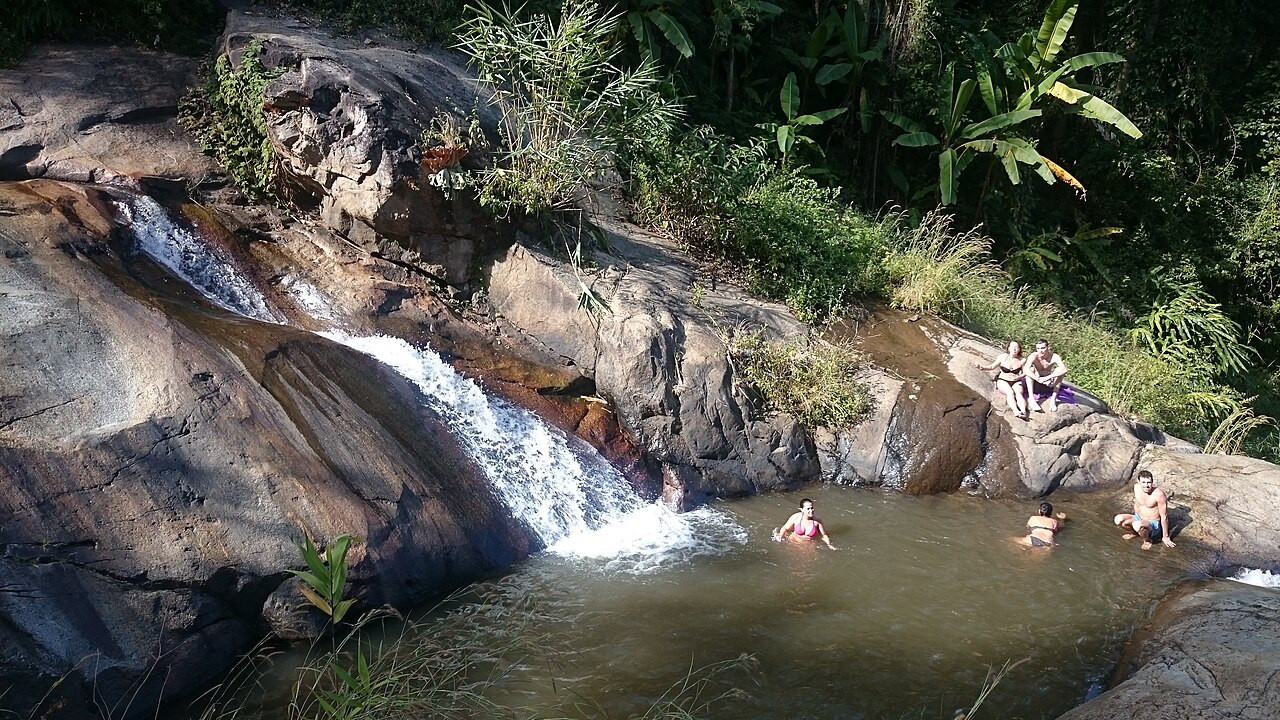
Picture this: you walk a few hundred metres along a forest path, the sound of water building, then round a corner to find a broad sheet of rock with water running down it in a glassy ribbon. Below it sits a clear pool where people are wading and floating; a few have climbed up and are letting themselves slide down the rock into the water, laughing on the way. That is what makes Mo Paeng different from the average look-but-don't-touch waterfall.
Mo Paeng Waterfall lies about 8 km northwest of Pai town, in Pai District, Mae Hong Son Province. It is a medium-sized waterfall that drops over roughly three tiers, each around five metres high. The spot everyone comes for is the lower section, where the rock has been worn smooth into a natural slide that runs down into a pool deep enough to swim in.
Mo Paeng is the closest waterfall to Pai town, and it sits on the same road as Santichon Village and the Yun Lai viewpoint — so most people rent a scooter and do all three in one morning or afternoon. Entry is free. But before you launch yourself down the slide, there are a couple of things worth knowing about the season and the safety.
It is not a huge cascade, but there is real play here — know what each part is like before you go.
Years of running water have worn the lower rock face smooth, and people climb up and slide down it into the pool below. This is where the fun is — but to be straight with you, the rock is very slippery and you can scrape or bruise yourself on the way down. Watch where local visitors are sliding, check the line, and take the first run gently rather than launching yourself hard.
Beneath the slide is a pool deep enough to wade into and swim when the water is up. It is cold and refreshing, especially on a hot afternoon. The second tier is generally the safest and the best for swimming, while the upper tiers are more for looking at and photographing than for getting into. Test the depth before you jump in anywhere.
Mo Paeng drops over roughly three tiers, each about five metres high, and a path with a bamboo walkway lets you head up to see the higher levels — around 300 metres of walking. The forest on either side is at its greenest in the rainy season. It is not a long climb, but the path can be slippery after rain, so take it slowly and hold the railings.
The falls sit in quiet hill forest, with a few small drink-and-snack stalls near the car park and places to sit and watch the water. It is less crowded than the in-town sights, particularly if you arrive early or visit in the green season. A good spot for anyone who wants to escape the bustle and just listen to the water for a while.
Mo Paeng runs year-round, but the volume varies a lot. It is fullest and best in and just after the rainy season, roughly June to October — the pools are deep enough to swim, the slide runs well, and the surrounding forest is at its most lush. In the dry months of March and April the water can slow to a trickle; it is still photogenic, but the swimming is far less fun.
In the cool season, November to February, there is usually still water carried over from the rains, the air is pleasant for walking — but the pool will be cold, and some people only manage to dip their feet. If you are coming specifically to swim, the rainy season is your best bet. To compare the whole Pai trip month by month, see the best time to visit Pai.
Straight up front: the rocks at Mo Paeng are coated in algae and genuinely slippery, both on the slide and along the path. People who slide too hard or misstep do graze and bruise themselves fairly often. Before you get in, watch where local visitors are sliding, check the depth of the pool and the strength of the flow, and take a gentle first slide to learn the line. Do not jump into any spot where you do not know the depth.
If you bring children, supervise them closely — the rocks around the pool are slick and some parts are deeper than they look. In the rainy season the water runs stronger and the path turns muddy, so the care needs to go up a notch. Shoes with good grip make a real difference.
The easiest and most enjoyable way to reach Mo Paeng is to rent a motorbike or scooter in Pai town (about ฿100–150/day), ride up towards Santichon Village and follow the signs to the falls. It takes around 20 to 25 minutes; the last stretch is a small hill road, narrow in places, so ride slowly and you will be fine. If you do not want to ride yourself, a songthaew or a western-loop tour works well.
Pai has no train, no metro/BTS/MRT and no scheduled flights — you arrive in Pai by minivan from Chiang Mai, and once in town most people get around on a scooter. Mo Paeng is the same: it is a two-wheels-or-rental kind of trip.
Bring shoes with good grip (flat smooth sandals are risky on these rocks), clothes you do not mind getting wet or a swimsuit, a towel, drinking water and insect repellent. There are no lockers, so keep an eye on your valuables and do not leave them out of sight. A waterproof phone pouch helps if you plan to get in the water.
Pai is a mountain town. Daytime sun is strong, so pack sunscreen and a hat. Nights, especially in the cool season (Nov–Feb), get genuinely cold — sometimes into single digits — and the pool will be cold then too, so bring a warm layer for the ride home. In the dry months of March and April there is crop-burning haze (PM2.5) that hurts the air and views, so check an air-quality app before you plan around it.
Mo Paeng is on Pai's western loop — pair it with Santichon, Yun Lai and more in a single day.