A city with two coffee worlds in one place — old kopitiam shops pouring dark-roast kopi with condensed milk and kaya toast that locals eat with dim sum in the morning, and modern specialty cafés the young crowd works in over a latte. Come early for the real Chinese breakfast, come in the afternoon for an air-conditioned café.
Picture a morning in Hat Yai: you're at an old coffee shop in a downtown shophouse, a hot cup of kopi in front of you — dark-roasted, poured over sweet condensed milk — with crisp kaya toast and two soft-boiled eggs beside it, and a stack of dim sum baskets on the table to pick from. This is the most Hat Yai breakfast there is, a heritage from the Chinese community that's been rooted here for generations. To be straight with you, Hat Yai might not be the first city you think of for coffee, but its coffee culture is deeper and older than most people realise.
What makes Hat Yai's cafés interesting is that it has two coffee worlds in one city — the first is the Chinese coffee shop (kopitiam): decades-old kopi shops in shophouses serving sock-brewed dark-roast coffee with kaya toast, sitting right alongside the city's dim-sum-for-breakfast culture. The second is the modern specialty café scene doing espresso, latte art and single-origin hand drips, plus air-conditioned cake and bakery cafés that the young crowd of this university city likes to sit in.
The charm is that you get to choose which world you're in today — or do both in a single day. Get up early for an old coffee shop, sip a kopi and eat dim sum with the locals downtown, then move to an air-conditioned specialty café around Municipal Park or in the Lee Gardens area in the afternoon for an iced latte while you work or meet friends. This guide walks through both the traditional Chinese-southern coffee culture and the newer café scene of Hat Yai, and tells you which area to sit in and what to order.
In Hat Yai, breakfast isn't just coffee and toast — it's a long sit-down: a hot cup, dim sum one basket at a time, and a chat with the next table, the way it's been done for decades.
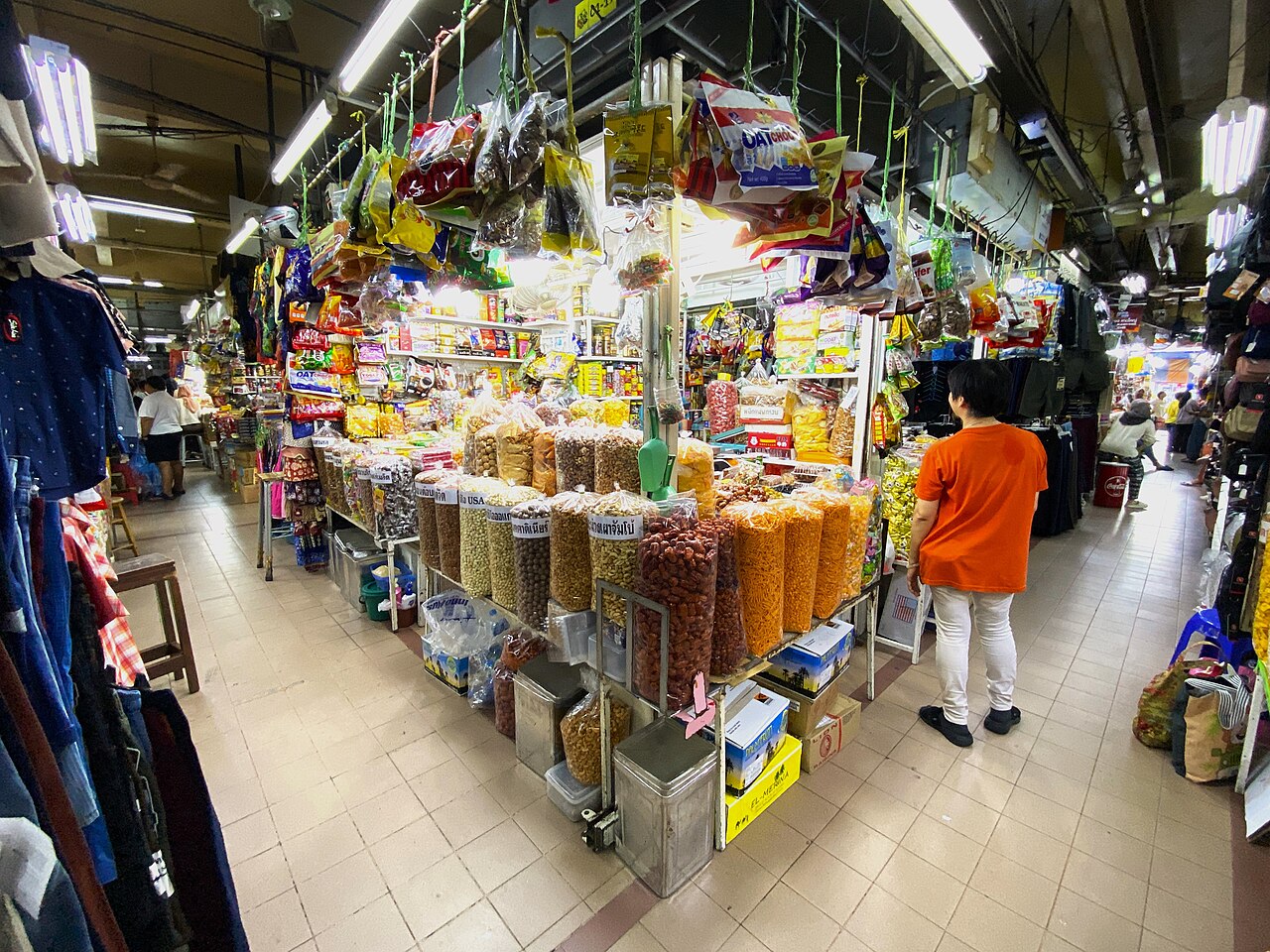
Central Hat Yai — the quarter where the old coffee shops, kopi shops and dim sum halls cluster together with Kim Yong Market, all walkable.
Hat Yai's traditional coffee world starts with kopi — dark-roast Chinese-style coffee, usually brewed through a cloth sock, served hot with sweet condensed milk (kopi) or black with sugar (kopi-o). It's a strong, sweet cup served in a glass or an old porcelain cup. Locals eat it with kaya toast — crisp toast spread with kaya, a jam of egg, coconut and sugar — and two soft-boiled eggs splashed with soy sauce and white pepper. It's the classic Chinese coffee-shop (kopitiam) breakfast you see across the city, and these shops open very early, sitting hand in hand with the city's dim-sum-for-breakfast culture — many people order dim sum to share and sip a kopi or hot Chinese tea alongside.
The city's other coffee world is the modern specialty café, growing every year with the young crowd of this university city. These places focus on espresso, latte and single-origin hand drips, with matcha lattes, cocoa and cold drinks for the non-coffee crowd, and photogenic cakes and bakes. An iced coffee in an air-conditioned room, out of Hat Yai's hot, humid midday, is the picture of the newer café scene — a completely different mood from an old kopi shop.
Get the types straight first, then decide whether today is about traditional Chinese coffee, sitting down to morning dim sum, or a modern air-conditioned specialty café.
The heart of Hat Yai's traditional coffee — Chinese coffee shops in old shophouses, open for decades, brewing kopi, a dark-roast coffee through a cloth sock, served hot with condensed milk (kopi) or black with sugar (kopi-o) in an old porcelain cup. You eat it with crisp kaya toast and two soft-boiled eggs. The mood is marble tables and ceiling fans, a step back into the city's Chinese-southern past. These shops are spread through the downtown core near the markets and open very early. It suits you if you want traditional coffee and the genuine old Hat Yai atmosphere.
In Hat Yai, dim sum is breakfast, and it's usually eaten with coffee. The dim sum shops open at dawn, with people eating shumai, har gow, steamed buns, chive cakes and steamed ribs, served in little bamboo baskets you pick one at a time, alongside a kopi or hot Chinese tea to start the day. It's the Chinese-southern breakfast ritual that defines a Hat Yai morning. The one people mention most is Dim Sum Dee Dee in the city centre — round tables, busy from 6 to 9am. Come early and it's all out and fresh, and you can order a lot to share.
Hat Yai is a university city with a big young crowd, so it has more specialty cafés serious about coffee every year. These places do espresso, latte art and single-origin hand drips, with both Thai and imported beans, aiming for a clean, fruity cup. They're well designed, air-conditioned, with power points and Wi-Fi, good for working or meeting friends, and you'll find them in the downtown core, around Municipal Park and in the Lee Gardens area. To be straight, they cost several times what a kopi does, but you get the atmosphere and a quality cup in a different lane from the old shops.
For non-coffee drinkers or anyone who wants a sweet with their drink, Hat Yai has air-conditioned dessert and bakery cafés across the city, serving cake, croissants and fresh bread plus the drinks the young crowd loves — matcha latte, cocoa, milk tea and fruit smoothies. Many are cutely done and good for photos, and they're a meeting spot for the city's younger set. Hat Yai is hot and humid most of the year, so cold drinks sell well. These cafés suit a late afternoon out of the sun, a cake and a cold drink before you head out to the night market in the evening.
A drink culture many visitors overlook is Hat Yai's Thai-Muslim southern tea shops, serving teh tarik (cha chak — milk tea "pulled" to a froth), iced tea and hot coffee, alongside roti or rice dishes at southern eateries. Prices are very light. It's a local drink that reflects Hat Yai as a southern border city with both Chinese and Muslim cultures mixed in. These shops are spread across the city and open from morning till late — good for a hot teh tarik and roti in the morning or late at night, a different lane from both kopi and the specialty cafés.
If you want a quick cup before a full day out, the easy-to-find chains are the answer. Café Amazon is all over the city, including in petrol stations, cheap and steady. Starbucks and the cafés in the Central Festival Hatyai and Lee Gardens Plaza malls are easy to find with air-conditioned seating. They're good for a morning coffee before you hit the markets, or a mid-day top-up in the heat — predictable, no surprises, handy when you're in a hurry or when you just want an air-conditioned mall seat out of the city's humidity.
The main areas every coffee lover should know — the downtown core is traditional coffee, Municipal Park and Lee Gardens are the modern cafés.
The downtown core around Niphat Uthit, Sanehanusorn and Phetkasem roads is the heart of Hat Yai's traditional coffee. This is where the old kopi shops in shophouses and the morning dim sum halls cluster, walkable from the hotel area without a drive. It's the place to get up early for a kopi, kaya toast and dim sum with the locals, then walk on to Kim Yong Market. This is the area that gives you the genuine Chinese-southern coffee atmosphere of the city — if you want to understand Hat Yai's traditional coffee culture, head here.
The area around Hat Yai Municipal Park — with its cable car and the giant standing Phra Buddha Mongkol Maharaj on the hill — has modern specialty and dessert cafés scattered about, in a more open, greener setting than downtown. It's good for an air-conditioned café and a coffee or matcha after you've been up to pay respects and take in the city view from the hill. These cafés tend to open later through to evening, so they suit late morning to afternoon rather than early. It's an area that pairs sightseeing at the park with a modern café in one trip.
The Lee Gardens area around Lee Gardens Plaza is a shopping-and-hotel zone with several modern air-conditioned specialty cafés, dessert spots and drink shops. It's good for getting out of Hat Yai's heat and humidity over an iced coffee or matcha and a cake while you shop. It's where the young crowd and visitors staying nearby meet up, close to malls like Central Festival with all the coffee chains. It suits you if you're staying in this area and want a relaxed air-conditioned café without travelling far.
Beyond the three main areas, the city's everyday drinks are found at markets and eateries across Hat Yai — Thai-Muslim southern tea shops serving teh tarik, iced tea and hot coffee with roti, open from morning till late, while around Kim Yong Market and the night-market area there are small coffee and drink stalls to grab between eating and shopping. Prices are light and cash-led. These are for a quick cup on the move rather than a long sit, but they're part of the drink culture that sets Hat Yai apart from other cities.
Some are the city's coffee culture you'll find at many shops; some are a breakfast ritual to try · check the latest opening days and hours before you go, as venues change.
The heart of Hat Yai's traditional coffee is the old kopi shops in downtown shophouses, open for decades. They brew kopi, a dark-roast coffee through a cloth sock, served hot with condensed milk or black with sugar (kopi-o), in old porcelain cups, with crisp kaya toast and soft-boiled eggs. The mood is marble tables and ceiling fans, a step back into the city's Chinese-southern past. There are several of these spread near Kim Yong Market and Niphat Uthit Road. To be straight, many don't have a clear sign out front — but ask a local where the old kopi shop is and you'll find it easily. It suits you if you want traditional coffee and the genuine old atmosphere.
One of the most-mentioned dim sum halls in Hat Yai, in the city centre, with the busy round-table feel of a traditional Chinese dim sum house. Order shumai, har gow, steamed buns, chive cakes and steamed ribs to share, served in little bamboo baskets you pick one at a time, with a kopi or hot Chinese tea alongside. It's the Chinese-southern breakfast ritual at its most Hat Yai. Come early, between 6 and 9am, and it's all out and fresh. A basket is around ฿20–40, and a shared breakfast comes to about ฿100–200 a head. Check the latest opening days and hours before you go to be sure.
Hat Yai gains more modern specialty cafés every year with the young crowd of this university city. These places do espresso, latte art and single-origin hand drips with both Thai and imported beans, in well-designed, air-conditioned rooms with power points and Wi-Fi, good for working or meeting friends. You'll find them in the downtown core, around Municipal Park and in the Lee Gardens area. Coffee runs around ฿60–140 a cup. This kind of café opens, closes and moves with the times, so check recent reviews and the current location before you go. It's the other side of Hat Yai coffee, a completely different mood from a kopi shop.
For anyone who wants a sweet with their drink or doesn't drink coffee, Hat Yai's modern air-conditioned dessert and bakery cafés serve cake, croissants and fresh bread plus the popular drinks — matcha latte, cocoa, milk tea and fruit smoothies. Many are cutely done and good for photos, a meeting spot for the city's younger set. You'll find them around Municipal Park, in the Lee Gardens area and in malls like Central Festival. Hat Yai is hot and humid, so cold drinks sell well, and these suit a late afternoon out of the sun before you head to the night market. Drinks run around ฿55–120, cake around ฿50–150.
The local drink that reflects Hat Yai as a southern border city is teh tarik (cha chak) — milk tea pulled back and forth to a soft froth, served hot or iced, strong and sweet. It's eaten with roti, crisp outside and soft within, dipped in condensed milk or curry, or alongside a southern meal. These tea shops are open from morning till late across the city, and prices are very light. It's a drink that tells you Hat Yai has both Chinese and Muslim cultures mixed in — a hot teh tarik in the morning or late at night gives you a southern-border flavour that neither kopi nor a specialty café can. Ask a local where the good teh tarik shop is and you'll find it easily.
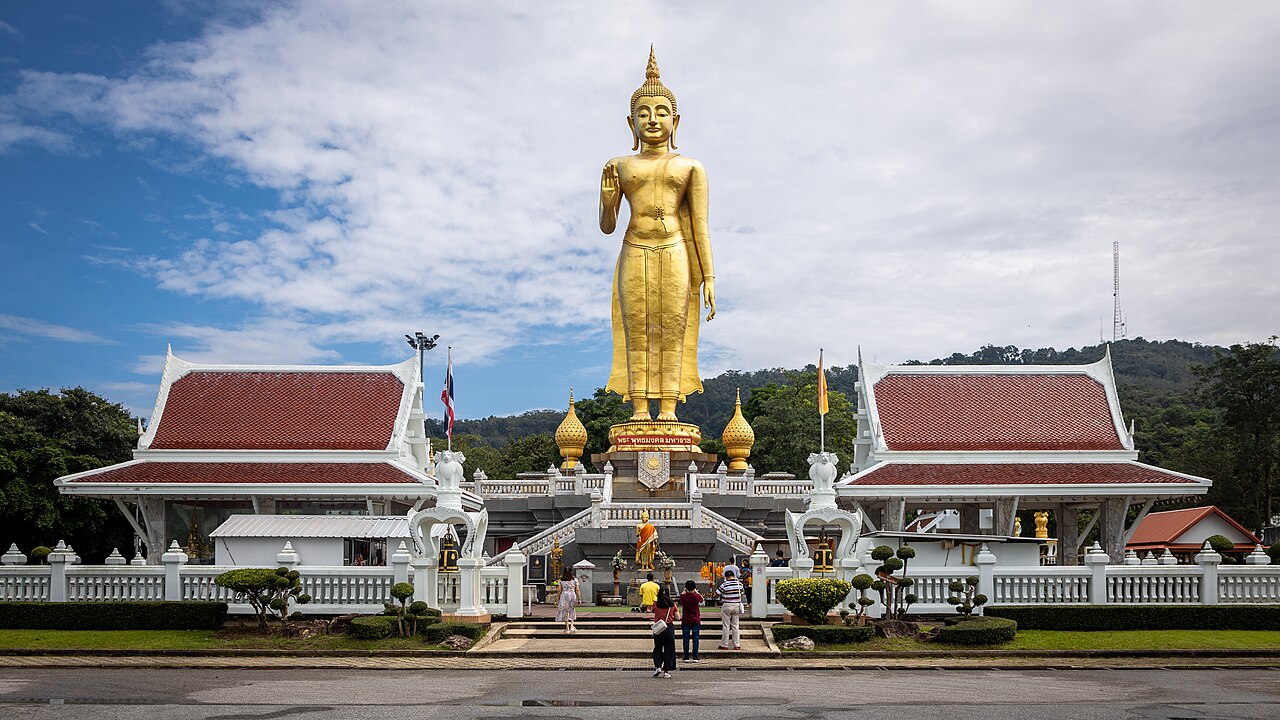
Hat Yai Municipal Park — this area has modern specialty cafés to stop at after going up to the giant Buddha and the city view.
What to drink and eat at a Hat Yai café to taste both the traditional Chinese coffee and the modern café scene.
The most Hat Yai cup there is — kopi, a dark-roast traditional coffee brewed through a cloth sock, served hot with sweet condensed milk; if you want it black, order a kopi-o (black with sugar). Served in an old porcelain cup, it's strong and rounded, made for a Chinese-southern breakfast. Order it with kaya toast and two soft-boiled eggs in the morning and sip it slowly at an old downtown coffee shop — it's how locals start the day, and it costs very little compared with a modern café.
Kopi's partner in a kopitiam breakfast — crisp toast spread with kaya (a jam of egg, coconut and sugar), with some shops tucking a slice of cold butter inside for sweet-and-savoury. You eat it with two soft-boiled eggs cracked into a bowl and splashed with light soy sauce and white pepper, dipping the toast into the egg. It's a simple, light, cheap breakfast you'll find at old coffee shops across the city — a dish that tells the Chinese-southern story of Hat Yai as well as the kopi does.
On the modern side, the drinks that sell in a hot, humid city like Hat Yai are the iced latte and the matcha latte. Specialty shops do latte art from quality beans, while dessert cafés have matcha, cocoa and milk tea for the non-coffee crowd. An iced drink in an air-conditioned room around Municipal Park or the Lee Gardens area, with space to work or meet friends, is the picture of Hat Yai's other coffee world that the young crowd loves. Order a slice of cake with it for the full café feel. It costs more than a kopi, but you get the cool air and a comfortable seat.
A southern-Muslim drink worth trying at least once is teh tarik — milk tea pulled back and forth until it's softly frothy, served hot or iced, strong and sweet. Eat it with roti, crisp outside and soft within, dipped in condensed milk or curry, or alongside a southern meal. These tea shops open from morning till late across the city, and prices are very light. It's the drink that tells you Hat Yai has both Chinese and Muslim cultures mixed in — a hot teh tarik in the morning or late at night gives you a southern-border flavour neither kopi nor a specialty café can.
Hat Yai is easy to pay in — old coffee shops, kopi shops and dim sum halls mostly take cash and PromptPay by QR, so it's easiest to carry some small cash. Modern specialty cafés and places in malls like Central Festival or Lee Gardens usually take Visa/Mastercard too. The city gets a lot of Malaysian and Singaporean visitors, so some cafés in the tourist areas are used to foreign customers, but stalls and small shops in the markets still lean on cash. If you'll need data for the whole trip, see the options in our Thailand SIM & eSIM guide.
The thing to know is that Hat Yai's cafés are two coffee worlds in one city — for traditional coffee and atmosphere, get up early for an old kopi shop and dim sum downtown; for a modern air-conditioned café to work in or meet friends, head around Municipal Park or the Lee Gardens area in the afternoon. Don't try to fit them all into one sitting — with one day, do an old coffee shop in the morning and a specialty café in the afternoon and you'll see both worlds. The old coffee shops and dim sum halls open very early and are at their best from 6 to 9am, while the modern cafés tend to open later.
On seasons, Hat Yai is hot and humid, inland-tropical. The most comfortable time for walking around and sitting outdoors is the cool season, November to February, when the sky is clear and rain is light. October to December is the northeast monsoon, with heavy rain at times (November is the wettest), and in bad years the city has flooded, so pack an umbrella and plan some indoor sitting. That said, indoor coffee — kopi shops, dim sum halls and air-conditioned cafés — works year-round. See the month-by-month detail in our guide to the best time to visit Hat Yai, and check which days the place you want is open, as some modern cafés close on a weekday.
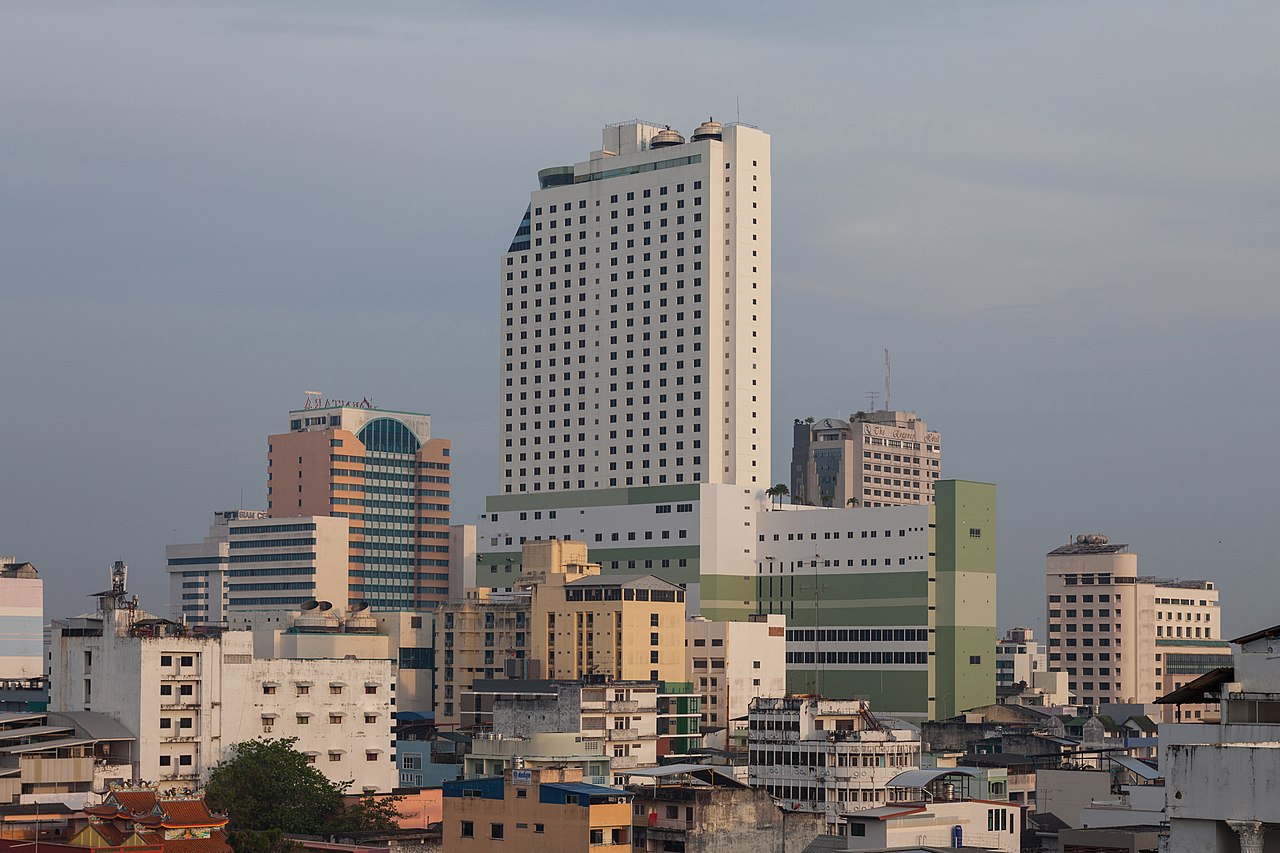
Hat Yai city — staying in the downtown core is the easiest way to reach the old coffee shops, dim sum halls, the markets and the cafés on foot.
Staying in the Hat Yai downtown core or the Lee Gardens area is the easiest way to reach the old coffee shops, dim sum halls, cafés and eating on foot.