Hangzhou has four genuinely distinct seasons — peach blossom on the causeways in spring, a lake full of lotus in summer, osmanthus drifting across the whole city in autumn, and the Lingering Snow on the Broken Bridge in winter. Each has something to offer, and each has something to warn you about.
If you can only pick one month, pick mid-to-late October. Temperatures sit between 12 and 22°C, the sky is a clear deep blue for days at a stretch, humidity drops sharply after the summer, and the scent of osmanthus (桂花) drifts across West Lake on the breeze. You can walk the Bai and Su causeways all day without tiring. One catch: book well in advance and arrive after October 7 — the first week is China's National Day Golden Week, when hundreds of millions of domestic travellers move at once and hotel prices peak.
If your dates land on the Mid-Autumn Festival, all the better — at the Three Pools Mirroring the Moon (三潭印月), locals light candles inside the stone pagodas so the openings glow like moons floating on the water. It is the image on the back of the one-yuan note. Tea lovers should aim for late March to April, the new Longjing harvest, when peach and willow are just coming into leaf. Summer and winter each have their own logic, but both demand more preparation.
The weather, what it delivers, and what you are trading for it — told straight.
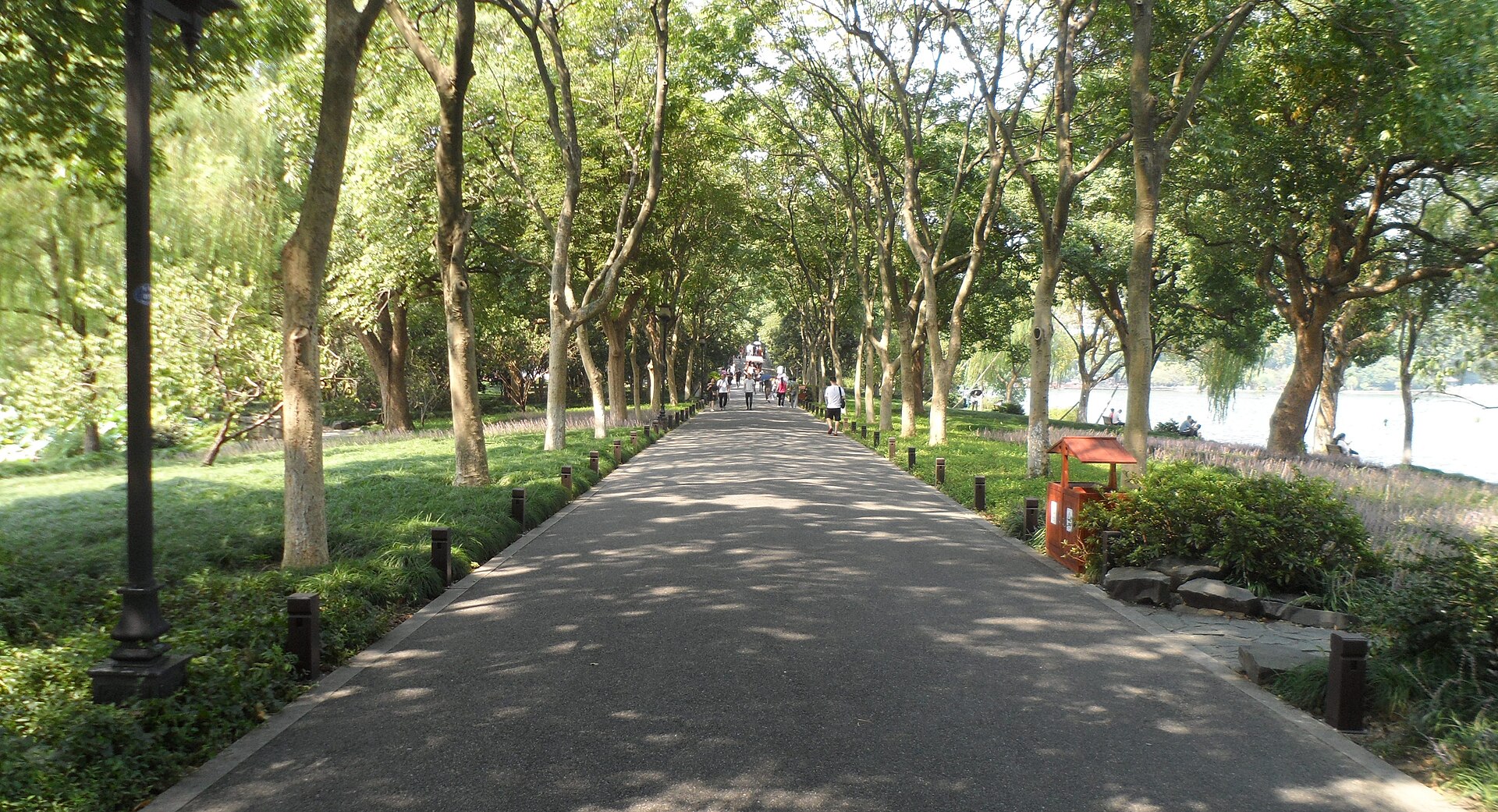
Su Causeway · Spring
Great
This is West Lake at one of its loveliest. The weather is mild, the willows along the Bai Causeway (白堤) and Su Causeway (苏堤) come into fresh green leaf, and pink peach blossom runs in long lines between them. The pairing of willow and peach is the spring symbol of West Lake that Chinese poets have written about for a thousand years. Walk the lakeside early, before the crowds arrive — that is the best of it.
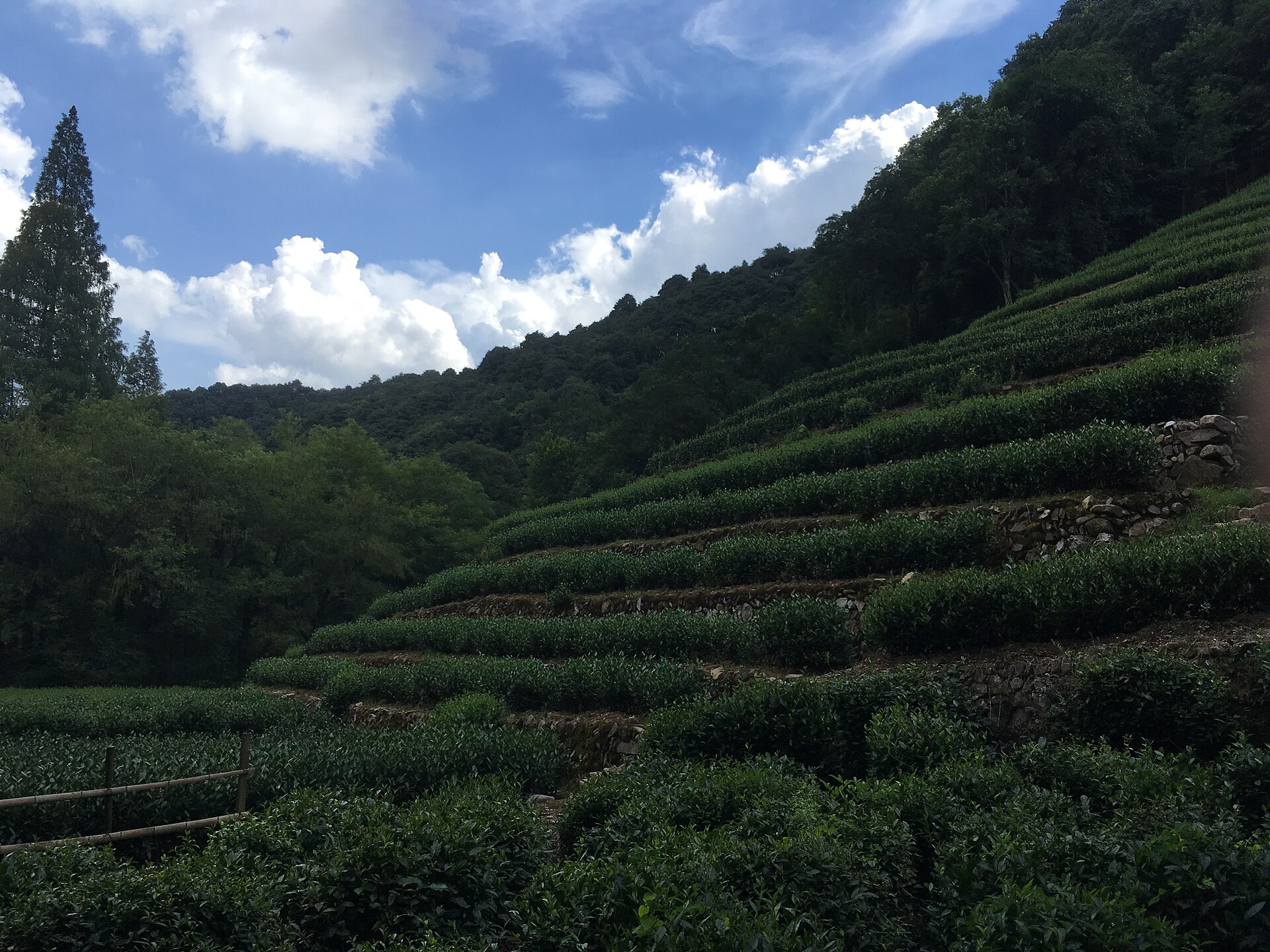
Late March also brings the new Longjing tea (明前) — head up to the terraces at Longjing Village and you can watch villagers hand-picking leaves. May warms to 18–22°C and stays pleasant, but watch the Labour Day Golden Week (1–5 May), when domestic travel surges.
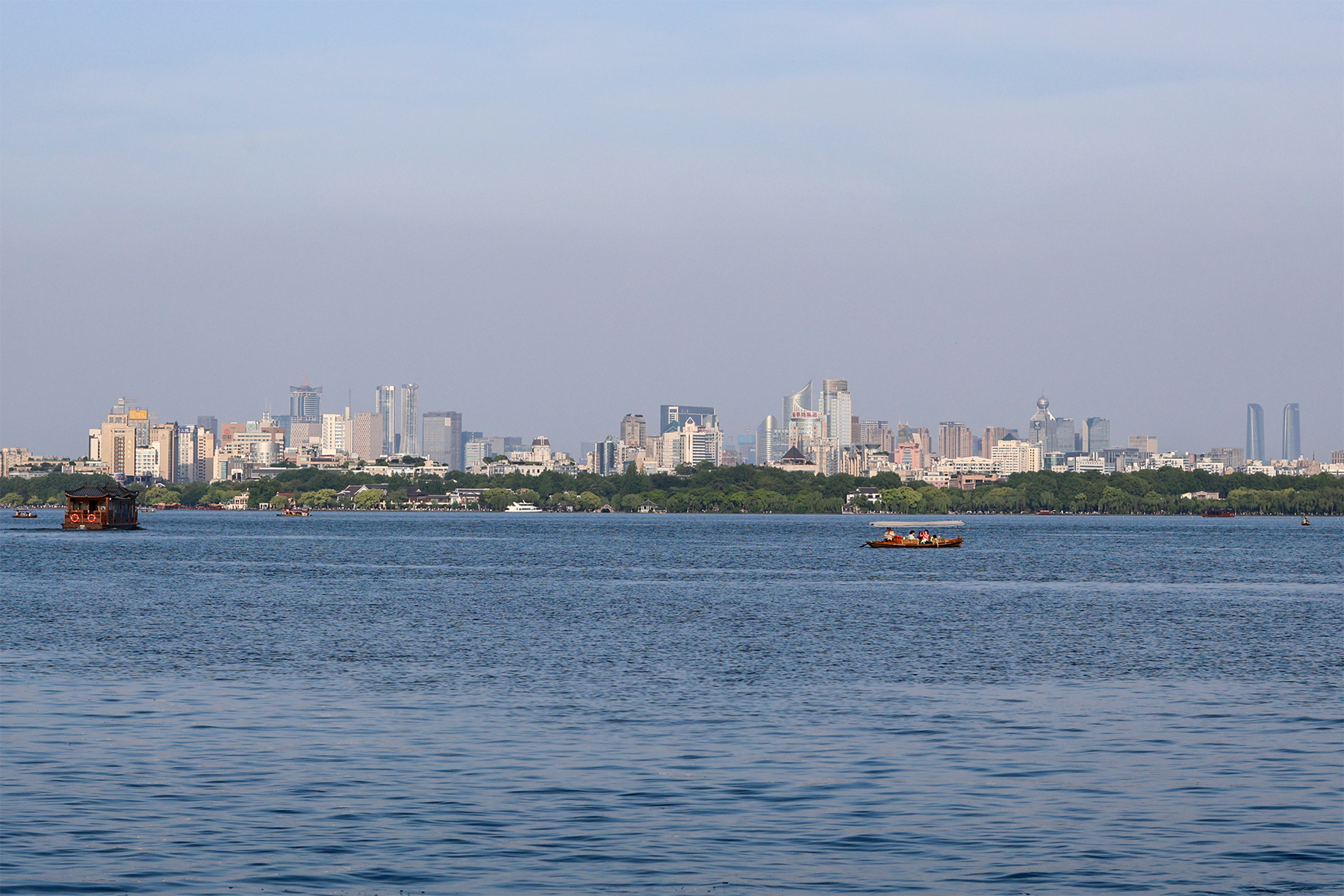
West Lake · Summer
Come prepared
Hangzhou in summer is hot and humid, and heavier than the thermometer suggests — some days touch 35–38°C, and the moisture off the lake makes the air feel thick. From mid-June the city enters Meiyu (梅雨), the plum rain season, when drizzle and downpours alternate for weeks. When the rains lift in July the heat intensifies and typhoons become a real possibility through September.
But summer brings one great gift — a lake full of lotus, peaking from mid-July to early August, most spectacularly at Quyuan (曲院风荷). A sea of green leaves and pink blooms at dawn is the reason many people brave the heat. Go before 8 am, ahead of the sun and the crowds.
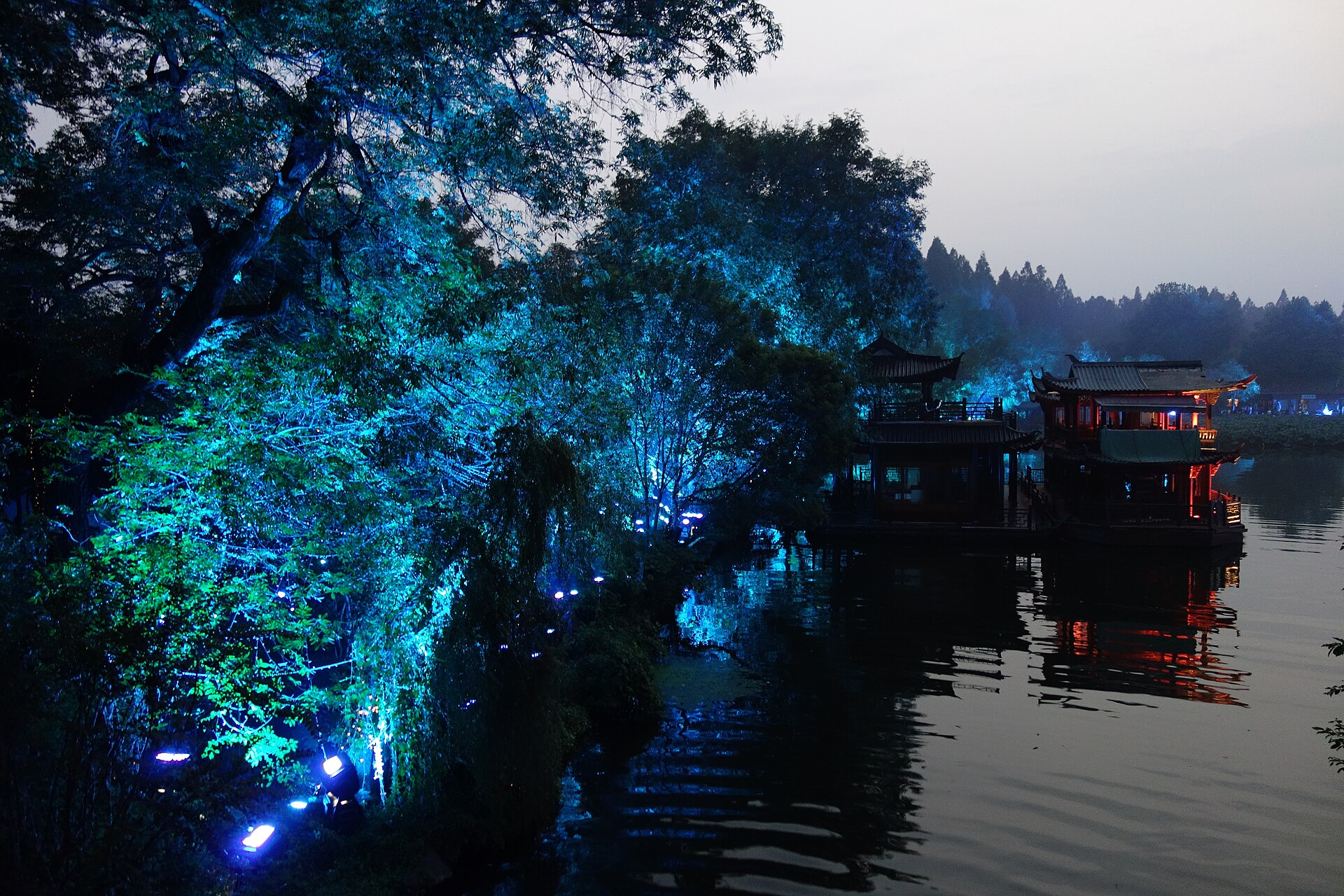
West Lake at night · Autumn
The best
This is Hangzhou at its clearest and most comfortable. The sky turns deep blue, humidity drops, and temperatures settle at 12–25°C — perfect for walking all day. The charm no other season can match is the scent of osmanthus (桂花), in bloom from late September to mid-October, drifting right across the city around the lake. The famous spot is Manjuelong Village (满觉陇), where more than 7,000 osmanthus trees line the hillside paths.
Time it with the Mid-Autumn Festival and it gets better still — at the Three Pools Mirroring the Moon (三潭印月), candles lit inside the lake's stone pagodas glow through the openings like moons floating on the water. By late November the leaves turn gold and amber around Lingyin and the lakeshore.
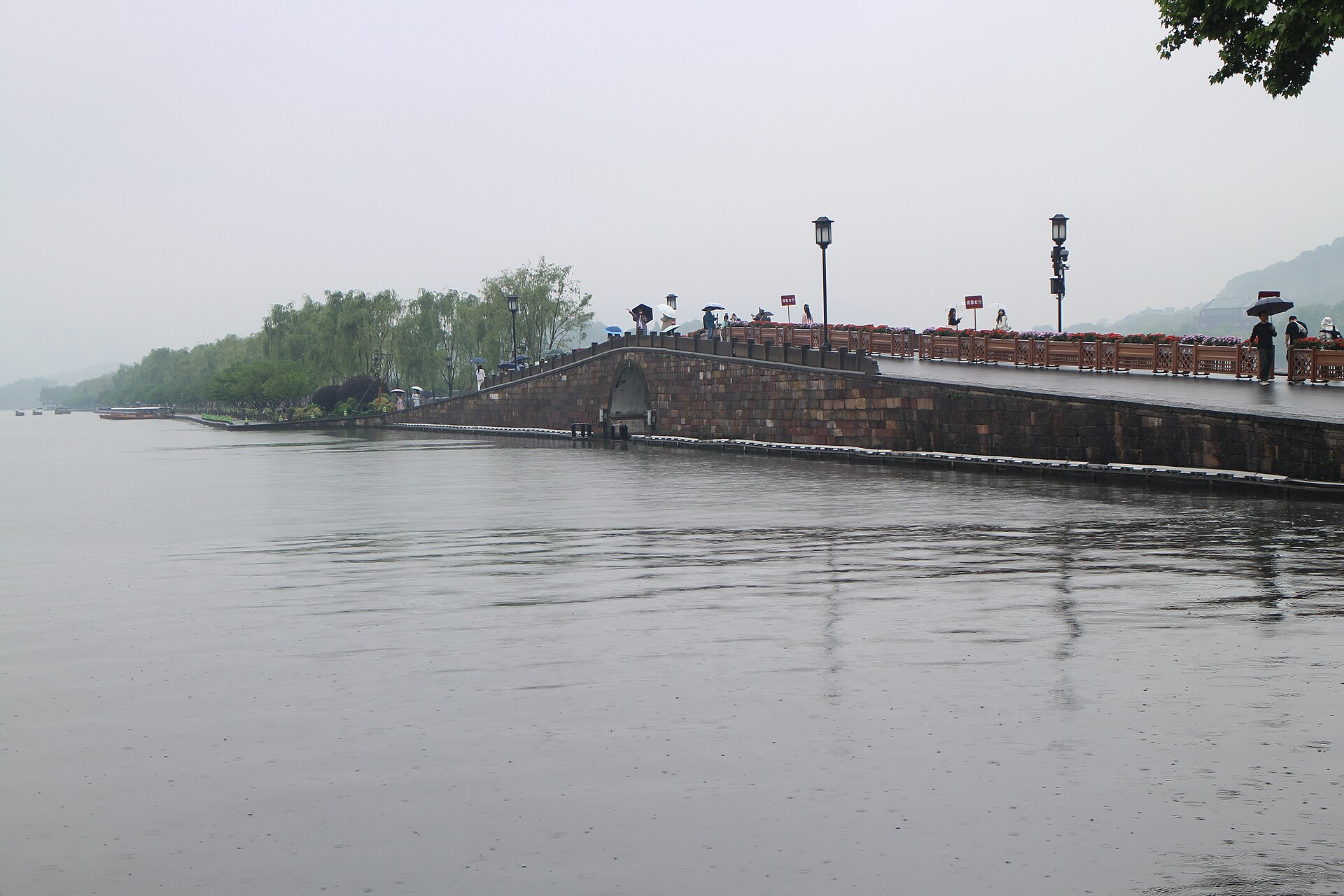
Broken Bridge · Winter
Its own kind of charm
Hangzhou gets genuinely cold, and more so than the numbers suggest. Average temperatures run 1–9°C, but humidity off the lake and a damp wind make it feel closer to freezing. Snow is uncommon, but if you are lucky enough to catch it, the scene known as Lingering Snow on the Broken Bridge (断桥残雪) — one of the Ten Scenes of West Lake, where the snow melts on the north side first and the bridge appears to break in two — is the image Hangzhou lovers dream of. Indoor heating is inconsistent — pack a heavy coat.
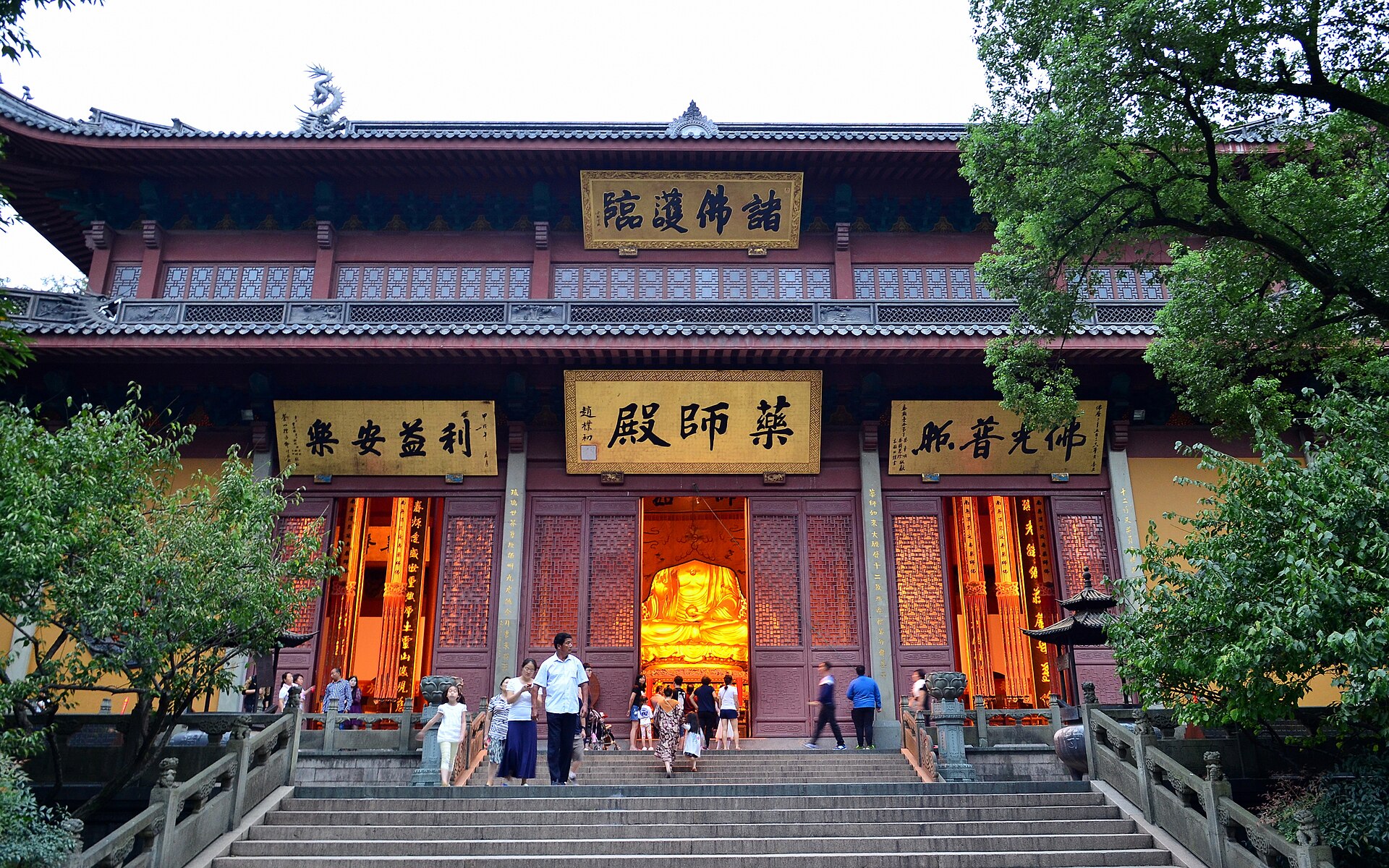
Chinese New Year (late January or February) brings festive crowds, lanterns and lights to Lingyin Temple and the old Hefang Street, but many small restaurants close for 7–14 days, high-speed rail tickets become hard to get, and prices spike. Outside Chinese New Year, winter is the quietest and cheapest season by a wide margin — and West Lake in the morning mist has a still, quiet beauty all its own.
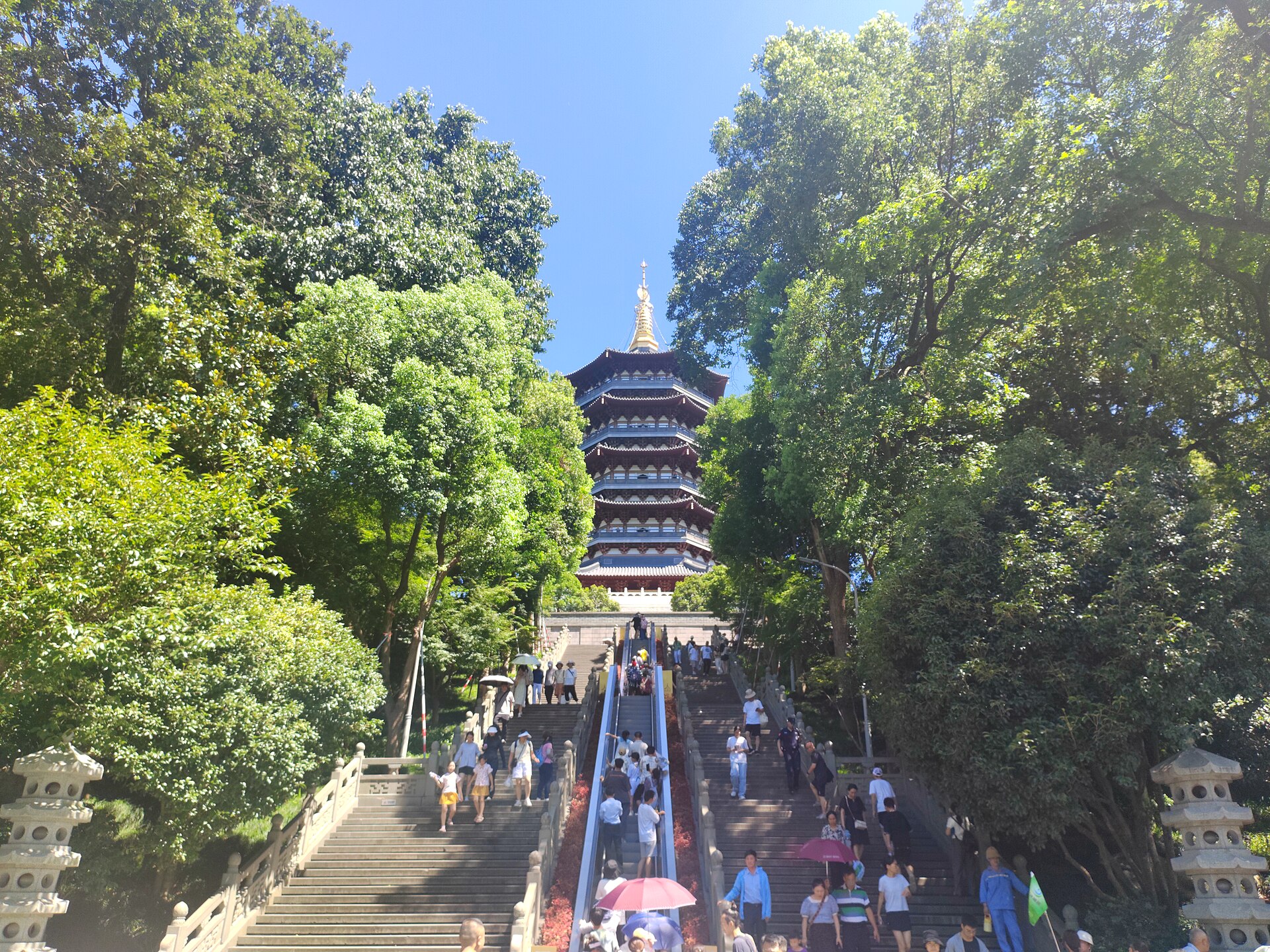
Temperature, rainfall and crowd levels — in one table for easy comparison.
| Month | Temperature | Rain | Crowds | Notes |
|---|---|---|---|---|
| January | 1–9°C | Low | Low | Coldest month · cheapest hotels · chance of Broken Bridge snow |
| February | 2–11°C | Moderate | High (CNY) | Chinese New Year — shops close · trains packed |
| March | 6–15°C | Moderate | Moderate | New Longjing tea late month · peach blossom begins |
| April | 11–21°C | Moderate | Moderate | Willow and peach blossom · best tea-terrace walking |
| May | 17–25°C | Moderate | High (Golden Week) | 1–5 May: Labour Day crowds and price spike |
| June | 21–30°C | Heavy (plum rain) | Moderate | Meiyu plum rains from mid-month · lotus begins |
| July | 26–38°C | Heavy | Moderate | Hottest and most humid · lotus peak · typhoon risk |
| August | 26–36°C | Heavy | Moderate | Still hot · late lotus · typhoon season continues |
| September | 20–28°C | Low | Moderate | Osmanthus begins late month · weather improving |
| October | 15–23°C | Very low | High (Golden Week) | 1–7 Oct: peak crowds · after 8th: best of the year · osmanthus |
| November | 9–18°C | Low | Moderate | Autumn foliage around Lingyin · clear skies |
| December | 4–12°C | Low | Low | Low prices · quiet West Lake in the mist |
China's national holidays generate the largest annual human movements on Earth — and West Lake is one of the places Chinese travellers flock to most.
The largest Golden Week of the year. Hundreds of millions of domestic trips happen in this single week, and Hangzhou is among the top destinations. The Bai and Su causeways and the lakeshore become so crowded that walking slows to a crawl, and West Lake boat queues stretch for hours. Hotel prices hit their annual peak. That said, the weather is excellent and the osmanthus is fragrant — manageable if you book ahead and accept the crowds. The obvious workaround: arrive on or after October 8, when the weather is identical but the crowds dissolve.
China's second major holiday window. Domestic tourism surges; West Lake and Lingyin Temple become difficult to walk through. Hotels fill and prices rise by 30–60%. It coincides with fresh green willows and fine weather, which only pulls more people in. If you must travel during this period, book accommodation six to eight weeks ahead and start each day early.
China's largest holiday. Hundreds of millions travel to their home towns and tourist destinations at once. The atmosphere at Lingyin Temple and around the old Hefang Street is festive — lanterns, lights, colourful crowds. But hotels charge peak prices, small restaurants and local shops close for 7–14 days, and high-speed rail tickets book out far ahead. If you want the festival itself, plan everything well in advance; if you want a normal trip, pick a different time.
These are reasons to time your visit, not reasons to avoid it.
Mingqian Longjing — picked before the Qingming Festival, around 4–5 April — begins in late March. These are the tenderest, most prized buds, and the most expensive. April is the best month to walk the terraces at Longjing Village and Meijiawu, where you can watch villagers hand-pick the leaves and pan-roast them fresh in the wok. Sipping green tea in the fields in mid-spring is a Hangzhou experience you will find nowhere else.
West Lake's lotus peaks from mid-July to early August. The best viewing is at Quyuan (曲院风荷, Breeze-Ruffled Lotus at Quyuan), one of the Ten Scenes of West Lake — a broad sweep of green leaves as far as you can see. It is hot and humid, but a lake full of lotus at dawn is the reason many people brave the summer. Go before 8 am, ahead of the strong sun.
Hangzhou has been famed for moon-viewing since ancient times. On the festival night, locals light candles inside the stone pagodas at the Three Pools Mirroring the Moon (三潭印月); the light through the openings looks like several moons floating on the water. Another spot is Autumn Moon over the Calm Lake (平湖秋月) on the shore. It falls right in the middle of osmanthus season, when the whole city is fragrant.
Not exhaustive — just the things that actually matter for Hangzhou.
Whatever month you arrive, there is something worth seeing.