Pattaya has no metro or city train — but the blue baht bus (songthaew) loops the beachfront all day for a fixed ฿10, flagged down anywhere with a wave. Back it up with motorbike taxis and Grab, and once you know how the loop works, getting around Pattaya is easier than you'd think.
If you're used to hopping on the BTS or MRT to get anywhere in Bangkok, here's the first thing to know: Pattaya has no metro, subway or city train. This beach city runs entirely on wheels and roads. It sounds like a hassle, but it's much easier than you'd think, because Pattaya already has a cheap, easy local transport system doing the heavy lifting.
The real workhorse is the songthaew, which everyone calls the "baht bus" — a blue converted pickup that loops the city all day. The fare is a fixed ฿10 per ride on the normal loop, you flag one down anywhere with a wave, and you press a buzzer to get off — no booking, no waiting at a stop. Backing it up are motorbike taxis that are fast and reach deep side streets, Grab for a fare locked in the app, and walking around central Pattaya.
There's one thing worth knowing from the start: the single most useful skill in Pattaya is learning to use the baht bus. Knowing which way the loop runs, what the normal fare is, and when you need to agree a price before getting in. This guide walks through every way to move around Pattaya, honestly, with the pros and cons of each — plus the tips that keep you from being overcharged.
Cheap, all-day, flagged down anywhere — once you understand the loop, this is the real workhorse of a Pattaya trip.
In a city with no train, the best stand-in is the blue songthaew. The key to it is that it runs in a "loop," not door-to-door like a taxi. Pattaya's main route runs down the beachfront (Beach Road) from North Pattaya heading south, then back up Second Road heading north, going round and round all day and night. You just stand on the side of the road facing the direction you want to go, wave it down, and climb into the back.
Wave down a blue songthaew coming your way and climb onto the bench seats in the back — no need to tell the driver your destination if you're going along the normal loop. When you're near your stop, press the buzzer (bell) on the ceiling or a post, the truck pulls over, and you walk round to pay at the driver's window.
The fare on the normal loop is a fixed ฿10 per person per ride. Have coins or small notes ready and it's effortless. You don't negotiate if you're staying on the main route — this is exactly where tourists get it wrong and end up overcharged.
The common trap: you climb into a songthaew and name a specific destination, and the driver treats it as a private hire at ฿100–300, because you've asked to leave the loop. If you're going along the normal route, say nothing — just get in, buzz to stop and pay ฿10.
But if you want it to go somewhere off the loop — deep into a soi (side street), up Pratumnak Hill, or somewhere far — always ask and agree the price before you get in. If the price isn't right, wave down another one or switch to Grab or a motorbike taxi, which keep the fare clearer.
Let's say it plainly so there's no confusion: Pattaya has no BTS skytrain, no MRT subway, and no in-city rail of any kind. Everything moves on the road — there's no underground shortcut or elevated line like Bangkok's. So traffic and road conditions are something to plan around, especially on evenings and long weekends when crowds drive down from Bangkok.
The in-city workhorse. Loops Beach Road–Second Road all day at ฿10/ride — flag it, buzz to stop. Used most often.
Fast, slips through traffic, reaches deep side streets. Agree the price first, roughly ฿40–100 by distance. Riders wear coloured vests.
Fare shown before you book, paid in-app, no haggling. Good with luggage, going far, or heading back late. Cars can be scarce at times.
The most freedom, around ฿200–300/day, but traffic is heavy, checkpoints ask for a permit, and crashes are common — ride with care.
People often ask about the "Pattaya railway station" they see on the map — that's the State Railway eastern-line station on the edge of town, with very few, slow trains. It's a budget option for a leisurely trip in and out of Bangkok, not an in-city transit system for sightseeing around Pattaya. Don't plan your days around the train; the baht bus and Grab match the reality far better.
Motorbike taxis in coloured vests wait at ranks (win) on corners and at key spots across town. They're great when traffic is jammed or you need to get deep into a soi the baht bus won't enter. Short hops in town are around ฿40–60, longer trips or crossing areas ฿80–150.
Tip: agree the price before you get on every time, since most have no meter, and ask for a helmet (riders usually carry a spare). If you'd rather not haggle, order a GrabBike in the app instead and the price is shown clearly.
Grab works in Pattaya for both cars (GrabCar) and motorbikes (GrabBike). Its strength is that you see the fare before you tap to book and pay in the app — no haggling, no worrying about detours. It suits you when you've got luggage, are heading back late, or are going somewhere the baht bus loop doesn't reach.
The honest truth: in some areas and at some times, Grab cars are scarce and slow to arrive, especially where motorbike-taxi ranks control the patch. For short hops along central Beach Road the baht bus is usually cheaper and quicker, so keep Grab for longer or late-night trips.
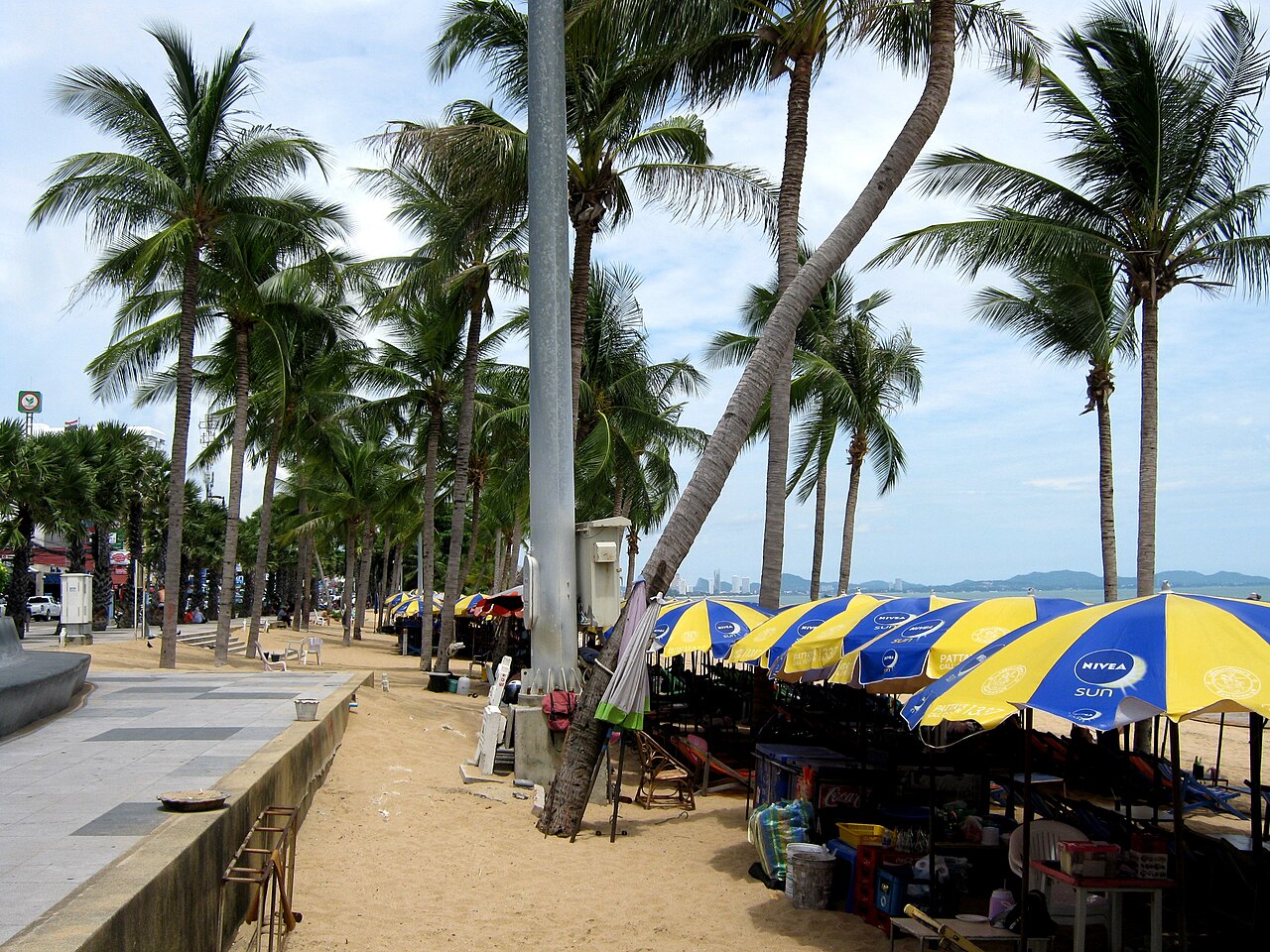
Walking
Central Pattaya is comfortable to walk. The beachfront (Beach Road) runs right along the sea and is pleasant to stroll out of the midday sun, while Walking Street is pedestrian-only in the evening and at night, closed to traffic, so you can wander freely. More in our Walking Street guide.
But honestly, Pattaya's areas sit too far apart to walk between — central Pattaya to Jomtien or Wong Amat is a long way, footpaths can be narrow or broken in places, and middays are hot. Walk within an area, then use the baht bus to connect between areas, and you'll have it right.
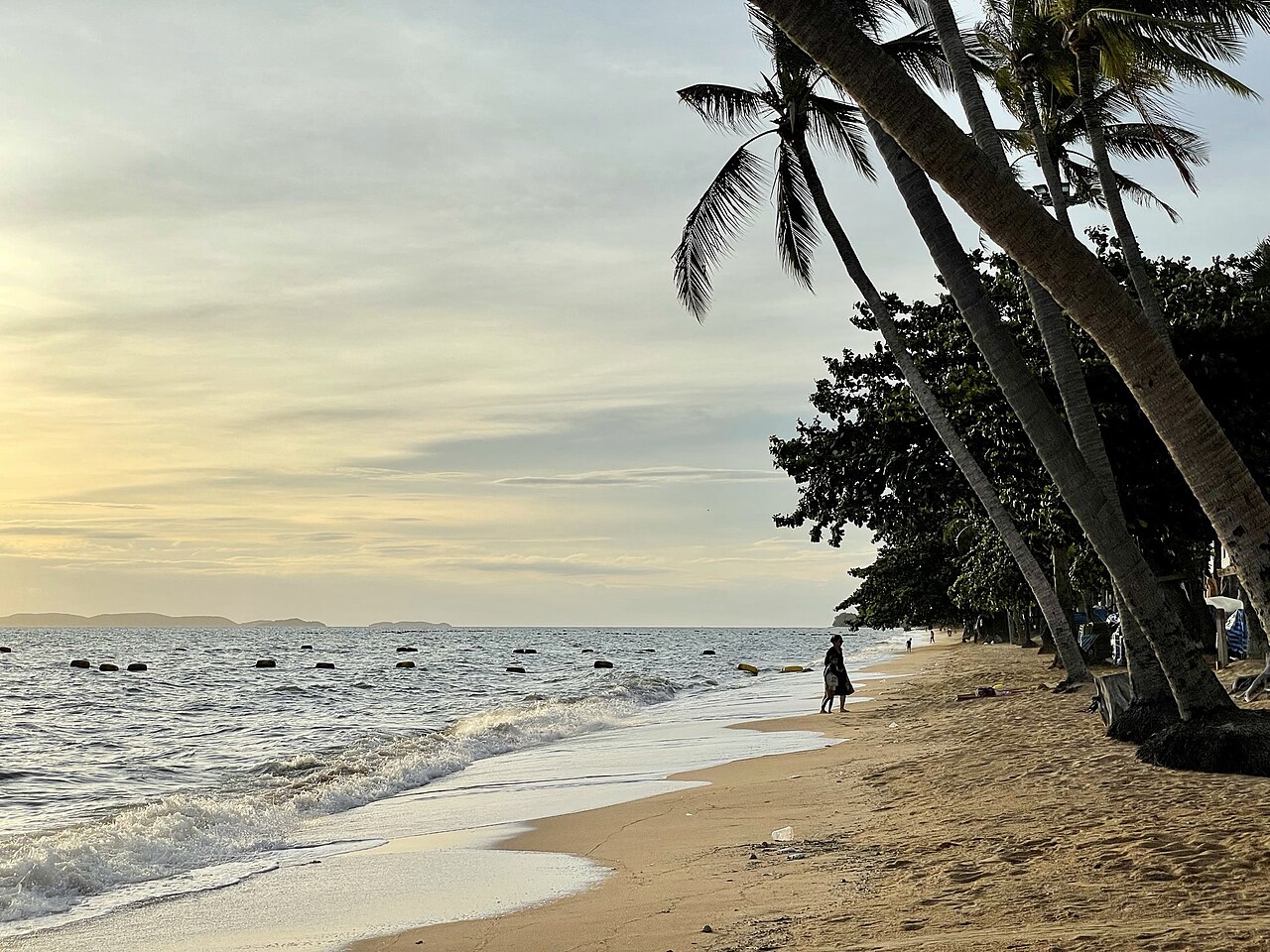
Scooter rental
There are scooter rental shops all over Pattaya, at around ฿200–300 a day, giving you the freedom to reach Jomtien, Pratumnak, Naklua or the viewpoints easily in a day. It suits confident riders who are used to Thai roads.
Honest safety note: Pattaya traffic is heavy and fast, and there are frequent checkpoints asking for an international driving permit and a helmet, with fines if you don't have them. Tourist crashes are common, so don't risk it if you're not used to it. If you do rent, wear a helmet every time, photograph the bike's condition before taking it, and never let the shop hold your actual passport (leave a copy or a deposit instead).
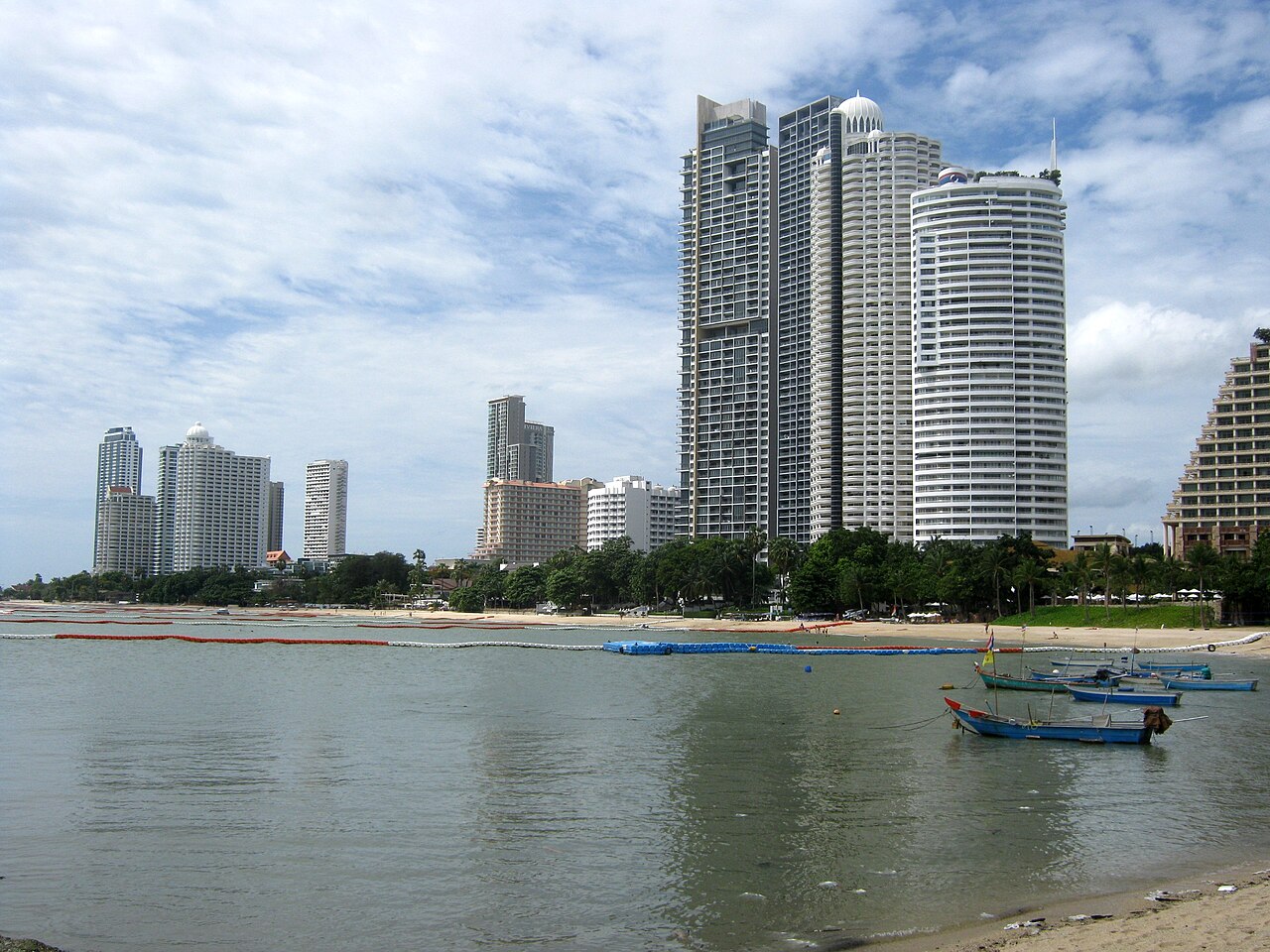
This is worth understanding before you book flights, since Pattaya isn't a place you can easily fly straight into.
Worth knowing before you plan: Pattaya has no airport in town. U-Tapao (UTP) sits about 45 minutes south but has very limited flights, so nearly all visitors fly into Bangkok Suvarnabhumi (BKK) and continue to Pattaya in about 1.5–2 hours. Or, if you're already in Bangkok, Pattaya is a popular weekend or day trip from the capital.
| Option | Time + rough price | Best for |
|---|---|---|
| Suvarnabhumi–Pattaya airport bus (Bell Travel) | ~1.5–2 hr · ~฿130 | Coming from BKK on a budget, light luggage |
| Minivan | ~1.5–2 hr · ~฿150–250 | Frequent, flexible, but more cramped |
| Taxi / private transfer | ~1.5–2 hr · ~฿1,300–1,800 | Groups/families, lots of luggage, door to door |
| Bus from Bangkok (Ekkamai / Mo Chit) | ~2 hr · ~฿120–160 | Anyone already in Bangkok |
| Fly into U-Tapao (UTP) | +~45 min into town · few flights | Only if you have a direct flight to UTP |
Pattaya splits into several areas that sit fairly far apart, and each suits a different way of getting around. The simple rule: along the Beach Road–Second Road loop, use the ฿10 baht bus; to cross areas or go off the loop, use Grab or a motorbike taxi. Pick a base in the area you most want to explore and you'll save both time and money.
| Area | Where it is | Best way to get around |
|---|---|---|
| Central Pattaya | The centre · on the baht-bus loop | Baht bus ฿10 + walking — the easiest |
| Jomtien | South of central · long beach | Jomtien-line baht bus (~฿20–30) or Grab |
| Wong Amat–Naklua | North · quiet, upscale | Mostly Grab/motorbike, or a private songthaew hire |
| Pratumnak Hill | The hill between Pattaya and Jomtien | Motorbike taxi / Grab / scooter (it's hilly) |
| Bali Hai Pier (for Ko Larn) | Far south end of the beachfront | Baht bus down to the pier, then the boat to Ko Larn |
Pattaya isn't complicated on the app front the way some overseas cities are. Google Maps works fully in Thailand — maps, routing and location. The two things you really want are a ride-hailing app and sorted mobile data.
Install it and link a card or set up GrabPay in advance. Use it to hail both cars and motorbikes in Pattaya, see the fare before you book without haggling, and even order food (GrabFood). It's a handy way to keep the price clear when you don't feel like negotiating with a songthaew or motorbike taxi.
Use it for accurate routing, place locations and distances around Pattaya. It helps you see whether your destination is "on the baht-bus loop" or off it, so you can decide whether to take the ฿10 songthaew or call a Grab.
Don't forget mobile data: sort out an eSIM or travel SIM before you arrive in Thailand, since ride-hailing, maps and payments all need a connection. See packages and setup in our Thailand eSIM & SIM guide.
If we had to boil it down to two points: one — learn to use the baht bus. Know that the loop is Beach Road heading south, then Second Road heading north; on that route you just wave it down, buzz to stop and pay ฿10 — no naming your destination, no negotiating. If you want to leave the loop or hire it privately, agree the price before you get in every time. That's the skill that keeps you from being overcharged all trip.
Two — pick a base in the area you want to explore. Pattaya's areas sit fairly far apart and there's no train to link them, so stay where you'll spend the most time (usually Central Pattaya, which is on the loop), then use the baht bus and Grab to cross to other areas occasionally. It saves far more time and money.