Home Bangkok Chiang Mai Thailand About
Home  ›  Asia  ›  Thailand  ›  Bangkok  ›  Bangkok vs Chiang Mai
First Trip to Thailand · 2026

Bangkok or Chiang Mai
which one first?

Big-city energy or the laid-back north — two very different faces of Thailand. Here is how to choose, before you book.

The dilemma

Two cities, two faces of Thailand

You've decided on Thailand for your first trip — and then you stall on the booking page, unable to choose between landing in Bangkok or flying up to Chiang Mai. Almost everyone planning a first visit hits this exact wall, and there isn't one right answer, because these two cities deliver genuinely different experiences.

Bangkok is Thailand's full-throttle capital — the Grand Palace and Wat Phra Kaew, Wat Arun, Wat Pho, Yaowarat (Chinatown) street food, the vast Chatuchak weekend market, malls like ICONSIAM, riverside rooftop bars, and a BTS/MRT system that carries you across the whole city. This is the city that never sleeps, with everything in one place. Chiang Mai is the slow-paced north in the hills — a square walled old town with Lanna temples like Wat Chedi Luang and Wat Phra Singh, Doi Suthep looking down over the city, elephant sanctuaries, northern cooking classes, garden cafes, and air that is noticeably cooler than Bangkok's.

Here's the part most people miss: the two cities are only about a 70-minute domestic flight apart. So for many travellers the best answer isn't "which city" — it's "do both". This guide compares them honestly across every factor, then shows you how to fit both into a single trip.

Quick verdict

The short answer, before the detail

If you need to decide right now

Here for big-city energy / want it around the clock / into food, shopping, temples and nightlife Choose Bangkok — the Grand Palace, Wat Arun, Yaowarat, Chatuchak, big malls and rooftop bars, with the BTS/MRT to get you everywhere. One city with everything, and the main gateway most flights land in.
Want an easy, cool-weather start / into nature, culture and cafes Choose Chiang Mai — a slow-paced old town, beautiful Lanna temples, Doi Suthep, elephant sanctuaries, northern cooking classes and night markets. The gentler first city for anyone who likes to relax.
Bangkok · The Capital

The full-throttle capital, the city that never sleeps
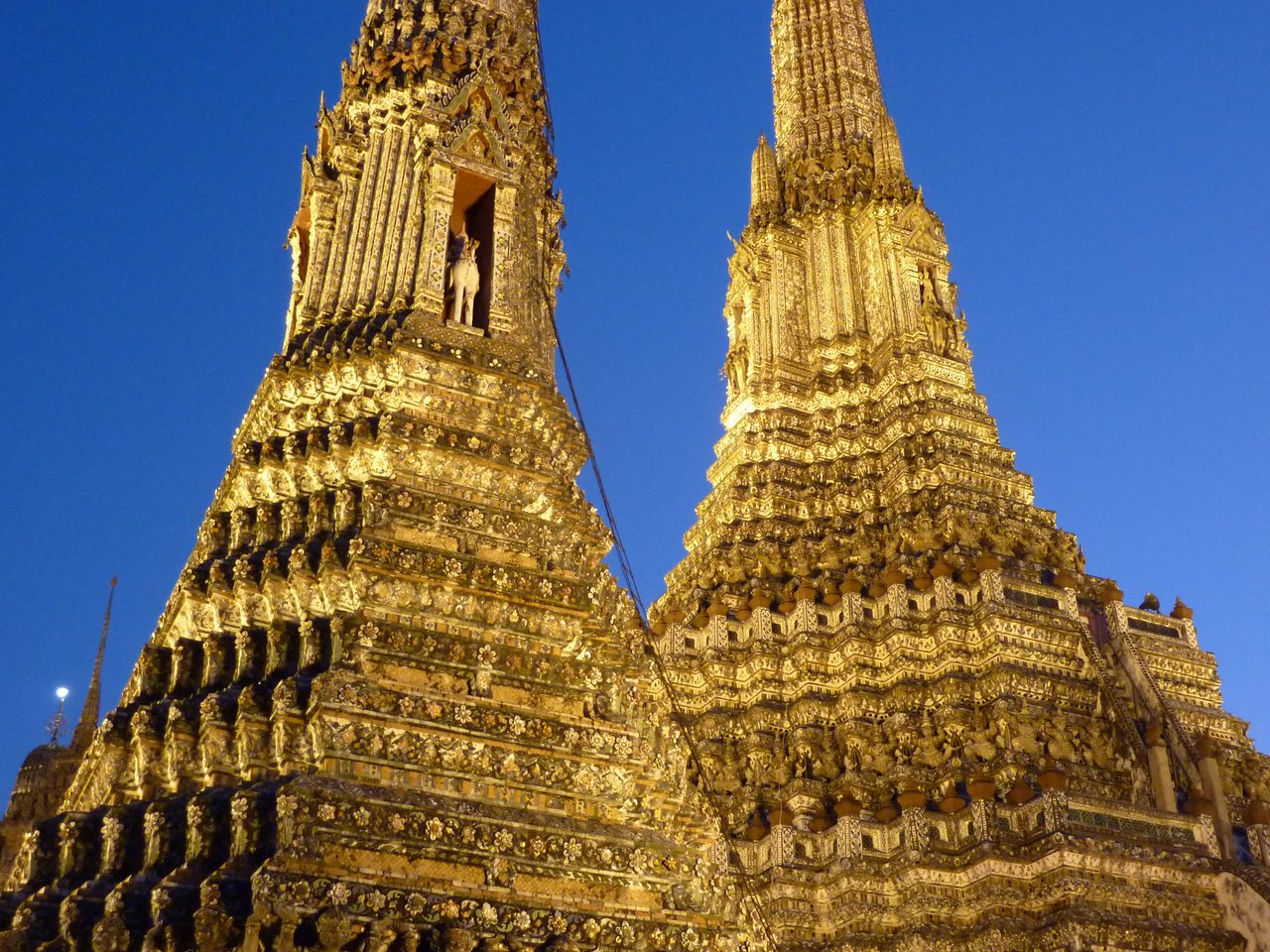
Wat Arun on the Chao Phraya River in Bangkok — the white prang at sunset against the city skyline

Bangkok packs everything into one place. The Grand Palace and Wat Phra Kaew sit at the heart of Rattanakosin island and still astonish on every visit. Wat Arun is the riverside prang at its most beautiful in the late afternoon, and Wat Pho holds the enormous reclining Buddha. On the modern side, ICONSIAM rises over the Chao Phraya, the big malls run all day, Chatuchak is one of the largest markets in Asia, and Lumpini Park is there for a morning run.

But the real draw is the food and the nightlife — the buzz of Yaowarat street food after dark, famous spots like Jay Fai and Thipsamai, cafes all over town, and rooftop bars with skyline views such as Sky Bar, Vertigo and Octave. Eating at a street stall and then moving on to a cocktail high above the city in one evening is a kind of magic that's hard to find elsewhere. And getting around is easy on the BTS/MRT across most of the city.

Pros & cons
Extensive, air-conditioned BTS/MRT with bilingual signs — the easiest transit in Thailand
Grand Palace + Wat Arun + Wat Pho: the country's most iconic temples in one city
Yaowarat street food + famous stalls + cafes + fine dining at every budget
Rooftop bars with skyline views and nightlife that runs around the clock
Shopping in every form — ICONSIAM, big malls, Chatuchak, every kind of market
The country's main gateway: nearly all international flights land here
Heavy traffic at rush hour and hot, humid weather most of the year
The old town around the Grand Palace has no BTS — you use boats or a taxi
Busy, loud and fast — it can wear you out if you prefer the quiet
Central-district accommodation costs more than Chiang Mai
Where to start · Bangkok

Start planning the Bangkok side

🛕
Grand Palace + Wat Arun + Yaowarat
The headline sights · temples by day, street food by night

These three are the heart of Bangkok. Read our full attractions guide for opening hours, ticket prices, how to get there and the best times to avoid the crowds before you plan your trip.

All Bangkok attractions →
🧭
First-timer guide + 3-day plan
Start here · the BTS/MRT, payment and where to stay

If Bangkok is your first city, start with our first-timer guide and ready-made 3-day itinerary. You'll know which day to do what, how to ride the BTS/MRT, and which neighbourhood is most convenient to base yourself.

See the 3-day plan →
Chiang Mai · The North

The laid-back north, cradled by mountains

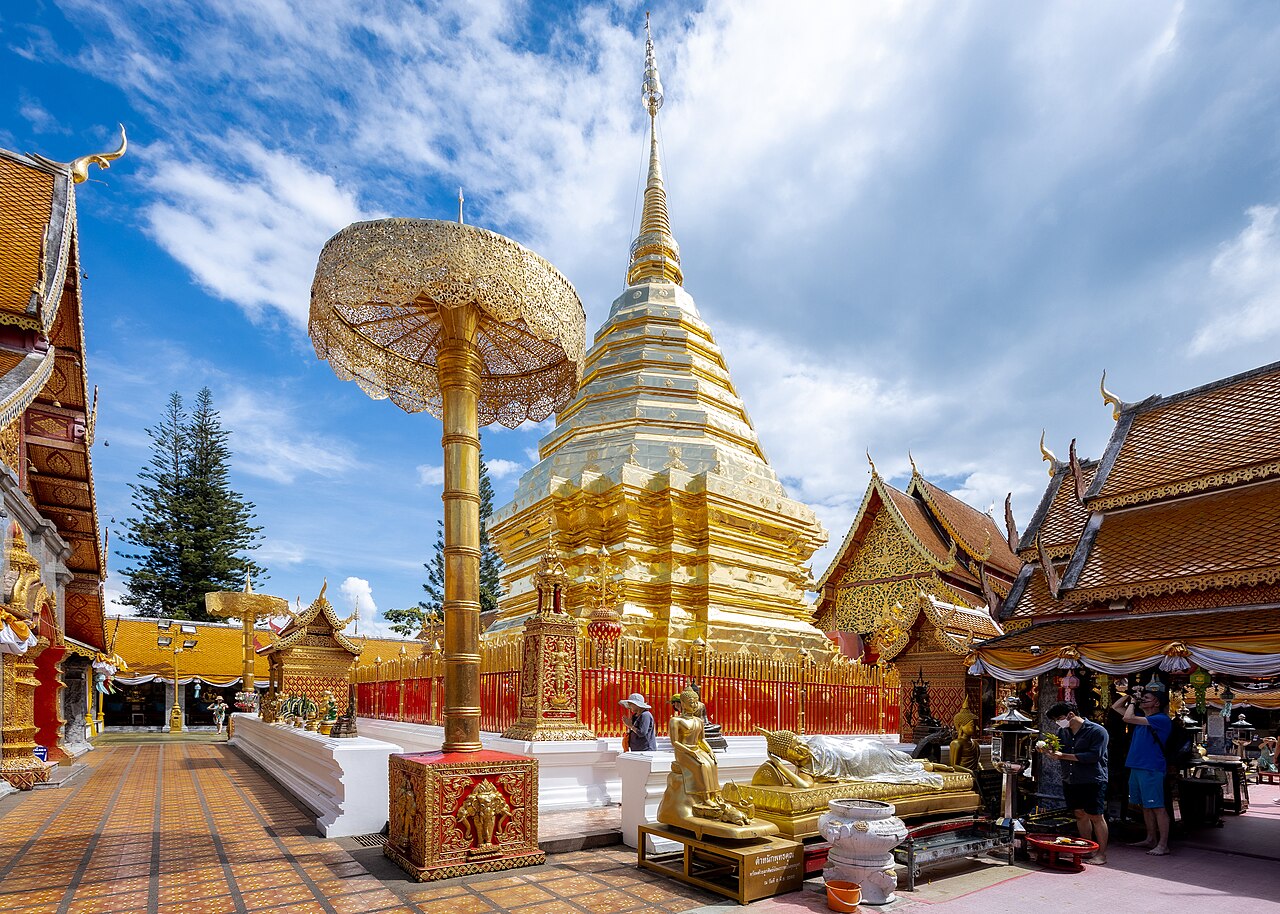
Chiang Mai slows your pace the moment you arrive. The old town is a square inside ancient walls, with Tha Phae Gate and easy temple-walking among Lanna landmarks like Wat Chedi Luang, with its huge ancient chedi, and Wat Phra Singh. Doi Suthep is the temple on the mountain that overlooks the whole city, and the night markets — the Night Bazaar and the Sunday Walking Street — fill up with crafts and northern food.

For a first trip to Thailand, Chiang Mai often feels gentler. It's a small city with kind locals and cooler air than Bangkok, and there's plenty to do outdoors — ethical elephant sanctuaries with no riding, northern cooking classes, waterfalls, farms and the garden cafes the city is known for. It's a place to settle into and soak up slowly, rather than rush to tick everything off.

Wat Phra That Doi Suthep in Chiang Mai — the golden chedi and tiered umbrella on the mountaintop overlooking the city below
Pros & cons
Slow, relaxed pace — a small, walkable city, great for anyone who likes to unwind
Beautiful Lanna temples — Wat Chedi Luang, Wat Phra Singh, Doi Suthep with city views
Elephant sanctuaries, waterfalls, farms and northern cooking classes
Cooler than Bangkok, especially November–January
Distinctive northern food — khao soi, sai ua, hang lay curry, and lots of cafes
Accommodation and food generally cheaper than Bangkok
February–April is the smoky season — air pollution rises and haze can hide the hills
No rail; in town you use red songthaews, Grab or a scooter (agree the songthaew fare first)
Nightlife is much quieter than Bangkok and winds down earlier
No single monument on the scale of the Grand Palace
Where to start · Chiang Mai

Start planning the Chiang Mai side

⛰️
Old town + Doi Suthep + night markets
The headline sights · Lanna temples + city views

The heart of Chiang Mai is in this set of sights. Read our full attractions guide for hours, prices, how to get around, and the best time of day to see each one at its most beautiful.

All Chiang Mai attractions →
🧭
First-timer guide + 3-day plan
Start here · where to stay, how to plan

If Chiang Mai is your first city, start with our first-timer guide and ready-made 3-day itinerary — including advice on whether to base yourself in the old town or the Nimman area.

See the 3-day plan →
Side by side

The full comparison, in one table

Factor Bangkok Chiang Mai
Vibe Full-throttle capital, a city that never sleeps, modern and busy Slow-paced northern city in the hills, Lanna culture
Headline sights Grand Palace · Wat Arun · Yaowarat · ICONSIAM Old town · Doi Suthep · elephant sanctuaries · night markets
Good for first-timers Yes — main gateway, easy BTS/MRT, but busy and hot More relaxed — small, kind locals, cooler, but you fly in separately
Getting around Extensive BTS/MRT + Chao Phraya boats (old town needs boat/taxi) No rail — red songthaews, Grab or scooter; small enough to walk
Food Yaowarat street food, central Thai, cafes, fine dining — every style Northern food — khao soi, sai ua, hang lay curry, lots of garden cafes
Temples Grand Palace/Wat Phra Kaew · Wat Arun · Wat Pho — grand in scale Lanna temples — Wat Chedi Luang, Wat Phra Singh, Doi Suthep on the mountain
Nightlife Around the clock — rooftop bars, bars, clubs, night markets Quieter — mostly night markets and small bars, winds down earlier
Day trips Floating markets · Ayutthaya · cycling around Bang Krachao Doi Inthanon · Bua Tong sticky waterfall · elephant sanctuaries · Chiang Rai
Weather Hot and humid most of the year; coolest November–February Cooler; November–January is best; Feb–Apr smoky season, high pollution
Overall budget Options at every budget, but central stays and dining cost more Cheaper overall — better value on accommodation and food
The decision

Choose this city if you are…

Someone who wants big-city energy — grand temples, street food, shopping, rooftop bars — choose Bangkok. No other city in Thailand packs this much into one place. Do the Grand Palace and Wat Arun in the morning, walk Yaowarat after dark, then finish on a rooftop bar.
On your first ever trip to Thailand and wanting an easy, slow start — choose Chiang Mai. It's a small city with kind locals and cooler air, the old-town Lanna temples are a pleasure to walk, and there's plenty to do outdoors without any pressure.
Travelling as a family who wants nature and animals — choose Chiang Mai. Ethical no-riding elephant sanctuaries, farms, flower gardens and waterfalls let kids get close to the outdoors in cooler air. If you'd rather have indoor attractions and water parks, though, Bangkok has those covered.
Visiting in February to April and worried about haze — choose Bangkok. The central plains are less affected by the northern burning season. If you do head to Chiang Mai then, check the air-quality reading and pack a mask.
Travelling with seven days or more — do both. A roughly 70-minute domestic flight links them, so you can see the big city and the laid-back north in a single trip. Read how to combine them below.
The honest answer for many

Why not do both?

✈️ Bangkok + Chiang Mai in one trip

This is what many Thailand travellers eventually figure out: you don't have to choose. The two cities are about 700 km apart, but they're easy to connect several ways. A domestic flight takes around 70 minutes, with dozens of daily departures from Don Mueang and Suvarnabhumi and cheap fares if you book ahead. Or take an overnight sleeper train on the northern line (about 11–13 hours), which many travellers love, or a long-distance bus (roughly 9–11 hours).

If you have seven days or more, doing both is the most complete first trip to Thailand there is — the big city and the laid-back north in one go. Compare domestic flight prices and book tours that link the cities on Klook.

START IN
Bangkok, 3–4 days
Do the Grand Palace, Wat Arun, Yaowarat, Chatuchak and the rooftop bars while you're fresh — this is where international flights land.
FLY NORTH
~70-min flight
Don Mueang / Suvarnabhumi → Chiang Mai. Book ahead for the best fares, or take the overnight sleeper train for the experience.
FINISH IN
Chiang Mai, 3 days
A more relaxed rhythm — old-town temples, Doi Suthep, an elephant sanctuary, a northern cooking class and the night markets.
Frequently asked

FAQ · Bangkok vs Chiang Mai

Should I visit Bangkok or Chiang Mai first on a first trip to Thailand?
If you want big-city energy — the Grand Palace and Wat Phra Kaew, Wat Arun, markets, malls, Yaowarat street food, rooftop bars and a city that runs around the clock — start in Bangkok. It's the main gateway most international flights land in, and it has everything in one place. If you'd rather start somewhere slower and cooler, with a small walkable old town, Lanna temples, elephant sanctuaries and the mountains, Chiang Mai is the gentler introduction for a first-timer. Both are excellent in different ways, and if you have seven days or more, the honest answer is to do both. See the Thailand travel guide for the bigger picture.
Which city is easier to get around for first-time visitors?
Bangkok has an extensive BTS Skytrain and MRT metro — air-conditioned, with bilingual signage and card or QR payment — which makes neighbourhoods like Sukhumvit, Silom and the riverside very easy. The catch is the old town around the Grand Palace and Wat Pho, which has no train into its core, so you use the Chao Phraya river boats or a taxi/Grab. Chiang Mai has no rail at all: in town you rely on red songthaew shared trucks, Grab, or a rented scooter. The old town is small enough to walk, and fares are cheap, but agree the price before getting into a songthaew. Overall Bangkok's transport is more modern, while Chiang Mai is slower but a much smaller city, so neither is genuinely hard. See the Bangkok first-timer guide and the Chiang Mai first-timer guide.
How far apart are Bangkok and Chiang Mai, and is it easy to do both?
The two cities are about 700 km apart, with several ways to connect them. A domestic flight is fastest at around 70 minutes, with dozens of daily departures from both Don Mueang and Suvarnabhumi airports, and cheap fares if you book ahead. The northern railway takes about 11–13 hours and includes popular overnight sleeper services. Long-distance buses take roughly 9–11 hours. Doing both cities in one trip is very doable — ideal if you have seven days or more. See the best months to go in our best time to visit Chiang Mai guide.
How bad is Chiang Mai's smoky season, and which months should I avoid?
The period to watch is February to April, the agricultural burning season in the north, when air pollution often rises noticeably and on some days the haze hides the mountains entirely. Anyone with dust sensitivity or breathing problems should bring a mask and check the air-quality reading before going. Bangkok, in the central plains, is less affected and has no equivalent burning season. If you want Chiang Mai with clear skies and sharp mountain views, aim for November to January, when the air is cool and comfortable and the haze hasn't arrived yet. More in best time to visit Chiang Mai.
Which city is better for travelling with kids?
Bangkok has plenty of indoor attractions — an aquarium, big malls such as ICONSIAM, water parks and museums — which are ideal on very hot or rainy days, and the BTS has lifts at many stations. Chiang Mai is stronger on nature and animals: ethical no-riding elephant sanctuaries, farms, flower gardens and waterfalls, with cooler air and children getting close to the outdoors. Both can be fun with kids; it comes down to whether your family prefers the city or nature. See the sights in the Chiang Mai attractions guide.
If doing both, should I start in Bangkok or Chiang Mai?
Most people start in Bangkok, because almost all international flights land there. Do the temples, markets, street food and shopping while you're fresh, then fly north to finish in Chiang Mai at a more relaxed pace — resting, exploring nature and taking a cooking class. A common split is 3–4 days in Bangkok plus 3 days in Chiang Mai, linked by a roughly 70-minute domestic flight or an overnight sleeper train if you want the experience. See the Bangkok 3-day plan and the Chiang Mai 3-day plan.