A city the world knows for its Terracotta Army and its belt-wide hand-pulled noodles is quietly growing a specialty coffee scene of its own — café alleys under the city wall, a young crowd of serious baristas, and a ¥30 cup that's better than you'd expect.
Let's be straight from the start: Xi'an is not a coffee city. The world knows it for the Terracotta Army, for the best-preserved Ming-era city wall in China, and for the cumin-scented, chilli-bright wheat food of its Hui Muslim quarter. If you were coming to Xi'an purely for coffee, we'd talk you out of it. But if you're already here, and you want a genuinely good cup one morning, there's far more on offer than you might guess.
The real story is that China is shifting from a tea-drinking country to a coffee-drinking one at remarkable speed. Nationwide coffee consumption grew roughly 57% between 2019 and 2023, and Xi'an is riding that wave. The city's Gen Z and millennials grew up with café culture; chains like Luckin and Manner have opened branches across town; and, more interestingly, small independent cafés run by owners who take beans and brewing seriously have appeared in the old lanes around the Bell Tower.
We'll keep this honest throughout. Xi'an's coffee scene is clearly smaller than Shanghai's or Chengdu's. There is no single street here with fifty cafés on it. What there is, instead, is properly good coffee in a city with a setting like no other — sipping an espresso in a lane a few steps from a 600-year-old city wall is an experience Shanghai simply can't give you.
Inside the old walls, the small lanes around the Bell Tower and Drum Tower hold the densest concentration of cafés in Xi'an.
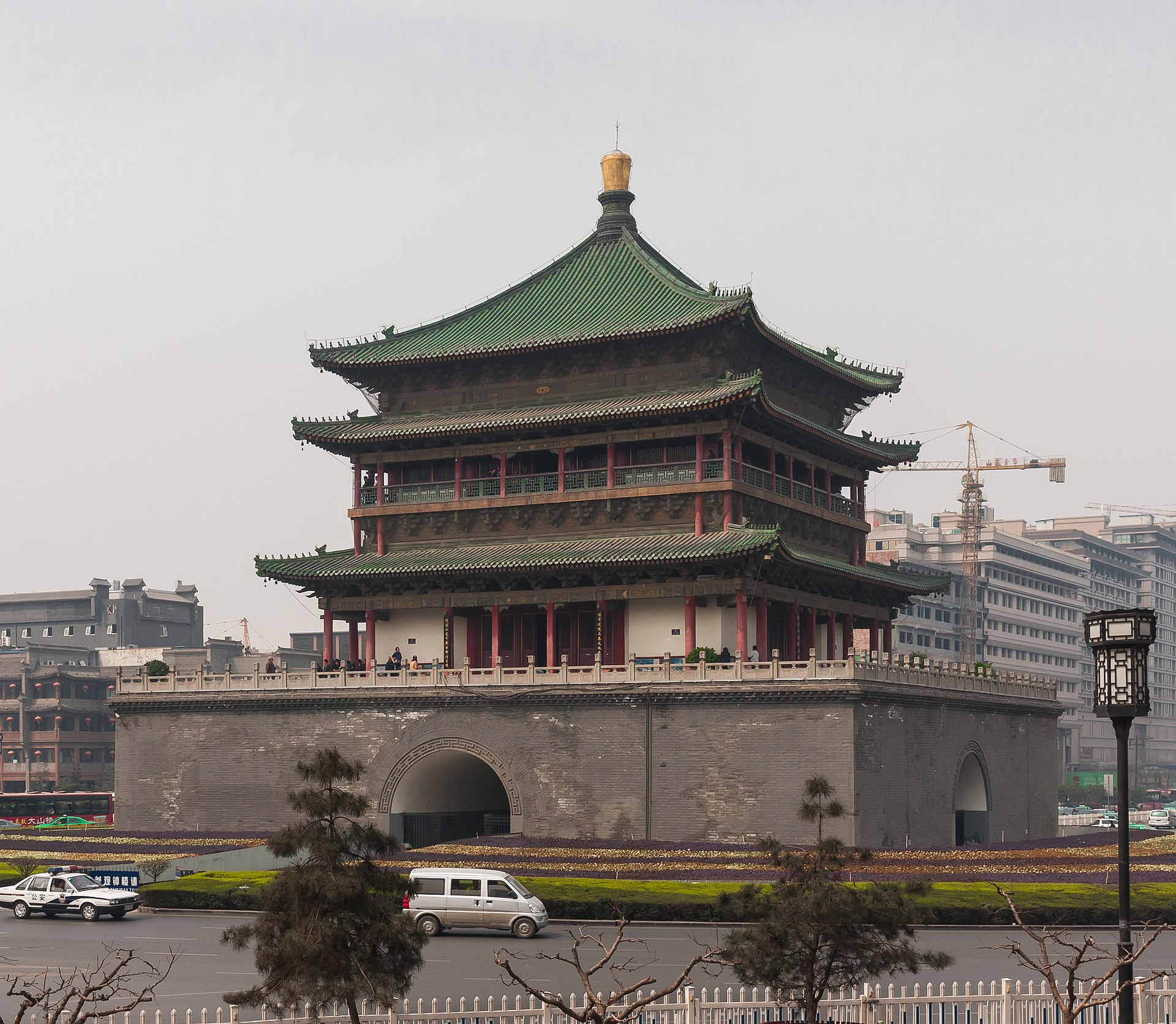
The centre of old Xi'an is anchored by the Bell Tower (钟楼) and the Drum Tower (鼓楼), standing at the main crossroads of the walled city. Within a few minutes' walk of them sits the heart of the coffee scene — not because there are hundreds of cafés, but because several of the most interesting ones have chosen to open in the narrow lanes here.
The standout is Defu Lane (德福巷), an alley less than 200 metres long that runs near the southern stretch of the city wall. It has a long-standing reputation as a "cafés by day, bars by night" street — mornings are for sipping coffee, reading, and watching the baristas work; come evening the soft lighting goes on and the same lane turns into a bar district. Nearby are art lanes like Huoyaoju Lane (火药局巷), lined with artist studios, small cafés and boutiques, and Zhongliu Lane (中柳巷), a narrow, photogenic alley that a younger crowd loves, full of independent cafés and minimalist shops.
Understand the categories before you go, then choose the mood you want for the day.
The heart of Xi'an's growing coffee identity: small places run by owners who genuinely care about beans and brewing. Some serve single-origin pour-over; some roast in-house. A handful are talked about in coffee circles for the quality of their beans and championship-level roasting, and others for careful, unhurried hand-brew. There aren't dozens of them the way there are in Shanghai — but the ones that exist are good enough to anchor a whole morning.
This is Xi'an's signature: old lanes under the city wall that have become clusters of cafés and artist studios. Defu Lane is the famous café-by-day, bar-by-night alley, while Huoyaoju Lane and Zhongliu Lane hold small, minimalist-designed spots where the young crowd comes to take photos, drink coffee and browse the boutiques. The atmosphere here is what sets Xi'an apart — coffee in a city that has history in every lane.
If you want a good, cheap coffee before a day of sightseeing, these chains are everywhere in Xi'an. Luckin Coffee is the cheapest — order on the app and a cup starts at a little over ¥10. Manner Coffee runs 30–40% below Western brands and is surprisingly accomplished. Starbucks has a Reserve store on South Street near the Bell Tower with attractive interiors and an exclusive menu. None of these are a let-down — genuinely good coffee for under ¥20.
Around Xiaozhai (小寨) in the south of the city is a dense student district — and where there are students, there are cafés. The places here have a relaxed college feel, Western food on the menu, plenty of seating, and the kind of room you can settle into with a laptop for half a day. Sculpting in Time (雕刻时光) is a name locals know well, with several branches near the universities. Prices are friendlier than the specialty spots in the old city.
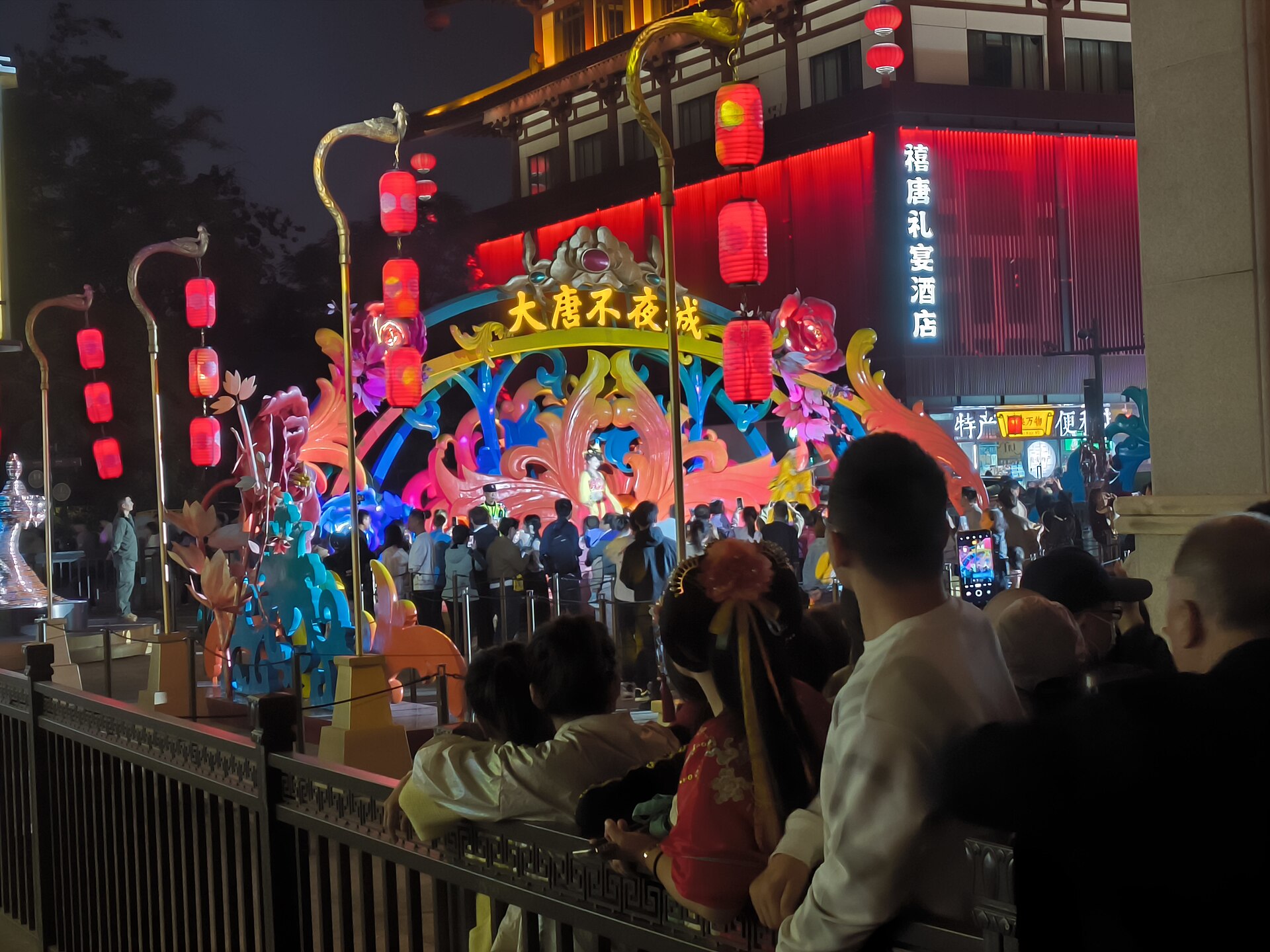
South of the city around the Big Wild Goose Pagoda (大雁塔) and Datang Everbright City (大唐不夜城) is a busy tourist zone that comes alive in the evening, with more mall and lane cafés opening all the time. Me Coffee Art Space inside MOMOPARK is decorated in a European style with the owner's own collections on display, and there are camera-friendly concept cafés around too. It's a good break between visiting the pagoda and watching the evening fountain show. Prices run a little higher than the university district, in keeping with the tourist location.
Xi'an has its share of concept cafés built for photos and a bit of theatre. Some are art spaces with work on the walls; some have novelty drinks like "knock coffee," where you tap a little hammer to crack the chocolate shell before you drink. These spots are scattered across both the old city and the newer mall districts. The coffee may not be the main event, but if you want a café that's fun and shareable, Xi'an has plenty to choose from.
Four areas every coffee-minded visitor to Xi'an should know — each with a different feel.
Xi'an's legendary café alley, under 200 metres long, near the southern city wall. Cafés by day, bars by night, with coffee houses, tea rooms and dessert shops in a continuous run. Mornings are quiet and made for sipping over a book. Walk on a little further and you reach Huoyaoju Lane and Zhongliu Lane, full of independents and minimalist shops to explore.
South Street (南大街) runs south from the Bell Tower and mixes chains with design-led spots. The Starbucks Reserve on South Street has a coffee-bean wall and an exclusive menu, and there are literary, retro-styled cafés around too. A handy stop while you explore the old city — good coffee is easy to find here, at every price level.
A southern district dense with universities and students. Cafés here have a relaxed college feel, friendly prices and roomy seating — ideal for a laptop afternoon or a light catch-up over lunch. Sculpting in Time (雕刻时光) has a branch in this area that locals know. Not hardcore specialty, but cafés you can genuinely live in for an afternoon.
The area around the Big Wild Goose Pagoda and Datang Everbright City is a tourist zone that buzzes in the evening, with mall and lane cafés opening all the time. Me Coffee Art Space inside MOMOPARK is one carefully-decorated example. A good break between visiting the pagoda and waiting for the evening fountain show. Prices sit a little above the university district, in line with the location.
These are real, well-known spots in the city — but small cafés open, close and move often, so check the latest location and hours on Amap or Dianping before you set out.
Not a single café but a whole alley — and the best starting point for anyone who wants to feel out Xi'an's coffee scene. Under 200 metres long, it packs cafés, tea rooms and dessert shops side by side; walk in and pick whichever room suits your mood. In the morning, people sit watching the baristas work, and a few spots hide local sweets or a tucked-away tofu-pudding shop. Come early for calm, come in the evening for the bar-district atmosphere.
SET is a name Xi'an coffee lovers bring up when the subject turns to bean quality. It's known for beans roasted by a champion coffee roaster and offers a range of brew methods. If you're the kind of drinker who cares about pour-over and wants to see how far specialty coffee in Xi'an goes, this is the answer — a place built around the coffee itself, not just the room.
A small café on Huoyaoju Lane (火药局巷), one of the art alleys where studios and boutiques sit side by side. North Café is known for its pour-over and for cakes that change with the season. The room is warm and friendly, and it captures the charm of the old Xi'an lane café well — small, quiet, attentive to detail.
Sculpting in Time is a Chinese café chain with a relaxed, university-town feel, with branches near Shaanxi Normal University and the Xiaozhai area. The menu carries Western food and a wide spread of drinks, the seating is generous, and it's the sort of place to bring a laptop or meet friends for a light meal. It isn't hardcore specialty, but it's where students and workers genuinely spend their days.
If you want a good coffee without lingering, Manner and Luckin are the answer. Manner runs 30–40% cheaper than Western brands and is surprisingly consistent; Luckin is the cheapest, starting at a little over ¥10 on the app, with branches in nearly every corner of the city including next to metro stations. Both are the daily coffee of young Xi'an — order ahead on the app, pick up at the counter, skip the queue.
Datang Everbright City around the Big Wild Goose Pagoda — the southern tourist zone where mall and lane cafés keep opening
From straight-up specialty coffee to the new Chinese-style drinks gaining ground across the country.
At a specialty café like SET or North Café, the thing to order is a single-origin pour-over. The barista brews it in front of you, the cup comes out clean, and the character of the bean is clear. If you're not sure which origin to pick, just ask the barista what's interesting today — these are places that take pride in telling you the story of the bean.
The drink that made Manner famous across China is the oat milk latte — smooth, not cloying, the runaway favourite of a young Chinese generation nationwide. In Xi'an you'll find it both at the budget chains and at specialty cafés using better oat milk. If you want to understand why coffee became a lifestyle for young China, start with this glass.
A trend sweeping across China is coffee built on Chinese ingredients — an osmanthus latte (with the sweet, faintly apricot-like guìhuā flower) or a jasmine latte that folds a familiar floral scent into espresso. Some Xi'an cafés run these on a seasonal menu. If you see one, try a glass — it's a flavour that shows young Chinese cafés finding an identity of their own rather than just copying the West.
Don't forget that Xi'an was a tea-drinking city long before it was a coffee one. In a lane like Defu Lane, tea rooms sit interleaved with the cafés, some serving traditional Chinese tea in a calm, quiet setting. On a day when you've had enough coffee, sit down for tea in one of the older rooms — it's a good way to understand how the city's old and new drinking cultures live side by side.
As across China, most cafés in Xi'an run on WeChat Pay and Alipay as their main payment methods. Some small lane cafés take neither cash nor cards. Before you travel, set up Alipay and link a foreign Visa or Mastercard through its international mode (it works reliably for visitors). See the full China payments guide for the steps.
Because Xi'an's coffee scene is still small and independents open and close often, open Amap (高德地图) or Dianping (大众点评) and search "coffee" or 咖啡 in your area to find what's actually open, with reviews and current hours. The prices in this guide are approximate ranges — the real figures can shift, so check before you set out.
If you need a VPN for general internet use in China — and many visitors do — set it up before you arrive, since most VPN apps can't be downloaded once you're inside the country. See our China internet and VPN guide for current options.
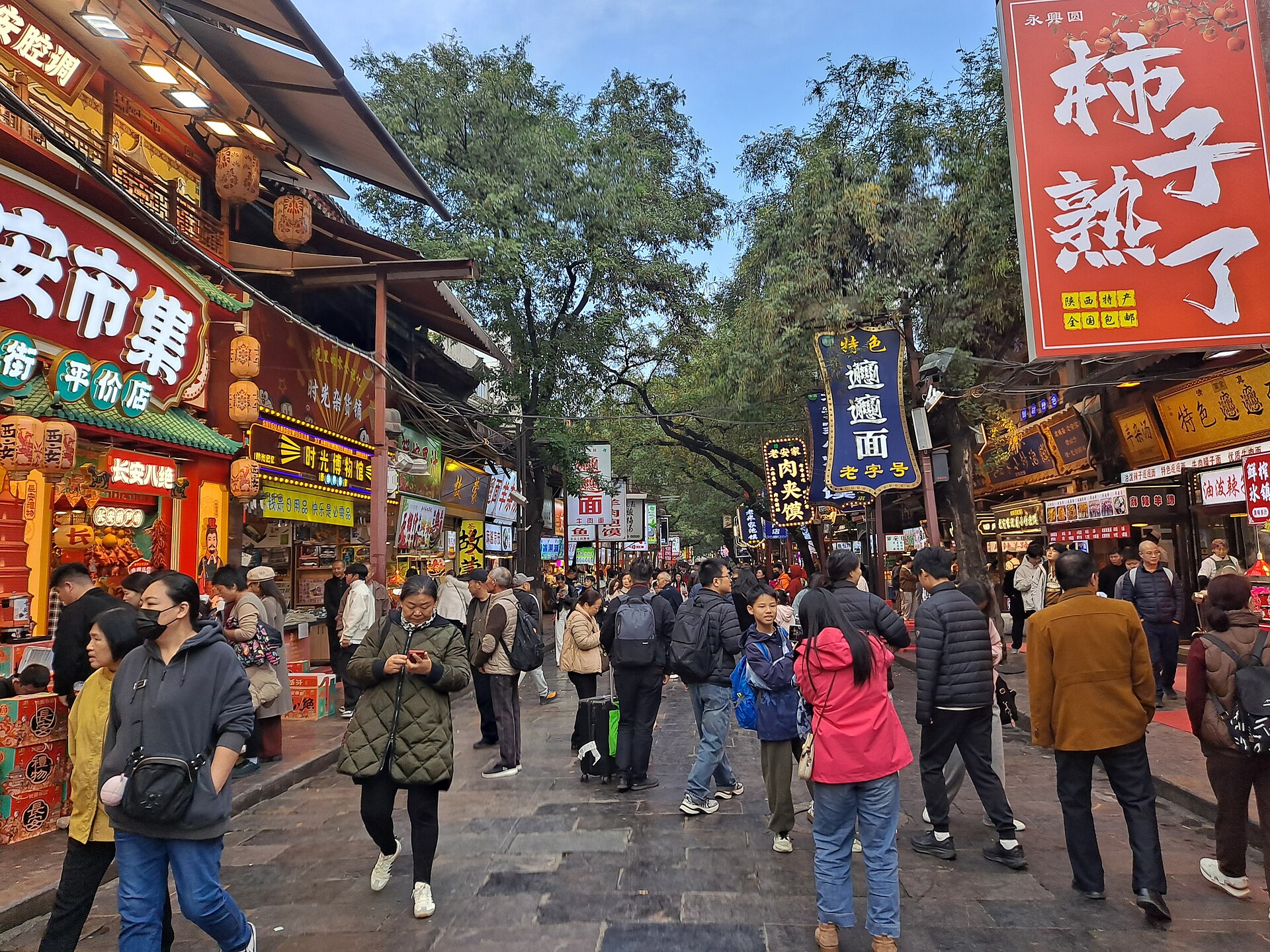
The Muslim Quarter (回民街) — the heart of Xi'an's traditional eating-and-drinking culture, running in parallel with the city's new café scene
Staying inside the old walls around the Bell Tower puts you minutes from Defu Lane, the art lanes and the city's best cafés.