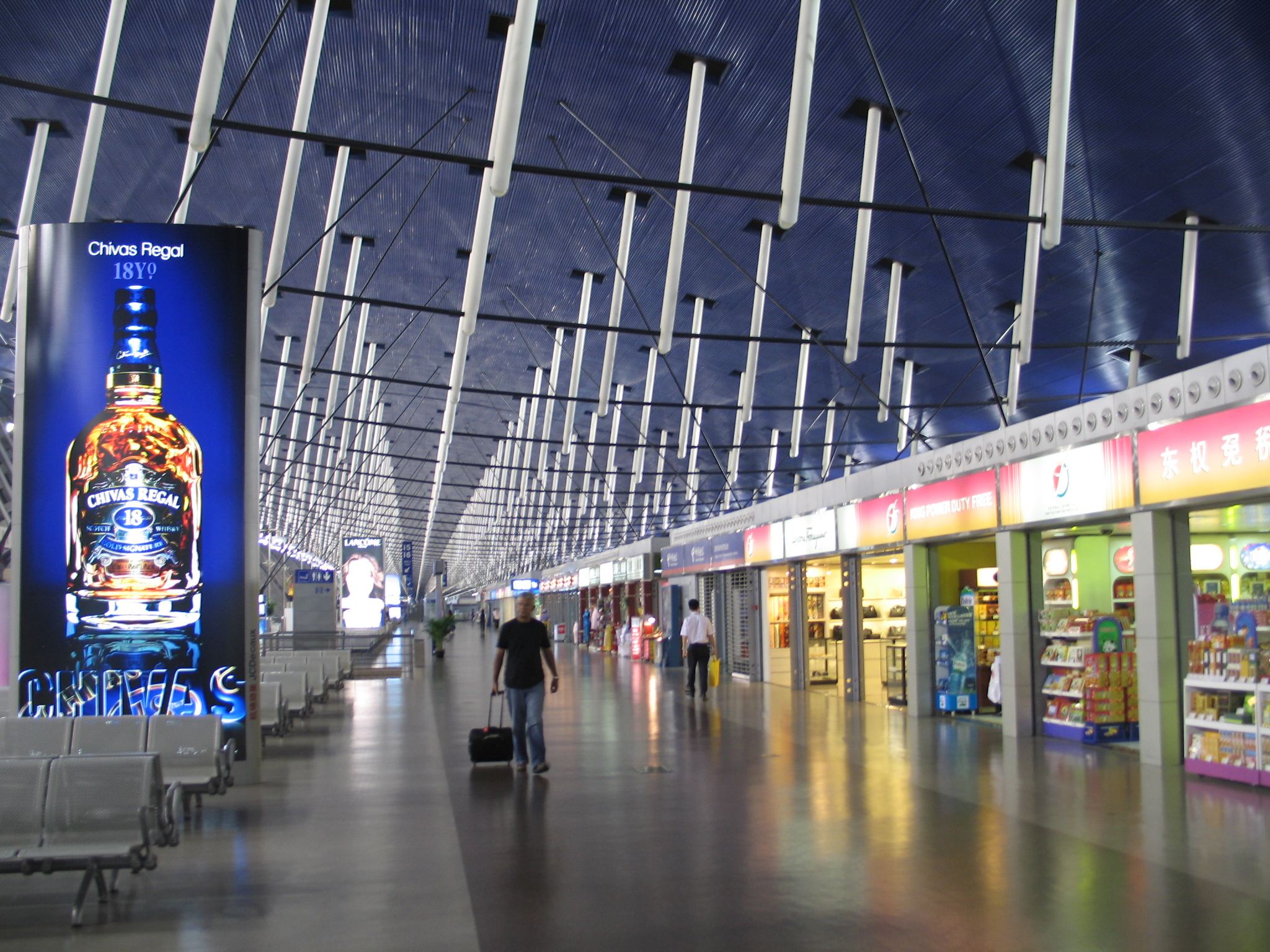
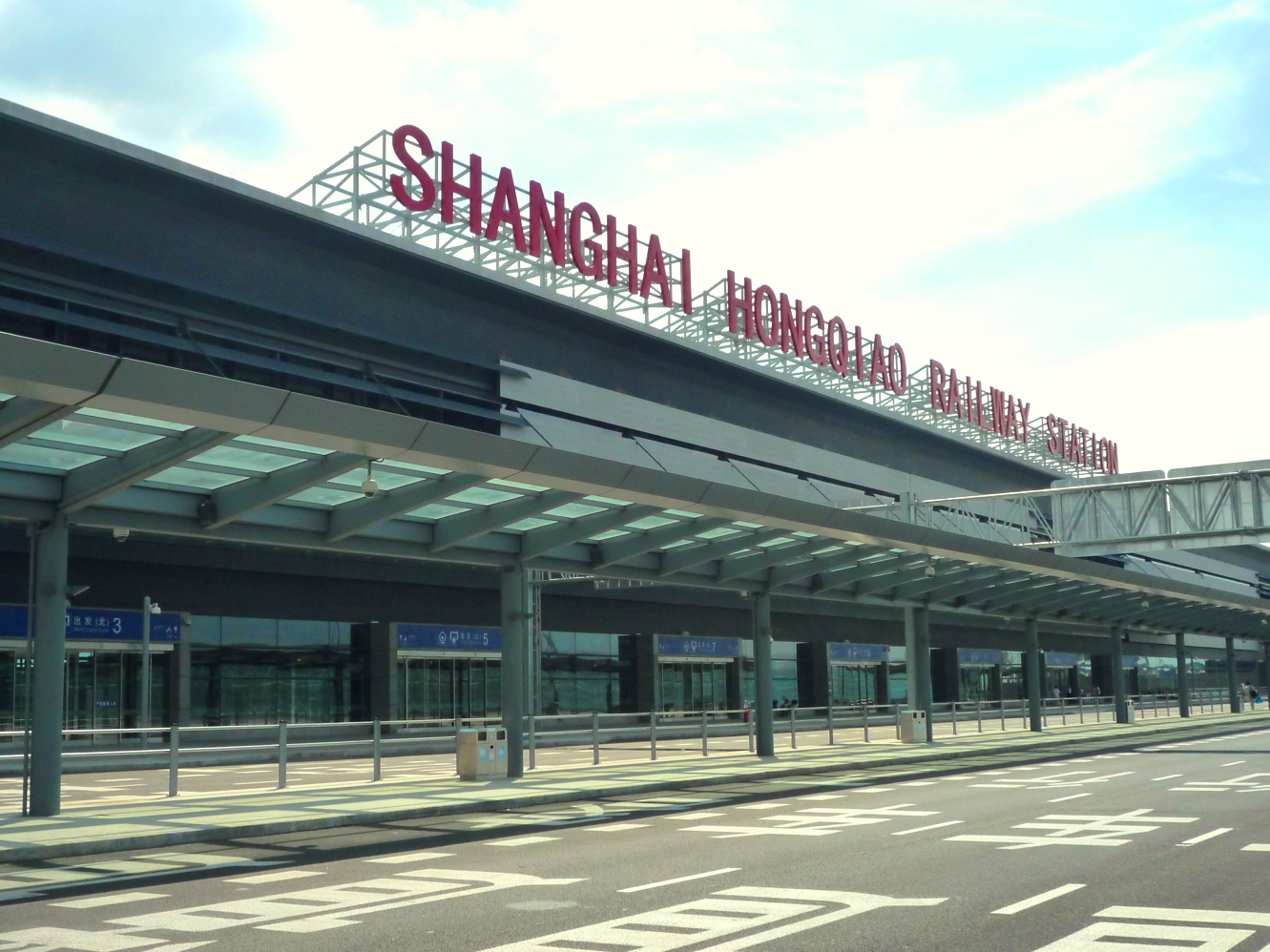
Hongqiao is not atmospheric. What it is: Suzhou by HSR in 25 minutes, the domestic airport next door, and hotel rooms noticeably larger than anything near the Bund at the same price point.
Hongqiao is not a neighbourhood people choose for its character. There are no shikumen lanes, no Art Deco facades and no canal views. What it has instead is something more useful for a certain kind of traveller: the best transport connectivity in Shanghai, concentrated in a single district on the western edge of the city.
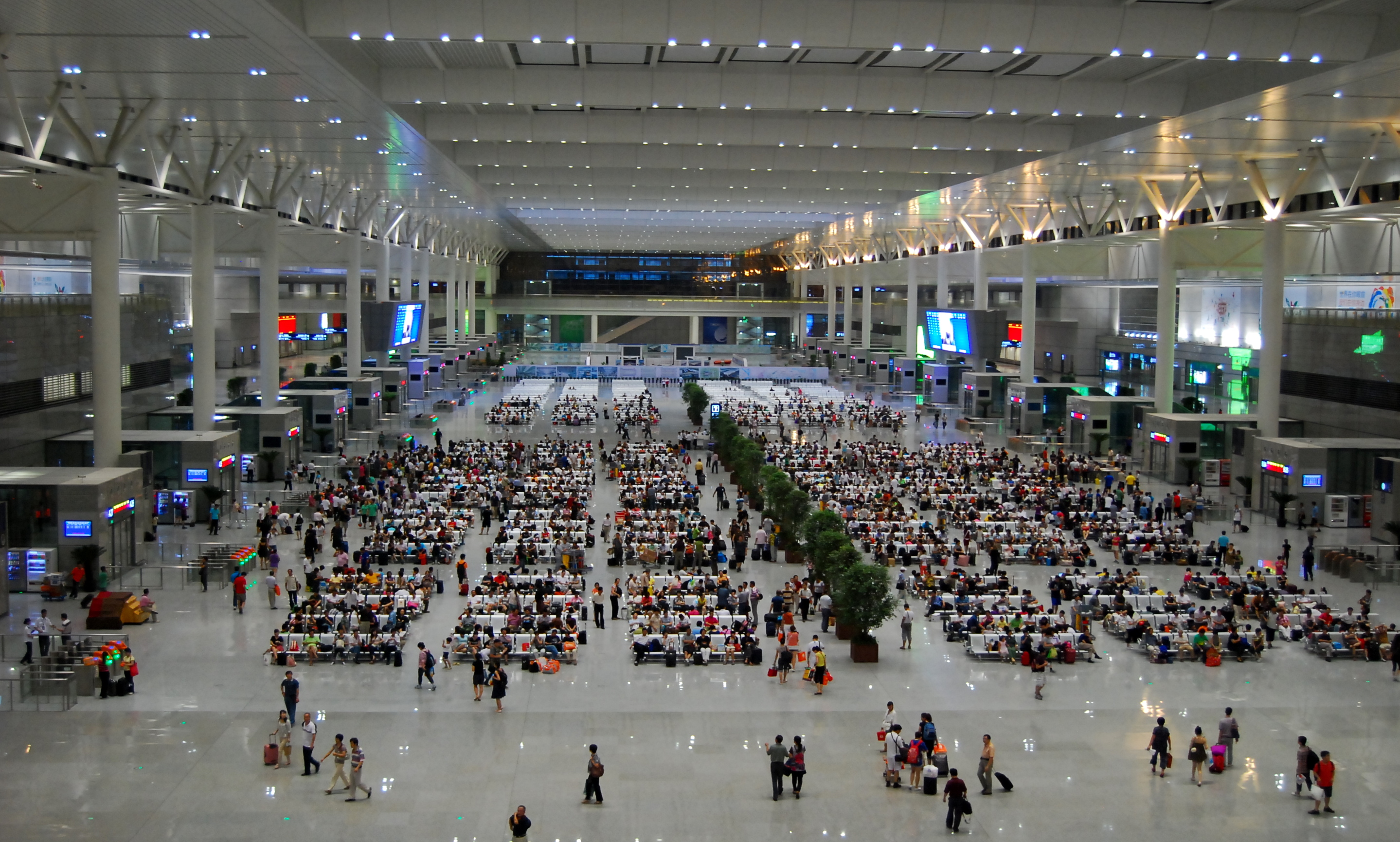
Hongqiao Railway Station is one of the largest high-speed rail stations in Asia — more than thirty platforms, trains departing to every corner of China throughout the day. Suzhou in 23–30 minutes. Hangzhou in 45–60 minutes. Nanjing in roughly an hour. Beijing in 4.5 hours. Adjoining the station is Hongqiao Airport (SHA), handling domestic flights and a handful of regional routes, and just to the south, NECC — the National Exhibition and Convention Centre, which holds the distinction of being the largest exhibition venue on earth.
All three are woven together by Metro Lines 2, 10 and 17. The result is a district that experienced travellers choose for a single reason: it saves a meaningful amount of time. Compiled from real guest reviews, the verdict is consistent — people who need the hub find it invaluable; people who came for the sightseeing find it inconvenient.
Compiled from real guest reviews — Hongqiao is not for everyone, but for the right traveller it is the best-value base in Shanghai.
If the NECC is your reason for being in Shanghai, staying anywhere else is a logistical penalty. The InterContinental NECC and Holiday Inn Express NECC are connected to the exhibition centre by a covered walkway. Commuting from the Bund on a busy trade-fair day — through the metro, across the city — can easily cost an hour each way. That is a meaningful amount of time on a short business trip.
Staying at the Mercure or Cordis and walking to Hongqiao Airport in ten to fifteen minutes is a genuinely different experience from setting an alarm for 4.30 am, hailing a DiDi from near the Bund and hoping for no traffic. If your first or last segment is a domestic flight from SHA, the maths strongly favour Hongqiao.
This is Hongqiao's single strongest argument. Walk five minutes from the hotel to the station, board an HSR train, arrive in Suzhou in twenty-five minutes. Day trips that involve crossing Shanghai first — from the Bund to Hongqiao by metro takes about forty minutes — become day trips you actually want to take. See the full options at the Shanghai day trips guide.
Hotels in Hongqiao tend to offer more space for the same money than equivalent properties near the Bund or Jing'an. A four-star room in Hongqiao that costs ¥450–600 (~฿2,250–3,000) per night is typically larger and newer than a room at the same price in a more central neighbourhood. Metro Line 2 covers the rest.
If your main agenda is the Bund, Tianzifang, Yu Garden, or simply the experience of being in the middle of Shanghai — Hongqiao is too far. From Hongqiao Railway Station to the Bund by metro takes roughly 40–50 minutes; to Lujiazui about the same. The neighbourhood itself is modern and corporate: no lane houses, no street food scene, and most dining is in malls and hotel restaurants. For first-time visitors whose days will be spent sightseeing, Jing'an or People's Square area is a better centre of gravity. See the full six-neighbourhood comparison at the where to stay in Shanghai guide.
A surprisingly common source of confusion — Shanghai has two airports, they are far apart, and they serve very different routes.
Hongqiao International Airport (IATA: SHA) sits in the west of the city, directly adjoining the railway station. Metro Lines 2 and 10 connect it to People's Square in about 25–35 minutes. It handles the vast majority of domestic Chinese routes and a relatively small number of regional international services — Hong Kong, South Korea, and Japan (Tokyo Haneda, Osaka Kansai are served).
If you are travelling onward within China by air, or connecting through Hong Kong, SHA is convenient and far less stressful than PVG. Two terminals: T2 handles the major carriers (China Eastern, China Southern); T1 serves smaller domestic operators. They are linked by a free shuttle within the airport precinct.
Pudong International Airport (IATA: PVG) is in the far east of the city, roughly 40 kilometres from the centre. Getting there from People's Square by Metro Line 2 takes 45–60 minutes (¥7–8). The faster option is the Maglev from Longyang Road to the terminal in about 8 minutes (¥50), then a short taxi or metro onward.
Almost all long-haul international flights arrive at PVG — including every flight from Thailand, flights from Europe, North America, Southeast Asia, and most of the rest of Asia. If you flew in from abroad for this trip, you almost certainly landed at PVG, not SHA. For the full breakdown of transfer options: Shanghai airport transfer guide.
One practical note for Hongqiao residents: if your outbound flight departs from PVG, budget 75–90 minutes to cross the city from Hongqiao. That is a meaningful lead time — factor it in when booking the final night.
Opened in 2010 alongside the Shanghai–Nanjing HSR line, Hongqiao Railway Station has grown into one of the busiest rail terminals in China. The building stretches nearly a kilometre, with over thirty platforms serving trains on the national high-speed network. Frequencies to Suzhou and Hangzhou are high — trains leave every fifteen to thirty minutes for both cities during the day.
Tickets are purchased through 12306.cn or the Trip.com app. During Golden Week holidays (Labour Day in early May, National Day October 1–7) and the Chinese New Year period, tickets on popular routes sell out days in advance — book early. Carry your passport; it is required to collect tickets from the machines and to board the train.
The airport is divided into two terminals that operate largely independently. T2 is the larger, newer building handling China Eastern, China Southern and most other major carriers. T1 serves smaller domestic operators and some regional routes. A free automated people-mover connects them. Check which terminal your carrier uses before you arrive — the check-in halls are not interchangeable without the shuttle.
Metro access: Line 10 serves T1 directly (Hongqiao Airport Terminal 1 station); Line 2 connects to the railway station end of the complex, from which the airport is a short covered walk or shuttle ride.
Opened in 2015, the NECC has total exhibition space exceeding 500,000 square metres, making it the largest such facility on earth. It hosts the China International Import Expo (CIIE) every November — an event that draws over 400,000 visitors in the space of a week and puts every hotel in the district into a period of high prices and full occupancy. Dozens of other major trade fairs run throughout the year. If your visit overlaps with any large NECC event, book accommodation well in advance; rooms at short notice during busy periods can be two to three times the normal rate.
Three metro lines serve Hongqiao, which means you are never stuck in the district if you want to be somewhere else. The tradeoff is time: the city centre is a genuine journey, not a quick hop.
Hotels in Hongqiao skew toward four- and five-star business properties — newer builds, larger rooms, and consistently better value per square metre than comparable hotels nearer the Bund.
Room rates in Hongqiao run from around ¥250–600 (~฿1,250–3,000) per night for three- and four-star properties to ¥600–1,200 (~฿3,000–6,000) for five-star options. During major NECC events rates jump sharply — sometimes doubling — so booking well in advance is essential if your visit coincides with a large trade fair.
Read individual hotel reviews for Hongqiao properties:
The city most often called the "Venice of the East" for its network of canals and classical gardens — several of which are UNESCO World Heritage listed. The highlight for most visitors is the classical garden circuit: Humble Administrator's Garden (拙政园), Lingering Garden (留园) and Tiger Hill (虎丘). The old Pingjiang Road canal-side street is one of the most pleasant in the Yangtze Delta region. A full day in Suzhou is very manageable from Hongqiao: depart at 8 am, return by 6 pm. Tickets from ¥22–30 (~฿110–150). Buy on 12306 or Trip.com.
West Lake (西湖) was inscribed as a UNESCO Cultural Landscape in 2011 — a genuinely beautiful stretch of water ringed by pagodas, tea plantations and temples. Lingyin Temple (灵隐寺) is one of the most important Buddhist sites in China; the Longjing tea villages produce the green tea that the rest of the country aspires to drink. Hangzhou is also the home of Alibaba's headquarters, which has its own appeal for those interested in China's technology sector. Half a day covers the lake; a full day includes the temple and the tea hills. Tickets from ¥55–75 (~฿275–375).
China's former imperial capital for several dynasties, with a weight of history that Shanghai largely lacks. The Sun Yat-sen Mausoleum (中山陵) on Purple Mountain, the ancient city wall — one of the longest surviving Ming-era walls in the world — and the Nanjing Massacre Memorial are the major sites. Xuanwu Lake offers a quieter counterpoint. The journey is longer than Suzhou or Hangzhou, so Nanjing works better as a full day. Tickets from ¥90–120 (~฿450–600).
All three destinations are covered in detail at the Shanghai day trips guide — Suzhou, Hangzhou, Zhujiajiao and more.