Home Shanghai China Shanghai Hotels About
Home  ›  China  ›  Shanghai  ›  Best Time to Visit
Shanghai Seasonal Guide · 2026

Best time to visit Shanghai
an honest season-by-season guide

Shanghai has four genuinely distinct seasons — cherry blossoms in late March, plum rains in June, luminous autumn skies in October, and cold damp winters that come with bargain hotel rates. Each has something to offer, and each has something to warn you about.

The short answer
The best windows are late March–May and September–early November

If you can only pick one month, pick mid-to-late October. Temperatures sit between 15 and 22°C, the sky is a clear deep blue for days at a stretch, humidity drops sharply after the summer, and the Bund skyline is at its sharpest and most photogenic. One catch: book well in advance and arrive after October 7 — the first week is China's National Day Golden Week, when hundreds of millions of domestic travellers move simultaneously and hotel prices peak.

If cherry blossoms are the draw, late March to April is your window — blossoms at Gucun Park and Century Park, mild temperatures around 10–18°C, and significantly thinner crowds than autumn. Summer and winter each have their own logic, but both demand more preparation to get the most from them.

Four seasons

What each season actually feels like

The weather, what it delivers, and what you are trading for it — told straight.
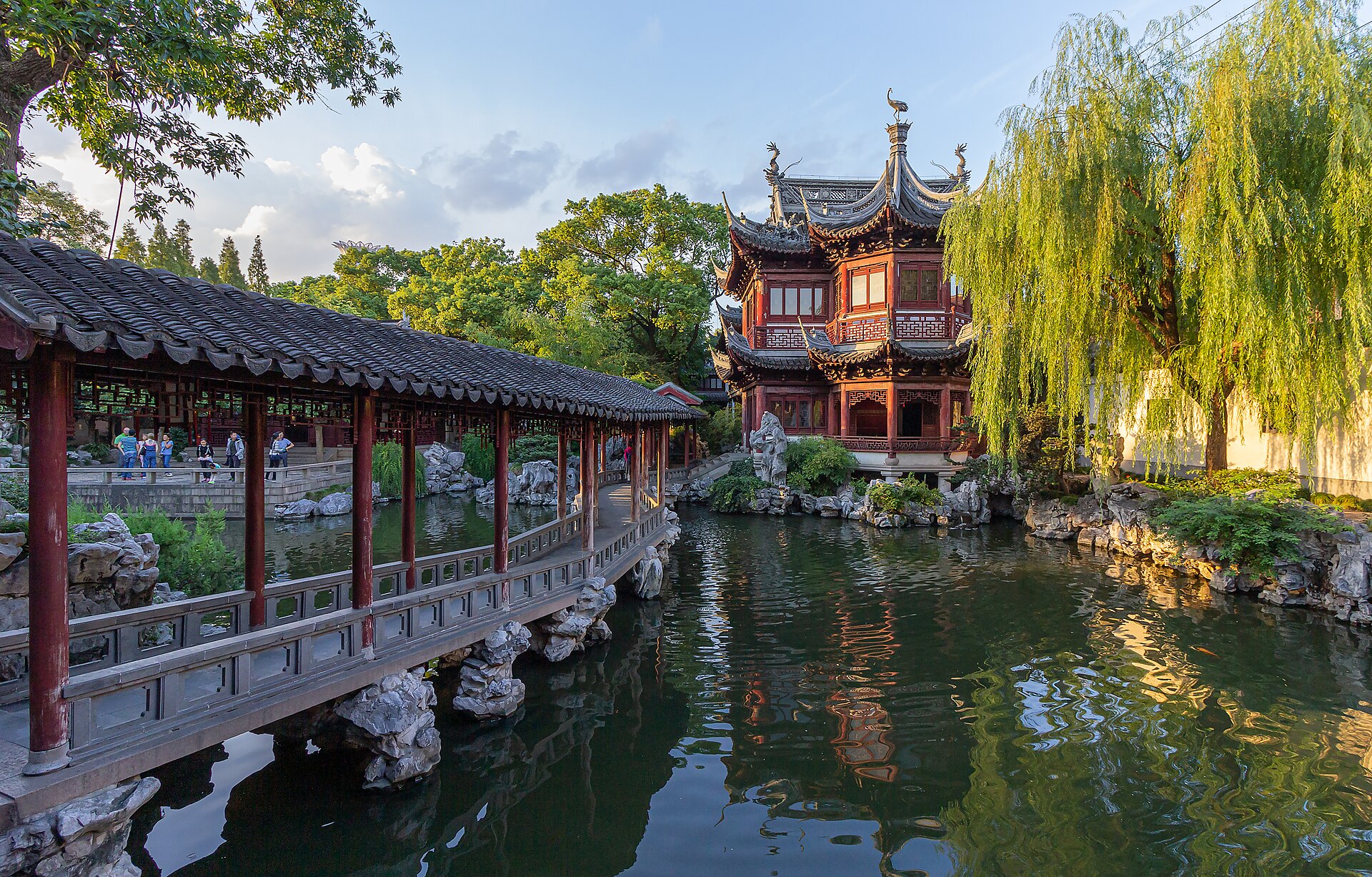
Yu Garden Shanghai in spring — trees in fresh leaf, classical pavilions reflected in the ornamental pond Yu Garden · Spring Great
Spring
March – May · 10–22°C

Shanghai's spring is genuinely lovely: mild temperatures, the city greening up, and the occasional soft rain that keeps everything fresh rather than oppressive. Cherry blossoms come in late March — Gucun Park in the north holds thousands of trees, Century Park in Pudong is more central. The pink against Shanghai's grey-and-glass streetscape is striking, and you can walk the French Concession's plane-tree avenues in a light jacket.

May is warmer (18–22°C) and still pleasant, though the Labour Day Golden Week (1–5 May) brings a rush of domestic travellers. Plan around it or book well ahead.
Temperature: 10–22°C (March evenings can drop to 7–9°C)
Rain: Moderate — occasional light showers, not persistent
Crowds: Moderate to high around Labour Day Golden Week
Hotel prices: Mid-range, spiking over Golden Week
Cherry blossoms at Gucun Park peak in late March. Go on a weekday before 9 am — the weekend crowds arrive early and the park fills fast.
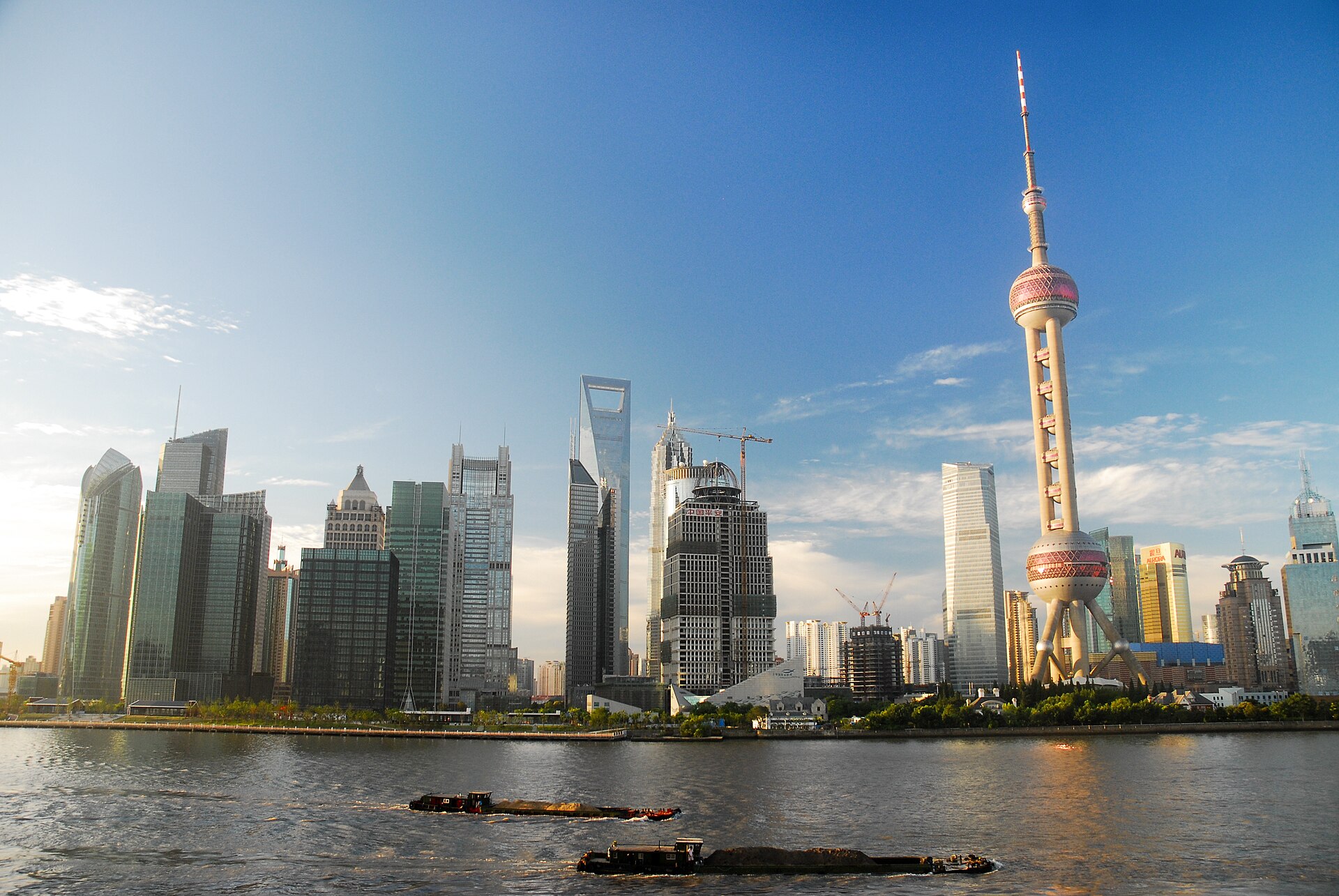
Shanghai Pudong skyline — Oriental Pearl Tower and glass towers under a heavy summer sky Pudong skyline · Summer Come prepared
Summer
June – August · 28–35°C

Shanghai in summer is hot and humid, and the combination is heavier than the thermometer suggests. From mid-June to early July the city enters Meiyu (梅雨) — the plum rain season — when drizzle and downpours alternate for weeks on end, sometimes without a clear day in between. When the rains finally lift in mid-July, the heat intensifies and typhoons become a real possibility through to September.

It is not without its appeal: fewer international tourists, uncrowded museums and galleries, and hotels that price below peak. If you run cold, or if you simply love cities in the full sweaty flush of summer, Shanghai delivers. But plan your outdoor time carefully and watch the typhoon forecasts.
Temperature: 28–35°C (July–August are the hottest)
Rain: Heavy — plum rain June–early July; thunderstorms July–Aug
Crowds: Moderate (fewer foreign tourists)
Hotel prices: Mid-range
Typhoon season runs July–September. Check daily forecasts — direct hits are uncommon but heavy rain and strong winds are not. App: Windy or Weather China.
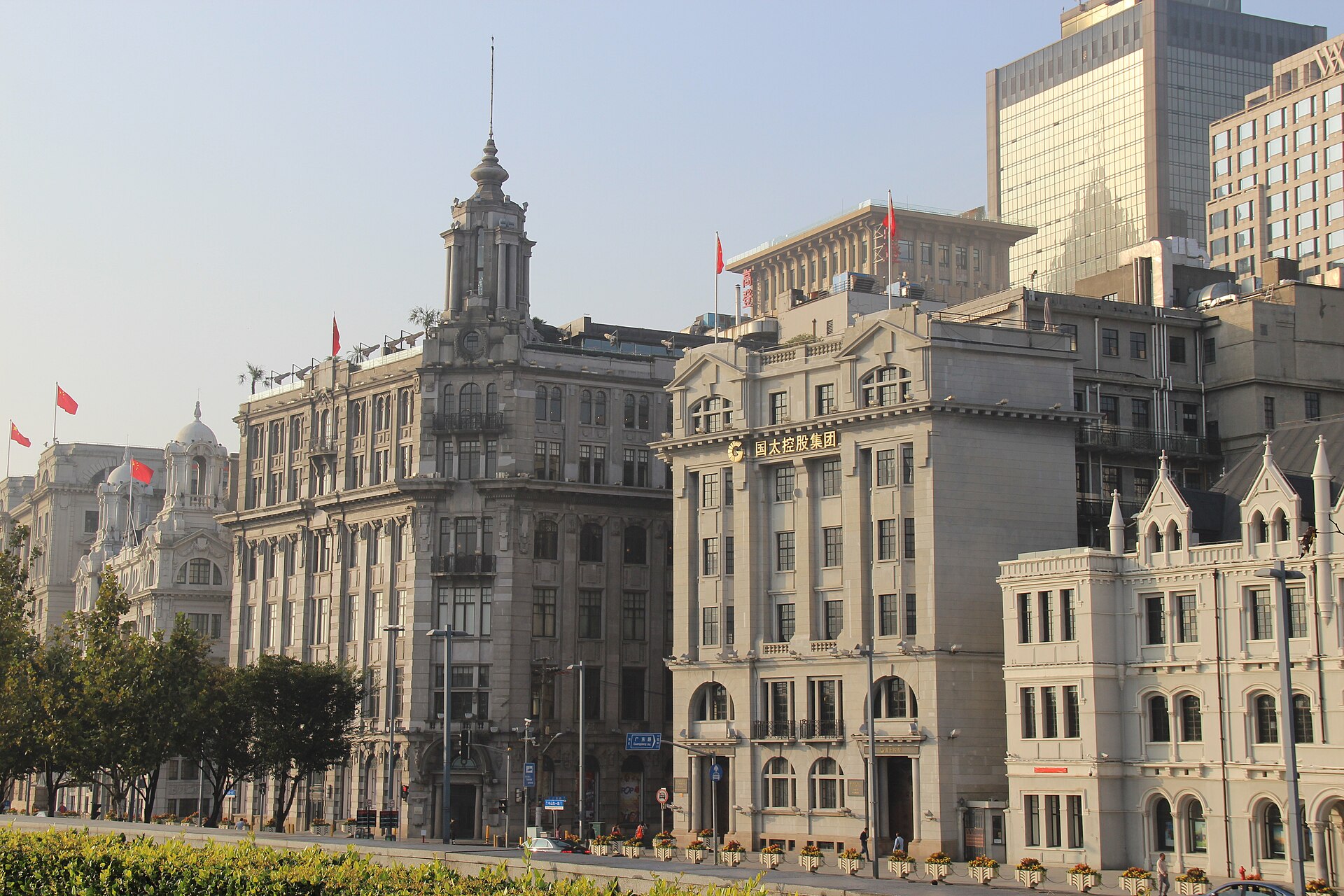
The Bund Shanghai skyline in autumn — crisp blue sky, the colonial facades sharp in clear light The Bund skyline · Autumn The best
Autumn
September – November · 15–25°C

This is Shanghai at its clearest and most comfortable. Temperatures settle between 15 and 25°C, humidity drops sharply after the summer, and the sky turns a deep blue that makes every skyline photograph look effortless. The Pudong towers are pin-sharp from the Bund. The French Concession's plane trees turn from green to yellow and amber in late October, and walking Wukang Road or Fuxing Park on a still October morning is one of the city's small pleasures.

Hairy crab season (大闸蟹, Da Zha Xie) begins in September and peaks in October–November. If you have any intention of eating the real thing — steamed fresh from Yangcheng Lake — this is the only time it is possible. Good restaurants fill weeks in advance.
Temperature: 15–25°C (November cools to 10–16°C)
Rain: Lowest of the year — many clear consecutive days
Crowds: High — National Day Golden Week 1–7 Oct is peak
Hotel prices: Highest of the year, especially Golden Week
Arrive after October 7. The weather stays just as good through November but crowds thin immediately once the Golden Week ends and prices return to normal. This — mid-October to early November — is arguably the finest window of the year.
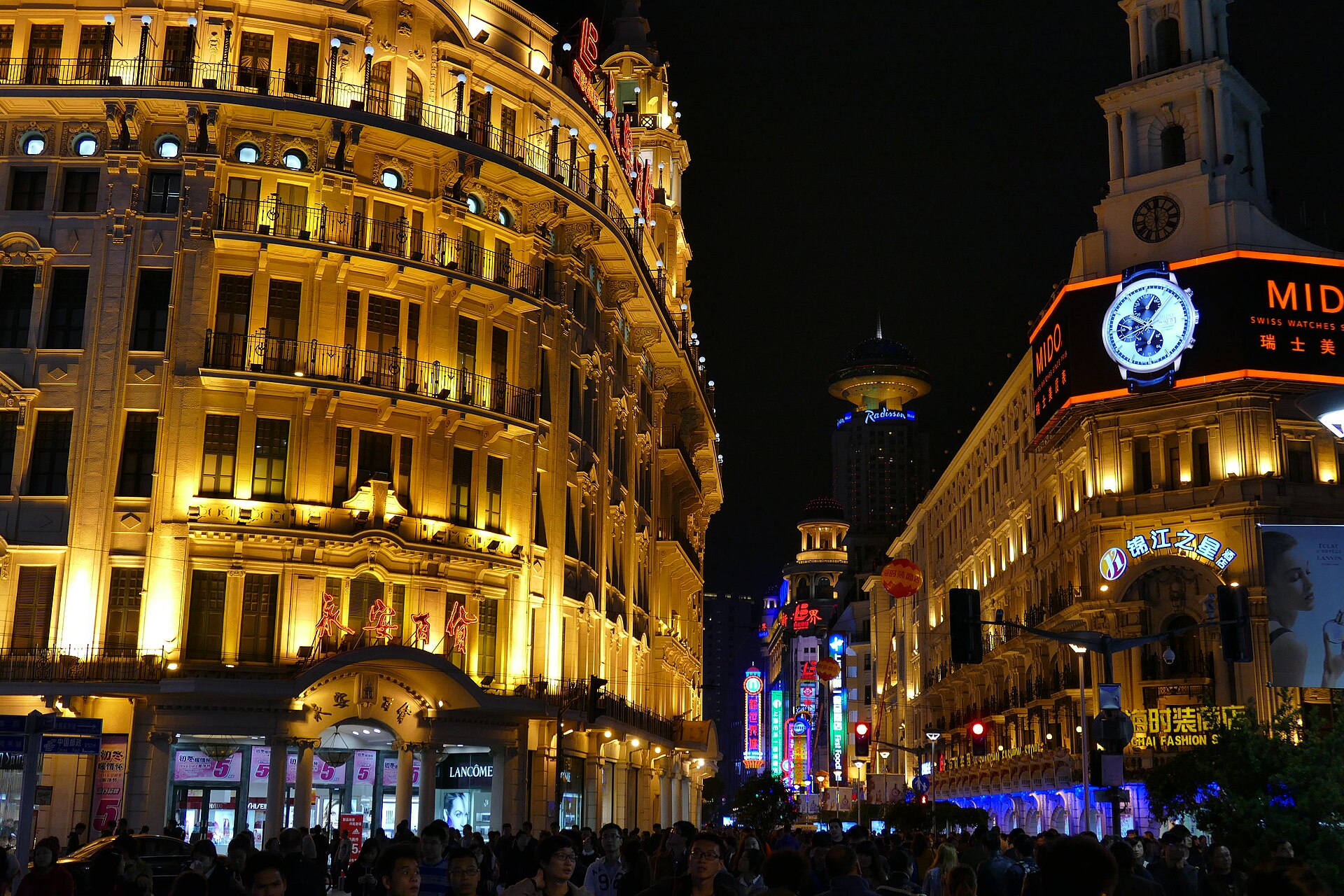
Nanjing Road shopping street Shanghai in winter — festive lights strung between buildings, pedestrians in heavy coats Nanjing Road · Winter Its own kind of charm
Winter
December – February · 1–8°C

Shanghai gets genuinely cold, and more so than the numbers suggest. Average temperatures run 1–8°C, but the city sits on a coastal plain and cold air off the Huangpu River makes it feel closer to freezing. Snowfall is possible but not common. Indoor heating is inconsistent — some hotels and restaurants are warm; others leave you in your coat. Pack accordingly.

Chinese New Year (late January or February) transforms the city: lanterns, firecrackers in the streets, temples crowded with people praying for the new year. It is festive and beautiful. The flip side: many small restaurants and shops close for 7–14 days, transport is booked solid and expensive, and hotel prices spike. Outside of Chinese New Year, winter is the quietest and cheapest season by a wide margin.
Temperature: 1–8°C (river wind makes it feel colder)
Rain: Low — damp and grey rather than rainy
Crowds: Low, except Chinese New Year
Hotel prices: Lowest of the year (except Chinese New Year)
During Chinese New Year many small restaurants close for one to two weeks. Research your dining options before you arrive — the neighbourhood noodle shop you were counting on may be shut.
Month by month

Shanghai every month at a glance

Temperature, rainfall and crowd levels — in one table for easy comparison.

Month Temperature Rain Crowds Notes
January 1–8°C Low Low Coldest month · cheapest hotels
February 2–10°C Low High (CNY) Chinese New Year — shops close · transport packed
March 7–15°C Moderate Moderate Cherry blossoms begin late month
April 12–20°C Moderate Moderate Full cherry blossom · ideal walking weather
May 17–25°C Moderate High (Golden Week) 1–5 May: Labour Day crowds and price spike
June 22–30°C Heavy (plum rain) Moderate Meiyu plum rains from mid-month
July 27–35°C Heavy Moderate Hottest and most humid · typhoon risk
August 27–33°C Heavy Moderate Still hot · typhoon season continues
September 21–28°C Low Moderate Hairy crab season begins · weather improving
October 15–22°C Very low High (Golden Week) 1–7 Oct: peak crowds · after 8th: best of the year
November 10–18°C Low Moderate Male hairy crabs peak · autumn foliage
December 4–11°C Low Low Festive lights · low prices · quiet museums
When to avoid

The three Golden Weeks to plan around

China's national holidays generate the largest annual human movements on Earth. Here is what that means for your trip.

Jan
Feb
Chinese New Year (Spring Festival)
Late January or February · date shifts each year with the lunar calendar

China's largest holiday. Hundreds of millions of people travel to their home towns and tourist destinations simultaneously. The atmosphere in temples and historic districts is genuinely festive — lanterns, firecrackers, colourful crowds. But hotels charge peak prices, small restaurants and local shops close for 7–14 days, and transport (trains, flights) books out weeks ahead. If you want to experience the festival itself, plan everything well in advance. If you want a normal trip, pick a different time.

1–5
May
Labour Day Golden Week
May 1–5 every year

China's second major holiday window. Domestic tourism surges; the Bund, Yu Garden and Nanjing Road become difficult to walk through. Hotels fill and prices rise by 30–60%. If you must travel during this period, book accommodation 6–8 weeks ahead and set your alarm for early starts at each sight — crowds build by 10 am and the best light is gone by noon anyway.

1–7
Oct
National Day Golden Week
October 1–7 every year

The largest Golden Week of the year. An estimated 800 million-plus domestic trips occur in this single week. Shanghai is one of the top destinations. The Bund Promenade and most major sights become extremely crowded — not unpleasant exactly, but walking speed drops to a crawl and any spontaneous photography of the skyline becomes impossible. Hotel prices hit their annual peak. The obvious workaround: arrive on or after October 8. The weather is identical through November — clear, mild, perfect — but the crowds dissolve almost overnight and prices normalise immediately.

Worth knowing about

Events that add to the trip

These are reasons to time your visit, not reasons to avoid it.

June
Shanghai International Film Festival
June every year · one of Asia's largest FIAPF-accredited film festivals

Held every June, this is one of the most significant film festivals in Asia, screening international competition films alongside Chinese cinema at venues across the city. The city has a tangible energy during the festival week. Central hotels and restaurants book up faster than usual — reserve in advance if your dates overlap.

Sept
Shanghai Tourism Festival
September every year · city-wide tourism celebration

An annual festival held throughout September with street parades, cultural performances and events across the city. It coincides neatly with the start of autumn — when the weather begins to improve — making early September a reasonable choice if you want some added colour to your visit.

Sept–
Nov
Hairy Crab Season
September–November every year · strictly seasonal

This is not an organised festival but it functions as one. Shanghai's obsession with Da Zha Xie — the hairy mitten crabs from Yangcheng Lake — reaches its annual peak in October. Female crabs (orange roe) are best in September and October; males (rich, milky milt) peak in October and November. Steamed and eaten with black Zhenjiang vinegar and pickled ginger, this is one of the singular food experiences of East Asia. Serious restaurants for hairy crabs book out weeks in advance during the peak.

Packing by season

What to bring for each season

Not exhaustive — just the things that actually matter for Shanghai.

Spring
March – May
  • Layering pieces — days and nights can differ by 8–10°C in March
  • Compact rain jacket or umbrella — light showers are frequent
  • Comfortable walking shoes — Shanghai's pavements are long
  • Sunscreen — spring sun is stronger than it looks
  • Light long-sleeve layer for outdoor queuing at popular sights
Summer
June – August
  • Breathable fabrics only — linen or technical dry-fit; nothing else
  • A serious umbrella — plum rain and afternoon thunderstorms
  • Quick-dry footwear — streets flood and stay wet
  • A reusable water bottle — drink constantly; the humidity is deceptive
  • Portable fan — outdoor queues can be brutal
  • Typhoon app — Windy or Weather China, checked daily
Autumn
September – November
  • Light layers — mornings and evenings are 5–10°C cooler than midday
  • A mid-weight jacket — November turns cold quickly
  • Good walking shoes — this is the season to explore on foot
  • Camera or a good phone — the light and skyline are at their best
  • Restaurant reservations — book hairy crab dinners well ahead
Winter
December – February
  • A proper heavy coat — river humidity makes 5°C feel like 0°C
  • Gloves and a scarf — essential, not optional
  • Insulated footwear — long outdoor queues in the cold
  • Thermal base layer — some restaurants and shops are poorly heated
  • Dining plan for Chinese New Year — research which restaurants stay open
The city every season

Shanghai in every light

Whatever month you arrive, there is something worth seeing.

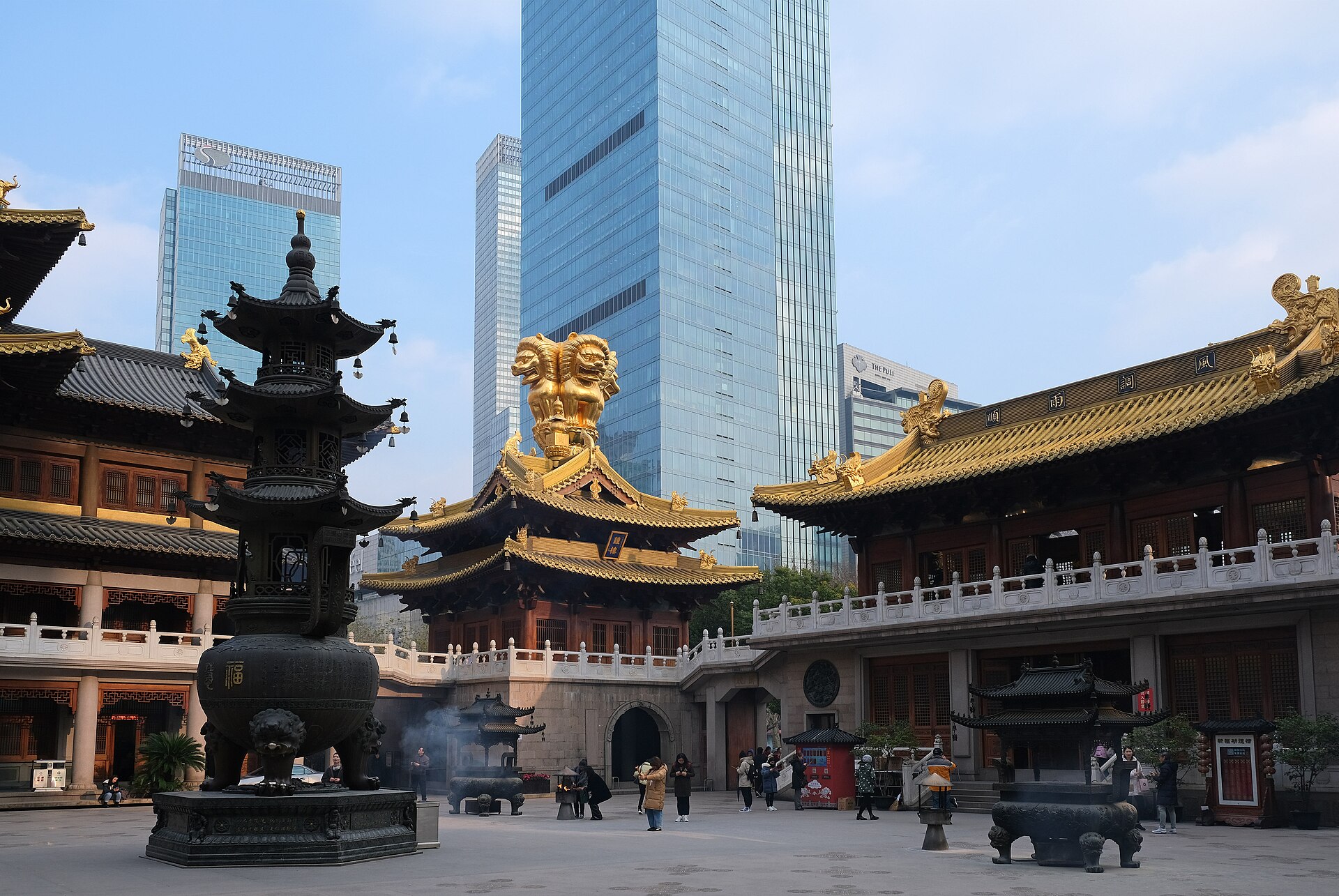
Jing'an Temple Shanghai — gilded rooftop details catching the morning light
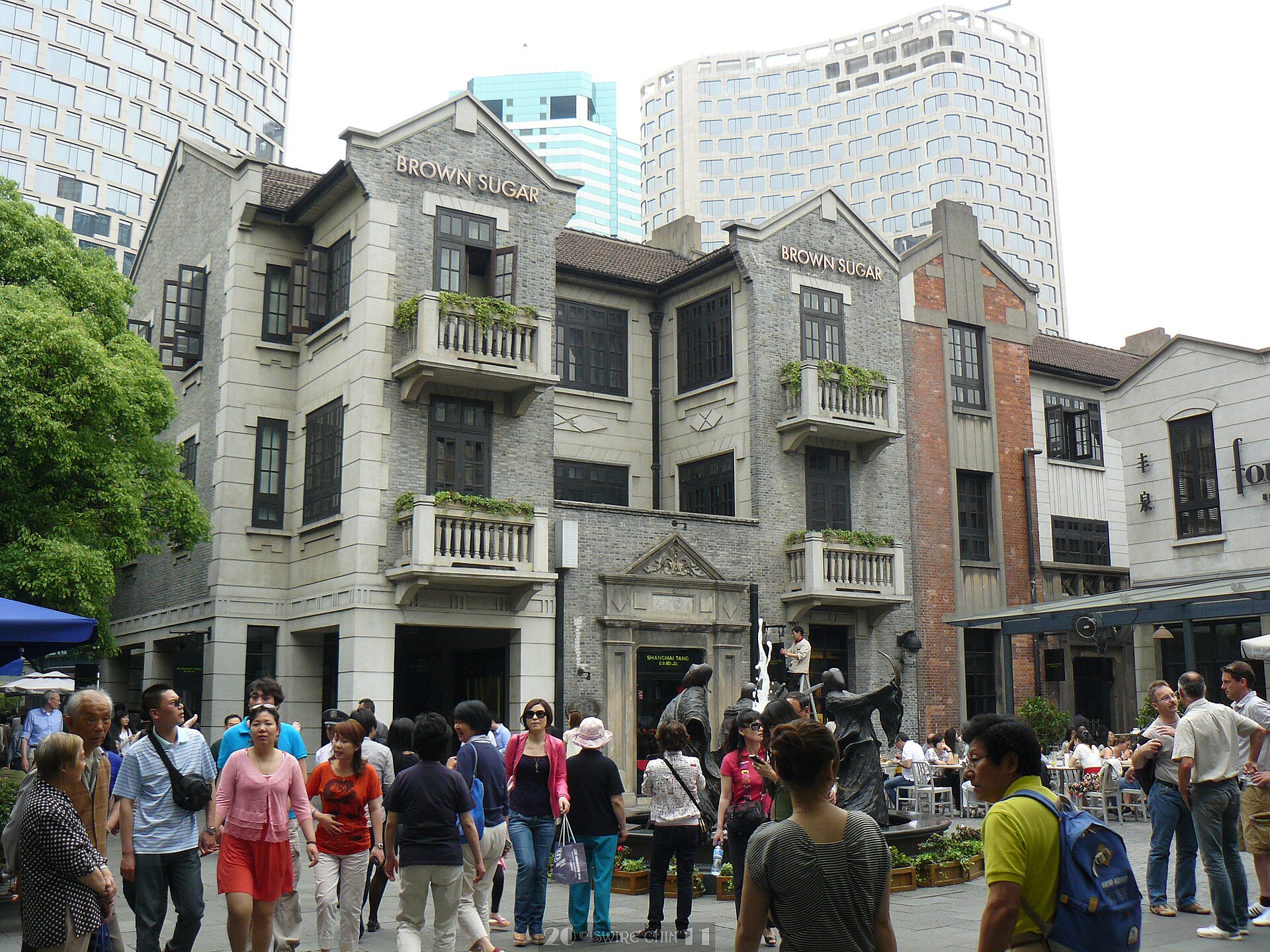
Tianzifang alley Shanghai — lanterns and old shikumen architecture in a narrow lane
Shanghai skyline from above — the full sweep of the city and the Huangpu River
Frequently asked

FAQ · Before you book

What is the rainiest month in Shanghai?
Mid-June to early July is the wettest period, known as the plum rain season (Meiyu, 梅雨). Rain falls on most days, sometimes for weeks without a meaningful break. July and August bring thunderstorms and typhoon risk. Autumn (September to November) is by contrast the driest stretch of the year — clear days with low humidity that can run for weeks.
When should you avoid visiting Shanghai?
Avoid the three Chinese Golden Weeks: Labour Day (1–5 May), National Day (1–7 October) and Chinese New Year (late January or February). Domestic travel peaks during all three, hotel prices rise sharply, and major sights become very crowded. If your dates can't shift, book accommodation 6–8 weeks ahead and budget for higher prices.
Is Shanghai worth visiting in winter?
Genuinely yes, with preparation. Winter temperatures average 1–8°C, and high humidity combined with river wind makes it feel colder. Indoor heating is inconsistent. The positives are real: fewer tourists than any other season, the lowest hotel prices of the year (outside Chinese New Year), and world-class museums and covered attractions that are quiet and unhurried. Pack a proper heavy coat, thermal layers, gloves and a scarf — then enjoy having the city largely to yourself. See our Shanghai hotel guide for winter value picks.
Which month has the cheapest hotels in Shanghai?
December through early January (before Chinese New Year) offers the lowest hotel prices of the year. International visitor numbers are at their lowest and domestic travel has not yet peaked. Rates can run 30–50% below peak-season prices. Browse options at our Shanghai hotel guide.
When do the cherry blossoms bloom in Shanghai?
Cherry blossoms typically peak in late March to early April. The best spots are Gucun Park in the north of the city (several thousand trees, large grounds) and Century Park in Pudong (more central, easier to reach). Both hold annual cherry blossom festivals that draw large local and tourist crowds. Go on a weekday morning to avoid the worst of it — weekends fill up fast.
Is October in Shanghai crowded? When in the month is best?
October has two completely different halves. October 1–7 (National Day Golden Week) sees hundreds of millions of Chinese travellers on the move — the Bund and major sights become extremely crowded and hotel prices peak. From October 8 onwards, the weather stays just as good, crowds thin noticeably and prices return to normal. Mid-to-late October is arguably the finest window of the entire year: clear blue skies, temperatures between 14 and 20°C, low humidity, and manageable crowds.
Klook · Tours & Activities

Book Shanghai activities in advance — skip the queue, not the experience

Bund walking tours, Huangpu River night cruises, Disneyland tickets and Suzhou day trips — book through Klook before you arrive and pay less than at the gate.

Browse Shanghai Activities on Klook →
Wherebest is an affiliate partner of Klook — we may earn a commission when you book through our links, at no extra cost to you.