Home Koh Samui Food Guide Thailand About
Home  ›  Asia  ›  Thailand  ›  Koh Samui  ›  Seafood
Thailand · Koh Samui Food Guide · 2026

Koh Samui Seafood
Pick It From the Ice, Eat It by the Sand

The best seafood meal on Samui usually isn't in the menu folder — it's on the ice display out front. Walk the tray, point at what you want, watch it weighed by the kilo, then sit at a table with your feet in the sand while the charcoal does its work. This guide shows you how to pick well, order well, and not overpay.

Before You Dive In

Why beachfront seafood is the Samui ritual

Picture it: the sun easing down over the Gulf of Thailand, and along the beach the restaurants start hauling out their ice displays. Tiger prawns laid out in rows, blue crabs with their claws tied, sea bass with clear eyes resting on crushed ice, squid gleaming. You browse slowly, point at the ones you want, and the staff lift them onto the scale where you can see the number. Grilled or steamed? You pick, then walk to a table whose legs are planted in the sand. Twenty minutes later, the prawns you chose arrive with char marks and a fierce green seafood dipping sauce — this is how Koh Samui eats the sea, and it beats ordering from a laminated menu.

Samui is a Gulf island in Surat Thani province. Part of the catch comes from small boats working the waters around the island and fishing communities like Hua Thanon; part crosses from the Don Sak–Surat Thani mainland, a coast known for its plump oysters. The pick-by-weight system is the heart of eating here: the seafood sits on ice with a per-kilogram price sign, and you control the freshness, the size and the cooking. There are a few things to watch for, though — like signs quoting per 100g in small print, or displays with no prices at all — so we'll take it step by step. For the bigger picture of what to eat across the island, read our Koh Samui food guide alongside this.

The Six-Step Ritual

Pick by weight, done right

Follow this order at any beachfront grill and you'll get fresh seafood, a fair bill, and a meal that ends with no sour taste

1
Browse before you buy · compare 2–3 displays
On Chaweng and in Bophut the grills line up side by side, and the per-kilo ฿ price for the same species can differ a lot. Walk the strip first. A busy restaurant whose display turns over fast usually means fresher seafood — a dry-looking tray at a quiet place is a skip.
2
Learn to read freshness
Fish: clear eyes, red gills, shiny scales. Prawns: firm, glossy shells with no blackened heads. Squid: glossy skin, taut body. Crab: ask them to lift it — heavy for its size means full of meat. Anything dull-coloured or soft, don't be shy: choose a different one.
3
Read the sign properly · then watch the weigh-in
The number-one tourist mistake — some signs quote per 100g in small print, not per kilo, which makes an expensive fish look ten times cheaper. Ask plainly: "How much per kilo, and does that include cooking and sauce?" Then watch the scale and see the number yourself, every time.
4
Match the cooking style to the catch
The no-fail formulas: prawns butterflied and charcoal-grilled · whole sea bass salt-crusted or steamed with lime · squid grilled with seafood dipping sauce · mud crab stir-fried in curry powder or plain-steamed. Tell them item by item (details in the next section).
5
Order sides · leave room for the star
Rice, som tam (papaya salad), flash-fried morning glory, a Thai omelette — sides are priced normally, like any restaurant. Order modestly and let the seafood lead the table. Cold drinks and fresh coconuts are on hand almost everywhere.
6
Check the bill before paying · keep the slip
The bill should itemise each item with its weight and per-kilo rate. If a number doesn't match what you agreed, ask straight away — most places fix it without drama. For expensive items like lobster, check the billed weight against what you saw on the scale.
What to Pick

The seafood worth grabbing + how to cook it

Point at the ice tray, then tell the kitchen this — prices are rough ranges that move with size, season and location

🦐
Tiger Prawns & River Prawns
Kung phao (กุ้งเผา) · charcoal-grilled prawns
The star of the charcoal grill. Butterflied, grilled, dipped in seafood sauce — bouncy, sweet flesh with a smoky edge. The bigger, the juicier. Around ~฿500–900/kg; jumbo sizes cost more. Always confirm the rate before weighing.
🦀
Blue Crab & Mud Crab
Pu ma / pu dam · steamed or curry-powder fried
Blue crab plain-steamed with seafood dipping sauce is the sweetest way in. Meaty mud crab suits curry-powder stir-fry — the eggy sauce begs for rice. Around ~฿350–800/kg; roe-filled females cost more.
🐟
Salt-Crusted Grilled Fish
Pla phao kluea (ปลาเผาเกลือ) · whole sea bass
A whole sea bass packed in salt and grilled slowly over coals — the flesh stays soft and steamy. Peel back the skin, wrap the meat in fresh herbs and greens, dip. Around ~฿250–450 per fish by size; one feeds the table.
🦑
Squid
Pla muek yang · grilled or steamed with lime
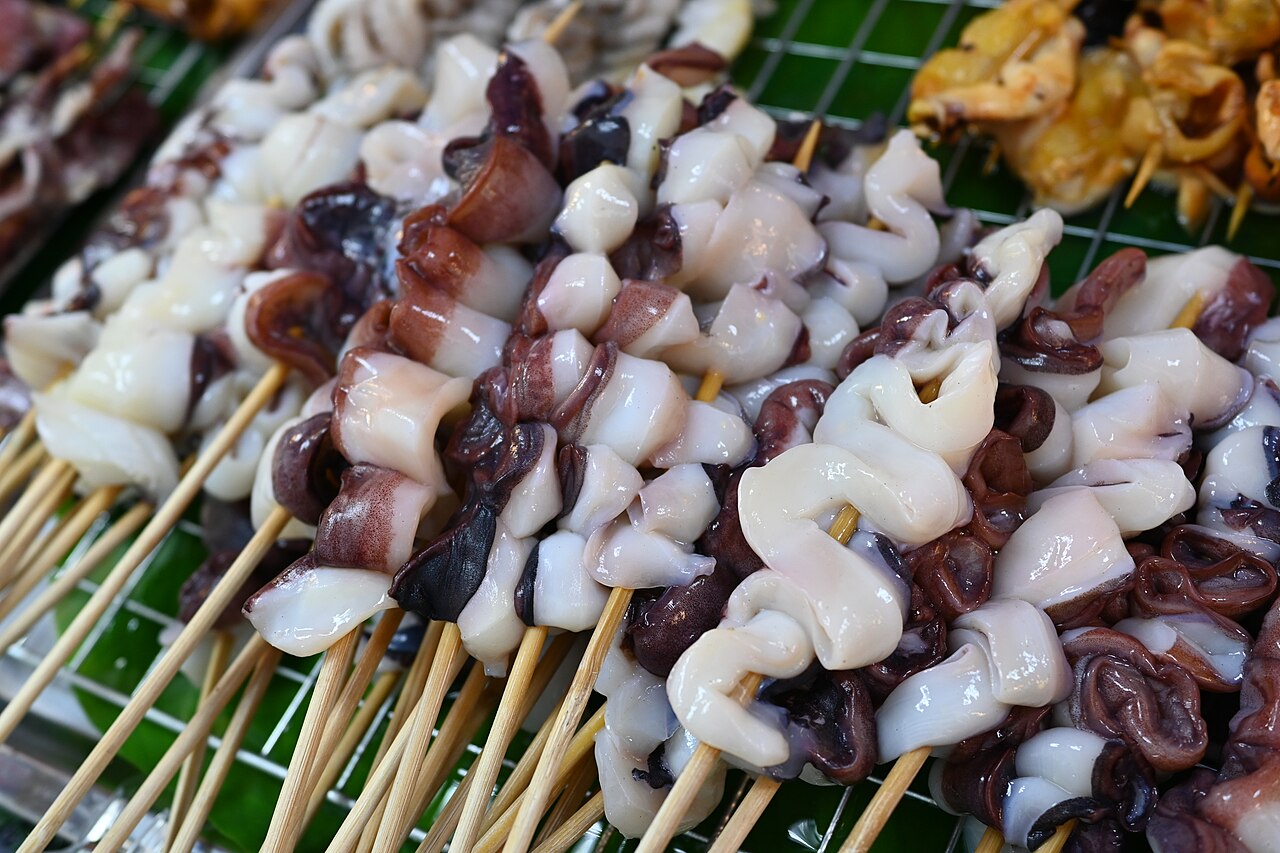
Grilled whole and sliced into rings with seafood sauce is the beachfront standard. For bigger flavour, order it steamed in lime — sour, hot and bracing. If you spot egg-filled squid on the tray, don't hesitate. ~฿300–500/kg.
🦪
Oysters & Grilled Shellfish
Hoi nang rom · the Surat Thani coast's pride
The Surat Thani coast is known for big, creamy oysters — eaten raw with lime, crispy fried garlic and herbs. Blanched cockles and grilled mussels come by the tray. Friendlier on price than prawn and crab — a good table-opener.
🦞
Spiny Lobster
Kung mangkon · the premium pick
Top of the ice tray. Grilled and served split, the flesh dense and sweet. Priced by size and season, usually upwards of ~฿2,000–4,000/kg. Ask for the full price of the whole animal before it's weighed — and share it; that's where the value is.
Let's Be Honest

Samui's beachfront has real "tourist pricing"

Not every restaurant — but go in knowing the game and the meal ends well

Let's say it plainly — seafood on an island costs more than on the mainland, full stop. Some of the catch crosses by boat, and beachfront rent is steep. That part is fair. What needs watching is that some restaurants in the tourist strips price with a built-in haggle margin, write ambiguous signs, or post no prices at all. The classic case is the per-100g sign in small print, which makes a ฿1,000-plus fish read like a few hundred — and the shock arrives with the bill. There are plenty of straight-dealing restaurants; you just need to pick them deliberately.

The second thing is "today's catch". During the Gulf monsoon (roughly Oct–Dec) the seas turn rough, small boats go out less, and some local seafood gets scarce — so restaurants may substitute frozen or mainland stock. That's not a scam, but you're entitled to ask, "Which of these came in today?" A good restaurant answers instantly and points. Finally, the doorway touts: along the Chaweng beach road, staff stand outside waving menus. It doesn't mean the restaurant is bad — but don't let the loudest pitch decide for you. Look at the ice, look at the price signs, and choose with your own eyes.

The anti-overcharge checklist, easy to remember: (1) compare 2–3 displays before committing · (2) read the sign properly — per kilo or per 100g · (3) watch the weigh-in and see the number · (4) ask whether cooking, sauce and rice are included · (5) in monsoon months, ask what came in today · (6) get an itemised bill + keep the slip · do all six and every beachfront meal ends easy.
Where to Start

The three seafood zones of Koh Samui
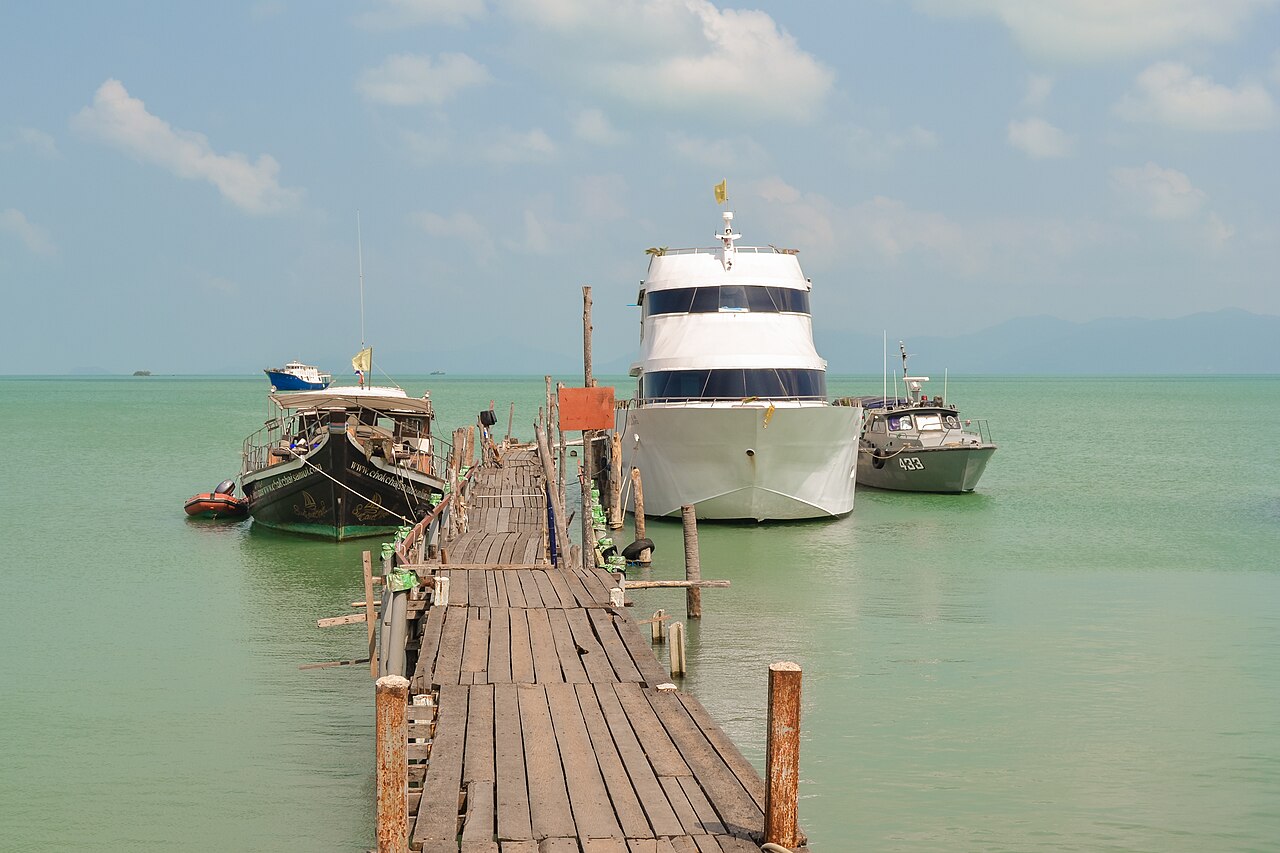
The wooden pier at Bophut fishing village on Koh Samui stretching into the Gulf of Thailand, with boats moored alongside 1
Best Atmosphere · Waterfront Dinner
Fisherman's Village · Bophut
Old fishing-village lane on the north coast · Friday Walking Street

The lane of old wooden shophouses in Bophut is the island's best-atmosphere dinner zone. As evening falls, the waterfront restaurants light up and set their seafood displays out front, with the back rows of tables right on the sand. Made for couples and anyone who wants a long, slow meal with the waves close by. Prices run a little above the island average for the setting. Land here on a Friday and the whole street becomes the island's busiest walking-street market — see our Fisherman's Village night market guide.
Style: Waterfront restaurants + tables on the sand
Cost: Slightly above island average
Best time: Evening — arrive before sunset
Getting there: Ring road (Route 4169), north coast
Heads up: Friday nights get very crowded. If you're set on a waterfront table, claim it by about 5:30 pm — or come another night. Parking is scarce during the walking street.
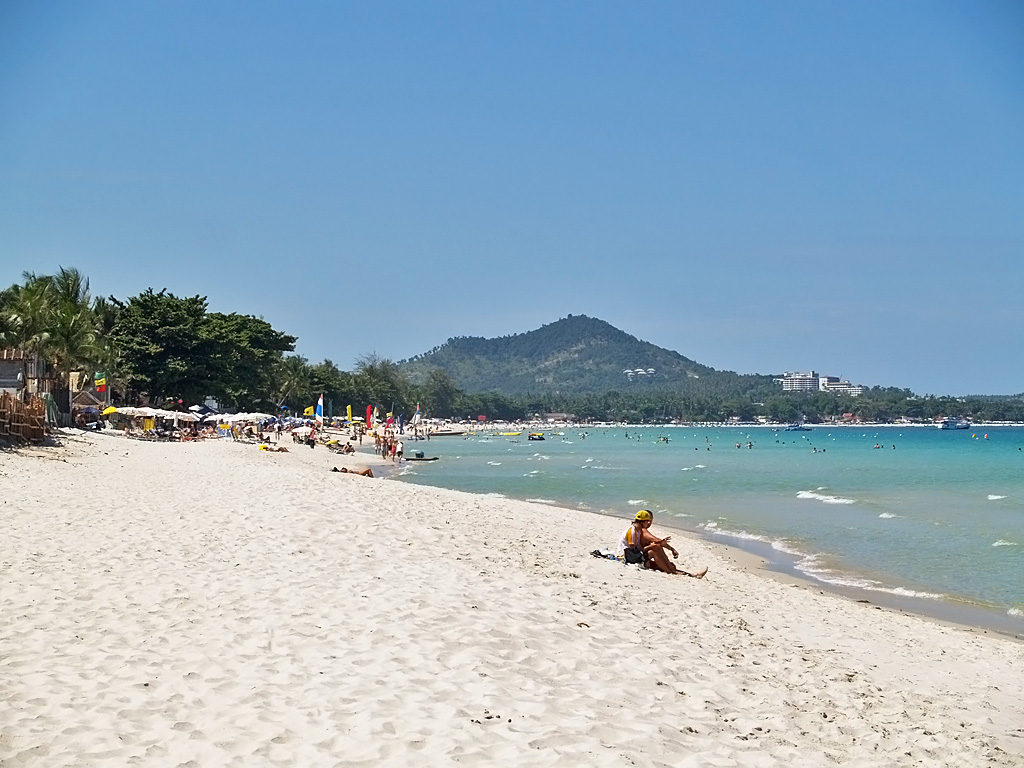
Chaweng Beach on Koh Samui, a long curve of white sand and clear water with swimmers and beach umbrellas along the treeline 2
Biggest Choice · Open Latest
Chaweng Beach
The island's main beach, east coast · grills along the beach road

Samui's main beach is where the ice displays are thickest — grills line the beach road and the sand itself. The biggest choice, the easiest price-comparing, and the latest closing times, which makes it the natural first-night option or the default if you're staying here anyway. The trade-off: this is also the zone with the most haggle-margin pricing and doorway touts. Run the full anti-overcharge checklist above and the good restaurants are easy to find.
Style: Rows of grills on the road + tables on the beach
Cost: Mid to high, by location
Best time: From 6:00 pm onward
Getting there: Mid-island east coast; songthaews pass by day
Getting home at night: after dark, songthaews switch to charter pricing, and Samui's taxis don't use meters — agree the fare before you get in, every time. Within Chaweng itself, many spots are walkable.
Skewers of fresh squid lined up on a rack ready for the grill at a seafood stall 3
Local Prices · Morning Catch
The Local Route · Hua Thanon & Beyond
Hua Thanon fishing community, south coast · local restaurants around the island

For local prices and seafood straight off small boats, drive past the main strips. The fishing community of Hua Thanon (just south of Lamai) has a morning market where the catch comes up from the boats. For a sit-down meal, the long-standing names people keep mentioning are Sabeinglae south of Lamai, known for fierce southern-Thai flavours, and Bang Por Seafood, an old-timer by the water on the northwest coast. Both are restaurants rather than beach grills, and clearly more local on price than Chaweng.

Style: Morning market + local sit-down restaurants
Cost: More local than the main zones
Best time: Market ~6–9 am · restaurants lunch and dinner
Getting there: Ring road, south and west coasts — easiest with your own wheels
A note from us: the restaurants named here are ones travellers and food media have mentioned consistently for years. We write from published information and take no advertising money. Menus, prices and hours change — check recent reviews before you go.
Quick Tips

Know before you go for a fair, easy feed

⚖️
Per kilo or per 100g — read it
A "per 100g" sign means multiply by ten for the real per-kilo price. If a number looks suspiciously pretty, be suspicious — and ask before anything is weighed.
🌅
Sand tables go first
In high season (Jan–Apr) the front-row tables by the water are claimed from early evening. Arrive around 5:30–6:00 pm to choose your spot and catch the sunset light.
💵
Cash and Thai QR rule the beach
Many beachfront grills take cash and Thai QR payment only; credit cards are mostly for bigger restaurants. Draw cash before you head down to the sand.
🌧️
Samui's monsoon is the reverse of Phuket's
Samui faces the Gulf: heavy rain runs roughly Oct–Dec (Nov wettest), when boats go out less and local catch thins. In Jun–Aug, while the Andaman gets rain, Samui usually still eats outdoors in comfort.
🦟
Pack a mini mosquito spray
Tables on the sand attract mosquitoes and sand flies after dark, depending on season. A quick spray on the ankles buys you the whole meal in peace.
👥
It's better in a group
Seafood is priced by weight, so three or four people can order a whole grilled fish, half a kilo of prawns and a tray of shellfish and share the lot. Splitting a lobster softens the cost too.
Frequently Asked

Questions people ask before they eat

How much does a beachfront seafood meal on Koh Samui cost?
For a middle-of-the-road order — half a kilo of grilled prawns, a whole salt-crusted fish shared around, grilled squid, rice and a side or two — expect roughly ฿400–800 per person. Add a spiny lobster or a big mud crab and it climbs past ฿1,000 each without much effort. Seafood is priced by weight per kilogram, and the rate depends on species, size, season and where the restaurant sits — tourist-strip beachfront spots charge noticeably more than local places. All figures here are rough guides; always confirm the price before anything goes on the scale.
How does the pick-by-weight system work at Samui's beachfront grills?
From late afternoon, restaurants set out an ice display at the front loaded with prawns, crab, fish, squid and shellfish, each with a price sign per kilogram (some signs quote per 100g instead — read carefully). You point at what you want, the staff weigh it in front of you, and you choose the cooking style: salt-crusted and grilled, charcoal-grilled, steamed with lime, or stir-fried in curry powder. The cooking is usually included in the per-kilo price, but some places charge it separately — confirm both the rate and what it includes before you agree.
How do I avoid being overcharged at a Samui seafood restaurant?
Five things cover most of it. First, read the sign properly: is the price per kilogram or per 100g? A per-100g sign makes an expensive fish look ten times cheaper. Second, watch the weigh-in and see the number yourself. Third, ask whether the price includes cooking, dipping sauce and rice. Fourth, compare two or three displays before committing — easy on Chaweng where the restaurants sit side by side. Fifth, ask for an itemised bill and check the weights and rates before paying. Plenty of honest restaurants exist; just don't let a doorway tout make the decision for you.
Which Samui zone is best for which kind of seafood meal?
Fisherman's Village in Bophut is the best-atmosphere dinner zone — waterfront tables among old wooden shophouses, well suited to couples and long evenings. Chaweng has the biggest choice and stays open latest, with displays lined up side by side for easy comparing. For local prices, head south and west: the fishing community of Hua Thanon has a morning market where the catch comes straight off the boats, and long-standing local favourites people mention include Sabeinglae south of Lamai and Bang Por Seafood on the northwest coast.
Can I still eat beachfront seafood on Samui in the rainy season?
Yes, with the right timing. Samui sits on the Gulf of Thailand, so its heavy rain runs roughly October to December, with November usually the wettest — the opposite of Phuket and the Andaman coast. In that window the seas get rough, small fishing boats go out less, some local catch is scarce, and tables on the sand move indoors on bad nights. The best months are January to April and June to August. Even in the wet months, rain tends to come in bursts rather than all day — keep a backup plan and you'll still eat well.
Do I need to book a table at a beachfront seafood restaurant?
Mostly you can walk in, but the front-row tables on the sand go first. In high season (January to April), arrive around 5:30–6:00 pm if you want a sunset table, or message a popular restaurant a day ahead. Local places outside the main zones rarely need booking. On Friday nights, Bophut's Fisherman's Village holds its Walking Street market and gets especially crowded — allow extra time to find a seat.
Klook

Make the most of Koh Samui
island tours, snorkelling and transfers

Full of seafood? Head out on the water tomorrow — Ang Thong Marine Park tours, Koh Tao and Koh Phangan day trips, snorkelling, and airport or pier transfers. Compare prices and reviews on Klook.

Browse Koh Samui activities on Klook →
Wherebest is a Klook affiliate partner — we may earn a commission when you book through our links, at no extra cost to you.