Home Koh Samui Must-Eat Dishes Thailand About
Home  ›  Thailand  ›  Koh Samui  ›  Night Markets
Thailand · Koh Samui Night Markets · 2026

Koh Samui Night Markets
Fisherman's Village Friday — and Which Market Which Night

On Friday evenings the old shophouse lane by Bophut beach closes to traffic, squid-grill smoke drifts past live music, and the island's biggest market takes over. But Samui has a walking street almost every night. This guide covers all five — which night to go where, what to eat, what it costs, and what to know before you leave your hotel.

Before You Go

Which night, which market

Picture this: 7 pm on a Friday, you walk under the wooden arch into the narrow lane of Bophut's Fisherman's Village. Either side of you, century-old wooden shophouses have become restaurants and bars. A squid grill smokes ahead, a kid wanders past with a banana roti, live music drifts from a beach bar — and the end of the lane opens straight onto the sea just as the sun drops. This is the Friday night nobody should leave Samui without.

The good news is that Samui isn't only about Friday. The island runs a rotating walking street almost every night — Thursday in Maenam, Friday in Bophut, Sunday in Lamai — plus Laem Din market in central Chaweng, where the island's workers genuinely eat every evening. We walk through all five markets and eating areas, ordered from the island's biggest night down to the markets where prices are local prices, with honest notes on who each one suits. For a deep dive into the dishes themselves, read our Koh Samui must-eat guide alongside this.

5 Markets & Walking Streets

Market by market, honest and current

Ordered from the big Friday night down to where locals really eat
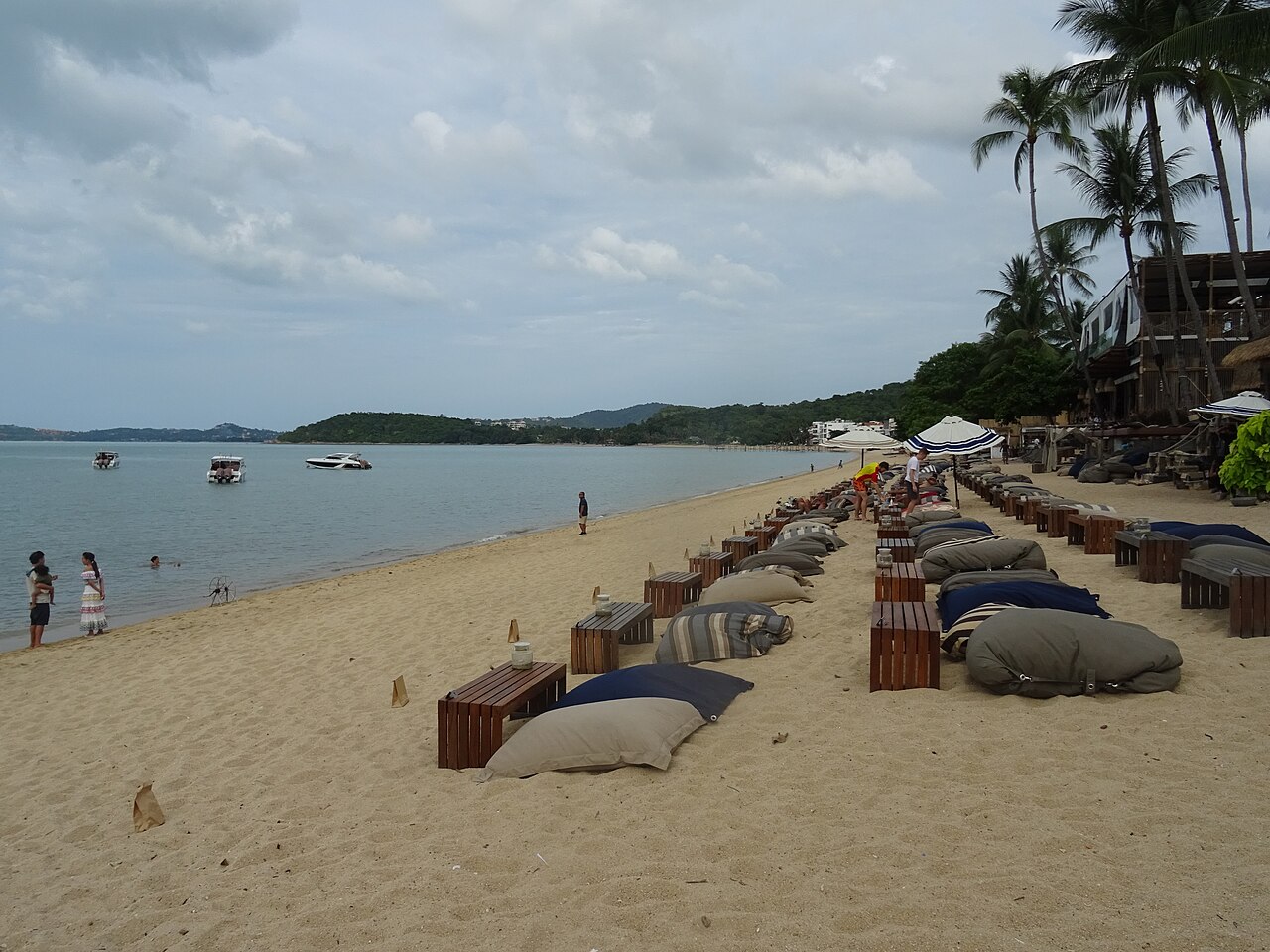
Bophut beach in the early evening, beach-bar bean bags lined up on the sand under coconut palms — the Fisherman's Village walking street opens onto this stretch 1
The island's biggest night · Friday only
Fisherman's Village Walking Street
Fisherman's Village, Bophut · north coast, off ring road 4169 · Friday ~17:00–23:00

The old trading lane of Bophut's fishing village — sea-trade-era wooden shophouses that now hold restaurants, bars and small independent shops — closes to traffic every Friday night and becomes a market running the full length of the street. Food stalls alternate with crafts, clothes and souvenirs, live music spills out of the bars, and the lane ends on Bophut beach, where you can settle in by the water afterwards.

What to eat: grilled seafood — big prawns, squid, whole fish · grilled skewers and Isaan sausage · banana roti made fresh on the griddle · mango sticky rice · coconut ice cream served in the shell · and a long line of sweets and drinks. It's the fullest market on the island — and the most crowded.
Getting there: ~10 km from Chaweng / 15–20 min · Friday traffic
Prices: skewers ฿10–60 · full graze ~฿250–450/person
Best time: 17:30–19:00 before the crush · winds down ~23:00
Payment: cash + Thai QR at some stalls · shops take cards
An honest warning: this is the tourist-facing market — food prices run roughly 20–50% above the local markets, and after 20:00 the lane gets packed enough to slow to a shuffle. If crowds aren't your thing, arrive 17:30–18:30. Taxis waiting outside afterwards like to quote high, so agree the fare before you get in or arrange your ride in advance. On other days the village still opens as normal (restaurants, bars, beach) — there are just no market stalls. For the full area guide, read our walk through Fisherman's Village, Bophut.
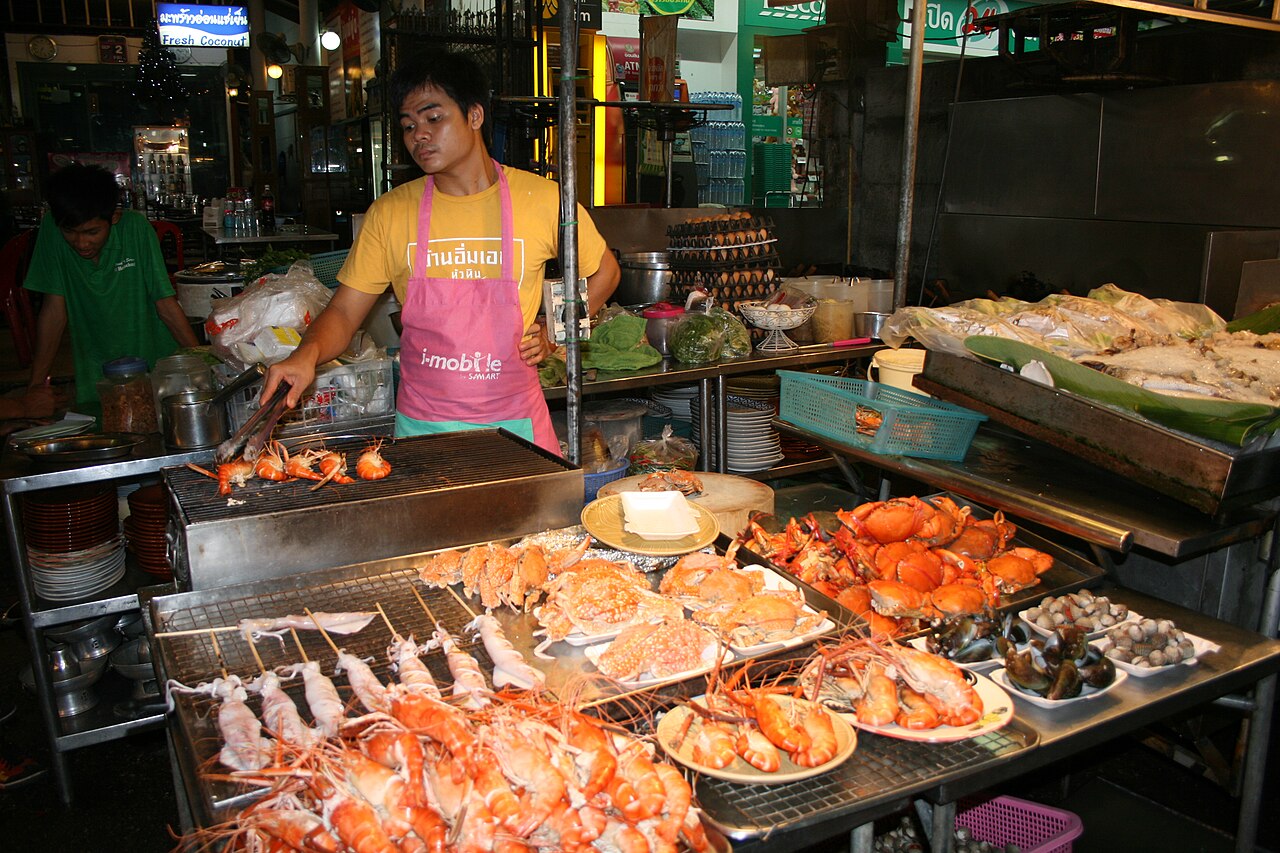
A Thai night-market seafood stall with prawns, crab and squid skewers laid out by the charcoal grill — the same scene you'll find at Laem Din's evening food stalls 2
Genuinely local · every evening, no fixed day
Laem Din Market, Chaweng
Central Chaweng · fresh market by day + food stalls in the evening · open daily

People assume Chaweng is all tourist-priced restaurants — but in the middle of the strip sits the market where the island's workers eat every day. By day it's a wet market of vegetables, fish and fruit; in the evening the cooked-food and grill stalls take over: southern-Thai curries over rice, fried chicken, som tam (papaya salad), pork skewers, khanom jeen noodles and seasonal fruit, at the same prices locals pay.

It's the answer for nights with no walking street (Monday–Wednesday), or any night you want real food without beach-road pricing. Takeaway bags back to your room work brilliantly too. English is limited — point, smile, and you'll eat well.
Getting there: walkable from most central-Chaweng hotels
Prices: dishes ฿40–80 · full dinner under ~฿150
Best time: late afternoon to evening, when food stalls peak
Payment: cash first · Thai QR at some stalls
Pro tip: this is the place to try real southern-Thai food — gaeng tai pla (fermented fish-innards curry), gaeng lueang (sour yellow curry), khua kling (dry-fried curry mince). A takeaway bag costs a fraction of a sit-down restaurant. Fair warning: southern means properly spicy — asking for "ped noi" (less spicy) is completely acceptable.
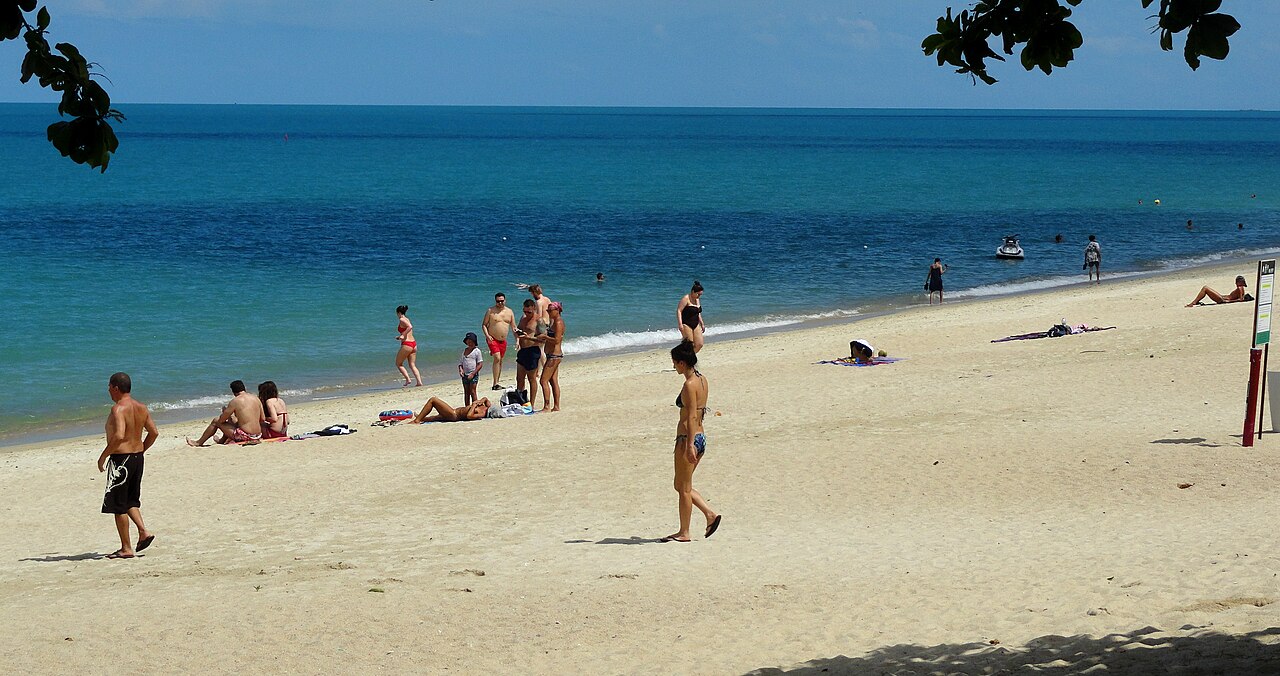
Lamai beach on a clear day, white sand and swimmers in blue water — the Sunday walking street sets up in central Lamai just in from this beach 3
Sunday night · the second beach
Lamai Walking Street
Central Lamai, south-east coast · Sunday ~17:00–22:00, roughly

Lamai is the island's second beach and runs at a noticeably slower pace than Chaweng. On Sunday nights the street through the centre of town turns into a market — grill stalls, made-to-order Thai dishes, desserts, clothes and souvenirs. It's smaller than Fisherman's Village, but easier to walk, less crushed and gentler on the wallet.

Sweet tooths do well here: the resident banana-roti carts, Japanese-style crêpes and icy fruit shakes. On the savoury side, the som tam pestles echo down the lane. When you're full, Lamai's street bars and massage shops stay open late enough to carry the evening on.
Getting there: ~15–20 min from Chaweng on the ring road
Prices: cheaper than Bophut · full graze ~฿150–300/person
Best time: Sunday 18:00–21:00
Payment: cash first
Other nights: central Lamai usually has a small cluster of food stalls near the town's fresh market most evenings — nothing like Sunday's scale, but enough to fix a grilled-skewer craving. And if you come early, the Hin Ta & Hin Yai rocks at the south end of the beach fit neatly before the market opens.
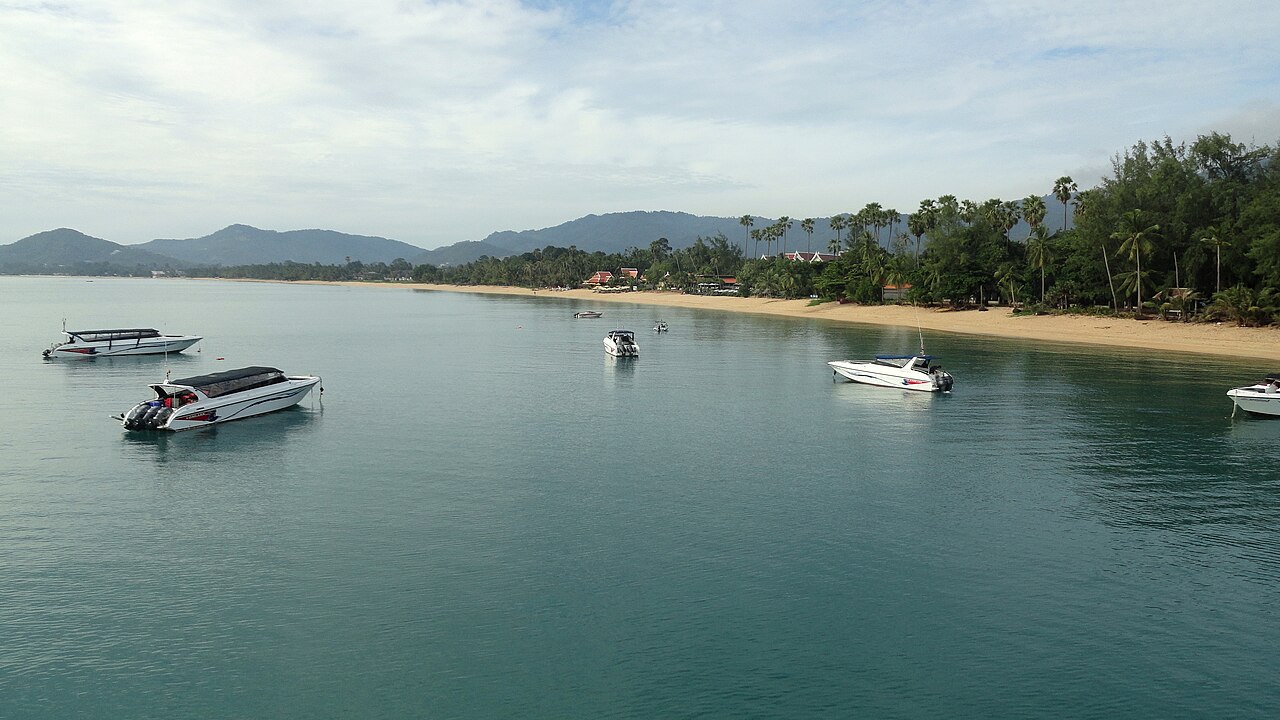
Maenam bay on Koh Samui with speedboats moored off a palm-lined sand beach — the Thursday walking street runs down a lane toward this beach and the pier 4
Thursday only · the cheapest and most local
Maenam Walking Street
Maenam, north coast · a lane off the ring road running toward the sea, near the town's old shrine · Thursday ~17:00–22:00

Every Thursday night, the little lane through Maenam — the quiet north-coast beach town with fewer tourists than anywhere else on this list — fills with food stalls at prices that feel like a different island. Pork skewers for under ฿20, khanom krok (coconut-rice puddings), fried bananas, wrapped pad thai, som tam, and the home-style dishes people who live here actually buy. The crowd is a mix of locals, island workers and the quieter kind of traveller.

The atmosphere is the selling point — strings of small lights across the lane, plastic tables at the edges, ten minutes to walk end to end and an hour's worth of eating. If you're staying in Maenam or Bophut, Thursday is not a night to stay in.

Getting there: off the ring road · ~10 min from Bophut
Prices: cheapest on the list · full graze ~฿100–200/person
Best time: 18:00–20:30
Payment: cash · Thai QR at some stalls
Why it's cheaper: Maenam is the island's budget-and-family corner, and most vendors sell to locals first. Prices were never set for tourists. If we had to whisper a single "best value" market on Samui, this is it.
🌅
West-coast port town · waterfront food + sunset
Nathon — waterfront evening market
The main port town, west coast, near the ferry piers · evening stalls most days · walking street usually Saturday

Nathon is the port town most visitors only pass through between ferry and beach — a shame, because in the evening the waterfront and the old wooden shophouse lanes fill with food stalls at local prices: khanom jeen with southern curries, rice-and-curry plates, fried chicken, old-school Thai sweets. It's also a west-coast sunset spot you won't have to share.

Nathon has usually added a proper walking street on Saturday nights on top of the regular evening stalls — it's a small market and the day and format can change, so check with your hotel or a local before making a special trip. The smart move is to fold it into a travel day: arrive on an afternoon ferry, eat here, watch the sun go down over the water, then head to your beach.
Getting there: west coast · ~30–40 min from Chaweng
Prices: local prices · full dinner ~฿100–200/person
Best time: early evening, before sunset
Payment: cash first
Who it suits: anyone curious about Samui as a real town rather than a beach strip, and anyone already passing the pier on the way in or out. Not quite worth crossing the island for on its own — very much worth it folded into a ferry day or a round-island drive.
Know the Snacks

7 Samui market snacks you shouldn't miss

Found at nearly every market above — just point and order

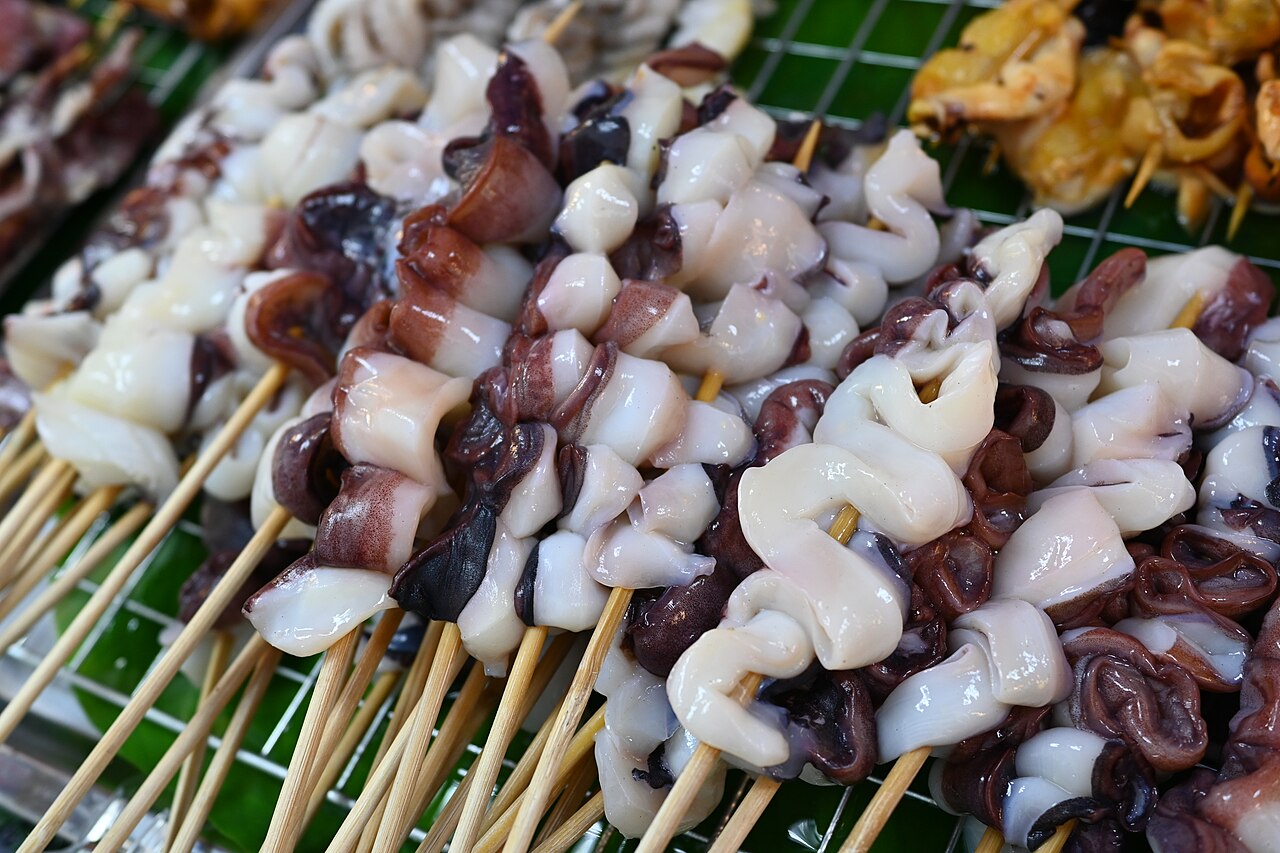
Skewers of squid lined up on a market stall rack, ready for the charcoal grill
Grilled squid & seafood skewers
ปลาหมึกย่าง · Grilled Squid
Charcoal-grilled on sticks, dunked in nam jim seafood — a hot, sour, garlic-heavy dip. Small skewers ฿20–60; whole squid and big prawns priced per piece from ฿100 up. The stall whose stock turns over fastest has the freshest catch.
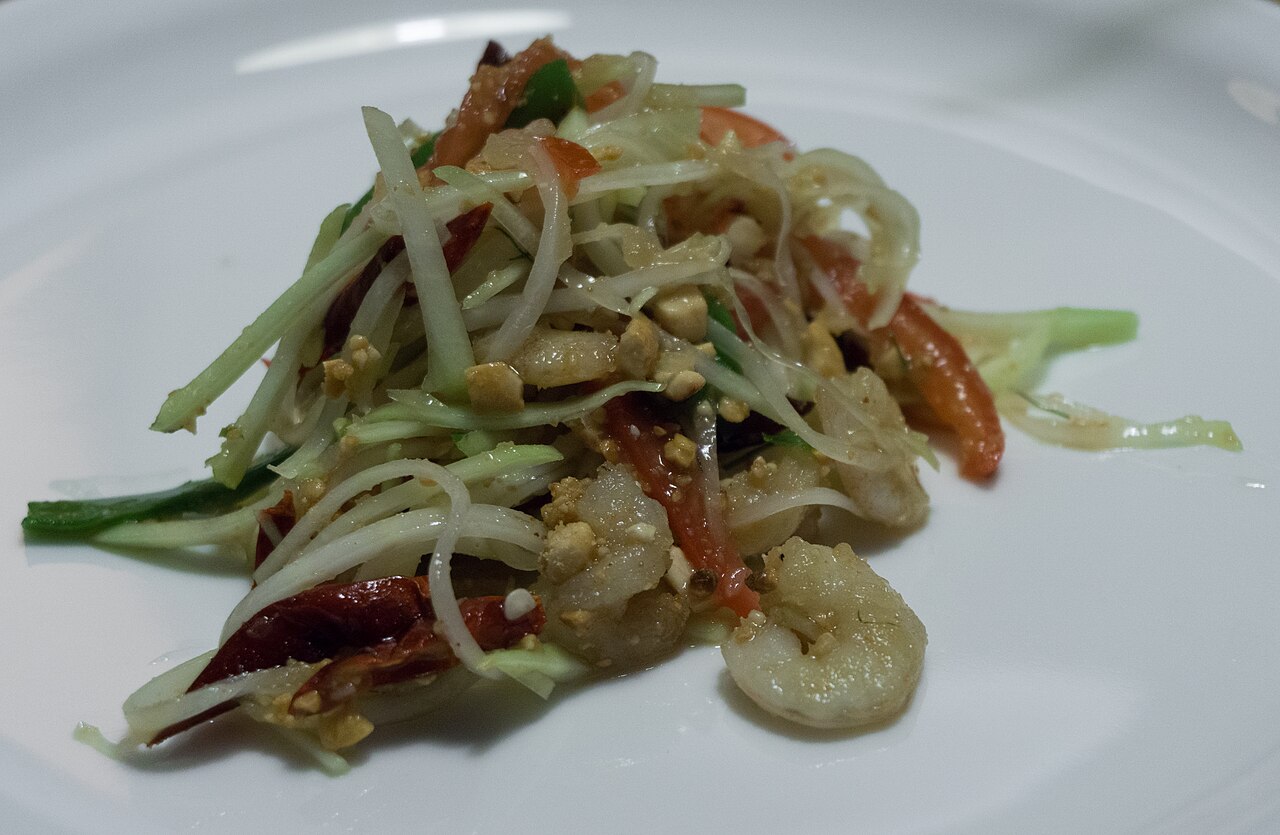
A plate of som tam papaya salad with prawns, shredded green papaya, chilli and peanuts
Som tam
ส้มตำ · Papaya Salad
Pounded to order, mortar after mortar. Tam Thai, tam poo (with crab), or a sharing tray with grilled chicken and sticky rice. ฿40–80. Spice is fully negotiable — from no chilli at all to ten.
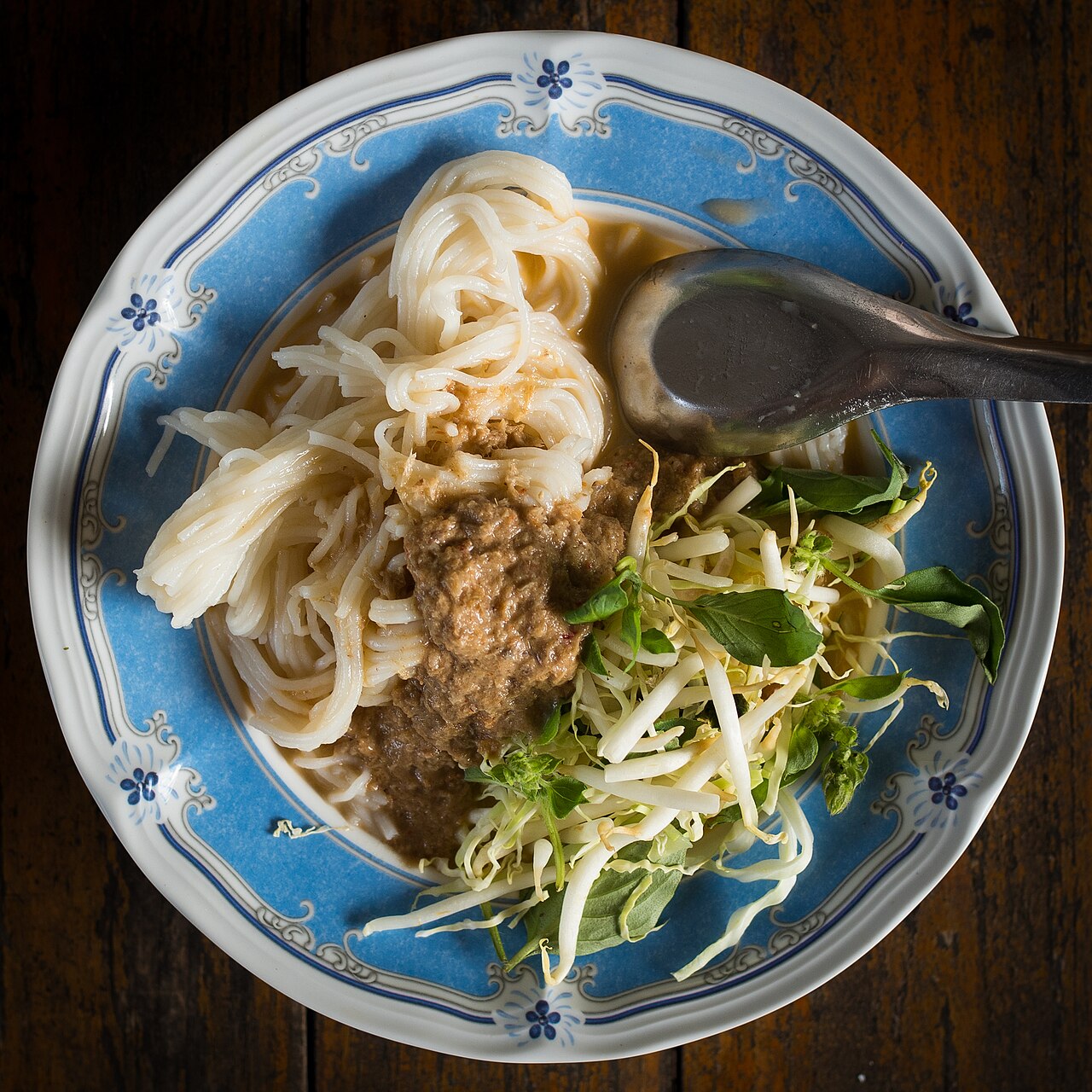
A bowl of khanom jeen rice noodles topped with southern Thai curry and fresh vegetables
Khanom jeen southern curry noodles
ขนมจีนแกงใต้ · Khanom Jeen
Soft rice noodles under gaeng tai pla, coconut nam ya or green curry, with a heap of fresh vegetables. ฿30–60, easiest to find at Laem Din and Nathon. The real southern article — properly hot.
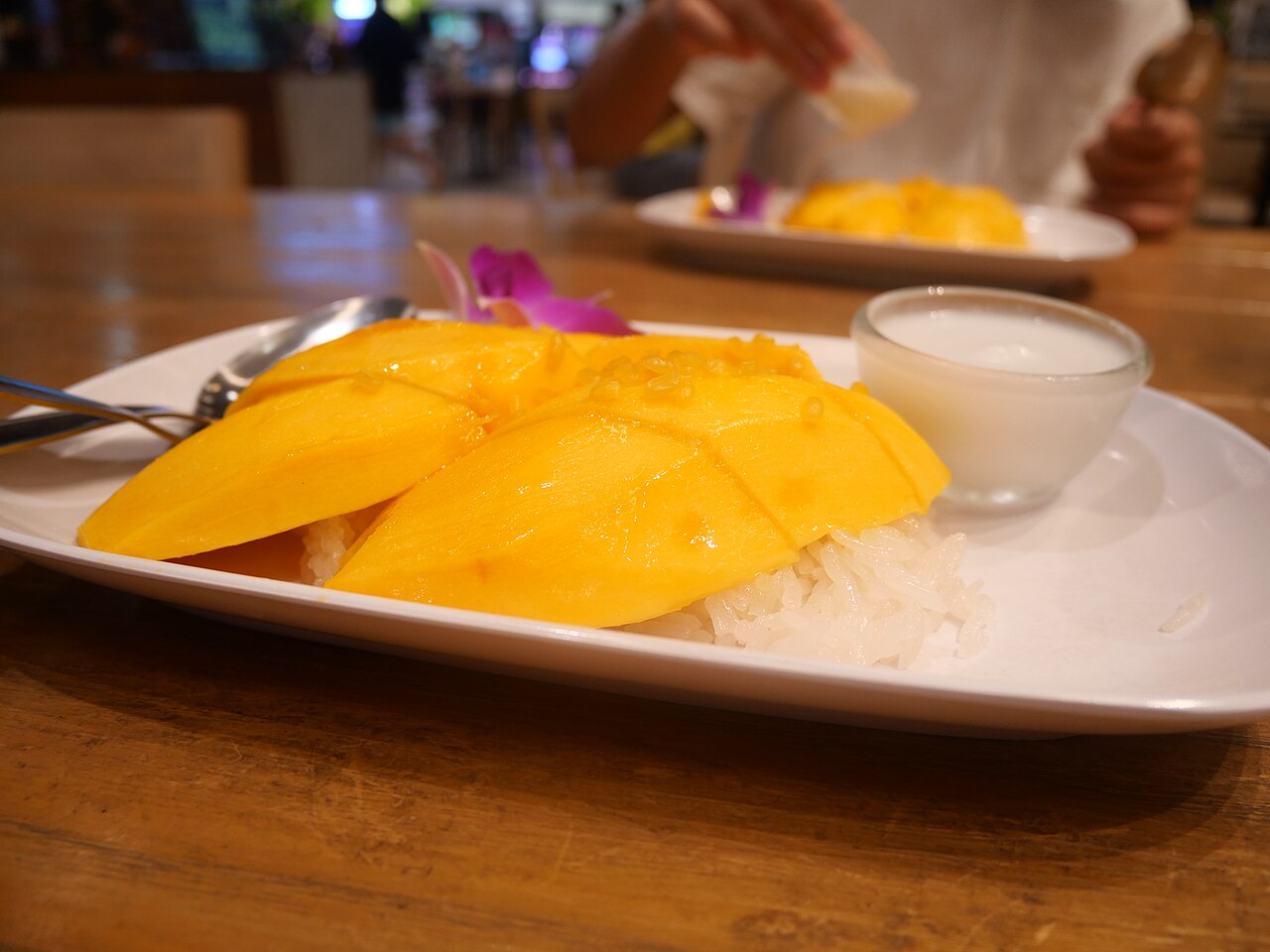
Mango sticky rice with coconut cream, ripe mango slices arranged on a plate
Mango sticky rice
ข้าวเหนียวมะม่วง · Khao Niao Mamuang
Sweet ripe mango over coconut-cream sticky rice with a scatter of crunchy beans. ฿60–120 depending on season and size. Thai mango season runs roughly March–June — peak deliciousness; off-season prices creep up.
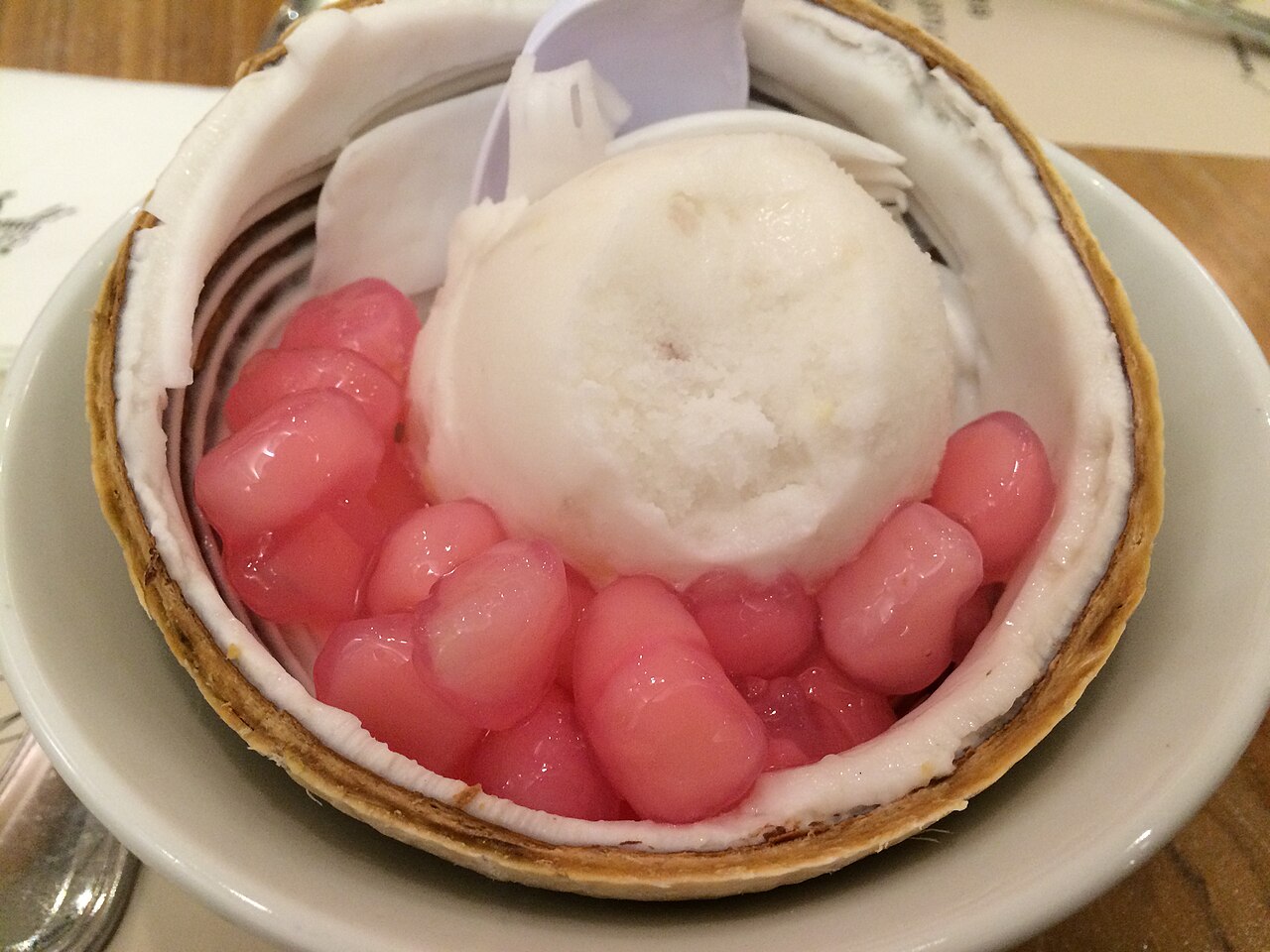
Coconut ice cream served inside a coconut shell, topped with pink palm seeds
Coconut ice cream
ไอศกรีมมะพร้าว · Coconut Ice Cream
Scooped into a coconut shell and topped with peanuts, sticky rice or palm seeds. ฿40–80. Samui was a coconut-plantation island long before it was a resort island — this is the native dessert, and the best cool-down in a hot market.
🥞
Banana roti
โรตีกล้วย · Roti Gluay
A griddled flatbread, crisp outside and soft inside, folded around banana and finished with condensed milk or chocolate. ฿30–80. Watching it made is half the fun — the closing act of every walking street.
🍢
Moo ping & grilled skewers
หมูปิ้ง · Grilled Pork Skewers
฿10–40 a stick — Thailand's original walking food. Marinated grilled pork with warm sticky rice is a small meal in itself. Buy a handful of different sticks and share as you go.
Plan Your Week

Which night, which market

An easy schedule to remember — slot in however many nights you have

1
Every evening · Laem Din Market, Chaweng
On nights with no walking street (especially Monday–Wednesday), eat here — southern curries, grills and fruit at local prices. Budget ~฿100–150
2
Thursday · Maenam Walking Street
The cheapest and most local market on the list — string lights, a short lane, a lot of food. Ideal if you're staying on the north coast. Budget ~฿100–200
3
Friday · Fisherman's Village, Bophut
The island's biggest night. Arrive before 18:00 to dodge the traffic and the crush, graze the lane, then take a beach-bar seat. Budget ~฿250–450
4
Saturday · Nathon (check first)
The port town's waterfront stalls plus a west-coast sunset. The walking street has usually run Saturdays — confirm with your hotel. Budget ~฿100–200
5
Sunday · Lamai Walking Street
Close the week on the south-east coast — a mid-sized market that's easier going than Friday, strong on desserts, with street bars to follow. Budget ~฿150–300
Know Before You Go

A few things that save you trouble

💵
Cash rules the stalls
Market stalls are cash-first. Many show a Thai QR code, but it generally needs a Thai banking app — visitors should carry baht. Hit an ATM before you head out (Thai ATMs charge a fee on foreign cards). Sit-down restaurants in Fisherman's Village mostly take cards.
🚕
No meters — agree the fare first
Samui taxis are famously expensive and unmetered: agree the price before you get in, every time. Songthaews turn into private charters after dark, and ride-hail apps have few cars at peak times. Arrange your ride home from the market in advance.
Friday: go before 20:00
After 19:30, Fisherman's Village slows to a shoulder-to-shoulder shuffle and traffic backs up around Bophut. Arriving 17:30–18:30 gets you the full food line-up, somewhere to park and the sunset light on the beach.
🌧️
Rainy season is Oct–Dec
Samui sits on the Gulf coast: heavy rain comes late in the year (November wettest) — the opposite of Phuket. Open-air stalls pack up fast in a downpour and some nights get cancelled; keep a covered-restaurant backup. January–April and June–August are the easiest months.
🛵
Scooters at night: extra care
Stretches of the ring road are unlit, and market nights mean more traffic and more drinking. Always wear a helmet, never ride after drinking, and if you're new to scooters, take a taxi — there's no late-night public transport on the island.
🍢
How to pick a stall
The same rule as everywhere in Thailand — the stall with a local queue and fast-moving stock is the one to join. Food is priced as marked, no haggling needed (gentle bargaining is fine at clothes and souvenir stalls).
Frequently Asked

FAQ · what travellers ask before market night

Which day is the Fisherman's Village night market, and what time?
The walking street runs on Friday night only, roughly 17:00–23:00. Stalls set up through the early evening and the peak is around 19:00–21:00. The village itself — restaurants, bars, cafés, little shops — opens every day of the week, so you can still stroll and eat by the beach on other nights; there just won't be market stalls. Times can shift with the season and the weather, so it's worth double-checking with your hotel before you head out.
How much should I budget for a night-market dinner on Koh Samui?
Grilled skewers start around ฿10–40, som tam (papaya salad) is ฿40–80, banana roti ฿30–80, mango sticky rice ฿60–120 and coconut ice cream ฿40–80. Big grilled-seafood plates at Fisherman's Village climb to ฿200–400 or more. Overall, grazing until you're full at a local market like Maenam or Laem Din comes to roughly ฿100–250 per person, while Fisherman's Village runs more like ฿250–450 per person. Treat all of these as rough figures — prices vary by stall and season.
Which market runs on which night?
The easy version: Thursday = Maenam Walking Street · Friday = Fisherman's Village in Bophut · Sunday = Lamai Walking Street. Nathon has waterfront food stalls most evenings and has usually held its walking street on Saturday night (it's a small market and the day can change — check locally). Laem Din market in central Chaweng has food stalls every evening, no fixed day needed, so Monday to Wednesday you can still eat well there or at the beach-road restaurants.
How do I get from Chaweng to Fisherman's Village?
It's about 10 km along the 4169 ring road — 15–20 minutes if you drive. By day you can flag a songthaew (shared pick-up truck) running the ring road for a fare in the tens-to-low-hundreds of baht depending on distance, but after dark songthaews switch to charter mode and you have to agree a price. Samui taxis don't use meters, so always agree the fare before you get in — Chaweng to Bophut is commonly quoted around ฿300–500 per car. There's no train, no bus network and no scheduled public transport on the island, and ride-hail apps work but cars are scarce. Friday evening traffic jams up around Bophut, so allow extra time and arrange your ride home in advance. More in our guide to getting around Samui.
Do the markets still run in Koh Samui's rainy season?
Samui sits on the Gulf of Thailand, so its heavy rain comes roughly October–December, with November usually the wettest month — the opposite rhythm to Phuket and Krabi, which get their rain mid-year. Most markets are open-air, so when a downpour hits, stalls pack up fast and some nights are cancelled. The restaurants and bars inside Fisherman's Village are in covered shophouses, though, so a rainy evening there still works. January–April and June–August are the most comfortable windows — month-by-month detail in our best time to visit Samui guide.
Is there anything at the markets besides food?
Plenty. Fisherman's Village has clothing stalls, crafts, souvenirs, street artists and live music in the bars, plus beanbags on the beach for after you've eaten. Lamai and Maenam carry cheaper clothes and homewares — gentle bargaining is fine at goods stalls (food is priced as marked, no haggling needed). Nathon is best folded into a ferry day: wander the old wooden shophouse lanes, eat at the evening stalls and stay for the west-coast sunset.
Klook

A Koh Samui food tour with someone who knows
the markets and stalls you'd never find alone

Samui food tours head into the local markets, southern-Thai curries and no-English-sign stalls — and many evening tours include hotel pick-up, which beats gambling on a taxi home. Most run around ฿1,000–2,500 per person depending on length and how much eating is included.

See Koh Samui food tours on Klook →
Wherebest is a Klook affiliate partner — we may earn a commission when you book through our link, at no extra cost to you.