Daiichi Takimotokan Noboribetsu — a 168-year legend with 7 hot spring types no other property in Asia can match
Imagine a hotel that opened during the Edo era — 32 years before the Imperial Hotel Tokyo was even conceived — and still earns a 9.0 score from over 3,150 Booking reviews today. That is Daiichi Takimotokan in Noboribetsu: a 5-star ryokan, the oldest in the area, founded by the Takimoto family in 1858 and built directly beside Jigokudani (Hell Valley), Japan's most powerful geothermal site. The claim that sets this place apart from anything else in Asia is its 7 types of hot spring under a single roof — sulfur, iron, acidic, alum, arsenic, radium and saline — all available to guests in one stay.
Daiichi Takimotokan stands at 55 Noboribetsu Onsen-cho, directly beside Jigokudani, at the heart of Hokkaido's most celebrated hot spring resort. The location is genuinely special — step out from the rear of the building and you can walk up to Jigokudani and watch steam billowing from the valley floor at any time, completely free. Guests who've been consistently describe it as one of the most beautiful sights they've seen in Japan, particularly at sunset and in the misty early morning. Getting here from Sapporo takes about 90 minutes on the JR line, with a free hotel shuttle covering the final stretch from Noboribetsu Station — making this a natural choice for a one-night detour or the stand-out highlight of any Hokkaido itinerary.
"One night wasn't enough — we bathed in all seven types and felt completely renewed. The kaiseki dinner was far better than expected. We'll definitely be back."
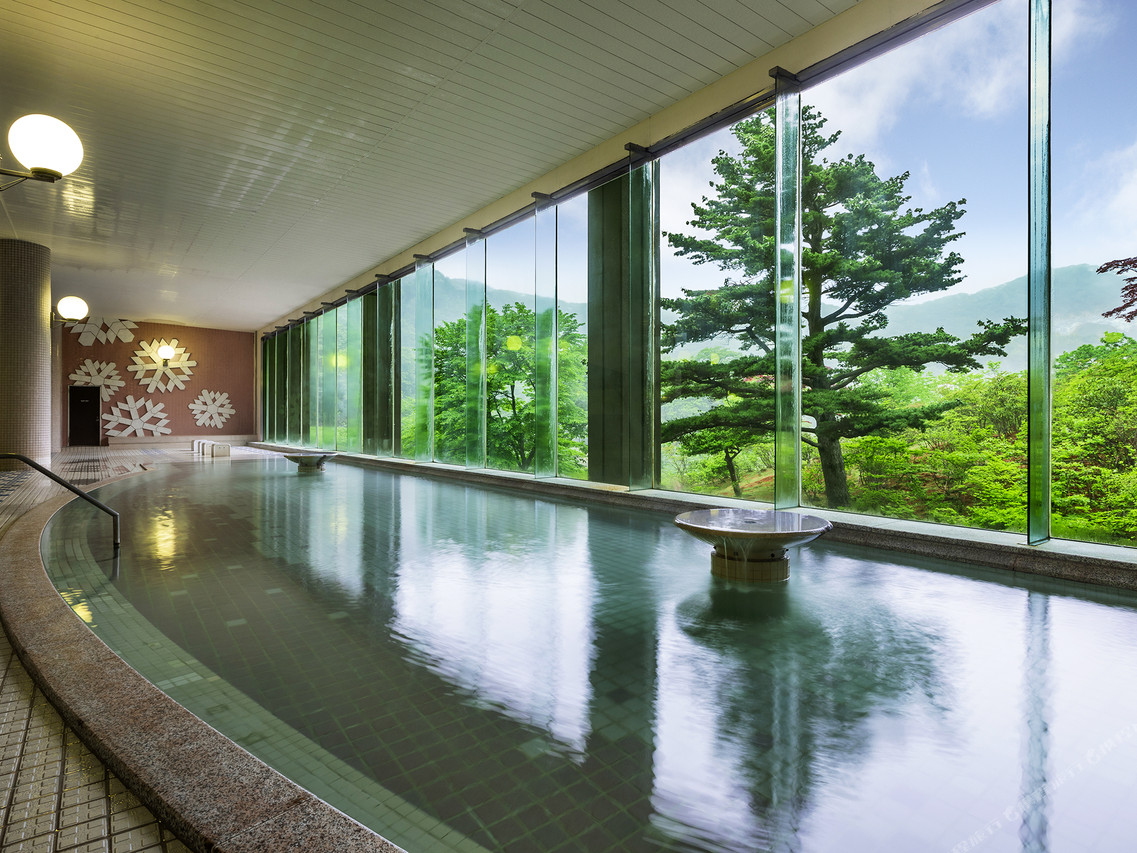
The heart of any stay here is the 7 types of hot spring housed under one roof — a record no other accommodation in Asia comes close to matching. Each type carries its own distinct mineral profile: sulfur (milky white, classic sulphur scent) · iron (rust-orange tones, said to promote circulation) · acidic (clear, mildly astringent) · alum (soft green tint, anti-inflammatory) · arsenic (clear, slightly cooler) · radium (clear, deeply relaxing) · saline (faintly salty, leaves skin silky smooth). Guests regularly report working through all seven in the course of a single evening, waking the next morning feeling noticeably lighter — a level of comprehensive immersion that simply cannot be replicated elsewhere.
Guest rooms are traditional Japanese tatami-style at 30 sq m for the Standard — futon sleeping on woven rush matting, the gentle sound of Noboribetsu's night silence, and an atmosphere that makes 1858 feel entirely present. Rooms on the upper floors offer direct views over Jigokudani, and many guests say waking to see steam rising from the valley floor through the window is a moment they never forget. While the building dates back 168 years, it has been carefully maintained and renovated to deliver the comfort of a modern 5-star stay while preserving the authentic ryokan spirit.
The rate of ¥28,000 per night includes two full meals — a Hokkaido kaiseki dinner and a breakfast buffet. The kaiseki draws on the ingredients that made Hokkaido famous: uni (sea urchin), ikura (salmon roe), zuwai gani (snow crab), and A4 wagyu. Most guests report the food as more impressive than they'd anticipated, with the quality and variety of the kaiseki genuinely justifying the room rate — there is no need to venture outside for a meal.
Worth knowing honestly: the breakfast buffet gets crowded, particularly on weekends and during holiday periods. Guests who've visited advise arriving by 6:30 am to get ahead of tour groups. The other trade-off is the distance — Noboribetsu is 90 minutes from Sapporo, which means this property works best when you dedicate a full overnight stay to it rather than treating it as a base for daily city excursions.
Many travellers ask whether Daiichi Takimotokan is worth the price for an international visitor. The honest answer is yes — particularly for anyone who appreciates onsen culture, traditional ryokan hospitality, or wants a single night that becomes the defining memory of their Hokkaido trip. This isn't simply a hotel; it's a place you'll end up recounting to friends for years. The 168-year heritage isn't marketing copy — it's something you feel the moment you walk in.
In short, Daiichi Takimotokan is the leading heritage ryokan in Noboribetsu and likely the most memorable onsen experience available anywhere in Hokkaido. If there is one property on a Sapporo or Hokkaido itinerary that deserves to be the night you remember most — this is it.
Summary from Booking & Agoda
- ✓ 7 types of hot spring in one building — nothing in Asia compares
- ✓ 168-year Edo heritage · authentic ryokan atmosphere throughout
- ✓ Hokkaido kaiseki dinner included · uni / ikura / snow crab / A4 wagyu
- ✓ Directly beside Jigokudani — free scenic walk to Hell Valley
- ! 90 minutes from Sapporo — best as a dedicated overnight, not a daily base
- ! Breakfast buffet gets very crowded · aim to arrive by 6:30 am
- ! Higher price point at ¥28,000/night (meals included)
- ✓ All 7 onsen types feel noticeably different · can complete all in one evening
- ✓ Free shuttle from Noboribetsu Station · no need to arrange transport
- ✓ Tatami rooms 30 sq m · authentic ryokan feel · upper floors overlook Jigokudani
- ✓ Kaiseki dinner quality exceeds expectations · included in the rate
- ! No private in-room onsen bath · shared public baths on various floors
- ! Limited parking — public transport is strongly recommended
- ! Standard check-in 15:00 · early arrivals will need to store luggage
- 💡If you want a private in-room onsen bath — Daiichi Takimotokan offers outstanding shared public baths but no private rotenburo in the room → check whether an upgraded room category is available, or consider a smaller ryokan in the area that offers private baths.
- 💡If your trip is focused on daily sightseeing in Sapporo — the 90-minute distance makes this property best as a dedicated night away → for onsen closer to Sapporo, consider Jozankei Onsen (around 45 minutes from the city).
- 💡If you want a relaxed breakfast experience — the breakfast buffet at peak periods draws large tour groups and queues can build → come down at 06:30 to eat at your own pace before the crowds arrive.