A tiny backpacker town in the hills and one of the easiest places in Thailand to make friends travelling alone — social hostels, a walking street with live music, and scooter freedom to canyons and waterfalls. This guide is honest about both the fun and the risks: the 762-curve road in, and the very real chance of a scooter crash.
Backpackers have a phrase for it: the "Pai vortex". You arrive planning to stay two days and somehow leave two weeks later. Pai really does have that pull, and it is even stronger when you come alone, because this is one of the easiest places in Thailand to meet people. The hostels are social, the night walking street is full of travellers from all over, and a single hello can turn into a whole group to explore with by the evening.
But this guide will not sugar-coat it. Pai has a side that needs straight talk, and the most dangerous thing here is not people, it is riding a scooter. The road in is 762 curves that make people carsick, and the tracks up to the canyon and waterfalls are steep and sandy. Travellers come off their motorbikes often enough that the road rash has a nickname, the "Pai tattoo". We will tell you exactly how to lower the risk.
This guide covers everything a solo traveller in Pai needs: honest safety advice, getting there and the scooter question, the things that are genuinely good to do alone, how to eat solo without feeling awkward, how to meet people along the way, and where to stay when you are travelling on your own.
Very safe when it comes to crime — but scooters are the genuine danger here, and you should know that first.
Violent crime against tourists is rare in Pai, which is a small, easygoing town. Walking the night market in the centre after dark feels comfortable and there are people around throughout. The usual tourist-town caution applies: keep an eye on your valuables and bag, especially in crowds and on nights out where there is drinking involved.
Women who travel Pai alone overwhelmingly report feeling safe — on the walking street, in restaurants, and in hostels, partly because there are so many solo women travellers around. Apply the same basic caution you would anywhere: watch your drink and do not leave it unattended, and if you ride a scooter back to your stay late at night in a quiet area, bear in mind there is little street lighting.
This one needs saying plainly: a lot of travellers get hurt falling off motorbikes in Pai. The road rash jokingly called the "Pai tattoo" is an everyday sight, and many of the people who get it had never ridden before and were learning on steep, sandy mountain roads. Wear a helmet every time, wear closed shoes (not flip-flops), never ride after drinking, and if you have never ridden a scooter, do not make Pai your first time.
In the burning season (roughly March to April) the haze is heavy, air quality is poor, and the valley views vanish — avoid this window if you can. On money: ATMs in Pai are limited and sometimes run out, so bring enough cash from Chiang Mai. And the thing people forget: check whether your travel insurance covers motorbike accidents — many policies will not pay out if you ride without a valid licence.
We have done the shortlisting: social hostels and guesthouses in town with common areas where it is easy to meet other travellers, plus quiet rice-field and riverside bungalows if you would rather have your own space. Pick whichever suits how you like to travel alone.
See Where to Stay in Pai →Ordered by what solo travellers tend to enjoy most and find easiest.
1
The real draw of Pai for a solo traveller is the freedom to ride wherever you like at your own pace. The canyon, Mo Paeng Waterfall, the hot springs and Santichon village are all a few kilometres out, with rice-field cafes to stop at along the way. But the safety point stands: you need a licence, wear a helmet, wear closed shoes, and never ride after drinking. A lot of the mountain roads are steep with loose sand, so keep your speed down, especially at first.
Worried about feeling lonely on a solo trip? Pai solves that better than almost anywhere. Stay at a hostel or guesthouse in town with a common area and a little bar, and you will meet travellers from all over who are also on their own. Many run activities or end up forming groups that head off together — this is exactly where the "Pai vortex" starts, when you click with people and decide to stay a few more days.
Come evening, the main street in central Pai closes to traffic and becomes a walking street packed with single-portion food stalls, craft sellers and tiny bars with live music. It is one of the best things to do alone here, because you can graze your way along it solo with no fuss — and if you want company, just pull up a stool at a live-music bar and chat to whoever is next to you. The atmosphere is friendly and nobody feels out of place on their own.
4
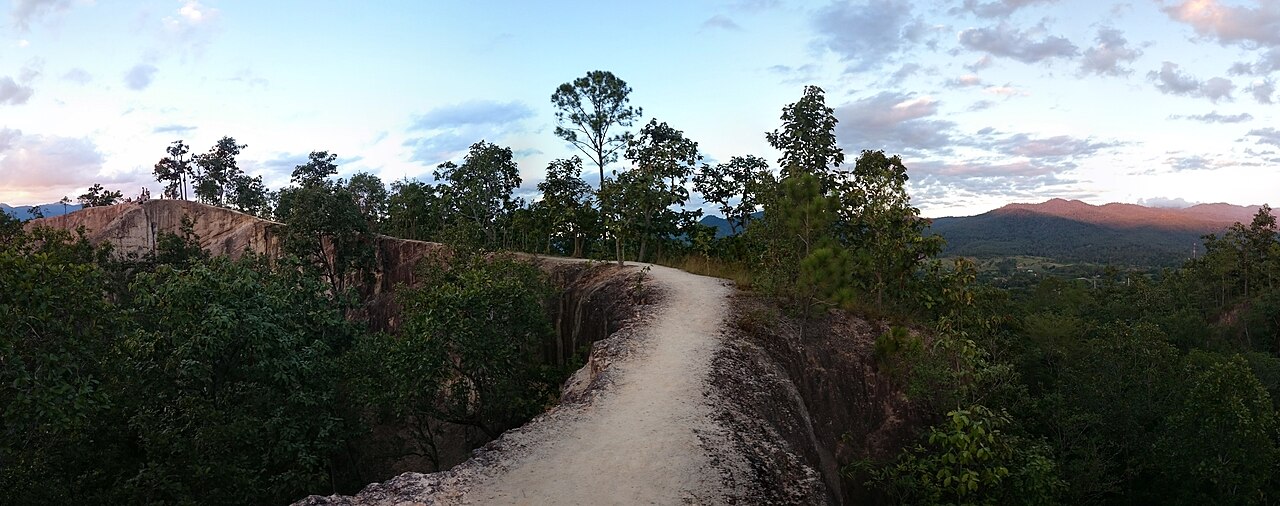
Pai Canyon (Kong Lan) is a maze of narrow earth ridges carved by wind and rain into deep gullies, with paths along the spines and valley views in every direction. At dusk it is the most popular sunset spot in Pai, and it is lovely solo — find a quiet ledge and wait for the sky to change. Take care, though: some ridges are narrow, high and made of crumbly, slippery earth. Walk slowly, wear shoes with grip, and do not go too close to the edge.
5
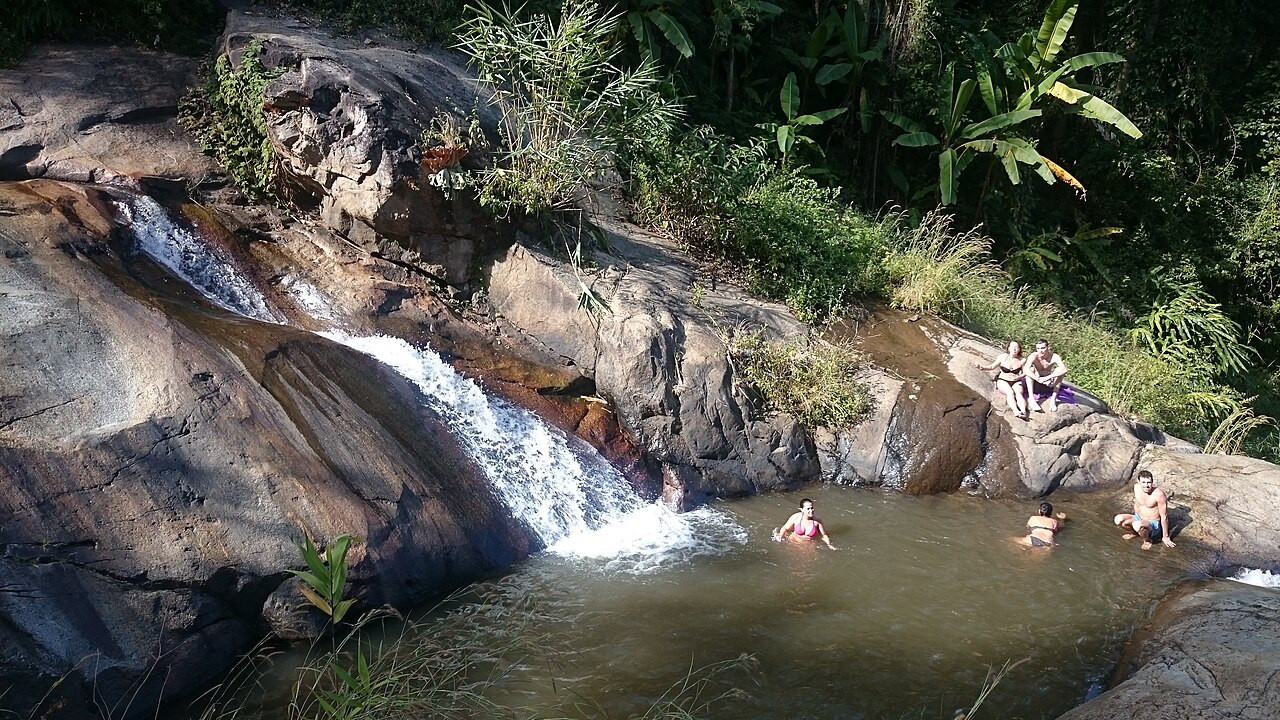
Around Pai there are natural hot springs to soak in and waterfalls to swim at. Mo Paeng Waterfall has tiers with pools and a smooth, slick rock section that people slide down like a natural waterslide (mind the slippery rock). The Tha Pai hot springs are good for a quiet solo soak. You can ride a scooter to both, and the waterfalls are at their fullest towards the end of the rainy season.
6
The big white Buddha on the hill to the east of town is one of Pai's best viewpoints. It is a short climb up the steps, and at the top the whole Pai valley opens out below you. It is lovely to do alone, quiet and cool in the early morning or late afternoon, and a good spot to just sit and think. It is an active temple, so dress modestly.
7
Around Pai are villages and little spots to wander to on your own. Santichon is a Yunnanese Chinese community with earthen houses, oolong tea and a hillside viewpoint — a different feel from the town. Nearby there are rice fields, a wooden bridge and field-side cafes to drop into. Riding a scooter loosely around the countryside for half a day with no real plan is exactly the kind of good day solo travel is made for.
8
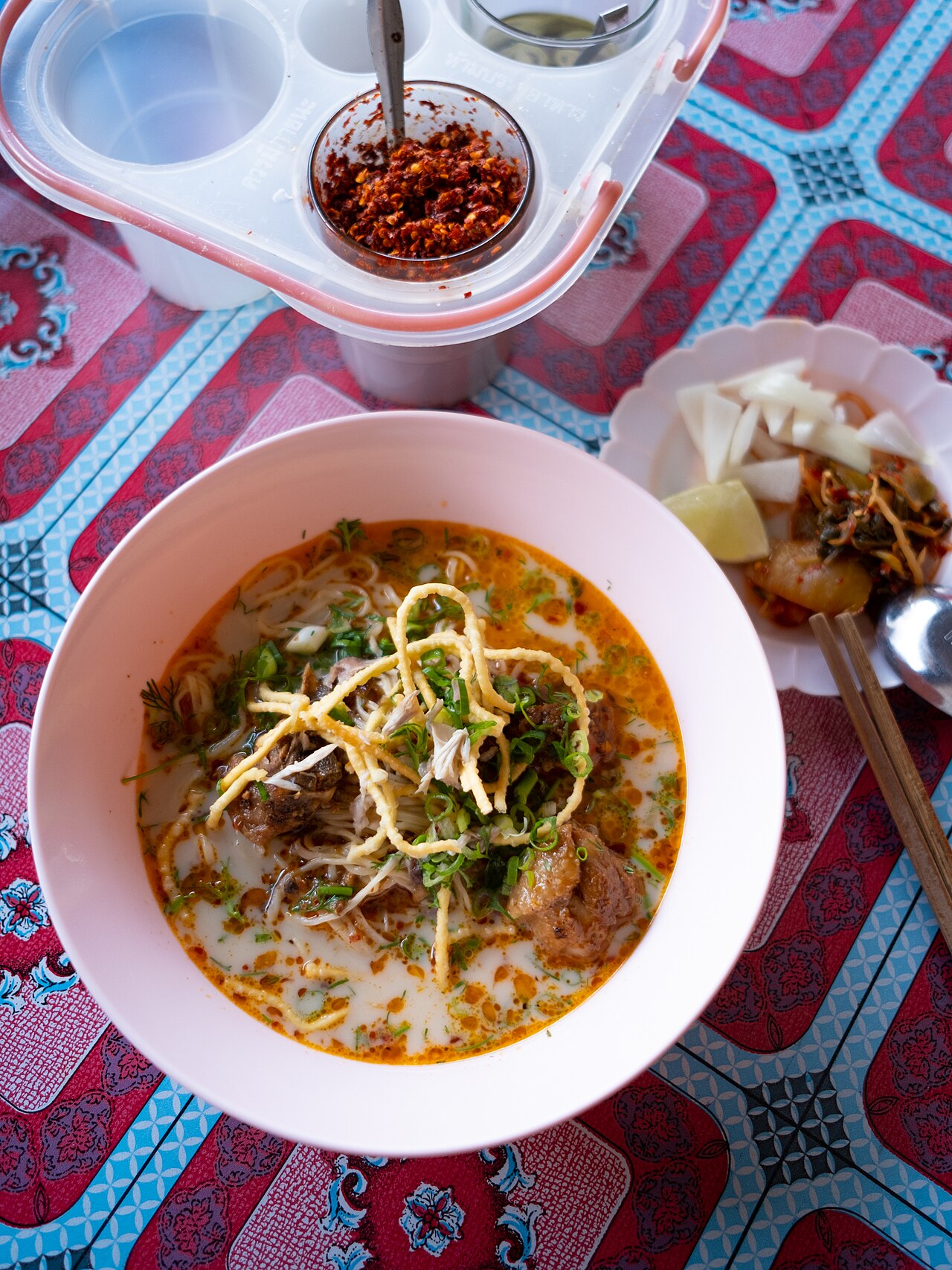
Eating alone in Pai is easy, because most dishes are served as single plates anyway — khao soi (egg noodles in a coconut curry broth), sai ua (northern herb sausage), nam ngiao (a tangy clear noodle soup) and nam prik num (a young-chilli dip) with steamed vegetables. Small restaurants have plenty of single tables, and with the walking street full of single-portion food to graze, no one looks twice at a solo diner.
Pai has an unusual number of cafes with rice-field and riverside views, which suits solo travel perfectly — order one coffee and read, journal or work over the fields for a whole afternoon. Many are relaxed and full of people on their own, so it is easy to strike up a conversation with the table next to you, or simply enjoy your own company quietly. Either is completely fine here.
10
If you want to reach the further sights without riding a scooter yourself, a day tour is a good and safer choice for a solo traveller. Popular ones go to Tham Lod cave (drifting through on a bamboo raft past stalactites), Ban Rak Thai (a Yunnanese tea village by a lake), or loop the sights around Pai. You get transport, you skip the mountain roads, and you meet other travellers in the group along the way.
Pai has no train and almost no scheduled commercial flights. The usual way in is a minivan from Chiang Mai, around 3 hours over Route 1095, famous for its 762 curves. If you get carsick, take motion-sickness tablets beforehand, sit in the front, and look at the horizon. Book your seat ahead in high season, as they fill up fast.
The town of Pai is tiny and walkable end to end — the walking street, restaurants and central stays are all on foot, no transport needed. For outlying sights such as the canyon, waterfalls and hot springs, rent a scooter (licence and helmet required), or if you would rather not ride, hire a motorbike taxi or songthaew, or join a day tour. There is no Grab the way there is in the big cities.
Pai is one of the easiest places to meet people, so the most effective tools are staying at a hostel with a common area, heading out to the live-music bars on the walking street, and joining a day tour where you chat with the group. There are a lot of solo travellers about, and many are happy to team up to sightsee or grab a meal — you just have to say hello first.
On money: ATMs in Pai are limited and sometimes empty or have long queues, so bring enough cash from Chiang Mai — many small places and walking-street stalls take cash only. On season: the best time is the cool months, November to February, with cool air and clear skies. March to April is the burning season with heavy haze, best avoided, and June to October is the rainy season — lush and green but slippery roads.