Home Nakhon Si Thammarat Thailand Nakhon Si Thammarat Attractions About
Home  ›  Asia  ›  Thailand  ›  Nakhon Si Thammarat  ›  Best Time to Visit
Nakhon Si Thammarat Seasonal Guide · 2026

Best time to visit Nakhon Si Thammarat
an honest month-by-month guide

Nakhon Si Thammarat sits on the lower Gulf, a temple-and-heritage city rather than a beach town — dry and clear from January to April, hot from March to May, with a heavy northeast monsoon in October to December that peaks in November–December. Here's our honest take on when to go, including the flood risk worth knowing and the festivals worth timing a trip around.

The short answer
The best window is January–April (the lower-Gulf dry season)

If you can only pick one month, pick February or March — the monsoon is over, the air is at its driest, skies are clear and there's little rain. It's ideal for paying respects at the Phra Borommathat chedi at Wat Phra Mahathat, walking the old city wall and the City Pillar Shrine, heading up Khao Luang to Krung Ching Waterfall, and taking a pink-dolphin boat at Khanom on calm seas. February usually lines up with the Hae Pha Khuen That festival, so you can get good weather and the city's big merit-making event at once.

The thing to know: Nakhon sits on the lower Gulf and takes the northeast monsoon head-on, with heavy rain in October–December, peaking in November–December. Nakhon has had floods in unusually wet years — not every year, but worth keeping in mind and watching the forecast if you go then. The upside is that this is a temple-and-heritage city with the temple, the museum, the shadow-puppet house and indoor food, so rain affects your plans far less than at a beach-only destination. On a budget, midweek stays outside the festivals are cheaper and quieter.

Nakhon's four phases

What each part of the year actually feels like

This lower-Gulf temple city splits into a dry stretch, a hot one, a mid-year rainy spell and the monsoon — each with its upsides and its trade-offs, told straight.
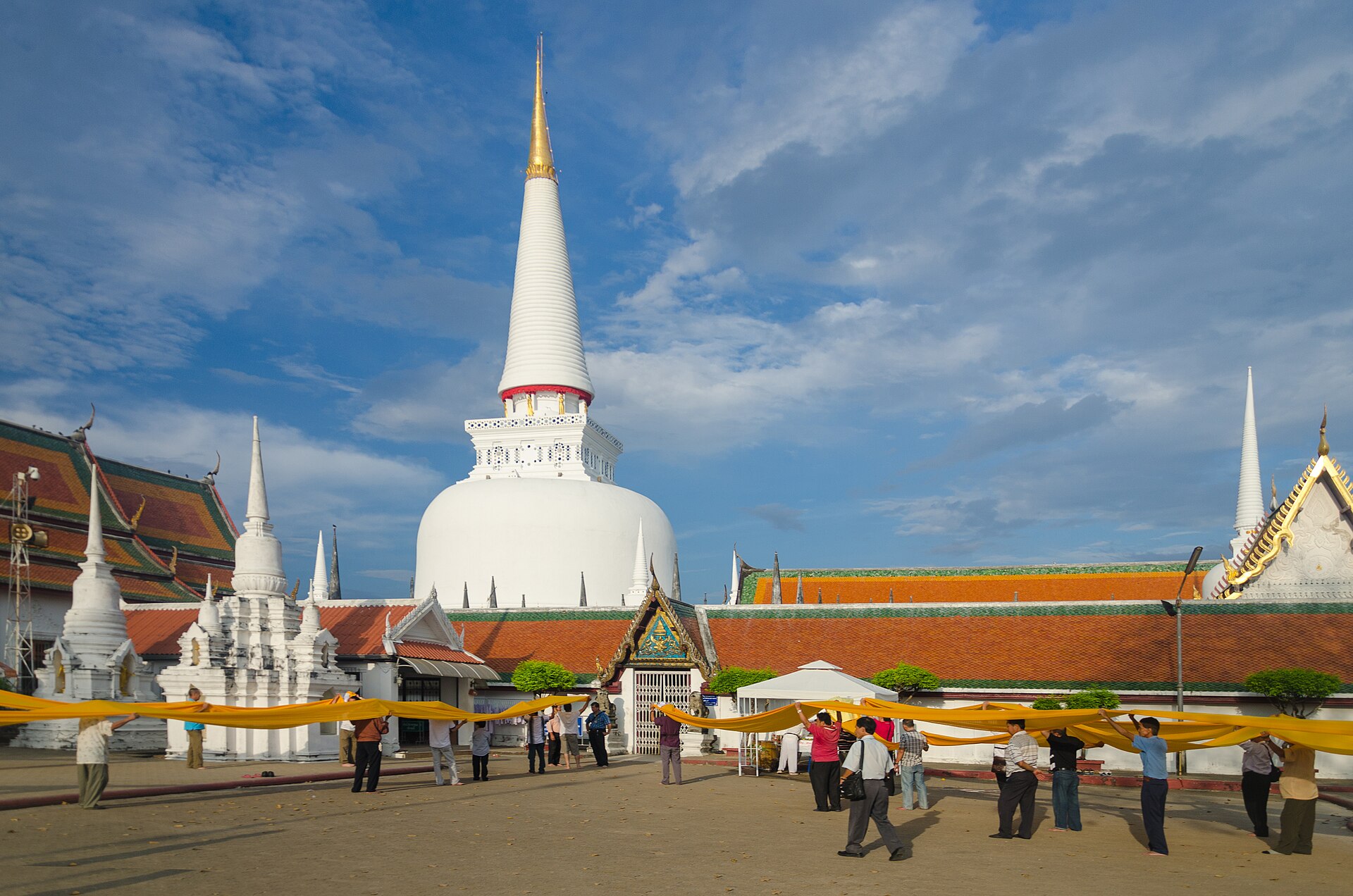
The tall golden-topped Sri Lankan-style Phra Borommathat chedi at Wat Phra Mahathat Woramahawihan in Nakhon Si Thammarat, its spire and rings set against a clear dry-season sky Phra Borommathat chedi · Clear dry season The best
Dry season
January – April · 24–34°C

This is Nakhon at its finest. The monsoon is done, rain drops off sharply and skies are clear on most days. January–February sits at a comfortable 30–33°C by day, cooling a little in the morning and evening, with lower humidity than the rest of the year. You can pay respects at the Phra Borommathat chedi, see the Phra Buddha Sihing image in the museum, walk the old city wall and the City Pillar Shrine, head up Khao Luang to Krung Ching Waterfall, and take a pink-dolphin boat at Khanom on calm seas.

April warms up sharply and brings Songkran, so more people travel and visit family, and hotel rates climb over the long holiday — but it stays mostly dry with open skies. February usually lines up with the Hae Pha Khuen That festival, so if you want to see it, check that year's Makha Bucha date before you plan.

Temperature: 24–34°C (cooler mornings and evenings Jan–Feb)
Rain: Low — clear skies most days
Crowds: Moderate — peaks at Hae Pha Khuen That, New Year, Songkran
Hotel prices: Higher over festivals and long weekends
January and February midweek are the sweet spot — the best weather, fewer people than the festivals, and good for both the city's merit-making and outdoor outings like Khao Luang and Khanom. Book ahead for Hae Pha Khuen That and long weekends.
🌞
Nakhon Si Thammarat · Hot season, go early or late Still good
Hot season
March – May · 26–36°C

It warms steadily, from around 34°C in March to genuinely hot and humid in April–May, when daytime temperatures reach 34–36°C. But it stays mostly dry and skies are still open. Indoor sights help you beat the heat — the temple, the museum, the shadow-puppet house and southern-Thai restaurants — while outdoor outings like the climb up Khao Luang to Krung Ching Waterfall or a Khanom boat are best in the early morning or late afternoon when the sun is softer.

April brings Songkran, when Nakhon is lively with water and merit-making but crowded, with some heavy traffic. Hotel rates climb over the holiday. By late May the first showers arrive in spells, taking some of the edge off the heat — and up on Khao Luang it's always cooler than in the city, a good escape.
Temperature: 26–36°C (April–May noticeably hot)
Rain: Low — first showers arrive late May
Crowds: Heavy at Songkran · moderate after
Hotel prices: Spike at Songkran · normal midweek
April–May is hot and humid with strong sun. Keep indoor stops for the afternoon, save Khao Luang and Khanom for morning and evening, use plenty of sunscreen, drink lots of water and avoid the midday heat.
Lush green forested hills with a waterfall threading over rocks in mid-year rain, similar to Khao Luang National Park and Krung Ching Waterfall near Nakhon Si Thammarat Khao Luang waterfalls · Mid-year rain, lush Best value
Mid-year rain
June – September · 25–34°C

Showers come in spells through these months, but it isn't the heavy monsoon yet. Most of the rain falls as short, heavy bursts in the afternoon or evening that pass quickly, while mornings are usually sunny. It's hotter and more humid than the dry season, around 31–34°C by day. Krung Ching Waterfall and the streams on Khao Luang run full and green now, and city sights like the temple and museum are barely touched by afternoon rain.

Crowds thin midweek and hotel rates drop. If you can take afternoon rain and the humidity, June–September is the best value of the year — and a good time for Khao Luang or a Khanom boat on a clear day. By late September the city is approaching Sat Duan Sip, its biggest merit-making festival.

Temperature: 25–34°C (hot and humid)
Rain: Scattered, mostly afternoon — not the heavy monsoon yet
Crowds: Low midweek · busier around Sat Duan Sip
Hotel prices: Well below festival peaks
Want a good hotel at a low price? June–September midweek is your window, with the waterfalls at their best. Keep outdoor day trips for clear days and plan indoor stops for the afternoon rain.
🌧️
Nakhon Si Thammarat · The northeast monsoon Check the sky first
Northeast monsoon
October – December · 23–31°C

This is Nakhon's wettest stretch, when the northeast monsoon brings the rain in full, with November–December usually the rainiest months of the year. Rain can settle in over several days in some weeks. To be straight about it: Nakhon has had floods in unusually wet years. It does not happen every year, and most years pass normally, but it's a risk worth knowing and planning around. The sea at Khanom is often choppy now, and the dolphin boats may not run on some days.

It isn't always grim — prices are low, crowds are thin, and as a temple-and-heritage city you can still visit the temple, the museum and the shadow-puppet house when it rains. But you need a flexible plan, a daily check of the forecast and any local advisories, a hotel in the inner city, and Khao Luang and Khanom saved for clear days only. By late December the rain begins to ease, opening the way into the dry season.
Temperature: 23–31°C (very humid)
Rain: Heaviest of the year, peaking Nov–Dec · flood risk some years
Crowds: Low, except long weekends and New Year
Hotel prices: Lowest of the year midweek
Oct–Dec brings the heaviest rain, with flooding possible in unusually wet years. Check the forecast and official advisories daily, stay in the inner city, keep an indoor backup ready, note that the Khanom dolphin boats may not run on rough days, and save outdoor outings for clear days only.
Month by month

Nakhon Si Thammarat every month at a glance

Temperature, rainfall and crowd levels — in one table for easy comparison.

Month Temperature Rain Crowds Notes
January 24–32°C Low–moderate Moderate Drying out · skies opening up after the monsoon
February 24–33°C Very low High (Hae Pha Khuen That) Ideal weather, dry and clear · usually the Hae Pha Khuen That festival
March 25–34°C Low Low Warming up · still dry · skies open, easy travel
April 26–36°C Low High at Songkran Hottest · Songkran crowds and some traffic
May 26–35°C Moderate Low First afternoon showers · prices easing
June 25–34°C Moderate Low Hot, humid · afternoon showers · waterfalls full · quiet
July 25–34°C Moderate Low Afternoon showers · low prices · good value
August 25–34°C Moderate Low Showers in spells · Khao Luang lush and green
September 24–33°C Moderate–heavy Moderate (Sat Duan Sip) Rain building · usually the Sat Duan Sip festival late month
October 24–32°C Heavy Moderate (Sat Duan Sip) Monsoon arrives · rain clearly heavier · Sat Duan Sip early month some years
November 23–31°C Heaviest Low Wettest of the year · flood risk some years
December 23–31°C Heavy Moderate (New Year) Still wet, easing late month · New Year travel picks up
Nakhon's rhythm

Why Nakhon works almost year-round

Nakhon is a temple-and-heritage city with the temple, museum and indoor food, so rain affects your plans less than at a beach town — but each part of the year has its own rhythm worth knowing before you book.

Jan
Apr
Dry season — clear skies, the best of the year
January–April · Nakhon's prime window

The monsoon is over, skies are clear and rain is light — ideal for the Phra Borommathat chedi, the old city wall and City Pillar Shrine, the Phra Buddha Sihing in the museum, the climb up Khao Luang to Krung Ching Waterfall, and a pink-dolphin boat at Khanom on calm seas. See everything to do in our Nakhon Si Thammarat attractions guide.

Jun
Sep
Mid-year rain — fewer people, low prices, waterfalls full
June–September · the best-value window

Rain comes in afternoon and evening spells, not all day, and mornings are usually sunny. Krung Ching Waterfall and the streams on Khao Luang run full and green now, while city sights like the temple and museum are barely touched by the rain. Midweek hotel rates are lower, making it the best-value trip of the year. Plan your meals in our Nakhon Si Thammarat food guide.

Oct
Dec
Nakhon's own monsoon — check the sky first
October–December · November–December the wettest

This is when Nakhon really does get heavy rain, November–December most of all, with rain that can last several days, and floods in unusually wet years — not every year, but check the forecast and official advisories. Save outdoor outings like Khao Luang and the Khanom dolphin boats for clear days, and keep indoor options like the temple, museum and shadow-puppet house for the wet ones. Compare seasons nationwide in our best time to visit Thailand guide.

Festivals and busy periods

Nakhon dates worth knowing before you book

Some windows are worth timing a trip around, others are extra busy — here are Nakhon's key periods.

Feb
Hae Pha Khuen That (wrapping the chedi)
Around February, near Makha Bucha · date changes each year

The city's signature festival, tied directly to the Phra Borommathat. People carry a long cloth in procession and wrap it around the base of the chedi — a striking act of faith that draws people from across the south. It's held around February, near Makha Bucha, and in some years near Visakha Bucha too. The upside is seeing this major merit-making event in the best of the dry-season weather; the trade-off is the crowds and rooms selling out, so check the date and book ahead.

Sep
Oct
Sat Duan Sip (Tenth Lunar Month Festival)
Around late September–early October · date changes each year

Nakhon's biggest merit-making festival, held to dedicate merit to ancestors believed to return at this time. It features the hmrab offering trays, processions and city-wide celebrations over several days, and is when people return home and visitors arrive in numbers. It falls at the end of the mid-year rains heading into the monsoon, so expect some rain. The upside is seeing the tradition at the heart of the city; the trade-off is the crowds and full hotels, so book ahead.

Apr
Songkran (Thai New Year)
Around 13–15 April

Nakhon is lively for Songkran, with water and merit-making as Thais return home and travel for the long holiday. The upside is the festive mood and still-dry weather; the trade-off is the crowds, some heavy traffic and hotel rates that spike over the holiday. If you'd rather avoid the chaos, skip this week, or book several weeks ahead. See trip ideas in our Nakhon Si Thammarat day trips guide.

Packing by season

What to bring for each season

A temple city with merit-making, mountain trails and the coast nearby means packing for a bit of everything — here's what actually matters for Nakhon.

Dry season
January – April
  • Light, breathable clothing — days are warm to hot even when the air is dry
  • A light long-sleeve layer — Jan–Feb mornings and evenings cool down a little 🧥
  • Modest clothing — for the Phra Borommathat chedi and the inner courtyard
  • Sunscreen and a hat — the sun is strong when you're out walking ☀️
  • Comfortable walking shoes — for the old town, Khao Luang trails and temple grounds
  • A charged camera or phone — the chedi and Hae Pha Khuen That photograph beautifully
Hot & monsoon seasons
March – December
  • Compact umbrella or light rain jacket — afternoon and evening rain, especially the Oct–Dec monsoon 🌧️
  • Quick-dry clothing — breathable fabrics; it's hot and humid
  • Non-slip shoes — waterfall trails and wet streets, with pooling in places
  • Sunscreen and water — April–May brings fierce, hot sun
  • Waterproof phone pouch — for rain and the spray on a Khanom boat
  • A weather app — check daily, especially before Khao Luang or a boat in the monsoon
Nakhon in every light

Nakhon Si Thammarat any season

Whatever month you arrive, this southern temple-and-heritage city always has merit-making, food and somewhere to wander.

The golden-topped Phra Borommathat chedi at Wat Phra Mahathat Woramahawihan, the icon of Nakhon Si Thammarat, southern Thailand
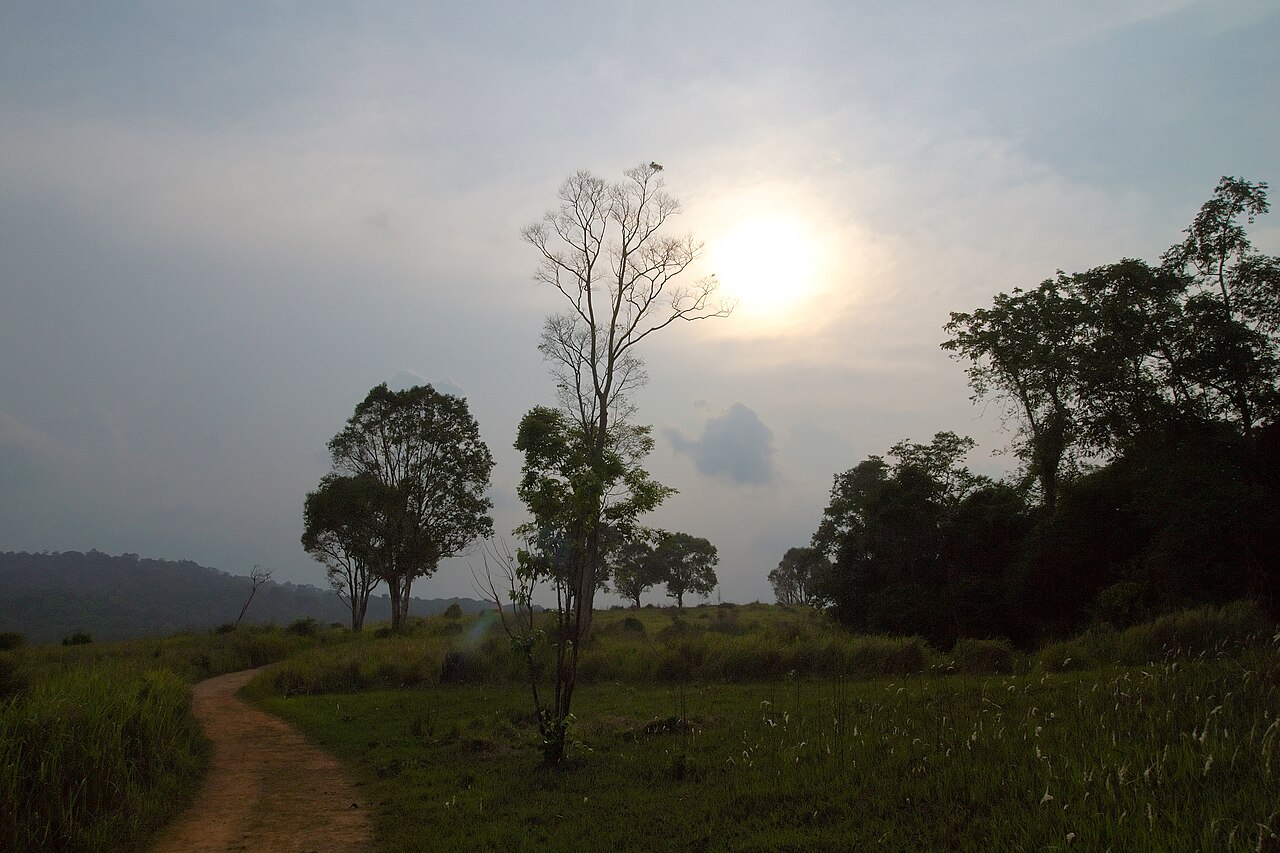
Green forested hills and a waterfall, similar to Khao Luang National Park and Krung Ching Waterfall near Nakhon Si Thammarat
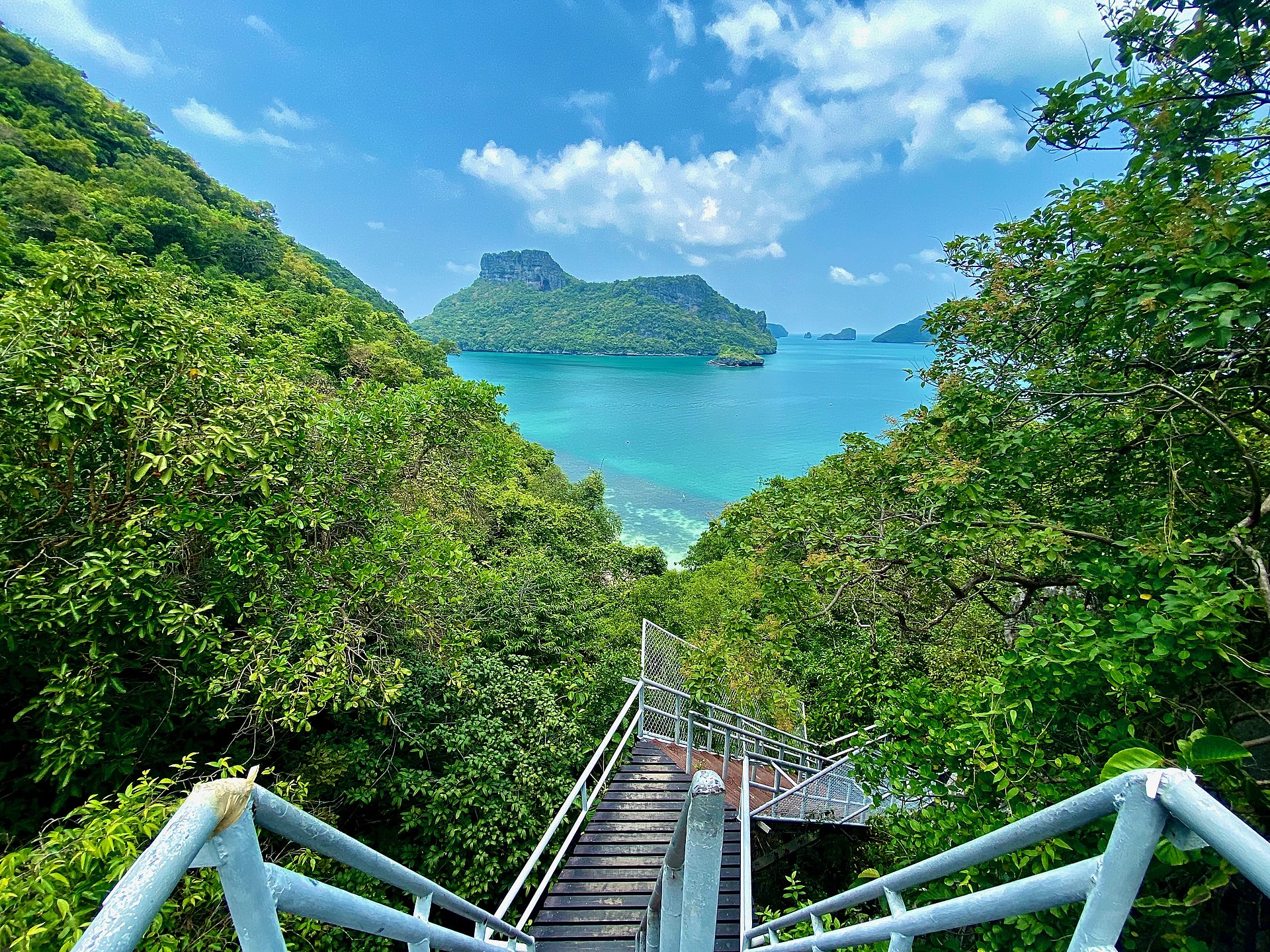
Calm Gulf of Thailand water, like the coast at Khanom across the bay from Koh Samui, where pink-dolphin boats run near Nakhon Si Thammarat
Frequently asked

FAQ · Before you book

When is the best time to visit Nakhon Si Thammarat?
January to April is the best window — the driest and clearest stretch, with little rain. It's ideal for paying respects at the Phra Borommathat chedi, walking the old town, heading up Khao Luang to Krung Ching Waterfall and taking a pink-dolphin boat at Khanom on calm seas. If you can only pick one month, choose February or March, when the monsoon is over and the heat hasn't peaked yet. The other approach is to time your trip to a festival: Hae Pha Khuen That around February, or Sat Duan Sip around September–October. See our Nakhon Si Thammarat 2-day itinerary.
Can you visit Nakhon Si Thammarat in the rainy season, and does it flood?
Yes, but plan around the rain. The heavy rain comes with the northeast monsoon in October–December, peaking in November–December. Flooding is a real thing to know about: Nakhon has had floods in unusually wet years, though it does not happen every year and most years pass normally. If you go in Oct–Dec, follow the forecast and any local advisories, stay in the inner city, keep indoor sights like the temple, the museum and the shadow-puppet house for wet days, and save Khao Luang and the Khanom boats for clear ones.
When are the Nakhon Si Thammarat festivals, and when is Sat Duan Sip?
Nakhon has two major annual festivals. The first is Hae Pha Khuen That, when a long cloth is carried up to wrap the Phra Borommathat chedi; it is held around February, near Makha Bucha (and in some years near Visakha Bucha too). The second is Sat Duan Sip, the Tenth Lunar Month Festival, the city's biggest merit-making event to honour ancestors, with offering trays (hmrab) and processions, held around late September to early October. Both follow the lunar calendar and shift each year, so check the dates and book accommodation ahead, as it gets busy.
Which months are cheapest and quietest in Nakhon Si Thammarat?
Mid-year through the start of the monsoon, especially weekdays from June to September, brings the lowest hotel rates and the fewest people. Nakhon is not a mainstream tourist city to begin with, so it never gets as crowded as the islands, except around Sat Duan Sip and long weekends. For good rates and a quiet trip, go midweek outside the festivals; if you can take afternoon rain, just keep outdoor outings for clear days. Browse stays in our Nakhon Si Thammarat hotels guide.
Is Nakhon Si Thammarat hot all year round?
Nakhon is in the south and stays warm to hot year-round, with no real cool season like northern Thailand. But it isn't equally hot every month. The dry stretch in January–February is the most comfortable, around 30–33°C by day with slightly cooler mornings and evenings, while March to May is the hottest and most humid, reaching 34–36°C. The rest of the year is warm and humid, with showers helping to take the edge off the heat. Up on Khao Luang it's always cooler than in the city.
How does Nakhon Si Thammarat's weather differ from Phuket or Krabi?
Nakhon is on the lower Gulf and takes the northeast monsoon head-on, with heavy rain in October–December — similar timing to Samui and Hat Yai, which are wettest then too. Phuket and Krabi, on the Andaman side, are wet on a different schedule, May to October. So late in the year Nakhon is wetter than the Andaman coast, and mid-year the Andaman side is wetter. The advantage of Nakhon is that it's a temple-and-heritage city with the temple, museum and indoor food, so rain affects your plans far less. Compare regions in our best time to visit Thailand guide.
Klook · Tours & Activities

Book Nakhon Si Thammarat activities in advance — make the most of every clear day

Khanom pink-dolphin boat tours, Khao Luang and Krung Ching Waterfall trips, Nakhon Si Thammarat airport transfers and in-city tickets — book through Klook before you arrive for better prices than at the gate, with the flexibility to shift dates when the rain comes.

Browse Nakhon Si Thammarat Activities on Klook →
Wherebest is an affiliate partner of Klook — we may earn a commission when you book through our links, at no extra cost to you.