🌏 Destinations · All 🇯🇵 Japan · full guide Kyoto Kyoto Attractions Kyoto Day Trips Nara 🍵 Uji Guide 🧭 Travel Prep Guide About Contact 🇹🇭 ไทย🇬🇧 English🇨🇳 中文🇪🇸 Español🇫🇷 Français
🍵 Uji, Kyoto

Uji — Byōdō-in, Matcha Tea & the Tale of Genji

A little riverside town just south of Kyoto, barely 17 minutes away by JR — home to the World Heritage Byōdō-in that's so beautiful it's on the ¥10 coin, a street of authentic matcha tea, Japan's oldest Shinto shrine, and the closing scenes of the Tale of Genji. An easy half-day trip that pairs perfectly with Nara.

Start Here

A Riverside Tea TownJust 17 Minutes by Train from Kyoto

Picture a small town where the smell of roasting green tea drifts down the street, a thousand-year-old wooden temple mirrors itself in a still pond, and a clear river runs right through the middle — that's Uji, the town south of Kyoto that most people ride straight past on their way to Nara without realising what they're missing. Honestly, Uji is one of the most rewarding day trips in Kansai, because it packs three great things into a single town you can cover almost entirely on foot: the World Heritage Byōdō-in temple, so beautiful it's printed on the ¥10 coin; matcha green tea that Uji has grown since the 12th century; and the closing scenes of the Tale of Genji, one of the oldest works of literature in the world.

The best part is how easy it is. The JR Nara Line from Kyoto Station gets you there in about 17–19 minutes, and it's a 10-minute walk from the station to the temple — you can see the whole town in half a day. On this page we'll walk you through every spot worth seeing, from the Phoenix Hall to Japan's oldest Shinto shrine and the matcha street out front, all the way to how to get there and how to time it right — and if you want to keep going, Uji sits roughly halfway between Kyoto and Nara.

🍵 One thing up front: ticket prices, admission fees, and opening hours at Uji's temples can change from year to year. The figures on this page reflect the latest 2026 information and work well as a planning framework, but before you actually set off, always re-check each temple's official website — especially the Phoenix Hall tours, which are capped at 50 people every 20 minutes.
🪙
The Temple on the ¥10 Coin
Byōdō-in's Phoenix Hall, a UNESCO World Heritage Site, is on the actual coin.
🍵
Japan's Matcha Capital
Growing tea since the 12th century — the street to the temple is full of old tea shops.
⛩️
Japan's Oldest Shrine
Ujigami, built around 1060 AD, also a World Heritage Site — and free to enter.
🚆
The Easiest Day Trip
JR Nara Line, ~17 min from Kyoto, and you can carry on to Nara right after.
Plan Fast

Only Have So Long?Here's What to See First

Almost all of Uji's main sights are within walking distance of each other, in a radius of under a kilometre around the Uji Bridge. This table helps you prioritise — whether you have half a day or a full one, here's what to hit first. Prices/times may change in 2026, so check the official sites before you go.

SpotTypeAdmission (approx.)Time to allowBest for
Byōdō-inByōdō-in · Phoenix HallWorld Heritage~¥700 (+¥300 to enter the hall)60–90 minDon't miss
The matcha street out frontOmotesandō · matchaEat & shopFree (pay as you go)30–60 minMatcha lovers
Uji Bridge + riversideUji BridgeViews & strollingFree20–30 minPhotos
Ujigami ShrineUjigami ShrineWorld HeritageFree20–30 minShrines & history
Tale of Genji MuseumTale of Genji MuseumMuseum~¥60045–60 minLiterature buffs
Mimuroto-jiMimuroto-ji · flower templeSeasonal~¥500–1,00060 minHydrangeas in June
📅 How to budget your time: with half a day, Byōdō-in + the matcha street + a walk across the Uji Bridge already fills you up. With a full day, add Ujigami Shrine (about a 10-minute walk across the river) and the Tale of Genji Museum. Mimuroto-ji is a little further out (take the Keihan a stop further) and is most worth it during the hydrangea bloom in mid-June or the lotus in July–August.
What to See

6 Spots in UjiYou Can't Miss

Almost everything good in Uji is within a kilometre on foot — from the World Heritage Phoenix Hall to the historic matcha street and Japan's oldest Shinto shrine. We've picked out what each spot is best known for and how much time to allow.
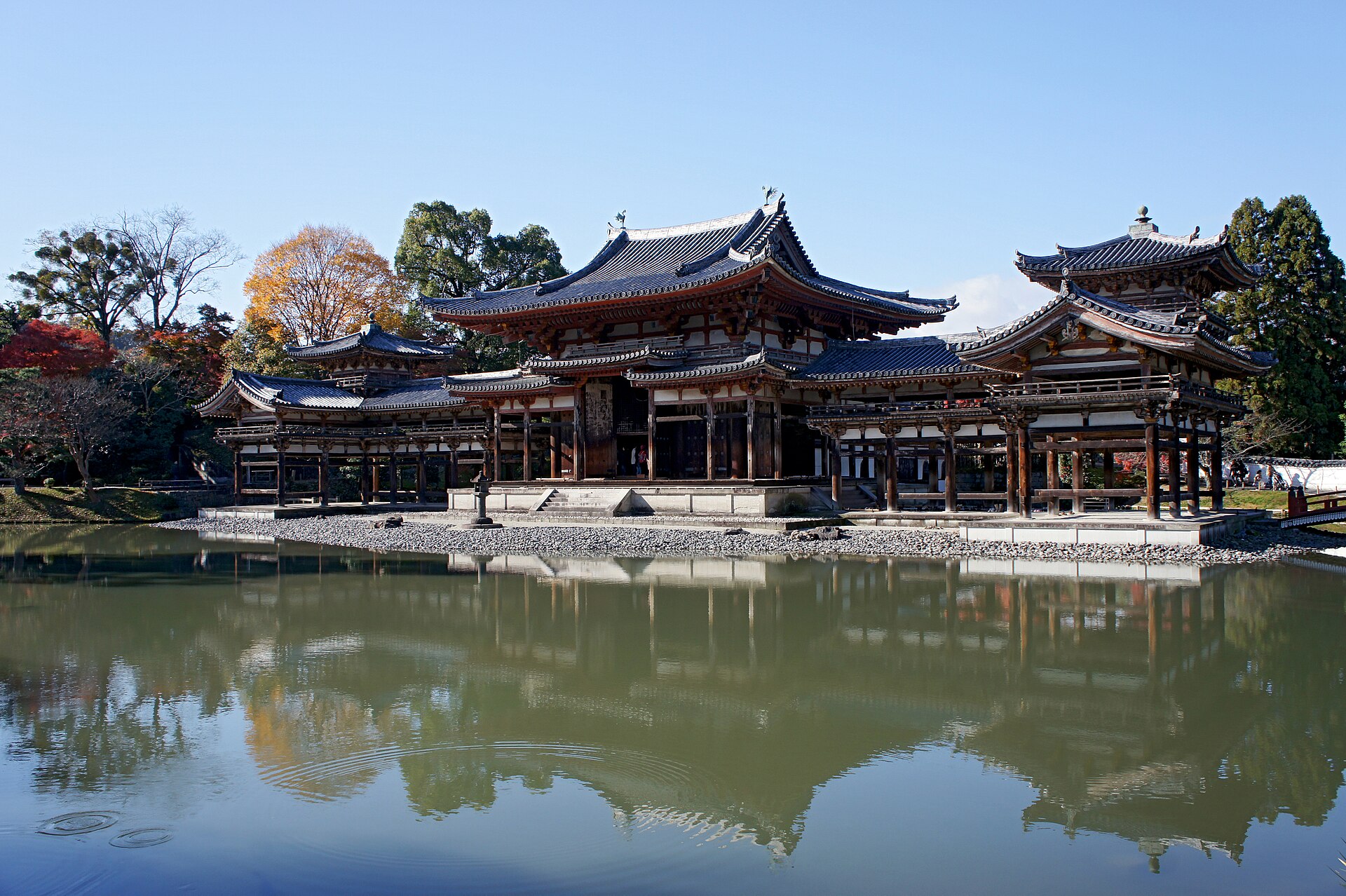
Byōdō-in temple, the Phoenix Hall (Hoodo) reflected in the pond, Uji, Kyoto 🪙 UNESCO World Heritage1
Byōdō-in · Phoenix Hall
Byōdō-in · Hōō-dō (Phoenix Hall)

This is the iconic image of Uji — a red wooden Phoenix Hall built in 1053 AD, standing in the middle of a pond that mirrors it with perfect symmetry, so beautiful it's printed on the ¥10 coin (and the phoenix on its roof appears on the ¥10,000 note). Inside is a gilded Amida Buddha, and the Hosho-kan museum holds the original golden phoenixes.

📍Location: about a 10-minute walk from JR Uji or Keihan Uji Station
🎟️Admission: garden + museum ~¥700 · inside the Phoenix Hall +~¥300
🕘Hours: garden 8:45–17:30 · hall tours 9:30–16:10 (capped at 50 people / 20 min)
💡Tip: Phoenix Hall slots fill fast — buy your timed ticket early, then explore the garden and museum while you wait.
Kyoto Attractions →
🍵 🍵 Matcha street2
The Matcha Street out Front
Byōdō-in Omotesandō

A short street running from the station to the temple, lined with old tea shops — some have been open for hundreds of years. Uji has grown tea since the 12th century, to the point that "Uji matcha" became the industry benchmark. Try the intensely bitter matcha soft-serve, warabi-mochi, or green-tea soba. Many shops have cafés where you can watch tea being whisked the traditional way.

📍Location: between JR Uji Station and the entrance to Byōdō-in
🍨Must-try: pure matcha, green-tea ice cream, warabi-mochi, cha-soba, matcha powder to take home
💴Cost: free to walk, pay as you order (ice cream ~¥400–600)
💡Tip: To understand the tea ceremony, read on in our Japanese tea ceremony guide
Japanese Tea Ceremony Guide →
⛩️ ⛩️ UNESCO World Heritage3
Ujigami Shrine
Ujigami Shrine

Cross the river to the north bank and you'll find a small shrine with a big story — tree-ring dating confirms the main hall was built around 1060 AD, making it the oldest original Shinto shrine building in Japan. It's a UNESCO World Heritage Site, originally built as the guardian shrine for Byōdō-in. The atmosphere is quiet and peaceful, with far fewer people than the temple side.

📍Location: north bank of the Uji River, near the Tale of Genji Museum
🎟️Admission: free (open during the day · still an active place of worship)
🚶Getting there: walk from Byōdō-in across the Uji Bridge, ~10 min
💡Tip: Pair it with the neighbouring Uji Shrine and carry on to the Genji Museum along the same route.
Kyoto Attractions →
🌉 🌉 Riverside4
Uji Bridge + Riverside
Uji Bridge · Uji River

The Uji Bridge is one of the oldest bridges in Japan (said to have first been built around 646 AD) and even appears in scenes of the Tale of Genji. Standing in the middle of it, looking out over the clear, fast-flowing Uji River and the midstream island of Tonoshima, is the best easy stroll in town. In summer there are cormorant-fishing boats (ukai) in the evening.

📍Location: linking the two sides of town, near both JR and Keihan stations
🎟️Admission: free, open all the time
📷Best angle: the south end of the bridge has a statue of Murasaki Shikibu, author of the Tale of Genji
💡Tip: Keep walking along the river from the temple — it's loveliest in the soft light of late afternoon.
Kyoto Day Trips →
📜 📜 Museum5
Tale of Genji Museum
The Tale of Genji Museum

The "Tale of Genji" (Genji Monogatari) is what some call the world's first novel, written by Murasaki Shikibu around 1,000 years ago — and its final ten chapters (the Uji Jujo) are set in Uji. This is the only museum in the world dedicated to the work, using models, recreated scenes, and video to make the story easy to follow even if you've never read it.

📍Location: north bank of the Uji River, near Ujigami Shrine
🎟️Admission: adults ~¥600 · children ~¥300
🕘Hours: 9:00–17:00 (last entry 16:30) · closed Mondays
💡Tip: Great for literature and history lovers — if you're after a laid-back visit, you can skip it.
Kyoto Attractions →
🌸 🌸 Flower temple6
Mimuroto-ji
Mimuroto-ji · "the Flower Temple"

A hillside temple known as "the Flower Temple" (Hana no Tera) because something is in bloom there almost year-round. The highlight is the hydrangea garden of ~20,000 plants in 50 varieties, peaking in mid-June, followed by potted lotus in July–August, azaleas in early May, and red maples in late November. It's a little way out from the main temple cluster, but well worth it in flower season.

📍Location: take the Keihan a stop further from central Uji toward Mimurodo Station
🎟️Admission: usually ~¥500 · ~¥1,000 during the hydrangea/lotus garden season
🕘Hours: 8:30–16:30 (Apr–Oct) · 8:30–16:00 (Nov–Mar)
💡Tip: Only really worth a trip in flower season (June hydrangeas / July–Aug lotus / Nov maples).
Kyoto Day Trips →
Eat & Drink

If You're in Uji,Go All In on the Matcha

Uji is a town where matcha is the star of nearly everything edible, from cold sweets to traditional hot tea. Here are three things you really shouldn't leave without trying.

No. 1
🍨 Matcha Ice Cream & Sweets

A rich matcha soft-serve, bitter enough to taste, is the signature of the street out front — some shops even let you pick the intensity. Follow it with warabi-mochi dusted in matcha powder, or a cold green-tea parfait. Prices start around ¥400–600.

No. 2
🍵 Sip Real Matcha in a Tea Café

Many shops have been open for over a century and have café areas where you can sit and sip freshly whisked matcha alongside Japanese sweets. Some let you grind the tea leaves yourself with a stone mill. To go deeper, read our Japanese tea ceremony guide.

No. 3
🍜 Savoury Dishes & Tea Souvenirs

Hungry? Try green-tea soba (cha-soba), green noodles with a gentle tea aroma. Popular souvenirs include pure matcha powder, hojicha sweets, and green-tea cookies. For more Kyoto eating, see our Kyoto food guide or the Japan food overview.

Where to Stay

Uji Is a Day Trip —It's Better to Sleep in Central Kyoto

Uji doesn't have many places to stay and goes quiet once the shops close, so most people base themselves in central Kyoto (or Osaka) and ride the train over for half a day — it's more convenient, there's far more choice, and onward travel is much easier.

🏨 We'd suggest staying in Kyoto: a spot near Kyoto Station is the most convenient of all, because the JR Nara Line to Uji (and on to Nara) leaves directly from Kyoto Station — see hotels near Kyoto Station · our top Kyoto hotels, or read the area overview in our Kyoto city guide.
🚉
Stay Near Kyoto Station
The handiest base for an Uji–Nara–Fushimi Inari day trip, since every line leaves from here. See hotels near the station.
🏮
Want That Kyoto Atmosphere
Try a machiya — an old wooden townhouse converted into a stay — near the old districts. See machiya in Kyoto.
🔎
Compare Prices Yourself
Check availability and rates for your dates on Agoda Kyoto — a free-cancellation booking keeps you flexible.
Map

Uji's Sightson One Map

You can see at a glance that everything good in Uji is clustered around the Uji Bridge — Byōdō-in sits on the south bank of the river, while Ujigami Shrine and the Genji Museum are on the north bank, an easy walk across the bridge.

Getting There + Tips

How to Reach Ujiand Tips for a Smooth Visit

Uji is very easy to reach by JR train — just ~17 minutes from Kyoto. Prices/times may change in 2026, so check Google Maps or the JR West website before you set off.

🚆
JR Nara Line (the main route)
From Kyoto Station, platforms 8–10, take the Nara Line to JR Uji · Rapid ~17–19 min / Local ~30 min · fare ~¥240
🚃
Keihan Line (the alternative)
Get off at Keihan Uji, near the shrine side, but you'll need to change at Tofukuji · better if you're coming from Gion/Fushimi Inari than from Kyoto Station
🦌
Carry On to Nara the Same Day
Uji sits right on the JR Nara Line between Kyoto and Nara. Stop in Uji in the morning and continue to Nara in the afternoon. See our Nara city guide.
🌅
Come Early for Fewer Crowds
Phoenix Hall tours are capped at 50 people / 20 min. Arrive before 10 am for a morning slot and to photograph the temple's reflection in the best light.
🌧️
Match the Season to the Flowers
June for the Mimuroto-ji hydrangeas · November for red maples · summer brings the riverside cormorant-fishing boats (ukai) in the evening.
📶
Bring an IC Card + Data
Just tap an ICOCA/Suica to ride the train. For data, IC cards, and yen, see our Japan travel prep guide.
Related Guides

More of Kyoto — Other Towns, Sights, and Day Trips

🏞️

Kyoto Day Trips

An overview of every day trip around Kyoto — Uji, Kurama-Kibune, Ohara, Nara, and more, with travel times.

See All Day Trips →
⛰️

Kurama & Kibune

A day trip north of Kyoto — a mountain temple, a red-lantern shrine, and riverside dining (kawadoko) in summer.

Kurama-Kibune Guide →
🍁

Ohara Village

Sanzen-in temple, green moss gardens, a quiet rural village, and November maples north of Kyoto.

Ohara Guide →
🦌

Nara

On the same line as Uji — deer roaming the park, Todai-ji temple, the Great Buddha, and Japan's ancient capital.

Nara City Guide →
⛩️

Kyoto Attractions

Fushimi Inari, Kinkaku-ji, Arashiyama, Gion, and the legendary temples of the old capital — all in one place.

Kyoto Attractions →
🏯

Kyoto City Guide

An overview of visiting Kyoto — which areas to stay in, the standout neighbourhoods, where to eat, and getting around.

Kyoto City Guide →
Frequently Asked Questions

Questions AboutVisiting Uji

How do I get to Uji from Kyoto, and how long does it take?
The easiest way is the JR Nara Line from Kyoto Station (platforms 8–10) to JR Uji Station. A Rapid train takes about 17–19 minutes; the Local stops at every station and takes around 30 minutes, with a fare of about ¥240. The alternative is the Keihan Line to Keihan Uji Station, but you have to change at Tofukuji. Both stations are about a 10-minute walk from Byōdō-in. Prices may change in 2026, so check the latest before you travel.
How much is admission to Byōdō-in, and what are the opening hours?
Admission to the garden including the Hosho-kan museum is about ¥700 for adults. To go inside the Phoenix Hall (Hoodo) costs an extra ¥300, with each tour limited to no more than 50 people every 20 minutes. The garden is open roughly 8:45–17:30 (last entry 17:15), and the Phoenix Hall tours run roughly 9:30–16:10. Prices and times may change in 2026, so check the official website before you go.
Why is Uji famous for matcha green tea?
Uji has grown green tea since around the 12th century and is one of Japan's most famous tea regions. The street in front of Byōdō-in (the Omotesando) is lined with long-established tea shops selling authentic matcha, rich green-tea ice cream, warabi-mochi, and green-tea soba. Many have cafés where you can watch tea being whisked the traditional way. To understand the tea ceremony itself, read on in our Japanese tea ceremony guide.
What is Ujigami Shrine, and is there an entry fee?
Ujigami Shrine has been confirmed by tree-ring dating to be the oldest original Shinto shrine building in Japan, built around 1060 AD. It is registered as a UNESCO World Heritage Site within the Historic Monuments of Ancient Kyoto. It sits on the north bank of the Uji River, near the Tale of Genji Museum. Entry is free, and it is open during daytime hours.
Is the Tale of Genji Museum worth visiting?
The Tale of Genji Museum is the only museum in the world dedicated to the literary classic the Tale of Genji, whose final ten chapters (the Uji Jujo) are set in Uji. It uses models and video to tell the story, so it suits anyone who loves literature and history. Adult admission is about ¥600, and it is open 9:00–17:00, closed Mondays. Prices may change in 2026.
How much time should I set aside for Uji, and can I combine it with Nara?
A relaxed visit to Uji takes about half a day (Byōdō-in + the matcha street + a riverside walk). If you also want to see Ujigami Shrine and the Tale of Genji Museum, allow a full day. Because Uji is on the JR Nara Line between Kyoto and Nara, many people stop in Uji in the morning and continue to Nara by train in the afternoon on the same trip. See our Nara city guide to plan the next leg.
Ready to Visit Uji?

Book a Stay in Kyoto
and Day-Trip Out to Uji

Base yourself in central Kyoto for easy travel, then ride the JR Nara Line ~17 minutes to Uji and carry on to Nara the same day. Open our day-trips guide for other routes, or lock in a place near the station early.

🔴 Hotels in Kyoto Kyoto Day Trips